Blog

  • A Tale of Two STEM Women

    A Tale of Two STEM Women

    Ada Lovelace Day is a day for celebrating the achievements of women in STEM (Science, Technology, Engineering and Math) fields. Recently, the New York Times published a fantastic article by Eileen Pollack, “Why Are There Still So Few Women in Science”. Women were leaving the profession not because they weren’t gifted but because of the “slow drumbeat of being under-appreciated, feeling uncomfortable and encountering roadblocks along the path to success”. In summary, the problem comes down to a lack of adequate support and encouragement for STEM women, whose confidence therefore slowly erodes over time, like limestone in an acid rain. Instead of beautiful stalactites however, we’re left with the ‘leaky pipeline’; the phenomenon where, although there appears to be gender parity, or even a majority, in the number of women in STEM fields at the undergraduate level, the senior staff ends up being almost predominantly male; the women have ‘leaked’ out of the pipeline.

    I want to illustrate why support and encouragement is vital for women in STEM by presenting two stories. They are old; from the late 1800s and early 1900s, but their message remains as relevant today as it did back then.

    For many people outside STEM fields, Marie Curie remains the go-to female scientist. Everyone knows about her fantastic work ethic and achievements, the only woman to win two Nobel Prizes, for Chemistry and Physics. A large part of her success comes from an uncompromising desire to excel at the things that she was passionate about, coupled with having people in her life who encouraged her to do so. Notably, both her father and grandfather were educators who encouraged her to pursue mathematics and physics, subjects that she wanted to study. She also married Pierre Curie, who treated her as an equal partner in every sense of the word. They supported and encouraged each other’s work constantly, and together were more successful than either would have been apart.

    In contrast, the story of Clara Immerwahr is far more tragic and, to me, illustrates the loss faced by humanity when women in STEM are not encouraged. Clara Immerwahr was a chemist, and also the first woman to earn a Ph.D from the prestigious University of Breslau (now Wrocław). But unlike her (often-cited) contemporary Marie Curie, Immerwahr had the misfortune to marry Fritz Haber, who was definitely not an open-minded man like Pierre Curie was.

    Fritz Haber is known for his contradictory contributions to society; on the one hand he is responsible for the Haber process by which ammonia is synthesized; this has applications in fertilizer production and is essential to our agriculture (he won the Nobel prize for this in 1918); on the other hand the scientists at his institute developed the gas Zyklon A, which the Nazis ‘refined’ into the notorious Zyklon B used in their concentration camp gas chambers. Haber was guilty too, of the development of other chlorine-based gases, infamously used in the German attack against the French in Ypres. Haber also developed Haber’s Rule, a horrific method to quantify the relationship between gas concentration, exposure time and death-rate. The mind recoils at the thought of what gathering data for this involved.

    Haber’s views on women were no better than his views on gas warfare. According to an historian, Immerwahr “was never out of apron”, and she once confided to a friend about her subservient role; “It has always been my attitude that a life has only been worth living if one has made full use of all one’s abilities and tried to live out every kind of experience human life has to offer. It was under that impulse, among other things, that I decided to get married at that time… The life I got from it was very brief…and the main reasons for that was Fritz’s oppressive way of putting himself first in our home and marriage, so that a less ruthlessly self-assertive personality was simply destroyed”. She ended up translating his manuscripts into English and providing technical support on his nitrogen projects, her own dreams and potential ignored and forgotten; although she drew the line at helping him with his poison gas work.

    Immerwahr was repulsed by Haber’s growing obsession with the development of poison gas. She confronted him numerous times but her pleas fell on deaf ears. On May 2nd 1915, she quarreled violently with Haber when she found out that he had come home for just the night and was leaving again in the morning to direct more poison gas attacks on the Eastern front. In the early hours of the morning, Immerwahr walked into the garden with Haber’s army pistol and shot herself in the chest. Haber of course did not let this inconvenience him, and left as planned the next morning without even making any funeral arrangements.
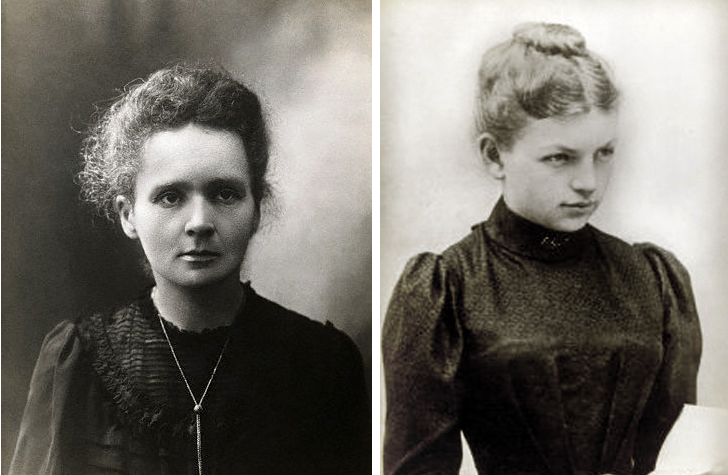
    Marie Curie (left) and Clara Immerwahr (right). Two extremely talented women with vastly different stories.
    Marie Curie (left) and Clara Immerwahr (right). Two extremely talented women with vastly different stories.

    When I first read this story, I was struck by how often we focus on happy stories like Marie Curie’s, and how the story of someone like Clara Immerwahr remains largely forgotten. She had a tremendous amount of potential, as evidenced by her being the first female to receive a Ph.D at the University of Breslau, an endeavor that is certainly not for the faint-hearted even now. One can only wonder at the ‘might-have-beens’ if she had had the same support and encouragement that Marie Curie did, if she had not married Haber, or if Haber had been a different kind of person. These examples highlight that talent alone is not enough; we need to encourage that talent by promoting equality and recognizing our own biases when it comes to women in STEM.

    For Ada Lovelace Day, let us recognize that we not only have to celebrate women in STEM, we have an imperative to actively support and encourage them.

  • Australia and India to collaborate on clean fuel production

    Australia and India to collaborate on clean fuel production

    In a time when Australia’s liquid transport fuel supplies are declining and our transport needs are growing, a research partnership between Australia and India could provide a solution to a number of energy concerns and ultimately reduce the reliance of both countries on imported fuels. 

    The widespread introduction of a clean-burning synthetic fuel, dimethyl ether (DME), is a step closer following the announcement of a A$6 million partnership between CSIRO and its Indian equivalent, the Council of Scientific and Industrial Research (CSIR).

    The project will focus on improving processes involved in the production of DME, which is a liquid fuel produced from natural gas (NG), coal, biomass, or even directly from carbon dioxide.

    Both Australia and India are currently unable to meet demand for petroleum products with domestic production alone. DME could help meet demand and consequently reduce both nations’ reliance on imported petroleum products.

    According to CSIRO’s Dr Nick Burke, “There are over half a million vehicles currently using liquefied petroleum gas (LPG) in Australia – all of which could be powered using DME. The fact that DME can be used as a blend in existing LPG engines makes it an effective transitional fuel

  • What Can Happen if You Say NO, Thank You And You Are a Science Writer?

    What Can Happen if You Say NO, Thank You And You Are a Science Writer?

    This weekend happened something that attracted our attention. Namely, Danielle N. Lee, Ph.D, the Urban Scientist blogger at Scientific American, has been mistreated twice: once by the blog editor at biology-online.org and now by SciAm itself. The blog editor asked Dr. Lee to contribute a blog post at Biology-Online, and when she declined, the blog editor asked her whether she was ‘an urban scientist or an urban whore.’ Then, SciAm deleted her blog post, in which she wrote about the incident.  Below is her original post with the video response.

    wacjemshe-hao-hao-kwangu-mtapoa

    I got this wrap cloth from Tanzania. It’s a khanga. It was the first khanga I purchased while I was in Africa for my nearly 3 month stay for field research last year. Everyone giggled when they saw me wear it and then gave a nod to suggest, “Well, okay

  • Dig down to lift your spirits: soil bacteria act as antidepressants

    Dig down to lift your spirits: soil bacteria act as antidepressants

    Have you ever noticed that people who spend more time outdoors, particularly those who garden regularly, are often cheery? While the exercise, sunshine and general health benefits of being outdoors contributes to a happy disposition, scientists have discovered that some of this cheer comes from a certain bacteria that lives in the soil.

    Mycobacterium vaccae, a soil dwelling bacteria, has been found to affect our brains in a similar way to antidepressants. It activates brain cells to produce serotonin, a hormone that helps regulate mood and sleep. Low levels of serotonin are often correlated with moodiness, feeling down and depression.

    Soil bacteria are well known, to soil scientists at least, for their contribution to modern medicine and technology. Rapamycin, a bacteria found in the soil on Easter Island is used in anti-fungal medications, and in transplants to stop the body attacking transplanted organs. Ralstonia, a very common microbe, has been persuaded to make isobutanol (a fuel). The difference here, with M.vaccae, is that no alterations need to be made to the bacteria to achieve the desired effects – all you need to do is head outside and play in the dirt.

    Researchers from the University of Bristol suggest that M.vaccae works by activating immune cells. Experiments on mice revealed the bacteria simulated the production of cytokines, indicating an increase in immune system activity, as well as an increase of serotonin in the brain.

    Experiments at the Sage Colleges in Troy, New York, have also suggested M. vaccae can increase learning abilities, with mice that were fed the bacteria being able to solve maze problems twice as fast as mice who weren’t. These wonderful soil bacteria are a Prozac and IQ booster in one. Best of all they’re free, you just need to head outside and play in the dirt.

    It has been argued that we are too clean these days, the antibacterial hand wash, wet wipes and multitude of cleaning chemicals doing more to harm our immune system than help it. The truth is, soil microorganisms play an important role in the development of immunity. We need to be exposed to microorganisms to train our immune systems to defend us.

    Those of us who garden or work with soil are exposed to M. vaccae simply by digging in the soil. It can be inhaled, or ingested via water or plants. Home-grown vegetables may contain the bacterium, so growing your own food can help increase exposure.

    A key to feeling better, it seems, is to do what health experts have been telling us to do for years. Get outside, get into the garden, and while you’re at it grow some of your own food. You’ll feel better, and you’ll have free food.

  • Weekly Science Picks

    Weekly Science Picks

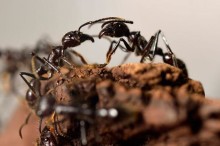
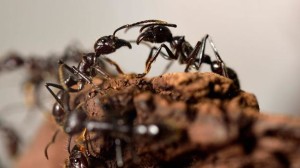
    Close-up view Giant ants (Paraponera Clavata), appearing at the exhibition "Mille milliards de fourmis" at the Palais de la Decouverte in Paris. (Copyright: Getty Images)
    Close-up view
    Giant ants (Paraponera Clavata), appearing at the exhibition “Mille milliards de fourmis” at the Palais de la Decouverte in Paris. (Copyright: Getty Images)


    Welcome to this edition of Weekly Science Picks!


    Here’s a great little story to get us started about how one scientist found out about his Nobel Prize win this past week. He doesn’t carry a mobile.

    Prof Peter Higgs did not know he had won Nobel Prize by BBC News

    Nobel Prize-winning scientist Prof Peter Higgs has revealed he did not know he had won the award until a woman congratulated him in the street.


    It’s now the 11th day of the US Government Shutdown. This past week I attempted to go to the Census Bureau website for research on population demographics near a development project I’m working on. No dice. This next story shows the impact that government funding has on science. The implications could be huge.

    Fears for science amid US shutdown by David Shukman

    Imran Khan, chief executive of the British Science Association, said: “The biggest lesson we should take from this week’s Nobel Prizes is that science doesn’t belong to one nation; it’s an international and collaborative human enterprise.


    One could spend hours, even days pondering the origins of our solar system. Some devote their life’s work to it. Check out this story about comets and presolar grains.

    First Evidence Found of a Comet Strike on Earth by Andrew Fazekas

    “Because there is no sign of an impact crater, it has been a mystery as to what kind of celestial event actually could have caused this debris field, but a small, black stone found lying in the middle of the glass area caught our attention,” said study co-author David Block, an astronomer at Wits University in Johannesburg, South Africa.


    Balancing the needs of economic development with conservation principles is not easy. Governments do have hard choices to make. Sustainable management of resources, both natural and economic, is not a choice; it should be a top policy priority.

    In Indonesia, Environmentalists See a Disaster in the Making by Sara Schonhar

    Now conservationists say the rapid clearing of virgin forest is paving the way for environmental catastrophe, turning critically endangered orangutans, tigers and elephants into refugees, and triggering landslides and flash floods.


    These next two links speak for themselves. You know that line, “a picture is worth a thousand words”. The power of communication, through both photos and words, assists scientists in developing and proving theories and solving problems of the modern world. Enjoy your weekend. Maybe grab a camera, or your smartphone, and capture some scientific snapshots of your own.


    Awesome Photos of NASA Equipment Tests by Vincze Miklos


    The best science and technology pictures of the week by BBC Future


  • Study Finds That Reading Tolstoy & Other Great Novelists Can Increase Your Emotional Intelligence

    Study Finds That Reading Tolstoy & Other Great Novelists Can Increase Your Emotional Intelligence

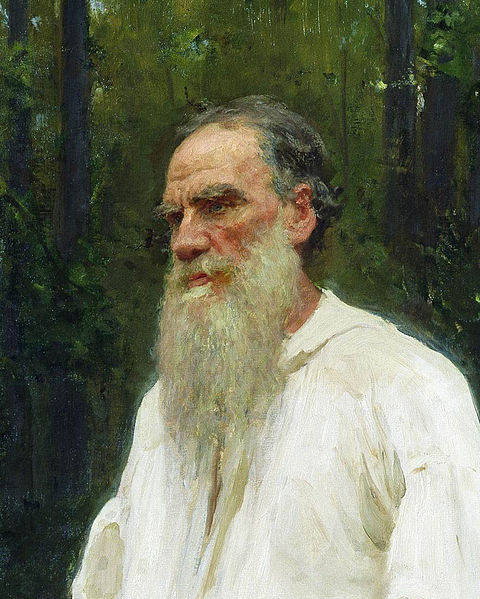
    tolstoy-social-intelligence

    A new study published this month in Science concludes that you may get something unexpected from reading great literary works: more finely-tuned social and emotional skills.

    Conducted by Emanuele Castano and David Comer Kidd (researchers in the psych department at the New School for Social Research), the study determined that readers of literary fiction (as opposed to popular fiction or non-fiction) find themselves scoring better on tests measuring empathy, social perception and emotional intelligence. In some cases, it took reading literary fiction for only a few minutes for test scores to improve.

    The New York Times has a nice overview of the study, where, among other things, it features a quote by Albert Wendland, an English professor at Seton Hall, who puts the relationship between literature and social intelligence into clear terms: “Reading sensitive and lengthy explorations of people’s lives, that kind of fiction is literally putting yourself into another person’s position — lives that could be more difficult, more complex, more than what you might be used to in popular fiction. It makes sense that they will find that, yeah, that can lead to more empathy and understanding of other lives.

  • The Podcast Project: a tool for fun and sustainable language learning

    The Podcast Project: a tool for fun and sustainable language learning

    A bad night´s sleep, a nervous stomach and sweaty hands. This scenario that students typically face before their obligatory English exam may be a thing of the past at the University of Wismar, Germany. Since June 2012, over 90 students from various degree programmes have produced podcasts – or vodcasts – as part of their assessed course requirements in the ESP module (English for Specific purposes). The result? Involvement, enthusiasm and students who confess to enjoying their learning.  And what´s more, engaging and educational teaching and learning material for the following courses. 

    The project was kick-started by our increasing frustration with the lack of stimulating, authentic teaching and learning material in the field of ESP. Motivated by the success of a method called ‘learning through teaching’, in which students address a certain topic and give so-called mini-lessons for their peers, we started wondering whether students couldn’t also create tailor-made language learning content themselves.

    How ESP podcasts are produced

    Groups of two to four students are tasked with producing a ten-minute video podcast. It has to feature both specific vocabulary and skills practised in the English course, such as negotiating, managing discussions, intercultural communication etc. Students are free to choose the podcast’s format: whether they decide on news productions, talk and reality shows, role-plays and educational lectures – the main objective is for the podcast to be both educational and engaging.

    To prepare, students gather information on content and language, create a storyline and practise dialogues. Using props, pictures, background images and sound effects to enrich the impact, the story is adapted as a screenplay and outlined in a storyboard.

    For the podcast recording, we are lucky enough to be able to offer students a real studio experience on our production site for elearning applications (PELA). Many students use the studio to record their podcasts, where they get a 90-minute recording slot as well as support in the postproduction process. But you do not need a studio to produce impressive results. We have seen some great productions from students using just a smart phone!

    Finally, students are asked to reflect on the results: they provide feedback on their peers’ podcasts and submit a written analysis of their own. Grading creative group work is not easy. But clear structures and transparent criteria go a long way. We are using a concept for productassessment, which differentiates between information, subject-specific quality, which in this case is mainly the language, and design, which is the creative aspect. We also apply a mix of individual and group assessment.

    Benefits

    For me personally, there are two extremely valuable aspects of the project. First there is the educational and fun value of tailor-made teaching and learning content for future generations of students, as the material produced can be reused again. Secondly, and perhaps most importantly, students really enjoy the project, as these two comments show:

    “This exciting and fun project combines many aspects: text, speaking, organisation, preparation and group processes. We are still talking about the project many months later and enjoy the memories.

  • Peter Higgs awarded Nobel Prize in Physics

    Peter Higgs awarded Nobel Prize in Physics

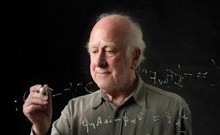
    King’s College London is celebrating the award of the 2013 Nobel Prize for Physics to its alumnus, Fellow and Honorary Doctor Professor Peter Ware Higgs CH CBE FRS FRSE FKC, jointly with François Englert.

    The award is the 11th Nobel Prize awarded to a member of King’s or its associated institutions, and it also highlights the remarkable tradition of discoveries in physics by members of the College, starting with James Clerk Maxwell in the 1860s.

    Peter Higgs came to King’s as an undergraduate in 1947 to read natural sciences in the field of physics. After graduating with a first-class BSc in 1950 he took an MSc in physics in 1952 and studied for his doctorate in molecular physics under the supervision of Charles Coulson and Christopher Longuet-Higgins. He was awarded his PhD in 1954 for a thesis entitled ‘Some problems in the theory of molecular vibrations’: a work that signalled the start of his life-long interest in the application of the ideas of symmetry to physical systems. He was a senior student at King’s and had already published four scientific papers by the time he left the College in 1954 to take up a post at the University of Edinburgh.

    Among the many honours and awards Professor Higgs has received are the Fellowship of King’s in 1998 and the College’s Honorary Doctorate of Science in 2009.

    The College’s tradition of world-changing discoveries in physics began in the19th century. In particular, the great 19th-century physicist James Clerk Maxwell was Professor of Natural Philosophy at King’s from 1860 to 1865. During this time he demonstrated that magnetism, electricity and light were different manifestations of the same fundamental laws, taking a major step towards a theory unifying the forces of nature.

    150 years later, the discovery in July 2012 by teams at CERN of a new particle consistent with the Higgs boson followed pioneering research on this particle by King’s current James Clerk Maxwell Professor of Theoretical Physics, John Ellis CBE FRS. Professor Ellis is considered one of the UK’s most influential and eminent particle physicists, and he has also made important contributions to astrophysics, cosmology and quantum gravity. He has been influential in setting CERN’s strategic direction over recent decades.

    In 2012 King’s inaugurated an annual Higgs Lecture in the School of Natural & Mathematical Sciences, with Professor Higgs giving the inaugural Higgs lecture on the theme ‘Putting Maxwell in his place’ on 10 December 2012 at the Strand Campus to an audience of King’s staff and students, science professionals and colleagues from other universities, and engaging in a lively question and answer session. A short video of the highlights and the full length video can beviewed online.

    Professor Sir Richard Trainor, Principal of King’s, said: ‘This is wonderful news and we send our warmest congratulations to Professor Higgs. King’s is extremely proud and honoured that our alumnus has been awarded the world’s greatest scientific prize, and we look forward to being able to congratulate him in person in the near future.’

    Professor John Ellis said: ‘In 1964 Peter Higgs was among the theoretical physicists who discovered a way to give masses to elementary particles. This is now the basis for the Standard Model that describes immensely successfully all the visible matter in the Universe. Peter Higgs pointed out that this theory required the existence of a new kind of particle, commonly called the Higgs Boson, which was discovered by the ATLAS and CMS experiments at CERN in 2012, providing dramatic experimental confirmation of his theoretical ideas.

    ‘We are proud that Peter Higgs was a student in the King’s Physics Department, and that his links with King’s continue. Research on the properties of the Higgs Boson and related aspects of particle physics is an active theme of research in the King’s Physics Department.’

    Source and image. 

  • Does my virtual forehead look big in this?

    Does my virtual forehead look big in this?

    The days of stalling online purchases in fear of products “not quite looking like they did on the model

  • Australia’s Marine National Facility to farewell its research vessel Southern Surveyor

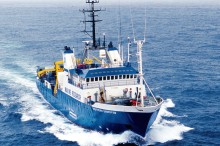
    Australia’s Marine National Facility to farewell its research vessel Southern Surveyor

    The Director of the Marine National Facility, Mr Ron Plaschke, said the research achievements onboard Southern Surveyor have not only been to Australia’s benefit, but also understanding the global importance of our surrounding seas and oceans.

    Southern Surveyor has made a major contribution to Australia’s blue-water research effort,” Mr Plaschke said.

    On board Southern Surveyor, scientists from a diverse range of universities, institutions and government organisations have, among many other things:

    Discovered massive submarine volcanoes between Fiji and Samoa, offering evidence of mineral deposits such as copper, zinc and lead. This research is helping us understand the origins of our continent and how geological resources are formed, which in turn guides exploration activities.

    Played an important role in the deployment and recovery of buoys as part of the Australian Tsunami Warning System.

    Deployed the Integrated Marine Observing System (IMOS) moorings in the oceans around Australia, which have been pivotal in collecting data for Australian and international weather and climate research.

    Observed changes to our ocean currents that influence rainfall, weather patterns and in turn fisheries, from the Indian, to the Pacific and Southern Oceans and also helped to uncover the southward movement of the East Australian Current.

    Mapped our seafloor – only 12 per cent of Australia’s Exclusive Economic Zone has been mapped.

    Discovered the final resting places of historically significant shipwrecks, like the MV Limerick and HMAS Australia.

    “The 42 year old Southern Surveyor is a former North Sea trawler converted into a research vessel and, while being well maintained, the ability to carry a wide range of scientific equipment and larger scientific teams is becoming increasingly limiting,” Mr Plaschke said.

    “It will be a sad day when Southern Surveyor is sold and departs from Hobart, but there is growing excitement about the upcoming arrival of the replacement vessel Investigator,” Mr Plaschke said.

    Source and image: http://www.csiro.au/en/Portals/Media/Australias-Marine-National-Facility-to-farewell-its-research-vessel-Southern-Surveyor.aspx

  • Weekly Science Picks

    Weekly Science Picks

    It’s been a slow week, but science never stops. Let’s have a quick look at some of the interesting science-related happenings over the past seven days.

    Eileen Pollack, a professor of creative writing at the University of Michigan, is writing a book about women in the sciences, and has a long piece in the New York Times. Worth the read.

    Why Are There Still So Few Women in Science?

    “Mostly, though, I didn’t go on in physics because not a single professor — not even the adviser who supervised my senior thesis — encouraged me to go to graduate school. Certain this meant I wasn’t talented enough to succeed in physics, I left the rough draft of my senior thesis outside my adviser’s door and slunk away in shame. Pained by the dream I had failed to achieve, I locked my textbooks, lab reports and problem sets in my father’s army footlocker and turned my back on physics and math forever.”


    Sciencemag and their “sting” operation that exposed severe lack of even cursory peer review among open-access scientific journals. It seems an alarming number of the publications tested (by submitting a conspicuously flawed paper by a non-existent author from a non-existent third-world institution) seem to be making money at the expense of authors and not even bothering to look at submitted papers.

    Who’s Afraid of Peer Review?

    “On 4 July, good news arrived in the inbox of Ocorrafoo Cobange, a biologist at the Wassee Institute of Medicine in Asmara. It was the official letter of acceptance for a paper he had submitted 2 months earlier to the Journal of Natural Pharmaceuticals, describing the anticancer properties of a chemical that Cobange had extracted from a lichen. In fact, it should have been promptly rejected. Any reviewer with more than a high-school knowledge of chemistry and the ability to understand a basic data plot should have spotted the paper’s short-comings immediately. Its experiments are so hopelessly flawed that the results are meaningless. I know because I wrote the paper. Ocorrafoo Cobange does not exist, nor does the Wassee Institute of Medicine.”


    The ever-present, ever-vocal George Monbiot in the pages of the Guardian.

    For scientists in a democracy, to dissent is to be reasonable

    “It’s as clear and chilling a statement of intent as you’re likely to read. Scientists should be “the voice of reason, rather than dissent, in the public arena”. Vladimir Putin? Kim Jong-un? No, Professor Ian Boyd, chief scientific adviser at the UK’s Department for Environment.”


    PopularScience.com will no longer accept comments on new articles. The comments, they feel, are bad for science.

    Why We’re Shutting Off Our Comments

    “Comments can be bad for science. That’s why, here at PopularScience.com, we’re shutting them off. It wasn’t a decision we made lightly. As the news arm of a 141-year-old science and technology magazine, we are as committed to fostering lively, intellectual debate as we are to spreading the word of science far and wide. The problem is when trolls and spambots overwhelm the former, diminishing our ability to do the latter.”

    Until next time…

  • Interview: Lana Ostojic, an applied scientist in the field of forensic biology

    Interview: Lana Ostojic, an applied scientist in the field of forensic biology

    Lana Ostojic pictureLana Ostojic is a young applied science professional with the real-world experience in criminal forensics. She is a researcher at the Research and Development Department at the Office of Chief of Medical Examiner (OCME), NYC. Lana is also a PhD candidate at the University of Belgrade, Faculty of Molecular Biology and Physiology. Her primary field is molecular biology and physiology. Recently, July 2012, she got in house OCME creativity award for developing an interesting new method where organic glue is used to collect cell samples for forensic purposes in a much more efficient way than the traditional methods.
    Welcome to Australian Science. Would you, please, tell our readers a little bit more about yourself? Where do you come from, both geographically and philosophically? What is your scientific background, and your professional scope?

    I think my early childhood experiences shaped my passion for learning and work ethic at a very early age.  My family has lived for 3 generations in Vukovar, Yugoslavia, currently known as Republic of Croatia.  Having withstood the bombing of Vukovar in WWII by Allied forces, and rationing that followed, my Grandmother instilled in me at a very early age to make the best of what you have and to be resourceful. This is a lesson I would learn firsthand at age 9 when bombs fell again in Vukovar in 1991 marking the beginning of a bitter and bloody civil war.  We left our classroom as tanks rolled in our streets and fled to Belgrade.  There I found a supportive academic culture of learning to be fascinating and quickly immersed and excelled in a school specializing in Math and Sciences, achieving the maximum grade point average.  The bombing would fall again as I applied to Universities as NATO cruise missiles and fighters took aim on Belgrade leveling bridges and power plants. Despite the difficulties of an economic embargo, I was accepted under a rare full scholarship grant program by Belgrade University specializing in Molecular Biology and Physiology. After graduation I was granted an opportunity to continue my work at the University of Milan to conduct research on a skin cancer, it was fascinating to work in the presence of such talented scientists.  I accepted an opportunity to immigrate to the US under resident status to work at the Office of the Chief Medical Examiner in NYC as a Criminalist.   There I specialized in the applied science of DNA testing for a Crime Lab along with testifying in court as an expert witness on behalf of the District Attorney.  It is fascinating work with many more advancements in forensic science yet to be applied. So to reflect back on what drives my interest in my field of applied science, I have to say that helping people through Science is rewarding for me, especially if it means someone life will be saved or justice will be served because of my work.

    Would you explain to our readers a bit about Department at the Office of Chief of Medical Examiner (OCME), for those in the science and technology who may not be familiar with the Office? 

    The City of New York Office of Chief Medical Examiner investigates all sudden, violent, or unexpected deaths in New York City, performs pathologic examinations necessary to determine cause and manner of death, identifies decedents, provides for the disposition of unclaimed human remains, and performs forensic anthropology, toxicology and DNA analysis as appropriate. The OCME houses the country’s largest public forensic DNA laboratory, and is a leader in technology and research. The Department of Forensic Biology is staffed by more than 150 forensic scientists, performing DNA testing on biological evidence from all types of crimes committed in New York City.  The lab is widely regarded for utilizing progressive methods and generating exceptionally high quality results.   The OCME is the only public forensic laboratory in the nation accredited to perform High Sensitivity DNA testing on samples from which very small amounts of DNA are recovered, and is one of the few public forensic laboratories in the nation that performs mitochondrial DNA testing.

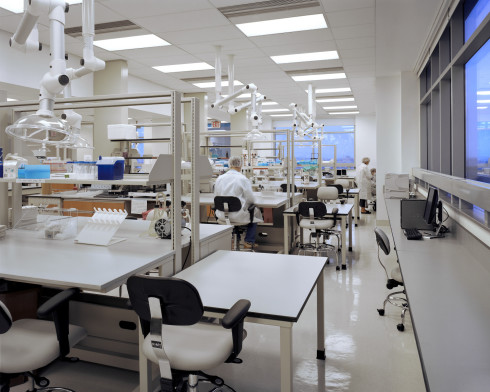
    The Office of the Chief Medical Examiner in New York City. Credit: http://www.perkinseastman.com/project_2400273_new_york_city_ocme_dna_forensics_biology_laboratory
    The Office of the Chief Medical Examiner in New York City.
    Credit: http://www.perkinseastman.com/project_2400273_new_york_city_ocme_dna_forensics_biology_laboratory

    What’s your main role at the OCME?

    At OCME I have a double role, being a Criminalist and being a research scientist. As a Criminalist I am examining the crime scene evidence for the presence of the biological material. I am involved in entire DNA testing process, analysis and interpretation of the results along with testifying in court as an expert witness on behalf of the District Attorney Office. As a research scientist I am helping developing more sensitive and effective methodologies for DNA testing process.

    Do you collaborate with similar organisations/institutions worldwide in the field of the criminal forensics ? Would you tell us more about your involvement within projects in the Office?

    OCME is an independent agency. Our collaborations are more involved in sharing scientific knowledge and experiences with other institutions that conduct forensic DNA testing worldwide. Many of our employees are also faculty members at New York City’s colleges, which allow us to extend our facility as a resource to accomplish graduate degree work for students at our research and development labs. The major focus of OCME is casework rotation. Criminalists, such as me, working on casework rotation aim to generate DNA profiles to identify the source of biological material found on crime scene evidence. Storing eligible DNA profiles in CODIS (Combined DNA Index System) which is primarily managed by FBI (Federal Bureau of Investigation), we are helping solving other crimes in reminder of NY state and other states of USA. As a research scientist I am co-investigator on an NIJ funded project (National Institute of Justice) where we are trying to minimize or eliminate mixtures via micromanipulation techniques as well as optimize testing method for biological materials that contain degraded or minute amounts of DNA.

    Finally, what are you currently working on? What’s your current projects and research about? In current project we are evaluating manual and robotic micromanipulation techniques to efficiently lift the cells from a piece of mock evidence and developing DNA testing method that displays higher level of sensitivity than traditionally used method, we are aiming to obtain database eligible DNA profiles.

    Thank you Lana for taking your time to talk with us! 

  • World authority leads ocean energy research

    World authority leads ocean energy research

    One of the world’s authorities on offshore oil spill countermeasures has taken the helm of CSIRO’s Wealth from Oceans National Research Flagship.

    Dr Ken Lee will head a multidisciplinary team of over 200 CSIRO scientists and technical staff to provide the science to support the healthy and sustainable coexistence of the ocean energy industry with all other marine industries and communities.

    Dr Lee, a Canadian, was formerly the Executive Director of Canada’s Centre for Offshore Oil, Gas and Energy Research, a Centre for Expertise in the Canadian Department of Fisheries and Oceans.

    He is internationally recognised for his expertise on the environmental impacts of offshore oil and gas production and oil spill counter-measures.

    Dr Lee led the Canadian contingent helping to deal with the 2010 Deepwater Horizon, BP oil spill in the Gulf of Mexico. He contributed to a recent report on the oil spill by the US National Research Council which noted the importance of understanding the wider economic and social impacts of the spill, in addition to immediate ecological and environmental damage.

    Dr Lee said Australia has the potential to lead the world in ocean energy research and setting environmental protection standards. To achieve this,
    his research team plans to increase its collaboration with the Australian and international oil and gas industry.

    “Offshore oil and gas will play a critical part in Australia’s future energy needs,

  • New study finds one in three jobs in Europe generated by IPR-intensive industries

    New study finds one in three jobs in Europe generated by IPR-intensive industries

    The European Commission welcomed the publication of the first-ever EU-wide study of the impact of Intellectual Property Rights (IPR) on the European economy in terms of GDP, employment, wages and trade.

    Carried out jointly by the Office for Harmonization in the Internal Market (OHIM) acting through the EU Observatory on Infringements of Intellectual Property Rights and the European Patent Office (EPO), the study finds that about 40% of total economic activity in the EU (some €4.7 trillion annually) is generated by IPR-intensive industries, and approximately 35% of all employment in the EU (77 million jobs) stems from such industries that have a higher than average use of IP rights. The report also finds that average remuneration in IPR-intensive industries is more than 40% higher than in other industries. 

    Internal Market and Services Commissioner Michel Barnier said: “I am convinced that intellectual property rights play a hugely important role in stimulating innovation and creativity, and I welcome the publication of this study. It will help us to further underpin our evidence-based policy making. What this study shows us is that the use of intellectual property rights in the economy is ubiquitous: from high-tech industries to manufacturers of sports goods, games, toys and computer games, all are making intensive use of not just one, but often several types of IP rights.”

    Benoît BattistelliPresident of the European Patent Office (EPO) said: “This report shows that the benefits of patent and other IPRs is not just economic theory. For innovative companies intangible assets have become extremely important. Especially for SMEs, but also research centres and universities, patents often open the door to capital and business partners. In order to remain competitive in the global economy, Europe needs to encourage even further the development and use of new technology and innovations.”

    António Campinos, President of the Office for Harmonization in the Internal Market (OHIM) said: “This study is the result of a detailed collaboration between experts drawn from different agencies and countries, using a transparent and replicable methodology. It tackles the fundamental question of the extent to which IPR-related industries matter to jobs, GDP and trade in the EU. We now have a clear answer. They do matter, they matter a lot.”

    The study, “Intellectual Property Rights intensive industries: contribution to economic performance and employment in Europe”, takes into account all the major IP rights: patents, trademarks, designs, copyrights and geographical indications. It focuses on the EU economy and covers a total of 321 IPR-intensive industries, identified as such either because they register more Intellectual Property Rights per employee than other industries, or because the use of IPR is an intrinsic characteristic of the industry’s activity. These industries were selected at EU-level, i.e. using EU-wide measures of IPR intensity.

    According to the report, about half of all EU industries are IP-intensive, with engineering, real estate, financial and insurance activities, manufacture of motor vehicles, retail, computers and pharmaceuticals among the top 20 IPR intensive industries in Europe. Another finding is that IP-intensive industries account for approximately 90% of the EU’s trade with the rest of the world.

    A list of all IPR-intensive industries is included in the Appendix to the report.

    This research follows on the heels of a similar study carried out in 2012 by the US Patent and Trademark Office together with the Economics and Statistics Administration, which resulted in comparable findings for the US economy. The share of employment and GDP in IPR-intensive industries is even higher in Europe than in the US.

    Further information:

    Study on the website of the European Patent Office

    Study on the website of the Office for Harmonization in the Internal Market (OHIM)