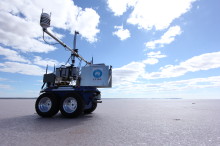
A prototype autonomous vehicle, or rover, developed by CSIRO is helping scientists improve the accuracy of Earth observation satellites that provide valuable data to our mining and agricultural industries.
Just as the Mars Rover Curiosity is gathering information about our neighbouring planet, CSIRO’s affectionately nicknamed ‘Outback Rover’ is helping to calibrate satellites that provide clues to Earth’s soil condition, mineralogy and vegetation.
Accompanied by researchers from Japan, China, Israel and France, CSIRO scientists recently took the rover prototype on a mission to Lake Lefroy – a huge salt lake in remote Western Australia – to see if they can automate the satellite calibration process.
Professor Arnold Dekker, Director of Earth Observation and Informatics at CSIRO, explains that this is where information gathered by satellites is matched against measurements taken on-ground and compared for accuracy.
“Satellite data is used for resource exploration, environmental monitoring and agricultural management such as soil mapping. So it must be regularly cross-checked to ensure that observations are accurate.
“This process is called vicarious calibration and is undertaken by ground crews who walk in grids or transects, taking measurements with hand-held devices known as spectrometers as satellites travel overhead,
For many, saunas are the epitome of health and wellbeing luxury. Originating in Scandinavia, they are now a staple in day spas and gyms around the world.
However, new health technologies are coming out all the time, many offering similar health benefits to saunas but often at inflated prices. The question is, are we better off sticking to the tried and tested benefits of saunas or should we be seeking out more advanced technologies? Here are the facts.
Health benefits of saunas
With a sauna’s dry heat reaching temperatures of around 80C, pushing skin temperature up to 40C within minutes, are these warm, cosy rooms actually good for you?
Studies by naturopathic physician, Dr Walter Crinnion, showed that sauna-induced sweating can help to lower blood pressure and assist with a range of chronic and acute health problems.
Sauna therapy for chronic heart failure
Several researchers and health practitioners praise the benefits of sauna therapy for a range of health problems.
A study by Takashi Ohori (2011) and colleagues found that repeated sauna use could help patients with chronic heart failure. Heart failure occurs when the heart can’t pump enough blood around the body, resulting in fatigue and shortness of breath. Saunas help to increase the heart’s ability to pump blood.
Common cold prevention
A study by Ernst et al (1990) found that regular sauna use could probably help reduce the prevalence of the common cold. Although the authors concluded that more research was necessary, it was a good step forward in potentially preventing the thousands of deaths that occur each year from the common cold, most of which are elderly patients.
Weight loss
There are varying opinions on the benefits of saunas for weight loss. Most people will lose approximately one pint of sweat during an average sauna session, which can give the illusion of almost immediate weight loss. However, this weight will go back on as soon as you consume any food or fluids (JAMA, 1981).
However, it can cause weight loss in another way. When the body is exposed to high heats, it causes the pulse rate to increase by 30 per cent or more. This causes an increase in metabolism, resulting in more calories being burned per minute than if you were sitting in front of the television, for example (Harvard University, 2005).
Your increased metabolic rate will also continue after the sauna should you then exercise, meaning a better result from a workout.
Muscle pain relief
When put in a warm environment, a body’s blood circulation is increased causing strained muscles to relax. After a workout, the heat of a sauna can help relax muscles and prevent the buildup of lactic acid and potential strains.
Flushes toxins
Toxins can build up in our bodies over time and one of the best ways to remove them is through deep sweating. While normal sweating will contain almost only water, deep sweating, which can be achieved in a sauna, may allow the release of chemicals such as lead, copper, zinc, nickel and mercury. These toxins get into the skin just by being surrounded by our everyday environment.
However, some argue that although you sweat a lot in a sauna, the toxins stay in the body. Professor Donald Smith from the University of California said that almost all toxins are excreted through urine and feces, and only 1 per cent through sweat (LA Times, 2008).
Neck and head pain reduction
New Zealand researchers found that saunas could help ease neck and head pain in chronic sufferers. The study, led by Dr Giresh Kanji, concluded that not only could sauna sessions minimise the intensity of a headache, but could shorten its duration too.
In his analysis, Dr Kanji said that saunas could be more effective than painkillers as they helped to treat the cause of the pain rather than mask it.
It’s the time of the month once more, when we look back and and remind ourselves of September’s variety of science and technology stories, news and articles covering space, health, biology, physics, education, and more. We hope you’ll enjoy these stories.
An international team of astronomers has used X-ray telescopes in space and ground-based telescopes, including two of CSIRO’s, to identify a pulsar that switches between emitting X-rays and emitting radio waves. This is the first direct evidence of one kind of pulsar turning into another.
An international team of astronomers using CSIRO radio telescopes and other ground and space-based instruments has caught a small star called a pulsar undergoing a radical transformation, described today in the journal Nature.
“For the first time we see both X-rays and extremely fast radio pulses from the one pulsar. This is the first direct evidence of a pulsar changing from one kind of object into another – like a caterpillar turning into a butterfly,” said Dr Simon Johnston, Head of Astrophysics at CSIRO’s Astronomy and Space Science division.
The cosmic drama is being played out 18,000 light-years away, in a small cluster of stars (M28) in the constellation of Sagittarius.
The pulsar (called PSR J1824-2452I) has a tiny companion star, with about a fifth the mass of the Sun. Although small, the companion is fierce, pounding the pulsar with streams of matter.
Normally the pulsar shields itself from this onslaught, its magnetic field deflecting the matter stream into space.
But sometimes the stream swells to a flood, overwhelming the pulsar’s protective ‘force field’. When the stream hits the pulsar’s surface its energy is released as blasts of X-rays.
Eventually the torrent slackens. Once again the pulsar’s magnetic field re-asserts itself and fends off the companion’s attacks.
“We’ve been fortunate enough to see all stages of this process, with a range of ground and space telescopes. We’ve been looking for such evidence for more than a decade,” said Dr Alessandro Papitto, the Nature paper’s lead author. Dr Papitto is an astronomer of the Institute of Space Studies (ICE, CSIC-IEEC) of Barcelona.
The pulsar and its companion form what is called a ‘low-mass X-ray binary’ system. In such a system, the matter transferred from the companion lights up the pulsar in X-rays and makes it spin faster and faster, until it becomes a ‘millisecond pulsar’ that spins at hundreds of times a second and emits radio waves. The process takes about a billion years, astronomers think.
In its current state the pulsar is exhibiting behaviour typical of both kinds of systems: millisecond X-ray pulses when the companion is flooding the pulsar with matter, and radio pulses when it is not.
“It’s like a teenager who switches between acting like a child and acting like an adult,” said Mr John Sarkissian, who observed the system with CSIRO’s Parkes radio telescope.
“Interestingly, the pulsar swings back and forth between its two states in just a matter of weeks.”
The pulsar was initially detected as an X-ray source with the European Space Agency’s INTEGRAL satellite. X-ray pulsations were seen with another satellite, ESA’s XMM-Newton; further observations were made with NASA’s Swift. NASA’s Chandra X-ray telescope got a precise position for the object.
Then, crucially, the object was checked against the pulsar catalogue generated by CSIRO’s Australia Telescope National Facility, and other pulsar observations. This established that it had already been identified as a radio pulsar.
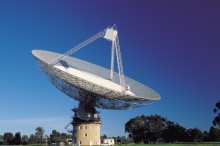
The source was detected in the radio with CSIRO’s Australia Telescope Compact Array, and then re-observed with CSIRO’s Parkes radio telescope, NRAO’s Robert C. Byrd Green Bank Telescope in the USA, and the Westerbork Synthesis Radio Telescope in The Netherlands. Pulses were detected in a number of these later observations, showing that the pulsar had ‘revived’ as a normal radio pulsar only a couple of weeks after the last detection of the X-rays.
The astronomers involved in these investigations work at institutions in Australia, Canada, Germany Italy, The Netherlands, Spain, Switzerland, and the USA.
Source and image: http://www.csiro.au/en/Portals/Media/Astronomers-find-missing-link-pulsar.aspx
The legendary Dodo bird was lost to the world in the 1600’s, when it was hunted to extinction on the island of Mauritius, but few Australians would realise that a flightless island bird here has narrowly avoided the same fate – thanks to an amazing story of dedication, skill and cooperation.
The Woodhen: A Flightless Island Bird Defying Extinction is a fascinating book from CSIRO Publishing, authored by renowned ornithologist Clifford Frith.
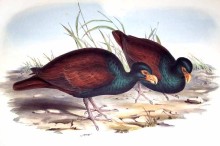
A native of the magnificent Lord Howe Island, the iconic local Woodhen (also known as the Lord Howe Rail) was at the very brink of extinction, with just 15 individuals found in 1980. Bold and risky actions were taken to save it.
“For millennia it fearlessly walked unmolested,” Mr Frith notes. “Within a mere 138 years of human settlement, the trusting and highly edible bird was all but gone from the face of the Earth – with as few as five breeding pairs still alive.”
Pristine Lord Howe Island was discovered in 1788 and was permanently settled in the 1830s, with the arrival of humans and rats wiping out many local birds. The book documents the various species driven to extinction – a fate that almost befell the Woodhen.
The Woodhen examines the origins of Lord Howe Island and its wildlife, as well as the origins, evolution and extinction of flightless rails.
The book details our early knowledge of the Lord Howe Island Woodhen, the decimation of its population, and the bold management plan that is slowly reviving the species.
Just as humans took the Woodhen to the brink of extinction, it has been intrusive and intensive methods that have come to the rescue – in the form of a smart and dedicated team.
Mortality in the wild remains a significant issue and Frith argues that even more should be done, by setting up breeding programs on predator-free islands and at reputable institutions. For despite great gains, the Woodhen remains in danger.
The Woodhen: A Flightless Island Bird Defying Extinction Author: Clifford B. Frith
Source: CSIRO media. Illustration By John Gould (1804-1881).
Schemes that offer economic incentives for growing trees for carbon present an opportunity to reverse trends in land clearing but also to restore ecosystem services – such as pest control, pollination, soil and water conservation.
‘Best practice’ carbon farming that considers more than just the carbon in trees is needed if the full benefits of trees in the landscape are to be realised by farmers, landholders, and the community.
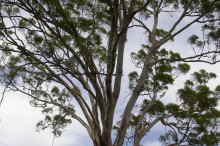
CSIRO-led research confirms that tree plantings in rural lands have significant potential to remove carbon dioxide from the atmosphere and, if done well, can provide a stream of other benefits to farmers, local communities and the environment.
“Schemes which offer economic incentives for growing trees for carbon present an opportunity to reverse trends in land clearing but also to restore ecosystem services – such as pest control, pollination, soil and water conservation – that provide important benefits to farmers and the broader community,” according to CSIRO’s Dr Brenda Lin.
Past removal of trees have disrupted many natural processes such as refuges for native insects that control pests, pollination, carbon sequestration, organic matter accumulation and water and soil conservation that are important for sustainable farming and the environment.
“The ability of carbon tree plantings to restore some of these other benefits that support agricultural production may be a key factor in encouraging farmers and landholders to take up this type of carbon farming,” Dr Lin said.
“Land-use models show that policies aimed solely at maximising carbon storage may not produce additional agricultural and environmental benefits and may even produce unwanted outcomes for farmers, landowners and communities.
“For example, studies of past revegetation in agricultural landscapes show that in some locations intensive single-species (or monoculture) plantations can affect water flows, increase invasive pests and lead to biodiversity loss, be fire prone and have poor growth rates. Poorly located vegetation could reduce the availability of land for food production.”
Alternatively, there are many opportunities for tree plantings, if planned and implemented properly, to provide additional benefits to the farmer beyond just carbon.
“By revegetating unused, marginal or degraded cropping land, using multiple species of trees and shrubs, we could see improvements to pest control, pollination and water quality, increased wind protection and reduced soil erosion and salinity,” Dr Lin said.
“For example, we know that remnant native vegetation patches that currently persist in agricultural landscapes, if they are well managed and contain few weed species, support a range of insect and spider predators and parasitic wasps that can attack pests of grain crops.”
The benefits for local communities and the public could include increased water quality, reduced pesticide use, more habitat for species such as birds, and other cultural benefits.
The research, published in the American BioScience journal, highlights the need to better understand these private, public and shared benefits and tradeoffs so that future policies and initiatives encourage ‘best practice’ tree plantings that maximise the positives while also storing carbon.
It appears NASA satellites have not accurately estimated the important life-giving microscopic phytoplankton population that lives in the Southern Ocean and Antarctica.
Could life really exist on other planets? The most positive scientific answer we can offer is: well, maybe, but we do not yet have enough evidence for or against.
A new nano material with applications that could include reducing condensation in airplane cabins and enabling certain medical tests without the need for high tech laboratories has been developed by researchers at the University of Sydney.
A HIV vaccine, known as SAV001-H has shown promising results in an early clinical trial, with no adverse effects reported and importantly, a significant increase reported in HIV specific antibodies in participants who received the vaccine. In this trial, 33 HIV positive participants were randomly allocated to one of two groups: half into a treatment group receiving the vaccine and half into a placebo group who did not receive the vaccine. The participants were followed up at regular periods, testing safety of the vaccine and antibody response over a one year period. The vaccine has been developed by Dr C. Yong Chan and his team at the University of Western Ontario and has been licensed for commercialisation by the biotechology company Sumagen.
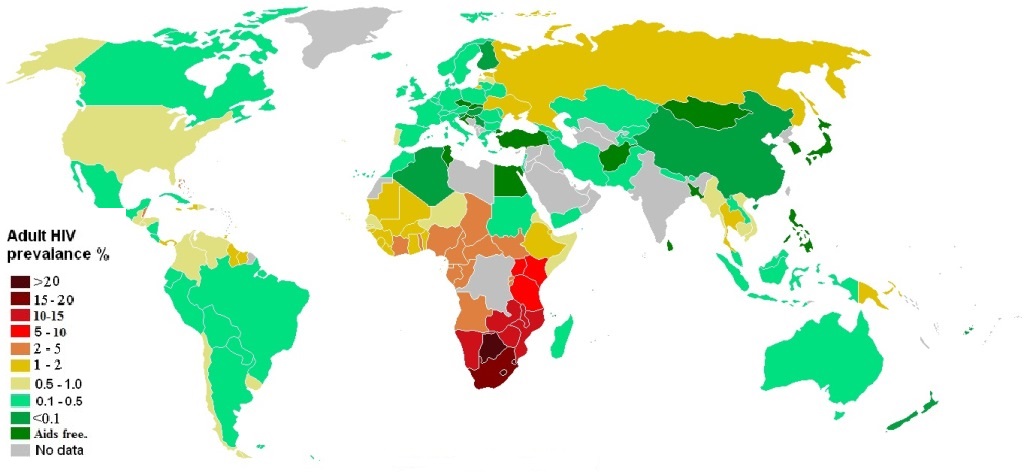
This is welcome news for a disease which killed an estimated 1.7 million people in 2011 (WHO, 2013). Furthermore, there are an estimated 34 million people around the world living with HIV/AIDS, and the disease continues to have a devastating impact in Sub-Saharan Africa where up to a quarter of the population in countries such as Botswana, Lesotho and Swaziland are infected (WHO 2013; UNAIDS 2013). While great strides in treatment of HIV; via the development of antiretroviral (ART) medications, have been made by extending the time it takes for HIV to develop to AIDS, ART treatment is not yet available to all, particularly in the poorest nations; and of course, treatment is much less optimal then prevention of HIV in the first place.
Worldwide adult HIV Prevalence (Click for larger)
The long road to effective HIV vaccines
However development of successful HIV vaccines has proven to be highly elusive, due in part to the rapid mutation rate of HIV, these mutations generating a diverse population of quasi-species of HIV over the length of the infection period – the immune system, itself the target of HIV, is simply not able to keep up (Ackerman and Alter, 2013). This immense genetic diversity of HIV has meant that targeting HIV with effective, universal vaccines has been particularly difficult.
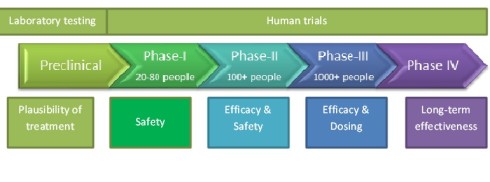
This leads to a cautionary note that must be taken regarding SAV001-H; this was a small, very early trial of this particular HIV vaccine. These early trials are referred to as Phase 1 trials, meaning that its primary focus was on assessing the safety of vaccine, with efficacy or effectiveness assessed only as a secondary objective (see graphic, below). Phase 2 and 3 trials are planned next and it is these trials which are particularly focused on assessing the effectiveness of the vaccine to prevent HIV infection in large numbers of HIV negative participants at high risk of contracting HIV. Furthermore, other promising HIV vaccines have passed through early Phase 1 trials, only to show in later trials no significant efficacy. An example of this was a highly anticipated STEP trial, which was a large Phase 2 trial enrolling 3,000 high risk individuals randomised into a vaccine or placebo group. The vector based vaccine used in this trial failed to show any effect on reducing risk of infection and indeed those receiving the vaccine appeared to be at greater risk of contracting HIV (HTNV, 2013).
Clinical trial phases
Thus some of the early media reports for SAV001-H which have been mentioning ‘eradication’ are very premature and paying scant heed to the long (and sometimes disappointing) road that this vaccine must pass through with its coming Phase 2 and 3 trials, as demonstrated above with the example of the STEP HIV vaccine trial. These promising early results from this latest HIV vaccine trial must be tempered by the historical difficulties in conducting successful HIV vaccine trials.
Cautious optimism
Despite the very real need for caution at this early stage, there are several reasons why many in the health community are particularly optimistic about SAV001-H. This optimism is largely due to the fact that SAV001-H takes a new approach to HIV vaccine design as it uses whole killed HIV viruses. Previous HIV vaccine strategies have used other strategies such as subunit vaccines which basically introduce important proteins (called antigens) to the body to induce a specific immune response, or vector based vaccines to introduce genetic material from the HIV virus via another ‘carrier’ virus; both approaches proving disappointing so far (Sumagen, 2013).
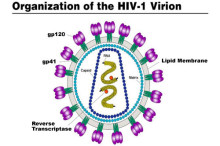
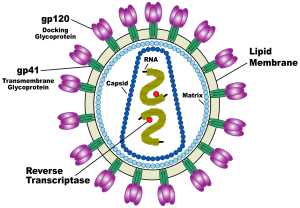
HIV structure: gp120 and gp41 are essential in fusion to immune cells and subsequent invasion
For SAV001-H, the HIV-1 virus is genetically engineered by deleting the activity of specific genes involved in the disease causing process (pathogenicity) and then chemically treated and bombarded with gamma radiation to disable its ability to multiply within human cells (virulence) (Sumagen, 2013). This way, the immune system will still detect and mount a response against the invading virus, but the virus is no longer able to cause disease. The early data from the Phase 1 trial are particularly encouraging as it has been reported that vaccination with SAV001-H produced large increases in two particular antibodies specific for the p24 envelop antigen and gp120 surface antigens of HIV-1 (Western News, 2013).
While gaining plenty of attention, SAV001-H is only one of multiple vaccines in development; a major focus of several other research efforts, are vaccines designed to induce potent antibodies, known as broadly neutralizing antibodies (bNAbs), that are able to potentially block HIV infection (Korber and Gnanakaran, 2011). Promising early research into vaccines that may be able to effectively induce these bNAbs and provide effective immunity against HIV infection have provided another boost to HIV vaccine development efforts. So there is certainly reason to be hopeful about SAV001-H, but we need to mix this hope with a healthy dose of caution at this stage. Also, it is worth noting that any effective HIV vaccines will likely be just one, albeit very important, part in a multitude of preventative strategies, including sex education, male circumcision, microbiocide gels and prophylactic antiretroviral therapies which will result in the effective prevention of HIV infections worldwide.
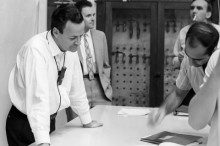
Bring out your bongo drums and beat in celebration of the entirety of Volume One of The Feynman Lectures is available online thanks to a partnership between Caltech and The Feynman Lectures Website making this possible. Richard Feynman was a brilliant physicist reknown for making physics and indeed science accessible to people outside of the scientific community. He also played the bongo drums.
This work is based lectures Feynman delivered at Caltech to undergraduate physics students. Fear not though because the words are easy to read and understand. In my opinion it is a very good example of science communication. It’s also an excellent resource material for teachers and students. The lectures have been compiled into three volumes of books before but now Volume One is freely available and designed to be able to be read on any device with the ability to zoom in on figures and equations.
Palaeontologists have applied physics to show how feathery dinosaurs adapted to flight. There is growing acceptance that birds evolved from small feathered dinosaurs but no one knows how. Researchers from the University of Southampton built a full scale model of Microraptor, a four winged dinosaur, and put it to the test in a wind tunnel.
The blue whale is the undisputed largest known living animal on the Earth ever. However, it is not the largest known living organism ever. Confused? MinuteEarth took time to explain in the latest video offering.
Russell Foster is a circadian neuroscientist: he studies sleep and its role in our lives, examining how our perception of light influences our sleep-wake rhythms. And he asks: What do we know about sleep? Not a lot, it turns out, for something we do with one-third of our lives. In this talk, Foster shares three popular theories about why we sleep, busts some myths about how much sleep we need at different ages — and hints at some bold new uses of sleep as a predictor of mental health.
Russell Foster studies sleep and its role in our lives, examining how our perception of light influences our sleep-wake rhythms. He and his team at the University of Oxford are exploring a third kind of photoreceptor in the eye: not a rod or a cone but a photosensitive retinal ganglion cell (pRGC) that detects light/dark and feeds that information to the circadian system. As Foster explains: “Embedded within our genes, and almost all life on Earth, are the instructions for a biological clock that marks the passage of approximately 24 hours.” Light and dark help us synchronize this inner clock with the outside world.
The research on light perception hits home as we age — faced with fading vision, we also risk disrupted sleep cycles, which have very serious consequences, including lack of concentration, depression and cognitive decline. The more we learn about how our eyes and bodies create our sleep cycles, the more seriously we can begin to take sleep as a therapy.
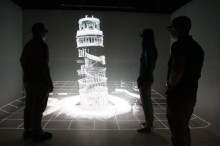
Australian researchers have created the first ever interior 3D map of Italy’s iconic Leaning Tower of Pisa by using a breakthrough mobile laser mapping system.
Developed by the CSIRO, Australia’s national science agency, the Zebedee technology is a handheld 3D mapping system incorporating a laser scanner that sways on a spring to capture millions of detailed measurements of a site as fast as an operator can walk through it. Specialised software then converts the system’s laser data into a detailed 3D map.
While the tower’s cramped stairs and complex architecture have prevented previous mapping technologies from capturing its interior, Zebedee has enabled the researchers to finally create the first comprehensive 3D map of the entire building.
“This technology is ideal for cultural heritage mapping, which is usually very time consuming and labour intensive. It can often take a whole research team a number of days or weeks to map a site with the accuracy and detail of what we can produce in a few hours,
By Heinz Schandl, Senior Science Leader and Thomas Wiedmann, Associate Professor at University of New South Wales
For some time Australians have been considered among the biggest consumers of natural resources in the world. According to previous studies, we each get through 70 tonnes of materials every year. This is way higher than other developed nations. But could something be influencing these figures?
Traditional analysis of international consumption of natural resources suggests countries such as Japan and the United Kingdom are consuming less as their economies grow, suggesting growth and resource use can be decoupled. Unfortunately, a closer look shows some countries are simply off-shoring the resource consumption they use to feed their growth.
Our new study shows something is missing from traditional analysis: the upstream natural resource requirements of imports and exports. With these included, the picture of national resource consumption changes dramatically.
Fossil fuels, minerals, ores, timber and food are critical to the global economy. The methods used so far to quantify natural resource use measure the flow of materials, energy, waste and emissions within a nation or region. This delivers an estimate for domestic material consumption: the amount of material and energy flow per person for that nation or region.
By this measure, Australia is one of the largest users of natural resources in the world. Japan has a domestic material consumption of around 10 tonnes per person, and the United Kingdom is even lower, at around 8 tonnes per person.
Measured this way, it seems reasonable to claim nations such as Japan and the UK are finally managing to decouple economic growth from resource consumption – something of a holy grail achievement as we face a resource-restricted future.
But the claim is based on misleading data. The domestic material consumption approach is flawed because it fails to account for two very important factors: the resource requirements of imports and exports.
This difference between consumption-based and territorial accounting is well known for greenhouse gas emissions. We know that you can count a country’s emissions either by looking at emissions generated in the country, or emissions generated in creating things that the country consumes. In our new paper published in PNAS, we now replicate this method for total use of primary resources.
Caltech and The Feynman Lectures Website have joined forces to create an online edition of Richard Feynman’s famous lectures on physics. First presented in the early 1960s as part of a two-year introductory physics course given at Caltech, the lectures were eventually turned into a book that became a classic reference work for physics students, teachers and researchers.
Created with HTML5, the new site gives readers access to “a high-quality up-to-date copy
This article originally appeared on Know The Cosmos. I will be re-posting excerpts here for Australian Science with added commentary over the coming weeks!