Blog

  • The Best of Australian Science: August 2013

    The Best of Australian Science: August 2013

    This month, we’d like to welcome our new writer Buddhini Samarasinghe, who is a molecular biologist, with experience in cancer research. Some of her upcoming stories will be bringing us fascinating contributions about the molecular mechanisms of cancers.
    As well, here is our usual monthly roundup.  A wonderful variety of science and technology stories, covering astronomy, education, technology, health, environment, and more!
    Stay curious and scientifically passionate!


    Life of an epidemic: Australian dengue by Charles Ebikeme

    It is always a bad sign when crowds gather. On the morning of Wednesday March 21 in the year 1900, a crowd began to gather in Sydney. A thousand people had gathered outside the offices of the Board of Health in Macquarie Street. They had gathered because bubonic plague had broken out. People had already started to die from the Black Death. Panic was the only course of action.

    The Government had stockpiled Haffkine’s serum (named after the Russian bacteriologist that developed it in a makeshift laboratory in a corridor of Grant Medical College) — a new plague vaccine, and had used it to inoculate front

  • CSIRO telescope marks 25 years of success

    CSIRO telescope marks 25 years of success

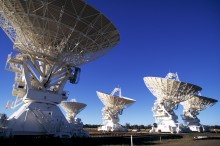
    One of the world’s most successful astronomy observatories, CSIRO’s Australia Telescope Compact Array near Narrabri, NSW, turns 25 years of age on 2 September.

    The Universe is a huge natural laboratory and astronomers study it to observe nature at its most extreme.

    “Every possible experiment is being played out somewhere in the Universe,” said Dr Jamie Stevens, CSIRO’s Senior Systems Scientist for the Compact Array.

    The Compact Array has given us the first 3D picture of the radiation belts around Jupiter … the first good evidence linking exploding stars with flashes of gamma rays … and the first image showing how gas churns in interstellar space.

    The telescope is so sensitive that it would see a mobile phone on the Moon as a very strong radio source. It can be pointed with an accuracy of better than two arcseconds — about the width of a finger seen one kilometre away.

    The Compact Array is to astronomy what the Australian swimming team is to sport: a world-class achiever for many years. It is among the top three telescopes of its kind by both publication numbers and citations. After the race, it would be standing on the podium!

    About 500 scientists from around the world use the telescope each year.

    The telescope has become better and better over time, as upgrades have made it more sensitive to faint radio signals and allowed it to capture more of the radio spectrum.

    In 2012 Compact Array data led to 76 refereed science papers — more than in any previous year of the telescope’s history.

    “I never tire of observing with the Compact Array,” Dr Stevens said.

    “It’s a factory for discovery.”

    The telescope was funded as a project for Australia’s Bicentennial in 1988, and was opened by the then Prime Minister, Bob Hawke. It boosted Australia’s international standing in radio astronomy, enabling CSIRO to develop the Australian SKA Pathfinder in Western Australia and Australia to win the right to co-host the international Square Kilometre Array telescope.

    CSIRO will celebrate the anniversary with a public Open Day at the telescope site on 1 September, then a formal ceremony and a scientific meeting.

    Source.

    The Compact Array is a set of six dishes that work together as one much larger radio telescope. It lies between the towns of Narrabri and Wee Waa in northwest NSW, about 500 km from Sydney, at CSIRO’s Paul Wild Observatory.

    Black holes, exploding stars, magnetic fields in space, galaxies at the edge of the observable Universe … the Compact Array studies them all.

  • Tear Down These Walls

    Tear Down These Walls

    This article originally appeared on the Nature Soapbox Science blog. I am excited to be joining the Australian Science team, and wanted to re-post this article here as it encompasses my approach to science communication, and will set the tone for future posts from me. 

    On a cold weeknight in late November, 1660, a dozen men gathered in the rooms at Gresham College in London to found the Royal Society. Not all of them had a scientific background; some of them were lawyers, politicians, merchants and philosophers. The one thing they all had in common was a thirst for knowledge. The formation of the Royal Society was the coming together of a group of curious gentlemen determined to promote the accumulation and dissemination of useful knowledge. It represented a paradigm shift in the practice of science. The Royal Society invented scientific publishing and peer review, two major developments that redefined science from an amateur hobby to the rigorous beast that it is today.

    Two remarkable characteristics distinguished the Royal Society from the other nascent scientific societies of its time. It was genuinely international, and being of noble birth was not a requirement for membership. It aspired to the ideal of meritocracy. External factors such as nationality, race, gender and wealth did not matter. This basic premise of science, that it is and must be open to everybody, began with its founding and should continue today. While the ability to practise science now requires a formal education in scientific theory and practice, access to science should not depend on nationality, wealth, geographical location or scientific training.

    Two things stand in the way of public access to science. The first is obviously the paywall: the second is something that I describe as the ‘jargon-wall’. The language of science is precise and meticulous; it has to be. Somewhere along the way, it has also become esoteric, foreign and inaccessible to the public by existing only within the confines of the ivory tower of academia. This has contributed to the chasm of scientific ignorance we see today, and it has created a deep divide that could impede human progress.

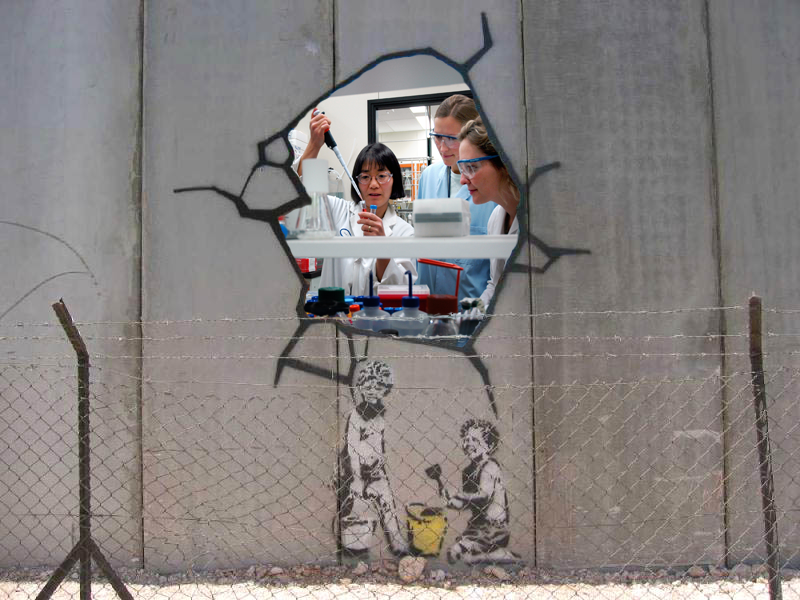
    Science shouldn't be kept behind walls. Image credit: Scott Lewis.
    Science shouldn’t be kept behind walls. Image credit: Scott Lewis.

    So how do we bridge that divide? Open access publications can address the paywall, by allowing anyone with an Internet connection, anywhere in the world, to access scientific discoveries. Open access is not just about giving scientists free access to the science; it is also about giving the public access to the science. However, the jargon-wall is still present, and it prevents ordinary people from understanding the research. Ask yourself, how many non-scientists would understand the average paper published in a peer-reviewed open access journal?

    Open access is meaningless without a scientist to interpret the findings. Social media can be a powerful tool for science outreach because it allows a general member of the public to contact and query scientists directly. And when scientists respond, the ivory tower is torn down. This engagement is key to breaking through the jargon-wall. The open access debate is a separate issue, but I want to make the point that open access by itself is not enough to make science accessible to the public.

    As scientists, when we engage with the public, the benefits reach far and wide. The primary benefit is of course that the public gets to share and be a part of the adventure that is science. The secondary but equally important benefit is the windfall profits of educating the public. The anti-science movement, including (but sadly not limited to) anti-vaccinationists, climate change deniers, evolution deniers and pseudoscience believers, feeds on ignorance. By providing access to the science, by breaking through both the paywall and the jargon-wall, we reduce that pool of ignorance that the anti-science movement relies on. By getting the public involved in the scientific adventure, we defang the anti-science movement. As a tertiary benefit, it gives us, the scientists, a much needed dose of perspective. All too often we despair over a rejected manuscript, an unsuccessful grant application, or a botched Western blot. I know I do. We forget what we love about science. By engaging with the public, they can be introduced to the wonder, while we, the scientists, are reminded of it.

    As an example, I recently came across a fascinating piece of research, published in PLOS Biology, about how a dying nematode worm displays a burst of intense blue fluorescence, generated within the intestinal cells as part of the necrotic cell death pathway. The paper was titled “Anthranilate Fluorescence Marks a Calcium-Propagated Necrotic Wave That Promotes Organismal Death in C. elegans

  • Connectomics: a window to the mind

    Connectomics: a window to the mind

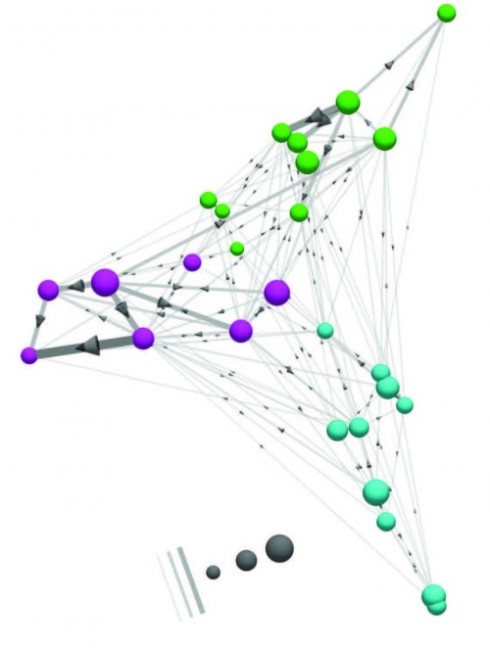
    The connectome module as a 3D graph. Cell types with stronger connections are positioned closer to each other, using an algorithm. Three spatially segregated groups are observed that closely match the pathways identified through clustering (colouring of spheres). The dominant direction of signal flow is oriented into the page.
    Connectomics as a 3D graph. Cell types with stronger connections are positioned closer to each other, using an algorithm. Three spatially segregated groups are observed that closely match the pathways identified through clustering (colouring of spheres). The dominant direction of signal flow is oriented into the page.

    The human brain has 100 billion neurons, connected to each other in networks that allow us to interpret the world around us, plan for the future, and control our actions and movements. Mapping those networks, creating a wiring diagram of the brain could help scientists learn how we each become our unique selves. Understanding the brain and all its connections is Connectomics – a word soon to become as familiar as ‘genetics’.

    In three papers appearing in Nature, scientists report their first step toward this goal: Firstly using a combination of human and artificial intelligence, they have mapped all the wiring among 950 neurons within a tiny patch of the mouse retina. While a second group look at a classic problem of neural computation – the detection of visual motion – in the eye of a fruitfly.

    The eye of the mouse

    The retina is technically part of the brain, as it is composed of neurons that process visual information. Neurons come in many types, and the retina is estimated to contain 50 to 100 types, but they’ve never been exhaustively characterised. Their connections are even less well known. Neurons in the retina are classified into five classes: photoreceptors, horizontal cells, bipolar cells, amacrine cells and ganglion cells. Within each class are many types, classified by shape and by the connections they make with other neurons.

    In this study, the research team focused on a section of the retina known as the inner plexiform layer, which is one of several layers sandwiched between the photoreceptors, which receive visual input, and the ganglion cells, which relay visual information to the brain via the optic nerve. The neurons of the inner plexiform layer help to process visual information as it passes from the surface of the eye to the optic nerve.

    By mapping all of the neurons in a 117-micrometre-by-80-micrometre patch of tissue, researchers were able to classify most of the neurons they found, based on their patterns of wiring. They also identified a new type of retinal cell that had not been seen before. To map all of the connections in this small patch of retina, the researchers first took electron micrographs of the targeted section generating high-resolution three-dimensional images of biological samples.

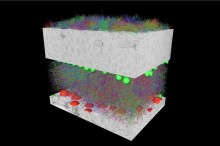
    950 neurons in a block of mouse retina, reconstructed from serial block-face electron microscopy data by the students. Spheres indicate the cell bodies (ganglion cells: blue, amacrine cells: green, bipolar cells: orange, photoreceptors: gray). “Skeleton
</p>
</div>
			<div style=

  • Weekly Science Picks

    Weekly Science Picks

    It’s that time of the week again. Time for some science-y goodness from around the globe!!

    NASA Spitzer Telescope celebrates 10 years in space!

    Ten years ago the Spitzer Space Telescope was launched about a Delta II rocket from Canaveral, Florida.  Spitzer is an infrared telescope and is the fourth of the NASA’s four Great Observatories in space, Hubble, Chandra, Compton and Spitzer.

    Precision atomic clock sets new record

    The most precise clocks in the world have been built in the US.  Two clocks made from ytterbium (serioulsy I’ve not heard of this element before!) and could be used for technological advancements beyond timekeeping, such as navigation systems, magnetic fields and temperature.  Apparently the clocks’ ticking rate varies less than two parts in one quintillion, or 10 times better than any other atomic clock. Sounds great! But does it stop me being late for work?

    NASA prepares for LADEE launch

    The Lunar Atmosphere and Dust Environment Explorer (LADEE) is a robotic mission that will orbit the moon to gather detailed information about the structure and composition of the thin lunar atmosphere and determine whether dust is being lofted into the lunar sky.  LADEE will help us better understand the moon, and other objects including asteroids and other planetary moons.

    Want to boost your testosterone level? Try chopping wood…

    A new study by the Institute of Social, Behavioural and Economic Research at the University of California, Santa Barbara has found that chopping wood to clear land and feed the family produces more testosterone in men than competitive activities like sport.

    Plankton may spread oyster herpes virus

    Plankton may be spreading a herpes-like virus that has been devastating Pacific oyster farms in countries ranging from France, UK, Spain and the US.

    Bacteria can cause pain on their own

    Bacteria can directly trigger the nerves that sense pain, suggesting that the body’s own immune reaction is not always to blame for the extra tenderness of an infected wound.

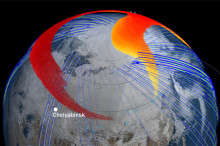
    Map tracks path of dust plume from Russian Chelyabinsk meteor

    Watch this video that shows the dust path left behind the 11,000-metric-ton meteor as it ripped through Earth’s atmosphere on February 15, 2013.


  • Space Open Day at the Canberra Deep Space Communication Complex

    Space Open Day at the Canberra Deep Space Communication Complex

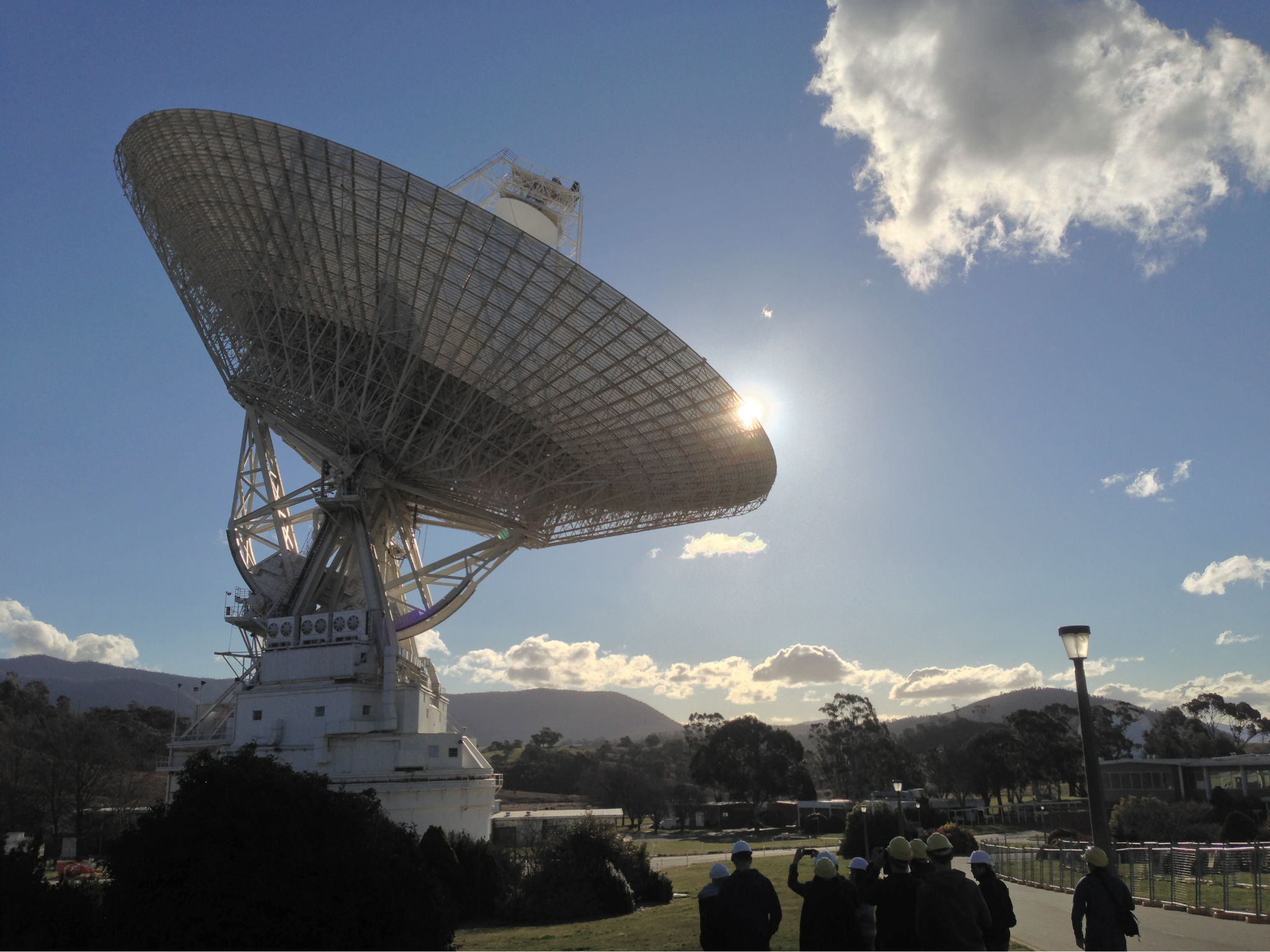
    The Canberra Deep Space Communication Complex (CDSCC), located on the rural outskirts of Canberra at Tidbinbilla, is one of only three NASA deep space tracking stations spread around the globe. On Sunday 18th August, as part of National Science Week they held their biennial ‘Space Open Day‘, affording a rare opportunity for visitors to tour areas of the facility that are normally off-limits to the public. My partner and I have recently joined the ranks of volunteers at CDSCC, and Space Open Day was to be our first outing in that role, along with a small team of new and long-time volunteers.

    Our hour-long trek to the facility started bright and early (for a Sunday) in order to catch the volunteer briefing before the gates opened at 9am. Briefing done, it was time to head ‘front of house’ to greet the incoming visitors and attend to our rostered duties. Throughout the day, visitors were able to hop on a bus tour of the entire complex, join a guided walking tour of “the big dish” (DSS-43), and complete a self-guided walk to the dish for fantastic photo opportunities. In addition, the Visitor Centre displays, video presentations, and hands-on computer terminals were available as normal.

    Guided walking tour of DSS-43
    A CDSCC staff member explains the technology & history behind DSS-43 to a tour group on Space Open Day

    Special talks were conducted throughout the day, with Education & Outreach Manager Glen Nagle first talking about CDSCC’s crucial role in the recent launch and landing of the Mars Science Laboratory, ‘Curiosity’, on Mars. CSIRO held a ‘Tweetup’ for the launch of Curiosity in November 2011, and a followup public event for the audacious landing in August the following year. (While guests were enthralled watching the Curiosity mission unfold, CDSCC staff were hard at work receiving telemetry and tracking data direct from the spacecraft and relaying it to Mission Control at NASA’s JPL in Pasadena, California.) Later in the day, Mike Dinn gave a talk on the Apollo missions. Mike was a technician at Honeysuckle Creek Tracking Station during the Apollo era, and it was a real treat for centre visitors to be able to hear about that iconic period of spaceflight from someone who actually worked on the missions.

    Bus tours of the complex ran every 20 minutes for the entire day. Despite having a fleet of three buses on rotation, there was a queue for the tours all day—attendance for the day was just under 3,000 visitors, by far the largest turnout for any event at the complex. Operational staff from the centre volunteered their time to act as tour guides, providing behind-the-scenes insights into the ongoing and historical operations of the complex. The guided walking tours of the 70m dish, DSS-43, were also incredibly popular, with people happily queueing for over half an hour to hear about the engineering, technology, and history of the large dish and the whole complex. Again, current and former CDSCC staff were on hand to provide a wealth of technical information.

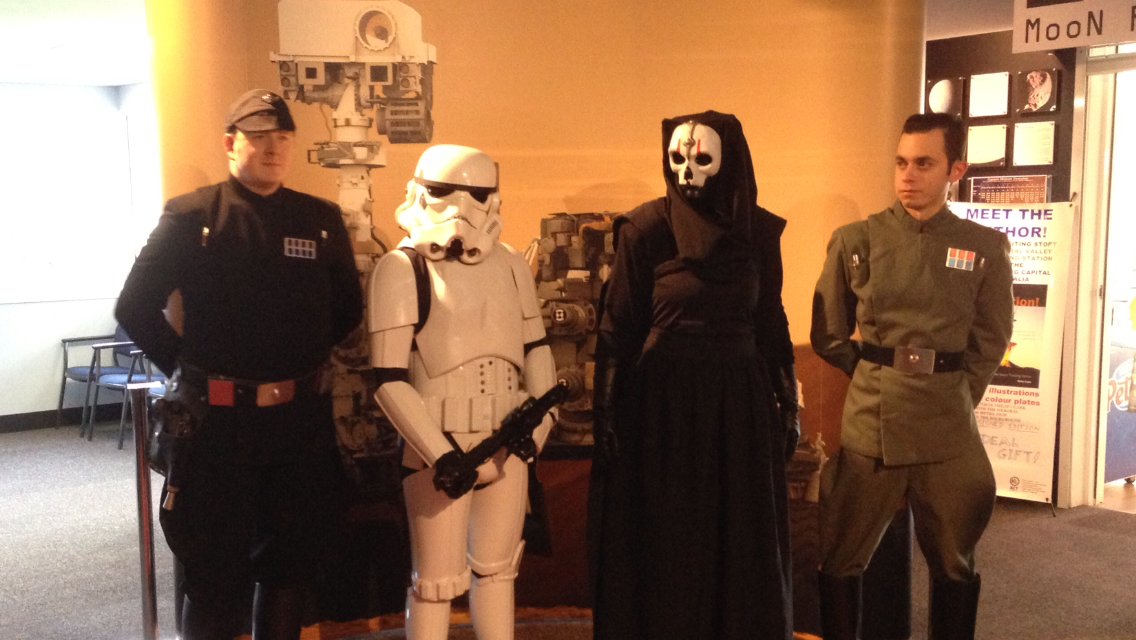
    Adding to the excitement for the young geeks-in-training visiting CDSCC on the day were special appearances by a number of representatives from the Galactic Empire, who assured us that they were on a “routine inspection tour” of the facility. I do believe that they consider the Communication Complex to be an Empire outpost under their control—and I wasn’t about to be the one to risk contradicting them! In all seriousness though, the members of the 501st Legion who attended were fantastic, and continued the long tradition of science fiction helping to inspire the next generation of real-world scientists and engineers.

    501st Legion at CDSCC
    Darth Nihilus, Imperial officers & Stormtrooper from the 501st Legion NSW/ACT Garrison survey their ‘outpost’

    Glen Nagle and his small team (Korinne McDonnell and Leanne George) run the CDSCC Visitor Centre—which is open 364 days of the year—as well as all of the Education and Outreach programmes on a modest budget. That they were able to promote and smoothly stage an event that proved to be wildly popular with the public is a testament to their passion and dedication to the mission of CDSCC and to science communication and outreach in general.

    For myself and the other volunteers, the day was quite tiring but immensely enjoyable. How often do you get a chance to take people on tours of a deep space tracking station, and spend time chatting to members of the public about robotic and human spaceflight, physics and astrophysics, cosmology, and radio astronomy? I’m sure that there are some people for whom that sounds like a painful day, but for myself and the other volunteers it was pretty close to Nerdvana.

    Explore further
    You can follow the Canberra Deep Space Communication Complex on Twitter: @CanberraDSN


    Full disclosure: Jessica is a volunteer at the CDSCC


  • The Forgotten Home of Coffee

    The Forgotten Home of Coffee

    Coffee is one of the world’s favourite drinks, one of the most important commercial crop-plants, and the second most valuable international commodity; Arabica coffee is considered to produce the finest coffee beans. Production of coffee helps support the livelihood of 25 million farming families around the world and it is estimated that around 32 pairs of hands are involved in bringing coffee from the plantation to the cup.

    A study conducted by scientists at the Royal Botanic Gardens, Kew, in collaboration with scientists in Ethiopia, reports that climate change alone could lead to the extinction of wild Arabica coffee (Coffea arabica) well before the end of this century. Wild Arabica is considered important for the sustainability of the coffee industry due to its considerable genetic diversity.

    The Arabicas grown in the world’s coffee plantations are from very limited genetic stock and are unlikely to have the flexibility required to cope with climate change and other threats, such as pests and diseases. In Ethiopia, the largest producer of coffee in Africa, climate change will also have a negative influence on coffee production. The climate sensitivity of Arabica is confirmed, supporting the widely reported assumption that climate change will have a damaging impact on commercial coffee production worldwide. These are worrying prospects for the world’s favourite beverage – the second most traded commodity after oil, and one crucial to the economies of several countries.

    This film was produced as part of Kew Gardens’ IncrEdibles festival; a celebration of fascinating edible plants which runs until September 1st, 2013.

    Find out more at: http://www.kew.org/incredibles

    Source and image.


  • Hyperloop – A Reality for Commuters?

    Hyperloop – A Reality for Commuters?

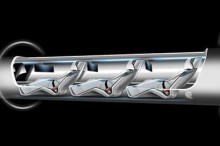
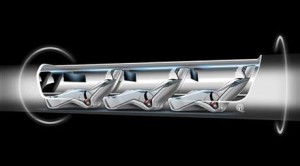
    Hyperloop concept. Via AP Photo/Tesla Motors
    Hyperloop concept. Via AP Photo/Tesla Motors

    As many of you may have heard, Elon Musk – founder of Tesla Motors, PayPal and SpaceX – released his plans for an extraordinary new mode of transportation, the Hyperloop.

    Whether they are ‘his’ plans, and if it is a ‘new’ idea, is up for debate. But we’ll leave it there and focus on the idea itself.

    So what is the Hyerloop? Remember those pneumatic tubes that transport capsules stuffed with paperwork in older buildings or drive-thru banks? That’s essentially what it is, a capsule moving through a tube. You would enter this capsule (the claustrophobic might want to find an alternative means of commuting), settle in, and then a force of acceleration would blast you through the tube. The capsules would be pulled down the line by magnetic attraction. Each capsule floats on a cushion of air, like a puck on an air hockey table. To reduce friction, a fan located at the front of the capsule would suck air to the rear in the already nearly air-free tube, creating a turbulence free ride to your destination. The system brings to mind that of Walt Disney’s Tomorrowland.

    And will it work? Is it feasible?

    Marc Thompson, a professor of electrical engineering at Worcester Polytechnic Institute in Massachusetts told ABC News that the core principles behind the Musk design should work, but travelling in pressurized tubes while encased in a pod went beyond core principles.

    Ernst Frankel, an emeritus mechanical engineering professor at MIT (who also designed a tube-based high-speed public transit system in the mid ‘90s linking Boston to New York, and some might say where Elon Musk took inspiration for his idea) said the over 700 MPH speed Musk proposes runs risks. While trains have broken the sound barrier, we still don’t run passenger trains above that speed.

    But can it actually be built?

    Sure, it could be built, but I’m not sure if any of the barriers or obstacles Musk’s system might encounter were considered in this pie-in-the-sky presentation. First, there are the mountains in the Central Valley of California to get over, or under. Second, there are the land use and zoning laws and property rights to consider when building an elaborate system stretching approximately 381 miles from San Francisco to Los Angeles. Where’s it going to go? Third, Musk mentioned that his Hyperloop system would never crash and would be immune to weather. Never say never. Where a system is operated by humans, there will be likely be human error. And the weather? Perhaps not so much a concern, but what about the seismic activity prevalent in the San Andreas Fault? Furthermore, if the system is underground, how exactly will it be solar-powered? Fourth is the cost. The price tag for the system is between $6 and $10 billion. Unrealistic.

    Many big cities and suburbs are facing a transportation breakdown. We eventually get to where we need to go, but often not without congestion, increasing pollution and oftentimes a headache. It’s no wonder engineers, scientists and tinkerers are looking for the next big thing in transportation.

    Hopefully, some feasible solutions are just around the corner.

  • Water, water everywhere?

    Water, water everywhere?

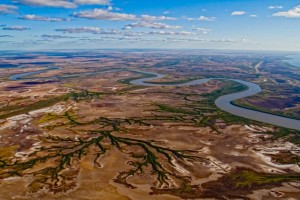
    Gulf of Carpentaria showing Flinders River in north Queensland. Department of Natural Resources via www.abc.net.au
    Gulf of Carpentaria showing Flinders River in north Queensland. Department of Natural Resources via www.abc.net.au

    We often don’t plan for water in the broader sense when we think of developing communities and towns. The water pipes are underground, sure, and they flow to the water and sewer treatment plant, and we have water whenever we command the faucet to release it. But when you think about it, the water cycle is lost on the ground. The holistic concept of it being a cycle is washed away. Water is seen more as a nuisance, a problem, something to be taken care of rather than a resource. This is the real problem. While water is a need, and a serious one globally for clean water, water is treated more as an expectation, a guarantee of service.

    In order to create more sustainable and resilient developments, we need better management and regulation of water resources. Better governance. Water efficiency, water quality, conservation, drought prevention, supply and demand issues, these are topics that local, state and national governments must tackle, and soon. Water is critical to economic development in terms of manufacturing and technology.

    Population distribution is skewed as cities and towns dot the coastlines. Over half of the world’s population lives within 200 kilometres (120 miles) of the coast. As we’ve seen increasingly over the past few years, extreme weather events such as cyclones, hurricanes and the resulting floods can cause great devastation to civilisation.

    There are design elements that can enhance a community’s relationship with water. Creating driveways and sidewalks out of permeable surfaces rather than bitumen; installing green roofs; rain barrels and gardens to collect water are just a few solutions. Harvesting runoff from buildings (rain barrels) can be used to flush toilets or recycled water for watering lawns and washing. Integrating water into town planning can minimize damage to infrastructure during extreme weather events.

    Better water management, which means integrating the water cycle with the urban environment, will produce more sustainable communities in the future. Can you imagine the alternative if we didn’t? A world without water would not last long. The human body can last about 3 days without water. Water and sanitation is a human right, with 3.4 million fighting for their survival each year for clean water. With the global economy’s current fixation on innovation, if we don’t recognize the basic resources needed to allow creativity to flourish, it will all be for nought.

    Please check your local conservation office for water resources and other conservation practices you can adopt. These websites will also give you more information and ways to make a difference.

    http://www.environment.gov.au/water/index.html

    http://water.org/

    http://www.charitywater.org/


  • Pulsars make a GPS for the cosmos

    Pulsars make a GPS for the cosmos

    CSIRO scientists have written software that could guide spacecraft to Alpha Centauri, show that the planet Nibiru doesn’t exist … and prove that the Earth goes around the Sun.

    Dr George Hobbs (CSIRO) and his colleagues study pulsars — small spinning stars that deliver regular ‘blips’ or ‘pulses’ of radio waves and, sometimes, X-rays.

    Usually the astronomers are interested in measuring, very precisely, when the pulsar pulses arrive in the solar system. Slight deviations from the expected arrival times can give clues about the behaviour of a pulsar itself, or whether it is orbiting another star, for instance.

    “But we can also work backwards,” said Dr Hobbs. “We can use information from pulsars to very precisely determine the position of our telescopes.”

    “If the telescopes were on board a spacecraft, then we could get the position of the spacecraft.”

    Observations of at least four pulsars, every seven days, would be required. “Each pulsar would have to be observed for about an hour,” Dr Hobbs said. “Whether you can do them all at the same time or have to do them one after the other depends on where they are and exactly what kind of detector you use.”

    A paper describing in detail how the system would work has been accepted for publication by the journal Advances in Space Research.

    Spacecraft within the solar system are usually tracked and guided from the ground: this is the role of CSIRO’s Canberra Deep Space Communication Complex, for instance. But the further out the craft go, the less accurately we can measure their locations.

    For voyages beyond the solar system, spacecraft would need an on-board (‘autonomous’) system for navigation. Gyroscopes and accelerometers are useful tools, but the position information they give becomes less accurate over time.

    “Navigating with pulsars avoids these problems,” said Deng Xinping, PhD student at the National Space Science Center in Beijing, who is first author on the paper describing the system.

    Scientists proposed pulsar navigation as early as 1974. Putting it into practice has recently come closer, with the development of fairly small, lightweight X-ray detectors that could receive the X-ray pulses that certain pulsars emit. NASA is exploring the technique.

    “For deep-space navigation, we would use pulsars that had been observed for many years with radio telescopes such as Parkes, so that the timing of their pulses is very well measured,” said CSIRO’s Dr Dick Manchester, a member of the research team. “Then on board the spacecraft you’d use an X-ray telescope, which is much smaller and lighter.”

    Dr Hobbs and his colleagues have made a very detailed simulation of a spacecraft navigating autonomously to Mars using this combination of technologies and their TEMPO2 software.

    “The spacecraft can determine its position to within about 20 km, and its velocity to within 10 cm per second,” said Dr Hobbs. “To our knowledge, this is the best accuracy anyone has ever been able to demonstrate.”

    “Unlike previous work, we’ve taken into account that real pulsars are not quite perfect, they have timing glitches and so on. We’ve allowed for that.”

    The same pulsar software can be used to work out the masses of objects in the solar system.

    In 2010 Dr Hobbs and his colleagues used an earlier version of the software to ‘weigh’ the planets out as far as Saturn — to six decimal places.

    The Earth is travelling around the Sun, and this movement affects exactly when pulsar signals arrive here. To remove this effect, astronomers calculate when the pulses would have arrived at the Solar System’s centre of mass, around which all the planets orbit.

    “If the pulsar signals appear to be coming in at the wrong time, we know that the masses of the planets that we are using in the equations must be wrong, and we can correct for this,” Dr Hobbs explained.

    The new version of the software lets the astronomers rule out unseen masses, including any supposedly undiscovered planets, such as the notorious Nibiru.

    “Even if a planet is hard to see, there’s no way to disguise its gravitational pull,” Dr Hobbs said. “If we don’t detect the gravitational pull, then there’s no planet there. Full stop.”

    And what about showing that the Earth goes around the Sun? Yes, they can do that too.

    “This was nailed a couple of hundred years ago,” said Dr Hobbs. “But if you still need proof, we’ve got it.”

    Publication

    Deng XP, Hobbs G, You XP, Li MT, Keith MJ, Shannon RM, Coles W, Manchester RN, Zheng JH, Yu XZ, Gao D, Wu X, Chen D. 2013. Interplanetary spacecraft navigation using pulsars [external link]. Advances in Space Research. arXiv:1307.5375.

    Source and image.
  • The Psychology of First Impressions

    The Psychology of First Impressions

    Though one must not judge a book by its cover, a job candidate only has thirty minutes to prove his or her worth to a hiring manager. Thus an interviewee’s cover must be able to represent the qualifications and potential that lies within. Since the job market is full to the brim, it is not realistically possible for hiring agencies to allocate equal amounts of time and resource to each candidate. If a candidate wishes to stand out in such a situation, he or she must understand the psychology behind first impressions.

    Ann Demarais and Valerie White together wrote a book titled First Impressions: What You Don’t Know About How Others See You. The book helps one to understand how he or she can best present themselves in any situation. Though a first impression will never tell the whole story, it is the only thing that a stranger has to judge someone. Of course the mood of the interviewer does play a crucial role but according to the book, three characteristics namely speech, body language and confidence play an equally important role in this regard.

    A first impression is like a filter. People absorb initial information by noticing your body language and assessing what you say. This information helps them determine what you are like and how you would react to situations in the future. Thereafter they keep seeing you through this filter because everyone likes to believe that they knew what you were like from the first moment they met you. While some interviewees may have to go through several rounds of interview to finally get a job, the impression that he or she makes the first time is the one that the interviewer is most likely to stick by.

    According to a study published in the Journal of Experimental Psychology, the first impression is likely to dominate regardless of how a person may contradict it by new experiences at different times. If you can impress an interviewer at the first meeting, you are likely to maintain that image but if on the other hand you come off poorly at an interview, it might be close to impossible to change that impression.

    How can you use the first impression to your advantage?

    Here is a list of tips that will help you create a great first impression and increase your chances of getting that job you have always wanted!

    · Be on time – Research shows that for every second you arrive late at an interview, you lose some traction with the interviewer and you will never be able to regain this loss. For an interview, ten to fifteen minutes before time is considered to be on time. Behaviour is often associated with personality so if you reach early your interviewer will also assume you have good organisational skills.

    · Look fresh – Appearance is very important. Some physical characteristics can determine the final outcome of the first impression. Your eyes should be bright and open. Avoid averting them as that will make you appear insecure. Get a good night’s sleep before your interview so that you appear fresh. A lack of smile will make you appear disinterested so remember to smile just enough to convey eagerness and emit warmth. Always attend an interview in conservative clothing even if the company you are applying to is alternative and funky. It is the safest option that will keep you from being judged.

    · Be personable – Remember to seem simple but be confident at the same time. Work on your chemistry with the interviewer while making sure you are polite. If the interviewer tries to lighten up, maintain a professional distance so that you seem poised and sincere.

    · Practice – If you are not sure how you will seem at your interview, it is a good idea to practice a few times. Prepare a list of your strengths and weaknesses so that you can handle any question that is thrown at you. Run a search about the company so that you have adequate information about where you are headed. Basically all you need to do is anticipate your interview and prepare accordingly.

    Once you lock in an interview, you are obviously moving towards the right direction. You were chosen from a much larger pool of applicants for an interview so have faith in your education, experience and skills. If you impressed them without seeing them, there is little that could go wrong when you meet them in person. Be confident and comfortable and let your personality show. Since you won’t get another chance to make a first impression, give your best shot at this interview.

  • Weekly Science Picks

    Weekly Science Picks

    After the Perseid meteor shower last weekend, it seems that lots of exciting things have been discussed this week. Here are a few of the things which caught my eye.


    The first of my picks is homegrown here on Australian Science, if you’ll pardon the pun. A sustainable food source for space travellers and outposts is one which has a lot of scientists and engineers scratching their chins, as does dealing with waste products. Which makes the prospect of using a form of bacteria to recycle waste and generate a food supply a very interesting one…

    Red bacteria as astronaut food

    Bacteria offer an attractive ingredient for space food. Quick and easy to grow, exponentially and to large numbers, and can provide the basic nutrients. And it was in search for astronaut space food that another discovery was made.


    There’s been a lot of talk this week about the Hyperloop – a high speed transit system conceived by everyone’s favourite space entrepreneur, Elon Musk. I must say, the concept looks quite exciting.

    Hyperloop

    The design of Hyperloop has been considered from the start with safety in  mind. Unlike other modes of transport, Hyperloop is a single system that  incorporates the vehicle, propulsion system, energy management, timing, and  route. Capsules travel in a carefully controlled and maintained tube  environment making the system is immune to wind, ice, fog, and rain. The  propulsion system is integrated into the tube and can only accelerate the  capsule to speeds that are safe in each section. With human control error and  unpredictable weather removed from the system, very few safety concerns  remain.


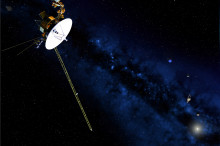
    Poor Voyager 1. For a startlingly long time now, we’ve been unsure about whether or not it’s actually left the Solar System and the protective influence of the Sun’s solar wind. In fairness, this is because it’s truly an explorer and, in a manner which would make any Star Trek fan proud, going where no one has gone before. All the same, the most recent buzz is that Voyager 1 may have indeed left the Solar System. In fact, it looks like it did so last year. (Though this study will no doubt remain contentious, there are a few of us who suspected this was the case).

    Voyager 1 Spacecraft Left Solar System Last Year, Study Suggests

    “It’s a somewhat controversial view, but we think Voyager has finally left the solar system, and is truly beginning its travels through the Milky Way,” lead author Marc Swisdak of the University of Maryland said in a statement.


    Interestingly though, some recent archaeological discoveries suggest that, despite the achievements of human technology, the first technology wasn’t created by modern humans at all. The exact nature of our extinct cousins, the neandertals, is shrouded in mystery, but it looks as though the first specialised bone tools ever created on Earth were made by them, and not us homo sapiens.

    Neandertals Made the First Specialized Bone Tools in Europe

    How widespread this new Neandertal behavior was is a question that remains. The first three found were fragments less than a few centimeters long and might not have been recognized without experience working with later period bone tools. It is not something normally looked for in this time period. “However, when you put these small fragments together and compare them with finds from later sites, the pattern in them is clear,” comments Shannon McPherron. “Then last summer we found a larger, more complete tool that is unmistakably a lissoir like those we find in later, modern human sites or even in leather workshops today.”


    I hope everyone has a good week!


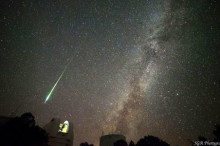
    Image: A luminous Perseid meteor over the McDonald Observatory, Texas. Credit and copyright: Sergio Garcia Rill/SGR Photography.

  • Red bacteria as astronaut food

    Red bacteria as astronaut food

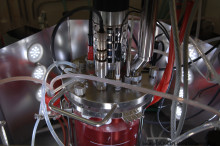
    Like something out of Stanley Kubrick’s famed 2001: A Space Odyssey her name is Melissa. Melissa was the first of her kind. Melissa will be there when the first of us touches down on Mars. She will feed and nurture us as we begin our exploration towards the stars. MELiSSA — or Micro-Ecological Life Support System Alternative — is a bioregenerative life-support system designed by the European Space Agency. She uses microorganisms living in interconnected controllable bioreactors to recycle organic waste. Melissa is essentially an artificial ecosystem — one that turns waste into food to feed her crew.

    When long space missions start to become commonplace, when we start colonies over the horizon, one of the obstacles will be how to be self-sustaining in space. Within a closed arti

  • Women in Space: Judith Resnik

    Women in Space: Judith Resnik

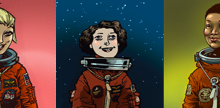
    This article is one of a series of articles in which I will profile every woman astronaut, cosmonaut and taikonaut who has been into space.  Last time we looked at the career of Sally Ride. Today I’m profiling astronaut Judith Resnik. (The feature image above is a collection of drawings of women astronauts by artist Phillip J Bond. You can find Phillip’s wonderful series on women astronauts here.)

    When the space shuttle Challenger was due to launch in the middle of the night (Australian time) on the 28th of January of 1986 – I was in the middle of a standard teenage baby sitting gig.  The kids must have been 6 or 7 years old and we were all very excited by the upcoming launch, but disappointed by the late hour.  As I tucked the kids into bed I agreed to wake them up during the night so we could watch the launch.   We didn’t get up during the night, I don’t remember why – maybe I didn’t set the alarm, maybe I decided not to wake them, maybe I just forgot.  When I woke in the morning and turned on the TV, the images of the Challenger exploding a minute into launch were so horrifying they still affect me today.

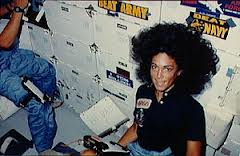
    Judith Resnik
    Judith Resnik (NASA image)

    Judith Resnik broke many records during her short life.   She was the only person in her high school graduating year to score a perfect college entrance score, she was the second American woman in space (2 missions/145hours), the first Jewish woman in space, and she was, sadly, a member of the first shuttle crew to perish during a mission.

    Judith was born in 1949 in Akron, Ohio to Jewish parents who had emigrated from the Ukraine.  She had a younger brother, Charles. When a student at Firestone High School, Judith excelled in mathematics and played classical piano. She went on to graduate from Carnegie Mellon University with a B.S. in electrical engineering, and then received her PhD in electrical engineering from the University of Maryland.  Judith married fellow student Michael Oldak in 1970; although the subsequently divorced in 1974 they remained close friends.  Michael even travelled to Kennedy Space Centre to watch Judith’s first mission launch.

    Judith in space
    Judith in space (NASA image)

    After graduation from Carnegie Mellon Judith worked as a design engineer on various NASA projects contracted through her employer, the RCA Corporation.  She also worked with the US National Institute of Health as a biomedical engineer, and as a systems engineer with Xerox Corporation during her PhD. When Judith heard that NASA was looking for female astronauts she sought advice from her faculty advisor and mentor Angel Jordan, who encouraged her to apply.  In an interview with the Carnegie Mellon newspaper Jordan said, ‘she was an amazing person’, and he still feels responsible for her loss, ‘I pushed her to excel, and I live with that memory every day’.

    Judith Resnick, like Sally Ride, was recruited into the astronaut program by actress Nichelle Nichols (Lieutenant Uhura on Star Trek) who worked as a recruiter for NASA from the mid 1970’s until the mid 1980’s.  NASA selected Judith as an astronaut candidate in January of 1978. She completed the year-long training and evaluation period in August 1979.   Judith’s first mission was as mission specialist on the maiden voyage of Discovery on 30 August 1984 (STS41-D).  She worked on a number of projects in support of Orbiter development, including experiment software, the Remote Manipulator System (RMS), and training techniques.

    During the mission the crew of STS41-D activated the OAST-1 solar cell wing experiment, deployed three satellites, and completed a number of experiments. STS 41-D completed 96 orbits of the Earth before landing at Edwards Air Force Base, California, on September 5, 1984. Judith’s first space mission caused plenty of publicity for NASA , during her mission Judith showed a playful sense of humour, doing extensive periods of aerobatics, and holding a sign reading ‘Hi Dad’ up to the camera.  According to her ex-husband, Judith ‘had a great sense of humor and was always willing to try anything’. She made waves during her first mission with images of her long flowing locks of hair, viewers were used to seeing the mundane cropped hair styles of men during missions.  Resnik didn’t like to be pigeonholed as a woman astronaut or a Jewish astronaut, she considered herself ‘just another astronaut, period.’

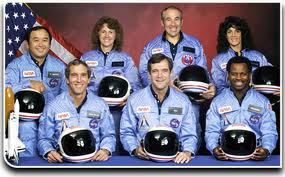
    STS151CREW
    STS51-L Crew (NASA image)

    Judith’s second mission was also as mission specialist, aboard Challenger (STS51-L), which was launched from the Kennedy Space Center, Florida, at 11:38 on January 28, 1986. Challenger crew included the commander, Mr. F.R. Scobee, the pilot, Commander M.J. Smith (USN), fellow mission specialists, Dr. R.E. McNair, and Lieutenant Colonel E.S. Onizuka (USAF), as well as two civilian payload specialists, Mr. G.B. Jarvis and Mrs. S. C. McAuliffe (NASA Teacher in Space). During the mission crew were expected to deploy tracking and data relay satellites, carry out the first flight of the Shuttle-Pointed Tool for Astronomy (SPARTAN-203), deploy the Halley’s Comet Experiment in order to observe Halley’s Comet and complete a number of lessons as part of the Teacher in Space Project.

    The STS 51-L crew died on January 28, 1986 when Challenger exploded shortly after launch.

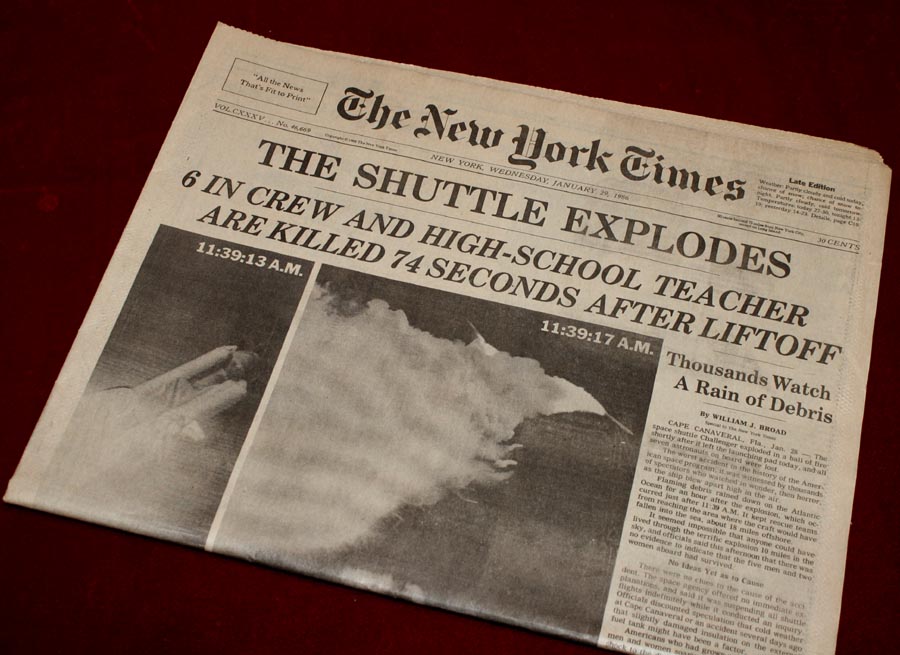
    The facts of the Challenger disaster are well known. Challenger blasted off from Kennedy Space Centre (KSC) at 11:38 hours on 28 January 1986.  73 seconds after lift off, during the ascent phase, Challenger experienced a catastrophic structural failure resulting in the loss of the crew and vehicle.

    Challenger Disaster
    How news of the Challenger disaster broke

    Naturally, after such a catastrophic incident there was a Presidential review, the resulting Rogers Commission findings are publicly available.

    Judith has been honoured many times, including lunar crater ‘Resnik’, a dormitory at Carnegie Mellon, the main engineering hall at University of Maryland all named in her honour.  A memorial to Resnik and the crew of Space Shuttle Challenger has been dedicated in Seabrook, Texas where Resnik once lived, the IEEE (Institute of Electrical and Electronics Engineers) ‘Judith Resnik Award’ for space engineering is also named in her honor, and a memorial to Judith resides at the base of Hammerschlag Hall, at Carnegie Mellon University.  Members of Tau Beta Pi, the National Engineering Honor Society, help maintain the monument.

    ‘The future is not free: the story of all human progress is one of a struggle against all odds. We learned again that this America, which Abraham Lincoln called the last, best hope of man on Earth, was built on heroism and noble sacrifice, It was built by men and women like our seven star voyagers, who answered a call beyond duty, who gave more than was expected or required and who gave it little thought of worldly reward.’

    – President Ronald Reagan, 31 January 1986.