Blog

  • Life of an epidemic: Australian dengue

    Life of an epidemic: Australian dengue

    It is always a bad sign when crowds gather. On the morning of Wednesday March 21 in the year 1900, a crowd began to gather in Sydney. A thousand people had gathered outside the offices of the Board of Health in Macquarie Street. They had gathered because bubonic plague had broken out. People had already started to die from the Black Death. Panic was the only course of action.

    The Government had stockpiled Haffkine’s serum (named after the Russian bacteriologist that developed it in a makeshift laboratory in a corridor of Grant Medical College) — a new plague vaccine, and had used it to inoculate front

  • Your ABC Wants Your Opinion

    Your ABC Wants Your Opinion

    ABC Mobile Studio Caravan - Australian Broadcasting Corporation
    ABC Mobile Studio Caravan – Australian Broadcasting Corporation

    The Australian Broadcasting Corporation is intertwined with the Australian identity since the 1920s. For Australians living in regional and remote locations away from the bright city lights of capital cities the ABC had been the only constant media and information source until recently when commercial media stations invested on capturing this audience. Growing up in the 1980s and 1990s in regional Western Australia, the ABC was the go to media outlet for information about the world outside of the town I was in. Sometimes there was no other media outlet.

    It was the ABC that taught me about story telling with the broadcast of Sesame Street and Play School. It was also through these mediums that I got my first tastes of science. I did not know what it was at the time but I enjoyed finding out why things worked the way they did and how things could be categorised. All this during the formative years of my education and especially helpful when I was having to learn English at school on top of writing, reading, and mathematics. I don’t think I’m alone in growing up with the ABC.

    Now the ABC is wanting our opinions on their science coverage. I don’t know of any other media outlet in Australia who wants to listen to the opinion of their audiences, let alone their audience’s opinion on science coverage. They are also asking for honest feedback. A few weeks ago I was invited to an ABC Community Science Forum in Perth to talk about just this in a room that included the ABC Advisory Council.

    It was honest. People talked about the things that they liked and what they did not like about the ABC’s Science Coverage. We did not get much of a description of the event before the forum and I admit to being hesitant in attending. I was concerned about the process being more of a marketing ploy than a feedback session. By the end of the session I felt that it had been well worth attending and that I shared some of the concerns raised in the discussion. What I especially liked was that no member of the ABC staff came on the defensive when criticisms were aired by participants.

    I turn to the ABC for so many things today, interviews with notable people of their field, documentaries, investigative journalism, and of course the latest news. What I adore is the coverage of science. It percolates through many things that the ABC programmes and I think this is unique and should be applauded. No other media outlet in Australia comes close to this. This is the only Australian media outlet that does not make a special case out of science except in the case of specialised science shows. The most notable example that I cannot get enough of at the moment is Conversations with Richard Fidler which brings a variety of people for interviewing. These people are all part of our community no matter what their day job may be.

    There is dedicated science content on radio, television, and online and with this has come the invitation for the public to interact with the ABC. It has especially grown with the explosion of social media. With the Australian Curriculum being implemented across the nation, ABC has created ABC Splash which is a collection of multimedia resources for use in the classroom and also for young people to explore. It is in its infancy and still being fully fleshed out but yet again it is another example of how ABC is the only media outlet going it alone working to provide science content to the Australian public.

    After 30 years of consuming products from the ABC, the act of inviting me to a feedback forum in an area I am passionate about has cemented the love I have for Australia’s public broadcaster. It demonstrates commitment in my pet area of interest and that they are not going to let their science coverage fall by the wayside. This is why I am also working on a written submission to the ABC Advisory Council, not because I want to see more science content but because they really are taking all opinions into consideration.

    If you have an opinion about the ABC’s science coverage, let them know. They want to know about it.


  • The Best of Australian Science: July 2013

    The Best of Australian Science: July 2013

    It’s the time of the month once more, when we look back and and remind ourselves of July’s wonderful variety of science and technology stories, covering space, technology, health, environment, education, and more. I hope you’ll enjoy these stories.

    Contact us if you’d like to join our team of science and tech bloggers and authors – please read the Editor’s note.

    Until next month’s Australian Science review, stay curious and scientifically passionate.


    Australia’s evolving drug landscape by Charles Ebikeme

    Last month, the Australian Parliament was debating a bill on patent law and public health called the Intellectual Property Laws Amendment Bill 2013. It is said that the legislation gives Australian governments greater powers to exploit patents without authorisation from the patent owner via stronger provisions for Crown use and compulsory licensing. Perhaps something more along the lines of what Thailand enacted in 2007. Thailand played the global system to their advantage, exploiting a clause in the 1995 World Trade Organisation agreement on intellectual property that gives governments a large amount of freedom to bypass patents on drugs if they face any kind of health crisis. Read more>>


    Are Australians Really Getting Dumber? by Magdeline Lum

    The Australian Academy of Science has found that when it comes to science Australians are getting dumber in its latest report on science literacy. Compared to three years ago, less people in Australia know that the Earth’s orbit of the sun takes one year. Among 18-24 year olds 62% surveyed knew the correct answer, a fall from 74% three years ago. Other results would also send scientists into a tail spin of despair, with 27% of respondents saying that the earliest humans lived at the same time as dinosaurs, though an improvement from 30% of respondents in 2010 who thought this.

    What does this all say? If you take the face value of the press release and the ensuing media coverage, Australians are getting dumber.  I’m a scientist who dedicates a significant proportion of time to science outreach activities and announcements like this get sent my way. They get sent my way not because I moonlight as a science journalist but because people genuinely want to know what I think and feel about such a survey. Read more>>


      Could Australian Terrain Help Train Future Mars Explorers? by Elizabeth Howell

    How do you rehearse for a Martian space trip? Simulations can only bring astronauts so far when they’re figuring out a mission. A typical person training for the International Space Station can expect a combination of classroom work, spacewalk rehearsals in the water, and robotic arm training using articles that are very close to the real deal. Exploring another world is a complex problem yet again. Astronauts in the Apollo mission received hundreds of hours in geology training, for example, and flew to areas ranging from Meteor Crater in Arizona to the site of a huge crater in Sudbury, Ont. Read more>>


    Pluto’s new moons named: Spock still homeless by Kevin Orrman-Rossiter

    The dwarf planet, Pluto, can still generate plenty of public interest – if the naming of its two recently discovered moons is anything to go by. After their discovery, the leader of the research team, Mark Showalter, called for a public vote to suggest names for the two objects. The on-line contest, aptly named ‘Pluto Rocks!‘, concluded with Vulcan as the outright favorite, after aWilliam Shatner led push by Star Trek fans. The names Cerberus and Styx ranking second and third respectively.  The International Astronomical Union (IAU) has announced that the names Kerberos and Styx have officially been recognised for these fourth and fifth moons of Pluto. A decision that is probably correct, even if it proves not to be the most popular. Read more>>


    Talking Carbon, Talking Solutions – Australians Want Action by Kelly Burnes

    The issues of climate change and carbon pricing have been caught in a purgatorial pinball game over the past 12 months. No wonder there is confusion, doubt and general misunderstanding on climate change among the populace considering the political battle lines drawn between parties in state houses, parliament buildings and capitols worldwide. But a recent study put forth by The Climate Institute, titled Climate of the Nation 2013: Australian attitudes on climate change, seeks to elevate the dialogue. The authors of the report actually talked to people to get their views on climate change. They asked questions, they listened and they documented the responses. Perhaps politicians could add that tactic to their constituent playbook. Read more>>


     Pacific plant could be good news for anxiety sufferers by Markus Hammonds

    A clinical study on kava, a Pacific plant, has found that it has properties which could be extremely useful in treating the symptoms of anxiety. The plant has been used recreationally in Pacific societies, in places like Polynesia and Hawaii, for a long time but this is apparently the first proper clinical study of the plant.

    Now, I must admit, I’m writing this story because I have some anecdotal experience with kava (piper methysticum) myself. Simply, I’ve been an insomniac on and off for most of my adult life. It can be an inconvenience, but I mostly have it under control. Read more>>

    ‘Rockin’ it and learning and the same time’ by Danielle Spencer

    “Theory in science gets tricky.

  • Talking Cars

    Talking Cars

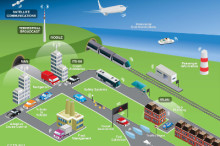
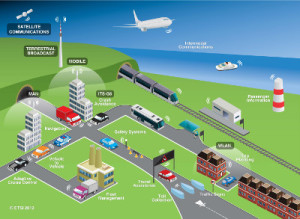
    ITS in action, via ETSI at http://www.etsi.org/
    ITS in action, via ETSI at http://www.etsi.org/

    The automobile. If you have one, it is the largest computer you own. When you think about the rate of changes made from the Model T to the present day 4-door family sedan, the evolutionary rate of development has been extraordinary. It’s data and computers and sensors that inform what’s running right with your car, from the fuel consumption to the brakes. And it’s data and technology that continue to make cars more efficient, durable and safer.

    Intelligent Transport Systems

    The idea behind Intelligent Transport Systems (ITS) is to increase safety and mobility: allowing you and I to get where we need to quicker and safer. How’s this possible? One component of ITS is IEEE 802.11p, a variant of Wi-Fi, or Dedicated Short-Range Communications (DSRC). This technology is responsible for vehicle-to-vehicle and vehicle-to-infrastructure communications; basically cars can talk to each other and to buildings. An Australian company, Cohda Wireless, is at the forefront of this new frontier.

    Cohda is part of a pilot project sponsored by the US Department of Transportation. The $15 million grant equips 3,000 cars with Wi-Fi based transmitters for vehicle-to-vehicle and vehicle-to-infrastructure communications. It works like this: each car is outfitted with a GPS receiver and DSRC radio, which exchanges speed and position data with other vehicles nearby. A computer integrates the vehicle-to-vehicle information with onboard data to determine how drivers respond to warnings, such as lane-change and collision avoidance. Of course, it is ultimately up to the person in the driver’s seat to react in time, and correctly, to avoid an incident.

    Other Options

    And if it’s incidents we want to avoid, why not just have robotic cars? Perhaps you’ll recall the Google driverless car. With over $200,000 worth of equipment in the vehicle, it’s unlikely these will be parked in family garages any time soon.

    The other reason robotic cars may not catch on is for the basic fact that people love to drive. Many of us long for the open road with the wind in our face as we chase down new adventures. For many rural and small towns and suburbia, driving is a way of life. A subway system or light rail facility is either a dream or a nightmare, if it were to happen, for many municipalities.

    But if you are in the big city, then public transit systems are in many ways ‘driverless’ – in that when you step on board, you don’t have to worry about the driving.

    Given the number of train derailments occurring in the past few weeks (with incidents in the United States, Canada, France, and most recently, Spain), we may want to think about equipping our commuter trains with IEEE 802.11p. If this technology could identify debris on the tracks, or misaligned tracks up ahead, or signals that are not responding to its sensors, or if a train is approaching a curve with too great a speed, it could very well minimize train derailments and incidents; resulting in far fewer fatalities, property damage and disruption to transportation networks. (Note: there is GSM-R, (Global System for Mobile Communications – Railway) technology in operation in Europe, China, Africa and Australia. This technology is a voice and data communications platform reliant on humans to signal a warning.)

    After 120 years on the road and over 200 years on the tracks, we still don’t have this commuting problem worked out; and it will likely never be perfect. If we utilise ITS in more projects, both on the road and the rails, we may near that safer, more mobile level of transport we all desire.


  • The astronaut as an Outback handyman or handywoman

    The astronaut as an Outback handyman or handywoman

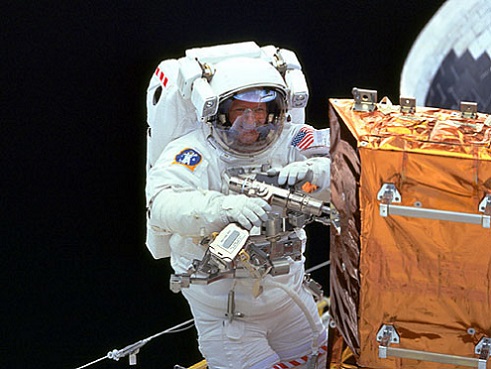
    Working in space is just slightly more remote than working in the Outback. Credit: NASA
    Working in space is just slightly more remote than working in the Outback. Credit: NASA

    Perhaps the ultimate expression of Australian self-sufficiency is those workers in the remote areas of the Outback, digging for oil or dinosaur treasure or perhaps using a telescope to gaze at the stars, far from light pollution. In much of Australia, if something breaks, you’re going to have to find a way to fix it yourself.

    That’s pretty similar to what astronauts face on the International Space Station. If a toilet or treadmill snaps, or if a solar panel fizzles, the astronauts can surely call for help to Mission Control to get some procedures. Ultimately, however, the men and women on board will need to fix the problem themselves with whatever tools are there.

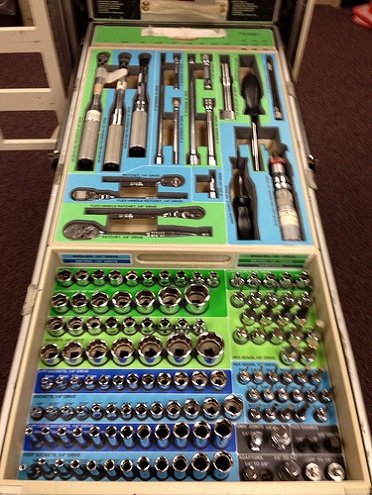
    Enter these pictures of an astronaut toolbox making the rounds in several media reports. Tim Peake, an astronaut with the European Space Agency, posted a photoset of a toolbox that astronauts use on the space station. The array of screwdrivers and washers and clamps is impressive, and demonstrates how the station partners are trying to prepare for just about any eventuality.

    A single drawer in a toolbox used aboard the International Space Station. Credit: Tim Peake/Flickr
    A single drawer in a toolbox used aboard the International Space Station. Credit: Tim Peake/Flickr

    What’s even more impressive is the tools that are used during spacewalks. This, in fact, prompted one astronaut crew (STS-61) to find itself on the American show Home Improvement during the 1990s — simply because they had fixed the Hubble Space Telescope in orbit.

    “It’s a lot like using tools here on Earth, except there’s no gravity, so you don’t have to worry about dropping a tool on your foot,” joked commander Richard Covey on the show, a Season 3 episode called “Reality Bytes.” At least two other NASA crews appeared in future seasons of the show because of their work during spacewalks.

    Just goes to show you that a repair, whether in space or on Earth, can take you to unexpected places.

  • Weekly Science Picks

    Weekly Science Picks

    It’s that time of the week again. Time for some science-y goodness from around the globe!!

    Mystery of the Van Allen Radiation belts solved!

    We’ve known for some time that electrons in the heart of the Van Allen Radiation Belts are accelerated to almost the speed of light.  But until now we didn’t know why…..

    Researchers implant false memories in mice

    This sounds like the plot of about a half a dozen sci-fi movies… but researchers have attempted to implant false memories in mice and the results are very interesting!

    Whispers from space will be clearer thanks to new technology

    Picking up extremely weak signals from exploring spacecraft, such as Gaia and BepiColombo requires cooling a detector to within a few degrees of absolute zero. Recently ESA upgraded 3 of their deep space tracking antennas with the new technology.

     Gastric bypass surgery reduces incidents of diabetes

    Doctors have known for a while that patients with diabetes who undergo gastric bypass surgery often don’t require insulin shots after surgery. They assumed it was the result of weight loss and change of diet, as it turns out that’s not the full picture…

    Hubble spies gold…

    Images snapped by the Hubble Space Telescope suggest that gold may have been generated by a violent neutron star collision that also yielded lead, platinum, uranium and other heavy elements.

    US authorities plan to cull thousands of barred owls

    Federal wildlife officials plan to dispatch armed bird specialists into forests of the Pacific Northwest starting this fall to shoot one species of owl to protect another that is threatened with extinction.

    Intact dinosaur tail discovered in Mexico

    Paleontologists discover the fossilized remains of a 72 million-year-old dinosaur tail in a desert in northern Mexico.


  • Lake Vostok: life beneath the ice

    Lake Vostok: life beneath the ice

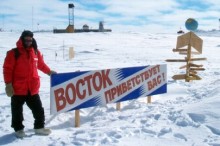
    Imagine, Lake Vostok is covered by more than 3,700 metres of Antarctic ice. Devoid of sunlight, it lies far below sea level in a depression that formed 60 million years ago, when the continental plates shifted and cracked. Few nutrients are available. Yet scientist, led by Scott Rogers, a Bowling Green State University professor of biological sciences, have found a surprising variety of life forms living and reproducing in this extreme environment. A paper published June 26 in PLOS ONE details the thousands of species they identified through DNA and RNA sequencing.

    What lies sealed beneath the glacial ice?

    Antarctica, 35 million years ago, had a temperate climate and was inhabited by a diverse plants and animals. About 34 million years ago, a huge drop in temperature occurred and ice covered the lake, when it was probably still connected to the Southern Ocean. This lowered the sea level by about 100 metres, which could have cut off Lake Vostok from the ocean. The ice cover was intermittent until a second big plunge in temperature took place 14 million years ago, and sea level dropped even farther.

    An artist's representation of the aquatic system scientists believe is buried beneath the Antarctic ice sheet. (Credit: Zina Deretsky, NSF)

    As the ice crept across the lake, it plunged the lake into total darkness and isolated it from the atmosphere, and led to increasing pressure in the lake from the weight of the glacier. While many species probably disappeared from the lake, as indicated by Rogers’ results, some seem to have survived.

    Rogers and his colleagues examined core sections from the ice above Lake Vostok that were extracted in 1998. At the time, no one had reached the actual lake, a feat that was achieved only last year. But the drilling had gone deep enough to reach a layer of ice at the bottom of the sheet that formed as lake water froze onto the bottom of the glacier where it meets the lake. The team sampled cores from two areas of the lake, the southern main basin and near an embayment on the southwestern end of the lake. The embayment appears to contain much of the biological activity in the lake.

    Schematic cross-section of Lake Vostok (above), drawn to scale. (Credit: Yury M. Shtarkman et al.)

    By sequencing the DNA and RNA from the ice samples, the team identified thousands of bacteria, including some that are commonly found in the digestive systems of fish, crustaceans and annelid worms, in addition to fungi and two species of archaea, or single-celled organisms that tend to live in extreme environments. Other species they identified are associated with habitats of lake or ocean sediments. Psychrophiles, or organisms that live in extreme cold, were found, along with heat-loving thermophiles, which suggests the presence of hydrothermal vents deep in the lake. Rogers said the presence of marine and freshwater species supports the hypothesis that the lake once was connected to the ocean, and that the freshwater was deposited in the lake by the overriding glacier.

    These results, however, are not without controversy.

    Other claims and other lakes

    Long before he began using these techniques to study the ice, Rogers and his team had developed a method to ensure purity. Sections of core ice were immersed in a sodium hypochlorite (bleach) solution, then rinsed three times with sterile water, removing an outer layer. Under strict sterile conditions, the remaining core ice was then melted, filtered and refrozen.

    Sergey Bulat has doubts about the results, despite the careful sample preparation. Bulat, a Lake Vostok expert at the Petersburg Nuclear Physics Institute in Gatchina, Russia, is quoted as saying, “that it is very probably that the samples are heavily contaminated with tissue and microbes from the outside world.”

    Quirin Schiermeier has noted in Nature News:

    Bulat and Rogers have both studied Vostok ice samples taken in the 1990s by a consortium of Russian, French and US Antarctic researchers. In the past, the pair pondered a close collaboration. But their scientific relationship broke over enduring disagreement about the level of contamination of samples.

    In March, Bulat himself faced criticism over an unknown species of bacterium his team had discovered in a Lake Vostok ice core drilled last year. Sceptics said that this finding was due to contamination from drilling fluid.

     Eric Cravens, assistant curator at the National Ice Core Laboratory in Littleton, Colo., holds up a piece of ice taken from above Lake Vostok, a remote region of Antarctica. The ice offers a glance at hundreds of thousands of years of geologic history. Melanie Conner/National Science Foundation

    The two researchers’ claims are probably the first in what will no doubt be an interesting period of discovery in Lake Vostok and other Antarctic lakes. The first samples of water from Lake Vostok itself, collected in early 2013 are currently being analysed. The Russian team has said that it hopes to have results within the next year. Bacteria, of known species, have been recovered from the smaller Antarctic Lakes, Whillans and Vida. Lake Vida has been sealed off for around 2,800 years. Ice cores drilled in 2005 and 2010 have recently revealed life, but at about one-tenth of the abundance usually found in freshwater lakes in moderate climate zones. Similarly in Lake Whillans the bacteria levels were roughly one-tenth the abundance of microbes in the oceans.

    These results are glimpses into the the sub-glacial world of Antarctica. Glimpses that may change how we not only view this continent but also providing clues to how extra terrestrial life may exist on icy moons such as Jupiter’s Europa and Saturn’s Enceladus.

  • Public Health in the Age of Austerity

    Public Health in the Age of Austerity

    “Care of the public health is the first duty of the statesman

  • Drug Sport

    Drug Sport

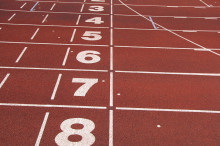
    Legalising doping in sports leaves no winners at the finsih line. Photo credit: Athletics tracks finish line by Petey21, via Wikimedia Commons
    Legalising doping in sports leaves no winners at the finsih line. Photo credit: Athletics tracks finish line by Petey21, via Wikimedia Commons

    The 100th edition of Le Tour de France came to a close yesterday evening in Paris. It was a spectacular 3 weeks of racing. The battling of teams, riders positioning for stage wins, fans in fancy (and quite often strange) dress, stunning scenery – all made for a memorable tour indeed.

    I’ve watched a lot of NBCSN’s Tour de France coverage this year because for one; it’s one of the greatest athletic competitions on this planet, and two; I was curious if this year was going to be any different. Probably as a result of instructions from broadcast corporations, there had been no mention of the American cyclist that ruined himself, Lance Armstrong, by name; just the scandal that rocked cycling. There were a lot of changes to this year’s course – twice up the Alpe d’Huez, the uphill finish on Mont Ventoux, the nighttime finish in Paris on the Champs-Élysées. Changes such as these, along with fresh, young riders such as Nairo Quintana and Andrew Talansky – the future of cycling – will help to lift the tarnish of this truly great, test of sporting endurance.

    There is a rampant drug problem in the US sports – baseball, football (not soccer), track and field, cycling. I’m not talking about athletes using and abusing drugs such as cocaine and alcohol; no, this is the pre-meditated plotting to use performance-enhancing drugs to gain an unnatural competitive advantage. Olympic swimming programs in the 1980s were no strangers to steroid cocktails. Wrestling and weightlifting are also sports to have experimented with drugs to push the boundaries.

    And to level the playing field there has been a lot of talk lately about legalising doping ‘since everyone is doing it.’ The argument that everyone is doing it is absurd. Granted both the business and science of sport has escalated with huge sums on the line. The money involved with stadium building, superstar contracts and ticket and concession prices is staggering. So too is the amount of funding that goes into exercise physiology equipment for training and recovery and nutrition for these athletes. But to go down the road where athletes shoot up, inhale, drink up, or cycle blood in and out of their body to win in order to beat records and earn more money and endorsements should not be the future of sport.

    It’s impossible to know how many are or are not cheating by taking drugs. But there has to be a zero tolerance enforcement policy in place, with much more stringent consequences for those that are caught. Sebastian Coe, the London 2012 chairman, makes an excellent point in this BBC article. Four-year bans would do more harm to an athlete’s career: two-year bans make it too easy for athletes to bounce back. To legalise doping in sport, as this article from The Conversation advocates, would indeed be a tragedy. It would change sport to sport entertainment: two very different things.

    Australia is deep in the throes of this debate. You can read about and watch what two Australian sporting icons, Shane Gould and Peter FitzSimons, have to say on the issue of athletes using performance enhancing drugs here. Weigh in and let us know what you think.

    In the meantime, let’s hope indeed, that this is one Maillot jaune that will not be compromised.

  • Are Australians Really Getting Dumber?

    Are Australians Really Getting Dumber?

    The Australian Academy of Science has found that when it comes to science Australians are getting dumber in its latest report on science literacy. Compared to three years ago, less people in Australia know that the Earth’s orbit of the sun takes one year. Among 18-24 year olds 62% surveyed knew the correct answer, a fall from 74% three years ago. Other results would also send scientists into a tail spin of despair, with 27% of respondents saying that the earliest humans lived at the same time as dinosaurs, though an improvement from 30% of respondents in 2010 who thought this.

    What does this all say? If you take the face value of the press release and the ensuing media coverage, Australians are getting dumber. I’m a scientist who dedicates a significant proportion of time to science outreach activities and announcements like this get sent my way. They get sent my way not because I moonlight as a science journalist but because people genuinely want to know what I think and feel about such a survey. I suspect what they really want to know is whether I feel I have wasted my time.

    Here is my honest answer: There ought to be no panicking and nor should there be any despair of the results. This survey does not reflect science literacy in Australia.

    This survey is asks these six questions of people:

    1. How long does it take for the Earth to go around the Sun?
    2. Is the following statement true or false? The earliest humans lived at the same time as dinosaurs.
    3. What percentage of the Earth’s surface is covered by water?
    4. What percentage of the Earth’s water is fresh water?
    5. Do you think that evolution is occurring?
    6. Do you think that humans are influencing the evolution of other species?

    The results of the answers of these six questions is what science literacy in Australia is measured against by the Australian Academy of Science. These questions are an exercise in recall. Some facts are bigger than others and are covered with more significance in the Australian Science Curriculum that is currently being rolled out across the nation. A curriculum I would like to point out that is formed from the basis of previous curricula from the states and territories of Australia. It is freely available to anyone who would like to see what some are demanding more science content in but not stating specifics as to what. More focus is not a sufficient demand.

    As a scientist sitting here typing this article, I could not tell you what percentage of the Earth’s water is fresh water. I certainly hope no one expects me to know this fact. I have memories of teachers stating the number but I can’t recall it. Instead what I do remember from those lessons is that fresh water is rare and that it is precious and that it should not be wasted. Which is the more important science lesson?

    I will go further and make a confession as a chemist. I cannot recall the first 20 elements of the Periodic Table. I know that hydrogen and helium are the first two elements and that’s where my recall is. However, place me in a chemistry lab, I can perform all manner of inorganic and wet chemical analysis. I know chemistry so well that I can tutor the subject so well that a C-grade student can become an A-grade student who no longer needs tutoring. I am not just imparting chemical knowledge but also the skills of lifelong learning and an appreciation for the reasons behind chemical relationships.

    Science is so much more than recalling factoids. The only use factoid recall will ever have is winning a quiz. It won’t even guarantee you an A in an examination. The vast majority of reporting of results of this quiz has widened the divide between the scientific community and everyone else. Going on the attack labelling Australians for not only being illiterate in science but also assuming that they did nothing to improve the results three years since the last survey is not being inclusive in the lead up to National Science Week. It is frustrating to witness this communication gaffe.

    I doubt many scientists or even Nobel Science Laureates could score 100% in the survey questions without any assistance. Does this diminish their ability as a scientist? Would you dare to question their interest and curiosity of science? I don’t think anyone would.

    What is science? I have heard it described as a common sense approach to finding out why things work. It is also about discovering new understandings of accepted scientific understanding. It is about communicating with other people interested in the same part of the world that you are. It is about being able to gather information and use evidence to form a hypothesis for testing. It is also about telling the world about why you see the way something is based on the evidence in front of you. It is also an ability to accept new ideas when the evidence presents itself. It is also a skill to recognise when something is not what you thought it was.

    Science is so many things. The practicing of observing events objectively and requiring evidence to form a conclusion is something that takes place in every science classroom in Australia. This underpins so many areas in life that require analysis. In this election year, I hope that eligible voters in Australia remember the skills of observation and reasoning from science lessons rather than factoids. It is the former that will allow them to discuss policies and make decisions.

    It is time that the Australian public is given credit where credit is due. I spend time reading the comments left on news articles dealing with contentious issues like vaccination and climate change. Despite the overwhelming scientific evidence, there are people that will argue against conventional knowledge under the guises of skepticism or conscientious objection. Time and time again there are Australians who are non-scientists engaging with the discussion to explain what the scientific evidence means.

    Additionally there are numerous citizen science projects dotted around the nation with armies of volunteers who don’t hold a science degree collecting and processing data for scientists to analyse. Take the time to talk to these volunteers and you will find that they are an incredible asset to Australia. They know the finer details of their local environment and add so much value to the numbers being collected.

    The survey by the Australian Academy of Science does not highlight these sorts of activity and does a disservice announcing Australians to be dumber. When it comes to science literacy discussion in Australia I would like to see something more than press releases on six question survey that tests memory recall. My description of science makes it hard to measure and define because science is a combination of particular skills and understanding and the application of them. It is time that due respect be given to this and change measurement methods to reflect this if we want meaningful data about Australian science literacy.

    Image source:  http://www.flickr.com/photos/scjn/

  • Spiders on Mars? No, An Australian Radio Telescope!

    Spiders on Mars? No, An Australian Radio Telescope!

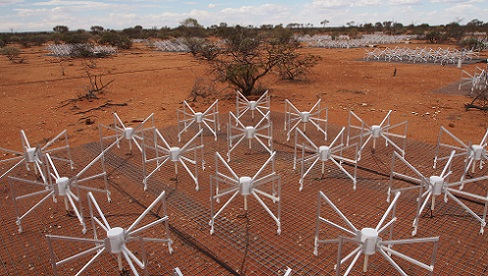
    Australia's Murchison Widefield Array, a precursor to the Square Kilometre Array. Credit: SKA
    Australia’s Murchison Widefield Array, a precursor to the Square Kilometre Array. Credit: SKA

    Those white insect-like things you see in the picture are not spiders on Mars, but the array that they’re a part of could help astronomers understand how the universe and its life came to be.

    What you see there is the Murchison Widefield Array, a newly ready radio telescope in western Australia in a remote area about 300 kilometres northeast of Geraldton. Using more than 2,000 antennas (some of which you can see in that picture), astronomers will soon pick up very faint signals from far into space.

    “In addition to helping us see back to the origins of the universe, the array will also help us to understand the interaction between the earth and the sun, give early warning of destructive solar flares and study our galaxy and other galaxies,

  • Weekly Science Picks

    Weekly Science Picks

    I hope everyone’s enjoying a nice weekend! It’s my turn again for the weekly science picks, and this week is the 44th anniversary of the Apollo 11 moon landing. On July 20th 44 years ago, human beings took their first small steps onto the surface of an object in the solar system other than the Earth. While we may not have returned to the Moon since NASA’s Apollo program, it’s important to realise the leaps and bounds which human technology and scientific knowledge have made since then.

    And speaking of those leaps and bounds…

    Astronomers have managed to determine the colour an exoplanet would appear if were able to see it with our own eyes. Planet HD 189733b, one of the most well studied worlds out there in our galaxy, is a beautiful azure blue planet. But don’t let the similarity to our own planet’s colour fool you. The blue colour of HD 189733b is because it’s a hot jupiter, orbiting scorchingly close to its parent star, and that colour is because the rain on this world is made of glass!

    Exoplanet HD 189733b Appears to be Azure Blue

    “This planet has been studied well in the past, both by ourselves and other teams,

  • New technology to measure soil carbon

    New technology to measure soil carbon

    Carbon is a hot topic at the moment, particularly with Rudd’s plan to move from the Carbon Tax to an Emissions Trading Scheme. But while the politicians argue over the economic implications, researchers at the University of Sydney have developed an instrument that could help drive policy to deal with the environmental impacts of carbon.

    The Carbon Soil Bench measures carbon levels in the soil, cheaper, faster and more accurately than current methods. The Bench is essentially a large furnace on wheels that works by burning a sample of soil and measuring how much carbon dioxide is released. Because the Bench can take samples up to 2.5cm in diameter and a meter in length (up to 500 grams of soil), the variation in results common to current methods is reduced.

    Current methods use a point analysis on 0.5 grams of soil, requiring crushing and mixing samples in an attempt to produce a ‘representative’ sample. The 0.5 gram sample is then selected from this mix. The Bench, by contrast, can measure up to half a kilo at once, the process taking only 10 minutes.

    This technology is exciting as soil has the ability to store carbon (via sequestration), however measuring the capacity of soil to do so, until now, has been difficult. The Bench may pave the way for a more serious look at how Australian land can contribute to environmental improvements by capturing carbon.

    The team, Robert Pallasser, Professor Alex McBratney and Associate Budiman Minasy, have created a video of the bench in action, which can be viewed on youtube:

  • Talking Carbon, Talking Solutions – Australians Want Action

    Talking Carbon, Talking Solutions – Australians Want Action

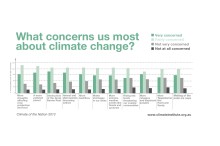
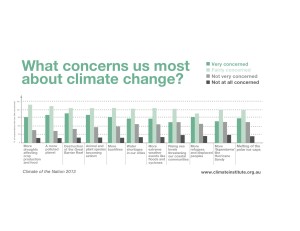
    Source: www.climateinstitute.org.au
    Source: www.climateinstitute.org.au

    The issues of climate change and carbon pricing have been caught in a purgatorial pinball game over the past 12 months. No wonder there is confusion, doubt and general misunderstanding on climate change among the populace considering the political battle lines drawn between parties in state houses, parliament buildings and capitols worldwide. But a recent study put forth by The Climate Institute, titled Climate of the Nation 2013: Australian attitudes on climate change, seeks to elevate the dialogue. The authors of the report actually talked to people to get their views on climate change. They asked questions, they listened and they documented the responses. Perhaps politicians could add that tactic to their constituent playbook.


    Highlights from the report include:

    • Two-thirds of Australians think that climate change is occurring and almost all of them believe that it is impacting Australia now. People are genuinely worried about the cost impacts of climate change on crop production and food supply, insurance premiums, water shortages and climate refugees.
    • More people want to give carbon pricing a go than get rid of it. And, more Australians want greater action and leadership than in recent years.
    • Results from the focus groups and poll behind Climate of the Nation 2013 indicate acceptance that climate change is happening and that humans are contributing to it. Twice as many trust the science than don’t.

    Give the report a look; it’s a quick read and the information is presented in a way that connects with people. The authors did a great job because they took a deeper look by diving into demographics – age, gender, and dwelling location to give a realistic snapshot of the population’s views on climate change.

    Speaking of the views of a population and whether politicians comprehend those views, The BBC put out this headline on 15 July: Australia PM Rudd sets out carbon tax shift cost.

    The Australian government says its plan to scrap an unpopular carbon tax will cost A$3.8bn ($3.5bn; £2.3bn).

    I wonder whom Kevin Rudd spoke with before deciding to take such action. Did he speak with the people? Could their views have changed over the course of the past year?

    The carbon tax, introduced in a somewhat controversial about face on the part of then Prime Minister Julia Gillard in 2012 did leave Australian businesses and families shaking their heads. But Australians place a high importance on the environment and their quality of life. Understanding that Australia is the worst polluter per capita in the developed world is something that most Australians, I think would want to see change. Expecting the worst-polluting firms to pay a tax on each tonne of greenhouse gases they emit is not unreasonable. However, the way the carbon tax policy was structured in Australia by including subsidies was a lose-lose, except of course for the corporations doing the polluting. Based on the information from the survey and work The Climate Institute put forward, perhaps politicians will consider “re-tooling” the carbon tax. The elections are due to take place in September. It will be an interesting to see which party comes out on top and the course of action the government takes on carbon emissions.


    The Climate Institute is an independent research organization with offices in Sydney and Melbourne. Their vision is for a “resilient Australia, prospering in a zero-carbon global economy, participating fully and fairly in international climate change solutions.“ That’s a vision the international community can embrace.