This month, we’d like to welcome our new writer Elizabeth Howell, who’s brought us some fascinating contributions about space and astronomy. She joins us for another month filled with a plethora of interesting things! A wonderful variety of science and technology stories, covering astronomy, education, technology, health, environmental, and more.
Stay curious and scientifically passionate and innovative!
For those interested in science blogging and contributing to Australian Science – contact us and check out the Editor’s note.
Throughout human history, stories have existed across all cultures in all forms, from ballads, poems, songs to oral history, plays, novels. Some narratives have evolved along with the human species—we are consistently drawn back to ancient parables, fables and fairytales, constantly reworking them into modern contexts.
Narrative is a gift unique to the human species, but how as it survived for so long? Is it a by-product of evolution or essential to survival? What drove us to painstakingly inscribe portraits on rocky walls in ochre and charcoal, to compose and listen to lengthy ballads of heroes’ tales, to nosily read people’s Facebook statuses about their day, to devour novels and films like we’re hungry for fictional worlds? Read more>>
A flurry of press articles went out this week after NASA announced its eight new astronaut candidates. The agency touted these people, who range from doctors to fighter pilots, as a generation of astronauts that will at last be trained for missions beyond Earth’s orbit. The agency is eyeing the moon, and Mars, as eventual destinations for astronauts in the coming decades. The long-term plan for NASA keeps shifting every few years, but right now it is embracing a sort of “flexible destination
A CSIRO radio telescope has detected the raw material for making the first stars in galaxies that formed when the Universe was just three billion years old — less than a quarter of its current age.
This opens the way to studying how these early galaxies make their first stars.
The telescope is CSIRO’s Australia Telescope Compact Array telescope near Narrabri, NSW. “It one of very few telescopes in the world that can do such difficult work, because it is both extremely sensitive and can receive radio waves of the right wavelengths,” says CSIRO astronomer Professor Ron Ekers.
The raw material for making stars is cold molecular hydrogen gas, H2. It can’t be detected directly but its presence is revealed by a ‘tracer’ gas, carbon monoxide (CO), which emits radio waves.
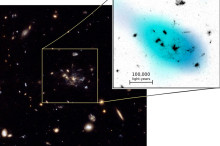
In one project, astronomer Dr Bjorn Emonts (CSIRO Astronomy and Space Science) and his colleagues used the Compact Array to study a massive, distant conglomerate of star-forming ‘clumps’ or ‘proto-galaxies’ that are in the process of coming together as a single massive galaxy. This structure, called the Spiderweb, lies more than ten thousand million light-years away [at a redshift of 2.16].
Dr Emonts’ team found that the Spiderweb contains at least sixty thousand million [6 x 10¹⁰] times the mass of the Sun in molecular hydrogen gas, spread over a distance of almost a quarter of a million light-years. This must be the fuel for the star-formation that has been seen across the Spiderweb. “Indeed, it is enough to keep stars forming for at least another 40 million years,” says Emonts.
In a second set of studies, Dr Manuel Aravena (European Southern Observatory) and colleagues measured CO, and therefore H2, in two very distant galaxies [at a redshift of 2.7].
The faint radio waves from these galaxies were amplified by the gravitational fields of other galaxies — ones that lie between us and the distant galaxies. This process, called gravitational lensing, “acts like a magnifying lens and allows us to see even more distant objects than the Spiderweb,” says Dr Aravena.
Dr Aravena’s team was able to measure the amount of H2 in both galaxies they studied. For one (called SPT-S 053816-5030.8), they could also use the radio emission to make an estimate of how rapidly the galaxy is forming stars — an estimate independent of the other ways astronomers measure this rate.
The Compact Array’s ability to detect CO is due to an upgrade that has boosted its bandwidth — the amount of radio spectrum it can see at any one time — sixteen-fold [from 256 MHz to 4 GHz], and made it far more sensitive.
“The Compact Array complements the new ALMA telescope in Chile, which looks for the higher-frequency transitions of CO,” says Ron Ekers.
Australia is really taking the initiative in alternative energy production. The latest news is that a consortium of Australian researchers have succeeded in producing printable solar cells, in a process which might just have the potential to revolutionise solar power production across the continent. Perhaps, we can only hope, the world.
Succinctly, a new printer which has been installed at CSIRO is capable of printing solar cells the size of A3 sheets of paper – the largest ever created. Printing onto sheets of flexible plastic, it can produce these at a rate of 10 metres per minute (one new and fully functioning solar cell every 2 seconds!), and those cells can produce between 10-50 Watts per square metre, dependent upon how much light they receive. Oh, and the best part? The printer uses no brand new or special technology. In fact, it’s not a lot different to mass producing printed t-shirts!
The group responsible refer to themselves as the Victorian Organic Solar Cell Consortium (VICOSC), and they’re made up of a collaboration between CSIRO, The University of Melbourne, and Monash University, together with a handful of industry partners. Over the past 3 years, they’ve been working on printing solar panels. Starting with a cell the size of a human thumbnail, they’ve scaled their way up to larger and larger sizes. And they have plans. Big plans.
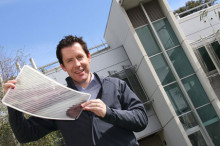
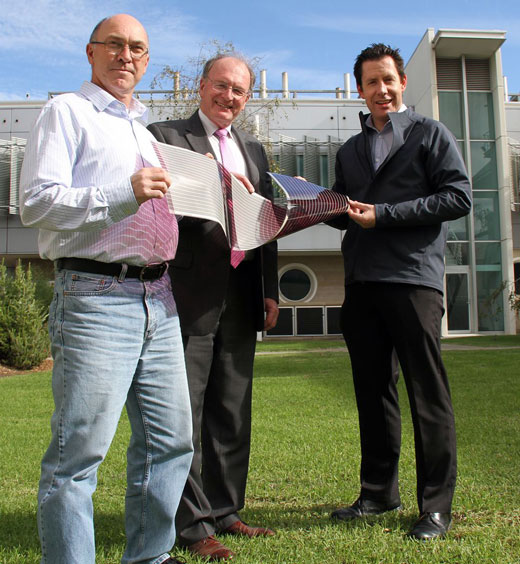
Dr David Jones, Professor Andrew Holmes and Dr Scott Watkins, three of the researchers involved, together with one of their printed solar cells.
I mentioned a little while ago in my article about wind power, that I’m a keen advocate of alternative energy. This is because, and let’s be frank here, energy based on crude oil is not sustainable in the long term. I could list dozens of reasons why this is the case, not least of which is the fact that oil reserves are limited. But the biggest factor is pollution. We really need to start taking better care of this world.
Australia, it has to be said, receives one thing in abundance. Sunlight. Developing solar power seems like something of a no brainer, especially for more isolated areas. In fact though, the Earth receives a staggering amount of solar energy constantly.
Sunlight hitting Earth carries with it approximately 174 petawatts (174,000,000,000,000,000 watts!) of power. Of course, for the most part we’ll never be able to harvest it. Around 30% is immediately reflected back into space (which is good, because otherwise our planet would boil). But if we could harvest just 0.01% of the solar energy hitting our planet, we would have more power than the entirety of human civilisation can currently use!
Realistically, powering everything on our world with solar power may not be feasible. But a significant fraction of global energy needs could be easily met with solar power – particularly in areas which receive a lot of sunlight. Areas like much of Australia. The new techniques developed by VICOSC could make solar energy much more accessible to the world at large.
Firstly, the printing techniques they use are familiar to us all. Essentially, it’s much the same as screen printing – except that they use semiconductive inks which can be printed onto either flexible plastic or steel, dependent on where precisely they’re needed. Even better, the group are currently researching new non-chorinated solvents to use, making the entire operation even more environmentally sound!
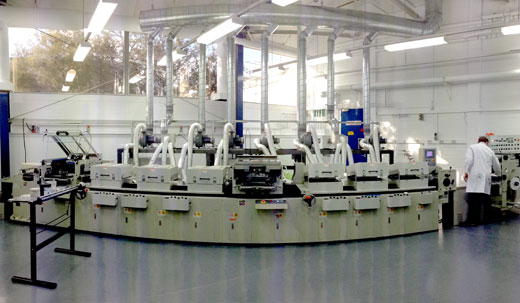
The newly installed solar cell printer at CSIRO.
While the new printer at CSIRO to produce these solar cells cost a total of A$200,000, the future component costs are tiny. These printed energy collectors work out at a price of just A$1 per watt! Needless to say, this is a huge improvement over any solar panels the market can currently offer.
The group suggest a couple of particularly interesting uses for their printed solar cells. For a start, they can actually be used to improve the efficiency of existing solar cells. The two technologies absorb sunlight at different wavelengths. This means that the same area of solar cell could be able to effectively collect twice the power.
Even more dramatically, there are plans to further scale up the printing equipment they’ve used (because why not, right?) and create much larger cells. These could be laminated onto the windows of large buildings like skyscrapers, making any city into its own power plant. Effectively a single typical skyscraper (for example, the Century Tower in Sydney) could “generate” over 100 kilowatts of power just by standing there.
The new printed solar cells aren’t quite ready to be released to the public just yet. But it sounds like they might be soon. Currently, they’re still undergoing tests. To date, they have a theoretical maximum power of 80 watts per square metre, and the cells currently being produced have a lifetime of over 6 months.
The current goal is to raise their useable lifetime to 2 years. But of course, given how ambitious VICOSC have been so far, I doubt they’ll stop there. Maybe we should start thinking about taking the word “alternative” out of “alternative energy”.
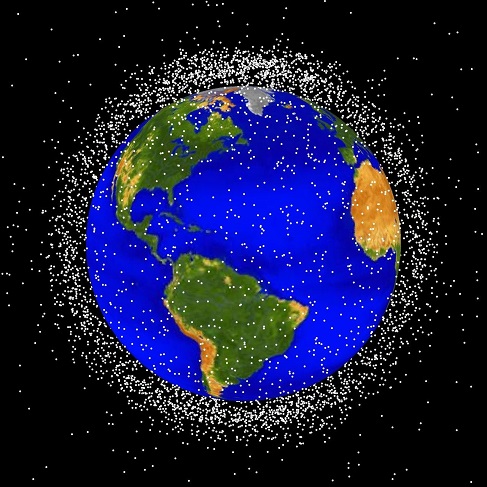
Thousands of objects surround Earth, but one Australian archaeologist argues care must be taken before getting rid of them. Credit: NASA Orbital Debris Program Office
Please don’t go all Chicken Little on us, but do be aware: there’s thousands of pieces of metal orbiting above your head. Many of these satellites are dead (read: out of fuel and uncontrollable.) And if one happens to smash into another, the results could be catastrophic. Humans depend on satellites for everything from the Internet, to weather forecasts, to ATMs.
This is a growing problem that is preoccupying entities such as NASA, which has an Orbital Debris Program Office. The Europeans recently had a space debris conference where experts estimated there is 1 billion Euros of infrastructure that must be protected. They called for some sort of retrieval solution as soon as possible.
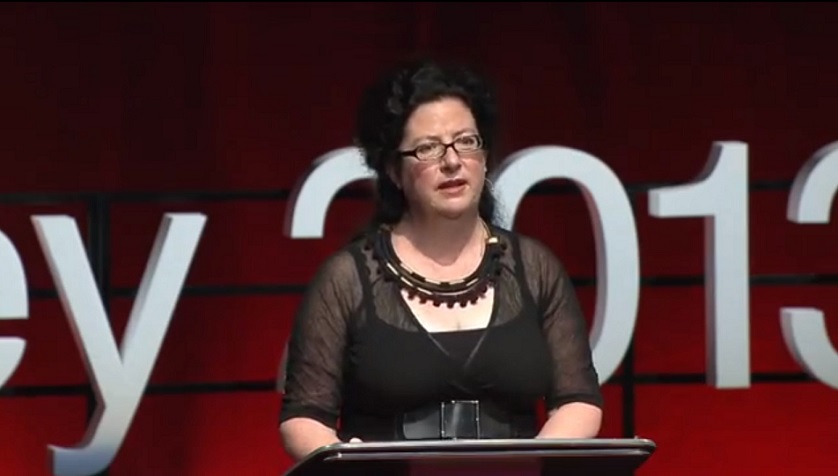
Against this backdrop stands Alice Gorman, a space archaeologist at Flinders University in Adelaide. She says she’s fully aware of the problem, but urges the relevant authorities not to take out these satellites willy-nilly. Part of Australia’s and the world’s cultural heritage rests in these bits of metal, she said at TEDxSydney last month.
Alice Gorman, a space archaeologist at Flinders University, delivers a talk at TEDxSydney in May 2013. Credit: TEDxSydney/YouTube (screenshot)
“Before we start trying to get rid of some of this stuff,” she told attendees in a speech later put on the web, “[ask] does any of it any have cultural significance for us? Does it have heritage value? And do we want to do something sensible about it, instead of destroy all that without thinking?”
Australia is among the nations that could stand to lose that heritage if satellites are destroyed without forethought, she said. Among those is a satellite that was designed by amateurs and was one of the first Australian ones to make it into space.
Called Australis-OSCAR-5, students at the University of Melbourne constructed the small amateur radio satellite out of whatever parts they could scrounge on a small budget. In some cases, pieces came off-the-shelf — not from satellite manufacturers, but from local stores, Gorman said. It launched in 1970 and has been dead for decades, she added, but there is still history attached with it.
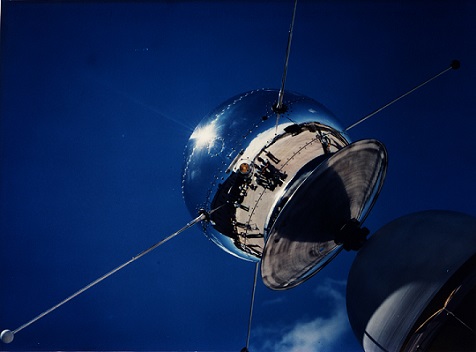
One of NASA’s Vanguard satellites. Vanguard 1, launched in 1958, remains the oldest human object in orbit. Credit: NASA
Australian ground infrastructure is also, in a way, represented in space. Vanguard 1 is the oldest human object to exist in orbit. Launched in 1958 by the United States, it signalled the country’s entry into the Space Race of competing missions that occupied Americans and Russians for at least the better part of a decade. (It came to a symbolic end when Apollo 11 landed on the moon in 1969, although the Russians were already pursuing other goals than moon missions by this time.)
When the United States was getting ready to lob Vanguard into space, officials approached several countries (including Australia) to set up a network to track the satellite in orbit, Gorman said.
Additionally, worldwide groups of amateurs (including Australians) were invited to send in their observations of Vanguard 1. Remember, satellites were rare machines in those days, so initiatives such as that would have gained a lot of attention.
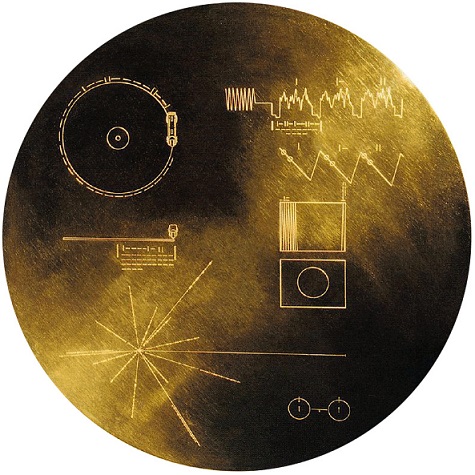
Voyager’s Golden Record, which includes sounds recorded from Australian aboriginals. Credit: NASA
Gorman said these objects, although they haven’t been functional for years, are symbolic pieces of us in space. Perhaps the ultimate expression for Australians is the Golden Record that travelled on each of the Voyager spacecraft that are on a one-way trip out of the solar system. The sounds of Earth recorded on them include some from Australian aboriginals.
“The [spacecraft] remind us that space isn’t just empty and vast and black and dark, and somewhere else out there we’re actually part of it,” Gorman added.
“It is something we should be feeling connected with, not cut off from. Our cultural heritage — these places and these artifacts — demonstrate the kinds of attachments and meanings we can give to these space places.”
To space authorities, Gorman seems to be saying: your move. There is a need to remove objects fairly quickly and efficiently, but before doing so, perhaps their history should be taken into account.
That said, this opens up questions about how to deem one piece of debris more culturally significant than another. Perhaps an international office of sorts could be established to deal with these questions, basing its work on that of heritage organizations around the world.
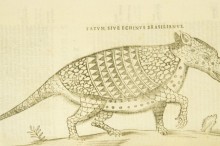
Texans love all things armadillo. It is the state animal and Texas has become somewhat of a haven for hunting the small creature. In Louisiana and Texas, people hunt, skin and eat armadillos. Nothing exemplifies this all-things-armadillo attitude quite like the fact that barbecued armadillo and armadillo chili are popular delicacies in Texas. During the Great Depression Texans went as far as to stock their pantries with armadillos.
Every year, a significant number of people in southern United States walk into emergency rooms presenting with lesions of unknown origin. The lesions are quite clearly as a result of leprosy, but with some patients showing no history of foreign exposure (leprosy is not endemic to the United States) how they ended up with leprosy had always been somewhat of a mystery. Leprosy is rare in the United States, with only about 150 new cases reported each year — the majority of affected people lived or worked abroad in leprosy-endemic sub-tropical regions and may have acquired their disease there.
Leprosy is not highly infectious — caused by the slow-growing bacillus, Mycobacterium leprae, and transmitted via droplets from the nose and mouth of infected and untreated patients. It can cause nerve damage, leading to muscle weakness and atrophy, and permanent disabilities when left untreated.
It was in a lab in Baton Rouge, Louisiana that the case was first confirmed. Whole-genome resequencing of the leprosy bacteria from one wild armadillo and three US patients with leprosy revealed that the infective strains were identical. Infected armadillos had been reported across the southern United States, in Alabama, Arkansas, Louisiana, Mississippi, Texas, and Mexico, with several case reports have suggested that armadillos may be a source of the bacteria. The building body of evidence that these small animals act as a reservoir for the disease.
Even though leprosy is exceptionally rare in the United States, it seems exposure to armadillos in southern states is quite common. Authors publishing in the New England Journal of Medicine show that a single predominant strain is involved in most human and armadillo infections. Transmission is relatively easy, either direct or indirect, involving fomites. Although in this case the authors suppose it occurs most frequently through long-term direct contact with an infected host as the bacteria doesn’t last for long out in the environment.
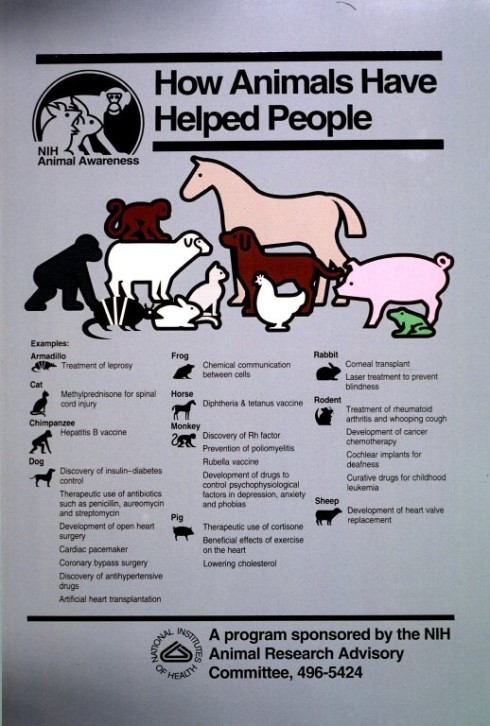
Historically, leprosy had been hard to study. Very few animal models provided an adequate host for the disease. It grows vigorously in one animal — the armadillo, a fact discovered only in the 1970s at another federal laboratory in Baton Rouge. The nine-banded armadillo, Dasypus novemcinctus, is the only species of armadillo that occurs in North America, wondering north from Central America sometime during the early Pleistocene.
There was a time, before sophisticated experimental techniques, when the bacteria for leprosy couldn’t be cultured. Research, especially research that deals with combating infectious diseases relies heavily on being able to culture the infectious agent in a controlled environment. They tried experimentally to transmit the bacteria to other animals such as mice — but failed. Not being able to produce enough bacteria to be truly useful is always a setback for research. Add that to the fact that mice don’t live very long and human leprosy can be over the course of two decades.
Armadillo leprosy closely resembles the infection in humans — the lesions in its nerves was evidence of the armadillo as a suitable model animal.
Today, it is estimated that a third of the leprosy cases that arise each year in the United States almost certainly result from contact, in one form or another, with infected armadillos. Interspecies transfer of the disease is uncommon and inefficient, but within the armadillo species transmission is efficient.
What is becoming more and more evident is a complex problem — the ever increasing, incrementally advancing scourge of certain tropical diseases towards previously virgin areas, together with the fact that doctors have never seen these sorts of exotic diseases on a regular basis means there is frequent misdiagnosis. And as an estimated 70 percent of new emerging infectious diseases were known to have animal origins, perhaps it’s time to reflect and reframe the question.
The microbe that causes leprosy is a fragile one. It does not grow in laboratory petri dishes, and survives only a week or two in moist soils. Its presence in armadillos predates the fact we use it as a disease model. Ironically, armadillos would have acquired it from humans sometime in the last 400 to 500 years — sometime after colonization of the New World. Now they’re giving it back…
I spent the other day meandering through some of the exhibits on display at the American Museum of Natural History. I checked out the Global Kitchen, Butterflies, and Whales exhibits and the planetarium Journey to the Stars show. Between the whales and the planetarium, I had this thought: What animals will we see extinct during our lifetime?
Perhaps a morbid thought, but when you walk through an exhibit on whale hunting, see hundreds of taxidermic specimens, stroll through the hall of biodiversity, you start to think about the state of the natural world. And what a state it is in.
Whales
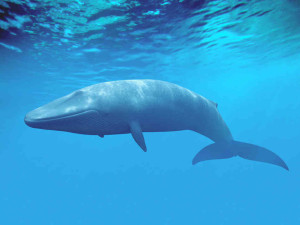
The sheer size of a blue whale (30 metres) or a sperm whale (15 metres) is astonishing. Several skeletons were on display at the museum. A model of the sperm whale’s heart – about the size of a Mini Cooper – serves as an indication as to what these giants of the sea need to survive from an anatomical and physiological perspective. What they don’t need to survive was evident in photos showing the flesh of whales sliced through from the blades of a shipping container’s propeller. The mysterious mass beach strandings, fishing nets, oil spills, the Japanese “Research
A happy Science Sunday to everyone! As usual there’s been a lot happening in the world of science, so lets take a peek of the most interesting picks for the past week!
At the end of this month, NASA will launch IRIS. IRIS will watch the Sun and provide NASA with information on the Sun’s atmosphere and the interface region. This will give scientists a better understanding of how the Sun’s energy powers the solar wind!
NASA Administrator Charles Bolden and Italian Space Agency (ASI) President Enrico Saggese signed a Memorandum of Understanding for cooperation on the European Space Agency (ESA) led BepiColombo mission to Mercury
A new three-dimensional map, aptly called BigBrain is the most detailed ever constructed! Scientists hope it will lead to a more accurate picture of how the brain’s different regions function.
Traditionally astronomers have relied on space telescopes to conduct high-energy y ray astronomy because Earth’s atmosphere is a very efficient shield for y rays. However, in early July at the International Cosmic Ray Conference in Rio de Janeiro, Brazil, indicate that γ-ray astronomers are betting their future on an ambitious ground-based telescope.
Australian researchers say that it’s not bad luck that drives mammals to extinction over geological time, but their failure to keep pace with a deteriorating environment.
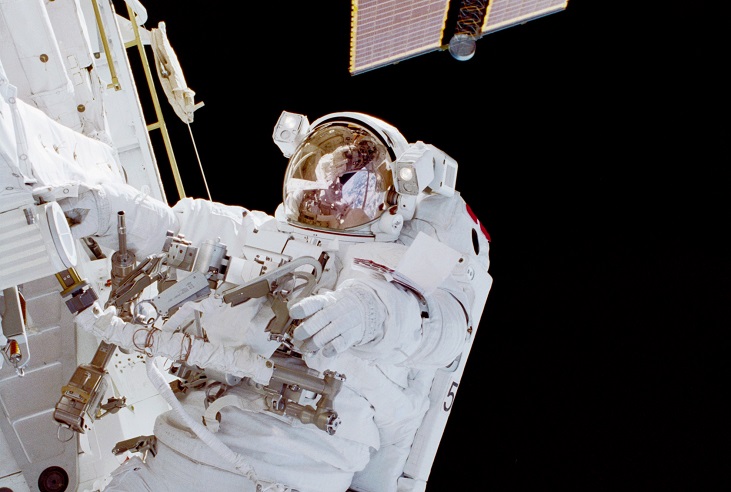
Australian Andy Thomas during a spacewalk on mission STS-102 in 2001. Credit: NASA
A flurry of press articles went out this week after NASA announced its eight new astronaut candidates. The agency touted these people, who range from doctors to fighter pilots, as a generation of astronauts that will at last be trained for missions beyond Earth’s orbit.
The agency is eyeing the moon, and Mars, as eventual destinations for astronauts in the coming decades. The long-term plan for NASA keeps shifting every few years, but right now it is embracing a sort of “flexible destination” approach that is intended to bring humans further into space.
Australia, of course, does not have an astronaut program of its own. But it does have Andy Thomas, an Adelaide-born mechanical engineer who flew four times in space, most recently on STS-114 Discovery in 2005. When asked by NASA about his aspirations as a kid in a country without an astronaut program, he expressed optimism about the situation:
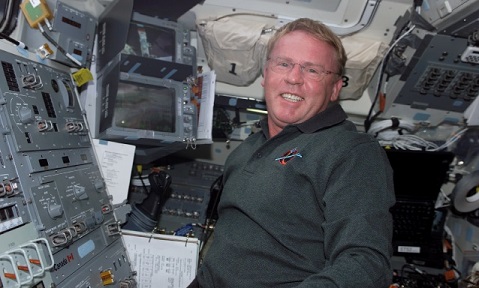
Andy Thomas aboard Discovery on STS-114. Credit: NASA
“I think for a young kid growing up in Australia at that time, the prospects of becoming an astronaut were remote, to say the least,” he said in a 2005 interview with NASA.
“But I’ve always believed that the pathway to many interesting experiences can be opened if you have the right kind of education, and certainly that’s true in my case. I think education, in fact, can open doors that you can’t even imagine and that would forever remain closed if you did not seek good education. And that’s been true in my case.”
While he ended up working in the United States and becoming a citizen there, it is worth noting that Thomas is a product of Australian education: he received two mechanical engineering degrees (including his Ph.D.) at the University of Adelaide.
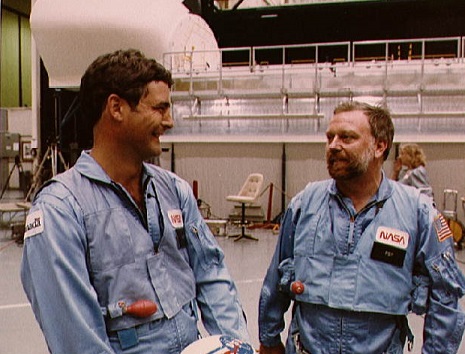
Paul Desmond Scully-Power (right) with fellow STS-41 astronaut Marc Garneau, a Canadian. Credit: NASA
Another Australian graduate was Paul Desmond Scully-Power, who flew into space aboard STS-41G Challenger. A graduate of the University of Sydney, he also began the first oceanographic group for the Royal Australian Navy.
Upon realizing that it’s been eight years since an Australian has been in space, and that few of the country have made it there, it might be natural for some to worry about whether one will make it again there soon.
There are initiatives within the country, however, to continue promoting educational opportunities that could one day set up students for that career path. One prominent example is Young Astronauts Space Schools Australia, a network focusing on both space and science education. Even if the path does not lead to space, there are opportunities in the country to perform astronomy and other forms of space science.
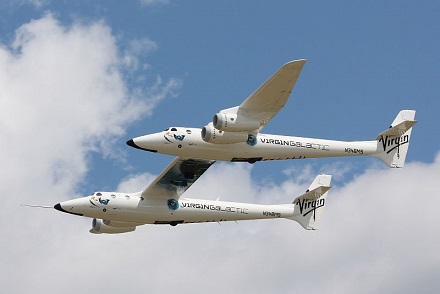
WhiteKnightTwo, the carrier craft aiming to eventually bring Virgin Galactic’s SpaceShipTwo into space. Credit: D. Miller/Wikimedia Commons
But with no Australian professional astronauts currently bound for space, it’s quite possible the next person from the country to make it into orbit will be one paying for a ticket aboard a private spaceship. Virgin Galactic is expected to fly its first flights in 2014, and XCOR is projecting flights in the next couple of years as well.
Hundreds of people have expressed a willingness to climb on board these flights, and there are at least eight companies in Australia willing to help you buy that ticket.
Perhaps the next Australian in space will be a “tourist”. This could be a business person who has spent their lifetime building up products in the country. Or perhaps they are simply an ordinary person who stashed away thousands of dollars in savings for what was an impossible dream a few years ago, but seems closer than ever today.
Trouble in Mind (Jenni Ogden, Scribe, $32.95, ISBN 9781922070562, July 2013)
I do not think I would be alone in fearing ‘losing my mind’. Even the common expression, “are you out of your mind?” gives solid form to what may seem a merely philosophical train of thought. At any given time most people will declare confidently that “I am in my ‘right mind’ and point to themselves as that ‘I’. The quandary is the ‘I’ of age eight is different to the ‘I’ of forty-eight; despite the continuity of of ‘I’ joining these two for example. Our mind then is one of those puzzling concepts at once both familiar and ephemeral. To lose ones mind, though, even partially, through trauma, disease, or disorder we would all agree is to lose some quintessential part of us. Trouble In Mind is a collection of real stories about people who have suffered just that – losing part of their minds.
The stories are from patients that the neuropsychologist author, Jenni Ogden, has worked with over her career in New Zealand, the USA, and Australia. Ten of the 15 patients portrayed in this book featured in Ogden’s 2005 textbook Fractured Minds. Trouble in Mind is neither text, nor assessment, nor treatment book. There are other books on the market that describe patients with a variety of neurological conditions. Many written by clinicians such as Ogden. Most I find fall short because the clinician writer is excited by the condition and fails to connect the human to that condition. In other examples non-clinicians often focus complete cures, without any reference to the many that underwent similar treatments – without success.
Ogden’s stories succinctly and clearly explain the medical conditions and engagingly present the human side of each in an empathetic and nuanced style. Whether talking about patients with car-crash brain trauma, rugby-induced concussion or suffering from Parkinson’s disease Ogden covers the personal, social and family elements with clarity that is often missing in clinical based non-fiction written by clinicians. In this respect Ogden writes with feeling like that of psychologist Oliver Sacks at his best.
These are stories that will have a resonance with most in our society. Three in particular I will mention as way of illustration of the breadth covered. Michael was a 24-year old motorcycle maniac. After a horrific accident, he left the critical care unit with a virtually ignored head injury; the surgeons had grappled with keeping him alive and the extensive orthopedic surgeries and specialist care. neither he nor his doctors realised that he was cortically blind. This resolved itself after two years – leaving him with object agnosia – the inability to recognise what he was seeing. Ogden then describes he many years work with Michael, his trials, tribulations and treatments to living 24 years later is a life with a most interesting disability. Amongst this we also get Ogden’s motivation – her clinician’s ‘delight’ in being asked to work with such an unusual case. Yes her delight, her excitement; those real human emotions not hidden behind neutral, banal psychology speak.
Hemispherical neglect. Wikimedia commons.
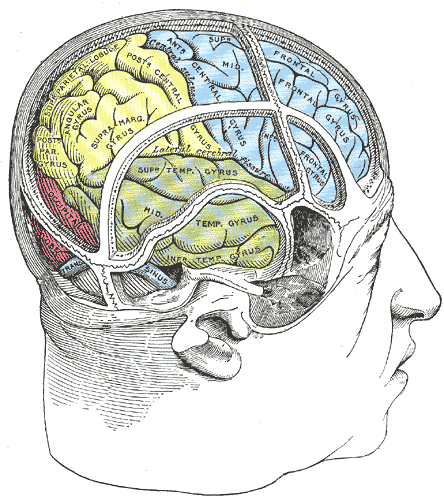
In another chapter Ogden looks at the bizarre neuropsychological disorder of hemineglect – ignoring visual stimuli in the side of space opposite to the side of their brain that is damaged. In this case though the patient is a chirpy 50 year-old female, Janet. The chapter is fascinating and the description of janet’s sessions with Ogden are sometimes, well, hilarious. But this is real-life not Hollywood. Janet’s hemineglect is caused by a brain tumor. Janet dies, four long and difficult years following her diagnosis. Ogden doesn’t just end the chapter, she humanely discusses the impact on Janet’s husband and close family and friends of her treatment and death. She also assesses the effectiveness of the treatments, looking at other cases, from her own and others’ casebooks.
The final chapter is aptly called “The Long Goodbye: coming to terms with Alzheimer’s disease.” This chapter follows Sophie’s diagnosis and cognitive decline from Alzheimer’s disease. I learnt a lot about the disease from reading this chapter. I equally learnt how it would be to watch a person who “was once active, independent, intelligent, humorous and loving gradually lose her mind”.
This collection of stories is eminently readable. I recommend it to readers with either; a specific, perhaps personal, topic of interest or those more generally who are curious and interested in how our minds work, particularly when they go awry due to damage to that squishy grey organ inside our skull.
What does the future hold for the Great Barrier Reef and what part will we play? In the most extensive social study to date, CSIRO is asking 5000 locals, visitors to the reef and businesses how they use, relate to and value the Great Barrier Reef.
It will be the first scientific survey of this scale about people’s perceptions for the whole of the Great Barrier Reef, covering marine tourism, traditional owners, ports and shipping, aquaculture, mining, residents and coastal communities.
CSIRO social scientist and project lead Dr Nadine Marshall said decision makers need as much information as possible to understand the role people will play in the future of the Great Barrier Reef.
“It’s the first time personal thoughts and feelings about the reef are being comprehensively collected,” Dr Marshall said.
“Years of data exist on the economic, ecological and environmental dimensions of the reef and now we’re closing the loop and including the hardest dimension of all – people.
“We want to understand what the Great Barrier Reef means to those who live nearby, work around it or visit the area.”
The findings will provide vital information to reef managers, businesses and the government to help them make decisions that reflect the needs of the people who interact with the Reef.
Over the next two months CSIRO will be approaching 5000 people from Cooktown to Bundaberg, to take part in the study. People could be approached at a shopping mall, on the beach or at a tourist hot spot. Local businesses will be contacted over the telephone.
Results will be published towards the end of the year when a snapshot of 2013 will be released. It is hoped that the study will be updated annually.
The three-year, A$2 million study is a collaboration between CSIRO’s Wealth from Oceans Flagship, the National Environment Research Program, James Cook University and the Great Barrier Reef Foundation.
Since the summer of last year, the perennial talk of epidemics and pandemics has focused on a novel coronavirus. A virus that belongs to a diverse group of that affects many animal species — from bats to humans. At the time the public health risks were unknown. How many could eventually possibly become infected or die? How does the virus spread? Is Human to human transmission possible?
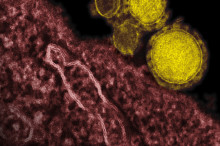
During the summer of 2012, in Jeddah, Saudi Arabia, the unknown coronavirus was isolated from the sputum of a patient with acute pneumonia and renal failure. To date, 55 laboratory-confirmed cases have been reported to the World Health Organisation. 31 individuals with laboratory-confirmed infection have died. Directly or indirectly most cases have been linked to four countries in the middle east; Saudi Arabia, Qatar, Jordan, and the United Arab Emirates. Now known as the Middle East Respiratory Syndrome Coronavirus (MERS-CoV), the exact scale and full parameters of a disease that the world is still understanding are slowly coming to the forefront.
Roughly two months ago a 73 year old man from Abu Dhabi died in a Munich hospital. He died on the 18th day of his infection of septic shock from the coronavirus infection he was suffering from. It is this patient, who was admitted to the Klinikum Schwabing in Munich in March, that is the subject of newly published research revealing more about the virus’ clinical features. Publishing in the Lancet, the research highlights the need for a therapeutic approach and that more data and research are needed. Little comprehensive clinical data on the new virus exists. In all, cases have been documented in Arabian Peninsula, Tunisia, Morocco, France, Italy, Germany, and the UK. Although one case in France turned out to be a false positive. Across all the documented and reported cases this is only the fifth patient for whom the virus’s progression and characteristics have been described in a medical journal.
A question early on had always been, is this the next SARS? In the spring and summer of 2003, the global outbreak of severe acute respiratory syndrome (SARS) caused more than 8000 probable or confirmed cases and 774 deaths in 25 countries across five continents. A health scare of pandemic proportions. And that is the new state of fear with every new mysterious infection. The new coronavirus (MERS-CoV) is one which Dr Margaret Chan, the Director General of the WHO, described as “my greatest concern right now.
Throughout human history, stories have existed across all cultures in all forms, from ballads, poems, songs to oral history, plays, novels. Some narratives have evolved along with the human species—we are consistently drawn back to ancient parables, fables and fairytales, constantly reworking them into modern contexts.
Narrative is a gift unique to the human species, but how as it survived for so long? Is it a by-product of evolution or essential to survival? What drove us to painstakingly inscribe portraits on rocky walls in ochre and charcoal, to compose and listen to lengthy ballads of heroes’ tales, to nosily read people’s Facebook statuses about their day, to devour novels and films like we’re hungry for fictional worlds? Neuroscience and developmental psychology have begun to answer these questions, embarking on the ambitious task of explaining why we tell stories.
Storytelling is one of our most fundamental communication methods, for an obvious reason: narrative helps us cognise information. Telling intelligible, coherent stories to both ourselves and others helps our brains to organise data about our lives and our world. But when we ask why stories are so effective at helping us cognise information, the answers are surprising: it seems that somewhere in the otherwise ruthless process of natural selection, evolution has wired our brains to prefer storytelling over other forms of communication.
Good stories engage us. When we hear plain, bloodless facts, the language processing centres of our brain light up and we decode words into meaning—but when we’re told a story, not only are language processing centres lit up, but also a vast array of other regions distinct from those centres. For example, if you tell a friend a story about a dinner party at which you ate delicious roast pork, their sensory cortex will light up; or if you tell them about the game of football, their motor cortex will become active. The parts of the brain they would use if actually experiencing the event light up, even though they are only being told about it.
This is particularly interesting when considering the effect that literary techniques have on our brain activity. In a 2006 study published in NeuroImages, Spanish researchers asked participants to read both neutral words (such as chair and key) as well as words with strong odour associations (such as coffee, perfume, lavender and soap). Brain scans using an fMRI machine showed that when they read the odour-associated words, their primary olfactory cortex lit up; but when they read the neutral words, that region remained dark. In another study at Emory University, texture metaphors such as “the singer had a velvet voice
As a five-time alumnus of the Canada-Wide Science Fair, I believed I had a thorough understanding of young scientists and their capabilities. However, my previous STEM experiences could not prepare me for the Intel International Science and Engineering Fair.
As the largest pre-college competition for young scientists, this event brings together over 1600 students from 70 countries. Setting aside language and cultural barriers, students are brought together through their shared insatiable curiosity and passion for science and innovation. This year, Intel ISEF took place in Phoenix, Arizona from May 12-17.
Team Canada arrived in Phoenix on May 11 after attending a media training event in Toronto. From the moment we stepped off the plane we were greeted by friendly volunteers and the excited Brazilian team. Our first encounter with each of the Intel ISEF finalists took place at the lively and exciting pin trading event. Being able to interact with passionate young scientists from around the world evoked a sense of pride in both our country and our generation. Every student in that ballroom was already changing the world, and it was exiting to imagine what they would accomplish in the future. Despite only knowing how to speak English and French, the Canadian team (myself included) immensely enjoyed interacting with other finalists and learning about the cultural differences between each participating country.
At the opening ceremonies, each finalist arrived with a heart full of national pride and many flags to hold high. The Canadian team paraded around the arena, cheering and singing with the other countries. During the “international shout out
I hope everyone’s had a good week! Personally, mine’s been rather tiring, having to take care of various academic shenanigans and with plenty to write about. And I have a couple of research fellowships still to apply for. Eek! But enough about me, because there have been some genuinely exciting things happening in science over the past few days. Here are the stories which managed to catch my eye…
One of the most interesting pieces of science news this week was that, for the first time ever, a fluorescent protein was discovered in a vertebrate animal – specifically, the Japanese freshwater eel. I also like that the protein has been named unaG – 鰻, or “unagi” is the Japanese word for eel!