The month of May saw us publish a plethora of interestingness – a wonderful variety of science and technology stories from within the fields of education, technology, space, internet technology, biology, environmental science, and more. We hope you enjoy them!
For those interested in science blogging and contributing to Australian Science – contact us and check out the Editor’s note.
I was skeptical when I stumbled on Henry Reich’s MinutePhysics Youtube channel one night. How could anyone explain light, The Big Bang or relativity in just minutes and be understood? I decided to watch one in the expectation that I would be sent to sleep. It was well past midnight. In the end, I didn’t go to sleep until after I had watched every MinutePhysics video in existence. I was hooked. It all started with an explanation of what fire is. Read more>>
Quantum computers will work using quantum bits, or qubits for short, which are analogous to the digital bits used in computers like the one which you’re using to read this article. Recently, a team of engineers at the University of New South Wales (UNSW) has successfully demonstrated, for the first time ever, how a single atom can be act as a qubit, effectively showing the first step in building an ultra fast quantum computer. And they might just have created the best qubit ever made.
A quantum computer is, simply, a computer which makes use of quantum mechanical phenomena to perform calculations.Well, I say “simply
The Australian Institute of Food Science and Technology (AIFST) has announced the recipients of their prestigious merit and innovation awards ahead of the 46th Annual AIFST Convention.
The Keith Farrer Award of Merit, which acknowledges achievement in food science and technology and contribution to furthering the aims of the Institute’s objectives, has been awarded to Professor Ian Brown.
Professor Ian Brown, Managing Director and CEO of Clover Corporation
Professor Brown’s 32-year career spans technical and commercial roles across the cereal, ingredient, food and nutrition industries both internationally and locally. In furthering his personal research activities and applying them collaboratively between companies and the scientific sector, Professor Brown has been successful in commercialising key food and nutritional ingredients including Hi-Maize®, the world’s first commercial source of resistant starch.
Professor Brown is currently the CEO and Managing Director of the Australian publicly listed company Clover Corporation, which under his leadership has experienced an increase in profits from $465,000 to $4.4 million. In addition, Professor Brown is a Special Visiting Professor at the University of Colorado and an Adjunct Professor at the Flinders University of South Australia.
President of the AIFST, Jo Davey, said, “It is unique in the food sector to see an individual that holds full-time senior industry positions with such an impressive scientific record of published papers, book chapters and keynote presentations. Additionally, he has also been awarded a PhD by one of Japan’s leading universities and is listed on 24 patents. Professor Brown has a long list of truly outstanding achievements.
European Inventor Award 2013 goes to outstanding inventors from Austria, France, Sweden, Switzerland, Spain and the US
· European Patent Office honours pioneering inventors of LCD technology, nano-capsules for cancer treatment, pyrosequencing, USB, and ‘Blumotion’ damper system for doors
· EPO President Benoît Battistelli: “These inventors have been truly exemplary, not only in coming up with ingenious solutions to the challenges of our time, such as healthcare and climate change, but also in improving people’s lives through the quality of the products and services that we are using every day, and by creating jobs to promote economic wealth”
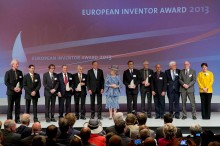
Amsterdam, 28 May 2013 — The European Patent Office today announced the winners of the European Inventor Award2013, which honours outstanding inventors for their contribution to social, economic and technological progress.
Some 500 guests attended the award ceremony at the Beurs van Berlage in Amsterdam, including Her Royal HighnessPrincess Beatrix of the Netherlands, Sander Dekker, the Netherlands State Secretary for Education, Culture and Science, and Michel Barnier, the European Commissioner for Internal Market and Services.
The 2013 awards were presented in five categories, in addition to the Popular Prize:
· Lifetime Achievement: Martin Schadt (Switzerland), inventor of the world’s first flat-panel liquid crystal display, better known as LCD. Schadt’s technology has paved the way for the low-energy devices, such as flat screens, tablet computers and mobile phones, now used by millions of people worldwide.
· Industry: Claus Hämmerle and Klaus Brüstle (Austria) from Austrian manufacturer Julius Blum for their invention of a damper system for soft closing of furniture doors, drawers and wall cabinets. ‘Blumotion’ has seen enormous market success worldwide and has become an industry standard.
· Small and Medium-Sized Enterprises: Pål Nyrén (Sweden) for inventing pyrosequencing ─ a far faster, less complicated and cheaper method of sequencing DNA strands. Its combination of lower costs and greater speeds has revolutionised the study of the building blocks of life, and opened up new avenues for research into personalised treatments and cures for life-threatening diseases such as cancer.
· Research: Patrick Couvreur, Barbara Stella, Véronique Rosilio, Luigi Cattel (France, Italy), a team at Paris-Sud University, for their invention of nano-capsules – 70 times smaller than red blood cells and protected by a biodegradable coating – which destroy cancer cells without harming healthy tissue.
· Non-European Countries: Ajay V. Bhatt, Bala Sudarshan Cadambi, Jeff Morriss, Shaun Knoll, Shelagh Callahan (USA), for creating and developing Universal Serial Bus (USB) technology, one of the most important advances in computing since the silicon chip. An industry standard today, USB not only allows users to more easily connect devices to a computer, it also streamlines work for hardware and software developers. It is found in billions of electronic devices all over the world, from webcams to cell phones and memory sticks.
José Luis López Gómez (Spain), winner of the Popular Prize award on the stage of the European Inventor Award 2013
· The winner of the Popular Prize was José Luis López Gómez (Spain), whose invention to use a unique ‘independent guided’ wheel design rather than a standard axle on high-speed passenger trains makes those trains some of the most comfortable and safe in the industry. The new technology also helps to reduce energy consumption, premature wear and costs of maintenance. An electronic system monitors the speed at which the wheels are rotating. Due to the wheels’ slightly conical shape and the difference in length between the inner and outer tracks on a curved section of track, the system can determine the wheels’ exact contact point. Pneumatic struts attached to the wheels then move the wheels to the best position.
“Innovation holds the key to safeguarding quality of life and economic prosperity in Europe,” said EPO President Benoît Battistelli at the award ceremony. “All of the inventors honoured here today have been truly exemplary, not only in coming up with ingenious solutions to challenges of our time, such as healthcare and climate change, but also in improving people’s lives through the quality of the products and services that we are using every day, and by creating jobs to promote economic wealth. They demonstrate Europe’s creative drive and inventive spirit, and the role played by patents in supporting this.”
About the European Inventor Award
Launched in 2006, the European Inventor Award is presented annually by the European Patent Office. The Award honours inventive individuals and teams whose pioneering work provides answers to the challenges of our age and thereby contributes to social progress, economic growth and prosperity. Nomination proposals are submitted by the public, and by patent examiners at the EPO and Europe’s national patent offices. Fifteen finalists and, subsequently, the winners are chosen from among the nominees by a high-profile international jury which includes experts from business, politics, media, academia and research. The Award is presented in five categories: Industry, Research, Small and Medium-Sized Enterprises (SMEs), Non-European Countries, and Lifetime Achievement. This year, for the first time, the general public was invited to vote for the Popular Prize from among the 15 finalists.
As one of the most prestigious competitions of its kind, the European Inventor Award each year pays tribute to the creativity of inventors, whose quest for new ideas drives technological progress and economic growth, shapes our society and improves our daily lives. The award not only gives inventors the recognition they deserve, it also encourages future innovation.
This year is the 40th anniversary of the European Patent Convention from which the European Patent Office (EPO) was born. The event, which takes place in Amsterdam, will feature a prestigious award ceremony and bring together some of the world’s brightest innovators, along with key decision makers in business, politics, media and the sciences.
The 2013 edition of the European Inventor Award will be presented by the EPO on Tuesday 28 May, in Amsterdam, the Netherlands. At the award ceremony, 15 inventors from eleven countries (link) in five nomination categories will be honoured for their outstanding contribution to technical progress and economic growth, and five of them will be distinguished as winners of the European Inventor Award. In addition, a Popular prize will be awarded for the first time to one of the 15 nominees.
Some 500 guests will attend the award ceremony at the Beurs van Berlage in Amsterdam, including Her Royal Highness Princess Beatrix of the Netherlands, Sander Dekker, the Netherlands Minister for Education, Culture and Science, and Michel Barnier, the European Commissioner for Internal Market and Services.
The event will open at 09.30 hrs CET with a joint press conference of EPO President Benoît Battistelli and EU Commissioner Michel Barnier, followed by a Q/A session.
The award ceremony starts at 10.45 hrs CET with the arrival of HRH Princess Beatrix, and is scheduled to close at about 12.45 hrs CET.
The following contents are offered for the event on 28 May (all times are CET):
“How the boy said, ‘mama, I’m going to die,’ and how she knew enough to say, ‘no you aren’t honey, no you never will.’ How this boy could only stare back at his father and mother and why they lied.
A happy Science Sunday to everyone! As usual there’s been a lot happening in the world of science, so lets take a peek of the best picks for the past week!
If you’re into astronomy, a planetary conjunction is something to celebrate! This week is one for the observers. Just after dusk for the next few days you can see the unusual and stunning alignment of Jupiter, Venus and Mercury.
‘Three planets Jupiter, Venus and Mercury — can be now be seen in the western sky at dusk, weather permitting, in a rare and beautiful gathering that changes from night to night. Astronomers call a meeting of objects in the night sky a conjunction, but this planet parade is better described as a “Grand Conjunction.”
Also in the news this week. Cockroaches. Yes. Cockroaches. Apparently they’re cutting back on the sugary stuff, for good reason.
Sugar-free diets aren’t just making headlines in the human world. Cockroaches have joined the anti-sugar trend. Research published in the US journal ‘Science’ today shows cockroaches will eat anything, except sugar. The researchers show that cockroaches have learned to detect and avoid a certain kind of glucose that is commonly used in commercial traps.
Citizen scientists solved a decades-old puzzle by assisting astronomers to make the most accurate distance measurements yet for an important star system.
The new research, reported in the in the journal Science found the distance to the binary system SS Cygni in the constellation Cygnus the Swan, is 372 light-years. That’s far closer than previous measurements of 520 light-years made by the Hubble Space Telescope, according to the study’s lead author Dr James Miller-Jones of Curtin University and the International Centre for Radio Astronomy Research.
This article took me by surprise. I know we can tell a lot from looking at skeletons, and fossilised teeth but how long a mother breastfed for?
The debate on how long to breastfeed now has a Neanderthal spin with analysis of a fossilised tooth suggesting primitive mothers breastfed exclusively for just seven months. The claim is based on an analysis of barium concentration in different layers of tooth enamel, which also reveals the Neanderthal child was completely weaned at 1.2 years.
If you remember the article Conversations with Google, you may recall it’s been predicted that the next mode of interaction with Google search will be natural language conversation where Google will be able to follow the course of the conversation and provide new results and suggestions. Well, as of this Wednesday it’s become a reality.
Google presented conversational voice search at Google I/O a week ago. It’s a kind of search designed to be more like natural language and human speech than the technically constructed search inquiries that people use daily to retrieve information. You can just click the microphone in the search box, ask your question in a natural way, and get spoken answers. Conversational voice search is not a Chrome desktop version of Google Now, even if it might look like that; it has none of the predictive answers that Google Now provides.
The conversational search feature has a natural language and semantic search integrated into it, and after the initial testing yesterday while it’s far from perfect, it presents one of those significant changes. Speaking your search into the box is not a new thing, but having a conversation with the search engine and being able to search by voice is what makes the difference in the human-computer interaction. And being able to speak a search inquiry and getting an answer read back to you is pretty impressive. The feature is similar to how the Google Search App works for the iPhone or Android.
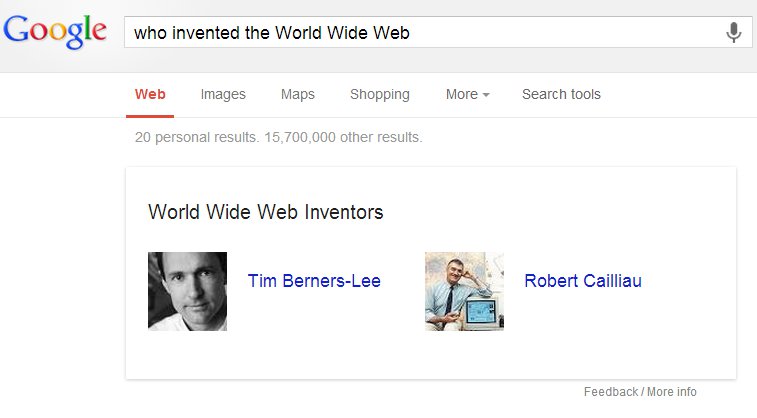
As a test, I asked “Who invented the World Wide Web?”
The Chrome voice feature responded with correct answer, “Tim Berners-Lee and Robert Cailliau…”.
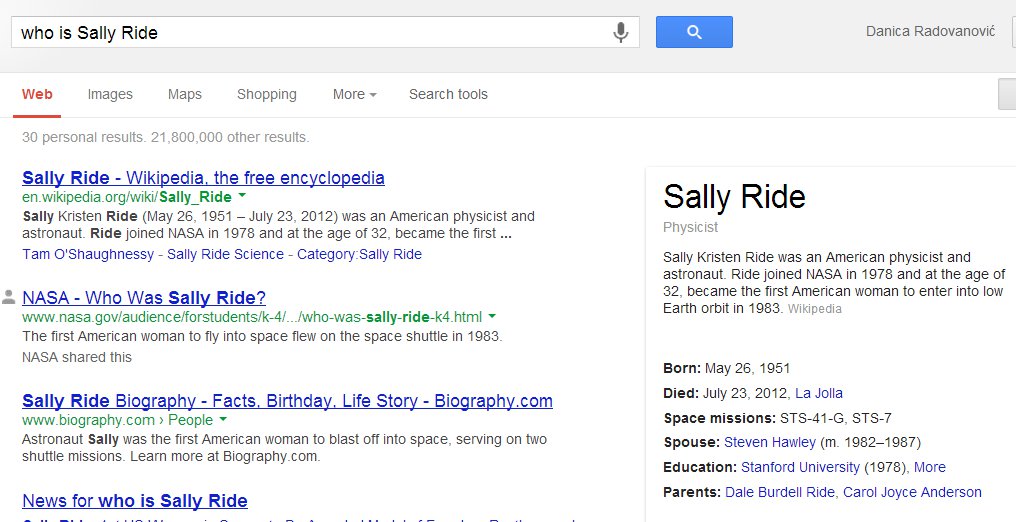
Conversational voice search does not always work right as you go further on into a conversation. Chrome didn’t follow up with voice feedback on questions “Where the World Wide Web was invented?”. Other search inquiries such as “who is Sally Ride?” include voice feedback “According to Wikipedia…” and then Chrome provides a brief synopsis.
For another test, a simple weather related inquiry, I asked, “What’s the weather like in Paris?” and then “Do I need umbrella for the weekend in Paris?”. I got back a full spoken report of today’s weather, along with a forecast for this weekend. What is really impressive is that you can continue with voice search by asking further questions in a way you could never do with regular search (i.e. you can use other references from previous inquiry).
While not yet perfect, conversational search is still very appealing; we’ll see how this feature will be developed by engineers. The conversational search question-and-answer feature is now available to users of the latest version of Chrome 27 browser, which Google released this Tuesday.
How did the universe begin — and how is it expanding? CERN physicist Tom Whyntie has created a new TED-ED three animated video that explains how the universe began, why it’s expanding, and other basic phenomena that concern cosmologists and particle physicists. He shows how cosmologists and particle physicists explore these questions by replicating the heat, energy, and activity of the first few seconds of our universe, from right after the Big Bang.
Lesson by Tom Whyntie, animation by Hornet Inc.
Renewable energy? I’m a big fan! Unfortunately, so are modern wind turbines, which are the subject of intense arguments and criticism despite their many benefits. However, this view might be changed somewhat, by a new innovation by Farzad Safaei at the University of Wollongong (UOW) – a new type of wind turbine known as PowerWINDows.
I’m actually going to come straight out and drop the neutral viewpoint on this article, because this is important. I am very much a supporter of renewable energy, and I find it quite preposterous that anyone would even think about arguing against it. Very recently, carbon dioxide levels in the atmosphere have reached 400 parts per million for the first time in recorded history. This may not seem like a lot, but Earth’s atmosphere hasn’t seen this much carbon dioxide for over 3 million years. It may sound like a cliché to say, but by continuing to burn fossil fuels we’re doing some permanent damage to our planet. And speaking as an astronomer, I can say with some authority – this is the only planet we’ve got.
Lots of people argue against wind turbines. In my not-so-humble opinion, this is ridiculous. Nonetheless, it happens. People claim that they’re “a blight on the landscape”, that they generate noise, that they affect local wildlife, and that they have a negative impact on health. Most of these criticisms are unsubstantiated and have no basis in fact. Let’s think rationally here: all of the same things are probably true of any other form of power station. And when other power stations go wrong, the effects can be significantly worse than a broken propeller blade. Hopefully then, innovations like PowerWINDows might help to both silence the critics and make wind energy a more easily attainable power source.
The basic idea with PowerWINDows is that there are none of the large rotating blades which people claim to be dangerous. The smaller, compact design allows PowerWINDows turbines to be installed on tall buildings such as skyscrapers and apartment blocks. All in all, the newly designed turbines are cheaper, quieter, and more convenient than existing wind turbine technology.
After four years of design and testing work, UOW have signed a deal with Birdon, one of Australia’s top engineering companies, to build and test a prototype suitable for commercial production. If all goes according to plan, the new turbines may go into production sometime in the future. Just imagine how much additional power could be generated if every large city had wind turbines installed on every tall building!
Professor Safaei’s inspiration for the idea was a desire to improve on existing wind turbines and any of their shortcomings – i.e. the criticisms made against them. His goal was to enable modular manufacturing, reduce noise and land usage, and allow easier transportation and installation. “I wanted to create a wind turbine that better integrated with living environments
I am doing advocacy on Open Access in India and following the activities related to Open Access around the world online. After writing a blog post on ‘Open Access India’, I thought of writing a series of country specific Open Access activities and decided to write about Australia’s Open Access activities. With the launch of Australian Open Access Support Group (AOASG)’s website on February 2013, I see that the visibility of Open Access in Australia had significantly grown up. The internet resources which I have collected for this blog post says that the AOASG was formed during the Open Access Week 2012 by Victoria University being its first member.
John Shipp, a University Librarian from the University of Sydney in 2006 had given an account of Open Access in Australia which can be accessed here. In his article, Mr. John mentions about the Australasian Digital Thesis Program (ADT) has 5,391 full text files were available in mid-January 2006. Currently Australia has 71,880 thesis online and available via the National Library of Australia, Trove.
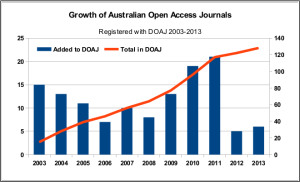
When we look at the Open Access Movement in Australia with the growth of Open Access Journals, we can see that it all started in 2003 and every year very good number of Open Access Journals are being added to the Directory of Open Access Repository (DOAJ).
The OAK Law project which had ended in 2009 had set up a database of all the publishers open access policies and publishing agreements. A similar database known to SHERPA/RoMEO publishers’ copyright policies is also existing at Univeristy of Nottingham, UK. These lists are facilitating researchers about what and how to share their research outputs legally with the cosmos.
According to the Registry of Open Access Repositories (ROAR), approximately 82 repositories are existing in Australia with Australasian Digital Thesis Repository of Tasmania being the oldest and Monash University Research Repository the recent one.
The Australia Australian Research Council (ARC) had announced its Open Access Policy in January 2013 which requires deposition of research outputs within a month from the publication date. However, according to the Creative Commons blog post, it appears that the Australian Government had already devoted to Open Access in 2010 for using CC-BY licenses for the Australian Public Sector Information.10 for using CC-BY licenses for the Australian Public Sector Information.
Support of Open Access in Australia is led by AOASG and Open Access Austalia group on openaccessweek.org
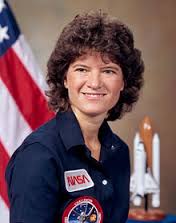
This article is the third in a series of articles in which I will profile every woman astronaut, cosmonaut and taikonaut who has been into space. Last time we looked at the career of Svetlana Savitskaya the second woman in space. Today I’m profiling astronaut Sally Ride, the first American woman in space. (The feature image above is a collection of drawings of women astronauts by artist Phillip J Bond. You can find Phillip’s wonderful series on women astronauts here.)
In 2004 I saw Sally Ride at an Australian Broadcast Corporation (ABC) Radio National Science Special in Canberra. When I first saw her speak, I was surprised how small she appeared on stage. In my mind, Sally Ride was larger than life, an adventurer, explorer, a trailblazer who broke boundaries in physics, astrophysics and space exploration. Of course within a few minutes of her speaking I was completely drawn into her world of science and space exploration where her stature, and gender is irrelevant. (The transcript of the show she shared with astrophysicist Paul Davies, and marine biologist Syliva Earle can be read here).
Sally Ride aboard the Shuttle (Image credit NASA).
Sally Ride was born in Encino, California. She had one sibling, a sister, her mother was a volunteer counselor at a women’s prison, her father was a political science professor. Sally went to Swarthmore College, taking physics courses at UCLA, she then went on to Stanford to earn her Bachelors degree in English and Physics, and her Masters degree and PhD in physics. Sally was an accomplished athlete, and nationally ranked tennis player in her youth.
Sally was one of about 8,000 people who responded to NASA’s call for applicants for the space program. Sally was ‘recruited’ to NASA by actor Nichelle Nicols who played communications officer Lt. Uhura in the original Star Trek television series. NASA had asked Nichols to help them find the first qualified women and minorities to join what was was until then, an all white male astronaut corps. After more than 12 months of testing and training Sally was one of the few selected to join NASA in 1978. Somewhat unsurprisingly at the time, her gender attracted quite a bit of media attention. Although she herself stayed well clear of gender issues Sally was still asked inane questions like ‘Do you weep when things go wrong on the job?’, and ‘Will the flight affect your reproductive organs?’. Sally noted that she felt astronaut training was ‘asexual’, women and men did all the same training, and that in space ‘weightlessness was the great equaliser, you don’t need to be strong in space’.
Sally Ride – Pilot (Image Credit NASA)
When Challenger roared into space on 18 June 1983 Sally Ride became the first American woman, and the youngest astronaut in space. She was preceded by Valentina Tereshkova in 1963 and Svetlana Savitskaya in 1982, both Russian astronauts. During the STS-7 mission the crew deployed two communications satellites and conducted pharmaceutical experiments. Sally was the first woman to use the robot arm in space and the first to use the arm to retrieve a satellite. Sally’s second space flight was in 1984, STS-41G where the crew deployed the Earth Radiation Budget Satellite, and conducted various observations. STS-41G was the first time that two women flew in space together, when Kathryn Sullivan joined Ride on the crew. Upon her return she was then scheduled for STS-61M, however, that mission was cancelled in the wake of the Challenger disaster. She was nominated to head the Operations sub-committee on the Rogers Commission, the presidential commission investigating the challenger accident. Following the investigation Sally went to work in NASA HQ authoring a report ‘NASA Leadership and America’s Future in Space’.
Sally Ride and Muppet (Image courtesy of Wikimedia)
During her career, Sally served as the ground-based capsule communicator (CapCom) for the second and third Space Shuttle flights (STS-2 and STS-3) and helped develop the Space Shuttle’s robot arm. She spent a total of more than 343 hours in space. Sally remarked in an 1984 interview that she felt ‘a lot of pressure’ being the first US woman in space, and that most of the pressure was ‘generated by the media’. She said she felt ‘proud’ to be the first US woman in space, and that the extra pressure made her determined to do things right.
Sally left NASA in 1987 and went to work for Standford University, she then moved to the University of California San Diego (UCSD) as the Professor of Physics. She was also the Director of the California Space Institute, and a vigorous promoter of public outreach for science. In 2001 Sally co-founded her own company, Sally Ride Science, a company that creates entertaining science programs, events, and publications for elementary and middle school students, with a focus on girls. In 2003 she was asked to be a member of the Space Shuttle Columbia Accident Investigation Board, the only person to sit on both the Challenger and Columbia accident boards. Whilst at USCD, Sally led Jet Propulsion Laboratories (JPL) public outreach program for the ISS – EarthKAM and GRAILMoonKAM which encouraged school students to study imagery of the Earth and moon. Sally was also nominated to serve on the 2009 commission that helped shape NASA’s current spaceflight program.
Sally Ride (Image courtesy of NASA)
Sally Ride passed away on 23 July 2012 from pancreatic cancer. A fiercely private person, she did not release any information or details of her 17 month battle with her illness. Her death shocked many people. President Obama said shortly after her death ‘As the first American woman to travel into space, Sally was a national hero and powerful role model. She inspired generations of young girls to reach for the stars and later fought tirelessly to help get them there by advocating for a greater focus on science and math in our schools’. Sally’s legacy of public outreach and work with school students through her company Sally Ride Science will be continued by her partner and co-founder of Sally Ride Science, Tam O’Shaughnessy.
Perhaps the most moving tribute to Sally comes from her friend Nichelle Nichols, ‘Sally Ride — my heart aches right now. Sally was one of my first and biggest achievements. She once thanked me for my recruitment efforts while under contract to NASA, saying “If it hadn’t been for you I might not be here.
Greetings one and all, and a very happy science Sunday to you! This week’s generally been quite interesting. We’ve had good news, bad news, a little heated discussion… All the kind of things which keep the science community vibrant and interesting. As for specifically what that news was, well. Please do read on…
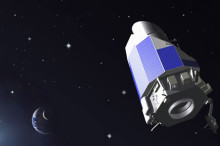
First up this week, sad news. After exemplary service ever since its launch in 2009 and a mission extension last year, the Kepler telescope has finally broken down. Kepler spots transiting exoplanets by staring unblinkingly at the same patch of sky, and in order to do that it needs to keep very still. Sadly, two of its four gyroscopes are out of action, meaning that Kepler may be shutting down for good.
“Frankly, I’m absolutely delighted that we’ve got all this data, that we have been so successful, that we have found so many thousands of planetary candidates,
There is a scientific term that causes fear and alarm to those that study biodiversity. More fear and alarm than the term climate change. Biotic homogenisation — introducing a new exotic species to an area that was, until now, without admixture. Worldwide there is an increase in introduced exotic species and the potential of these species to become invasive have their impact.
The most invasive ladybird on Earth — Harmonia axyridis — was introduced in several European countries and North America for biological pest control, and quickly turned invasive. It has been outcompeting indigenous ladybird species in many countries for a long time now. Ladybirds are quite common in use as a — what we now call — biological control agent. They have a long history of use against unwanted pest insects. For example, the Australian vedalia ladybird, Rodolia cardinalis, was released in 1888 to control scale insects.
Harmonia axyridis is also known as the harlequin ladybird, and it has been outcompeting and threatening native species since the beginning of the 20th century. Its invasive success has until now been attributed to its enduring resistance against diverse pathogens. The same pathogens that strike down and blight the native European species, allowing the harlequin ladybird to outperform and out-survive.
But now, Andreas Vilcinskas knows of another reason — and it is something more like parasitic warfare than simple evolutionary survival of the fittest.
Andreas Vilcinskas goes to work every day to kill ladybirds. Or rather, he goes to work to investigate how ladybirds kill each other. And it is the parasites within that act as the smart bomb against the native species. Harmonia have within them, swimming around in their blood, spores of the parasite microsporidia. They do no harm to Harmonia, but are lethal to the native ladybird Coccinella septempunctata. What is more interesting is that this lethality comes when the native species feed on microsporidia-infested Harmonia eggs or larvae. As is convention, ladybirds often eat the eggs of other ladybirds.
The tale of an invasive species is always something more akin to Kal-El leaving Krypton. You land in a foreign land with the realisation that you have superpowers (in comparison to the natives). The harlequin ladybird’s secret most likely lies within its blood (hemolymph). A hemolymph already shown to ward of mycobacterium and the parasite that causes malaria. Its blood, or more accurately, the metabolite harmonine within its blood, exhibits broad-spectrum antimicrobial activity. Antibacterial activity against Mycobacterium tuberculosis, and chloroquine-resistant Plasmodium falciparum strains.
For this new reason to awe the ladybird, Andrea Vilcinskas and colleagues drew blood from the legs of 100 ladybirds. With such super blood already documented, the question being: was the harlequin ladybird’s advantage over the native species simply down to harmonine, or did the microsporidia have a significant lethal effect.
They showed that injecting the native species with Harmonia blood — but not harmonine alone — can kill. Suggesting, that it is unlikely that the mortality caused by native species feeding on Harmonia eggs is caused by the presence of harmonine.
It seems that native ladybird species are lethally infected with microsporidia carried by Harmonia when they feed on its eggs and larvae. The microsporidia parasitize cells by means of a spear through the plasma membrane. Within two weeks of starting their experiment all native species had died from the microsporidia.
The most invasive ladybird on Earth lives up to its name. The worldwide invasion of the harlequin ladybird is as a result of a parasite that lies within. A parasite to which it has grown immune but to which the natives have no way of stopping. War of the Worlds gone backwards.
Computers are everywhere these days. They play us music, tell us when to wake up, remind us that we’re late for an appointment, and provide us with entertainment. Even if we don’t realise it, so ingrained in our lives are computers that the world would be a very different place without them. Computing is also an incredibly fast moving field of technology, and research is finally taking us towards the exciting world of quantum computing!
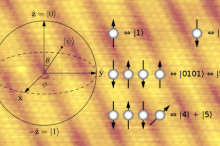
Quantum computers will work using quantum bits, or qubits for short, which are analogous to the digital bits used in computers like the one which you’re using to read this article. Recently, a team of engineers at the University of New South Wales (UNSW) has successfully demonstrated, for the first time ever, how a single atom can be act as a qubit, effectively showing the first step in building an ultra fast quantum computer. And they might just have created the best qubit ever made.
A quantum computer is, simply, a computer which makes use of quantum mechanical phenomena to perform calculations. Well, I say “simply”… Let’s step back a moment. The simplest form of computers involve actual moving objects, and using the positions of those objects to perform calculations. This is essentially how an abacus works, if you’ve ever used one. The earliest computers to be designed, automated this process, using mechanisms. Charles Babbage’s famous, albeit never built, Analytical Engine worked on exactly this basic principle, and if it had been constructed it would have truly been the world’s first computer.
Essentially, the way these old mechanical computers work is to use the positions of their mechanical parts to perform mathematical and logic functions. This is actually the fundamental way in which all computers work. Since the discovery of electricity and the invention of electronics, computers have worked using electric circuits – effectively using the position of electrons instead of the position of actual moving parts. As technology has progressed, computers have become faster, smaller, and more reliable, until the world around us today.
In modern electronics, silicon is king. Silicon-based electronics are the standard used everywhere, though they’re reaching the limit of what they’re capable of. For the next generation of electronics, some people are beginning to advocate new materials, such as graphene, over silicon. But ultimately, others have a higher goal. Proponents of quantum computing believe that in the future, the most vital components of computers will not be electronics at all, but single atoms.
In quantum mechanics, any single particle, from an electron to an atomic nucleus, has a set of properties which can often be changed quite easily. Where past computers used motion of mechanical parts and modern computers use motion of electrons, quantum computers will use changes in the properties of these particles to perform their calculations.
One such quantum property is known as spin (the same property behind magnetism), and this is what the UNSW engineers managed to manipulate. They based their qubit on a single silicon atom and demonstrated how they used changes in the nuclear spin of the nucleus to store and retrieve information. Andrea Morello at UNSW’s School of Electrical Engineering and Telecommunications described how; “We have adapted magnetic resonance technology, commonly known for its application in chemical analysis and MRI scans, to control and read-out the nuclear spin of a single atom in real time.