Blog

  • Weekly Science Picks

    Weekly Science Picks

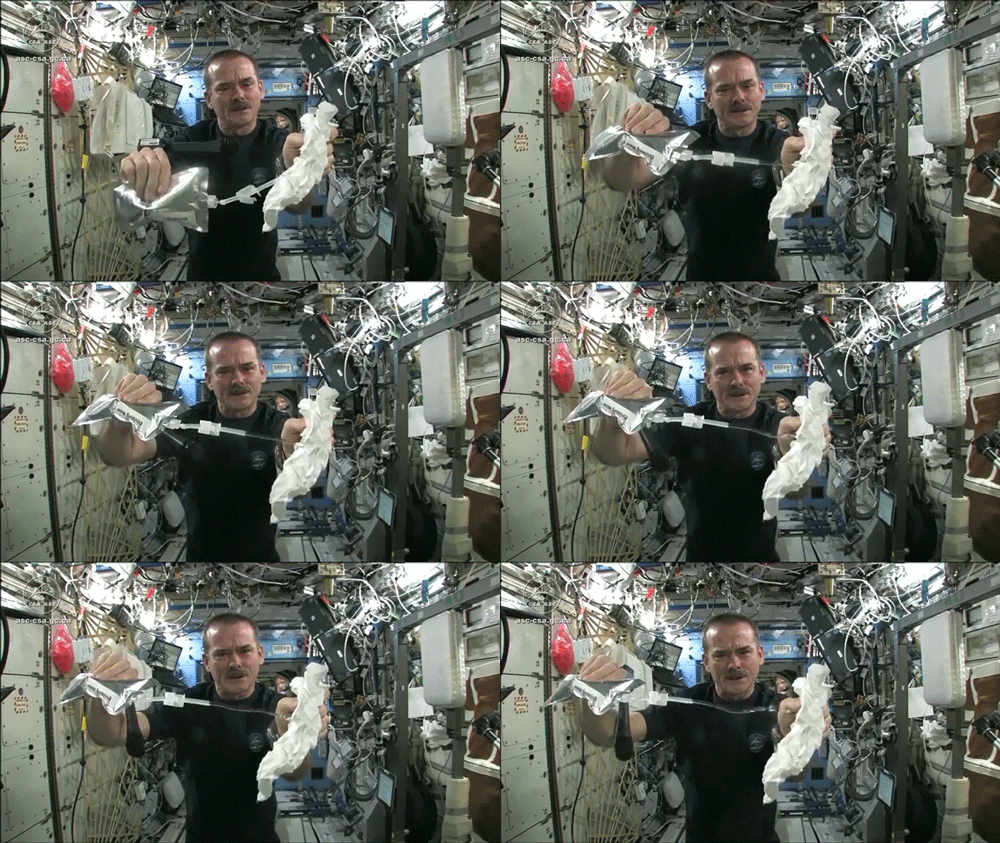
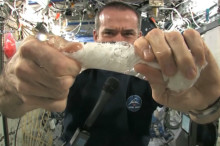
    At the top of my list this week would have to be the ISS Commander Chris Hadfield from Canadian Space Agency wringing out a wet towel in zero gravity. If you haven’t watched it yet. Do it now.

    The explanation behind what happens is more in depth than “magic”. Cmdr Hadfield is right when he mentions surface tension of water. Though it doesn’t explain the chemistry and physics of what is happening and also why he wasn’t worried about the exposed electronics in the ISS. I have to admit I was worried about droplets of water travelling out and into the wiring because water molecules are attracted to one another due to its molecular structure. I should have realised this being a chemist and all.

    The arrangement of oxygen and hydrogen of water results in a slightly positively charged area and a negatively charged area so water molecules arrange themselves where opposites attract. This even holds in zero gravity.

    What I especially like about Cmdr Hadfield is that he includes people on Earth in his daily routine on the ISS. He replies to people’s tweets. I personally got a kick when he retweeted one of my tweets. Real time communication with an astronaut on the ISS. That’s awesome. He also includes school students allowing them to ask him questions. If you’re on Twitter and he isn’t someone you’re following, go find him at @Cmdr_Hadfield.

    At the end of this week, a news story broke of how radioactive bacteria could potentially used to treat metastatic pancreatic cancer, that is where the cancer has spread to other parts of the body. The bacteria used was Listeria monocytogenes which is a member of a bacterial family that can cause serious infections and health complications. The good news though is that immune system normally gets rid of Listeria.

    One reason why tumours grow is that they suppress the immune system so scientists thought to exploit this hoping that introduced Listeria would concentrate in tumour sites and deliver targeted radiotherapy. They introduced Listeria bacteria dosed with radioisotopes in mice with pancreatic cancer.

    The results are really promising. The mice that received this treatment had 90% fewer cancer tumours in other areas of the body than those who had received radiotherapy and saline. The original cancer in the pancreas though was unaffected. It’s early days and it’s a long way from human trials. There is still the need to explain what was observed in this trial and what remains unknown is the effect of radiation on healthy organs.

    Pancreatic cancer is the 6th highest cause of death for all cancer types in Australia, and only about 6% of people with this cancer survive 5 years after diagnosis compared to a 5-year survival of 88% for breast cancer, 93% for thyroid cancer and 19% for lung cancer. Currently there are very few treatment options available.
  • Australia from orbit

    Australia from orbit

    From December 19th last year, Chris Hadfield has been living aboard the International Space Station (ISS) in orbit roughly 400 km above planet Earth. Seeing 15 sunrises every day as the station tracks its way above our planet, the ISS, to quote Hadfield himself, “weighs 500 tonnes and is the size of 5 NHL hockey rinks, with living quarters for 6 people.”

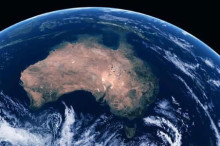
    One of the many things which Hadfield has been doing is to keep the tradition set by previous astronauts of taking fantastic photographs of our planet from above. In a Reddit AMA session a couple of months ago, he mentioned that Australia “looks the coolest” from orbit, being fond of the textures and colours of the Australian Outback. So here, for your visual pleasure, are some of the most beautiful pictures of Australia taken from high, high above by Chris Hadfield. Enjoy!

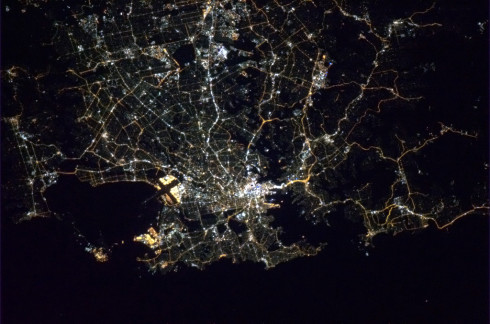
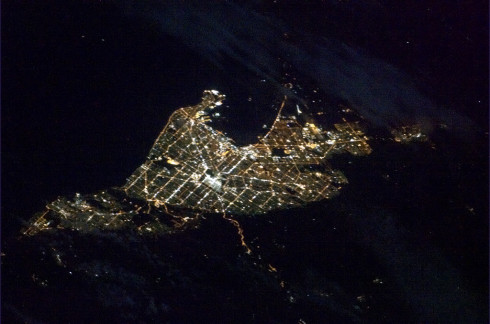
    Adelaide by night

    Adelaide by night, glittering like a jewel.


    Outback from Orbit

    “The Outback is full of scary faces, staring up in forbidding horror.”


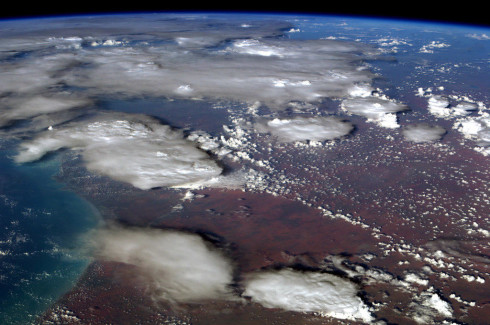
    Smoke clouds from the bush fires

    Smoke clouds from the bush fires, as seen from above.


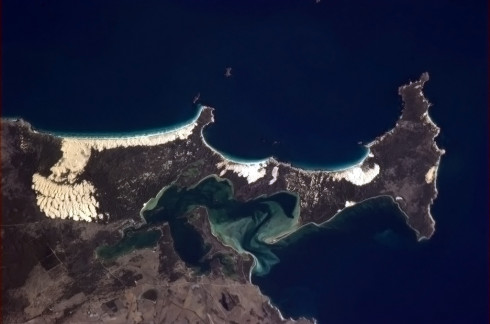
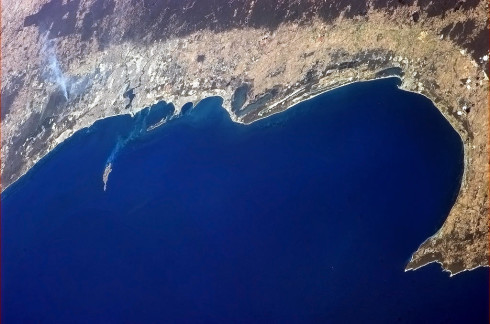
    Coffin Bay

    Coffin Bay national park.


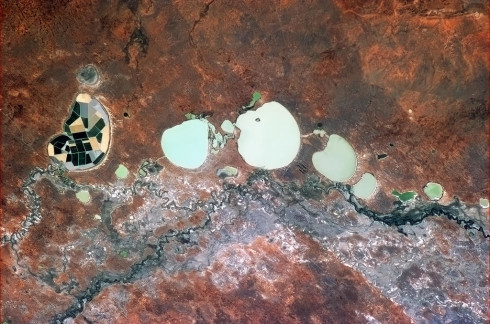
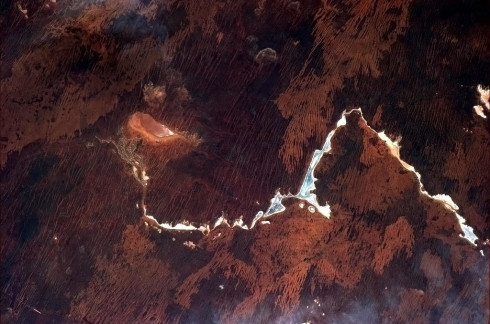
    Dry Lake Beds

    Dry lakes in the Outback, including one which is being used for farming. Quite ingenious.


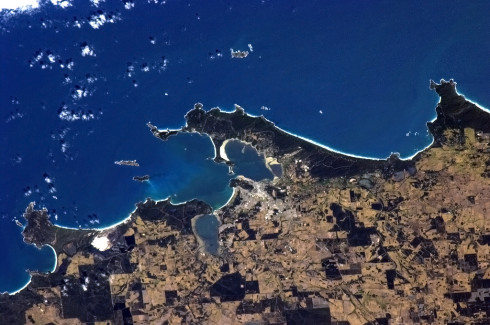
    King George's Sound

    King George’s Sound. Hadfield notes that “Charles Darwin got off the Beagle and hosted a dance here in February, 1836.”


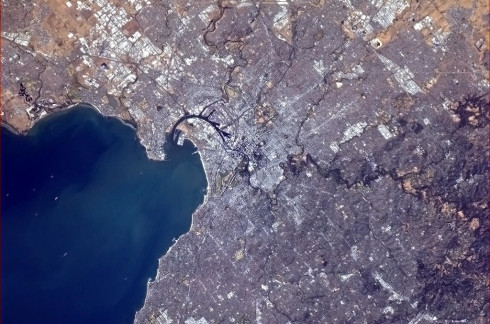
    Melbourne

    Melbourne harbour.


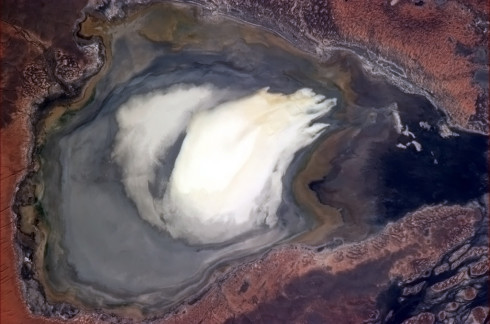
    Dry Lake in the Outback

    Beautiful smeared colours of a dry lake bed.


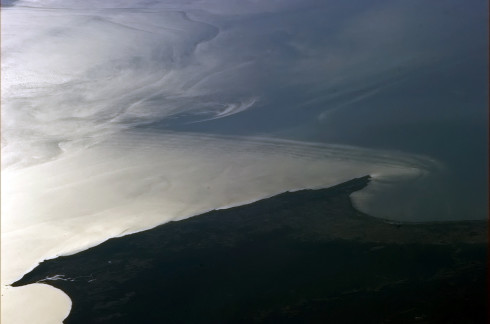
    Off the coast of Perth

    The ocean off the coast of Perth. Evening sunlight catches the waves and ocean currents, making them visible.
     

    Outback from Orbit

    Jagged lines of the Outback.


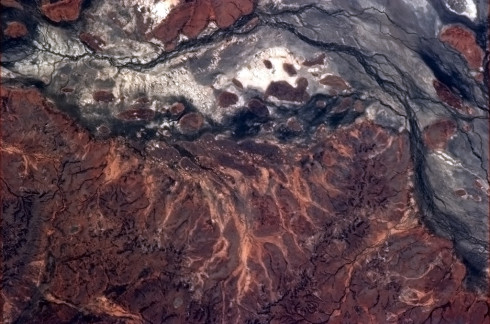
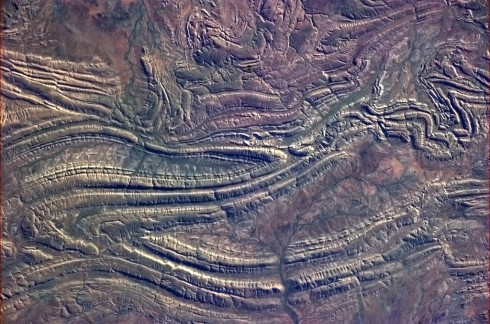
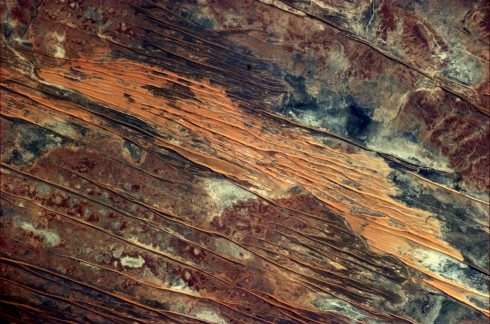
    Outback rock patterns

    Folded rock formations created by tectonic activity in the Outback. Caught by the morning sunlight, they really stand out.


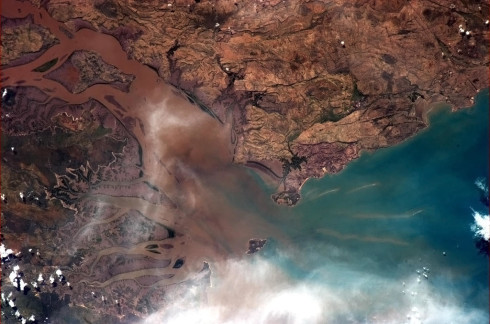
    River Delta

    A river delta, showing a host of gorgeous colours.


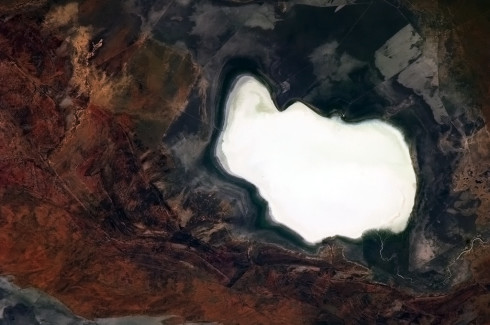
    Dry Lake in the Outback

    A big dry lake somewhere in the Outback.


    Perth from Orbit

    Beautiful blue seas off the Perth coast.


    Outback from Orbit

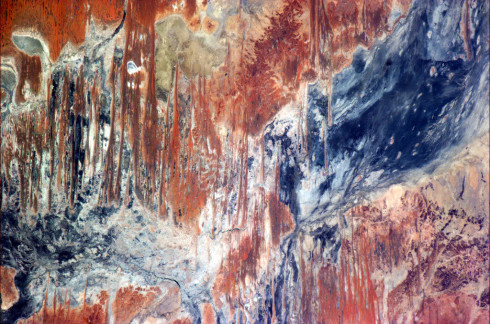
    “A lot of the Australian Outback looks like somebody spilled something on it.”


    Sydney by night

    The city lights of Sydney.


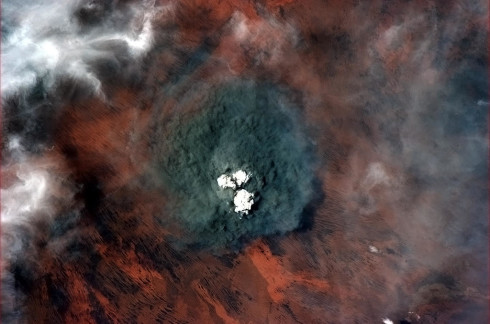
    Ominous smoke cloud

    An ominous looking smoke cloud in Western Australia.


    Outback from Orbit

    A shot of the Outback looking very much like a Jackson Pollock painting.


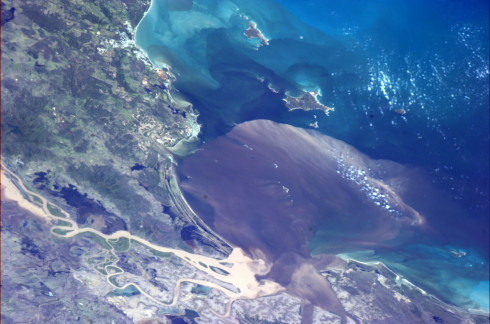
    Floodwaters at Rockhampton

    Floodwaters pouring into the Coral Sea near Rockhampton. You can see all the murky brown silt from the river as it disperses into the tides.


    Outback from Orbit

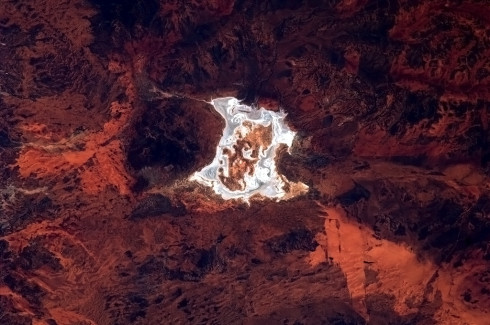
    “A splash of dry salt white on seared red in Australia’s agonizingly beautiful Outback.”


    All images: NASA/Chris Hadfield

  • Weekly Science Picks

    Weekly Science Picks

    It’s been rather a turbulent week, all told. There’s been a lot going on in the news, both good and bad. Hopefully, this little handful of science news items will help you finish the last week and begin this next one on a lighthearted note!


    NASA’s Kepler mission has found a star system which has not one, but two possibly terrestrial planets in its habitable zone.

    Kepler-62: A Star System With Two Earths?

    Whether either or both of Kepler-62’s optimally positioned planets actually has water is beyond the technical capabilities of the Kepler and other telescopes. Kepler works by detecting the very slight dips in light coming from a star caused by a planet passing by, relative to the telescope’s line of sight.


    Sometimes the best way to learn more about nature is to try and recreate it. That happens to be exactly what happened when a group of roboticists were looking at insects…

    Roboticists discover the secret of insect flight, and it’s not wings

    They found that the moth moved its abdomen in direct response to its shifting visual environment. “If the pattern is rotating up (clockwise), the moth would raise its abdomen up (counterclockwise),” says study co-author Jonathan Dyhr, a University of Washington biologist. “The moth was raising or lowering its abdomen to counteract the movement.”

    The Horsehead Nebula

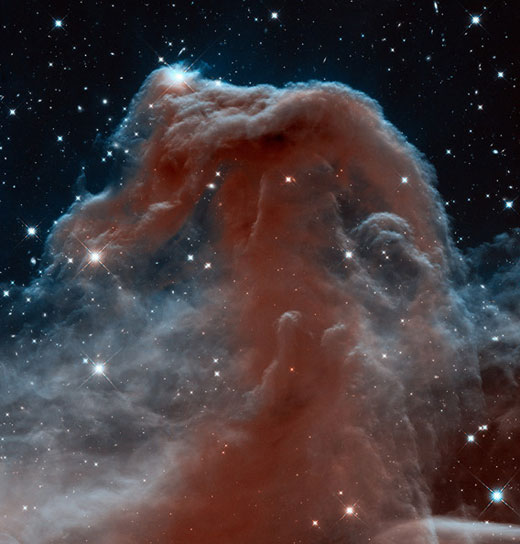
    To celebrate the 23rd anniversary of the Hubble Space Telescope’s launch into orbit, NASA have released a brand new and frankly beautiful image of the iconic Horsehead Nebula. Phil Plait explains more…

    Hubble’s Knight to Remember

    The Horsehead itself is the site of ongoing star formation. The dense gas and dust inside the nebula is collapsing to form stars, and, at the same time, the edges are being eroded away by the fierce ultraviolet light of Sigma Orionis. The top of the Horsehead is acting a bit like a shield, protecting the material beneath it, which is why it’s taken on that umbrella-like shape. You can see more sculpted pillars of material around the sides, too, like sandbars in a stream.


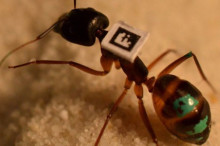
    Ants are fascinating little creatures, and a team of Swiss researchers have been studying the goings on inside a colony of them – by tracking them with barcodes!

    Barcodes let scientists track every ant in a colony

    Analyzing the color codes, they found that younger ants were more likely to work nursing the young, and older ants were more likely to be foragers. In general, they watched ants transition from nursing to cleaning to foraging as they age, but there’s a lot of individual variation in how quickly these transitions took place.

    Chris Hadfield. Being awesome from orbit.

    Finally, everyone’s favourite astronaut, Commander Chris Hadfield aboard the ISS answers an interesting question. What happens if you wring out a wet cloth in zero gravity? Click the link to watch the video!

    What happens when you wring out a washcloth in space?

    Two Nova Scotia high school students, Kendra Lemke and Meredith Faulkner, submitted this experiment to Canadian Space Agency and got to see astronaut Chris Hadfield actually test it out on the ISS. The results are seriously extraordinary and you need to see them.

  • Do animals have minds?

    Do animals have minds?

    Animal Wise: the thoughts and emotions of our fellow creatures, by Virginia Morell, Black Inc. Books, 2013.

    Photo credit BBC.

    Laughing rats, name-calling wild parrots, archer-fish with a sense of humour, and educated ants; the naturalist Charles Darwin would have loved this book. The philosopher Rene Descartes would equally have found it deeply troubling. Both with good reason.

    In Descartes’ dualist philosophy the mind and body are two separate entities. There is the material body and the immaterial mind or soul. The latter linking humans to the mind of God, making us, in his philosophy, different to animals. Descartes famously reasoned animals are composed only of material substances and therefore have no capacity to reason. More importantly for how we see animals, Descartes wrote that a human person, such as you or I, is something distinct from that person’s body. Therefore an animal, being material only, could in this way of thinking, never have a mind – never have a concept of “I”.

    This stance was extended by the behaviorist paradigms of the mid 20th century associated with the psychologist B F Skinner.

    Darwin on the other hand thought differently. He was a natural philosopher who got up out of his armchair and voyaged the world, most notably aboard the Beagle. Darwin attributed emotions to many animals and even argued that earthworms are cognitive beings. In his classic The Descent of Man he argued, most persuasively, that we and the other animals differ in our mental powers by degree, not in kind.
    Today the discussion is no different, researchers still debate not only advanced claims of intelligence in animals but also how to test whether their abilities reflect human-like cognition.

    This brings me to what I liked so much about this book.

    An archer-fish demonstrating its uncanny aim. Photo credit BBC.

    Each chapter focuses on an animal in a particular observational or experimental setting. Virginia Morell introduces us to the scientist and the animals, explaining the studies, the results and some of the trials and triumphs along the way to building an understanding of what the scientists find. The animal and settings we may already have a prejudice about; captive dolphins, elephant memories, chimpanzees and language, dogs and humans, are very carefully presented to ensure that the most compelling results are well presented. The more novel animals, ants and fish for example, are also carefully presented, their novelty makes for an easier presentation. For example I had no preconceived ideas regarding the ability of ants to teach – with no mental hurdle of my to overcome – that chapter was very illuminating. The examples and researchers chosen for these chapters succinctly illustrate what we have learnt about the emotions and intelligence of these animals.

    Yes I did say chosen. It does not pretend, nor claim to be, encyclopaedic, academic nor ‘balanced’ presentation of the entire field. This is a lively, non-fiction tour of the cutting edge of animal cognitive science. Virginia Morell translates the scientific jargon of the field into words that all can engage with.
    Each chapter is a separate story, reflecting that some of the chapters were adapted from previously published articles from 2008 to 2012. These are neatly book-ended with chapter that frame these quite succinctly. This I think is a strength of the book. Each chapter, each story, is self-contained that you can read it, look at the references and ponder what the researchers and Virginia are conveying to you. Not only do you get an appreciation of the scientific significance of the various studies – you get that rare glimpse into the scientific process and personality that is often missed in science communication writing.

    For example, consider the archer-fish and neuroscientist Stefan Schuster. I learnt that Stefan has spent more than forty years investigating how fish think and make decisions. I learnt that the idea of seeing life from the mind of a fish was something that grabbed him as a child. Stefan’s story is more than just his careful experimentation on fish behaviour. Along the way he has made key discoveries about the sophisticated mental abilities of the archer-fish. The archer-fish is well-named for it is the sharpshooter of the piscine world.

    In the chapter discussing his work I learnt that Schuster owes his success to curiosity, fun and serendipity – as well as careful experimentation. Schuster and his students had discovered that archer-fish learnt how to shoot at difficult and novel targets by watching another skilled fish perform the task. That means they had taken the viewpoint of the other fish. Did they copy or imitate? Let the philosophers debate the definitions. What the archerfish do involves cognition. Although we don’t understand the relationship between cognition and sentience, scientists know that one informs the other.

    Each chapter is replete with great stories, good science and probing philosophy. Morell displays her ability to write engagingly for a general audience, while presenting the science at a suitably intriguing level. If you view animals the same after reading this book – then give it a second read – it will be worth it.

    I’ll leave the last words to the late Douglas Adams:

    Man had always assumed that he was more intelligent than dolphins because he had achieved so much – the wheel, New York, wars and so on – while all the dolphins had ever done was muck about in the water having a good time. But conversely, the dolphins had always believed that they were far more intelligent than man – for precisely the same reasons.


  • Maria Island joins international ocean monitoring network

    Maria Island joins international ocean monitoring network

    A key facility in an international observing network to detect increasing ocean acidification is monitoring carbon cycling in the Tasman Sea from a site near Maria Island.

    The A$150,000 mooring with its suite of environmental sensors is one of three in Australia’s Integrated Marine Observing System (IMOS) that are included in the international network in which Australian scientists at CSIRO and the Australian Institute of Marine Science are playing a central role.

    The mooring was built at CSIRO’s Hobart Marine Laboratories, and deployed late last year at Maria Island, bringing the number of IMOS instruments at the Maria Island site to four. The instruments are managed and operated by CSIRO and the data is available free to the public at CSIRO National Reference Stations and Regional Sensor Arrays orIntegrated Marine Observing System [external link].

    Others are located on the western side of Kangaroo Island, South Australia, and on the central Great Barrier Reef near Townsville. Extending the IMOS observations into the Southern Ocean is the French Antarctic supply ship l’Astrolabe and the Australian ice breaker, Aurora Australis. The vessels provide a platform for at-sea monitoring during return voyages from October to March between Hobart and the Antarctic bases they visit.

    The observations made by the new mooring will provide data to determine the ocean acidification change and will fill a key need in assessing how the marine ecosystems of our region might be impacted.

    Leading the acidification research is Dr Bronte Tilbrook from CSIRO’s Wealth from Oceans Flagship, who said the uptake and storage of carbon dioxide by the ocean is causing changes in the seawater chemistry and increasing acidity levels of surface waters.

    The potential for impacts from the tropics to the polar oceans is large, and the resilience of ecosystems to these changes is poorly known.

    “Elevated levels of carbon dioxide in the atmosphere have made the oceans about 30 per cent more acidic in the past 200 years.

    “The ocean takes up about 25 per cent of annual carbon dioxide emissions generated by human activity. The ocean uptake is a great benefit because it removes human-generated emissions, but it comes at the cost of increased acidification of ocean waters.”

    “Australia contains many ecosystems that may be sensitive to ocean acidification, including the extensive coral reefs of Northern Australia and down to the polar regions.

    “Predicted impacts range from a decline in the growth of shells and skeletons of important species including corals and some shellfish, to shifts in the structure and dynamics of ecosystems,” he said.

    Dr Tilbrook said the Australasian region contains some of the world’s most extensive carbonate-based ecosystems, ranging from the coral reefs of the Great Barrier Reef and Indo-Pacific, to the earth’s largest cool-water carbonate platform along the southern Australian shelf.

    The surface waters of the Southern Ocean are where some of the most profound shifts in carbonate chemistry will occur by mid-century, potentially influencing the survival of deep-sea coral communities and calcifying pelagic species.

    The Maria Island and Great Barrier Reef sites are part of a growing international network of moorings, and are located to characterise changes down the east coast of Australia and the influence of the East Australian Current. The Kangaroo Island mooring monitors deeper waters that can seasonally upwell onto the South Australian continental shelf.  The upwelled waters are expected to have higher carbon dioxide concentrations that could accelerate the exposure of ecosystems to acidification earlier than in other regions.

    Sensors on the Maria Island mooring also measure temperature, salinity, oxygen, chlorophyll and turbidity, while water samples are taken each month for plankton and nutrients.  Basic measurement samples have been collected at Maria Island by CSIRO technicians monthly since 1944, providing scientists with an enviable ocean monitoring record.

    More information: Integrated Marine Observing System.

    Source: http://www.csiro.au/en/Portals/Media/Maria-Island-joins-international-ocean-monitoring-network.aspx

  • The future looks ‘appy’ for Aussie broadband connected homes

    The future looks ‘appy’ for Aussie broadband connected homes

    You’ve heard of the Ice Age but have you heard of the ‘App Age’? A new report compiled by CSIRO’s Australian Centre for Broadband Innovation (ACBI) has revealed the next generation of broadband-enabled applications will be more about connecting households to new sensors and cloud services than checking emails and social media invites.

    The ‘Broadband Connected Homes’ report describes the changing environment of the Australia’s homes, the technologies that are affecting it, and its capacity to support new applications and services.

    “When considering over 3.5 million Australians now a use smart device to access the internet and that app downloads are predicted to rise above 40 billion globally in 2013, it’s very clear our love affair with apps has come a long way in few short years. We are now looking at the next era of development by experimenting with what our homes will look like when broadband-enabled apps connect data with multiples sensors and new business services,” said Colin Griffith, Director of ACBI.

    “These apps will provide new ways for people to access health, energy, education, retail, security, entertainment and many more services. They will allow people to access, discover, share and contribute to media content personalised for us. Broadband apps will also allow us to do old things in new ways such as managing our home energy use through a centralised communications hub as well as enabling non-invasive monitoring and support systems which allow elderly people to live independently in their own homes,” he said.

    In conjunction with the release of the report, ACBI is also opening entries for a new Broadband4Apps competition to provide developers with the opportunity to build and demonstrate applications that are enabled by next generation broadband services. With up to $50,000 available in prize money, entrants will be invited to develop prototypes or working applications that address emerging opportunities for delivering services into broadband connected homes.

    The competition will be open to individuals and companies that can demonstrate a consumer facing software application which uses the distinctive features of next generation broadband services in Australia’s home.

    “The competition will help Australians better understand what is possible through the smart use of broadband. It will also help accelerate the ability of Australian developers to realise these new business opportunities and connect with service providers, technology partners and end users to build game-changing apps,” said Mr Griffith.

    ACBI will be hosting two hack days (one in Sydney on 11th May and one in Melbourne on 18th May) to offer entrants the opportunity to workshop their ideas with peers and be mentored by key professionals in the industry including CSIRO, Intel, NBN Co and NICTA.

    About ACBI:

    The Australian Centre for Broadband Innovation (ACBI) is a national research initiative connecting people to the benefits of broadband through innovative services. It is led by CSIRO in conjunction with National ICT Australia (NICTA), NBN Co with funding support from the NSW and Tasmanian Governments.

    ACBI provides unique opportunities to create innovative broadband-enabled services demonstrate their use in real world situations and evaluate their potential commercial and social value. ACBI connects people and business to the benefits of game-changing services and applications enabled by next generation broadband technologies.

    About CSIRO:

    CSIRO is Australia’s national science agency and has been pushing the edge of what’s possible for more than 85 years. Today, the organisation has close to 6,500 people working out of 58 centres in Australia and internationally. These people work closely with industry and communities to leave a lasting legacy across five broad areas: food, health and life science industries; energy; environment; information and communications; and manufacturing, materials and minerals. ACBI is part of CSIRO’s Digital Productivity and Services Flagship that is a $40 million research initiative to improve Australia’s productivity, deliver innovative services that improve people’s wellbeing and prosperity.

    About the Broadband Connected Homes report:

    Commissioned by ACBI, the report is designed to help businesses, government agencies and software developers better understand the potential to design new applications and services that can be used in homes that are being connected to next generation broadband services such as the National Broadband Network (NBN).

    It describes the changing environment of the broadband connected home, the technologies that are affecting it, and its capacity to support new applications and services. This includes the new capabilities and features of NBN and home networks, the increasing range of connected devices being used in the home, and some of the development platforms for applications. It is the ability to leverage all these different aspects of a connected home that will enable successful new applications and services.

    Source:  http://www.csiro.au/en/Portals/Media/The-future-looks-appy-for-Aussie-broadband-connected-homes.aspx


  • Keeping the past in the future with world first 3D mobile mapping project

    Keeping the past in the future with world first 3D mobile mapping project

    Australian researchers are using a novel mobile laser 3D mapping system called Zebedee to preserve some of the country’s oldest and most culturally significant heritage sites.

    The new joint research initiative between CSIRO and The University of Queensland aims to collect detailed 3D maps of historic sites of Moreton Bay. With the assistance of Queensland Parks and Wildlife Services, the research team have collected data from a number of heritage sites including the 19th century Brisbane River defences at Fort Lytton and Peel Island’s leper colony buildings.

    At the core of the technology, developed by CSIRO’s Autonomous Systems Lab in Brisbane, is a laser scanner that swings back and forth on a spring to capture millions of detailed measurements. Zebedee gives researchers the ability to reliably map an environment in 3D by simply walking through it.

    “This technology is ideal for cultural heritage mapping, which is usually very time consuming and labour intensive. It can often take a whole research team a number weeks or even months to map a site with the accuracy and detail of what we can produce in a few hours,” said Dr Jonathan Roberts, Director of CSIRO’s Autonomous Systems Lab.

    “Zebedee has allowed us to capture a detailed record of several key cultural heritage sites ranging from those which are fragile and risk of damage through natural disasters to those which are remote and difficult to get to,” said Professor John Macarthur, Dean and Head of the School of Architecture at The University of Queensland.

    “We’re looking to use these maps in the future to create an archive of rich data about cultural heritage sites, which will allow us to analyse them without costly and time consuming hand measuring. From this, we have already analysed important aspects of Australian history. For example, the detailed map of Peel Island’s many small buildings allowed us to analyse architecture used to racially segregate people within the leper colony. The point cloud data clearly depicts how cramped and crowded the living quarters for Indigenous people were, when compared to the non-Indigenous people who lived in their own huts with scenic verandas,” he said.

    The research will be officially launched by the Honourable Andrew Powell, Queensland’s Minster for Environmental Protection and Heritage during an event to mark the beginning of Australia’s National Heritage Week celebrations at Fort Lytton today.

    About Zebedee

    Zebedee is a handheld 3D mapping system developed by CSIRO that can scan an environment as an operator walks through it. The system produces a 3D map of the environment as well as an accurate record of the trajectory followed. The primary sensing technology utilised is LiDAR (Light Detection and Ranging), in which an infrared laser measures ranges to surfaces in the environment.

    The distinguishing feature of Zebedee’s design is that the laser scanner is mounted on a spring, which provides a lightweight solution for ensuring a wide scanning field of view. The spring converts the natural motions of the operator into a suitable sweeping motion of the scanner. A low-cost inertial sensor provides rough measurements of the spring’s rotations. Specially designed software is able to convert the raw range and inertial measurements into a 3D map, represented as a pointcloud, which consists of millions of points expressed in a common coordinate frame.

    About CSIRO

    CSIRO is Australia’s national science agency and has been pushing the edge of what’s possible for more than 85 years. Today, the organisation has close to 6,500 people working out of 58 centres in Australia and internationally. These people work closely with industry and communities to leave a lasting legacy across five broad areas: food, health and life science industries; energy; environment; information and communications; and manufacturing, materials and minerals.

    About National Heritage Week

    During Australian Heritage Week, the commonwealth, state and local governments and all National Trust organisations throughout Australia, host community events to present a coordinated and cohesive approach to the importance of our heritage. For more information please visit Australian Heritage Week.

    Source and image: http://www.csiro.au/en/Portals/Media/CSIRO-keeps-the-past-in-the-future-with-world-first-3D-mobile-mapping-project.aspx

  • Weekly Science Picks

    Weekly Science Picks

    DNA
    DNA

    This edition of weekly science picks is going to be a little different… it’s a smorgasbord of intriguing facts ranging from corporate ownership of our DNA to recycling building materials. Let’s get started.

    This first story represents the line between scientific research and corporate profits that sometimes leaves the ethical, human components as an afterthought. Hopefully on Monday, 15 April, the US Supreme Court rectifies this when they hear oral arguments on a case concerning the patent of human genes.

    The Supreme Court should invalidate the patent on human DNA by Jeffrey A. Rosenfeld and Christopher E. Mason

    Today, Salk would be shocked to find that your DNA belongs not to you but rather to many companies and institutions that have patents on the DNA from your cells. Forty-one percent of the genes in your genome are not legally yours, according to a long list of gene patents that have been granted since the 1980s. These patents cover thousands of human genes and restrict a doctor’s ability to look at your DNA and plan your medical treatment. These patent claims contradict an intuitive sense that your DNA is no less yours than your lungs or kidneys.


    As if Google wasn’t involved in our daily lives enough, they want to be their in death too. Don’t get me wrong, Google is great, I use their products every day. Although this story is a little creepy to think about, where to store or what happens with all that data we create while alive and breathing, is important.

    Google Lets You Manage Your Digital Life From Beyond the Grave by Roberto Baldwin

    Google announced today that users of its myriad digital services can control how their data is handled while they’re taking a dirt nap.


    If you’re fascinated by buildings and building materials, you’ll enjoy this next story I came across on Arup’s website. Arup is a design, planning, and engineering firm with offices around the globe. (They designed and engineered the Sydney Opera House.)

    Resources / The hidden assets of building by Mark Bowers

    Take glass, for example. Glass from buildings is not widely recycled because it’s not as straightforward as taking empty bottles to the bottle bank. There are issues such as contamination from silicone sealants to consider, for example. But when Arup worked on refurbishing the Lloyd’s of London building, we showed it could be done.


    And the last pick for this week is an update on another legal case soon to be heard in The Hague. The UN Court will hear oral arguments from representatives of both Australia and Japan over the Japanese whale research programme in Antarctica. The case is scheduled for 26 June to 16 July.

    Australia to face Japan over whaling in UN Court by BBC News

    “Australia will now have its day in court to establish, once and for all, that Japan’s whaling hunt is not for scientific purposes and is against international law,” Australia’s attorney-general, Mark Dreyfus, said.

  • Building a bigger picture of the Bight

    Building a bigger picture of the Bight

    A unique Collaborative Research Science Program to improve understanding of the environmental, economic and social value of the Great Australian Bight was today announced by BP Developments Australia (BP), CSIRO and Marine Innovation Southern Australia (MISA).

    The A$20 million Science Program aims to obtain information about the unique marine environment and potential marine resources within the Great Australian Bight (GAB), and will provide information to decision makers to support sustainable development in the region and monitor possible future impacts.

    “The Science Program will be one of only a few whole-of-ecosystem studies undertaken in Australia,” Dr David Smith of CSIRO’s Wealth from Oceans Flagship stated. “It will focus on collating information about the marine resources of the Great Australian Bight and providing vital knowledge to inform future decisions for sustainable development in the region.”

    The research officially started on 4 April 2013, with scientists setting sail for the GAB aboard the RV Southern Surveyor to collect water and seafloor sediments from depths three kilometres below the surface. These will be the deepest set of samples ever taken from the Bight and will provide an insight into the distribution, diversity and ecology of the deepwater species of animals, plants and microbes which reside in the central and eastern GAB.

    “BP is already undertaking a range of studies to ensure environmentally responsible operations in the GAB. This additional multidisciplinary research program will build on these and other studies to improve the understanding of how the GAB ecosystem functions,

  • The Schoolchild who Discovered a New Jellyfish Species

    The Schoolchild who Discovered a New Jellyfish Species

    The thing I love the most about scientific discovery is that anyone can do it. Literally anyone could, tomorrow, turn over a stone or look at a seemingly empty spot in the night sky and find something which no human being has ever seen before. Or, perhaps more importantly, something which no one has full appreciated before.

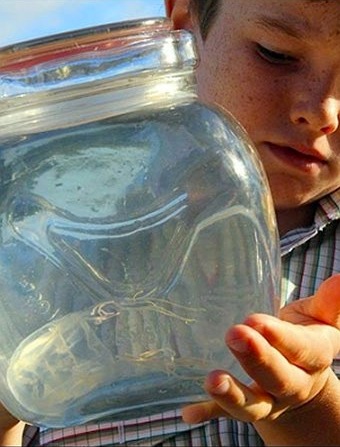
    And that’s exactly what happened to nine-year-old Saxon Thomas from Paradise Point in Queensland, Australia. While fishing in a canal in his backyard, Saxon found a jellyfish which he recognised as a box jellyfish. This was surprising at first, because no box jellies had previously been found in these waters. With a little help from his father, he carefully collected the fragile animal into a jar and sent it to Merrick Ekins, a marine expert at the Queensland Museum, to be identified.

    But Ekins couldn’t identify it. It’s now been confirmed to actually be a new species, previously unknown to marine biologists. This has caused some consternation among locals who may now be thinking twice about swimming off the nearby coast. A few box jellyfish species are notorious for having extremely painful, and in some cases potentially fatal, stings.

    Mercifully, this species is not the box jellyfish, otherwise known as chironex fleckeri, known for its lethal stings. This was the first species which Ekins checked, because if c. fleckeri was found around the coast of Queensland, it would be a big problem for local swimmers. Reassuringly, while the new jellyfish is a related species, it’s definitely not the same one.

    Unfortunately though, for now at least, no one’s quite sure whether this new species is dangerous or not. Lacking the resources to investigate it further, local marine biologists explain that they won’t know how severe the stings this jelly can give are until someone is stung by one. Needless to say, no one’s particularly keen to find out voluntarily. While it’s very definitely capable of giving you a sting – this is, after all, how jellyfish catch their prey – it’s probably not life threatening. That said, Ekins cautions that there’s simply no way of knowing this for sure. Swimmers would be well advised to steer clear of them in any case.

    Dangerous or otherwise, a new species is always an exciting find for biologists. Lisa Gershwin, director of Australian Marine Stinger Advisory services, shares in the excitement, while wondering what the new jellyfish species should be named. “I haven’t met Saxon yet but my intention is to one of these days when I meet him ask him what he would like it to be named,” she said, in keeping with the tradition that new species are named by whoever discovers it.

    However, while this privilege is normally taken by the first scientist to describe the species, Gershwin thinks that Saxon Thomas should have the honour of naming the jellyfish he discovered. She explains, “I wanna give him the choice to name it because I think it’s such a wonderful thing that here’s these kids out playing with nature and going ‘hey wait, that’s different – what’s that?’ – and now we know. What a fabulous find.”

    Fabulous indeed. And a reminder that it’s impossible to know when and where discoveries like this will be made next – or who might be there to make them!

    Saxon Thomas with his jellyfish

    Images:
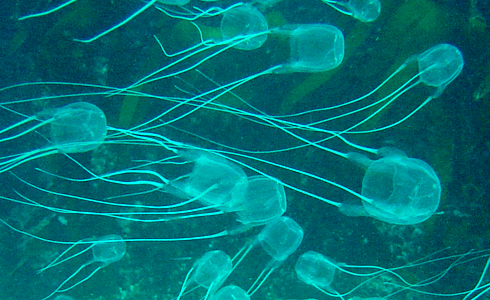
    Top – Box jellyfish – Peter Southwood/Wikimedia Commons
    Bottom – Saxon Thomas with the jellyfish he found – via ABC Gold Coast


  • New light on dark matter: space station magnet attracts praise

    New light on dark matter: space station magnet attracts praise

    qqtyppyd-1365030919
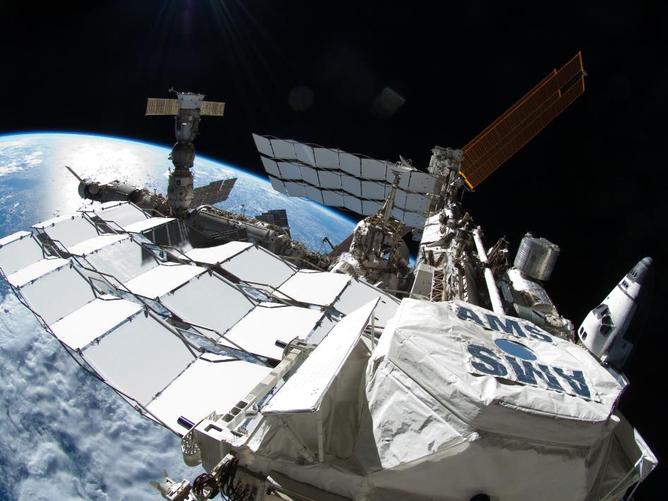
    The AMS aboard the ISS. Photo credit NASA.

    Nobel prizewinner Samuel Ting, early Thursday morning (March 4, 2:00 AEDT), announced the first results from the Alpha Magnetic Spectrometer (AMS) search for dark matter. The findings, published in Physical Review Letters, provide the most compelling direct evidence to date for the existence of this mysterious matter.

    In short, the AMS results have shown an excess of antimatter particles within a certain energy range. The measurements represent 18 months of data from the US$1.5 billion instrument.

    The AMS experiment is a collaboration of 56 institutions, across 16 countries, run by the European Organisation for Nuclear Research (CERN). The AMS is a giant magnet and cosmic-ray detector complex fixed to the outside of the International Space Station (ISS).

    Dark matter matters

    The visible matter in the universe, such as you, me, the stars and planets, adds up to less than 5% of the universe. The other 95% is dark, either dark matter or dark energy. Dark matter can be observed indirectly through its interaction with visible matter but has yet to be directly detected.

    Cosmic rays are charged high-energy particles that permeate space. The AMS is designed to study them before they have a chance to interact with Earth’s atmosphere.

    ams_rivelatori
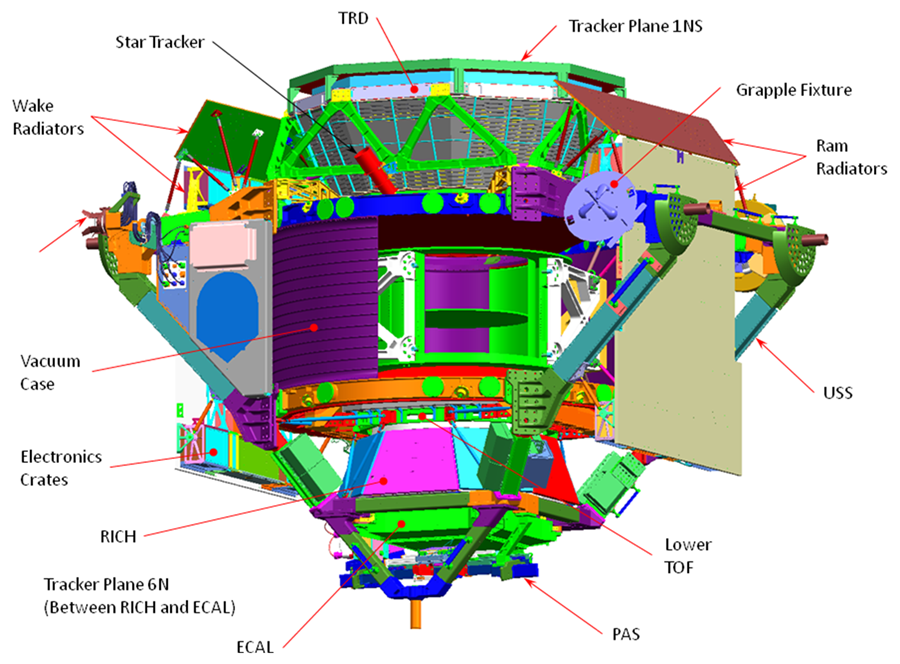
    Magnet bends in opposite directions charged particles/antiparticles. Transition Radiation Detector (TRD) identifies electrons and positrons among other cosmic-rays. Time-of-Flight System (ToF) warns the sub-detectors of incoming cosmic-rays. Silicon Tracker (Tracker) detects the particle charge sign, separating matter from antimatter. Ring-Imaging Cherenkov Detector (RICH) measures with high precision the velocity of cosmic-rays. Electromagnetic Calorimeter (ECAL) measures energy of incoming electrons, positrons and γ-rays. Anti-Coincidence Counter (ACC) rejects cosmic rays traversing the magnet walls. Tracker Alignment System (TAS) checks the Tracker alignment stability. Star Tracker and GPS defines the position and orientation of the AMS-02 experiment. Electronics transform the signals detected by the various particle detectors into digital information to be analyzed by computers. Diagram credit AMS Collaboration.

    An excess of antimatter within the cosmic rays has been observed in two recent experiments – and these were labelled as “tantalising hints

  • A Supernova Post-Mortem in Radio Waves

    A Supernova Post-Mortem in Radio Waves

    It was a late February night in 1987 when, standing on top of a Chilean mountain range, Ian Shelton saw something which no one had seen for centuries. Looking up in disbelief, he watched a star explode some 160 thousand light years away. Rushing to another observatory to check with someone else, he was initially met with stark disbelief. But there was no doubt. Shelton had seen a supernova explosion with his own eyes.

    Named SN 1987A, this was the death of a massive star in the Tarantula nebula. Distant enough to not even be in our own galaxy, but in the Large Magellanic Cloud – one of the Milky Way’s smaller satellite galaxies, the discovery was reported independently by Albert Jones in New Zealand. This began decades of fascinating observations for astronomers, as many began to watch this supernova expand over the years, in real time.

    Supernova which are close enough to see with the naked eye are rare beasts. This was, and still is, the only one close enough and visible enough to see properly with modern telescopes, giving us some of the best information we’ve ever had about how an exploding supernova interacts with the dusty interstellar clouds which surround it.

    The latest observations of this literally awesome event come courtesy of a team of astronomers working in Australia and Hong Kong, led by Giovanna Zanardo at the International Centre for Radio Astronomy Research (ICRAR). Using CSIRO’s Australia Telescope Compact Array in New South Wales, the researchers have published the highest resolution images of the stellar explosion’s aftermath ever taken.


    Portrait of a Dying Star

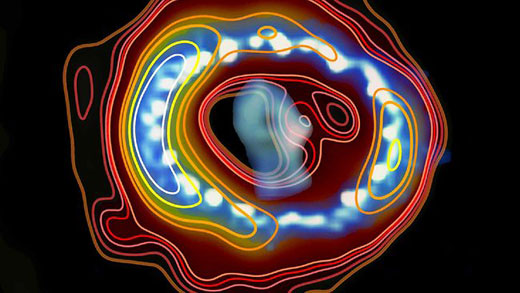
    SN 1987A contour lines


    High resolution images are wonderful in astronomy. The higher the resolution, the more you can learn about what you’re seeing. Zanardo and her colleages compared their observations with other images and data taken at optical and x-ray wavelengths. On doing so, they gained some fresh insight into exactly what happens shortly after a star explodes.

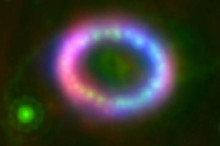
    In the centre of the explosion, stellar ground zero, they discovered a pulsar wind nebula. This is a pocket of intensely hot material emitted by a neutron star*, the last remains of the exploding star’s core, proving that SN 1987A did not create a black hole.

    Referred to in technical jargon as a “compact source”, a neutron star is a tiny ball of incredibly dense material. With a mass up to over 3 times the mass of the Sun, these bizarre little objects truly are compact. An average neutron star has a radius of just 12 km, which is comparable with the size of Sydney. Yes, you read that correctly. The mass of a star compressed into something with a size similar to a large city.

    This discovery actually answers a long standing puzzle about SN 1987 A. Supernovae like SN 1987A are normally expected to form neutron stars, because of the near-unimaginable pressures which occur inside an exploding star. But for several years, despite looking carefully, no astronomers could find any trace of a neutron star amid the stellar debris. But the star which caused this supernova would not have been massive enough to collapse into a black hole, leading theoreticians to try and devise explanations for why there was no neutron star to be seen.

    If Zanardo’s team are right, and they have indeed found a pulsar wind nebula inside the shattered remnants of this dead star, then it has to be generated by something. Unless I’m mistaken, this may be some of the most convincing evidence yet for the missing neutron star!


    Seeing Clearly in Invisible Light

    Discovering all of this, however, was far from easy. Radio images at centimetre wavelengths are difficult to capture with detail. Exceptionally good weather conditions are needed. Zanardo explains, “For this telescope, these [observations] are usually only possible during cooler winter conditions, but even then the humidity and low elevation of the site makes things very challenging.

  • The CO2 Bargaining Business

    The CO2 Bargaining Business

    Coal power plant in NY. Photo credit: Matthew D. Wilson, Wikimedia Commons
    Coal power plant in NY. Photo credit: Matthew D. Wilson, Wikimedia Commons

    The Bargaining Table

    Does anyone think this 2-degree goal is achievable? You know, that we can keep global temperatures from increasing 2°C? It’s time to admit that it cannot be. It’s time to set new goals. Goals not based on single-digit bargaining at the next climate convention. Some of the world’s nations agreed to limiting global warming to 2°C (3.6°F) over pre-industrial temperature levels four years ago; a voluntary goal. Our approach to tackling climate change has been to put, what seems to be, arbitrary limits on CO2 emissions while not seeking to take accountability for the issues causing those emissions. This goes for both the developed world and the emerging market economies. The industrial world must make amends with the top tier industrial economies assuming the responsibility to assist the 2nd and 3rd tier economies. Look at Beijing, China, the smog that engulfs that city. While pushing new boundaries to emerge on the global stage as an economic powerhouse is respectable and we can all argue that London, New York, Berlin did this when they were coming of age in the industrial revolution, the result of living in cities was grim then and it is grim for Beijing now in terms of the pollution that confronts citizens.
    CO2 levels are rising, as a result of a global economy pushing forward, full steam ahead. Pieter Tans of The U.S. National Oceanic and Atmospheric Administration (NOAA) has said CO2 levels increased by 2.67 parts per million (ppm) in 2012 to 395 ppm. This marks the second highest rise in carbon emissions since recordkeeping began back in 1959. Cleaning up the way business does business is the first order of business in tackling climate change. Returning to the bargaining table year after year is not getting us anywhere.
    Tipping the Balance
    Coal-burning power plants, particularly in the emerging economies are the main culprit behind the continuing rise of CO2 emissions. For more detailed information, see IEA Statistics report, CO2 Emissions from Fuel Combustion, Highlights, 2012 edition. In countries such as the U.S., Australia and Denmark, conservation and clean energy research and implementation have begun to show small declines in CO2 emissions. But again, it is that see-saw balancing act – fair play – in order for developing nations to get on the economical playing field, they should have an allowance to pollute as did the U.S. and the rest of the G-20. Instead of taking this “fair is fair

  • Weekly Science Picks

    Weekly Science Picks

    Science Sunday! My first since the death of Google Reader. Let’s dive straight in.

    Viet Le, the scientific amasian, has a nice piece on genetically modified crops. Perhaps the time has come to have another debate on the issue of GMOs, too often dismissed out of hand.

    An “Acceptable