Blog

  • The elusive atmospheric molecule

    The elusive atmospheric molecule

    Sometimes, the simplest things are the hardest to find. Out there, up there, in the atmosphere, amongst the things that fly around, are things that collide with other things and make other things. Small things crash into each other and produce other small things. The layman’s way of saying chemical reactions happen. This one, the one we are concerned with is no more important than the rest, and it involves the degradation of atmospheric pollutants.

    The story began over half a century ago when a German chemist, Rudolf Criegee, came up with a reaction. A reaction to which we are still trying to observe its smallest components. More than 50 years ago, he came up with a reaction that proposed that alkenes degrade by reacting with ozone to form a cyclic ozonide. Consequently, this ozonide falls apart and one product a carbonyl oxide called a Criegee intermediate.

    Last year marked the first sighting of things that had — up until then — gone unseen. The simplest Criegge intermediate, CH2OO — carbon and two pairs of hydrogen and oxygen — tentatively attached to one another, destined to eventually fall apart and react with other things up there. This unique configuration of three different atoms were observed with the help of a cyclic particle accelerator — a synchrotron. Not your everyday piece of lab tech.

    Criegee intermediates along with other important atmospheric elements are important as more and more we talk about climate change. And more and more we try and tease out the things up there that are relevant to our changing climate and environment. Whether the identification of the intermediate will lead to eventually finding a way to offset climate change is, at this point, speculation. The pollutants in the upper atmosphere — nitrogen dioxide and sulphur dioxide react extremely quickly with the Criegee intermediates. The story that gets bandied around is that Criegee intermediates have the potential to cool the planet by converting these pollutants into sulphate and nitrate compounds that will lead to aerosol and clouds (that to some extent will reflect solar radiation back into space and help reduce temperatures).

    A recent study, published in Science, describes detection of the simplest Criegee intermediate in the gas phase using a technique much simpler and more accessible than previously. They detected the molecular fingerprint of their chemical structures. What was once unknown now left a detectable signal. Up until now not a lot was known due in part to the fact that it couldn’t be detected directly. The fact that this new method of detection uses a machine and instrumentation more widely available to researchers opens the doors up to more investigations on the Criegee intermediates exact nature.

    The Criegee intermediates go back to the history of the ozone. One that has been formulating even long before Rudolf Criegee. And the story is far from over. The final numbers of the exact nature of the Criegee intermediates are still in the making. Now its reactivity with other compounds can be verified and tested — and perhaps provide more insight into its proposed “climate cooling

  • Interview with ABC: Mars One

    Interview with ABC: Mars One

    dan-abc

    Link of the interview: http://www.abc.net.au/news/2013-05-14/reality-tv-to-send-guests-to-mars/4690088

    An updated page with the full article: http://www.abc.net.au/news/2013-05-15/an-ethical-questions-over-one-way-mars-mission/4690824

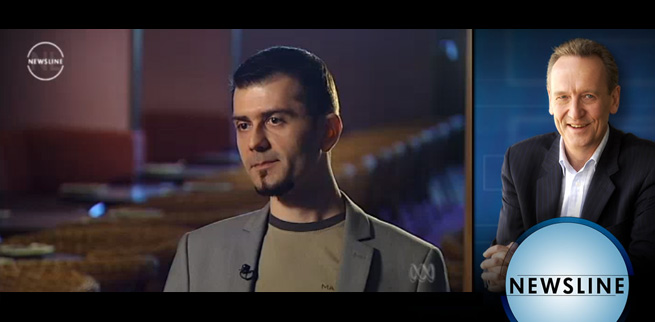
    Dan Petrovic appeared on ABC’s Newsline as a representative of Australian Science and one of the first five sponsors of Mars One initiative. The interview also features comments from the founder Bas Lansdorp, Jonathan Nally from SpaceInfo and Dr. Graham Phillips from ABC.

    Report by: Kesha West for Newsline by Jim Middleton


  • Mosquito-borne diseases: Fighting fire with fire

    Mosquito-borne diseases: Fighting fire with fire

    I have a decidedly “live and let live” approach to life. There are no animals in this world which I harbour any malicious feelings towards, regardless of how many of those animals would think nothing of poisoning, eating, maiming, or otherwise killing me (it’s a tough world out there). No animals, with one exception. I absolutely detest mosquitos – and not irrationally so.

    You see, you might not realise it, but mosquitos are actually the most dangerous animal in the world. Yes, seriously. They may not look like much, but every year, mosquitos will spread diseases to 700 million people. That’s 10% of the human population on this planet. Many of the diseases spread by mosquitos are potentially fatal, and mosquitos are responsible for over 2 million deaths every year. Needless to say, some way of curbing the spread of mosquito-borne disease would be a huge success in combating illness worldwide.

    Interestingly, an unusual but potentially effective method has been devised by Ary Hoffmann and Michale Turelli at the University of Melbourne. I say unusual, because their method of preventing mosquitos from spreading disease is to actually infect the mosquitos with a disease of their own.

    When mosquitos are infected with a type of bacteria called wolbachia, it renders them unable to spread viruses such as dengue fever. Dengue is a particularly nasty disease spread by mosquitos, for which no real treatments or vaccines are available. Around 40,000 people die every year from dengue, with around 2,400 cases reported over the past few years in Northern Australia.

    Wolbachia bacteria are actually surprisingly common, existing naturally in around 70% of all insects. The particular strain used in this study was discovered by Hoffmann in 1988, in Australian fruit flies. Nature, it seems, is full of serendipities. In 2011, studies showed a great success. Mosquitos infected with wolbachia cannot spread the dengue virus!

    However, there was still a problem to address. Wolbachia also affected the mosquitos eggs, preventing them from hatching. While this may seem, at first, like a good thing in that it may cull the mosquito population, the problem lies in the fact that if the infected mosquitos all die off, the remaining insects will still be quite able to spread disease.

    The solution, perhaps even more counterintuitively, involves giving the mosquitos resistance to insecticide. At first glance, this idea may seem unappealing, but it isn’t without merit. In fact it’s quite ingenious. Areas which are particularly prone to mosquito-borne infections tend to use insecticides as a way to control the mosquito populations and curb disease. In these regions, the non-infected mosquitos would be killed off by insecticide, so that the population of mosquitos would adapt. The end result would be a population of mosquitos which cannot spread the dengue virus.

    Similarly, the insecticide resistance gene would not be able to be passed to any non-infected mosquitos. A female mosquito would pass on both the gene and the bacteria to her eggs, while any non-infected female mating with an infected male would lead to eggs which will never hatch (due to cytoplasmic incompatibility). The end result would be that the only offspring from this population of infected mosquitos would also be infected, and therefore would be unable to spread viral infections to humans.

    As well as dengue, the method is promising as a way of preventing other mosquito-borne illnesses, such as yellow fever, and perhaps eventually even malaria. The latest strain of bacteria which Hoffmann and Turelli are working with, named wMelPop, is a strong blocker of dengue and other viruses. Perhaps this method could eventually help to eradicate mosquito-borne diseases altogether.

    the meantime, I’m noticing that typing up this article is having the psychosomatic effect of making me feel rather itchy. I’m going to take this as a sign that I should stop writing about mosquitos now. And perhaps take a shower…

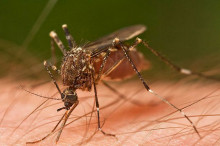
    Image: A Tasmanian mosquito feeding on human blood. Credit: J. J. Harrison/Wikimedia Commons

  • Women take centre stage at ground breaking healthcare conference

    Women take centre stage at ground breaking healthcare conference

    Over 50% of the speakers are prominent females in the scientific healthcare field at the ‘World Research and Innovation Congress – Pioneers in Healthcare’ event, Steigenberger Grandhotel, Brussels, 5 and 6 June, 2013

    anne g
    Professor Anne Glover, Chief Scientific Adviser to the President of the European Commission

    Despite playing a significant role in science and healthcare throughout the ages, women globally are under-represented in this sector.  A recent article in Nature magazine explains that there is still a scientific ‘gender gap’ with women continuing to face discrimination including disparities in pay and funding.  (Helen Shen, 6/3/13)

    Professor Anne Glover, Chief Scientific Adviser to the President of the European Commission, is the keynote speaker on the session Women in Science, addressing some of the key challenges in attracting women to this sector.  Professor Glover will be joined by Professor Teresa Lago, Universidade do Porto, Portugal, founding member of the ERC Scientific Council and former Chair of the ERC gender balance working group.

    Professor Glover says “While the 19th Century has been the Age of Engineering and the 20th Century the one of Chemistry and Physics, the 21st Century is going to be the Age of Biology. Facing the challenges of an Ageing Society in Europe and still major basic health challenges in the Developing World, research helps to come up with solutions for our well-being. This includes exciting developments in areas such as synthetic biology, personalised medicine, vaccine research and other fields. The presentation will highlight in particular how important it is to enthuse young people to choose a career in health science.

  • Weekly Science Picks

    Weekly Science Picks

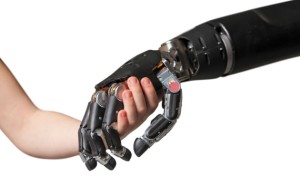
    The Modular Prosthetic Limb will help patients to feel and manipulate objects just as they would with a native hand. JOHNS HOPKINS UNIV. APPLIED PHYSICS LAB.
    The Modular Prosthetic Limb will help patients to feel and manipulate objects just as they would with a native hand. JOHNS HOPKINS UNIV. APPLIED PHYSICS LAB.

    These were the science stories that resonated the most for me this week. Gene snipping, CO2 alarms, and brain-controlled prosthetics – an array of stories touching on the impossible, and yet, totally possible.


    Given the way budgets and financing have always dominated the path of scientific research and with the rise of start-ups and crowdsourcing dominating many a young entrepreneurs dream, this story is important for many reasons. It raises the questions of safety, ethics and regulatory responsibility. It is a must read.

    A Dream of Trees Aglow at Night by Andrew Pollack

    But part of the goal is more controversial: to publicize do-it-yourself synthetic biology and to “inspire others to create new living things.

  • Annual AIFST Convention to Reel in Registrations with Unique Session Line-­

    Annual AIFST Convention to Reel in Registrations with Unique Session Line-­

    947203_482217315179139_1916311990_nThe 46th Annual Australian Institute of Food Science and Technology Convention is the premier food technology conference in Australia for industry, research and government organisations, locally and overseas.

    Date: 14th – 16th July 2013 / Location: Brisbane Convention & Exhibition Centre, Brisbane, Australia

    The upcoming 46th Annual AIFST conference has an array of international and local speakers where attendees can learn about cutting edge food science and technology innovation including seafood science, digestive health and even about a laser fence that shoots down mosquitoes!

    To be held in Brisbane from July 14th – 16th 2013, session highlights include:

    Seafood makes a splash – Australians consume around 16kg of fish and seafood per person a year, making it the nation’s fifth largest producing industry and worth more than $2.2 billion to the economy annually. Microbiologist Graham Fletcher will provide insight
    into the seafood industry and share exciting innovations from around the world after 30 years of research. Fletcher is a trusted expert
    in seafood safety, packaging, optimisation of chilled fish, ultra high pressure processing of seafood and horticultural products.

    Neuroscience of leadership – Award-­

  • Life of an astronaut – Jerry Carr

    Life of an astronaut – Jerry Carr

    In one of the TED-Ed’s lessons worth sharing – astronaut Jerry Carr share his experience on space. As commander of Skylab, he spent over 2000 hours in space, orbiting the Earth over 1000 times. Recounting his life story, Carr remembers the enchanting years he spent at NASA.

  • Toolkit – Digital & Media Literacy Education

    Toolkit – Digital & Media Literacy Education

    In industrialised countries, the Internet has increasingly become embedded in everyday life: from the purchase of a train ticket to the consultation of a bibliographical catalogue, the Net can be seen today as an “invisible technology

  • All You Need is a Minute to Learn Physics

    All You Need is a Minute to Learn Physics

    Really.
    Well okay, maybe a little more than a minute. Three minutes tops. Well okay, maybe five minutes and throw in an appreciation of watching cartoons and Youtube videos. That’s it.
    I was skeptical when I stumbled on Henry Reich’s MinutePhysics Youtube channel one night. How could anyone explain light, The Big Bang or relativity in just minutes and be understood? I decided to watch one in the expectation that I would be sent to sleep. It was well past midnight. In the end, I didn’t go to sleep until after I had watched every MinutePhysics video in existence. I was hooked. It all started with an explanation of what fire is.

    I come across people who have not heard of MinutePhysics so here I am telling everyone on the internet. Each of Henry’s videos is well researched and easy to understand. It is firmly on the list of Youtube channels that I have subscribed to.
    Henry Reich
    Henry Reich
    Henry creates every MinutePhysics stop motion video himself. He draws, narrates and edits the entire thing. This is because while Henry has a Masters in Physics from the Perimeter Institute for Theoretical Physics he had also pursued filmmaking as a hobby. After the masters was finished, Henry pursued filmmaking more seriously and discovered that Youtube isn’t just about cute cat videos.
    “After I finished my masters at the Perimeter Institute for Theoretical Physics, I took some time to work in film/video and ended up working for the youtube channel “Freddiew” where I learned that you could actually make videos intentionally for youtube,” says Henry.
    “I’ve also always enjoyed explaining complicated things, so it seemed like it might be fun to try making some videos to explain complicated physics to the public.”
    This is what Henry does and he does it well. Nothing seems too small or too big to tackle. He reads every personal message that is sent to him on Youtube and Facebook and does his best to respond. When asked on how he judges a video to be successful, it is not the number of views or whether it has gone viral. The answer Henry gives is humble and reflective.
    “I know a video is successful when a middle schooler and the Nobel Laureate who did the research I’m explaining both tell me how much they liked the video.”
    Henry doesn’t just make videos on physics found in textbooks and highlights how they do influence our everyday lives whether we think about it or not. He also makes videos on physics discoveries as they happen. One great example of this was when the Higgs Boson discovery was announced. He made a three part video series found its way onto New Scientist, Huffington Post, and NBC.
    This is the first video in the Higgs Boson series.

    Henry’s enthusiasm for theoretical physics is evident in his videos as he unpacks ideas and concepts for his audience and it is infectious. The videos spawn endless conversation on his Youtube and Facebook pages. After more than a year working on MinutePhysics, Henry has teamed up with other scientists creating MinuteEarth, a Youtube channel bringing together biology, geology, ecology, anthropology, and more.

    So if you have a minute, you can learn just about anything.
  • Celebrating Global Star Wars Day by unveiling the next generation of robotics research

    Celebrating Global Star Wars Day by unveiling the next generation of robotics research

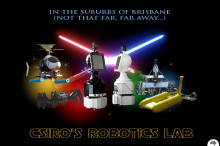
    As science-fiction fans around the world gear up to celebrate some of the most popular robots ever created on global Star Wars Day (otherwise known as May-the-fourth-be-with-you Day), last week CSIRO has released details about its latest crop of robots which indicate advances in ICT research will see closer collaboration between people and robots in the not so distant future.

    CSIRO’s ‘Yoda of robotics’, Dr Jonathan Roberts says the next generation of assistive robots which are specifically designed to help humans in the workplace will increase efficiencies and improve safety. He believes this trend reveals interesting similarities and differences between today’s robots to those first seen in the epic George Lucas series 35 years ago.

    “The main difference is that the droids in Star Wars are capable of far more general tasks than what robots are designed to perform today and often lend a hand in all sorts of applications. For example, R2-D2 is a droid designed to help work spacecraft, yet he also occasionally subs as an excellent spy and cocktail waiter,” says Jonathan Roberts, Director of CSIRO’s Autonomous Systems Lab.

    “Robots on Earth today tend to be made for very specific tasks and are not particularly easy to train to perform activities outside their intended scope. However, we are currently developing robotic systems which are designed to assist people in a variety of circumstances. While some may work alongside people in a factory others are designed for tasks considered impractical or too hazardous for humans. This is exactly what droids do in the Star Wars universe, except of course droids help all types of weird creatures, not just people.”

    Some of the latest robots which are being developed by CSIRO’s Autonomous Systems Lab to help humans include:

    • Telepresence Robot – offering a solution which allows a robot to move around and offer a virtual video-conferencing experience. From national museums to under the Great Barrier Reef, this technology will eventually allow all Australians with a high speed broadband connection especially those in rural and regional areas to experience and access a range of our national landmarks or treasures, despite the tyranny of distance.
    • Stealth Robot – move over David Attenborough because this robot aims to track and observe animals in their natural habitat without being detected. Using acoustics to monitor surrounding sounds, the robot uses them to mask its motions so that it can move without being detected and appear as part of the natural habitat.
    • Starbug – an inexpensive, miniature autonomous underwater vehicle ideal for data collection and ecosystem surveys. It helps to get marine data from areas which humans wouldn’t be able to travel.
    • Helicopter Robot – an unmanned automatic helicopter designed to remotely inspect dangerous or hard to get to infrastructure such as powerlines, buildings and bridges.
    • Hexapod Robot – with a similar aesthetic to an insect, this multi-legged robot can be used for monitoring and mapping uneven and unstructured terrain which can be difficult to navigate with wheeled robots. It has 18 servo motors which provide rich sensory feedback to the control software allowing it to detect when the robot interacts with an obstacle and also to assess the type of terrain it is traversing on.

    CSIRO will also be launching a whitepaper outlining further details on how assistive robotics can be used in the manufacturing industry during next week’s National Manufacturing Week (7-10 May) conference.

    About Global Star Wars Day:

    May 4 is considered a holiday by Star Wars fans to celebrate Star Wars culture and honour the films. It is called Star Wars Day because of the popularity of a common pun spoken on this day. Since the phrase “May the Force be with you” is a famous quote often spoken in the Star Wars films, fans commonly say “May the fourth be with you” on this day.

    About CSIRO:

    CSIRO is Australia’s national science agency and has been pushing the edge of what’s possible for more than 85 years. Today, the organisation has close to 6,500 people working out of 58 centres in Australia and internationally. These people work closely with industry and communities to leave a lasting legacy across five broad areas: food, health and life science industries; energy; environment; information and communications; and manufacturing, materials and minerals.

    Source and image: http://www.csiro.au/en/Portals/Media/May-the-fourth-be-with-the-bots.aspx

  • Weekly Science Picks

    Weekly Science Picks

    Science Sunday! What better way to spend the day than to kick back and let some of the week’s best science stories come to you.

    Firstly, right here on Australian Science, Markus tells the story of the world’s slowest experiment — that is still going.

    The World’s Slowest Experiment

    “This curious looking setup is the pitch drop experiment. Some people reading this will undoubtedly know of it. Set up at the University of Queensland in 1927 by Professor Thomas Parnell, this experiment may take a few of your ideas about what a liquid actually is and turn them on their heads. Pitch, you see, is a liquid. But if you were to see some of it up close, you might not think so. To our eyes and senses, it appears to be a solid. It’s a black, waxy looking substance, a derivative of tar which ship builders used to use to waterproof boats. You can think of it more or less like a liquid which moves in slow motion. Extremely slow motion! Pitch is so viscous and flows so slowly that you can quite easily pick up a piece of it and hold it in your hands. You can snap pieces of it off, and if you hit it with a hammer, it will even shatter. But make no mistake – pitch is not a solid.

  • The World’s Slowest Experiment

    The World’s Slowest Experiment

    What exactly is a liquid? It’s a seemingly basic question with an answer which may seem obvious to any of us. But as with so many things in science, it may not be as straightforward as you think. Of course you know what a liquid is, and the answer which may have come to mind as you read this paragraph is most certainly the truth – but it may not be all of it.

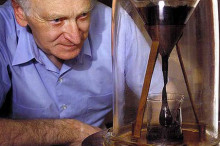
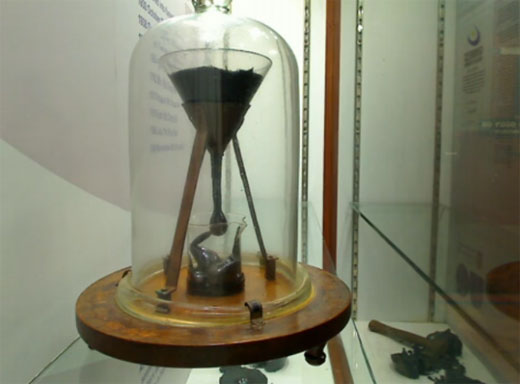
    This curious looking setup is the pitch drop experiment. Some people reading this will undoubtedly know of it. Set up at the University of Queensland in 1927 by Professor Thomas Parnell, this experiment may take a few of your ideas about what a liquid actually is and turn them on their heads.
    Good things come to those who wait...?

    Pitch, you see, is a liquid. But if you were to see some of it up close, you might not think so. To our eyes and senses, it appears to be a solid. It’s a black, waxy looking substance, a derivative of tar which ship builders used to use to waterproof boats. You can think of it more or less like a liquid which moves in slow motion. Extremely slow motion! Pitch is so viscous and flows so slowly that you can quite easily pick up a piece of it and hold it in your hands. You can snap pieces of it off, and if you hit it with a hammer, it will even shatter. But make no mistake – pitch is not a solid.

    Perhaps a better word to use here is not liquid, but “fluid.” A fluid is, simply, any substance which is able to flow. Everyday liquids like water are fluids, as are gasses like the air around us. So too are the thicker, more viscous liquids you may encounter, like treacle or tomato ketchup. But pitch is quite possibly the most viscous fluid in the whole world, an average 100 billion times as viscous as water.

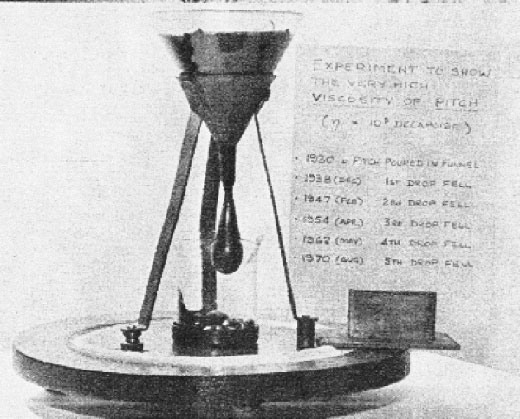
    Parnell’s pitch drop experiment, presently looked after by Professor John Mainstone, was set up to demonstrate this bizarre fact. In 1927, Parnell heated a sample of pitch and poured it into a sealed glass funnel. He gave the black tarry fluid three full years to “settle” before cutting open the stem of the funnel and leaving it to its own devices, kept in relatively inert conditions under a large glass bell jar. I say relatively inert. This experiment is really more of a demonstration, and how fast the pitch flows depends on the seasons – it moves ever so slightly faster in warm weather, though still never so fast as to be actually noticeable. In the 83 years since, this slow moving tarball is currently forming it’s ninth drop.

    In material science terms, pitch is a “viscoelastic polymer”. You may be familiar with some other, similar liquids without realising it. There are, you see, a few materials which very slowly flow over time. The effect is so slow that it takes a significant fraction of your lifespan to notice any motion, but it is there. Certain types of varnish actually have similar, very slowly flowing properties, which can be a concern in the art world. Paintings are often handed down through generations, and anyone wishing to preserve them must be careful not to use varnishes which may slowly flow and spoil the artwork.

    On the other hand, there’s a common misconception that glass flows this way. This is absolutely not true. Glass, you see, is not viscoelastic. It’s what’s termed, an “amorphous solid”. Amorphous materials have no order at the atomic level. Many plastics, like the type which makes up the bottles you may buy drinks in, are amorphous this way. If you were to look at a piece of glass on a very, very small scale, you’d find that it’s made up of a web of molecular chains, made from silicon and oxygen atoms. But amorphous solids are not fluid. You can leave a piece of glass alone for centuries, and it will not flow at all.

    Actually, glass is quite a generic term, referring to a whole variety of materials. Any material which is rigid and brittle, with a disordered structure, is technically a glass. As well as the glass in windows, many types of plastic, such as polycarbonate and perspex, are technically glasses. Even metals can be made into a glass. If you shave, the razorblade you use is probably made from a glassy metal. Glasses can be pulled and stretched (this is one way in which fibre optics are made), but if you leave them alone, they’ll remain perfectly solid.

    Viscoelastic polymers are not like glass. They may have a disordered structure, like a glass, but they behave rather differently, even though you may not realise this at first glance. The word viscoelastic itself, gives away what’s really going on. These materials are both viscous, and elastic. Being elastic, you can stretch them, and they will try to return to their original shape. Leave them alone, and they’ll behave like viscous liquids, and slowly flow. This is because unlike glasses, the molecular chains which make them up aren’t tightly interconnected. Instead, they’re a tangled mess, looking, if I’m honest, not unlike my hair does when I wake up some mornings. Because those chains aren’t joined together, they can slowly slip past each other, which is what gives these materials their fluid properties. Anyone who’s used gloss paint may have noticed how a surface which appears to be smooth will sometimes have visible drops running down it hours later, where the paint flowed before it had time to dry. Unlike pitch, however, most types of paint do eventually dry and harden. Viscoelastic materials, like amorphous materials, are also defined by how they behave at the molecular level – any material can only move  as fast as its molecules allow. If you take a highly viscous fluid like pitch and try to move it too quickly, the molecular chains which make it up won’t be able to move fast enough, and it will simply snap. It’s only if you leave it alone for long enough, that you can see it’s fluid behaviour.

    This is precisely what Parnell did with the pitch drop experiment all those years ago. To date, it’s already managed to prove his point. The pitch in that funnel, kept at Queensland University, is very definitely flowing just like a liquid. It’s just an excruciatingly slow liquid.

    To date, no one has been around to actually witness a drop falling. I’ve no doubt, this must be very frustrating for people like John Mainstone (who actually missed one drop in 1988 because he’d just stepped out to get some coffee). So far, the pitch has dropped just over once a decade.If you’re feeling lucky, you can watch a live webcam feed at the Queensland University website, where three webcams now monitor it at all times. Though I should warn you that it’s possibly even less exciting than watching paint dry. Some are beginning to say that the ninth drop may fall soon. But then, they’ve already been saying that for years…

    It's not often you find vintage photographs of experiments which are still running!

  • Seriously, NAPLAN to include Science?

    Seriously, NAPLAN to include Science?

    In the last few weeks in Australian politics there have been critical discussions regarding the inclusion of science in NAPLAN (the National Assessment Program in Literacy and Numeracy).  Without entering too much into the debate regarding the reported advantages or disadvantages of NAPLAN, it is heartening to hear that science is at the forefront of political agenda.

    NAPLAN is a series of standardised testing given to all Australian students in Grades 3, 5, 7 and 9. Beginning in 2008, these pencil/pen and paper tests assess children in set skills relating to reading, language conventions, writing and numeracy. ACARA, Australian Curriculum Assessment and Reporting Authority, claim that “NAPLAN tests identify whether all students have the literacy and numeracy skills that provide the critical foundation for their learning, and for their productive and rewarding participation in the community

  • The Best of Australian Science: April 2013

    The Best of Australian Science: April 2013

    It is time to recount April’s highlights, the most read and interesting articles from the month in the fields of science, education, internet technologies, space, and among others.

    If you are interested in science blogging and contributing to Australian Science – contact us and check out the Editor’s note.

    Until next month’s review,  stay curious, scientifically and artistically passionate. I hope you’ll enjoy these stories.

    A Supernova Post-Mortem in Radio Waves by Markus Hammonds

    Supernova which are close enough to see with the naked eye are rare beasts. This was, and still is, the only one close enough and visible enough to see properly with modern telescopes, giving us some of the best information we’ve ever had about how an exploding supernova interacts with the dusty interstellar clouds which surround it.

    The latest observations of this literally awesome event come courtesy of a team of astronomers working in Australia and Hong Kong, led by Giovanna Zanardo at the International Centre for Radio Astronomy Research (ICRAR). Using CSIRO’s Australia Telescope Compact Array in New South Wales, the researchers have published the highest resolution images of the stellar explosion’s aftermath ever taken. More>>


    The CO2 Bargaining Business by Kelly Burnes

    Does anyone think this 2-degree goal is achievable? You know, that we can keep global temperatures from increasing 2°C? It’s time to admit that it cannot be. It’s time to set new goals. Goals not based on single-digit bargaining at the next climate convention. Some of the world’s nations agreed to limiting global warming to 2°C (3.6°F) over pre-industrial temperature levels four years ago; a voluntary goal. Our approach to tackling climate change has been to put, what seems to be, arbitrary limits on CO2 emissions while not seeking to take accountability for the issues causing those emissions. This goes for both the developed world and the emerging market economies. More>>


    New light on dark matter: space station magnet attracts praise by Kevin Orrman-Rossiter

    The visible matter in the universe, such as you, me, the stars and planets, adds up to less than 5% of the universe. The other 95% is dark, either dark matter or dark energy. Dark matter can be observed indirectly through its interaction with visible matter but has yet to be directly detected.

    Cosmic rays are charged high-energy particles that permeate space. The AMS is designed to study them before they have a chance to interact with Earth’s atmosphere. An excess of antimatter within the cosmic rays has been observed in two recent experiments – and these were labelled as “tantalising hints