
April 1 — about the only thing on the internet that wasn’t a huge Poisson d’Avril was the “landmark
Blog
-
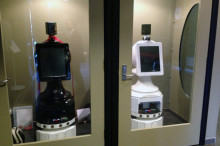
A Robot Revolution: When Robots Come to Life
A day at the museum has come to life. Our latest robots are roaming the galleries of the National Museum of Australia. They’re using high speed broadband to allow remote visitors to control their own view of museum exhibits while interacting with a museum educator.
The stars of Museum Robot project, B1 and B2, will use telepresence technology to roam the galleries of the National Museum of Australia. Using high speed broadband, the robots will allow remote visitors to control their own view of museum exhibits while interacting with a museum educator.
“The Museum Robot is a fantastic initiative and a perfect example of some of the applications made possible by the NBN. This kind of rich and interactive experience, nationally accessible, depends on the type of synchronous communication made possible by high speed broadband,
-

Haptography: The Technology of Touch
As we move through the world, we have an innate sense of how things feel — the sensations they produce on our skin and how our bodies orient to them. Can technology leverage this? In this fun, fascinating TED-Ed lesson, learn about the field of haptics, and how it could change everything from the way we shop online to how dentists learn the telltale feel of a cavity.
Katherine Kuchenbecker works on incorporating the sense of touch directly into virtual objects. Imagine being able to feel textures on your digital screens.
Is it possible to incorporate the sense of touch into the digital world?
-

The Best of Australian Science: March 2013
Another month behind us with plenty of interesting and intriguing articles written by Australian Science authors, bloggers, and researchers, and it is time to recapitulate the most read stories and share them with you. I hope you’ll enjoy these articles.
Note: If you are interested in science blogging and contributing to Australian Science – contact us and check out the Editor’s note.
Combating the rise of the superbugs: The health and scientific challenges of antibiotic resistance by David Borradale
It’s hard to imagine the world prior to antibiotics, a world where even a deep laceration could frequently spell significant illness or even death due to infection. Thankfully, since the discovery of penicillin in 1929 by Alexander Fleming, we now have a range of potent antibiotics to treat many of the various types of bacterial infection.
There is a problem though, bacteria are great survivors and have been competing against other bacteria and microorganisms for billions of years. As Professor Matt Cooper from the University of Queensland puts it “Billions of years ago, bacterial species were engaged in an arms race against each other and the chemicals they developed to kill one another have been modified into today’s antibiotics
-
CSIRO and the ANU launch biodiversity research centre
An initiative that will help Australia harness cutting-edge advances in biological sciences to inform better environmental management decision making will be announced on Wednesday 3 April at the official launch of the Centre for Biodiversity Analysis, Canberra.
The Centre is a joint initiative established in partnership with CSIRO and the Australian National University (ANU).
“The Centre is drawing on CSIRO and ANU’s world class expertise, and harnessing new and emerging technologies in biodiversity science to improve our knowledge of Australia’s biodiversity and enable governments and conservation NGOs to translate policy into meaningful actions,” said Professor Craig Moritz, Director of the Centre for Biodiversity Analysis.
“The Centre is drawing on CSIRO and ANU’s world class expertise, and harnessing new and emerging technologies in biodiversity science to improve our knowledge of Australia’s biodiversity and enable governments and conservation NGOs to translate policy into meaningful actions.”
Professor Craig Moritz, Director, Centre for Biodiversity Analysis
“It’s estimated that Australia is home to over half a million unique living species, many of which are found nowhere else on Earth, but of these only about one third are known to science.”
“Improved knowledge of Australia’s biodiversity – how many species, where they are, and how they evolve across environments and through time – will be especially important to ensure sustainable development and production, to maximize ecosystem benefits, and to protect our unique diversity in the face of rapid environmental change,” he said.
CSIRO and ANU have joined forces to address this challenge.
“The Centre will promote collaborative biodiversity science by hosting conferences and workshops, forming ANU-CSIRO working groups, supporting collaborative projects, connecting students and researchers with managers and policy makers, and facilitating the collation and connection of biodiversity information in the ANU-CSIRO Canberra Precinct,” said Professor Moritz.
The Centre also provides an early example of the value of the developing Canberra Global Research Precinct, which will focus on plant and environmental sciences. Like the Centre, the Precinct will be built on CSIRO-ANU collaboration, and will utilise its location in the national capital to promote the uptake of research outputs by government agencies.
The launch will also mark the opening of the Centre’s inaugural conference which brings together Australian and international biodiversity scientists to discuss recent advances in biodiversity genomics.
“Genomics is an exciting and rapidly expanding field that has the potential to significantly improve the efficiency of environmental assessments and monitoring, and the speed at which new species can be identified,” said Professor Moritz.
“It is also providing important new insights into the ability of species to adapt to climate change.”
Media are invited to attend the launch and associated conference.
Location: CSIRO Discovery Centre, Clunies Ross St, Black Mountain, ACT
Time: Conference start 9.00am, launch 10.00am – 10.30am, Wednesday 3 April 2013
Conference presentations include:
- How genome sequencing technologies are helping in the fight against Tasmanian devil facial tumour disease.
Devil facial tumor disease (DFTD) is threatening the iconic Tasmanian devil with extinction in the wild within the next few decades. Genome sequencing has highlighted the low levels of genetic diversity within the population and the importance of selecting individuals for the careful maintenance of genetic diversity within conservation insurance colonies. Genomic technologies are allowing rapid progress to be made in our understanding of the disease. - Combining genomics and evolutionary theory to understand how species respond to climate change.
There has been much recent debate about the potential for evolutionary changes to enable species to adapt to the stressful effects of climate change. We will discuss the current body of evidence supporting this, how genomic techniques can provide valuable insights into evolutionary adaptation, how evolutionary approaches can be used to predict future changes in biodiversity, and what the implications are for conservation strategies. - Mining genomic data from museum collections to understand how species change over time.
Biological collections-based research is poised at another exciting transition because of research avenues made possible by the tools of genomics. Traditional museum collections are large repositories of dormant genetic data. This treasure trove of taxonomic, spatial and temporal data is now within reach thanks to genomic technologies. The insights gained are providing valuable contributions to our knowledge and, in-turn, the preservation of Australia’s biodiversity.
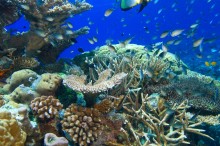
Image: Research undertaken by the Centre for Biodiversity Analysis will help to inform the sustainable management of Australia’s unique ecosystems, such as the Great Barrier Reef. (Image: Marie Davies)
- How genome sequencing technologies are helping in the fight against Tasmanian devil facial tumour disease.
-

Groundbreaking healthcare conference to take place in Brussels
The first ‘World Research and Innovation Congress – Pioneers in Healthcare’ conference takes place at Steigenberger Grandhotel, Brussels on the 5 and 6 June, 2013.
The two day event will bring together over 500 of the world’s top scientific health professionals to discuss future challenges and strategies on the key issues facing health research today.
Speakers include:
- Professor Anne Glover, Chief Scientific Advisor to the President of the European Commission
- Dr
-

15 million mobile phones used to track malaria
We all know that mosquitoes spread malaria. What we never quite realise is that humans also spread malaria — and quite significantly. In some places, the spread of malaria is directly linked to the mass movements of human populations. The movements of infected humans seem to increase the dispersal of parasites beyond what would be possible by mosquitoes alone.
Fifty years ago, when we first tried to eradicate malaria, it failed — and among the main culprits (along with drug resistance and unsustainable funding) was listed movements of human populations. Historically, movements of infected people from areas where malaria was still endemic to areas where the disease had been eradicated led to a resurgence of the disease. As people and populations move, they can increase their risk for acquiring the disease, or increase the risk of transmitting it.
As always wars and civil unrest tend to favour disease transmission, and malaria is no different. During the 1980s in Angola, 15 years of continuous war had displaced hundreds of thousands of people. As a direct result, malaria moved from sixth to first place as the leading cause of mortality. This, simply because the capital city Luanda underwent an unprecedented population increase — and the malaria endemicity rose along with it. In a population that wasn’t ready for it.
The relationship between malaria transmission and population movement is undoubtedly complex. Population movements that either place people at risk for malaria or cause them to pose a risk to others cannot be stopped. But it seems now they can be tracked and we can mitigate for it.
In June of 2008, the movements of approximately 15 million people in Kenya were tracked using their mobile phones. Tracked, not by governments or refugee aid organisations, but tracked by researchers from the Harvard School of Public Health. During a 12 month period, every call or text made by each individual to one of 11,920 cell towers located within the boundaries of 692 settlements was logged and recorded.
Surveillance is a term that loses more and more of its meaning with every single advance in technology. Usually we picture more nefarious intents and purposes for tracking citizens. Within that year in Kenya, starting points and destinations of all 15 million individuals were tracked — giving each person a primary settlement to call home and mapping their movements in relation to malaria prevalence. Researchers determined where each person spent most of their time based on the location of the majority of their call and text records — this was their home base.
Mapping that onto malaria prevalence for the entire country allowed researchers to estimate and infer an individual’s probability of being infected and the probability that visitors to the settlement will become infected. Researchers built up what was essentially a parasite movement network.
There was some directionality to the net movements of people and parasites between settlements. Settlements can either be characterised as “source
-
DNA technology set to speed up species discovery
Scientists from CSIRO and the University of Western Australia have teamed up with Kimberley Traditional Owners to test a new molecular technique that has the potential to revolutionise the discovery of new species, particularly those living in remote and poorly studied parts of the world.
Working in the virtually inaccessible rainforest vine thickets of Australia’s National Heritage-listed Kimberley region, the team are using a technique known as ‘ecogenomics’ to survey the area’s insect biodiversity, and rapidly describe what are expected to be hundreds of unique and rare species. The technique involves identifying species based on their DNA and morphology, and is much faster and more cost effective than traditional taxonomic approaches.
“Using ecogenomics, we will be able to understand what is there and how unique it is in months rather than decades,” said CSIRO’s Dr Owain Edwards, the project leader.
“Identifying, or describing, new species is the first step towards ensuring their ongoing survival. However, with millions of undescribed species around the world, this is no small task, particularly as many of these species will likely be found in remote locations.”
“Faster ways of surveying biodiversity are essential if we are going to effectively manage the world’s unique ecosystems.”
The remote and hard to access nature of the rainforest pockets of northwest Kimberley, as well as their isolation from each other, mean that the insect life there is some of the least known on the planet and is likely to be highly endemic (which means unique to that area). This provided the ideal location for the team to put ecogenomics to the test.
“Over the coming months we’ll be analysing the DNA of about 300 000 insect specimens collected from 36 isolated rainforest pockets across the Kimberley and screening them for the presence of endemic species,” said Professor Raphael Didham, an invertebrate expert that holds a joint position with CSIRO and the University of Western Australia.
“We’re hoping to find hundreds of new species. It’s pretty exciting work.”
The technique also has the potential to improve the efficiency of environmental impact assessments and conservation management.
“The speed and accuracy at which we’ll be able to assess a given site, even a really remote one, will greatly improve the efficiency of evaluating possible biodiversity impacts,” said Dr Edwards.
The scientists and Indigenous rangers from the Wunambal Gaambera and Dambimangari Aboriginal Corporations carried out the wet-season insect surveys over a one month period in January, at a time when the Kimberley is in its active growing season.
The team clocked up over 7000 kilometres in a helicopter accessing the isolated rainforest pockets across a 21 000 square kilometre region of the northwest Kimberley.
On-the-ground training provided to rangers as part of the project will mean insect sampling activities can continue in the Kimberley in the future.
The research is supported by the Science and Industry Endowment Fund.
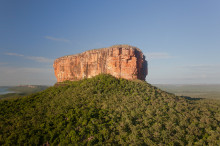
Source, and image: Approaching Mt Trafalgar, northwest Kimberley. The team surveyed the rainforest patch visible (dark green) in the lower left corner of the photo: http://www.csiro.au/en/Portals/Media/DNA-technology-set-to-speed-up-species-discovery.aspx
-
Lake Vostok and the search for extraterrestrial life
When Russian geographer and Antarctic explorer Andrey Kapitsa travelled to Vostok Station in 1959 he was looking for evidence of a subglacial lake that was first proposed by Russian scientist Peter Kropotkin at the end of the 19th century. Whilst Kropotkin was not able to specify the location of subglacial lakes, he theorised that masses of fresh water could be trapped far below the Antarctic ice sheets. He believed that the massive pressure of thousands of meters of solid ice would mean that temperatures at the bottom of the ice sheet would be high enough to create isolated water lakes.
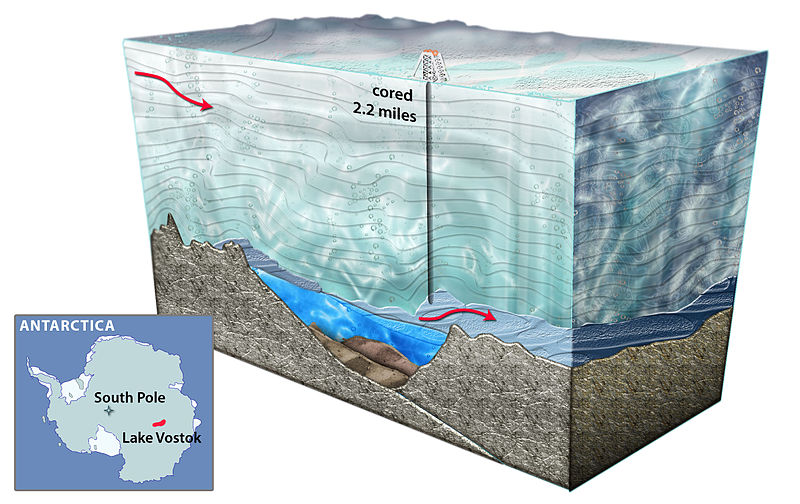
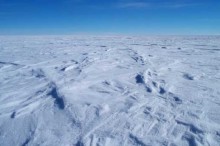
Lake Vostok (Image courtesy of the National Science Foundation) During expeditions to the region around Vostok Station in 1959 and 1964 Kapitsa took numerous seismic readings of the thickness of the Antarctic ice sheet. When Kapitsa analysed his measurements he was able to confirm that he had found a subglacial lake – just as Kropotkin predicted.
It wasn’t until the 1970s that further tests were conducted on Lake Vostok. British scientists performed numerous tests including airborne ice-penetrating radar surveys over the site. Results confirmed the presence of a liquid, freshwater lake far below the icy surface. In the 1980s and 1990s subsequent studies confirmed the details of the lake and revealed that it was the largest of 140 known Antarctic subglacial lakes (about 400 subglacial lakes exist worldwide). Measurements showed that the lake was more than 250km long, 50 km wide, about 400m deep, and was submerged more than 4km under the surface. In 2005 it was discovered that Lake Vostok had a number of islands, and that it’s likely that Lake Vostok is connected to other Antarctic subglacial lakes by a series of subglacial rivers. Unfortunately, scientists are still unsure how water might travel between the lakes, however it appears that the water in Lake Vostok may have been trapped under the ice for 15 – 25 million years. Lake Vostok is interesting to astronomers and astrobiologists, who theorise that if life exists somewhere in the cold murky depths of the lake, then perhaps it could also survive in the cold icy moons of our outer solar system.
Since 1989 there have been various efforts to drill down into the lake to obtain samples to test for microbes. However, drilling Lake Vostok has proven to be a very difficult exercise due to the remote location, freezing temperatures (the coldest recorded temperatures on Earth were recorded at Lake Vostok at -89 degrees Celsius), and long dark winters that reduce drilling times. Samples were taken from an ice core that reached within 100m of the lake in 1998, 2011 and 2012 but these results were inconclusive.
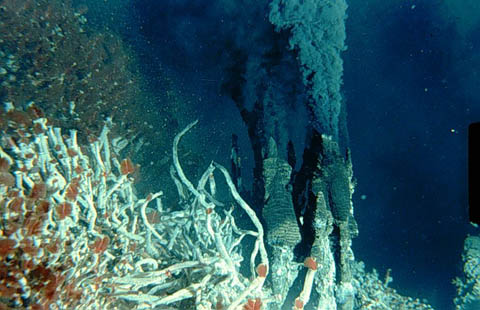
Black Smoker Hydrothermal Vent (Image Courtesy University of Victoria) Recently researchers announced that they had penetrated the ‘surface’ of Lake Vostok and had analysed samples taken from the drill head in the borehole. Results indicated a type of bacteria that was ‘unknown’ – a result that initially excited scientists. However, the next day, it was announced that the bacteria in the sample was found to use kerosene as an energy source. This was problematic for the team, as they use significant amounts of kerosene and freon at the site to stabilise the borehole (54 tonnes over the last few years). This result pointed to a likely contamination of the sample. Researchers advised they would be conducting further tests in order to collect ‘clean’ samples.
So – why are we so interested in Lake Vostok?
Until the mid 1980s we had a very narrow idea of where life could survive on our planet. We essentially applied the ‘Goldilocks’ theory; in order to foster ‘life’ the environment had to be not too hot, not too cold, must have water, sunlight etc… In the 1980s and 1990s, scientists discovered that microbial life has an amazing ability to survive in what we would consider extreme environments, niches that are blisteringly hot, dry, acidic, or even extremely cold. The discovery of these microbes, known as extremophiles has shown us that the boundaries of where life can exist, and even thrive are far wider than previously imagined. The image above shows a ‘black smoker’ hydrothermal vent – deep in the ocean spewing out water anywhere from 60 – 400 degrees Celsius. Typically these objects are surrounded by life forms, including Thermophiles, microbes that thrive in extremely hot temperatures. Until these deep sea hydrothermal vents were discovered in the early 1980’s we had no idea that life could survive, let alone thrive in such an inhospitable environment without sunlight and under such enormous pressure. The Grand Prismatic Spring in Yellowstone National Park in the U.S. is also home to various types of thermophiles, which thrive in the Grand Prismatic hot spring, despite it’s average 70 degree Celsius temperature.
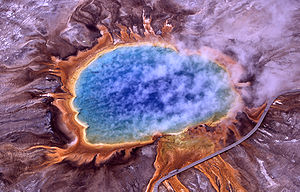
Grand Prismatic Spring – Yellowstone National Park (Image courtesy of Wikimedia) By looking at sites such as Lake Vostok we hope that we will discover something that will confirm our understanding of the boundaries for life or perhaps give us new information! We hope to find a new type of bacteria, similar perhaps to the psychrophile, or cryophile, extremophiles that can grow and reproduce in temperatures as low as -15 degrees Celsius. These organisms are currently found on Earth in small pockets of briny water surrounded by sea ice, alpine and arctic soils, deep ocean waters, glaciers and snowfields.
Although the Russians have been working on Lake Vostok for some time, they aren’t the only ones taking a good look at sub glacial lakes. Researchers from Britain and the U.S. are also working on Antarctic sites. The Americans have drilled more than 800m to reach Lake Whillans, whilst British researchers have stalled testing on Lake Ellsworth while they test new hot-water drilling methods.
If we find microbes surviving in the waters of Lake Vostok, or another subglacial lake that has been subject to enormous pressure, freezing conditions, lack of sunlight – that suggests that life could exist on one of the icy moons of the solar system. With the knowledge gained from sites like Lake Vostok we can plan missions to the icy moons in search of life. Research has shown that subsurface oceans may exist on a number of solar system moons including Enceladus (Saturn), Titan (Saturn), Europa (Jupiter), and Triton (Neptune). Each of these moons may have an environment capable of harbouring life.
It just may not be life as we know it.
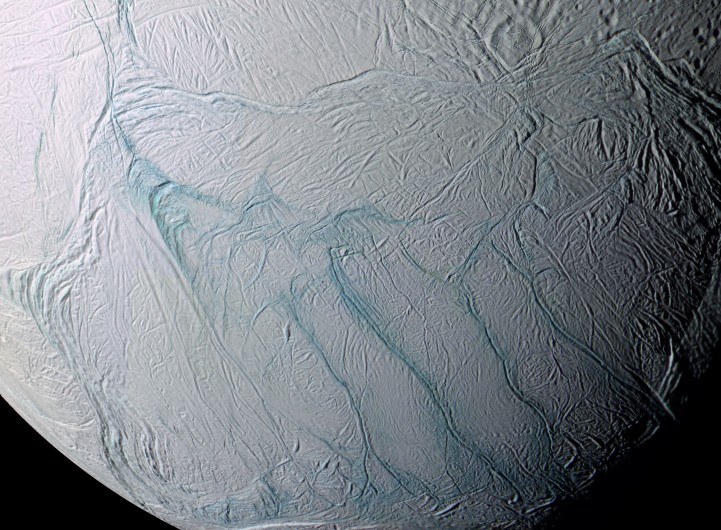
Enceladus and it’s ‘tiger stripes’ – an area near the south pole of the moon that may cover a sub surface ocean (Image courtesy of NASA) -
Weekly Science Picks
Science Sunday! Our recurring collection of some of the week’s blogs and science articles that you may have missed.
What a week! So much science! Let’s start with mosquitoes….
The beat the mosquito’s heart didn’t miss…
Frankly I’ve not given much thought to the heartbeat of mosquitoes. I’m usually much more worried that mine will continue will continue to beat for many more years to come. But Charles Ebikeme’s article covering the research done by Dr Julian Hillyer and his team at Vanderbilt University, Nashville, Tennesee, is fascinating.
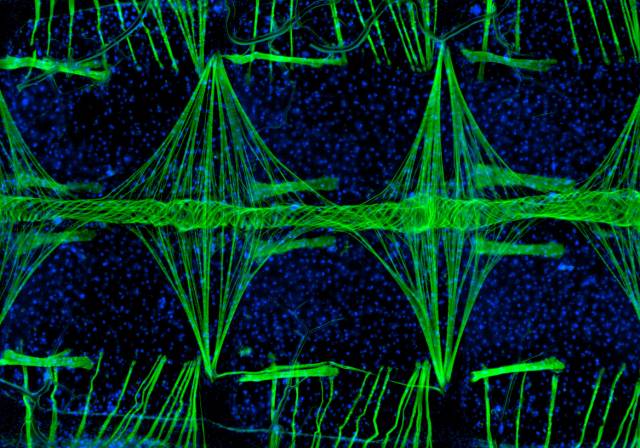
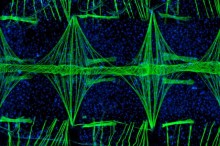
“A mosquito’s heart is very different — without veins or arteries, it pumps a clear liquid called hemolymph. The hemolymph flows from the heart into the abdominal cavity and eventually cycles back through the heart. The heart runs along the insects body as an unbranched tube, no thicker than three tenths of a millimeter. Helical twists of muscle fibres support the central tube. Their sequential contractions makes the heart in a wave-like peristaltic action. A peristaltic action that has the ability to run in both directions.”
As an insect that carries various diseases that wreaks havoc on the human population, mosquitoes are a significant concern for health authorities. Hillyer’s research is just one more step in understanding the pest and developing effective control strategies.
FishMap – Mapping Australian Fish
Millions of Australians are recreational fishers, there’s a large commercial seafood and aquaculture industry, and plenty of us who like to eat fish!! So who wouldn’t be interested in an online mapping tool that allows us to check out where our favourite marine fish are hiding?
“With FishMap you can find out what fish occur at any location or depth in the waters of Australia’s continental shelf and slope. You can also create species lists for any region that include photographs and illustrations, distribution maps and current scientific and common names.”
FishMap is a pretty cool tool – and you’d be surprised how much time you can spend looking at fish….
Creative Commons announces ‘School of Open’ project
The “School of Open” offers courses on the meaning, application, and impact of “openness
-
How to green the desert and reverse climate change
“Desertification is a fancy word for land that is turning to desert,
-
The beat the mosquito’s heart didn’t skip
It pulsed continuously without stopping. Then it repeated, as it had done many times before. Then, without delay, almost without skipping a beat, it changed direction. The action was as old as man himself, yet this time, completely and uniquely different — the perfect heartbeat. The perfect mosquito heartbeat.
An interesting quirk of nature is how remarkably constant the number of heartbeats exist within a lifetime. An interesting quirk, more a function of the metabolic demands of the animal in question rather than any underlying feature of the heart itself. Humans, mice, insects all have the same number of total heartbeats. The human heart, from life to death, will beat roughly 3 billion times. A mouse will use up its heartbeats in about two years. An elephant, with a much slower heartbeat, will last for much longer. The mosquito’s heart beats at a rate of just over one beat every second (1.3 Hz). In one minute it will beat 82 times, of which, some of that will be in the other direction.
The heartbeat is nothing unique to humans and has been around long before us, but we have romanticised it and given it a meaning more than its basic function. For researchers at Vanderbilt University, Nashville, Tennesee, this is also the case for the mosquito’s heart, where function and meaning is more than its basic, simple architecture.
Dr Julian Hillyer, the lab’s director, and his team have offered the most comprehensive visualisation to date of how the mosquito’s heart beats. They filmed live restrained female Anopholese mosquitoes — the same species of mosquito responsible for life threatening malaria — through a microscope connected to a very sophisticated camera.
The beatings of thirty mosquitoes were collected and analysed frame-by-frame to arrive at a comprehensive structure of the heart. They painstakingly dissected individual mosquitoes, injecting infinitesimally small amounts of fluorescent fluid into the mosquito, allowing them to describe the mechanics, directionality and flow involved when the insects blood (hemolymph) is propelled through the heart.
A mosquito’s heart is very different — without veins or arteries, it pumps a clear liquid called hemolymph. The hemolymph flows from the heart into the abdominal cavity and eventually cycles back through the heart. The heart runs along the insects body as an unbranched tube, no thicker than three tenths of a millimeter. Helical twists of muscle fibres support the central tube. Their sequential contractions makes the heart in a wave-like peristaltic action. A peristaltic action that has the ability to run in both directions.
Another set of muscles anchors the heart where ever there is a valve, at intervals, along the mosquito’s body – just underneath its cuticle shell. All of this was visualised in fluorescent detail, using different coloured flourescent dyes to highlight different structures inside the insect’s body. Winning the lab’s images the Nikon Small World photomicrography competition in 2010.
As stunning as the images were, it was the functionality gained from the study that provided the most insight. Following and tracking tiny microscopic particles (microspheres) showed how the insect’s hemolymph entered and was expelled from the heart, and, most importantly, how the heart reverses direction.
Most of the time, the heart pumps the mosquito’s clear hemolymph blood towards the mosquito’s head, but occasionally it reverses direction and pump fluid to the last segment of its abdomen. The direction in which the heart contracts reverses roughly 5 times every minute.
Heartbeat reversal is not unique to the mosquito — a phenomenon that has been observed in other orders of insects. You would think that something that small would have no need for such an elaborate beating system, but perhaps it is the only way the heart can regulate the different hemolymph pressure and volumes entering it. Thus far, a conclusive “why
-

The Science of Productivity: All You Need to Know About Productivity, Animated
After their illustrated primer on how our brain works, the scientific power of thought, and the science of procrastination (and how to manage it), folks behind the AsapSCIENCE look at the science of productivity. This video is made in collaboration with Sparring Mind, the behavioral psychology blog.
The moral of the story: It’s hard to be productive while trying to maintain high energy levels through your entire day.
It’s much easier for your brain to approach a 90-minute session of productivity when it knows that a 15-minute break is coming up afterward.
You may try pomodoro technique for boosting your productivity, as well as the free pomodoro app.
Reference: http://www.sparringmind.com/productivity-science/
-
FishMap – Mapping Marine Australian Fish
Ever gazed out over the sea and wondered what creatures great and small lie beneath? Wouldn’t it be great if the water was so transparent you could see all that swam by?
The Australian fish world was abuzz this week with the release of FishMap, an online mapping tool that allows humans to check out where their favourite marine fish are living these days. You can see what fish are living in your area and what depth they tend to hang out at, just in case you wanted to drop by. The tool gives fish around Australia an unprecedented ability to compete for the attentions of people. With 4500 Australian marine fishes listed, including our 320 sharks and rays, there are sure to be plenty jostling for your affection.
With FishMap you can find out what fish occur at any location or depth in the waters of Australia’s continental shelf and slope. You can also create species lists for any region that include photographs and illustrations, distribution maps and current scientific and common names.
According to the Australian Bureau of Statistics more than five million Australians take part in recreational fishing in Australia as a leisure activity.
There is also a large commercial seafood and aquaculture industry which is worth over $2 billion annually and employs around 16,000 people.
Combined with the number of people who love a good feed of fish, there are a lot of people with a direct interest in the oceans and seas of Australia and what is in them.
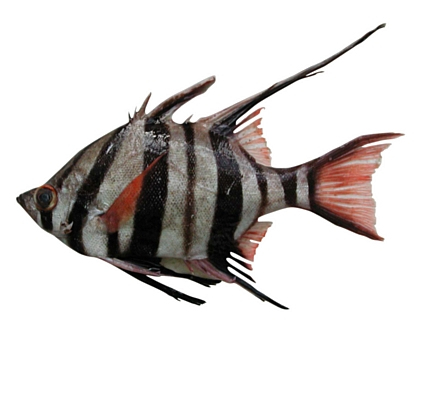
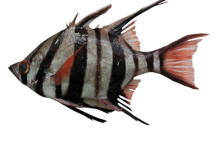
Here are some of the stars of FishMap:


