Blog

  • DARPA’s ATLAS Humanoid Robots

    DARPA’s ATLAS Humanoid Robots

    NASA is exploring peaceful civilian space applications for ATLAS-related technologies. Atlas is a new humanoid robot 6 foot, 2 inches tall weighing 330 pounds. Atlas is initially being designed to provide humanitarian assistance in disaster response/crisis situations.

    ATLAS 1 (large)NASA’s Johnson Space Center (Valkyrie) and Jet Propulsion Laboratory(RoboSimian) teams are participating in the DARPA Robotics Challenge (DRC) focused on developing innovative software to control the robot’s functions. Last month, DARPA awarded funds and an Atlas robot to 7 teams who competed in a software challenge leading up to the first leg of the Robotics Challenge, which kicks off in December 2013.

    According to the project website, the goal of the DARPA Robotics Challenge is to create robotic systems that can work “in tandem with their human counterparts, in order to reduce casualties, avoid further destruction, and save lives.”

    Atlas can travel through rough terrain outdoors and climb using its hands and feet. The robot features two fully working hands with four fingers, including opposable thumbs, 28 hydraulically actuated joints, a “head” with LIDAR and stereo sensors, automatic crash protection, and an on-board, real-time control computer. In a demonstration video, Atlas easily avoided obstacles, maintaining a steady gait despite unexpected changes to the terrain, and even maintained its balance when struck by a large object.

    “Articulated, sensate hands will enable Atlas to use tools designed for human use,” Boston Dynamics says. “Atlas includes 28 hydraulically actuated degrees of freedom, two hands, arms, legs, feet, and a torso.”
    Its head includes stereo cameras and a laser range finder. It’s currently tethered to an off-board, electric power supply which limits its range for the moment.

    Specifications:
    – Six feet, two inches tall (1.88m)
    – 330 pounds (150kg)
    – On-board real-time control computer
    – On-board hydraulic pump and thermal management
    – Tethered for networking & 480-V three-phase power at 15 kW
    – Two arms, two legs, a torso and a head
    – 28 hydraulically actuated joints
    – Carnegie Robotics sensor head with LIDAR and stereo sensors
    – Two sets of hands, one provided by iRobot and one by Sandia National Labs

    Defense Advanced Research Projects Agency (DARPA) is an agency of the United States Department of Defense responsible for the development of new technologies for use by the military.

    Boston Dynamics is an engineering and robotics design company best known for the development of the humanoid robot ATLAS and BigDog, a quadruped robot, both designed for the U.S. military with funding from DARPA. The company was spunoff from the Massachusetts Institute of Technology (MIT).

    The DRC groups are not starting from scratch: thanks to the physical modeling of the DRC Simulator, the software algorithms successfully employed by teams in the previously held Virtual Robotics Competition (VRC) should transfer relatively easily to the ATLAS hardware, according to DARPA officials. The teams will be presented with tasks for ATLAS, such as driving a utility vehicle, walking over uneven terrain, clearing debris, breaking through a wall, closing a valve, and connecting a fire hose.

    Ultimately, despite its advanced nature, ATLAS is essentially a physical shell awaiting its software brains that, along with the actions of a human operator, will guide the suite of sensors, actuators, joints and limbs through a series of tasks.

    In order to accomplish this, the winning teams will receive funding from DARPA and ongoing technical support from Boston Dynamics, the developer of ATLAS.

    Dr. GIll Pratt, Program Manager for the challenge, said DARPA is investing in an open-source simulation package to advance the state of the art in robotic simulation. “In particular, we want to have these tools outlast the program and be the foundation for catalyzing the field of robotics, particularly helping to make the design of robots move from an art to a science,”  he said. DARPA is also funding the Open Source Robotics Foundation to further develop a preexisting simulator that will use cloud computing for quick and easy scalability.

    Credit: +DARPA/Boston Dynamics, IEEE Spectrum

    Source.

  • Celebrated Dairy Leader Announced As New AIFST President

    Celebrated Dairy Leader Announced As New AIFST President

    Acclaimed dairy expert and champion of leadership opportunities for women, Dr Anne Astin, has been officially announced as President of the Australian Institute of Food Science and Technology (AIFST).

    Inducted last night for a two-year term at the 46th AIFST Convention in Brisbane, Dr Astin’s appointment follows two years as AIFST President Elect. Dr Astin is the former CEO of Dairy Food Safety Victoria, a leading government dairy authority, and has more than 20 years experience at a senior executive and board level. Outgoing President Jo Davey said that Dr Astin is passionate about food safety and maintaining Australia’s enviable food industry reputation. “She has been widely praised for her commitment to empowering people to reach their full potential – a dedication that aligns perfectly with AIFST’s most important role of supporting the professional development of its members,

  • Pacific plant could be good news for anxiety sufferers

    Pacific plant could be good news for anxiety sufferers

    A clinical study on kava, a Pacific plant, has found that it has properties which could be extremely useful in treating the symptoms of anxiety. The plant has been used recreationally in Pacific societies, in places like Polynesia and Hawaii, for a long time but this is apparently the first proper clinical study of the plant.

    Now, I must admit, I’m writing this story because I have some anecdotal experience with kava (piper methysticum) myself. Simply, I’ve been an insomniac on and off for most of my adult life. It can be an inconvenience, but I mostly have it under control. Of course, I’ve tried numerous different things to ease the insomnia, with varying degrees of success – but kava was always one of the best. That is, before it became unavailable to buy here in the UK.

    This latest study, led by researchers at the University of Melbourne certainly seems to support the plant’s apparent calming ability. It may prove to be very useful to the significant numbers of people, both in Australia and worldwide, who suffer from anxiety disorders.

    Anxiety is a more common problem than many people may think. In particular, generalised anxiety disorder (GAD) is a blight to millions of people around the world; in Australia, 3% of people suffer from GAD, and the numbers are similar in North America and parts of Europe, with estimates in the UK being as high as one in 20. Over the past decade, I’ve known a huge number of people who suffer from anxiety, and unfortunately, treatments for this type of disorders are far from straightforward.

    “Based on previous work we have recognised that plant based medicines may be a viable treatment for patients with chronic anxiety,” explained lead researcher Jerome Sarris at the University of Melbourne’s Department of Psychiatry, who believes that new an more effective options are needed for patients with anxiety, instead of the existing medications. Sarris stressed the complexity of GAD and the way it can significantly affect the daily lives of those who suffer from it, continuing to add that, “In this study we’ve been able to show that Kava offers a potential natural alternative for the treatment of chronic clinical anxiety. Unlike some other options it has less risk of dependency and less potential for side effects.

  • Weekly Science Picks

    Weekly Science Picks

    Stay tuned for top science stories! Photo credit: Thinkstock, via BBC News
    Stay tuned for top science stories! Photo credit: Thinkstock, via BBC News

    Welcome to this edition of Weekly Science Picks.

    What a busy news week – with the markets up, the transportation incidents with planes and trains, major flooding in China…well, there’s been a lot going on. And there were numerous stories of scientific importance reported on as well. So I’ve listed the stories I’ve found significant this week. Topics include climate change, space, physics, public health, girls in education, and dogs watching TV. Yes, dogs watching TV. There’s a little something for everyone. So kick back, with your favorite beverage in hand and soak up some knowledge.

    TOP STORIES

    Distant quakes ‘can trigger wastewater-site temblors’ by Jason Palmer

    The notion of natural earthquake triggering is not new; in hydrothermal and volcanic areas, tremors can be triggered by large, distant earthquakes. But the new study suggests what is in effect a new category: natural triggering of seismic events primed by human activity.

    If you’d like to read the full paper, you can check it out on Science: Injection-Induced Earthquakes by William L. Ellsworth


    NASA Warned to Go Slow On Asteroid Capture Project by Richard A. Kerr

    NASA’s plan to retrieve a tiny asteroid as a steppingstone for astronauts on the way to Mars in the 2030s could be just the exciting project that the space agency needs to garner public support in these severe budgetary times, speakers at a workshop held yesterday in Washington, D.C., said.


    Climate Change Will Cause More Energy Breakdowns, U.S. Warns by John M. Broder

    Every corner of the country’s energy infrastructure — oil wells, hydroelectric dams, nuclear power plants — will be stressed in coming years by more intense storms, rising seas, higher temperatures and more frequent droughts.


    NEWS TO BE AWARE OF

    ScienceShot: Sterilizing Human Waste, No Electricity Required by Lizzie Wade

    Thanks to a new invention, all you need is some sunshine, a little water, and a dash of gold nanoparticles.


    Optical lattice atomic clock could ‘redefine the second’ by Rebecca Morelle

    The devices, called optical lattice clocks, lost just one second every 300 million years – making them three times as accurate as current atomic clocks.


    At UN, Malala Yousafzai rallies youth to stand up for universal education by UN News Centre

    “Let us pick up our books and our pens. They are our most powerful weapons. One teacher, one book, one pen, can change the world,

  • Australian scramjet test illustrates the importance of suborbital research

    Australian scramjet test illustrates the importance of suborbital research

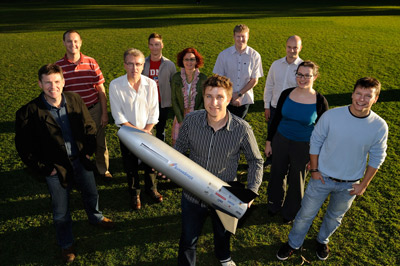
    The University of Queensland Scramspace team with a smaller prototype of the 1.8m long hypersonic scramjet. Credit: University of Queensland
    The University of Queensland Scramspace team with a smaller prototype of the 1.8m long hypersonic scramjet. Credit: University of Queensland

    Space rocket launches tend to get a lot of attention in the media, particularly when humans are on board. There’s something a little … strange … about watching a human-made object make it into orbit, even as we’re well into our sixth decade of sending stuff into the solar system.

    While many people think that a space rocket will always make it into orbit around Earth, at the least, that’s not the way orbital mechanics works. Rockets must reach a certain height and speed in order to orbit our planet. Anything less, and the rocket is considered a suborbital one — one that essentially blasts up and then falls back down to Earth.

    These launches are still valuable, however. Because they’re cheaper than orbital missions, they provide a platform for small businesses as well as universities to perform work. For example, they often can feature a few minutes of weightlessness where researchers can get a quick glimpse of how microgravity affects manufacturing or life processes. They’re also good for a scout of weather conditions or even to perform quick bursts of astronomy.

    The University of Queensland plans to launch a scramjet aboard a suborbital rocket. This type of engine, which can be used in hypersonic speeds, is expected to reach 8,600 kilometres an hour during its launch from the Andøya Rocket Range, a Norwegian launch site 300 kilometres inside the Arctic circle.

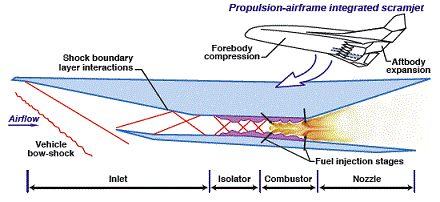
    An illustration of how a scramjet works. Credit: NASA
    An illustration of how a scramjet works. Credit: NASA

    “We have been working with our project partners to test the components of this scramjet in the laboratory with wind tunnels and simulations for the past three years, but testing the scramjet in real flight conditions will be the ultimate test,” stated Russell Boyce , the hypersonics university chair who leads the “Scramspace” project.

    “The test period itself will last for just three seconds before the scramjet completely combusts, but the amount of data we can collect in those seconds is enormous. It will give us insights into hypersonic physics, hypersonic combustion, performance of materials and components and how we will make these vehicles fly in future.”

    The scramjet will be shipped there in August. It would be a spectacular test to watch, as it will go up to 340 kilometres in altitude on a two-stage rocket. Then the scramjet vehicle will separate itself from the launch vehicle and prepare for re-entry — reaching Mach 8 before it undergoes a planned self-destruction over the water.

    About $5 million in funding for the Scramspace project came from the Australian Space Research Program. More information on the researchers’ activities is here.

    While Australia is one player in the scramjet research field, the applications of this research are also reaching international agencies such as NASA and DARPA (the U.S. Defense Advanced Research Project Agency). DARPA, in fact, has done testing with the  Australian Defence Science and Technology Organization, such as this 2007 examination that was supposed to examine how to create an engine with efficient thrust compared to drag.

  • Deep-space flashes light up a new face of Nature

    Deep-space flashes light up a new face of Nature

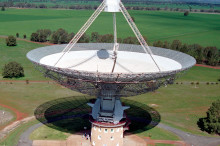
    CSIRO’s Parkes radio telescope has detected brief flashes of radio emission from the distant Universe. Their origin is unknown.

    CSIRO’s Parkes radio telescope in eastern Australia has detected mysterious ‘flashes’ of radio energy from the distant Universe that may open up a whole new area of astrophysics. The surprising finding, made by a team of scientists from ten institutions in Australia, the USA, UK, Germany and Italy, is published in today’s issue of the journal Science.

    “Staggeringly, we estimate there could be one of these flashes going off every ten seconds somewhere in the sky,” said research team member Dr Simon Johnston, Head of Astrophysics at CSIRO Astronomy and Space Science.

    Four flashes were detected, each from a different direction and each lasting for only a millisecond (a thousandth of a second).

    The characteristics of the radio signal — how it is ‘smeared out’ in frequency from travelling through space — indicate that the flashes came from up to 11 billion light-years away.

    No gamma rays or X-rays were detected in association with the flashes, and the astronomers have ruled out the flashes being from phenomena such as gamma-ray bursts, the merger of two neutron stars, merging black holes, or evaporating black holes.

    Dan Thornton, a PhD student with the University of Manchester and CSIRO, is the lead author on the Science paper. “A single burst of radio emission of unknown origin was detected outside our galaxy about six years ago but no one was certain what it was or even if it was real,” he said. “So we have spent the last four years searching for more of these explosive, short-duration radio bursts.”

    That original radio flash, known as the ‘Lorimer burst’ after its discoverer, was also found with CSIRO’s Parkes telescope.

    “Finding these things requires both a sensitive telescope and spending enough time looking, and that’s what we’ve done with Parkes,” said Dr Johnston.

    CSIRO’s Australian SKA Pathfinder telescope, now under construction in Western Australia, will be running a major survey for transient radio sources like the ones just found with Parkes.

    “With the ability to detect these very fast sources we are opening up a whole new area of astrophysics,” said Dr Johnston.

    Image: CSIRO’s 64-m Parkes radio telescope. Credit: John Sarkissian, CSIRO.

    Source.


  • Australia’s evolving drug landscape

    Australia’s evolving drug landscape

    This year we saw Australia put into force a new patent law. An intellectual property system that was Australia’s most comprehensive in over two decades. It came into effect on 15 April 2013 and no one knew exactly what to expect from it.

    We have seen with cases like India, how one country’s patent laws can send ripples and disrupt the entire system. And, in the case of Thailand, how a country can take matters into its own hands to enact a public good.

    It really all centres around compulsory licensing. A compulsory license, in simple legalese, is the use of a patented innovation that has been licensed by a state without the permission of the patent title holder. This started over a decade ago, when the World Trade Organization adopted the “Declaration on the TRIPS Agreement and Public Health

  • Could Australian Terrain Help Train Future Mars Explorers?

    Could Australian Terrain Help Train Future Mars Explorers?

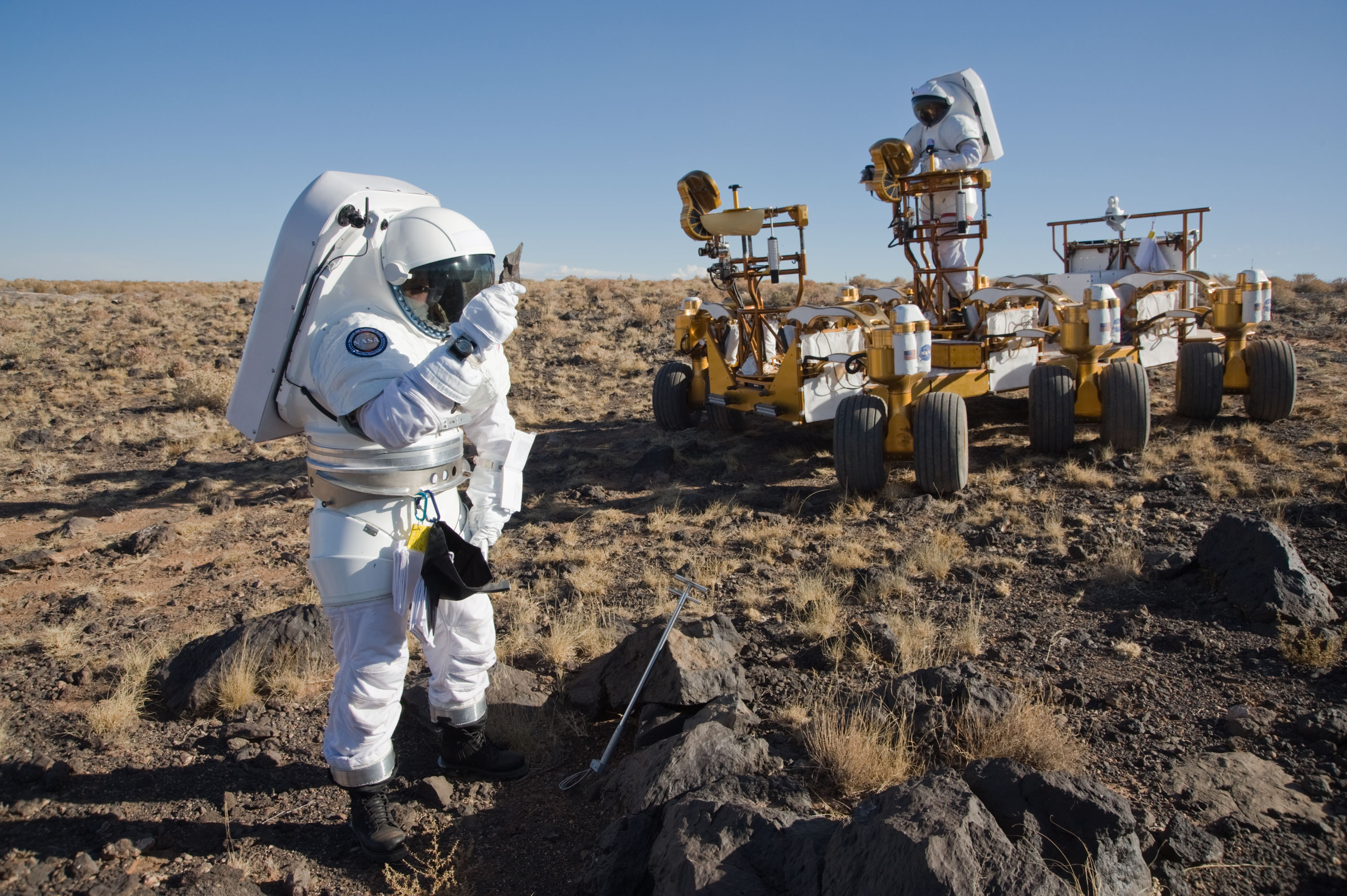
    Researchers simulate Mars exploration during a 2008 NASA Desert RATS (Research and Technology Studies) exercise in Arizona. Credit: NASA
    Researchers simulate Mars exploration during a 2008 NASA Desert RATS (Research and Technology Studies) exercise in Arizona. Credit: NASA

    How do you rehearse for a Martian space trip? Simulations can only bring astronauts so far when they’re figuring out a mission. A typical person training for the International Space Station can expect a combination of classroom work, spacewalk rehearsals in the water, and robotic arm training using articles that are very close to the real deal.

    Exploring another world is a complex problem yet again. Astronauts in the Apollo mission received hundreds of hours in geology training, for example, and flew to areas ranging from Meteor Crater in Arizona to the site of a huge crater in Sudbury, Ont. Today, NASA and other research institutions carry out Mars mission research at two Mars Society sites in Canada and Utah, among other locations.

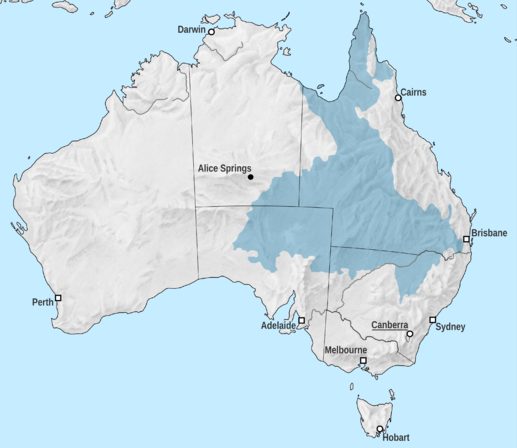
    Turns out Australia’s challenging environment could also be a good analog for the Red Planet. The Great Artesian Basin, which stretches across much of the east side of the continent, is the site of “acidic weathering” that could be similar to what was experienced on Mars, a new study says. Perhaps future Martian trainees could add Australia to their list of destinations.

    A map of the Great Artesian Basin. Credit: Wikimedia Commons
    A map of the Great Artesian Basin. Credit: Wikimedia Commons

    The tough environment has an economic link to Australia: precious opals, the national gemstone of the country. The May 2013 paper in the Australian Journal of Earth Sciences suggests not only a way that opals form.

    There’s a bit of a mystery behind opal formation, which Markus Hammonds documented in a past Australian Science article. Also, their formation could point to similarities to the Red Planet.

    “Interestingly, acidic oxidative weathering has been documented at the surface of Mars, which shares an intriguing set of attributes with the Great Artesian Basin,” stated the scientific paper.

    These characteristics include sandstones that appear very similar between the locations, a “drying out” period that created clay and opaline silica, and even a similar red color, the paper noted. The opals themselves were formed after the acidic weathering dried out the landscape amid the Eromanga Sea receding about 100 million years ago.

    A sample of precious opal. Credit: Wikimedia Commons
    A sample of precious opal. Credit: Wikimedia Commons

    So what are the implications of this link between Australia and Mars?

    It could help us better understand geological features. Rovers on Mars keep stumbling across evidence of minerals that formed in water, “including opal-bearing mineral assemblages”, the paper noted. Research on the Red Planet is thus helping us to better understand how opal formed in Australia, it added, and how the area was dehydrated during the Late Cretaceous.

    It could teach us more about each planet’s history. Both areas are very red, suggesting that “oxidative weathering played an important role during and after the dehydration of Mars’ surface”, the paper stated. From a wider perspective, comparative planetology between Mars and Earth could help us understand how a planet can lose much of its atmosphere (as Mars did) or hang on to it (as Earth has, so far.)

    Australia could be a good training ground for budding Martian scientists. This finding has already generated a lot of interest in the greater space community (it was picked up by a NASA astrobiology publication, for example) and will likely bring about more research into the links. This could potentially bring Australia to more prominence as a potential training ground for Mars exploration. Geologists could train for searching on Mars by searching in the Great Artesian Basin.

    Human Mars exploration is likely still years away, but at the very least, Australia could be a spot where technology is tested out and Martian geological exploration is simulated. The Mars Society has talked about putting in a “Mars-OZ” base in Australia, for example.

    There are substantial risks to the journey — this Australian Science article by Sharon Harnett explains more about the hazards associated with radiation and cardiovascular damage, among other risks. There’s a lot we need to figure out. But as more findings like this recent one are released, interest in Australia as an analog environment is bound to increase.

  • Weekly Science Picks

    Weekly Science Picks

    Happy Sunday, Happy Science. Without further ado, here’s the list…

    We start with one of our own. Pluto, the dwarf planet that has probably gone through more drama than any other palnetary body in our solar system is back in the news as well. What do Spock and Pluto have in common?

    Pluto’s new moons named: Spock still homeless

    “The dwarf planet, Pluto, can still generate plenty of public interest – if the naming of its two recently discovered moons is anything to go by. After their discovery, the leader of the research team, Mark Showalter, called for a public vote to suggest names for the two objects. The on-line contest, aptly named ‘Pluto Rocks!‘, concluded with Vulcan as the outright favorite, after a William Shatner led push by Star Trek fans. The names Cerberus and Styx ranking second and third respectively.  The International Astronomical Union (IAU) has announced that the names Kerberos and Styx have officially been recognised for these fourth and fifth moons of Pluto. A decision that is probably correct, even if it proves not to be the most popular.”


    Science has promised us many things in its long history. Jetpacks and the promise of immortality to name just two. News this week tells us that at least science has not completely forgotten about promises made (hint: its not jetpacks). The possibility of building components of ourselves in a laboratory that will allow us to eventually live forever.

    Building a Liver From Stem Cells

    “Reporting in the journal Nature, researchers say they have created a functional liver using induced pluripotent stem cells. The team of scientists first created “liver buds” and transplanted those into mice, where the buds grew into tissue resembling the adult liver. Anthony Atala of the Wake Forest Institute for Regenerative Medicine, who was not affiliated with the work, describes what was done and whether whole, functioning, transplantable organs might be created in this way.”


    Why is the ultimate question. Search no further for a simpler answer to the universe than Ethan Siegel’s explainer on Scienceblogs.

    Why did the Universe start off with Hydrogen, Helium, and not much else?

    “This primordial, unprocessed material has actually been detected observationally, and is one of the three cornerstones of the Big Bang, along with Hubble expansion and the cosmic microwave background. And that’s where all the elements in the Universe started from! Everything you are, everything you know, and every material object you’ve ever interacted with came from this primordial sea of protons and neutrons, and was once a mere collections of hydrogen and helium atoms. And then the Universe happened…”


    And finally, over at PLoS Blogs we have an indepth look at the HPV vaccine. Something Michael Douglas should be reading.

    HPV goes up, HPV goes down, and America struggles with the vaccine’s image problem

    “It’s the “your teenage girl will have sex

  • Pluto’s new moons named: Spock still homeless

    Pluto’s new moons named: Spock still homeless

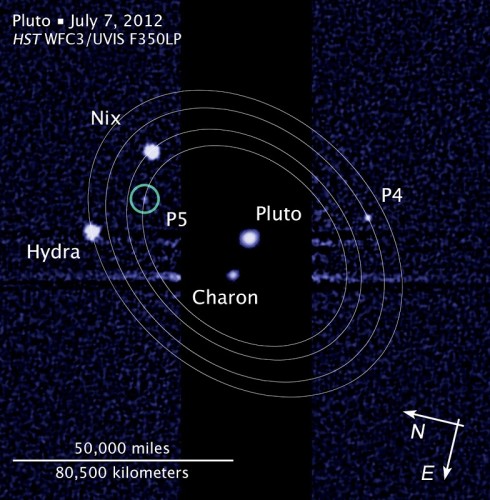
    This image, taken by the NASA/ESA Hubble Space Telescope, shows five moons orbiting Pluto, the distant, icy dwarf planet (ESA/Hubble/AFP/Showalter)
    This image, taken by the NASA/ESA Hubble Space Telescope, shows five moons orbiting Pluto, the distant, icy dwarf planet (ESA/Hubble/AFP/Showalter)

    The dwarf planet, Pluto, can still generate plenty of public interest – if the naming of its two recently discovered moons is anything to go by. After their discovery, the leader of the research team, Mark Showalter, called for a public vote to suggest names for the two objects. The on-line contest, aptly named ‘Pluto Rocks!‘, concluded with Vulcan as the outright favorite, after a William Shatner led push by Star Trek fans. The names Cerberus and Styx ranking second and third respectively.  The International Astronomical Union (IAU) has announced that the names Kerberos and Styx have officially been recognised for these fourth and fifth moons of Pluto. A decision that is probably correct, even if it proves not to be the most popular.

    The moons of Pluto

    The new moons were discovered in 2011 and 2012, during observations of the Pluto system made with the NASA/ESA Hubble Space Telescope. Their discovery increasing the number of known Pluto moons to five. Kerberos lies between the orbits of Nix and Hydra, two bigger moons discovered by Hubble in 2005, and Styx lies between Charon, the innermost and biggest moon, and Nix. Both have circular orbits assumed to be in the plane of the other satellites in the system. Kerberos has an estimated diameter of 13 to 34 kilometres, and Styx is thought to be irregular in shape and is 10 to 25 kilometres across.

    Artist illustration of Pluto (centre) from one of its small moons. The largest moon Charon is on the right. Credit: NASA, ESA and G. Bacon (STScI)
    Artist illustration of Pluto (centre) from one of its small moons. The largest moon Charon is on the right. Credit: NASA, ESA and G. Bacon (STScI)

    The recent discoveries of the two small moons orbiting Pluto raise interesting new questions about how the dwarf planet formed. We now know that a total of four outer moons circle around a central “double-planet” comprising Pluto and its large, nearby moon Charon.

    No home for Spock

    The International Astronomical Union (IAU) is the arbiter of the naming process of celestial bodies, and is advised and supported by astronomers active in different fields. On discovery, astronomical objects receive unambiguous and official catalogue designations. When common names are assigned, the IAU rules ensure that the names work across different languages and cultures in order to support collaborative worldwide research and avoid confusion.

    To be consistent with the names of the other Pluto satellites, the names had to be picked from classical European mythology, in particular with reference to the underworld — the realm where the souls of the deceased go in the afterlife.  Showalter submitted Vulcan and Cerberus to the IAU where the Working Group for Planetary System Nomenclature (WGPSN) and the Committee on Small Body Nomenclature (WGSBN) discussed the names for approval.

    After a final deliberation, the IAU Working Group and Committee agreed to change Cerberus to Kerberos — the Greek spelling of the word, to avoid confusion with an asteroid called 1865 Cerberus. According to mythology, Cerberus was a many-headed dog that guarded the entrance to the underworld. In keeping with the underworld theme the third most popular name was chosen — Styx, the name of the goddess who ruled over the underworld river, also called the Styx.

    The IAU decided against the name Vulcan for a number of reasons: Vulcan had already been used for a hypothetical planet between Mercury and the Sun (although this planet was found not to exist), the term “vulcanoid

  • Deserts ‘greening’ from rising CO2

    Deserts ‘greening’ from rising CO2

    Increased levels of carbon dioxide (CO2) have helped boost green foliage across the world’s arid regions over the past 30 years through a process called CO2 fertilisation, according to CSIRO research.

    In findings based on satellite observations, CSIRO, in collaboration with the Australian National University (ANU), found that this CO2 fertilisation correlated with an 11 per cent increase in foliage cover from 1982-2010 across parts of the arid areas studied in Australia, North America, the Middle East and Africa, according to CSIRO research scientist, Dr Randall Donohue.

    “In Australia, our native vegetation is superbly adapted to surviving in arid environments and it consequently uses water very efficiently,” Dr Donohue said. “Australian vegetation seems quite sensitive to CO2 fertilisation.

    This, along with the vast extents of arid landscapes, means Australia featured prominently in our results.”

    “While a CO2 effect on foliage response has long been speculated, until now it has been difficult to demonstrate,” according to Dr Donohue.

    “Our work was able to tease-out the CO2 fertilisation effect by using mathematical modelling together with satellite data adjusted to take out the observed effects of other influences such as precipitation, air temperature, the amount of light, and land-use changes.”

    The fertilisation effect occurs where elevated CO2 enables a leaf during photosynthesis, the process by which green plants convert sunlight into sugar, to extract more carbon from the air or lose less water to the air, or both.

    If elevated CO2 causes the water use of individual leaves to drop, plants in arid environments will respond by increasing their total numbers of leaves. These changes in leaf cover can be detected by satellite, particularly in deserts and savannas where the cover is less complete than in wet locations, according to Dr Donohue.

    “On the face of it, elevated CO2 boosting the foliage in dry country is good news and could assist forestry and agriculture in such areas; however there will be secondary effects that are likely to influence water availability, the carbon cycle, fire regimes and biodiversity, for example,” Dr Donohue said.

    “Ongoing research is required if we are to fully comprehend the potential extent and severity of such secondary effects.”

    This study was published in the US Geophysical Research Letters journal and was funded by CSIRO’s Sustainable Agriculture Flagship, Water for a Healthy Country Flagship, the Australian Research Council and Land & Water Australia.

    Source.


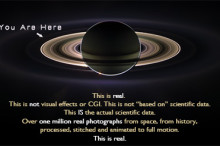
  • Cassini in Motion: Spectacular In Saturn’s Rings First Official Teaser

    Cassini in Motion: Spectacular In Saturn’s Rings First Official Teaser

    In Saturn’s Rings is a non-profit giant-screen space art film that takes audiences on a journey of the mind, heart and spirit from the big bang to the near future via the Cassini-Huygens Mission at Saturn.

    Composed entirely of still photographs using innovative visual techniques developed by the filmmaker, In Saturn’s Rings stretches the boundaries of the motion picture form. The film will feature powerful music by Ferry Corsten, William Orbit, Samuel Barber and melds non-narrative visual poetry & science documentary into a rich experience for audiences.

    In Saturn’s Rings is a film that’s both personal and universal, experimental and sincere, science and spirit , narrative and documentary. The goal is to use large screen imagery, synchronized to powerful but moving music, to create an experience for those who see it, hear it and feel it.

    Using hundreds of thousands of still images manipulated to create full motion, using “2.75D” photographic fly-through technology. The film will be presented in beyond Hollywood quality 5.6K resolution on massive screens and concert-level surround systems to audiences in giant screen institutions, IMAX™ theaters, planetariums, museums and select 4k digital cinemas.

    “‘In Saturn’s Rings’ is a film that’s both personal and universal, experimental and sincere, science and spirit , non-narrative and documentary. The goal is to use large screen imagery, synchronized to powerful but moving music, to create an experience for those who see it, hear it and feel it.

  • Australia extends its expertise in water resource management to Asia

    Australia extends its expertise in water resource management to Asia

    Scientists from Australia’s national science agency, CSIRO, are applying their knowledge in transboundary river basin management to improve the livelihoods of people living in some of the poorest parts of Asia.

    CSIRO and its partners have begun work in the Koshi River Basin which stretches from China, across the Himalayas through Nepal and discharges into the Ganges River in India.

    The Koshi Basin is home to millions of people who rely on its fertile floodplains for their livelihoods. There is growing pressure to address development challenges in the Basin, in particular population growth and an increasing demand for energy, whilst working within constraints of natural hazards exacerbated by a changing climate, such as floods, drought, landslides, sediment movement and debris flow.

    In a collaborative four-year project, scientists from CSIRO’s Water for a Healthy Country Flagship will provide technical assistance to the International Centre for Integrated Mountain Development’s (ICIMOD) Koshi Basin Programme. CSIRO scientists will develop an integrated basin-wide modelling system to improve management of the Koshi River Basin. This system will incorporate information on water availability, freshwater environments and the ecosystem services they provide and social considerations such as the effect of changes in water availability on livelihoods. The system will contribute to development in the Koshi Basin in a socially and environmentally sustainable manner and support national and transboundary water reforms.

    “Australia has a long history of managing a scarce and variable water resource, and sharing this resource amongst competing users,” said CSIRO’s Water for a Healthy Country Flagship Director, Dr Carol Couch. “There is much the Australian water experience will bring to this project to help improve sustainable development and climate resilience, reduce water stress, and inform water-related decision making and transboundary issues. We will draw on the suite of large river basin assessments undertaken across Australia in recent years, such as the Murray-Darling Basin Sustainable Yields assessment.

    “Research will be undertaken as a partnership between Australian organisations and ICIMOD researchers, based in Nepal. We will also be learning from ICIMOD, particularly in relation to sediment movement, snow melt and glacial processes,” said Dr Couch.

    “At ICIMOD, we have taken a long-term, transboundary approach to support river basin management. This includes testing, piloting, and monitoring the innovations needed to address common issues related to climate change, cryosphere, water resources management and livelihood promotion,” said Dr David Molden, Director General of ICIMOD.

    “The Koshi Basin Programme will provide a platform for national and international researchers and decision makers to come together to promote transboundary cooperation and integrated water resource management practices and policies. This will also include the development of measures for risk management as well as equitable access to water for energy and food security,” said Dr Molden.

    Work undertaken by CSIRO this year will consist of a review and analysis of the existing knowledge base, capacity building and the development of a prototype model for the Koshi River Basin that incorporates information on water, climate, hydropower, freshwater environments, irrigation and social issues including poverty alleviation. The knowledge gained from this project will culminate in the development of a robust integrated basin-wide modelling framework, using eWater’s hydrological modelling platform, Source.

    Source.

  • Explosions visible from across the Universe

    Explosions visible from across the Universe

    Gamma ray bursts are the most violent and energetic events in the entire universe. Powerful blasts of high energy gamma radiation, bright enough to be seen from literally the very edge of the visible Universe. And yet, we know surprisingly little about them. Of course, we have theories, but every now and again astronomers spot something which those theories don’t fully cover. Such as a couple of years ago, when an international team of astronomers caught a glimpse of the longest lasting gamma ray burst ever seen.

    December 9th, 2011. NASA’s Swift telescope detected a sudden spike of gamma rays from somewhere within the constellation of Phoenix, visible in the Southern hemisphere. Gamma ray bursts (GRBs for short) like these are normally subdivided into two types, short bursts and long bursts, which have different causes. Short bursts last for just a couple of seconds, while long bursts can last for several minutes. But this particular burst, dubbed GRB 111209A (pictured above), was very different. One of a unique, rare breed of extra long lived GRBs, and by far the longest ever observed – lasting an unprecedented 7 hours!

    Ever since then, astronomers have been picking at the data which were recorded, trying to work out exactly what kind of unusual circumstances would cause such a goliath GRB. One team, a collaboration between Bruce Gendre now at the French National Center for Scientific Research, and David Coward and Eric Howell at the University of Western Australia, managed to get to what may be the bottom of the puzzle. In short, these extra long GRBs are caused by the deaths of the Universe’s most massive stars.

    It’s a sobering fact that all stars die. Some burn slowly for billions of years. The very smallest may burn for trillions. But the most massive stars burn out rapidly before dying in titanic explosions which we know as supernovae. It seems that the most massive of the massive, exceptionally rare, die in a unique type of GRB.

    So far, only three of these ultra-long GRBs have been found, appearing so bright that some astronomers initially believed that they came from inside our own galaxy. As it happens, this wasn’t the case. Analysing GRB 111209A, Gendre and his colleagues hypothesised the source of it to be an extremely hot, massive star.

    A furiously burning blue supergiant (possibly a hypergiant), hundreds of times the diameter of the Sun. When a star like this dies, its core collapses into a black hole, which then proceeds to start devouring the star from the inside out. As that black hole hungrily eats, its mammoth gravitational forces brutally tearing matter apart at the subatomic level, it generates an immense amount of energy which causes two jets of material to shoot out from its north and south poles. These are blasted outwards out with such ferocity that they actually punch two holes in the doomed star.

    Read that again. A star which is hundred of times as massive as the sun, and these jets are powerful enough to blast two holes in it! The amount of energy required to accomplish that is truly difficult to comprehend.

    Oh em GRB!

    The stars which die in these titanic events still require a specific set of circumstances. These stars are apparently enriched in elements heavier than helium (astronomers refer to these as “metals”, even though chemists would disagree on a few counts). More of these heavier elements cause a star’s stellar wind to increase, causing its rotation speed to slow as it loses material. But faster spinning stars seem to be more likely to cause these long bursts, which led some to wonder if the massive star behind GRB 111209A was also cannibalising another nearby star – a process which could possibly cause its rotation to speed up.

    The exact cause is still a matter of puzzles and hypotheses. We won’t know more until we observe more of these ultra-long GRBs, and seeing as we’ve only ever spotted 3 of them, it may remain a puzzle for a while yet. But a tantalising glimpse like this of one of the Universe’s most extreme events gives us a good reason to keep watching and waiting. When we do finally understand, it will almost certainly have been worth waiting for.

    Image credits:
    Top – NASA/Swift/B. Gendre (ASDC/INAF-OAR/ARTEMIS)
    Bottom – CNRS/ARTEMIS – Céline Lavalade