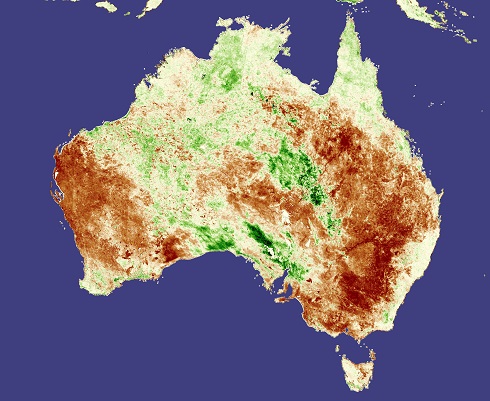
A false-colour view of Australia during the drought season. Credit: NASA images created by Jesse Allen, Earth Observatory, using data obtained courtesy of USDA FAS and processed by Jennifer Small and Assaf Anyamba, NASA GIMMS Group at Goddard Space Flight Center
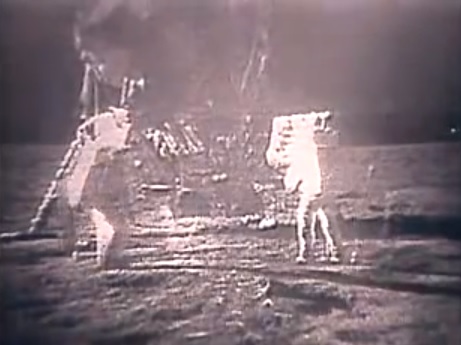
Despite its lack of a space agency, Australia has a rich space heritage. Its telescopes, many of which are set up in desert areas, provide excellent views of the nighttime sky. It has dishes that stay in touch with NASA spacecraft (perhaps most famously, broadcasting Apollo 11 as the first lunar landing crew worked on the surface.) There also are many professionals that work in space, whether in astronomy, engineering, various sciences or other fields.
Dempster’s plea isn’t the first such one. In 2008, as he points out, the Australian Senate Standing Committee on Economics wrote a report (called “Lost In Space“). Besides repeating the oft-made observation that Australia is alone among its OECD peers in not having a space program, the report stated that Australia’s work “in space science and industry has drifted and the sense of purpose has been lost.”
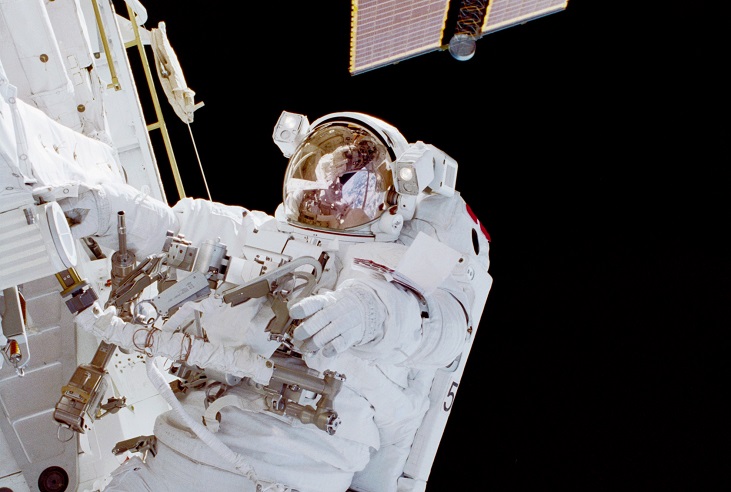
A few Australians have flown in space, such as Andy Thomas, who is pictured here during a spacewalk on mission STS-102 in 2001. Credit: NASA
The report, and Dempster in his new article, both urged the government to set a policy to make it easier for industry to figure out where to go next.
“Personally, my problem with Australia’s reactive approach to overseas approaches on space missions is only partly that we don’t have the competence of a space agency to answer such questions from foreign agencies. More important is that we don’t have the people to ask them,” he wrote. “There is no one in Australia dedicated to finding satellite solutions to Australia’s problems.”
There are other benefits that would flow as well from having an established space program, Dempster said. Space funding would be stabilized, technical responsibilities would be better understood, and satellite work in particular could accelerate. In a country that is so sparsely populated, satellites are essential for Australian communications as well as to view agriculture, forest fires and other features from above.
Australia’s Parkes Observatory received the first transmissions of human steps on the moon in 1969. Credit: NASA/YouTube screenshot
A space program, once established, would not be a panacea for all problems. NASA, for example, is currently fighting a hard battle in Congress to get funding for the commercial spaceflight partner programs it wants to bring human launches back to American soil. Canada’s space program recently received criticism in a government-issued report that said the lack of funding stability is hampering its goals. Money will always be a problem, whether there is an established space agency or not.
What must be established is whether a space agency is a good point of access for external stakeholders to forge partnerships with Australia, if universities and industry require a connecting node to form relationships, and if the economy itself requires a spur to put money into space — a government spur that could front money during tough economic conditions, for example, to stimulate the economy.
What is your feeling on the matter? Feel free to leave your comments below.
It happens all too often: as soon as we leave our early childhood behind and cross the borderline between primary and secondary education, we lose all or part of our interest in books. From the age of 12-14 children’s visits to the public library, for instance, drop dramatically, leaving those who keep reading a minority. Over the last decades, numerous researchers have analysed this phenomenon. Their conclusions are more or less the same: the leap into puberty makes boys and girls either turn much more into themselves, or it diverts their attention to the outside world. In both cases puberty changes their interests and emotional household, averting many from reading literature. The ever-broadening world of gaming, TV, internet and social media offers children a host of instant and flashy challenges with which the slow and silent world of books cannot compete. Moreover, in some schools reading education to young adolescents focuses too little on the pleasure of reading and too much on analysis. As a result children lose every (remaining) interest in reading. They get bored from the start or are insufficiently challenged. That being said, many teachers who do try to enhance reading pleasure in their classrooms, do not always succeed – “It is so difficult to bring books to life for Nintendo-children
Concrete and cement. Words synonymous with solidity and well, staidness. Cement is probably the most ubiquitous building material of the late 20th century – yet it may provide some very 21st century surprises. Researchers at the University of Alicante have developed a cement material incorporating carbon nanofibres in its composition, turning cement into an excellent conductor of electricity. Similarly scientists from the USA, Japan, Finland and Germany have unraveled the formula for transforming liquid cement into liquid metal – opening up its use in the profitable consumer electronics marketplace for thin films, protective coatings, and computer chips.
The warmer side of concrete
Concrete is a composite material composed of coarse granular material (the aggregate or filler) embedded in a hard matrix of material (the cement or binder) that sets and hardens independently, filling the space among the aggregate particles and gluing them together. Concrete made from such mixtures was first used in Mesopotamia in the third millennium B.C. and later in Egypt. It was further improved by the Ancient Macedonians and three centuries later on a large scale by Roman engineers. They used both natural pozzolans (such as pumice) and artificial pozzolans (ground brick or pottery) in these concretes. Many excellent examples of structures made from these concretes are still standing, notably the huge dome of the Pantheon in Rome and the massive Baths of Caracalla. The vast system of Roman aqueducts also made extensive use of hydraulic cement.
Conventional concrete is a poor conductor of electricity. To obtain a cement-like compound that is effective as a heating element, it then should have a low resistivity. This has been achieved by the addition of conductive materials such as carbon fibres, for example. This new technology, developed and patented by the University of Alicante Civil Engineering Department’s Research Group in Multifunctional Concrete Conductors, allows, among other functions, the material to heat up due to the passage of current.
The technology allows buildings’ premises to heat or prevents the formation of ice on infrastructure, such as highways, railways, roads, airstrips and other elements. In this way, a new conductive compound with much more interesting properties is achieved since it keeps the structural properties of concrete and does not compromise the durability of the structures themselves. This new product has a great versatility, since any existing structure or surface can be coated with it, keeping thermal control in it by applying continuous electric current. At present, the research group has developed trials to test the technology in plasters with carbonaceous materials. These tests have given very satisfactory results, obtaining optimal properties of heating the material with minimum energy consumption.
21st century metallic-glass cement
A team of scientists from the USA, Japan, Finland and Germany have made a metallic-glass cement. This new material has lots of applications, including as thin-film resistors used in liquid-crystal displays – basically the flat panel computer monitor that you are probably reading this from at the moment. The team have demonstrated how make and understand the cement-to-metal transformation, which has positive attributes including better resistance to corrosion than traditional metal, less brittleness than traditional glass, conductivity, low energy loss in magnetic fields, and fluidity for ease of processing and molding. Previously, only metals have been able to transition to a metallic-glass form. Cement does this by a process called electron trapping, a phenomena only previously seen in ammonia solutions. Understanding how cement joined this exclusive club opens the possibility of turning other solid normally insulating materials into room-temperature semiconductors.
This phenomenon of trapping electrons and turning liquid cement into liquid metal was found recently, but not explained in detail until now. Now that the conditions needed to create trapped electrons in materials are known, other materials can be developed and tested to find out if we can make them conduct electricity in this way. The results were reported in the journal the Proceeding of the National Academy of Sciences in the article “Network topology for the formation of solvated electrons in binary CaO-Al2O3 composition glasses.”
The team of scientists studied mayenite, a component of alumina cement made of calcium and aluminum oxides. They melted it at temperatures of 2,000 degrees Celsius using an aerodynamic levitator with carbon dioxide laser beam heating. The material was processed in different atmospheres to control the way that oxygen bonds in the resulting glass. The levitator keeps the hot liquid from touching any container surfaces and forming crystals. This let the liquid cool into glassy state that can trap electrons in the way needed for electronic conduction.
The scientists discovered that the conductivity was created when the free electrons were “trapped” in the cage-like structures that form in the glass. The trapped of electrons provided a mechanism for conductivity similar to the mechanism that occurs in metals. To uncover the details of this process, scientists combined several experimental techniques and analyzed them using a supercomputer.
These developments are sure to provide an impetus for a new look at old building material.
On Friday night I was lucky enough to be able to attend National Science Week’s Event ‘Memes, blogs and videos: how social media has transformed the way we communicate science‘ in Canberra. The event was a panel discussion between some of the most prominent and influential social media science communicators around the globe. The panel included:
Phil Plait – (AKA @BadAstronomer) an astronomer, writer and popular science blogger, Elise Andrew – Creator of I Fucking Love Science on Facebook; Henry Reich – Creator of MinutePhysics and MinuteEarth YouTube channels; Mitchell Moffit & Gregory Brown – Creators of AsapSCIENCE YouTube channel; Destin Sandlin – Creater of SmarterEveryDay YouTube channel; and Chris Cassella – Managing Director of Science Alert.
It really was a stellar ‘cast’ who have a combined social media reach of well over 100 million people per week. So what did these ‘giants’ of social media have to say about science communication? Well they said a lot, so I can only cover the highlights here. For a start – they all agreed – anyone can be a ‘science communicator’. You don’t have to be a scientist, or journalist or writer to be an effective science communicator, you just need to have a passion for science, and the time and ability to pass that information onto others. So what do the panel members think makes their science communication successful, and what can they suggest to someone interested in science communication?
Let’s start with Phil Plait, astronomer, author and science blogger who thinks that ‘all science is entertaining’! Phil selects topics for his blog based on what he’s excited by, not so much on what he thinks others want to see. Phil explained that his philosophy is that if he’s excited about it, other people will be excited about it. He recognises that people are often interested in the scary stuff, so he wrote ‘Death from the Skies’, where he talks about all the stuff that could kill us; blackholes, magnetic flares, supernovas, and killer asteroids. He recommends putting your own spin on a topic, if every one else is talking about it, you need differentiate yourself from everyone else.
Phil Plait (Image courtesy of www.badastronomer.com)
In contrast to Phil, Elise Andrews, creator of the enormously popular I Fucking Love Science Facebook page, really didn’t start off with an idea of ‘doing’ social media. Elise manages a page with 6.4 million followers on her own, and admits that the task takes up all of her time. Elise’s tip is to use the Facebook scheduling function, which helps dramatically with maintaining content in a global 24 hour information cycle. She stressed that the viral nature of social media means that it’s one of the few ways we have to get the message of science and science communication in front of people who wouldn’t normally seek out science-related material. When asked about the contentious name of her page, Elise responded ‘the name of your page is important, you need a name you can’t not look at!’
Minute Physics creator Henry Reich has a background in physics, so that’s why he focuses on physics – he understands it and he wants others to understand it. Henry believes that traditional teaching of physics/science is classical and boring to most people, which is a shame, because right now current physics is focused on really cool stuff like the big bang, string theory, quantum theory, etc. When deciding on a topic Henry tries to focus on the cool stuff, he then tries to explain it in a way that is simple and fun – but remains true to the science. Minute Physics videos are restricted to a minute or two – that makes Henry focus on what is important and condenses the message – there’s no room for extraneous material or ‘fluff’, and that keeps the attention of the viewer.
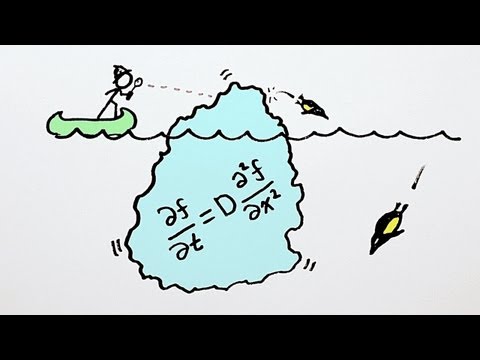
A clip from Minute Physics: Albert Einstein, The size and existence of atoms (Source: Minute Physics)
AsapSCIENCE creators Mitchell and Gregory, who also have a YouTube channel agree that the traditional way of teaching science can be seen as boring and dry. They believe the message in traditional classroom learning is ‘goal focused’ rather than focusing on the details of the science. So when they pick a topic, they ask a question like ‘Why do we age?’ rather than starting with detailed descriptions of cell division and DNA replication, etc.. This makes the message more relatable, rather than what often happens in a classroom setting with it being very dry and overwhelming. Incorporating entertainment is a vital part of effectively communicating the message – it helps to overcome the reputation of science as being dry and boring, and overly serious.
The third member of the panel that has his own YouTube channel is Destin Sandlin, creator of Smarter Every Day. Although Destin has an engineering background – B.Sc. in Mechanical Engineering, M.Sc. in Aeronautical Engineering – he takes the approach that he’s just an average guy who is trying to figure something out that he doesn’t know. This allows him to take his viewers on a journey from unknowing to discovery to knowing. In crafting his videos he looks for the “Aha!” moment – the point at which you go from not-knowing to knowing how something works or what caused it to happen. Destin’s videos are progressive – each one starts off with simple concepts, gets progressively harder, until it spikes with a serious point, before it reaches its conclusion. He believes that each video needs to cater for all levels of viewer and should have something interesting for everyone.
Lastly, Science Alert Managing Director Chris Cassella, says that Science Alert started as a website promoting Australian science, since Australian scientific accomplishments are under-represented in the media and community awareness. Chris started to use Facebook to drive traffic to the website, although things didn’t quite work out that way. The Facebook page didn’t drive much traffic to the website, but there was fantastic engagement on Facebook – he then realised that Facebook itself was a better delivery medium. He recommends that sites mix up the serious science content with humorous memes, jokes, etc which breaks up the stream and helps keep people engaged.
During the Q&A session at the end of the panel, an audience member asked the panel for their advice to scientists on what they can do to help assist science popularisers to get the message out about new research. The immediate and very strong message from all panelists was, “publish your results in open access journals!” So often, they would love to link to new research, but linking to a paywalled paper or article creates a deluge of complaints from their audience – so they can’t do it.
So there’s a lot of information to take away from this group of committed science enthusiasts and communicators, but here’s a few tips:
– Be passionate about the science you love, whether it’s biology, physics, astronomy or chemistry – if you’re passionate about it, your enthusiasm will be passed on to your listeners/viewers.
– The advent of social media and platforms like Facebook, Twitter and YouTube means that you no longer need to have a lot of money or resources to be an effective science communicator, you can start with a laptop and internet connection and you’re on your way.
– You don’t need top notch equipment, ‘Hollywood’ style special effects or eye-wateringly expensive graphics to produce your own YouTube videos.
– Make sure you get your science facts right, but if you make a mistake, correct it, be transparent about it, and move on.
If you’d like to see more of the panelists check out these links for further tour dates during National Science Week: Phil Plait, IFLS Live, and National Science Week.
Australian soils are losing about 1.6 million tonnes of carbon per year from wind erosion and dust storms affecting agricultural productivity, our economy and carbon accounts, according to new research.
Top soil is rich in nutrients and carbon but is increasingly being blown away by events such as the ‘Red Dawn’ in Sydney in 2009.
When wind lifts carbon dust into the atmosphere it changes the amount and location of soil carbon.
Some carbon falls back to the ground while some leaves Australia or ends up in the ocean.
CSIRO research scientist Dr Adrian Chappell and an international team of experts in wind erosion and dust emission recently calculated the extent of these carbon dust emissions.
“Carbon stored in our soils helps sustain plant growth. Our modelling shows that millions of tonnes of dust and carbon are blowing away, and it is uncertain where all that ends up,
The magenta exoplanet, Illustration courtesy S. Wiessinger, NASA, via BBC
What a week in the world of science! Let’s dive right in!
I’m currently re-reading the Ultimate ‘ Guide by Douglas Adams. This next story got me to thinking of custom designed planet building. What a lovely shade of pink!
In a new study announcing the magenta gas giant, researchers were able to directly image this exoplanet using the Subaru telescope on Hawaii. The color of this blushing body indicates it has less cloud cover than other observed exoplanets, meaning researchers can peer even deeper into its atmosphere to divine its components.
The professor said the meat was made up of tens of billions of lab-grown cells. Asked when lab-grown burgers would reach the market, he said: “I think it will take a while. This is just to show we can do it.”
This next story highlights a growing global problem… teaching and STEM.
The government’s new School Direct scheme is recruiting too few trainee teachers in key subjects, says Oxford Brookes university’s Prof John Howson.
There is a mystery disease attacking the bottlenose dolphin population. It won’t be easy to pinpoint the source, but let’s hope some real progress is made soon.
Federal wildlife officials raised a formal alarm on Thursday over the deaths of scores of bottlenose dolphins in waters off the east coast, saying that a fast-spreading infection could be attacking dolphin populations from New York to Virginia.
Another fish tale… though this one may have leave a bad taste in the mouth with some viewers and readers.
The Discovery Channel, which bills itself as the “#1 nonfiction media company” opened this year’s Shark Week with a fictional “documentary”.
I think this last “story” is a perfect capstone to this edition of Weekly Science Picks. Discovering new planets, investigating unusual mortality events in an animal population, even creating edible meat from stem cells; that’s all real science. And we need teachers to teach the subjects of maths and science to youngsters and to dispel these myths and sensationalism that media companies are hyping with outrageous headlines. It’s not just Discovery; the History Channel and National Geographic have departed from their traditional core programming, presumably to keep pace in the ratings race. And if that’s what viewers want more of, entertainment, well that’s one thing. But science should not be compromised at any cost.
I was awake at stupid o’clock last Sunday morning to watch NASA’s livestream of the launch of the HTV-4 resupply vehicle. At precisely 05:48:46AM AEST, JAXA H-IIB F4 launch vehicle lifted off smoothly en route to resupply the International Space Station (ISS). The 5.4 tonne payload comprised all the usual suspects: water, replacement and upgraded electronics for various ISS systems, spares for major station components, and new equipment and supplies for experiments.
Nestled in amongst the other cargo were four tiny ‘CubeSats’, two of which were funded by a Kickstarter project: ArduSat. These tiny satellites are the first example of crowdfunded space operations, and represent an exciting new development in the recent popularisation of ‘citizen science’.
Commercial satellite launches are immensely expensive, costing hundreds of millions of dollars using current rocket-based technology. The idea behind the ArduSat project is to provide low-cost access to real, orbiting satellites to students and space enthusiasts. By designing payloads small enough to fit into gaps in the main cargo area, innovative satellite operators are able to hitch a ride on commercial space launches at a fraction of the cost. The dramatic cost reduction has finally made it viable to create an orbiting educational platform, a remarkable achievement.
The two crowd-funded cubesats, ArduSat-1 and ArduSat-X, really are tiny—just 10 x 10 x 10cm and weighing only 1kg each. But their size is deceptive. Each satellite not only has its own flight stabilisation systems, but also incorporates a camera, an impressive suite of sensors (see list below), and 16 fully-functional Arduino-based computers. Each of those computing modules is capable of running experiments either independently or in concert with multiple other modules. The ‘experiments’ that can be run are essentially computer programs which can access data from the onboard sensors.
It is the onboard Arduino computers from which the ArduSats take their name. Arduino is a popular open source computing platform designed for hobbyists, enthusiasts, and professionals who use the ‘computer on a board’ platform to build everything from retro video game consoles, to home automation systems, through to… orbital experiment platforms! The ArduSat project is a global collaboration. NanoSatisfi is the company that was formed to create the Kickstarter project, and is headquartered in San Francisco. The main ArduSat Payload Processor Module (pictured below) was designed by Australian Aurduino guru, Jonathan Oxer, who I talked to after the launch. Jonathan co-authored the popular how-to book, Practical Arduino, and has subsequently founded Freetronics, a Melbourne-based company specialising in designing and producing Arduino-based boards, kits, and components.
The ArduSat payload processor module. [Image credit: Jonathan Oxer]
Arduino is open source hardware, which means that it is explicitly intended to be assembled, disassembled, studied, understood, and built upon. At the most basic level, people are able to build their own Arduino-compatible boards from common electronics components. Pre-built Arduino and Arduino-compatible boards are also available for under $50, allowing experimenters to get started at incredibly low cost even if they don’t wish to build the boards themselves. The effective removal of the entry barrier means that Arduino has made physical computing far more widely accessible than ever before.
The extremely low cost of building and launching the ArduSats creates an exciting opportunity for science education and outreach. Schools around the world are able to purchase experiment time on the satellites for only $300 for a full week of access. As Jonathan put it, “That’s an amazing price-point compared to anything previously available, and it makes it attainable even to individuals and small groups. A typical science class could run a bake sale, raise $10 per student, and then run their own experiments in space for a week!
CSIRO has announced the appointment of Dr Bronwyn Harch as chief of its newest research division with a focus on data-driven computational and information sciences.
The new research division, CSIRO Computational Informatics (CCI), will work in partnership with the organisation’s National Research Flagship program to address key national challenges across the information and decision making value chain. It will also work closely with a range of external partners and collaborators to create a capability hub in key research areas including next generation data analytics, autonomous robotics, complex systems modelling, and decision making under uncertainty.
“From pioneering the development of digital image analysis for agriculture in the 1980s to securing the landmark patent to Wireless LAN technology in the 1990s, CSIRO has always been at the forefront of technology-related research which tackles the nation’s toughest challenges,” said Dr Harch.
“The proliferation of smart devices and increasing access to next generation broadband has caused an explosion in the volume, velocity and variety of data and information. With predictions, that by 2020 the average person will own six different smart devices[1] connecting us to over 37 billion ‘things’, from cows in the field to our car to our fridge door through the Internet[2], it is clear the amount of data we produce will continue to grow at an exponential rate,” said Dr Harch.
“We have responded to the information and data challenges facing Australia with the formation of this new CSIRO Computational Informatics (CCI) Division. Our integrated and strengthened capabilities in this division will enable us to remain at the forefront of global developments in key research areas that transform the information and decision making workflows of industry, government and the innovation sectors.”
A recent McKinsey Institute report[3] on the future of ‘disruptive technologies’ shows a reduced focus on new gadgets and gizmos and an increased emphasis on the impact of technologies which require advanced data analytics. The same report predicts that by 2025 the potential economic contribution of new disruptive technologies such as mobile Internet, advanced robotics and 3D printing are expected to return between $14 trillion and $33 trillion globally each year.
Dr Harch believes the new Division’s focus on data-driven science will help CSIRO to increase the economic and social well-being of the nation by tackling some of the biggest challenges facing Australia including our declining productivity and ageing population.
“Through our Preventative Health Flagship, we are already leading the way in transforming advanced data analytics to pinpoint the genes that could lead to a simple blood screening test for Alzheimer’s disease before it takes hold. We’re also working on another project, with our Digital Productivity and Services Flagship and Australian Centre for Broadband Innovation (ACBI), which leverages next generation broadband networks to monitor health data and help older Australians to live in their own homes longer, independently and safely.”
However, it’s not just the healthcare industry reaping the rewards from this explosion of data. In an impressive debut, research from the CSIRO Computational Informatics Division has earned a staggering 13 nominations across multiple categories from environmental science to the services industries at this year’s iAwards, Australia’s premier technology accolades.
These projects include:
Zebedee: a handheld 3D mapping device which doesn’t rely on GPS and can be used underground or inside buildings.
ReMoTe: allows a remote expert to guide in real-time an onsite technician using gestures and voice to increase productivity and assist in up-skilling the workforce.
Smarter, Safer Homes: a platform which uses home sensors and video conferencing to support older Australians to live in their own homes safely and independently.
Environmental Linked Data: which produced Australia’s first set of open-linked long-term climate data.
Sense-T Aquaculture Decision Support System: a platform which helps to ensure public food safety by supplying the Tasmanian Shellfish Quality Assurance Program with real-time environmental awareness to simplify decisions regarding when to close shellfish farms.
Patient Flow Research: analytics to predict requirements and optimise configurations for hospital beds.
Automated Disease Grading and Clinical Decision Support: an automatic disease grading and clinical decision support system for diabetic retinopathy level grading.
Computer-aided Ocular Biomarker Suite: an eye test for early detection of Alzheimer’s disease 15-20 years before diagnosis is usually possible.
SensorDB Virtual Laboratory: used for storing, analysing and looking for patterns in distributed sensor data for plant phenomics in the field. This work received two Australian Capital Territory categories iAwards.
Medtex: a software platform that unifies the language across narrative medical reports and extracts clinically relevant information to aid decision support.
Lung Anatomy Trainer (eLAnT): a web-based program that uses an online lung anatomy and nomenclature training tool for teaching the complex and variable human lung anatomy seen from a fibre-optic inspection tool.
Starbug: Jeremy Breen, a University of Tasmania and CSIRO student, won a postgraduate tertiary award for autonomous analysis of marine sediment chemistry using an underwater robot.
The winners of this year’s iAwards will be announced during a ceremony in Melbourne on 8th August 2013.
For more information about the CSIRO Computational Informatics Division please visit www.csiro.au/cci.
Warming oceans are impacting the breeding patterns and habitat of marine life, effectively re-arranging the broader marine landscape as species adjust to a changing climate, according to a three-year international study published today in Nature Climate Change.
The international team led by CSIRO’s Climate Adaptation Flagship and University of Queensland marine ecologists Elvira Poloczanska and Anthony Richardson, based their findings on a review of peer-reviewed literature from around the world, identifying more than 1 700 changes, including 222 in Australia.
CSIRO’s Dr Poloczanska said marine species are shifting their geographic distribution towards cooler regions and doing so much faster than their land-based counterparts.
Despite the ocean having absorbed 80 per cent of the heat added to the global climate system, the ocean’s thermal capacity has led to surface waters warming three times slower than air temperatures over land.
“The leading edge or ‘front line’ of a marine species’ distribution is moving towards the poles at the average rate of 72 kilometres per decade, which is considerably faster than terrestrial species moving poleward at an average of six kilometres per decade,” said Dr Poloczanska.
“This is despite sea surface temperatures warming three times slower than land temperatures.”
Dr Poloczanska said winter and spring temperatures, over both the ocean and land, are warming fastest, which might advance phenological events such as the start of growing seasons and the timing of reproduction. In addition, anthropogenic carbon dioxide uptake by the oceans is altering seawater carbonate chemistry, which can impact some marine organisms.
“Given these findings, we expect marine organisms to have responded to recent climate change, with magnitudes similar to or greater than those found for terrestrial species,” she said.
The research team also considered changes in species’ life cycle, such as breeding times, to find these are also changing as seas warm.
Associate Professor Richardson explained that the timing of breeding and migration are, on average, occurring much earlier in the sea with marine species advancing by 4.4 days each decade which is also much faster than land based species which are breeding around 2.3 – 2.8 days earlier each decade.
Although the study reported global impacts, there is strong evidence of change in the Australian marine environment.
Dr Poloczanska said that in Australia’s south-east tropical and subtropical species of fish, molluscs and plankton are shifting much further south through the Tasman Sea. In the Indian Ocean, there is a southward distribution of sea birds as well as loss of cool-water seaweeds from regions north of Perth.
“Essentially, these findings indicate that changes in life events and distribution of species indicates we are seeing widespread reorganisation of marine ecosystems, with likely significant repercussions for the services these ecosystems provide to humans.
“For example, some of the favourite catches of recreational and commercial fishers are likely to decline, while other species, not previously in the area, could provide new fishing opportunities,” Dr Poloczanska said.
The international team included 19 researchers from Australia, USA, Canada, UK, Europe and South Africa.
Source and image: http://www.csiro.au/en/Portals/Media/Marine-life-spawns-sooner-as-oceans-warm.aspx
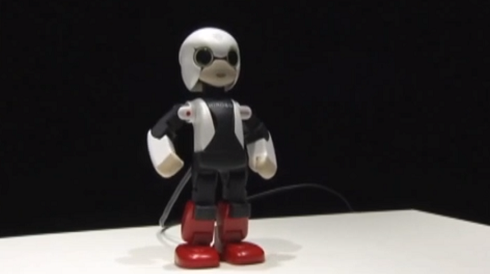
The Kirobo robot that will be on board the International Space Station. Credit: ToyotaEurope (YouTube screen shot)
Living alone can be an isolating experience, whether you’re in a remote area of the Outback, in a condo in downtown Sydney, or floating in the International Space Station. In the latter spot, to be sure, there are other astronauts on board and Mission Control is only a radio call away. Still, however, you’re away from family in a dangerous environment.
Japan has just sent up a cute robot, called Kirobo. It talks in Japanese and is intended to be a sometimes companion to astronaut Kochi Wakata, who will arrive on station in November if the schedule holds. The cargo spacecraft, with Kirobo on board, is en route to the station and should arrive Aug. 9.
“The Kibo robot has a special mission: to help solve the problems brought about by a society that has become more individualized and less communicative,” the Japanese space agency (JAXA) stated. “Nowadays, more and more people are living alone. It’s not just the elderly — with today’s changing lifestyles, it’s people of all ages. With a new style of robot-human interface, perhaps a new way to solve this problem could be found.”
This could have applications for Australians that are living alone or in rural areas. In June, there was a program on ABC Australia radio exploring loneliness for men that are in rural areas. Statistically, the scientists said, men are more likely to die from lung cancer and suicide than women, and it is difficult to get them to talk about their health — especially in remote areas. You can listen to their suggestions here.
Loneliness is also a common problem among the Australian elderly, which was explored in this 2010 Health and Social Care in the Community paper. “Participants expressed the importance of maintaining social contact and having a sense of connection and belonging to the community,” the researchers wrote.
If you’re feeling lonely yourself, this fact sheet from ReachOut.com has coping strategies such as talking to others, reducing your workload and working through negative patterns of thinking through bolstering self-talk.
Every once in awhile, communities form. Collections of similar or diverse things come together, and in unison strive for a common goal. It is the same for mice, men, and bacteria. Humans do it and build nations. Bacteria do it and build biofilms.
Dental plaque, the slimy coating on pipes and tanks, algal mats on a still lake — are all different types of biofilms. Biofilms for us are a nuisance because they colonise medical devices implanted in the human body. They can be used, however, in treating sewage, industrial waste, or contaminated soil.
When a biofilm forms, it is far from random. At its leading edge — the biofilm has purpose and direction. Imagine it as an invading army sending out the vanguards toward an unexplored territory. Highly coherent groups of bacteria migrate across the surface — swarming as one. As they advance, they create furrows for those bacteria at the back to follow. The vanguards carve out a network of trails — one that will eventually guide the exodus — the mass transit of following bacteria towards the leading edges of the biofilm.
Pseudomonas aeruginosa — the bacteria they use to eat up oil spills — is able to colonise many natural and artificial environments. It thrives on most surfaces, and easily causes a problem for implanted medical equipment like catheters. Individual bacteria show distinctive multicellular behaviour. When they grow, patterns and order emerge from seeming chaos. Australian scientists, publishing in the Proceedings of the National Academy of Sciences, describe the methods they used to visualise movements of individual bacteria, and to characterise the order within. Researchers had to develop sophisticated computer algorithms to visualise, identify and track individual bacteria. Carrying out a time lapse recording of bacteria at one frame every 2 seconds, and visually inspected a 1000-frame time series (download the movie).
Kevin Rudd’s plan to scrap the carbon tax in the name of an emissions trading scheme has spurred debates over which carbon reduction system is better. I use the term ‘better,’ as discussions seem to be focusing on costs to Australian families rather than which system is more effective at actually reducing carbon emissions.
The new emissions trading scheme will reportedly ‘ease the pressure’ on Australian families. But the average Australian family pays only $380/year with the carbon tax, less than a standard mobile phone bill for a single person. Rudd should, therefore, be focusing on the bigger picture – the effects of carbon in the atmosphere and which system will actually reduce carbon emissions.
Pollution trading was first suggested in the United States in the 1960’s, becoming popular in the US during the 1990’s Acid Rain program, a cap and trade scheme that successfully reduced sulphur dioxide (SO2) emissions. The success of the SO2 program is frequently cited as ‘proof’ that carbon markets will also be effective at reducing Green House Gases (GHG), and was a key driver behind the United States push for market mechanisms to be the main mechanisms in the Kyoto Protocol.
Most emissions trading schemes are cap-and-trade. Cap-and-trade works by quantifying emissions, assigning a set number licences to pollute (emit carbon), then incentivising businesses to meet their cap the cheapest way. Businesses can pay for technology to reduce their emissions, adopt cleaner practices, or purchase licences to emit from other businesses. According to neoliberal market ideology, the market will effectively allocate permits, therefore market based mechanisms are the most efficient way to reduce emissions. For example, Businesses A and B both have 20 permits. Business B finds it cheaper to reduce emissions and only needs 10 permits. It then sells its left over 10 permits (for a profit) to business A. Business A now has 30 permits, Business B 10 permits. Emissions haven’t been reduced, they have just shifted.
In theory, the number of permits will gradually be reduced, forcing business to ‘clean up their act’. This has been shown to work, but only in examples like the SO2 trading scheme where trading was only allowed within one country, was easy to monitor and only involved one pollutant. When trading is global, emissions are often not reduced, and can even increase.
Kyoto is a prime example. Instead of reducing emissions, the international trading schemes just shifted them around, moving emissions from wealthier nations to poorer ones. How? Businesses simply outsourced their polluting activities to poorer nations in the Global South – India, China, Africa, where environmental laws are less strict and labour cheaper. Businesses also purchased offsets – popular because it is cheaper to pay for emissions savings in the Global South than for abatement costs in the Global North. However offsets themselves have received even more criticism than carbon trading. Offsets are vague, the ‘savings’ in carbon reductions often unprovable and unquantifiable, summarised neatly by journalist Dan Welch as “an imaginary commodity created by deducting what you hope happens from what you guess would have happened.
Hard to believe Curiosity has been on Mars for twelve short months. Here at Australian Science we’ve covered the tinyrover that couldsince the start. Now, NASA’s Jet Propulsion Lab have given us a rover’s eye view of driving, scooping and drilling during Curiosity’s first year on Mars, from August 2012 through July 2013.
Sad and shocking news coming out of the University of Pittsburg where a professor of neurological surgery at the School of Medicine was charged on with criminal homicide in connection with the death of his wife.
“Authorities say that Ferrante poisoned Klein by mixing cyanide with creatine, CBSNews reports. According to Ferrante’s online biography, his work “has provided the basis for human trials” using creatine. Klein consumed the drink because Ferrante told her it would help them conceive a child. Police said that Ferrante had purchased cyanide with a university credit card days before and had it shipped to his lab overnight, and that he had enlisted the assistance of a lab member in buying the cyanide.
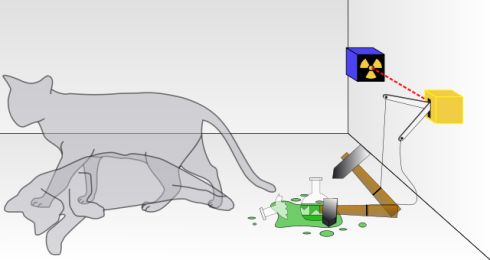
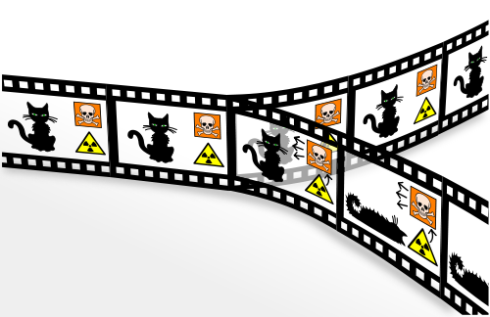
Diagram of Schrödinger’s cat theory. Image credit: Dhatfield
Since Erwin Schrödinger’s famous 1935 cat thought experiment, physicists around the world have tried to create large scale systems to test how the rules of quantum mechanics apply to everyday objects. Scientists have only managed to recreate quantum effects on much smaller scales, resulting in a nagging possibility that quantum mechanics, by itself, is not sufficient to describe reality.
Researchers Alex Lvovsky and Christoph Simon from the University of Calgary recently made a significant step forward in this direction by creating a large system that displays quantum behaviour, publishing their results in Nature Physics.
Understanding Schrödinger’s cat
Quantum mechanics is without doubt one of the most successful physics theories to date. Without it the world we live in would be remarkably different: driving and shaping our modern world making possible everything from computers, mobile phones, nuclear weapons, solar cells and our everyday appliances. At the same time it presents us with conundrums that are at the far end of reason; challenging even the greatest minds to comprehend.
In contrast to our everyday experience, quantum physics allows for particles to be in two states at the same time — so-called quantum superpositions. A radioactive nucleus, for example, can simultaneously be in a decayed and non-decayed state.
Schrödinger’s Cat; visualization of the separation of the universe due to two superposed and entangled quantum mechanical states. (image credit: Christian Schirm)
Applying these quantum rules to large objects leads to paradoxical and even bizarre consequences. To emphasize this, Erwin Schrödinger, one of the founding fathers of quantum physics, proposed in 1935 a thought experiment involving a cat that could be killed by a mechanism triggered by the decay of a single atomic nucleus. If the nucleus is in a superposition of decayed and non-decayed states, and if quantum physics applies to large objects, the belief is that the cat will be simultaneously dead and alive.
Schrödinger’s thought experiment involves a (macroscopic) cat whose quantum state becomes entangled with that of a (microscopic) decaying nucleus. While quantum systems with properties akin to ‘Schrödinger’s cat’ have been achieved at a micro level, the application of this principle to everyday macro objects has proved to be difficult to demonstrate. The experimental creation of such micro-macro entanglement is what these authors successfully achieved.
Photons help to illuminate the paradox
The breakthrough achieved by Calgary quantum physicists is that they were able to contrive a quantum state of light that consists of a hundred million photons and can even be seen by the naked eye. In their state, the “dead” and “alive” components of the “cat” correspond to quantum states that differ by tens of thousands of photons.
While the findings are promising, study co-author Simon admits that many questions remain unanswered.
“We are still very far from being able to do this with a real cat,” he says. “But this result suggests there is ample opportunity for progress in that direction.”
Seeing quantum effects requires extremely precise measurements. In order to see the quantum nature of this state, one has to be able to count the number of photons in it perfectly. This becomes more and more difficult as the total number of photons is increased. Distinguishing one photon from two photons is within reach of current technology, but distinguishing a million photons from a million plus one is not.
Decoherence: the emergence of the classical world from the quantum
Why don’t we see quantum effects in everyday life? The current explanation is that it is to do with decoherence.
Physicists see quantum systems as fragile. When a photon interacts with its environment, even just a tiny bit, the superposition is destroyed. This interaction, could be as a result of measurement or an observation, or just a random interaction. Superposition is a fundamental principle of quantum physics that says that systems can exist in all their possible states simultaneously. But when measured, only the result of one of the states is given.
This effect is known as decoherence and it has been studied intensively over the last few decades. The idea of decoherence as a thought experiment was raised by Erwin Schrödinger, in his famous cat paradox. Unfortunately for non-physicists decoherence only provides an explanation for the observance of wave function collapse, as the quantum nature of the system “leaks” into the environment. It does not tell us where the line is, if one does exist, between the quantum and everyday worlds.
Although Schrodinger’s thought experiment was originally intended to convey the absurdity of applying quantum mechanics to macroscopic objects, this experiment and related ones suggest that it may apply on all scales.
If you are interested in the history and foundation of quantum mechanics then I highly recommend Quantum: Einstein, Bohr and the great debate about the nature of reality, by Manjit Kumar (2009), and The Age of Entanglement: when quantum physics was reborn, by Louisa Gilder (2008). Both are well-researched and captivating brilliant accounts of science science and scientists.