Author: Editorial Board

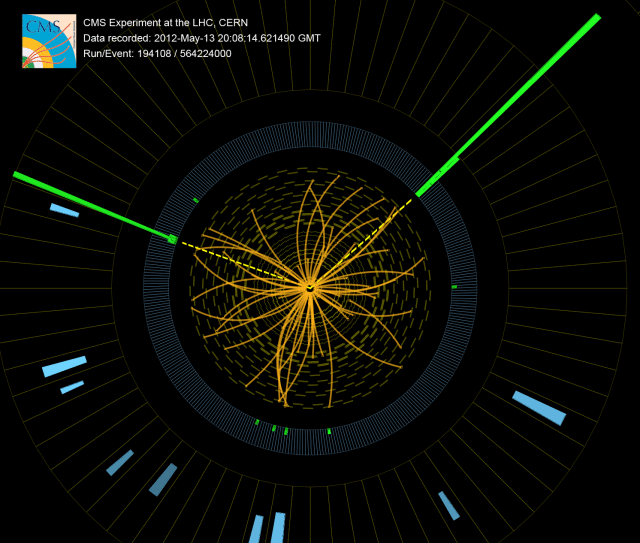
  • The Higgs boson does exist: New particle observed at 125 GeV

    The Higgs boson does exist: New particle observed at 125 GeV

    Australian researchers helped design and build parts of the ATLAS detector and helped analyse the results.

    Researchers using two huge detectors at the Large Hadron Collider announced the results of their searches at a joint scientific seminar in Geneva and Melbourne, where the International Conference on High Energy Physics is being held.

    In a joint seminar today at CERN and the “ICHEP 2012

  • The EMBO Meeting 2012 – Call for Participation

    The EMBO Meeting 2012 – Call for Participation

    EARLY REGISTRATION & ABSTRACT SUBMISSION: 12 JUNE 2012
    ON-LINE REGISTRATION: 4 SEPTEMBER 2012

    UPDATE: Late abstract deadline 12 August 14:00 CEST (Berlin)

    SUBMIT ABSTRACT | REGISTER


    http://www.the-embo-meeting.org/

    This annual conference attracts 1,500 scientists working in the life sciences. Featuring an impressive line-up of more than 120 world-class scientific speakers, including: Paul Nurse, Linda Partridge, Kari Alitalo, Steven Henikoff and Rob Singer. The programme includes three plenary lecture sessions devoted to genomics, RNA and oxygen sensing, vasculogenesis and disease. 20 concurrent sessions juxtapose classical fields of research with those exploring new frontiers in molecular biology. Daily meet the speaker lunches, giving access to leading researchers, and poster sessions extend the scientific programme.

    Latest News:

    Brisbane Times:

    Scientists closer to elixir of youth

    A FUTURE where Australians can pop a pill and significantly delay the effects of ageing – from hair loss to the onset of dementia – may be only about a decade away, one of the world’s leading evolutionary biologists predicts.

    Professor Dame Linda Partridge, who heads research teams at University College London and is the founding director of the Max Planck Institute for Biology of Ageing in Cologne, has been selected to give the prestigious Graeme Clark Oration in Melbourne next month.

    She predicts that at some point in the next 10 years drugs will be available that could keep us healthy in body and mind long into old age.

    More: http://www.brisbanetimes.com.au/act-news/scientists-closer-to-elixir-of-youth-20120616-20h6o.html

    Latest Videos:


  • EduWiki 2012: Wikipedia as an educational resource, now and in the future

    EduWiki 2012: Wikipedia as an educational resource, now and in the future

    What do Dictator novelImplicit self-esteem and Nuclear energy policy in the United States have in common? Each of these Wikipedia articles has been improved by university students in exchange for course credit.

    Wikipedia educational assignments – where improving the free online encyclopaedia is integral to the course – already happen in many universities in the USA, Canada and other countries. In the UK, lecturers in the universities of Hull, Southampton, Portsmouth and Imperial College, London have been experimenting with Wikipedia assignments.

    It seems that everybody gains from this sort of assignment. The students get a real experience of publication, and are motivated to find reliable sources, write neutrally, avoid plagiarism and seek feedback from Wikipedia’s internal review processes. Wikipedia, and its enormous global audience, get improved articles in academic subjects. The lecturers get help in creating a distinctive and demanding educational experience.

    To avoid the potential pitfalls, these courses need planning and coordination beforehand between the lecturers and the Wikipedia contributors. Ambassadors – experienced Wikipedians – assist the courses online or in person. The Wikimedia education portal has tips, case studies and supporting materials.

    These projects treat Wikipedia as a set of educational processes, not as a static, fixed resource.

    The saying about sausages and legislation is that people who enjoy them shouldn’t watch them being made. With anything that claims to be knowledge, the opposite is true. Learners need to see the process behind it: whether the idea just popped into someone’s head, or survived rigourous testing against alternative explanations; whether it was published directly or went through some sort of review. On Wikipedia, the writing, editing and review processes are all open and on public view. By exploring and taking part in these processes, learners have a chance to develop high-level skills of research and collaboration.

    At school level, there are opportunities not only to teach many subjects using Wikipedia’s freely reusable text, images and other media but also to teach a critical understanding of Wikipedia itself. Those of us who write Wikipedia don’t want readers to treat the site as a final authority: we want them to view it critically, as a medium with weaknesses and strengths, just as newspapers, books or television should be read critically.

    What would be ideal now is if educators and other staff from universities and schools could get together in a room with Wikimedia contributors, discussing the educational projects we’re each working on and the opportunities for the future. That’s exactly why Wikimedia UK and the University of Leicester are hosting a one-and-a-half-day EduWiki conference on the 5th and 6th of September.

    There will be speakers from the USA, Canada and Germany as well as the UK, talking about educational activities that use Wikipedia or other wiki projects.

    The EduWiki conference takes place on 5 and 6 September at the University of Leicester. More about this – on the Source page.
  • Wikimedia Commons – Images of the Year Announced

    Wikimedia Commons – Images of the Year Announced

    Winner of the 2011 Picture of the Year: A view of Lake Bondhus in Norway, and in the background of the Bondhus Glacier, part of the Folgefonna Glacier.

    Wikimedia Commons have just announced their three best images from 2011. Commons is an online repository of media freely licensed and available for anyone to use and repurpose. Every year the Commons community highlights the best media submitted over the course of the previous 12 months, in what has become the Picture of the Year Contest. This year, German Wikipedian Heinrich Pniok is the winner of the Sixth Annual contest for his picture of Lake Bondhus in Norway. You can read the complete story behind the 2011 Picture of the Year inthis excellent article by User:Tony1 from the 25 June 2012 issue of the Wikipedia Signpost.

    Australian Science Editorial Board’s favourite photo is a self portrait of Tracy Caldwell Dyson in the Cupola module of the International Space Station observing the Earth below during Expedition 24, featured in the article Networking the Solar System.

    Tracy Caldwell Dyson on the International Space Station


  • ScienceOnline 2013 – be a part of the program, and participate!

    ScienceOnline 2013 – be a part of the program, and participate!

    ScienceOnline2013 conference will take place Jan. 31-Feb. 2 in the McKimmon Conference Center on the campus of N.C. State University in Raleigh, North Carolina.
    For those not familiar with ScienceOnline conferences, ScienceOnline started in 2007 as a one-day conference with 135 people who wanted to explore the world of science blogging. Today, ScienceOnline has grown into an international and interconnected network of thousands of individuals, local groups and regional affiliations, and signature annual events that delve into all the ways that science is done, shared, communicated and supported through the Web and tools of social media.

    In short, ScienceOnline is a global community – a community built through our online connections and face-to-face conversations.
    Those connections and conversations have been in full splendor online with the hashtag #scio13.
    Note that the scio13 planning wiki, where you can add suggestions for discussion sessions, workshops and demonstrations, will close July 1 at 12 noon E.D.T. Bora and the program committee will then begin to build the program for the conference.
  • Bike Brisbane: Brisbane winners announcement

    Bike Brisbane: Brisbane winners announcement

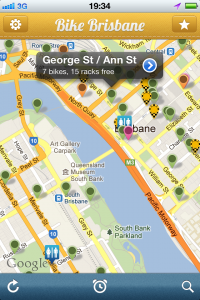
    On Thursday, the Lord Mayor announced the winners of the hack::Brisbane competition at a presentation in New Farm Park. The winners of the hack::Brisbane competition are: (more…)
  • Australian scientists win European Inventor Award 2012

    Australian scientists win European Inventor Award 2012

    · European Patent Office honours outstanding inventors with European Inventor Award in Copenhagen

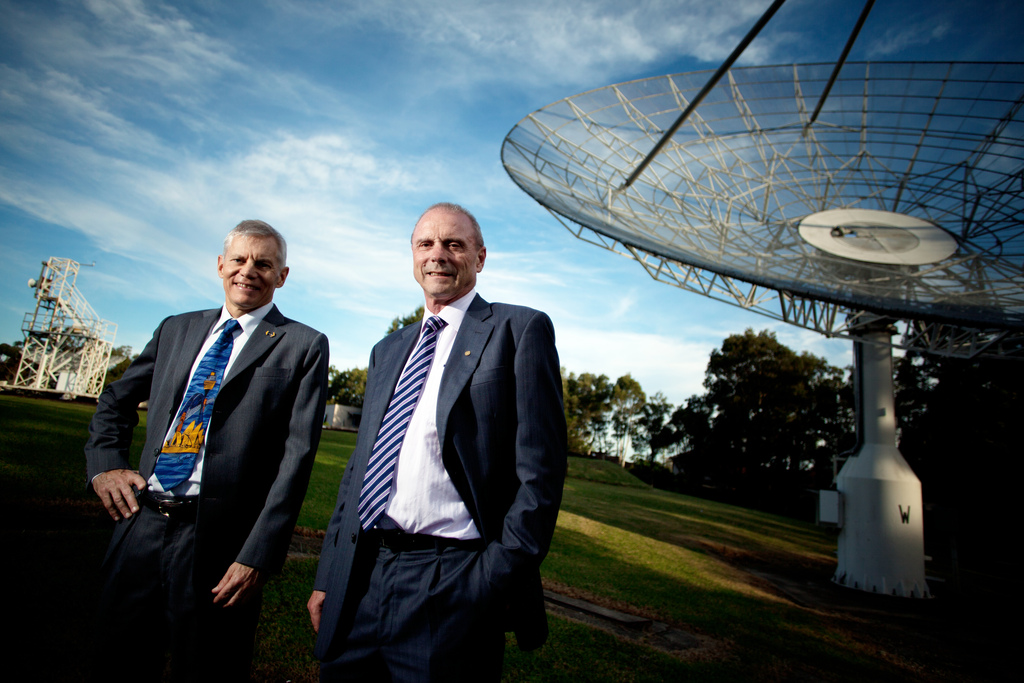
    · Australian prize winners Dr. John O’ Sullivan, Dr. Terence Percival, Graham Daniels, Diethelm Ostry and John Deane paved the way for today’s Wi-Fi technology

    · EPO President Benoît Battistelli: “The work completed by Dr. O’Sullivan and his team perfectly demonstrates how a publicly funded Research Centre can use patent protection and licensing revenue to finance further innovation.

  • The transit of Venus 2012 as seen from Cairns (Australia)

    The transit of Venus 2012 as seen from Cairns (Australia)

    Credits: GLORIA Project (www.gloria-project.eu)

    Transit of Venus as seen from the Cupola Module, by NASA_JSC_Photo
  • 2012 Victoria Fellowships Open for Expanded Prestigious Science Awards

    2012 Victoria Fellowships Open for Expanded Prestigious Science Awards

    Minister for Innovation, Services and Small Business Louise Asher today announced applications are now open for the 2012 Victoria Prize for Science and Innovation, and the 2012 Victoria Fellowships.
    Ms Asher said the Victorian Coalition Government was committed to supporting discovery and development in research and innovation, and had doubled the number of Victoria Prize and Victoria Fellowships on offer. “The Coalition Government believes there is immense scientific and research talent to reward and promote in Victoria and that is why we made an election commitment to double the number of awards,

  • Victoria’s Leading Postgraduate Health and Medical Researchers Recognised

    Victoria’s Leading Postgraduate Health and Medical Researchers Recognised

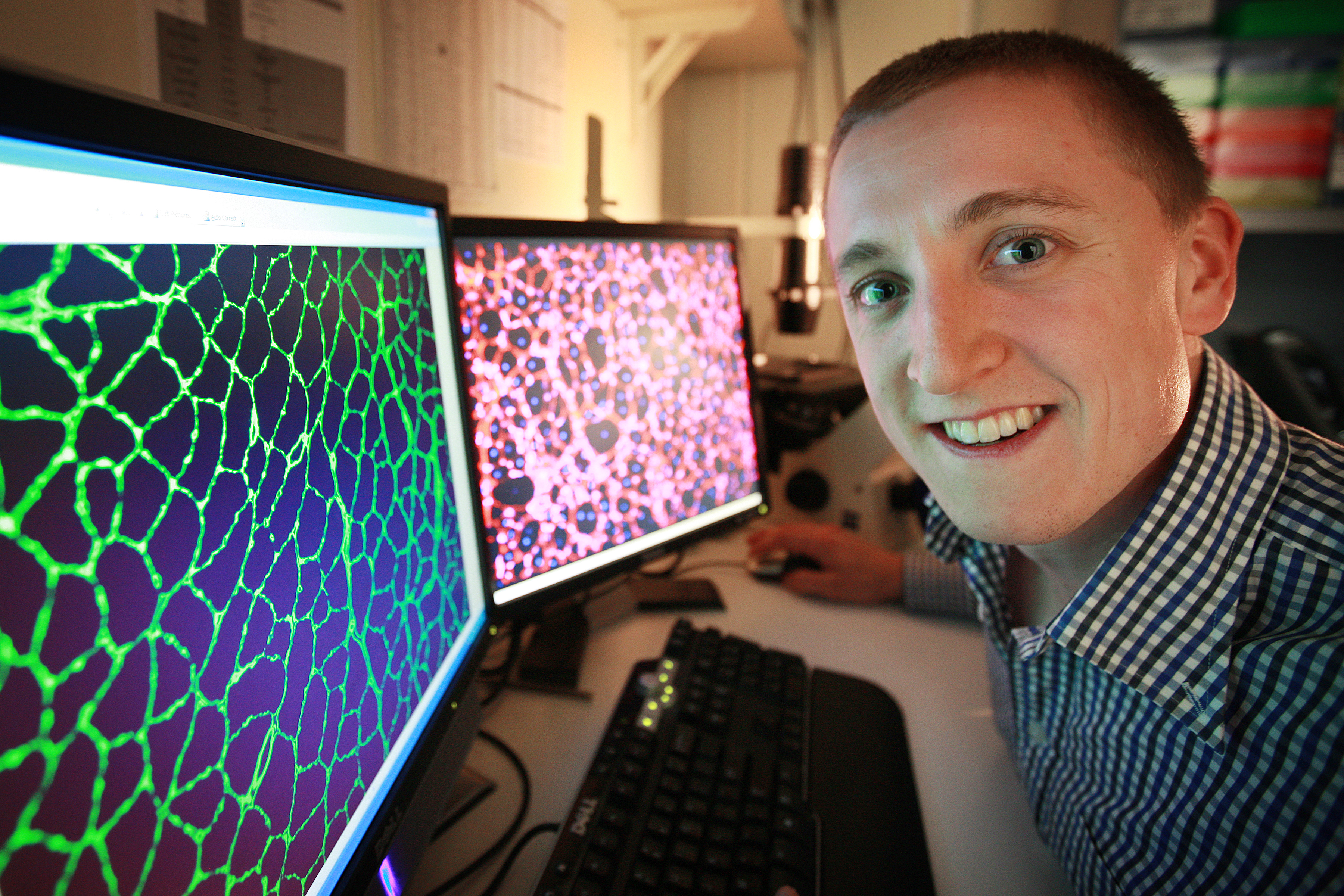
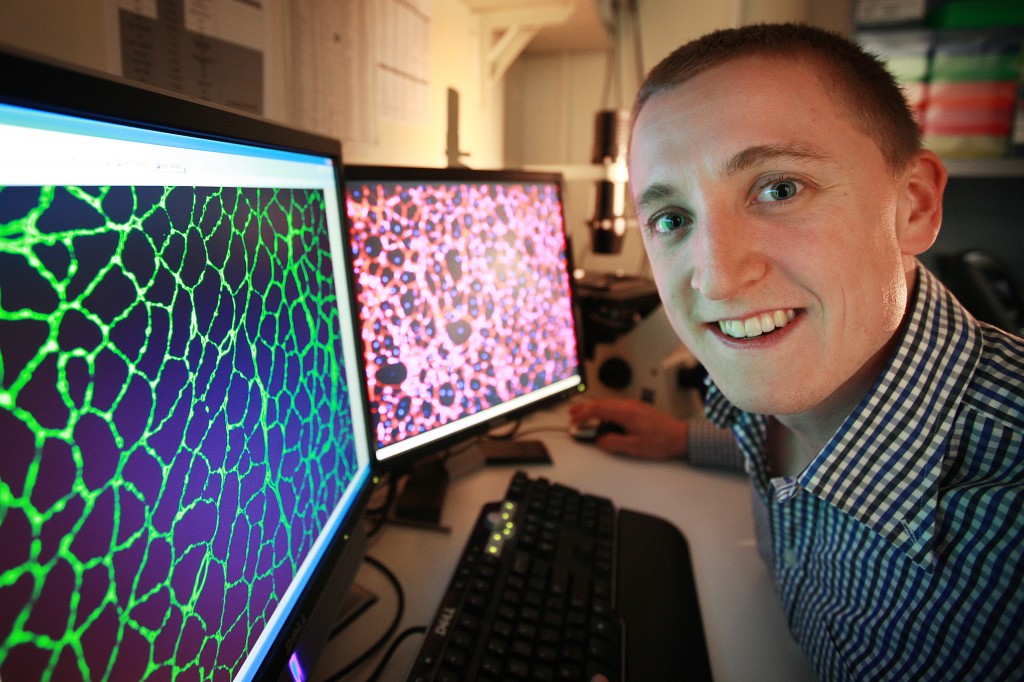
    Premier Ted Baillieu and Minister for Health David Davis today announced that Dr Stefan Gehrig has been awarded the prestigious Premier‟s Award for Health and Medical Research for 2012. The Premier‟s Award for Health and Medical Research recognises and honours the achievements of Victoria‟s early career health and medical researchers.

    Mr Baillieu said Dr Gehrig won the award from a highly competitive field of young Victorian researchers for his far-reaching investigation into Duchenne muscular dystrophy (DMD).

    “Dr Gehrig discovered that increasing levels of a specific protein in muscles has the potential to treat DMD – a severe and progressive muscle wasting disease,

  • Measuring Network Performance with M-Lab

    Measuring Network Performance with M-Lab

    Measurement Lab is an open platform for researchers to deploy Internet measurement tools. By enhancing Internet transparency, M-Lab helps sustain a healthy, innovative Internet. What this explanatory video to learn why M-Lab is important to researchers, network engineers and policy makers. M-Lab is a collaborative effort founded in 2009 by Googler Vint Cerf and a number of network researchers and industry partners, including Google.

    M-Lab’s goal is to provide researchers, consumers, policymakers, and anyone else who wants good, intelligible information about the Internet,  with open data about network performance.

    The nuts and bolts of M-Lab start with a widely-distributed server platform maintained and managed by the M-Lab Collaborative. These servers are purpose-built to support broadband measurement, and are consistently deployed to exact specifications. This means that the data they collect is consistent — important when you’re contrasting global network performance. Researchers host open-source, active broadband measurement tools on these servers, and users access these tools, run tests, and get real-time information on their network performance. Each time a user runs a test (about 200,000 times a day), data is collected and put into the public domain. So far, it’s 516 terabytes and growing.


    M-Lab is a head-to-tail solution for high quality, open data. And the best part is that it’s all open. From the testing methodology described in the open source code of the tools, to the server documentation, to the data collected, scientists and others can vet exactly what is being measured, how it’s measured, and what precisely this says about networks and performance. M-Lab’s momentum is generated by working together from a shared source of data to progress the state of networks.

     Source.

  • Dragon’s Rendez-Vous Day

    Dragon’s Rendez-Vous Day

    For those who may not be familiar, The SpaceX Dragon commercial cargo craft  is developed, and built by the American company Space Exploration Technologies, SpaceX, as it is more commonly known. You may find very informative and interesting  article on SpaceX Dragon written by Kevin Orrman-Rossiter.

    Today SpaceX #Dragon is proceeding toward rendezvous with #ISS.  The International Space Station mission management team completed a thorough review of the progress of the SpaceX Dragon spacecraft and at 9:38 p.m. EDT unanimously authorized the International Space Station and Dragon flight control teams to proceed toward rendezvous and berthing about 11:20 a.m. Friday.

    The SpaceX mission management team reported all spacecraft systems are ready for the final stages of rendezvous and completion of the final COTS demonstration objectives, and space station managers reported the orbiting outpost is ready for the commercial spacecraft’s arrival.

    Dragon has nearly completed its fly-around of the station, crossing behind the station and beginning its final approach. NASA TV coverage will begin at 2 a.m. Source.

    Photo source: Takot

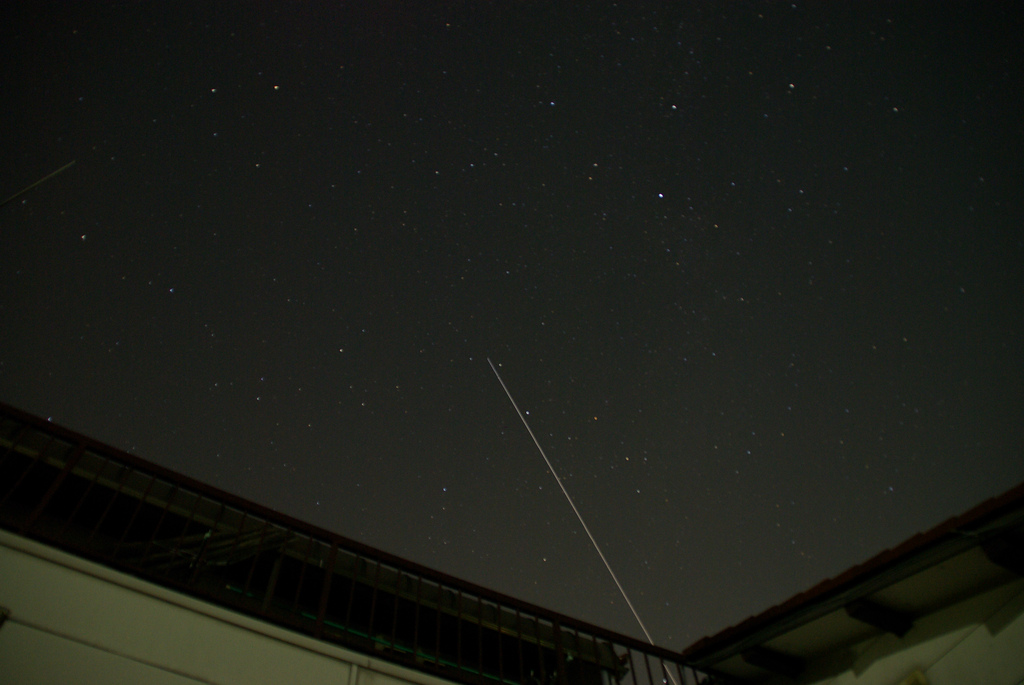
    International Space Station Flying By – captured by Takashi Ota, Japan
  • Call for Participation – PLNOG 2012 conference

    Call for Participation – PLNOG 2012 conference

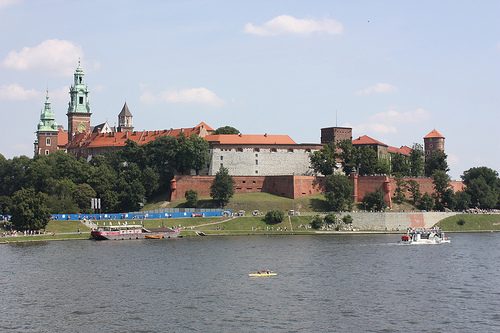
    This year in Krakow, a real Polish Golden Autumn will accompany the next meeting of all operators, deployment companies, content providers and network administrators at the 9th edition of the PLNOG conference. In response to the expectations and suggestions of attendees of previous editions, lectures again will be divided into four independent paths with an even greater number of foreign speakers and a big emphasis on the educational level. In addition, there will be panels, unique workshops, peering session and lots of attractions.
    PLNOG Conference is a unique conference dedicated to issues of maintaining and developing of ICT networks. This is an incredible opportunity to exchange experiences, broaden knowledge, attempt to solve common problems in networking industry and to meet fantastic people with similar interests. The participation of many outstanding professionals, two days of exciting lectures and fun during the evening event make the PLNOG conference a truly unique.

    In addition, in September, EuroNOG Meeting will be held – the international meeting of experts responsible for the construction, maintenance and development of ICT networks, which is an extension of the initiative PLNOG to the European market. Subsequent meetings will be held each year in various cities in Europe. Our main goal is to build a platform to exchange experience between the operators, ISPs and companies responsible for deployment.

    More about  PLNOG, and the Call For Papers can be found at: http://plnog.pl/spotkanie-8-pazdziernik/call-for-papers/

    Photo source

  • New Associate EMBO Member from Australia

    New Associate EMBO Member from Australia

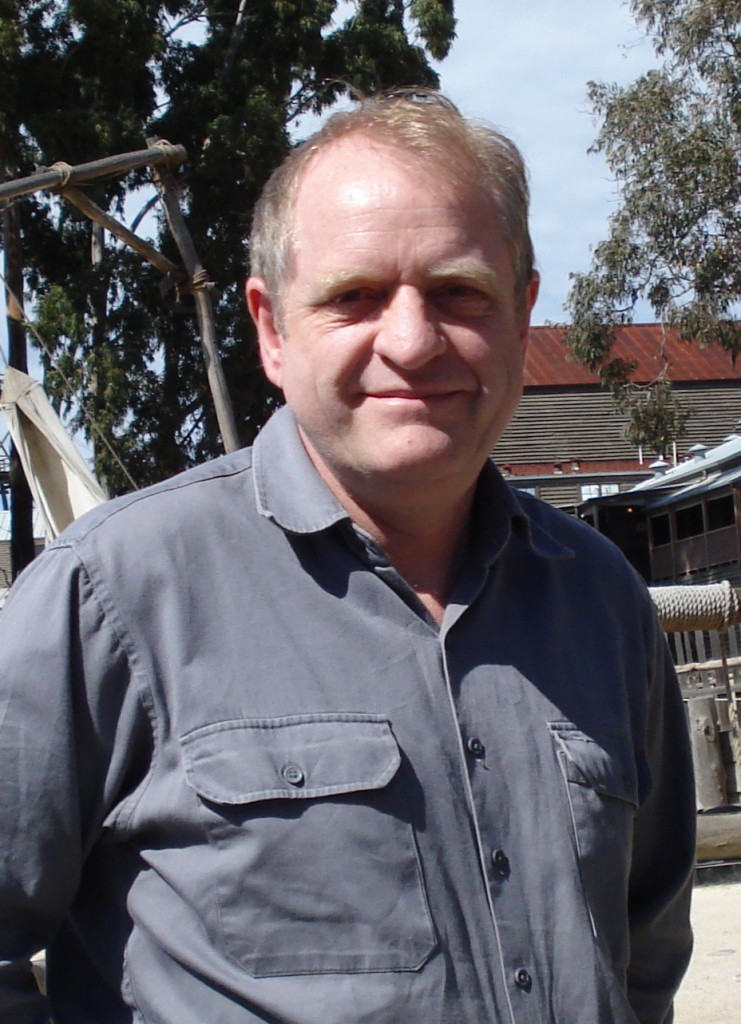
    New Associate EMBO Member from Australia – professor David L. Vaux

    Fifty-five life scientists from Europe and around the world, on 9 May 2012 in  Heidelberg, Germany, were recognised by EMBO (Excellence in Life Sciences) for their excellence in research. Forty-eight of the researchers are from Europe and neighbouring countries while seven scientists from Argentina, Australia, South Korea and the United States join as Associate Members. In total, EMBO membership now comprises almost 1,550 life scientists in the international scientific community.

    EMBO elects new members annually on the basis of scientific excellence. The new members represent a broad cross-section of the life sciences. The latest scientists to join the group come from 17 different countries and include 13 female scientists recognized for their contributions to life science research.

    The new Associate Member from Australia is professor David L. Vaux, Walter and Eliza Hall Institute, Parkville. Prof. Vaux is best known for identifying the proto-oncogene bcl-2 as an inhibitor of cell death, thus launching the field of molecular biology of apoptosis (programmed cell death). Read more about his research division Cell Signalling and Cell Death and his research overview, interests, and selected publications.

    The selected researchers will help shape the direction of the life sciences in Europe and beyond by their involvement with the activities of the organization. EMBO Members provide scientific input such as acting on advisory editorial boards of the four scientific journals of the organization, serving on selection committees for EMBO Programmes and giving general advice to the scientific community.

    A list of all new EMBO Members and Associate Members accompanies this announcement [link].