
When astronauts head to the International Space Station (ISS), Dr. Justin Wilkinson, the chief geoscientist at NASA, asks them to snap pictures of various geographical locations. From this vantage point 250 miles above the planet’s surface, he learns many things — for example, he tells Slate, “there are a lot more examples of a geographical phenomenon called an inland delta or megafan—that is, deltas formed far from coastlines—than was once thought.
Author: Editorial Board
-
Singing Mice Show Signs of Learning
Like songbirds and humans, male mice have brain circuits and behaviors they may use to learn some of their sounds.
Guys who imitate Luciano Pavarotti or Justin Bieber to get the girls aren’t alone. Male mice may do a similar trick, matching the pitch of other males’ ultrasonic serenades. The mice also have certain brain features, somewhat similar to humans and song-learning birds, which they may use to change their sounds, according to a new study.
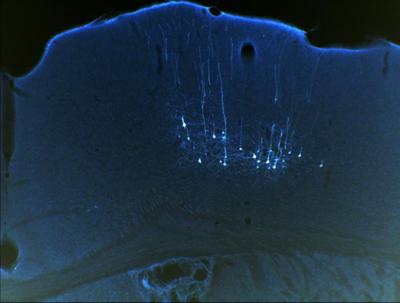
This image shows the motor cortex neurons that directly project to the brainstem and ultimately control the larynx of male mice. Credit: Gustavo Arriaga and Erich Jarvis, Duke. “We are claiming that mice have limited versions of the brain and behavior traits for vocal learning that are found in humans for learning speech and in birds for learning song,” said Duke neurobiologist Erich Jarvis, who oversaw the study. The results appear Oct. 10 in PLOS ONE and are further described in a review article in Brain and Language.
The discovery contradicts scientists’ 60-year-old assumption that mice do not have vocal learning traits at all. “If we’re not wrong, these findings will be a big boost to scientists studying diseases like autism and anxiety disorders,” said Jarvis, who is a Howard Hughes Medical Institute investigator. “The researchers who use mouse models of the vocal communication effects of these diseases will finally know the brain system that controls the mice’s vocalizations.”
Jarvis acknowledged that the findings are controversial because they contradict scientists’ long-held assumption about mice vocalizations. His research suggests the vocal communication pathways in mice brains are more similar to those in human brains than to sound-making circuits in the brains of chimpanzees and other non-human primates. The results also contradict two recent studies suggesting mice do not match pitch or have deafness-induced vocalization changes.
“This is a very important study with great findings,” said Kurt Hammerschmidt, an expert in vocal communication at the German Primate Center who was not involved in the study. He is cautious about some of the claims but suggested that if mice can learn vocalizations they could become a good model to study the genetic foundation of the evolution of language.
Jarvis, his former graduate student Gustavo Arriaga, and a colleague from Tulane University tested male mice for vocal learning traits as part of a larger project to study speech evolution in humans. Vocal learning appears to be unique to humans, songbirds, parrots and hummingbirds and scientists define it with five features related to brain structure and behavior. Since scientists have never found the features in other animals, “I almost expected every experiment in mice to fail,” Arriaga said.
In the study, funded by HHMI, NSF and NIH, Arriaga first used gene expression markers, which lit up neurons in the motor cortex of the mice’s brain as they sang. Arriaga then damaged these song-specific neurons in the motor cortex and observed that the mice couldnât keep their songs on pitch or repeat them as consistently, which also happened when the mice became deaf.
Arriaga also used an injectable tracer, which mapped the signals controlling song as they moved from the neurons in the motor cortex to those in the brainstem and then to the muscles in the larynx. “This direct projection from the mice’s forebrain to the brainstem and muscles was the biggest surprise,” Jarvis said.
“The evidence of direct projection from these motor cortex regions is a great finding,” Hammerschmidt said. “And I think it is important to try to understand whether these projections are really able to work in a similar way like such projections known in birds and humans.” The question is whether mice can learn a vocalization the way other species do. The researchers found that when two male mice were placed in the same cage with a female, the males’ pitch began to converge after seven to eight weeks. Arriaga and Jarvis tested 24 male mice and did the experiment twice to confirm the result.
Hammerschmidt is skeptical. Jarvis and Arriaga’s “pitch convergence story is less convincing,” he said. Scientists have observed pitch convergences in non-vocal learners and the number of tested animals in this study could be too low to determine whether the discovered effect is reliable, he said.
Jarvis disagrees, but added that more work does need to be done to know if mice can learn other features of vocalizations or if their learning is limited to just pitch.
“Our results show that mice have the five features scientists associate with vocal learning. In mice, they don’t exist at the advanced levels found in humans and song-learning birds, but they also are not completely absent as commonly assumed,” he said. His team is now searching mouse brains for genes specific to the brain circuits for vocal behavior. So far, these genes have only been found in songbirds and humans but, based on these results, could be in mice too, Jarvis said.
Citations:
“Of mice, birds, and men: the mouse ultrasonic song system has some features similar to humans and song-learning birds,” Arriaga, G. et. al. (2012) PLOS ONE. 7(10): e46610. doi:10.1371/journal.pone.0046610
“Mouse vocal communication system: are ultrasounds learned or innate?” Arriaga, G. et. al. (2012) Brain and Language.
-

The “POLI
This article is part of Media and Learning month’s newsletter, dedicated series on lecture capture. It is provided by the Lifelong Learning project REC:all, which aims to explore new ways in which lecture capture can become more pedagogically valuable and engaging, and which is investigating a variety of learning design, technical and legal issues related to lecture capture. Marta Cabedo Fabrés from Universitat Politècnica de València (UPV), Spain – describes how.
The new educational paradigm due to the Bologna process, presents a teaching model in which the professor acts as facilitator of learning and the students assume an active and autonomous role. Based on these points the Universitat Politècnica de València (UPV) has developed and implemented a number of tools (POLIMEDIA, POLITUBE and POLICONECTA) and a Virtual Learning Environment (POLIFORMAT), in order to adapt to the European Higher Education Area and to improve teaching quality.
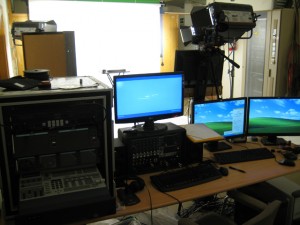 POLIMEDIA is a system designed at the UPV for creating multimedia content (videos, instruction clips, knowledge clips, etc.), and POLITUBE is a free access portal enabled by the UPV to store educational videos that are used to support and complement classroom teaching.
The materials and resources available in POLITUBE and POLIMEDIA, after a rigorous review, are recognized as learning objects and become part of Riunet (UPV institutional repository). Riunet provides access from the Internet to the scientific, academic and corporate production of this university following the international movement of Open Access.
POLIFORMAT is a tele-education platform used in the UPV. It is based on Sakai and it offers a standardised interface for accessing to a Web 2.0 toolkit. It facilitates autonomous and collaborative learning to students.
Each subject has its own space in POLIFORMAT and it is accessible only to teachers and students enrolled in the subject. The tools available include news, calendar, repository of resources, tasks, contents, on-line exams, chat, internal mail, discussion forum, wiki and student’s personal space. Some of these tools can be activated during a specified period of time, according to the needs of the subjects.
POLICONECTA is a videoconferencing tool developed at the Lifelong Learning Center of the UPV for distance learning. It is based on
the use of commercial software Adobe Connect, and allows virtual meetings, video conferencing and remote lectures, which can be
recorded. It also includes the ability to share documents, applications or a whiteboard.For the delivery of courses or seminars at a distance UPV makes more than 30 classrooms available which are properly equipped with multiple cameras, microphones, projector, monitors, and interactive whiteboard. Some classrooms also have “Paper Show” (a special notebook that records what you write or draw with a pen in a computer). The only equipment required by students is a broadband Internet connection, headphones and a microphone.
All tools and platform described in this article have already been used with a high degree of acceptance by more than 250 lecturers and approximately 36000 students at the UPV. In the last six years more than 3000 videos have been produced using these technologies and actual experiences show that the use of lecture captures results in a substantial improvement of teaching quality. Find out more.
UPV’s experience in lecture capture will be presented during the REC:all workshop taking place on 13 November.
-

Amy Cuddy at TED: Your body language shapes who you are
Body language affects how others see us, but it may also change how we see ourselves. Social psychologist Amy Cuddy shows how “power posing
-

Hubble goes to the eXtreme to assemble the deepest ever view of the Universe
Like photographers assembling a portfolio of their best shots, astronomers have assembled a new, improved portrait of our deepest-ever view of the Universe. Called the eXtreme Deep Field, or XDF, the photo was assembled by combining ten years of NASA/ESA Hubble Space Telescope observations taken of a patch of sky within the original Hubble Ultra Deep Field. The XDF is a small fraction of the angular diameter of the full Moon.
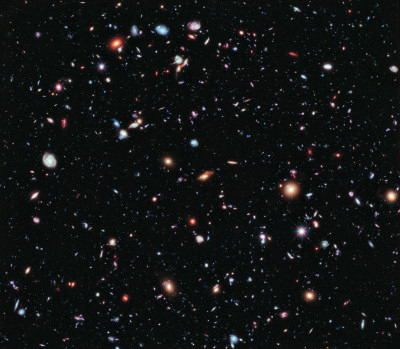
The Hubble eXtreme Deep Field (XDF) The Hubble Ultra Deep Field is an image of a small area of space in the constellation of Fornax (The Furnace), created using Hubble Space Telescope data from 2003 and 2004. By collecting faint light over one million seconds of observation, the resulting image revealed thousands of galaxies, both nearby and very distant, making it the deepest image of the Universe ever taken at that time.
The new full-colour XDF image is even more sensitive than the original Hubble Ultra Deep Field image, thanks to the additional observations, and contains about 5500 galaxies, even within its smaller field of view. The faintest galaxies are one ten-billionth the brightness that the unaided human eye can see [1].
Magnificent spiral galaxies similar in shape to the Milky Way and its neighbour the Andromeda galaxy appear in this image, as do large, fuzzy red galaxies in which the formation of new stars has ceased. These red galaxies are the remnants of dramatic collisions between galaxies and are in their declining years as the stars within them age.
Peppered across the field are tiny, faint, and yet more distant galaxies that are like the seedlings from which today’s magnificent galaxies grew. The history of galaxies – from soon after the first galaxies were born to the great galaxies of today, like the Milky Way – is laid out in this one remarkable image.
Hubble pointed at a tiny patch of southern sky in repeat visits made over the past decade with a total exposure time of two million seconds [2]. More than 2000 images of the same field were taken with Hubble’s two primary cameras: the Advanced Camera for Surveys and the Wide Field Camera 3, which extends Hubble’s vision into near-infrared light. These were then combined to form the XDF.
“The XDF is the deepest image of the sky ever obtained and reveals the faintest and most distant galaxies ever seen. XDF allows us to explore further back in time than ever before,” said Garth Illingworth of the University of California at Santa Cruz, principal investigator of the Hubble Ultra Deep Field 2009 (HUDF09) programme.
The Universe is 13.7 billion years old, and the XDF reveals galaxies that span back 13.2 billion years in time. Most of the galaxies in the XDF are seen when they were young, small, and growing, often violently as they collided and merged together. The early Universe was a time of dramatic birth for galaxies containing brilliant blue stars far brighter than our Sun. The light from those past events is just arriving at Earth now, and so the XDF is a time tunnel into the distant past when the Universe was just a fraction of its current age. The youngest galaxy found in the XDF existed just 450 million years after the Universe’s birth in the Big Bang.
Before Hubble was launched in 1990, astronomers were able to see galaxies up to about seven billion light-years away, half way back to the Big Bang. Observations with telescopes on the ground were not able to establish how galaxies formed and evolved in the early Universe.
Hubble gave astronomers their first view of the actual forms of galaxies when they were young. This provided compelling, direct visual evidence that the Universe is truly changing as it ages. Like watching individual frames of a motion picture, the Hubble deep surveys reveal the emergence of structure in the infant Universe and the subsequent dynamic stages of galaxy evolution.
The planned NASA/ESA/CSA James Webb Space Telescope (Webb telescope) will be aimed at the XDF, and will study it with its infrared vision. The Webb telescope will find even fainter galaxies that existed when the Universe was just a few hundred million years old. Because of the expansion of the Universe, light from the distant past is stretched into longer, infrared wavelengths. The Webb telescope’s infrared vision is ideally suited to push the XDF even deeper, into a time when the first stars and galaxies formed and filled the early “dark ages” of the Universe with light.
Notes
The Hubble Space Telescope is a project of international cooperation between ESA and NASA.
The HUDF09 team members are G. Illingworth (University of California, Santa Cruz), R. Bouwens (Leiden University), M. Carollo (Swiss Federal Institute of Technology, Zurich (ETH)), M. Franx (Leiden University), I. Labbe (Leiden University), D. Magee and P. Oesch (University of California, Santa Cruz), M. Stiavelli (Space Telescope Science Institute), M. Trenti (University of Cambridge), P. van Dokkum (Yale University), and V. Gonzalez (University of California Observatories/Lick Observatory).
[1] The faintest objects detected in the XDF are 31st magnitude.
[2] The total exposure time is approximately two million seconds, or 23 days. Because Hubble can only observe for about 45 minutes of every 97-minute orbit, the observations that make up the XDF represent 50 days of telescope time.
Image credit: NASA, ESA, G. Illingworth, D. Magee, and P. Oesch (University of California, Santa Cruz), R. Bouwens (Leiden University), and the HUDF09 Team
LinksSource: http://sci.esa.int/science-e/www/object/index.cfm?fobjectid=50874
-

Botanist Wins Prestigious Nature Conservancy Award to Work on Grass Trees
24 September 2012. MEDIA RELEASE
Botanist Todd McLay has won the 2012 prestigious Australian Conservation Taxonomy Award to delve further into the mysteries of the iconic Xanthorrhoea genus or, Australia¹s native grass trees.
PHOTO CREDIT: © Ted Wood The Nature Conservancy and The Thomas Foundation launched the award last year to foster research by young scientists into important taxonomic works with significant implications for conservation in Australia.
Dr James Fitzsimons, director of conservation with The Nature Conservancy, said the $10,000 award would be used to ³interpret the evolutionary history of the grass tree with a view to underpinning conservation in the global biodiversity hotspot of Western Australia.²
³The last major look at the Xanthorrhoea family was in 1986 for the Flora of Australia, and it showed a level of uncertainty about some aspects of the grass tree. We urgently need to learn more about its biological make-up in order to better protect it.²
Mr McLay, a postgraduate student at the University of Melbourne, will assess and revise the species-level taxonomy of Xanthorrhoea in Western Australia, including the identification of potentially undescribed species.
Two species of Xanthorrhoea thortonii and nana are found in the Great Western Woodlands, the world¹s largest intact temperate woodland. These species are biogeographically distinct from other recognised species of grass trees that grow in the subregions of western Australia.
³Knowing what species exist and their ecological requirements are essential elements of conservation and we are confident that Mr McLay, with his passion for plants, will help provide more answers,² Dr Fitzsimons said.
The Australian Conservation Taxonomy Award was presented to Mr McLay at the Australasian Systematic Botany Society conference. The award is administered by the Australasian Systematic Botany Society.
The Thomas Foundation was established in 1998 by David Thomas and his wife, Barbara. The conservation of biodiversity has always been part of the Foundation¹s focus. The Foundation adopts a strategic planning approach to its grant making and considers its grants to be investments in forming social capital. The Foundation¹s mission is ³Arresting the decline of biodiversity in Australia and encouraging others to do likewise.²
About The Nature Conservancy One of the world¹s largest science-based conservation organisations, The Nature Conservancy delivers large-scale conservation projects across Australia. The NGO is currently influencing conservation over nearly 30
million hectares of Indigenous lands across northern Australia¹s vast savannas from the Kimberley to Cape York and Central Australia¹s arid lands. The Nature Conservancy is working with Indigenous groups and other key partners and has helped to protect more than 6 million hectares of lands and waters in Australia since 2000. This includes securing 29 high priority additions to the National Reserve System, including some of the largest private protected areas in Australia.Media inquiries: John Myers 03 9818 8540 or mediawise@mediawise.net.au
-

Music Underlies the Ability to Acquire Language, Theorists Propose
Contrary to the prevailing theories that music and language are cognitively separate or that music is a byproduct of language, theorists at Rice University’s Shepherd School of Music and the University of Maryland, College Park (UMCP) advocate that music underlies the ability to acquire language.
 “Spoken language is a special type of music,” said Anthony Brandt, co-author of a theory paper published online this month in the journal Frontiers in Cognitive Auditory Neuroscience. “Language is typically viewed as fundamental to human intelligence, and music is often treated as being dependent on or derived from language. But from a developmental perspective, we argue that music comes first and language arises from music.”
Brandt, associate professor of composition and theory at the Shepherd School, co-authored the paper with Shepherd School graduate student Molly Gebrian and L. Robert Slevc, UMCP assistant professor of psychology and director of the Language and Music Cognition Lab.
“Infants listen first to sounds of language and only later to its meaning,” Brandt said. He noted that newborns’ extensive abilities in different aspects of speech perception depend on the discrimination of the sounds of language — “the most musical aspects of speech.”
The paper cites various studies that show what the newborn brain is capable of, such as the ability to distinguish the phonemes, or basic distinctive units of speech sound, and such attributes as pitch, rhythm and timbre.
The authors define music as “creative play with sound.” They said the term “music” implies an attention to the acoustic features of sound irrespective of any referential function. As adults, people focus primarily on the meaning of speech. But babies begin by hearing language as “an intentional and often repetitive vocal performance,” Brandt said. “They listen to it not only for its emotional content but also for its rhythmic and phonemic patterns and consistencies. The meaning of words comes later.”
Brandt and his co-authors challenge the prevailing view that music cognition matures more slowly than language cognition and is more difficult. “We show that music and language develop along similar time lines,” he said.
Infants initially don’t distinguish well between their native language and all the languages of the world, Brandt said. Throughout the first year of life, they gradually hone in on their native language. Similarly, infants initially don’t distinguish well between their native musical traditions and those of other cultures; they start to hone in on their own musical culture at the same time that they hone in on their native language, he said.
The paper explores many connections between listening to speech and music. For example, recognizing the sound of different consonants requires rapid processing in the temporal lobe of the brain. Similarly, recognizing the timbre of different instruments requires temporal processing at the same speed — a feature of musical hearing that has often been overlooked, Brandt said.
“You can’t distinguish between a piano and a trumpet if you can’t process what you’re hearing at the same speed that you listen for the difference between ‘ba’ and ‘da,’” he said. “In this and many other ways, listening to music and speech overlap.” The authors argue that from a musical perspective, speech is a concert of phonemes and syllables.
“While music and language may be cognitively and neurally distinct in adults, we suggest that language is simply a subset of music from a child’s view,” Brandt said. “We conclude that music merits a central place in our understanding of human development.”
Brandt said more research on this topic might lead to a better understanding of why music therapy is helpful for people with reading and speech disorders. People with dyslexia often have problems with the performance of musical rhythm. “A lot of people with language deficits also have musical deficits,” Brandt said.
More research could also shed light on rehabilitation for people who have suffered a stroke. “Music helps them reacquire language, because that may be how they acquired language in the first place,” Brandt said.
The research was supported by Rice’s Office of the Vice Provost for Interdisciplinary Initiatives, the Ken Kennedy Institute for Information Technology and the Shepherd School of Music.
-
Open Monograph Press 1.0 (Beta)
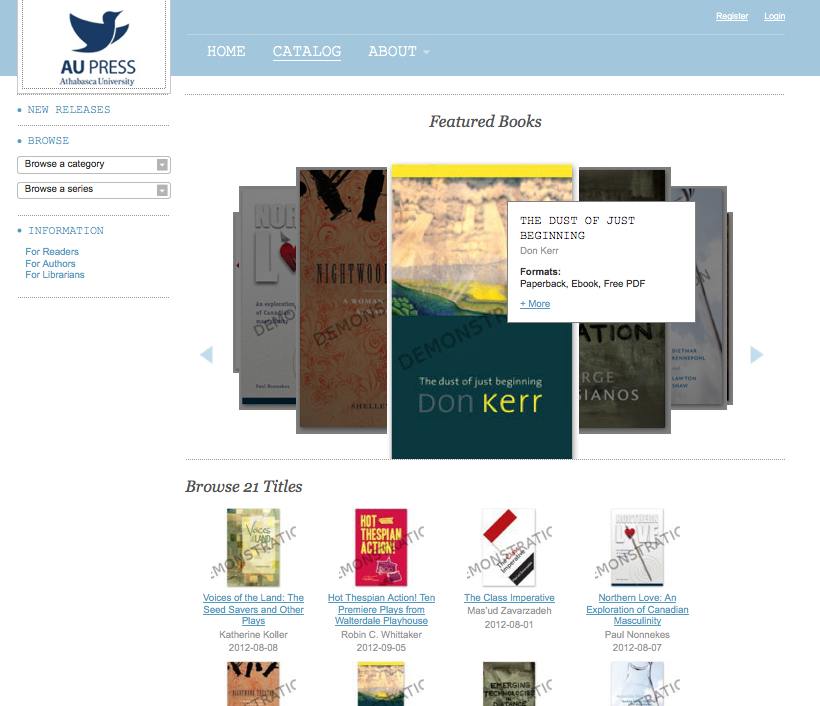
The Public Knowledge Project (PKP) is very pleased to announce the 1.0 (Beta) release of Open Monograph Press (OMP). OMP is an open source software platform for managing the editorial workflow required to see monographs, edited volumes, and scholarly editions through internal and external review, editing, cataloguing, production, and publication. OMP will operate, as well, as a press website with catalog, distribution, and sales capacities.
 OMP has been developed to support a format that remains critical to the advancement of learning. John Willinsky, Khosla Family Professor of Education at Stanford University, Distinguished Scholar in Residence at SFU Library and Professor (Limited Term) in Publishing Studies at Simon Fraser University, and founding Director of PKP, stated, “We have worked hard to create a virtual publishing-house-in-a-box, which, in the hands of publishers and scholars, will give life to a new generation of learned books.”
OMP is designed to assist university presses, learned societies, and scholar-publishers interested in publishing scholarly books in print-on-demand and multiple electronic formats, whether on an open access or purchase basis. OMP is intended to:
- Handle edited volumes, with different authors for each chapter;
- Involve editors, authors, reviewers, designers, indexers, and others in book production;
- See submission through multiple rounds of both internal and external reviews;
- Utilize industry standard ONIX for bookseller metadata requirements (e.g., Amazon);
- Create document libraries for submissions, recording contracts, permissions, etc.;
- Handle thumbnail covers in Catalog, as well as Spotlight features; and
- Enable Series Editors to see books through review to publication.
OMP is a completely new software module from the Public Knowledge Project. It has been developed from the ground up to take advantage of Web 2.0 technologies. It will also provide the framework for the redevelopment of OJS — now used by more journals than any other software in the world — and other PKP software to a more contemporary software architecture based on a common PKP Web Application Library. Alec Smecher, PKP’s Lead Developer, noted: “With OCS and OJS, we developed workflow tools to facilitate publishing of short- and medium-form content with academic rigor. With OMP, we have broadened these tools to support monograph-length content and written a cutting-edge user interface to manage it. By doing so with code shared by all applications via the Web Application Library, we ensure that all of our applications will benefit rapidly from this work.”
As part of OMP’s release strategy, PKP will be working closely with several early adopters who will use OMP in a production environment. They will provide feedback in the coming months on OMP in the following areas:
- Taking a production-destined publication through the entire workflow
- Utilization of ONIX support and other new functional areas
- User interface and usability review
- Translating and using the software in a multilingual context
OMP’s early adopters represent a variety of use cases including an established university press; a scholarly publishing group; an academic department; and an academic library providing hosting services.
OMP was designed in consultation with and support from Athabasca University Press, which has kindly permitted us to use their books and content to populate a presentation site of OMP. OMP has been built with support from the Simon Fraser University Library, SFU Canadian Centre for Studies in Publishing, Canadian Foundation for Innovation, Alfred P. Sloan Foundation, and Stanford University. Moving forward, it is anticipated that OMP will continue to be enhanced with a particular focus on pre- and post-publication support.
As with all PKP software, OMP can be downloaded for free and installed on a local webserver or it can be hosted by PKP Publishing Services. More information about OMP, including links to documentation, can be found on the PKP website at http://pkp.sfu.ca/omp
-

Open Access Initiative policy recommendations for the next 10 years
 Ten years after the release of the Budapest Open Access Initiative, OA advocates last week released updated recommendations in support of open access around the world, touching on areas including policy, licensing, sustainability, and advocacy. Of particular interest are recommendations that urge funders to require open access when they make grants: “When possible, funder policies should require libre OA, preferably under a CC-BY license or equivalent.
 -

2012 Winners from the 60SecondScience Video Competition
Results from the 2012 60SecondScience Video Competition have been released. For the last two years 60SecondScience has been a global science event involving students and citizens from 40 countries. These citizen and student-created videos have been downloaded and viewed well over 700,000 times, and growing daily. The competition is sponsored by DEECD Victoria, Australia. Winners below share $10,000 in cash prizes in the 2012 Competition.
 OPEN DIVISIONS
• BEST CINEMATOGRAPHY: From Austria: Vision
• BEST ANIMATION: From UK Hamster Quantum Physics
• INTERNATIONAL OPEN Winner: From India Water Vapour
• INTERNATIONAL OPEN Runner-up: From Hong Kong Genetic Modification
• INTERNATIONAL OPEN Highly Commended: From Slovenia Wind Turbine. Egypt Alzheimer’s. USA Dog Colour Vision. UK Food for Thought• AUSTRALIAN OPEN Winner: Doppler Effect Runner-up: Pectin-The Movie
STUDENT DIVISIONS
• INTERNATIONAL Junior Winner: From Bulgaria Calcium Reaction
• INTERNATIONAL Junior Runner-up: From West Java Water
• INTERNATIONAL Junior Highly Commended: From Indonesia Fan from CD Waste
• INTERNATIONAL High School Student Winner: From Indonesia Frying Oil Filter
• INTERNATIONAL High School Student Runner-up: From California Nerve to Eat
• INTERNATIONAL LOTE Winner: From Hong Kong Sublimation
• AUSTRALIAN OPEN Winner: Doppler Effect Runner-up: Pectin-The Movie
AUSTRALIAN Primary School Students
• VIC • winner Lemon Battery • Runner up Bicarb Highly Commended: Egg Drop – Fire Extinguisher – Flowers
• NSW • winner *The Mpemba Effect • Runner up Scientific Nerds Convention Highly Commended Cooling – Tenergy
• QLD • winner Floating Egg • Runner up Electroscope Highly Commended Moving Water – Pepper
• WA • winner Bouncing Egg • Runner up Longbow Energy Highly Commended Radiation – Super Suction
• SA • winner Soluble • Runner up Sugar Content in Fruit Highly Commended Water Pressure
• ACT • winner A Gummy Problem Runner up The Mystery of Gravity Highly Commended: Rust
• AUSTRALIAN LOTE Primary Winner From Queensland Kan BakuhatsuAUSTRALIAN Secondary School Students
• VIC • winner Fractal Coastline • Runner up Hydro Kiss Highly Commended: Newton’s 3rd Law – Pain to Brain–Veggie Pwr
• NSW • winner Nick’s Science Vid • Runner up Dissolving Sugars Highly Commended: Photosynthesis – Bacteria
• QLD • winner Igneous Rocks
• WA • winner Nuclear Fusion • Runner up Icy Float Highly Commended: Brazil Nut– Sodium-Water Exp– Wind Power– Ink
• ACT • winner * Occipital Lobe • Runner up Cerebellum Highly Commended: Hot Air Balloon Physics
• AUSTRALIAN LOTE Secondary Winner From Victoria Lava in a CupThe 2012 Competition is now finalised and our 11 fabulous local and world judges have made their decisions. In 2013 the judging panel welcomes Richard Saunders and Dr. Rachael Dunlop. Judging criteria are based on science accuracy, communication and video production values.
With assistance from Emeritus Professor John McKenzie AM, the convenor presented Australian winners with awards last Friday 7 September at BMW Edge Theatre, Federation Square as part of the ICT Week Celebrations, opened by Victorian Minister for Technology Gordon Rich-Phillips.
The 2013 Competition opens for Registration and Uploads on 23 September 2012 and closes on 18 August 2013.
-
BioGrid and Victorian Cancer BioBank Join Forces for Cancer Research
September 7 2012
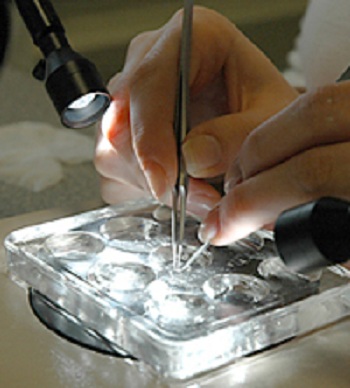
Cancer research has taken a major step forward in Victoria as the Victorian Cancer BioBank and BioGrid Australia join forces to improve bowel cancer management. The collaboration allows researchers for the first time in Australia to access detailed data associated with tissue and blood samples.
Maureen Turner, CEO of BioGrid Australia, said today: ³Our collaboration opens up new possibilities, further strengthening the work that is underway to establish an integrated technology platform for cancer research in Victoria,² she said.
The Victorian Government announced in the 2012 Budget the development of an integrated cancer research platform under the umbrella of the Victorian Cancer Agency.
Bowel cancer research will be the first to benefit from the new association. Led by Dr Jeanne Tie, up to 13 sites are involved in the project, including clinicians from Royal Melbourne, Western, Austin and Box Hill Hospitals are examining whether circulating tumour DNA (ctDNA) is a reliable blood biomarker for the presence of colorectal cancer.
The clinicians are currently recruiting suitable participants for the study before taking serial blood samples.
Up to 900 blood samples over four years will be processed by Victorian Cancer Biobank staff across all four sites within three hours of collection. The plasma samples will be stored on ice before being shipped to the research laboratory for ctDNA analysis.
Dr Anne Thompson, CEO of the Victorian Cancer BioBank said: ³Interpreting the clinical usefulness of this biomarker relies on correlating ctDNA levels with the histopathology of the tumour, the treatment given to the patient and imaging results used to monitor effectiveness of treatment.²
³With the link now in place, researchers are able access secure, ethically approved data provided through BioGrid Australia to learn more about disease recurrence and survival.²
³This type of approach was not available before in Victoria, and it seemed logical to join forces for better cancer research results,² she added.
This new data linkage service between BioGrid and Biobank is available to all Australian researchers. The Victorian Cancer BioBank and BioGrid Australia chose bowel cancer as the first cancer to be supported through the collaboration because Australia has one of the highest rates of bowel cancer in the world and bowel cancer is the second most common type of newly diagnosed cancer and causes the second highest number of cancer deaths in Australia. Around 14,225 Australians are told they have bowel cancer every year but it is one of the most curable types of cancer if detected early, however, fewer than 40% of bowel cancers are detected early.
The collaboration has other immediate benefits for Victoria, according to Ms Turner. ³While Victoria is actively securing clinical trials to take place in Victoria, trials can and do have their limitations,² she said.³For instance, often older or frail patients are excluded from trials leaving doctors uncertain as to whether trial results are relevant to many of the patients they see in routine practice.²
She says the approach that BioBank and BioGrid is taking ensures that biospecimens together with data will inform data analysis across all ages and stages of cancer through translational research projects and multi-centre clinical trials. ³What we have together is a very powerful draw card for attracting international research to Victoria, as larger numbers of patients participating in our services can be amassed more rapidly.²
BioGrid Australia
BioGrid Australia (www.biogrid.org.au) is an innovative health research platform that facilitates ethical privacy-protected research across many hospitals and medical research institutes. BioGrid provides a web-based Access Request System by which researchers can apply for access to specific databases. Sometimes additional ethics approval is required. Through this system, the data custodians authorise access to their data and a Scientific Advisory Committee assesses the proposed investigation.Victorian Cancer BioBank
The Victorian Cancer Biobank is a not-for-profit consortium of tissue banks, supported by the Victorian government through the Victorian Cancer Agency. Our coordinated and integrated program collects and distributes tissue samples to researchers in Victoria, Australia and throughout the world. Our purpose is to provide high quality, ethically obtained biospecimens to support research that will lead to improvements in cancer diagnosis and treatment and deliver better clinical outcomes to people with cancer.Media inquiries: Penny Underwood, MediaWise, on 03 9818 8540.
-
Media & Learning Brussels 2012 – Conference Programme Available
[Press release]
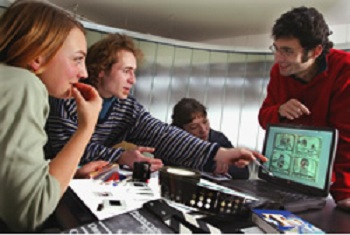
 The Media & Learning Conference taking place in Brussels on 14 and 15 November 2012 is aimed at anyone who wants to find new and effective ways to use media to enhance the learning process. It has three main themes; mapping future trends and developments in media-enhanced learning in all sectors, boosting skills and competences in media production, use and re-use of media-enhanced content and tracking the importance of media literacy and wisdom as fundamental building blocks in the creation of innovative, inclusive and futureproof education and training.
The conference programme is now available online. Keynote speakers include Xavier Prats Monné, Deputy Director-General for Education at the European Commission and Guus Wijngaards who will present his take on the educational media trends of the future based on the recent highly rated NMC Horizon Report. Andrew Keen, author of “Digital Vertigo: How Today’s Online Social Revolution Is Dividing, Diminishing, and Disorienting Us
-

Kepler Astronomers Find First Planetary System Around a Binary Star
NASA’s Kepler mission has found the first multi-planet solar system orbiting a binary star, characterized in large part by University of Texas at Austin astronomers using two telescopes at the university’s McDonald Observatory in West Texas. The finding, which proves that whole planetary systems can form in a disk around a binary star, is published in the August 28 issue of the journal Science.
“It’s Tatooine, right?” said McDonald Observatory astronomer Michael Endl. “But this was not shown in Star Wars,” he said, referring to the periodic changes in the amount of daylight falling on a planet with two suns. Measurements of the star’s orbits showed that daylight on the planets would vary by a large margin over the 7.4-Earth-day period as the two stars completed their mutual orbits, each moving closer to, then farther from, the planets (which are themselves moving).
The binary star in question is called Kepler-47. The primary star is about the same mass as the Sun, and its companion is an M-dwarf star one-third its size. The inner planet is three times the size of Earth and orbits the binary star every 49.5 days, while the outer planet is 4.6 times the size of Earth with an orbit of 303.2 days.
Artist's concept of the Kepler-47 system. The outer planet is the first planet found to orbit a binary star within the “habitable zone,” where liquid water could exist and thus create a home for life. However, the planet’s size (about the same as Uranus) means that it is an icy giant, and not an abode for life. It’s a tantalizing taste of discoveries waiting to be made.
The combination of observations from the NASA mission and McDonald Observatory allowed astronomers to understand the characteristics of Kepler-47’s two stars and two planets.
The Kepler mission looks for minute dips in the amount of light coming from a star that might indicate a planet is passing in front of it, an event called a “transit.” The space telescope is also adept at identifying eclipsing binary stars, in which two stars pass in front of each other as they orbit each other. In the case of Kepler-47, they found both stellar eclipses and planet transits in one system.
So Kepler astronomers Jerome Orosz (lead author on the study) and William Welsh of San Diego State University flagged the Kepler-47 system as worthy of follow up from the ground. They asked the McDonald Observatory Kepler team to work with them.
Endl studied the binary star with the 9.2-meter Hobby-Eberly Telescope (HET, one of the world’s largest telescopes), as well as the 2.7-meter Harlan J. Smith Telescope at McDonald.
“The challenging thing is that this is a very faint star,” Endl said, “about 6,000 times dimmer than can be seen with the naked eye.”
He was taking spectra of the system — looking for characteristics in its light to indicate the motions of the primary star. (The secondary star is too faint to measure.) The McDonald observations enabled astronomers to calculate the mass of the primary star.
These values, along with the Kepler eclipse and transit timings, were plugged into a model that calculated the relative sizes of all the bodies involved, Endl said.
The Kepler team at McDonald Observatory also includes Bill Cochran (a co-Investigator of the Kepler mission), research scientist Phillip MacQueen, graduate students Paul Robertson and Eric Brugamyer, and recent graduate Caroline Caldwell.
“This is the type of research where McDonald Observatory really excels,” Cochran said. “We have excellent scientific instruments on our telescopes, and the queue-scheduled operation of the HET allows us to obtain spectra at the optimal times when they will give us the best information about the stars.”
-
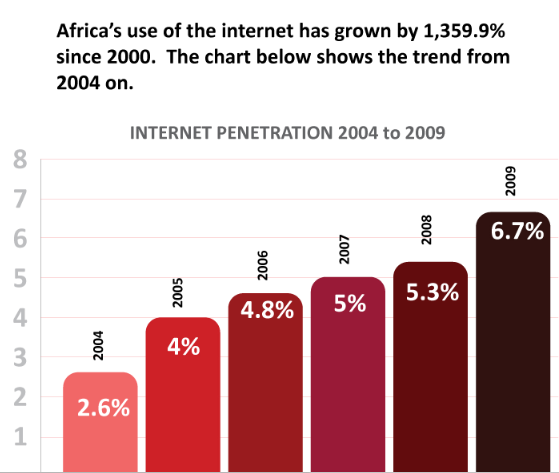
Reducing the Digital Divide: Internet Society Supports Establishment of Internet Exchange Points across Africa
[Johannesburg, South Africa –23 August 2012] – The Internet Society announced that it has been selected by the African Union (AU) to conduct community mobilization and technical aspects workshops to support the establishment of Internet Exchange Points (IXPs) in AU Member States as part of the African Internet Exchange System (AXIS) project. The AXIS project aims at keeping Africa’s Internet traffic local to the continent by providing capacity building and technical assistance to facilitate the establishment of National Internet Exchange Points and Regional Internet Exchange Points in Africa. The project is funded by the Euro-Africa Infrastructure Fund and the Government of Luxembourg.
The Internet Society is committed to organizing 60 community mobilization and technical aspects workshops in 30 African countries. To this effect, the Internet Society will also contribute its own resources for the implementation of this component of the AXIS project.
Africa's use of the internet by Jon Gosier (Flickr) Currently, much of Africa’s Internet traffic is routed through Internet exchange points external to the African continent. As countries establish their own IXPs, Internet traffic will be routed locally, creating a downward pressure on costs and stimulating growth in and distribution of local Internet content. Through the AXIS project, the interests of the AU and the Internet Society, working with other African Internet organizations such as AfriNIC, AfNOG and AftLD, will be realized in this collaborative effort to assist in the development of a more locally operated and, hence, more robust and economically accessible pan-African Internet.Moctar Yedaly, Head of Information Society Division, African Union Commission, commented, “Africa is paying overseas carriers to exchange ‘local’ (continental) traffic. This is both a costly as well as an inefficient way of handling inter-country exchange of Internet traffic. Independent analysis has shown that Africa pays over US$600 Million to developed countries every year for inter-African traffic exchange that is carried outside the continent. We are therefore pleased that the African Internet Exchange System project will address this challenge by facilitating optimization of Internet traffic to support intra-continental traffic flows in Africa.