Author: Editorial Board

  • Australia’s first rainforest research ‘Supersite’ opens for business

    Australia’s first rainforest research ‘Supersite’ opens for business

    Following three years of research and planning, CSIRO and the Terrestrial Ecosystem Research Network (TERN) have opened Australia’s first large-scale rainforest research plot.

    The plot, which is located at Robson Creek on the Atherton Tablelands near Cairns, will allow scientists to monitor the rainforest over the long term and answer questions about the health of this unique Australian environment and any impacts that might arise from climate change.

    ‘In preparing the plot for research, we established baseline data by identifying, mapping and measuring every tree that was greater than 10cm in diameter so we can continue to monitor them. We censused over 23 000 stems from 212 different species and there is estimated to be more than 400 plant species represented on the plot,’ said Matt Bradford, a field botanist who manages the Robson Creek site for the CSIRO.

    ‘It’s been a huge effort, but it’s a great place to be working. There’s such a diversity of life and some of the trees on site are well over a thousand years old.’

    TERN and CSIRO are now inviting scientists from Australia and across the world to undertake research at the Robson Creek site, which is the largest rainforest plot that has ever been set up in Australia.

    ‘Already there are studies under way involving CSIRO and four Australian universities looking at the diversity of plants, birds, animals and insects and the dynamics of how things like water, carbon and gases move through the ecosystem,’ said Mr Bradford.

    ‘A state of the art flux measuring tower, part of TERN’s OzFlux network, will be installed on the site in coming months that will monitor gas exchange between the forest and the atmosphere, allowing us to observe how climate change might affect this ecosystem.’

    The Robson Creek plot forms part of the Far North Queensland Rainforest Supersite, which carries out research on the rainforests of the World Heritage Wet Tropics region. The Rainforest Supersite is one of ten research ‘Supersites’ that make up the Australian Supersite Network established by TERN. These Supersites are enabling long-term monitoring of key Australian ecosystems and provide a unique opportunity for scientists to answer questions about species distribution, the potential for carbon storage and exchange, and the impacts of a changing climate.

    ‘We envisage that the Robson Creek plot will quickly become an important part of the global forest plot network that will allow for comparisons with other tropical forests and contribute to our understanding of how the world’s forests will adapt to any effects of climate change.’

    Mr Bradford and other scientists will be speaking about the Supersites at the 2013 TERN Annual Symposium taking place this week in Canberra. For more information about the Symposium visit www.tern.org.au/Welcome-pg24024.html.

    TERN is supported by the Australian Government through the National Collaborative Research Infrastructure Strategy and the Super Science Initiative.

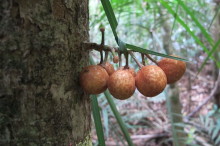
    Source and imageA Yellow Mahogany tree (Dysoxylum parasiticum) on the rainforest Supersite showing the unusual trait of bearing fruit on the stem.

  • Rock lobster fishery balances lifestyle and livelihood

    Rock lobster fishery balances lifestyle and livelihood

    CSIRO researchers are studying the Torres Strait tropical rock lobster fishery to develop a scientific approach to integrate cultural factors into natural resource management.

    “Fisheries management traditionally involves balancing commercial gain and sustainability, but for Indigenous communities cultural and lifestyle factors can be just as important and these factors are more difficult to measure,” says Dr Eva Plaganyi of CSIRO’s Wealth from Oceans Flagship.

    “Globally, small-scale fisheries employ around 38 million people and it’s important to look at the impact of natural resource management practices on their livelihood,” she says.

    “Often research into fisheries management has focused on commercial businesses and overlooked the unique characteristics of Indigenous fishers. We wanted focus on economic needs as well as socio-cultural rights and values.”

    Dr Eva Plaganyi, CSIRO Wealth from Oceans Flagship

    The Torres Strait tropical rock lobster fishery has many stakeholders, including non-Indigenous commercial fishers and Indigenous fishers who fish for reasons ranging from subsistence to commercial. The social objectives of the fishery are spelled out in a treaty between Australia and Papua New Guinea that acknowledges and protects the traditional fishing practices of Indigenous people.

    “Often research into fisheries management has focused on commercial businesses and overlooked the unique characteristics of Indigenous fishers. We wanted focus on economic needs as well as socio-cultural rights and values,” says Dr Plaganyi.

    The multidisciplinary team of researchers brought together a range of sophisticated methods, from mathematics and modelling to social science interviews. Their results allow managers to understand the potential trade-offs when making a management decision that affects not only a resource but also the people who depend on it.

    “Market-based management options might score highly in a capitalistic society, but we found that two key social indicators, namely equity and a sense of self-determination, underpin successful management,” says Dr Plaganyi.

    “Indigenous communities have aspirations and cultural considerations that are simultaneously unique and important, and their communities are often communalistic rather than being driven solely by economic considerations. We have developed an objective scientific approach that reflects this and can be applied to natural resource management beyond fisheries,” she says.

    The research described here is underpinned by extensive consultations with Indigenous fishers, as well as other sectors and managers. It builds on a long history of involvement in the Torres Strait, with CSIRO divers planning the 25th annual lobster survey this year.

    This research was funded by Australian Fisheries Management Authority and CSIRO.

    ‘Integrating Indigenous Livelihood and Lifestyle Objectives in Managing a Natural Resource’will be published this week in the online early edition of Proceedings of the National Academy of Sciences.

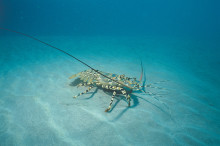
    Image: Panulirus ornatus, the tropical rock lobster.

    Source.

  • World solar expert to shine light in Australia

    World solar expert to shine light in Australia

    Dr Manuel J Blanco joins CSIRO as Director of the Australian Solar Thermal Research Initiative (ASTRI).

    ASTRI is an A$87 million, eight year international collaboration transforming the energy industry in Australia by bringing down the cost of solar thermal, a unique energy technology that can create electricity, heat and fuels.

    “Australia has one of the best solar resources in the world. It is a natural fit for an international solar thermal research collaboration to use this resource and our expertise to make solar power the cheapest, cleanest energy source it can be.”

    Dr Manuel J Blanco, Director – Australian Solar Thermal Research Initiative

    Dr Blanco, a world-renowned solar scientist with almost three decades of academic, research and development managerial experience, comes to ASTRI from Spain’s National Renewable Energy Centre (CENER), where he was Director of the Solar Thermal Energy Department.

    Dr Blanco has made an invaluable contribution to the international solar thermal industry, including paving the way for the first commercial solar thermal system installed in Spain and chairing the International Energy Agency’s SolarPACES executive committee, the 20-country network for solar thermal collaboration.

    “Australia has one of the best solar resources in the world. It is a natural fit for an international solar thermal research collaboration to use this resource and our expertise to make solar power the cheapest, cleanest energy source it can be.

    “We will reduce the cost of solar thermal to just 12 cents a kilowatt hour by 2020 and provide zero-emission energy to people when they need it. It’s a technological leap but we will do it. We are working with the best in the world,

  • New leader of CSIRO Astronomy and Space Science division

    New leader of CSIRO Astronomy and Space Science division

    CSIRO’s astronomy, spacecraft tracking and space science activities will be headed up by a new leader, with the announcement today that Dr Lewis Ball has been appointed as the incoming Chief for CSIRO’s Astronomy and Space Science (CASS) division.

    Dr Ball returns to CSIRO from his present role as Deputy Director at the Atacama Large Millimeter/sub-millimeter Array (ALMA) located in Chile. There he has led the successful commencement of ALMA’s scientific operation, currently the world’s largest and most complex astronomical observatory and a partnership involving 20 countries.

    “I look forward to enhancing and building on CSIRO’s national and international reputation in the fields of radio astronomy and space science. I’m excited and honoured to be leading such a world-class team and thrilled to be a part of the international SKA effort.”

    Previous to his ALMA appointment, Dr Ball had been with CSIRO for nine years in a number of management roles including leadership of CSIRO’s astronomy division from February 2009 to May 2010, first as Acting Director of the Australia Telescope National Facility (ATNF) and then as Acting Chief of Astronomy and Space Science.

    As the new CASS Chief, Dr Ball will lead approximately 280 staff and be responsible for a world-class national research facility for radio astronomy that includes three existing radio telescopes, as well as the 36-dish Australian Square Kilometre Array Pathfinder which begins operations this year.  Dr Ball will also be responsible for driving CSIRO’s contribution to the first phase of the Square Kilometre Array telescope in Australia and for heading up, on behalf of NASA, the Canberra Deep Space Communications Complex based at Tidbinbilla.

    Dr Ball’s appointment fills the role made vacant by Dr Phil Diamond, who left CSIRO in October 2012 to take up the position of Director General of the SKA Organisation.

    Group Executive for CSIRO’s Information Sciences, Dr David Williams, welcomed Dr Ball’s appointment.

    “Following an international recruitment search, we are delighted to see Lewis returning to CSIRO. Lewis has had enormous success in his career so far and we’re thrilled to have someone of such high calibre joining our leadership team,” Dr Williams said.

    Dr Ball added, “I look forward to enhancing and building on CSIRO’s national and international reputation in the fields of radio astronomy and space science. I’m excited and honoured to be leading such a world-class team and thrilled to be a part of the international SKA effort.”

    Dr Ball will commence as Chief of CSIRO’s Astronomy and Space Science division on March 18, 2013 and will be based at Marsfield in Sydney.

    Source.

    Image: Dr Lewis Ball has been appointed as the incoming Chief for CSIRO’s Astronomy and Space Science (CASS) division. Photo credit: ALMA(ESO/NAOJ/NRAO), M. Alexander (ESO)

  • Research gives digital economy a boost

    Research gives digital economy a boost

    CSIRO will today launch Australia’s largest publically-funded research initiative focused on the digital economy.

    The Digital Productivity and Services Flagship, CSIRO’s tenth National Research Flagship, is a A$40 million research initiative focusing on the services sector and optimising the full value of national broadband infrastructure.

    The Digital Productivity and Services Flagship, CSIRO’s tenth National Research Flagship, is a A$40 million research initiative focusing on the services sector and optimising the full value of national broadband infrastructure.

    The Director of the Flagship Dr Ian Oppermann says the new Flagship is focused on helping Australia transition from being a predominantly resource-focused nation by developing and delivering more efficient and innovative digitally-enhanced services.

    “Australia is faced with the challenge of maintaining a competitive economic edge in an increasingly complex and resource-limited world,” Dr Oppermann says.

    “Our labour productivity has declined from around 92 per cent relative to the US in 1998 to around 84 per cent in 2010, meaning Australia’s economic prospects beyond the current resources boom will deteriorate significantly if the decline in our productivity growth performance is not reversed.

    “A successful digital economy is essential for Australia’s economic growth and to maintain our international standing.  The services sector represents about 80 per cent of Australia’s GDP, so if we are to help Australia grow, we must help businesses and government deliver services in new, faster and better ways.

    “CSIRO’s expertise in cybersecurity, broadband technologies and services science positions us as the key organisation to take on this research. While some of our work will be in labs, most of it will happen out in businesses and departments across Australia; finding ways to apply technology to improve the way they deliver their services.”

    Dr Oppermann says the Flagship has the potential to transform a range of areas – from the way health services are delivered to the way banks manage their funds.

    “For example, we are working to reduce hospital waiting times and identify bottlenecks in Queensland hospitals by predicting how many patients will turn up in emergency departments, and when.

    “By investing in our services sector we aim to help Australia remain competitive in the global economy, now and into the future. We are looking forward to working with our government and industry partners to help Australia grow through the digital economy.”

    The Flagship builds on CSIRO’s successful track record in health service delivery, logistics, finance and communications. The Flagship will initially focus on four key research areas:

    Government Services – develop efficient and effective information use, government services and systems through improved decisions, coordination and customer centricity.

    Commercial Services – with a strong focus on financial services, develop efficient and effective commercial services and systems through better use of capital and improved service delivery models and processes across supply chains.

    Smart, Secure Infrastructure – extending and securing Australia’s physical and cyber infrastructure, including the extension of wireless broadband services.

    Health Services – improving the safety, quality and efficiency of health services for all Australians by delivering technology in partnership with all State Health Departments.

    The Australian Centre for Broadband Innovation (ACBI) is also a key platform for facilitating new research projects within the Flagship. The goal of ACBI is to develop and test innovative broadband-enabled services, applications and technologies and their use in real world situations.

    Senator the Hon. Stephen Conroy, Minister for Broadband, Communications and the Digital Economy, will officially launch the Flagship with guests from industry, government and innovation sector, at an event in Sydney today. This will also feature a key-note presentation by Sir Tim Berners-Lee, inventor of the World Wide Web, in his first public appearance in Australia in 15 years.

    For more information, please visit  www.csiro.au/dpas

  • Greenland ice core records provide a vision of the future

    Greenland ice core records provide a vision of the future

    Ice cores drilled in the Greenland ice sheet, recounting the history of the last great warming period more than 120,00 years ago, are giving scientists their clearest insight to a world that was warmer than today.

    In a paper published on January 24th 2013, in the journal Nature, scientists have used a 2,540 metre long Greenland ice core to reach back to the Eemian period 115-130 thousand years ago and reconstruct the Greenland temperature and ice sheet extent back through the last interglacial. This period is likely to be comparable in several ways to climatic conditions in the future, especially the mean global surface temperature, but without anthropogenic or human influence on the atmospheric composition.

    The Eemian period is referred to as the last interglacial, when warm temperatures continued for several thousand years due mainly to the earth’s orbit allowing more energy to be received from the sun. The world today is considered to be in an interglacial period and that has lasted 11,000 years, and called the Holocene.

    “The research results provide new benchmarks for climate and ice sheet scenarios used by scientists in projecting future climate influences.”

    Dr Mauro Rubino, CSIRO Marine and Atmospheric Research

    “The ice is an archive of past climate and analysis of the core is giving us pointers to the future  when the world is likely to be warmer”, says CSIRO’s Dr Mauro Rubino, the Australian scientist working with the North Greenland Eemian ice core research project.

    Dr Rubino says the Greenland ice sheet is presently losing mass more quickly than the Antarctic ice sheet. Of particular interest is the extent of the Greenland continental ice sheet at the time of the last interglacial and its contribution to global sea level.

    Deciphering the ice core archive proved especially difficult for ice layers formed during the last interglacial because, being close to bedrock, the pressure and friction due to ice movement impacted and re-arranged the ice layering.  These deep layers were “re-assembled

  • Telescope takes temperature of Universe

    Telescope takes temperature of Universe

    CSIRO telescope takes temperature of Universe Astronomers using a CSIRO radio telescope have taken the Universe’s temperature, and have found that it has cooled down just the way the Big Bang theory predicts.

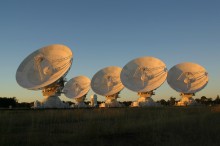
    Using the CSIRO Australia Telescope Compact Array near Narrabri, NSW, an international team from Sweden, France, Germany and Australia has measured how warm the Universe was when it was half its current age.

    “This is the most precise measurement ever made of how the Universe has cooled down during its 13.77 billion year history,” said Dr Robert Braun, Chief Scientist at CSIRO Astronomy and Space Science.

    “This is the most precise measurement ever made of how the Universe has cooled down during its 13.77 billion year history.”

    Dr Robert Braun, Chief Scientist, CSIRO Astronomy and Space Science

    Because light takes time to travel, when we look out into space we see the Universe as it was in the past — as it was when light left the galaxies we are looking at. So to look back half-way into the Universe’s history, we need to look half-way across the Universe.

    How can we measure a temperature at such a great distance?

    The astronomers studied gas in an unnamed galaxy 7.2 billion light-years away [a redshift of 0.89].

    The only thing keeping this gas warm is the cosmic background radiation — the glow left over from the Big Bang.

    By chance, there is another powerful galaxy, a quasar (called PKS 1830-211), lying behind the unnamed galaxy.

    Radio waves from this quasar come through the gas of the foreground galaxy. As they do so, the gas molecules absorb some of the energy of the radio waves. This leaves a distinctive “fingerprint” on the radio waves.

    From this “fingerprint” the astronomers calculated the gas’s temperature. They found it to be 5.08 Kelvin (-267.92 degrees Celsius): extremely cold, but still warmer than today’s Universe, which is at 2.73 Kelvin (-270.27 degrees Celsius).

    According to the Big Bang theory, the temperature of the cosmic background radiation drops smoothly as the Universe expands. “That’s just what we see in our measurements. The Universe of a few billion years ago was a few degrees warmer than it is now, exactly as the Big Bang Theory predicts,” said research team leader Dr Sebastien Muller of Onsala Space Observatory at Chalmers University of Technology in Sweden.

    Publication “A precise and accurate determination of the cosmic microwave background temperature at z=0.89”, by S. Muller et al. Accepted for publication in the journal Astronomy & Astrophysics; online at

    http://arxiv.org/abs/1212.5456

    Source: News@CSIRO blog

  • Fascinating short film about NASA’s Dawn: the very beginning of us

    Fascinating short film about NASA’s Dawn: the very beginning of us

    This fascinating video, narrated by Leonard Nemoy, gives you a glimpse into the origins of our solar system and NASA Dawn mission’s  journey to Vesta & Ceres and its hope to unveil clues as to what was going on at the very beginning of our solar system’s formation!


    NASA’s Dawn mission is a spacecraft designed to collect data from the asteroid belt. The ship itself is a marvel. Outfitted with massive solar panel wings that can power it for years, Dawn converts xenon gas into plasma, which it propels from its engine at speeds up to 78,000 miles per hour (or 21 miles per second) for maximum acceleration. In fact, Dawn is the fastest ship NASA has ever launched. Even at top speeds, Dawn required four years to reach its first stop, the asteroid Vesta, the brightest asteroid in the solar system and the only one visible to the naked eye. Departing Earth in 2007, the ship reached Vesta in July of 2011 and departed last September for the asteroid Ceres, which it will reach in February of 2015.  Via OpenCulture.

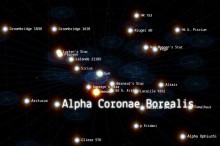
    For those visually driven – please take a look at the beautiful interactive map of our stellar neighborhood. With over 100,000 stars in an interactive visualisation, you can take a walk through the stellar neighborhood.

  • Australian scientists may have found ‘potential cure for AIDS’

    Australian scientists may have found ‘potential cure for AIDS’

    Australian scientists say they have made a breakthrough that could lead to a potential cure for AIDS, modifying a protein in HIV so it prevents against replication and instead protects against the infection.

    A FORM of gene therapy developed by researchers at the Queensland Institute of Medical Research may provide hope to sufferers of HIV, preventing the virus from crippling the immune system by manipulating its genetic structure and turning HIV into a weapon against itself.

    Dr David Harrich, a naturalised Australian citizen, has utilised a technique that alters the proteins that enable the HIV virus to replicate throughout the body. By modifying the proteins that make up HIV into a mutated form, referred to as Nullbasic, Harrich’s research team have determined that it is possible to block the process of reverse transcription that allows HIV to damage the immune system. This would ultimately render the virus inert, preventing the condition of those infected with HIV from deteriorating further.

    Harrich began studying the HIV virus in 1989 while completing his doctorate in experimental pathology at the University of California – Los Angeles. This project explored the issue of genetic expression and the replication of the HIV virus, a research concept he would continue to pursue after moving to Australia in 1997. The initial breakthrough in Harrich’s research occurred in 2007, with the discovery that Nullbasic had the ability to inhibit the spread of HIV.

    Harrich told Australian Times: “With money running out, I had my PhD student try one more experiment in late 2007. The experiment was to test ifNullbasic could render HIV non-infectious. The student came back and said it worked, so I told him to do it again and again and again. It works every time.

  • SignMedia: online learning tool for deaf media professionals

    SignMedia: online learning tool for deaf media professionals

    SignMedia is an online learning resource that uses sign language to teach vocational written English to deaf media professionals. The project was proud to be a finalist in the recent MEDEA Awards 2012.

    The world of broadcast media offers an increasingly rich source of employment for deaf graduates and professionals across Europe, but the focus on communication through written English still proves to be a barrier for sign language users. Essential production documentation contains challenging technical English, as do many of the instructions and descriptors used in software, hardware and on technological equipment.

    The SignMedia project aims to break down these barriers with an innovative and accessible online learning resource that uses Sign Language video and interactive tasks. It has pushed boundaries further in eLearning design, bringing video narrative, and an immersive, alternative reality to deaf online education for the first time. To create an authentic media experience for the users, the learning takes place within a fictional deaf production company whilst working on the soap opera ‘Beautiful Days’. All learning
    activities are designed around authentic media documentation taken from the production process, such as Risk Assessments, Call Sheets, Treatments and Scripts, thus enabling deaf users to develop language skills that are directly transferrable to their place of work.

    The use of Sign Language videos and deaf presenters to teach written English is in itself an innovation. For many years, deaf people have been taught through the spoken word, but recent developments have seen a rise in sign bilingualism across Europe – a teaching method that promotes deaf culture and uses sign language as a method of delivery. Within the SignMedia learning tool, we were determined that Sign Language users would not feel like an afterthought, an ‘added extra’.

    The visual medium of Sign Languages also means that print dictionaries are of limited use. As a result, it is a real challenge to make specialist language items and neologisms accessible to the wider deaf community and younger generations. This presents an obvious disadvantage to Sign Language users who wish to break into the media industry. SignMedia addresses this need with the inclusion of a signed glossary with language items selected by deaf and hearing media industry professionals.

    Target users have described the tool as engaging, unique and fun. We were especially delighted when feedback revealed that the ‘alternative reality’ learning environment removed the threat and pressure that many deaf people have experienced in formal education. There has also been a powerful response to the Sign Language videos, with deaf adults revealing that they have understood English grammatical concepts for the first time after watching the clips.
    The SignMedia project recognises the immense potential of combining the shared visual modalities of e-learning, media and Sign Language. The result is a product that uses contemporary media developments to reflect the vibrancy, creativity and professional aspirations of the deaf community. SignMedia was supported by Leonardo da Vinci Development of Innovation and the consortium included deaf and hearing teams from the University of Wolverhampton (UK), University of Klagenfurt (Austria), University of Turin (Italy) and Mutt&Jeff Pictures (UK). Visit the resource.

    By Christine Jolly, University of Wolverhampton, UK

  • Phantom fishing targets turtles in northern Australia

    Phantom fishing targets turtles in northern Australia

    14 January 2013

    Phantom fishing targets turtles in northern Australia CSIRO scientists working with GhostNets Australia and Indigenous rangers are identifying hotspots where lost fishing nets are threatening our marine biodiversity.

    Worldwide, around 640 000 tonnes of fishing gear is lost or discarded each year. These ‘ghostnets’ can continue fishing for decades, entangling huge numbers of marine animals, including threatened and commercially valuable species.

    “Our research goes beyond discovering where ghostnet fishing is taking place, to actually estimating its impact on biodiversity, in particular on threatened marine turtles.”

    Dr Denise Hardesty, CSIRO Ecosystem Sciences

    Ghostnets, originating mainly from fisheries in Asia and Australia, are a particular problem in Australia’s Gulf of Carpentaria, where they can reach densities of up to three tonnes/km, among the highest recorded worldwide.

    “Our research goes beyond discovering where ghostnet fishing is taking place, to actually estimating its impact on biodiversity, in particular on threatened marine turtles,” Dr Denise Hardesty of CSIRO said.

    “Using a model of ocean currents and data collected by Indigenous rangers on the number of ghostnets found during beach cleanups, we simulated the likely paths ghostnets take to get to their landing spots on beaches in the Gulf of Carpentaria,” Dr Hardesty said.

    “Combining this with information about the occurrence of turtles in the area, we found that entanglement risk for turtles is concentrated in an area along the eastern margin of the Gulf and in a wide section in the southwest extending up the west coast,” she said.

    “Most ghostnets enter the Gulf from the northwest and move clockwise along its shore. This means we can help protect biodiversity in the region by intercepting nets as they enter the Gulf, before they reach the high density turtle areas along south and east coastlines,” she said.

    Australia is home to six of the world’s seven threatened species of marine turtle. During a recent cleanup of ghostnets on beaches in the Gulf, 80 per cent of animals recorded in nets were marine turtles, including Olive Ridley, Hawksbill, Green and Flatback turtles.

    “Our predictions of the distribution of turtles washing ashore entangled in ghostnets matched the actual frequencies of turtles found in ghostnets during beach surveys, suggesting our model is accurate,” Dr Hardesty said.

    Ghostnets are a global problem, capturing seabirds, marine mammals and sea turtles worldwide. Lost or abandoned fishing gear makes up only 20 per cent of marine debris but has a disproportionate effect because it is designed to capture wildlife.

    “Our research shows that combining models of marine debris with species occurrence data could identify global hot spots for impact, helping pinpoint where prevention and clean-ups could really make a difference to biodiversity,” Dr Hardesty said.

    This research used information on ocean currents generated by the BLUElink Ocean Data Assimilation System to simulate the paths of ghostnets.

    Ghostnet impacts on globally threatened turtles, a spatial risk analysis for northern Australia [external link]‘ was published by CSIRO and GhostNets Australia in the January 2013 online early issue of Conservation Letters [external link].

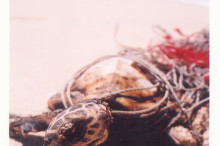
    Image: A turtle washed ashore caught by a ghostnet (Image: Alistair Dermer)

  • Our Galaxy’s ‘Geysers’ Are Towers of Power

    Our Galaxy’s ‘Geysers’ Are Towers of Power

    thgfht
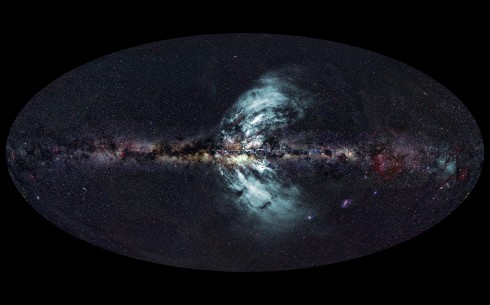
    This shows the “geysers” (in blue) shooting out of the Milky Way. Credit: Optical image – A. Mellinger, U.Central Michigan; radio image – E. Carretti, CSIRO; radio data – S-PASS team; composition – E. Bresser, CSIRO

    “Monster” outflows of charged particles from the centre of our Galaxy, stretching more than halfway across the sky, have been detected and mapped with CSIRO’s 64-m Parkes radio telescope. Corresponding to the “Fermi Bubbles” found in 2010, the outflows were detected by astronomers from Australia, the USA, Italy and The Netherlands. The finding is reported in the Jan 2 issue of Nature.

    “These outflows contain an extraordinary amount of energy — about a million times the energy of an exploding star,” said the research team’s leader, CSIRO’s Dr Ettore Carretti.

    But the outflows pose no danger to Earth or the Solar System.

    The speed of the outflow is supersonic, about 1000 kilometres a second. “That’s fast, even for astronomers,” Dr Carretti said. “They are not coming in our direction, but go up and down from the Galactic Plane. We are 30,000 light-years away from the Galactic Centre, in the Plane. They are no danger to us.”

    From top to bottom the outflows extend 50,000 light-years [five hundred thousand million million kilometres] out of the Galactic Plane. That’s equal to half the diameter of our Galaxy (which is 100,000 light-years — a million million million kilometres — across).

    Seen from Earth, the outflows stretch about two-thirds across the sky from horizon to horizon. The outflows correspond to a “haze” of microwave emission previously spotted by the WMAP and Planck space telescopes and regions of gamma-ray emission detected with NASA’s Fermi space telescope in 2010, which were dubbed the “Fermi Bubbles.”

    The WMAP, Planck and Fermi observations did not provide enough evidence to indicate definitively the source of the radiation they detected, but the new Parkes observations do.

    “The options were a quasar-like outburst from the black hole at the Galactic Centre, or star-power — the hot winds from young stars, and exploding stars,” said team member Dr Gianni Bernardi of the Harvard-Smithsonian Center for Astrophysics, in Cambridge, Massachusetts. “Our observations tell us it’s star-power.”

    In fact, the outflows appear to have been driven by many generations of stars forming and exploding in the Galactic Centre over the last hundred million years.

    The key to determining this was to measure the outflows’ magnetic fields.

    “We did this by measuring a key property of the radio waves from the outflows — their polarisation,” said team member Dr Roland Crocker of the Max-Planck-Institut fuer Kernphysik in Heidelberg, Germany, and the Australian National University.

    The new observations also help to answer one of astronomers’ big questions about our Galaxy: how it generates and maintains its magnetic field. “The outflow from the Galactic Centre is carrying off not just gas and high-energy electrons, but also strong magnetic fields,” said team member Dr Marijke Haverkorn of Radboud University Nijmegen in The Netherlands.

    “We suspect this must play a big part in generating the Galaxy’s overall magnetic field.”

  • Evolution of flying bat clue to cancer and viruses

    Evolution of flying bat clue to cancer and viruses

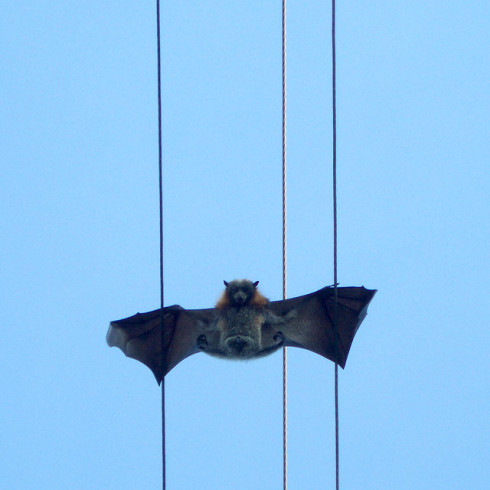
    bat sThe genes of long-living and virus resistant bats may provide clues to the future treatment and prevention of infectious diseases and cancer in people, the Commonwealth Scientific and Industrial Research Organization ( CSIRO), Australia’s national science agency, said in a report on Friday.
    This research, published in the journal Science, was a global effort involving researchers from China, Australia, Denmark, the United States and Singapore. It provides an insight into the evolution of bat’s flight, resistance to viruses and relatively long life.

    Researchers at CSIRO and the Beijing Genome Institute led a team sequencing the genomes of two bat species – an Australian mega bat, the black flying fox, and a Chinese micro bat, David’s Myotis. They then compared the bat genomes to those of eight other mammals, including humans, to find similarities and differences.

    “A deeper understanding of these evolutionary adaptations in bats may lead to better treatments for human diseases, and may eventually enable us to predict or perhaps even prevent outbreaks of emerging bat viruses,” said Dr. Chris Cowled, post-doctoral fellow at CSIRO’s Australian Animal Health Laboratory.

    “Bats are a natural reservoir for several lethal viruses, such as Hendra, Ebola and SARS, but they often don’t succumb to disease from these viruses. They’re also the only mammal that can fly, and they live a long time compared to animals similar in size,” he said.

    The research also reaffirms bats’ ancient and important place in the eco-system, particularly as pollinators and controlling insect numbers.

    image source


  • Ocean science robot revolution hits symbolic millionth milestone

    Ocean science robot revolution hits symbolic millionth milestone

    An innovative global observing system based on drifting sensors cycling from the surface to the ocean mid-depths is being celebrated by scientists today after reaching a major milestone – one million incredibly valuable ocean observations.

    12 December 2012

    argo
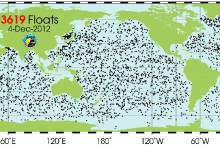
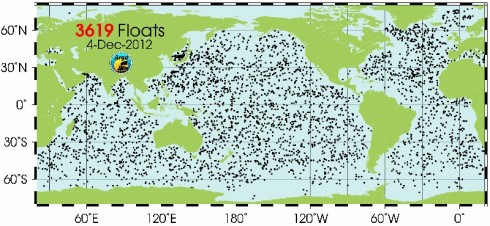
    Global locations for Argo robotic sensors – 4 December 2012.

    From 10 drifting robotic sensors deployed by Australia in the Indian Ocean in late 1999, the international research program has been quietly building up a global array which is now enabling new insights into the ocean’s central influence on global climate and marine ecosystems.

    The initial objective was to maintain a network of 3000 sensors, in ice-free open ocean areas, providing both real-time data and higher quality delayed mode data and analyses to underpin a new generation of ocean and climate services. The program is called Argo.

    “Argo data is now also being widely used in operational services for the community, including weather and climate prediction and ocean forecasting for environmental emergency response, shipping, defence, and safety at sea.” Dr Susan Wijffels, Argo co-Chair, CSIRO Wealth from Oceans Flagship scientist

    “We’re still about 50 years behind the space community and its mission to reach the moon,” says Argo co-Chair and CSIRO Wealth from Oceans Flagship scientist, Dr Susan Wijffels.

    “The world’s deep ocean environment is as hostile as that in space, but because it holds so many clues to our climate future exploring it with the Argo observing network is a real turning point for science.

    “In its short life the Argo data set has become an essential mainstay of climate and ocean researchers complementing information from earth observing satellites and uniquely providing subsurface information giving new insights into changes in the earth’s hydrological warming rates and opening the possibility of longer term climate forecasting,” Dr Wijffels said.

    Although the one millionth profile of the upper ocean, measured from the surface to a depth of two kilometres, was achieved in early November, oceanographers around the world are today celebrating this critical benchmark in ocean monitoring which delivers data to a scientist’s desk within 24 hours of sampling.

    Celebrations included a series of high-level international presentations by senior scientists involving Dr Wijffels, her Argo co-Chair Prof Dean Roemmich from Scripps Institution of Oceanography, oceanographer Dr Josh Willis from the NASA Jet Propulsion Laboratory, and Dr Jim Cummings from the US Naval Research Laboratory.

    The Argo array has risen to now number more than 3500 sensors, the largest there has ever been. The average lifetime of the floats has improved in the past decade greatly increasing the efficiency of the operation.

    Presently 28 countries contribute to the annual A$25M cost of operating the program. The US is the largest provider of sensors to the network, with Australia, led by CSIRO with the Integrated Marine Observing System and the Bureau of Meteorology, maintaining more than 300 profilers for deployment mainly in the Indian and Southern Oceans, and Tasman Sea.

    The 1.5 metre tall robotic sensors cycle vertically every 10 days, sampling temperature and salinity. At the surface, the sensors despatches its data via satellite to national centres across the globe, where analysts then check it, package it and send it to synchronous assembly centres in France and the US.  The sensor’s ascent and descent is regulated by a hydraulic pump, powered with lithium batteries. Their life expectancy is between 4-9 years, averaging more than 200 profiles per sensor as they drift with the currents and eddies.

    Data are collected at the impressive rate of one profile approximately every four minutes, (360 profiles per day or 11000 per month) and on 4 November 2012 Argo passed the symbolic milestone of collecting its one millionth profile. To put this achievement in context, since the start of deep sea oceanography in the late 19th century, ships have collected just over half a million temperature and salinity profiles to a depth of 1km and only 200000 to 2km.  At the present rate of data collection Argo will take only eight years to collect its next million profiles.

    Dr Wijffels said almost 1200 scientific papers based on or incorporating Argo data have been generated since the start of the program. Prominent findings include:

    • Analysis of ocean salinity patterns that suggests a substantial (16 to 24%) intensification of the global water cycle will occur in a future 2° to 3° warmer world.
    • A more detailed view of the world’s largest ocean current, the Antarctic Circumpolar Current.
    • An insight into changing bodies of water in the Southern Ocean and the way in which carbon dioxide is removed from the atmosphere.
    • Isolating the effect of ocean warming and thermal expansion on the global energy and sea level budget.

    Dr Wijffels said Argo data is now also being widely used in operational services for the community, including weather and climate prediction and ocean forecasting for environmental emergency response, shipping, defence, and safety at sea.

    Provided by Csiro