The open Internet can give voice to the voiceless.
Photo used under Creative Commons from WWF-Canon / Fernado Zarur
[Geneva, Switzerland] – The Internet Society joined world-wide celebrations of the United Nations Human Rights Day and welcomed its focus on inclusion and the right of all people to participate in public life and make their voices heard.
The Internet, in just a few years, has emerged as a major platform for communication and expression, amplifying the voices of more than two billion people around the world. The open and global network offers the potential for greater inclusion in public issues and provides a platform for individuals to influence the decisions that shape their communities.
“The open and unencumbered Internet has become a key means by which people can share, receive, and impart information across frontiers,
Brussels, 6 December 2012 — Breaking new ground in providing access to the most comprehensive technological information, the European Patent Office (EPO) and the State Intellectual Property Office of the People’s Republic of China (SIPO) today launched the Chinese-English component of the EPO’s free automatic translation service Patent Translate.
As a result, the collections of the two largest languages in patents are now united as full-text documents on the same website through the EPO’s global patent database, Espacenet, and linguistically accessible for innovators from both regions using a single tool, Patent Translate. Under the new arrangement with SIPO, Espacenet has grown by 4 million Chinese language documents, adding to the 75 million documents already available.
Making the announcement at the annual bilateral meeting of the two offices in Brussels today, EPO President Benoît Battistelli said: “The launch of the Chinese-English machine translation tool opens a new dimension in patent information. Thanks to the close relations between the EPO and SIPO, millions of patent documents in the two most important languages of technology are now freely available for engineers, inventors and scientists the world over. This is a major contribution to strengthening the competitiveness of European businesses. The European economy as a whole will benefit, as innovating companies will now be able to better target their R&D work by searching Chinese patent documents, while further improving the substance of their patent applications. Patent offices, too,
will be able to use the service in their daily work, which will positively impact on the quality of the patenting process. This step underlines the leading role of the EPO in patent information.”
SIPO Commissioner Tian Lipu said: “Automation is one of the key areas of SIPO-EPO strategic co-operation and the launch of the Chinese-English machine translation service is another milestone of all these years’ successful co-operation. It is estimated that by the year 2013, the total volume of Chinese patent documentation will be over 10 million and since 1 July 2012, Chinese patent documentation had become the minimum PCT documentation. The machine translation service will help European IP users to conquer the Chinese language barrier in a direct and effective way. It will further promote the science and technology communications between China and Europe, and eventually serve global innovation development.
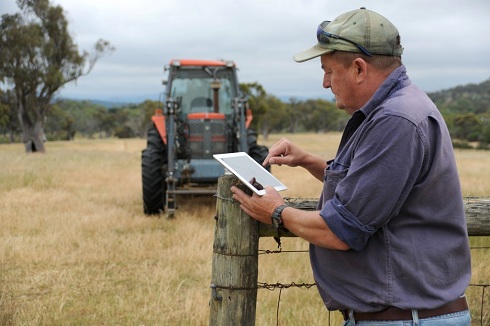
Australia’s national soil databases can now be accessed in real time online through a new iPad app called SoilMapp.
The new app provides open access to the best and most up-to-date information for soil at any location in the country within a matter of seconds.
The SoilMapp for iPad will allow farmers and others to access real time information about their soils from in the field.
Information such as soil depth, acidity, salinity, soil carbon, soil water holding capacity and other attributes will help land managers, farmers and rural advisors make on-the-spot, decisions about how to more effectively manage their land.
This mobile device technology will deliver detailed scientific information on soils directly into the hands of farmers, rural consultants, agronomists, and potentially other soil enthusiasts like real estate agents, hobby farmers and keen bushwalkers.
The app has been developed by the Australian Collaborative Land Evaluation Program (ACLEP) and CSIRO, with funding from the Grains Research and Development Corporation (GRDC), because understanding soils is essential for sustaining healthy, natural environments and productive agricultural landscapes.
CSIRO’s Mike Grundy said soils are one of the most important building blocks of our agricultural and ecological systems and are a precious natural asset.
“They sustain food production, biodiversity, water quality and play a key role in human health. Understanding the characteristics of soil allows us to ensure we make decisions about its management to ensure maximum productivity and maintain or improve its health for today and future generations,” Mr Grundy said.
SoilMapp is the first app developed by CSIRO and it is being launched at the Joint Australian and New Zealand Soil Science Conference in Hobart on Tuesday, in time for World Soil Day on Wednesday. The app taps into soil information from the Australian Soil Resource Information System (ASRIS) and APSoil, the database behind the farming systems model, the Agricultural Production Systems SIMulator (APSIM), which is used worldwide.
Both these databases are stocked with contributions from thousands of individuals and organisations including the Australian Government Department of Agriculture, Fisheries and Forestry (DAFF), state and territory agencies responsible for land resource assessment, Geoscience Australia, and soil research and industry groups. The databases contain information about approximately 85,000 samples from nearly 15,000 locations, some dating back to the 1950s.
“There’s a lot of information about Australian soils stored in these two databases and the beautiful thing about SoilMapp is that it provides a user friendly mechanism for accessing that information in real time, on location,” Mr Grundy said.
“Although that information is already available through the web, it is now of far more use to famers or consultants working out on the land because it can be at your fingertips in the field, and at no cost. Importantly, as our soil agencies improve their data collections, SoilMapp will provide access to later releases,” he said.
Senior Agronomist Steve Richmond from Kerin Landmark Rural said the app will be a welcome addition to his decision making toolkit when speaking with growers.
“By understanding the soil’s characterisation, water holding capacity and amount of organic carbon, we can make calculations about how much nitrogen to use on certain crops. This could lead to improvements in fertiliser use efficiency as well helping prevent soil acidification from the overuse of nitrogen. That provides a productivity benefit as well as environmental and economic benefits,” Mr Richmond said.
“Farmers are the custodians of vast tracts of Australia, and the decisions they make daily will impact on the short and long term future of this country’s ability to feed itself, meet growing global demands and to sustain its natural beauty. The more informed we can be when making these decisions, the greater benefit we can deliver for both productivity and environmental health. It’s a win-win,” he said.
While SoilMapp for iPad currently accesses Australian information, other users may soon be able to get the benefit of this technology, with CSIRO exploring the possibility of working with partners in New Zealand, Indonesia and the Pacific Island countries to widen the scope of SoilMapp.
SoilMapp was developed by CSIRO through the Australian Collaborative Land Evaluation Program (ACLEP) and the Grains Research and Development Corporation (GRDC) project Doing it better, doing it smarter — managing soil water in Australian agriculture.
SoilMapp for iPad will be available from the App Store soon.
Media are invited to attend the Joint Australian and New Zealand Soil Science Conference on Monday and Tuesday to use SoilMapp and speak with the researchers that developed it.
A worldwide survey of more than 10,000 Internet users in 20 countries conducted by the Internet Society revealed attitudes towards the Internet and user behavior online. The Global Internet User Survey is one of the broadest surveys of Internet user attitudes on key issues facing the Internet. This year’s survey covered areas such as how users manage personal information online, attitudes toward the Internet and human rights, censorship, and the potential for the Internet to address issues such as economic development and education.
“Today’s online users have high expectations for the Internet and its impact on our lives and society, while also expressing concerns over censorship and excessive governmental controls,” said Lynn St. Amour, President and CEO of the Internet Society. “As part of realizing the Internet Society’s vision of an Internet that is for everyone, this survey uniquely focuses on users and their experiences, attitudes, and opinions on how to meet the challenges and opportunities facing the Internet and society in general. We are committed to the Internet’s continued open growth and evolution, not only for those who enjoy the Internet today, but until everyone is able to access and benefit from an open Internet.”
Key Findings
Key findings from this year’s survey cover a broad range of topics.
The Internet and Human Rights:
Eighty-three percent of respondents agreed or agreed strongly that access to the Internet should be considered a basic human right.
Eighty-nine percent agreed or agreed strongly that Internet access allows freedom of expression on all subjects, and 86 percent agreed or agreed strongly that freedom of expression should be guaranteed.
Sixty percent of respondents agreed or agreed strongly that Internet access has contributed significantly to civil action and political awareness in their country.
Internet censorship:
Thirty percent of users agreed strongly that censorship currently exists on the Internet.
Sixty-six percent of respondents agreed or agreed strongly that governments in countries with no Internet censorship have a responsibility to keep the Internet free of censorship in countries where the Internet is being censored/controlled/shut down.
More than 70 percent of users agreed or agreed strongly that more government involvement would make the Internet too controlled or would limit content they can access.
More than two-thirds agreed or agreed strongly that increased government control would inhibit the growth of the Internet and/or stifle innovation.
Online privacy and identity:
Even when users know they are sharing personal data with a site or service, most users (80 percent) do not always read privacy policies and a significant fraction (12 percent) of respondents admitted that they never read privacy policies.
Of users who logged into online services, only half reported that they logged out.
Nineteen percent of respondents were aware of circumstances in which personal data was used in a way they did not expect. The most commonly reported consequences were: unsolicited communications, stolen personal data, private data becoming public, impersonation, and financial loss.
The Internet and economic and societal issues:
Nearly two-thirds of respondents agreed or agreed strongly that the Internet would play a significant role in solving global problems, including reducing child mortality (63 percent), improving maternal health (65 percent), eliminating extreme poverty and hunger (61 percent), and preventing the trafficking of women and children (69 percent).
An even higher percentage of respondents agreed or agreed strongly that the Internet would increase global trade and economic relationships (81 percent), improve the quality of education (80 percent), and improve emergency response during a natural disaster (77 percent).
A majority of respondents felt strongly that the Internet plays a significant role in making improvements to business, science, and technology in areas such as: expanding the availability of goods and services (66 percent), allowing entrepreneurs to conduct business across all countries (65 percent), and advancing science and technology and creating a technologically recognized workforce (61 percent).
Attitudes towards the Internet:
Ninety-eight percent of users agreed or strongly agreed the Internet is essential for their access to knowledge and education.
More than 80 percent agreed or agreed strongly that the Internet plays a positive role for their individual lives as well as society at large.
Nearly 75 percent of users strongly agreed that access to the Internet allows them to seek any information that interests them.
General Internet usage:
Internet users nearly universally (96 percent) indicated they accessed the Internet at least once a day.
More than 90 percent of Internet users surveyed globally indicated they use social media, with a majority (60 percent) using it daily, an increase of 10 percent over 2011.
Connection speed (73 percent) and reliability (69 percent) ranked slightly above more affordable monthly fees (68 percent) among factors that would increase usage. Other factors included more content in their local language (50 percent) and more online availability of government and/or community services (49 percent)
The Internet Society’s Global Internet User Survey (GIUS) provides reliable information relevant to issues important to the Internet’s future. As an ongoing effort, the survey provides information, informs and supports the activities of the global Internet Society community, and makes the data it collects openly available for all. While other ICT surveys focus on economic, infrastructure, or other Internet use indicators, the GIUS focuses on users, which are the source of innovation that has driven the Internet’s development, evolution, and dramatic growth over the past four decades. The first GIUS in 2011 gathered the responses of 6,088 Internet users in 11 countries.
This year, the GIUS was conducted on behalf of the Internet Society from July to August 2012 by Redshift Research, a leading business market research firm. The survey questionnaire engaged 10,789 Internet users in 20 countries: Argentina, Brazil, Chile, China, France, Germany, India, Indonesia, Italy, Kenya, Peru, Philippines, Poland, Russia, Saudi Arabia, South Africa, South Korea, Spain, UAE, and the United States. Of the respondents, 53 percent were male and 47 percent were female. Results from the survey varied across countries; future reports will provide additional insight into these variations.
The complete questionnaire, full results—including results by country—and more information on survey methodology are available at: http://www.internetsociety.org/survey
Minister for Innovation, Services and Small Business Louise Asher today announced that two world leaders in storm-water management and bioinformatics, Professors Ana Deletic from Monash Water for Liveability and Terence Speed from the Walter and Eliza Hall Institute, have won the 2012 Victoria Prize for Science and Innovation.
Professor Deletic is the first female scientist to be awarded the Prize in its 14 year history.
Speaking at a ceremony to award the winners of the Victoria Prize for Science and Innovation and the Victoria Fellowships, Ms Asher said the Victorian Coalition Government was committed to supporting science and innovation and had awarded two $50,000 Victoria Prizes this year instead of one, as well as increasing the number of $18,000 Victoria Fellowships from six to 12.
“The Coalition Government has invested $1.7 million in Victoria’s innovation researchers since 2011, and has committed to treble this investment over the next three years to $4.8 million,
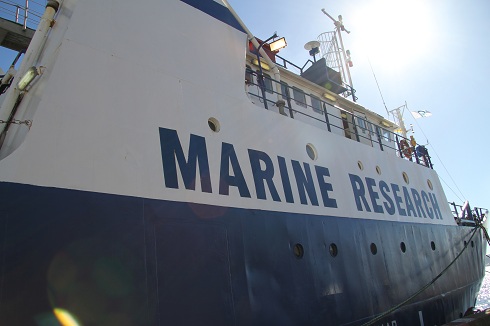
Nearly three years ago a 10-year-old Queensland primary school student beat the rush of entries in a national competition to find a name for Australia’s new Marine National Facility research vessel.
The current Marine National Facility research vessel, Southern Surveyor.
The Federal Minister for Science deemed Clare Cameron’s entry, The Flinders Investigator, the joint winner as it linked the planned A$120 million research vessel to Australia’s maritime history – Matthew Flinders first circumnavigated the continent in His Majesty’s sloop Investigator.
The new state-of-the-art 93.9 metre vessel has been named Investigator and is under construction. The vessel will herald a new era in marine and atmospheric research for Australian scientists when it arrives in late 2013.
The new Investigator provides a huge leap forward in capability, being equipped to accommodate 40 scientists and travel for up to 60 days at sea compared with the current research vessel’s, Southern Surveyor, capacity of 15 scientists and 28 days at sea.
Clare Cameron and her family, who live in Runaway Bay, have been invited to tour theSouthern Surveyor while the vessel is in Brisbane for a short port period prior to its next research voyage. Clare will meet the team of Australian and international scientists who will have returned from their research voyage in the Coral Sea.
The Chief Scientist onboard, Dr Maria Seton from the School of Geosciences at the University of Sydney, and her team have been working in a little explored region between the Solomon Islands, Vanuatu, and New Caledonia taking rock samples from the ridges and plateaus at depths of up to 3.5 km. They also have mapped about 8000 kilometres of seafloor under their voyage track and taken gravity and magnetic data.
“These data will help us to better understand the type of crust that underlies the region and the age of these basins and will give us a more complete geologic and tectonic history of the area during the last one hundred million years,” Dr Maria Seton said.
“We are trying to understand what’s going on with the Earth’s crust in this part of the world by mapping what we call hotspots, which are a series of extinct underwater volcanoes and this fundamental research helps us to determine how the Australian continent has moved.”
“We believe on this voyage we may have found remnants of the Australian continent which would have splintered from mainland Australia when eastern Gondwana starting breaking apart. It will be at least a year before our hypotheses can be confirmed.”
Dr Seton and her team will explain some of their findings to Clare and her family and show them rock samples taken from the deep seafloor, kilometres below the surface.
[Washington, D.C. and Geneva, Switzerland] — A new Internet Exchange Point (IXP) was launched on 16 November in Kinshasa, Democratic Republic of the Congo (DRC). The Kinshasa IXP (KINIX) was funded through the Internet Society’s Community Grants Programme and managed by the DRC ISP Association (ISPA-DRC), as part of its DRC-IX project, which aims to establish IXPs in Kinshasa, Lubumbashi, and Goma.
KINIX will serve as a catalyst for innovation and development of Internet services and applications in the DRC, and will support Government efforts to implement E-government services and lower the cost of developing local hosting and application development. The presence of KINIX will improve local Internet resilience by eliminating the dependence on international connectivity for local Internet services and Internet-based communications.
DRC is largely dependent on satellite connectivity for its Internet access. As the DRC waits to get connected to the West Africa Cable System, the time to access locally hosted content will be reduced significantly from over 500ms to less than 50ms through KINIX.
Initially, KINIX will connect six Internet Service Providers (ISPs): AfriNET, Cielux, Cybernet, Global Broadband Solutions, Microcom, and Vodacom. Twenty-six (26) engineers from these ISPs, including the regulator (ARPTC); Central Bank of Congo; local universities; and the tax, customs and revenue authorities among others have received technical, hands-on training prior to the launch through the Internet Society Africa Interconnection and Traffic Exchange (ITE) programme. The training sponsored by the Internet Society, and in partnership with Netnod and Jaguar Network, will also enable the network providers in the DRC to prepare their networks for interconnection with the rest of the world once the submarine cable connection is activated.
The Internet Society’s Africa Interconnection and Traffic Exchange programme has been actively supporting the development of IXPs and regional interconnection in the region. The programme aims to have 80% of Internet traffic exchanged in Africa by 2020, keeping local traffic local. This objective has been boosted by the appointment of the Internet Society to implement the African Union’s African Internet Exchange System (AXIS) programme, http://www.internetsociety.org/axis-announcement.
Research Fellow Dr Giacomo Vivanti and his team of researchers at the Olga Tennison Autism Research Centre (OTARC) at La Trobe University have successfully profiled children with autism in order to predict how well they will respond to a particular form of developmental therapy.
Dr Cheryl Dissanayake, Director of OTARC, says that Dr Vivanti¹s research, published last week in the Journal of Autism and Development Disorders, is the first of its kind to profile children in order to predict treatment responses.
This research is important because it is the first step towards being able to identify which intervention programs are best suited to specific children, says Dr Dissanayake.
The autism intervention model being studied by Dr Vivanti and his team is the Early Start Denver Model (ESDM), which is being implemented at the Victorian Autism Specific Early Learning and Care Centre: The Margot Prior Wing of the La Trobe Community Childrens Centre since 2010. (See details of the ESDM, below.)
There is little doubt that all children in the Margot Prior Wing benefit from the ESDM, but what we’re trying to understand is why some children make more gains than others.
ŒChildren are making gains across four cognitive areas after one year of therapy. And some children in our sample are moving from a severe autism diagnosis to a less severe diagnosis.
However, not all children improve to the same degree under the ESDM, and Dr Vivanti says that the challenge is to better understand how to match children to the programs that are best suited to their specific needs.
We are working on the issue of what works for whom and why? says Dr Vivanti. The paper published this week details the initial results of the OTARC research, and uses the profiling model developed by Dr Vivanti to predict the responses of children at the Margot Prior Wing to the ESDM therapy.
The paper shows that Dr Vivantis profiling model has been highly successful in predicting treatment outcomes for children undergoing the ESDM intervention, although the sample size was relatively small, with 21 children participating in the study.
The next step in the research, says Dr Dissanayake, is to assess whether the predictors of treatment success used by Dr Vivanti will work equally well when used in other types of early intervention programs.
We really want to get to the stage where we can say, this group of children will do better in program A, whereas these other children will do better in program B so that we can prospectively match treatments to individual children, says Dr Dissanayake.
REPORT: Autism intervention model normalises brain signals in children with autism
An American study provides strong evidence for the effectiveness of an autism intervention model known as the Early Start Denver Model (ESDM), currently in use at the Margot Prior Wing of La Trobe Childrens Centre.
It’s been known for some time that ESDM leads to significant positive changes in the development of children with autism, says Dr Cheryl Dissanayake, Director of the Olga Tennison Autism Research Centre (OTARC) at La Trobe.
The latest American research builds on this by demonstrating that ESDM may actually normalise brain signals of young children receiving the therapy in terms of the way that they respond to faces and objects.
What this means is that children receiving ESDM showed the same pattern of response to faces and objects as typically developing kids. They are still autistic, but the ESDM seems to be changing the way their brain responds to other people.
Ultimately, this means that they will relate to other people in a more normal manner, says Dr Dissanayake.
The ESDM has been in use at the Victorian Autism Specific Early Learning and Care Centre: The Margot Prior Wing of the La Trobe Community Children’s Centre since 2010. The model in its original form relies on one-on-one delivery, but the Margot Prior Wing has adapted the model for delivery in a group setting.
The ESDM is a developmentally-based behavioural intervention model for children between 12 and 60 months of age. It is a naturalistic play-based approach delivered by specially trained therapists in collaboration with the childs parents or guardians. The therapy is based on strict adherence to a manual that guides treatment.
The American research, published last week in the Journal of the American Academy of Child and Adolescent Psychiatry, provides further evidence in support of the ESDM.
The La Trobe University centre is one of six Autism Specific Early Learning and Care Centres funded by the Federal Government, and one of just two centres that deliver a group-based ESDM. Research is currently taking place at the Margot Prior Wing to assess the effectiveness of the ESDM in a group setting, as well as to understand why some children make greater gains in response to the ESDM than others.
Dr. Mark Boslough is a world-renowned expert on global catastrophies. As a Caltech-trained physicist, member of the technical staff of Sandia National Laboratories, and adjunct professor at the University of New Mexico, he is regularly seen on science documentaries and news reports explaining his research on planetary impacts and participating in expeditions to remote destinations around the world.
BioGrid Australia has won the hotly contested People¹s Choice Excellence in Business Intelligence Award for 2012 for its application of information technology in e-health.
The Excellence in Business Intelligence Award, sponsored by BusinessMinds, was won by Telstra for a customer centric solution using nearreal time BI.
In the People’s Choice Award, the delegates at the Big Data Summit in Sydney held 29-30 October, voted BioGrid Australia as a clear winner. The award recognises how the BI solutions BioGrid Australia provides researchers helps to save lives.
Maureen Turner, CEO of BioGrid Australia, said This award recognises the value and importance of BioGrids collaborative technology which connects data from multiple institutions to enable research projects with sample sizes of thousands of patients allowing Australian research to compete on an international scale.
She said the award was a clear demonstration of the not for profit organisation¹s skills and ability in establishing, maintaining and using business intelligence to drive results.
In essence, BioGrid Australia is paving the direction for the future of how e-health in Australia will operate in the future, enabling a more comprehensive view of a patient, their history and how they have been treated.
The organisation links 26 health services and research organisations across Australia using a web based platform. Data is physically located across jurisdictions and dynamically queried and analysed using SAS statistical analysis software.
BioGrid was initially set up by clinical researchers who were trying to find more effective solutions to clinical problems. Their aim was to use a federated platform to connect individual data and enable researchers to use it effectively.
Recent research using BioGrid showed the significant impact of the national bowel screening program as researchers were able to analyse data from more than 1200 bowel cancer patients from 19 sites around Australia.
The analysis produced showed the government the importance of the bowel screening program. It indicated that early diagnosis of bowel cancer not only significantly improves the chances of patient survival but it also reduces the cost of treatment per patient as advanced bowel cancer requires expensive drugs to treat. The 2012 federal budget included $50 million to extend the program for another four years.
The People Choice Award highlights the recognition within the business world as well as IT and medical research of the role that BioGrid is playing: it is enabling research that will inform and change the way patients are viewed and treated, she said.
The other finalists in the BI Awards were Commonwealth Bank, NRMA and Open Universities Australia.
More info on BioGrid Australia (www.biogrid.org.au).
The Open Knowledge Foundation is dedicated to promoting the creation, sharing and application of Open Knowledge in the Digital Age.
Yesterday, a working group at OKFN Australia gathered data geeks from around the country. The opening the Australian chapter of the Open Knowledge Foundation happened via a Google hang-out. The group includes internet public servants, data scientists, data visualisation specialists, data journalists, and others dedicated to the idea that, when it comes to knowledge and information, open is better.
OKFN Au is a community initiative to create a bridge between the many and varied open knowledge communities in Australia, including hackers, data journalists, scientists, Gov 2.0 and open data peeps, knowledge and change management enthusiasts and civil society.
OKFN Au is part of the global OKFN community, established originally in the UK. It brings together people interested and active in opening up and using data to create and share knowledge.
The goal of OKFN Au is to support, promote and bring together the active and diverse open knowledge communities in Australia. Member communities come from a variety of backgrounds where open knowledge is already being practically applied. Australia has some well established tech communities, research groups, open government communities, emerging data journo communities and loads more that could all benefit through being connected to each other, even if just peripherally. It makes it easier to understand the breadth and skills of our community which, in turn, makes it easier to connect with each other and collaborate on common goals or projects.
Analysys Mason’s new study published this week entitled ‘How the Internet continues to sustain growth and innovation’ reveals how the market forces that have always ensured the sustainability of the Internet in developed countries also extend to developing countries.
Analysys Mason (www.analysysmason.com) is a global specialist in telecoms, media and technology (TMT). The Internet Society (www.internetsociety.org) commissioned Analysys Mason to study the impact of increased demand for new Internet services and concerns about the sustainability of the ensuing growth.
The new study shows how, in the past, Internet challenges have been continually met in developed countries, based on a combination of new technology and investment to increase capacity, and changing business models to distribute content. Further, the report shows how investment and innovation are already addressing new demands in developing countries today.
“Challenges in the past followed the increase in demand from the first commercial web browsers, and the widespread take-up of Internet video. Today, concerns about the sustainability of the Internet in developed countries have arisen from the increased availability of mobile broadband services,
We wrote about Open Access many times: here, here, here, here, and here, and since it’s Open Access week everywhere in the world- it is good to be reminded what is OA – Open Access. This time Nick Shockey and Jonathan Eisen take us through the world of open access publishing and explain just what it’s all about.
The discovery of planets continues to expand beyond the domain of professional astronomers. A joint effort of amateur astronomers and scientists has led to the first reported case of a planet orbiting a double-star that, in turn, is orbited by a second distant pair of stars.
Aided by volunteer citizen scientists using the Planethunters.org website, a Yale-led international team of astronomers identified and confirmed discovery of the phenomenon, called a circumbinary planet in a four-star system. Only six planets are known to orbit two stars but none of these are orbited by a distant binary.
Image Credit: Haven Giguere/Yale
Coined PH1, the planet was identified by the citizen scientists participating in Planets Hunters, a Yale-led program that enlists the public to review astronomical data from NASA’s Kepler spacecraft for signs of planets transits distant stars.
“I celebrate this discovery as a milestone for the Planet Hunters team: discovering their first exoplanet lurking in the Kepler data. I celebrate this discovery for the wow-factor of a planet in a four-star system,” said Natalie Batalha, Kepler scientist at NASA Ames Research Center, Moffett Field, Calif. “Most importantly, I celebrate this discovery as the fruit of exemplary human cooperation– cooperation between scientists and citizens who give of themselves for the love of stars, knowledge, and exploration.”
A bit larger than Neptune and thought to be a gas giant, PH1 orbits its host stars every 137 days. Beyond the planet’s orbit approximately 900 times the distance between the sun and Earth, a second pair of stars orbits the planetary system.
The research paper submitted to the Astrophysical Journal is scheduled to be presented today at the annual meeting of the Division of Planetary Sciences of the American Astronomical Society in Reno.
Ames Research Center in Moffett Field, Calif., manages Kepler’s ground system development, mission operations and science data analysis. NASA’s Jet Propulsion Laboratory, Pasadena, Calif., managed the Kepler mission’s development.
Ball Aerospace and Technologies Corp. in Boulder, Colo., developed the Kepler flight system and supports mission operations with the Laboratory for Atmospheric and Space Physics at the University of Colorado in Boulder.
The Space Telescope Science Institute in Baltimore archives, hosts and distributes Kepler science data. Kepler is NASA’s 10th Discovery Mission and is funded by NASA’s Science Mission Directorate at the agency’s headquarters in Washington.
For information about the Kepler Mission, click here.



 Brussels, 6 December 2012 — Breaking new ground in providing access to the most comprehensive technological information, the European Patent Office (EPO) and the State Intellectual Property Office of the People’s Republic of China (SIPO) today launched the Chinese-English component of the EPO’s free automatic translation service Patent Translate.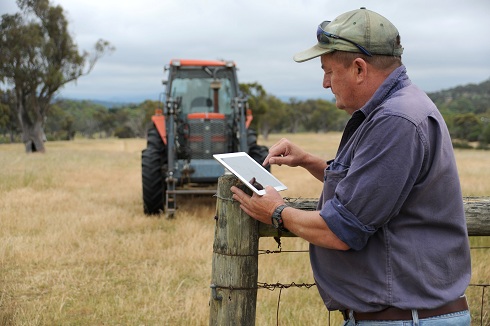





 Dr Cheryl Dissanayake, Director of OTARC, says that Dr Vivanti¹s research, published last week in the Journal of Autism and Development Disorders, is the first of its kind to profile children in order to predict treatment responses.

 The Excellence in Business Intelligence Award, sponsored by BusinessMinds, was won by Telstra for a customer centric solution using nearreal time BI.
 Yesterday, a working group at OKFN Australia gathered data geeks from around the country. The opening the Australian chapter of the Open Knowledge Foundation happened via a Google hang-out. The group includes internet public servants, data scientists, data visualisation specialists, data journalists, and others dedicated to the idea that, when it comes to knowledge and information, open is better.