CSIRO Chairman Mr Simon McKeon has announced that Chief Executive Dr Megan Clark has agreed to extend her term with CSIRO to the end of 2014.
“The Board has full confidence in Dr Clark and supports the continuing execution of the CSIRO strategy which is focused on answering big questions and increasing Australia’s productivity through the organisation’s world class science capability,” Mr McKeon said.
Dr Megan Clark, Chief Executive and CSIRO Board member.
Under Dr Clark’s leadership over the past four and half years CSIRO has significantly increased its engagement with industry and the community. Dr Clark has set the CSIRO vision of building five global innovation precincts for Australia in plant and agricultural, resource, environmental, human life and materials and manufacturing sciences. She has also led a strong focus on ensuring the safety and welfare of CSIRO people and affiliates and embedding a values-based culture. Dr Clark will continue to implement the 2011-15 strategic objectives including providing a platform for the organisation under a future new Chief Executive to lead the development and implementation of the 2015-2020 Strategic Plan.
“I am very proud of the impact that CSIRO is delivering to the nation under Megan Clark,” Mr McKeon said.
“We’ve seen the Hendra virus vaccine developed and brought to market in three years, fast Wireless Local Area Networks are now licensed for use in billions of devices worldwide.These and many other examples are a demonstration of passionate leadership with a deep commitment to applied science.
“CSIRO is well positioned to continue its 87-year role as a trusted advisor to the community, governments and industry.”
Change is a-coming! In 2050 CSIRO predicts that our homes and businesses could be powered by over 20 different energy sources and technologies. Together with our partners we are helping Australia’s electricity sector prepare for the monumental make-over required to undergo the transformation.
This week in Sydney, CSIRO announced a A$13 million research collaboration between CSIRO and four leading Australian universities – University of Sydney, University of Newcastle, University of Queensland and University of New South Wales – to develop the nation’s capacity to plan and design the most efficient, low emission electricity grid for Australia.
Launching the Future Grid Cluster today, Dr Tom Hatton, CSIRO Energy Group Executive, said the electricity sector is undergoing a huge transformation, a change not seen since the industrial revolution.
“The Future Grid Cluster brings together Australia’s best research capabilities and provides a framework the electricity sector needs to make A$240 billion worth of decisions in the next two decades.”
Dr Tom Hatton, CSIRO Energy Group Executive
“We are facing unprecedented change in the electricity system over the next 20 to 30 years. We’re talking about change to a system that has seen stability for decades and has used technologies and energy sources that are predictable and controllable. Moving away from that is going to require a great deal of effort and capacity building,” Dr Hatton said.
“The Future Grid Cluster brings together Australia’s best research capabilities and provides a framework the electricity sector needs to make A$240 billion worth of decisions in the next two decades.”
Leader of the research program, University of Sydney’s Professor Tony Vassallo, said “Each university will contribute specialist knowledge and expertise and will work with CSIRO to develop a new suite of tools to understand, develop and optimise energy grids of the future.
“This will assist decision makers in their choices about future grid development,”said Professor Vassallo.
The project is supported by A$10 million worth of in-kind contribution from university partners and a A$3.2 million grant from the CSIRO Flagship Collaboration Fund – established to enable the skills of the wider Australian and global research community to be applied to the major national challenges targeted by CSIRO’s Flagship research program.
More information on CSIRO’s Future Grid Cluster
The research will build on CSIRO’s broad electricity sector and energy management work, including the industry-led Future Grid Forum that began in 2012.
The research cluster launched today will draw together engineering, economic and policy aspects of grid development and optimisation with four major areas covered in the research:
– Improved understanding of impacts of different loads, generation sources and energy storage on system security, led by University of Sydney
– planning and co-optimisation of electricity and gas networks, led by University of Newcastle
– economics of alternative network development paths and estimates of total cost and price impacts, led by University of Queensland
– policy measures and regulatory changes to facilitate a smooth transition to a de-carbonised future grid, led by University of NSW.
The Australian Institute of Food Science and Technology (AIFST) has announced the recipients of their prestigious merit and innovation awards ahead of the 46th Annual AIFST Convention.
The Keith Farrer Award of Merit, which acknowledges achievement in food science and technology and contribution to furthering the aims of the Institute’s objectives, has been awarded to Professor Ian Brown.
Professor Ian Brown, Managing Director and CEO of Clover Corporation
Professor Brown’s 32-year career spans technical and commercial roles across the cereal, ingredient, food and nutrition industries both internationally and locally. In furthering his personal research activities and applying them collaboratively between companies and the scientific sector, Professor Brown has been successful in commercialising key food and nutritional ingredients including Hi-Maize®, the world’s first commercial source of resistant starch.
Professor Brown is currently the CEO and Managing Director of the Australian publicly listed company Clover Corporation, which under his leadership has experienced an increase in profits from $465,000 to $4.4 million. In addition, Professor Brown is a Special Visiting Professor at the University of Colorado and an Adjunct Professor at the Flinders University of South Australia.
President of the AIFST, Jo Davey, said, “It is unique in the food sector to see an individual that holds full-time senior industry positions with such an impressive scientific record of published papers, book chapters and keynote presentations. Additionally, he has also been awarded a PhD by one of Japan’s leading universities and is listed on 24 patents. Professor Brown has a long list of truly outstanding achievements.
European Inventor Award 2013 goes to outstanding inventors from Austria, France, Sweden, Switzerland, Spain and the US
· European Patent Office honours pioneering inventors of LCD technology, nano-capsules for cancer treatment, pyrosequencing, USB, and ‘Blumotion’ damper system for doors
· EPO President Benoît Battistelli: “These inventors have been truly exemplary, not only in coming up with ingenious solutions to the challenges of our time, such as healthcare and climate change, but also in improving people’s lives through the quality of the products and services that we are using every day, and by creating jobs to promote economic wealth”
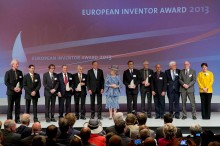
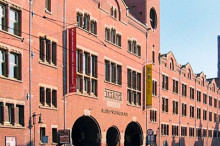
Amsterdam, 28 May 2013 — The European Patent Office today announced the winners of the European Inventor Award2013, which honours outstanding inventors for their contribution to social, economic and technological progress.
Some 500 guests attended the award ceremony at the Beurs van Berlage in Amsterdam, including Her Royal HighnessPrincess Beatrix of the Netherlands, Sander Dekker, the Netherlands State Secretary for Education, Culture and Science, and Michel Barnier, the European Commissioner for Internal Market and Services.
The 2013 awards were presented in five categories, in addition to the Popular Prize:
· Lifetime Achievement: Martin Schadt (Switzerland), inventor of the world’s first flat-panel liquid crystal display, better known as LCD. Schadt’s technology has paved the way for the low-energy devices, such as flat screens, tablet computers and mobile phones, now used by millions of people worldwide.
· Industry: Claus Hämmerle and Klaus Brüstle (Austria) from Austrian manufacturer Julius Blum for their invention of a damper system for soft closing of furniture doors, drawers and wall cabinets. ‘Blumotion’ has seen enormous market success worldwide and has become an industry standard.
· Small and Medium-Sized Enterprises: Pål Nyrén (Sweden) for inventing pyrosequencing ─ a far faster, less complicated and cheaper method of sequencing DNA strands. Its combination of lower costs and greater speeds has revolutionised the study of the building blocks of life, and opened up new avenues for research into personalised treatments and cures for life-threatening diseases such as cancer.
· Research: Patrick Couvreur, Barbara Stella, Véronique Rosilio, Luigi Cattel (France, Italy), a team at Paris-Sud University, for their invention of nano-capsules – 70 times smaller than red blood cells and protected by a biodegradable coating – which destroy cancer cells without harming healthy tissue.
· Non-European Countries: Ajay V. Bhatt, Bala Sudarshan Cadambi, Jeff Morriss, Shaun Knoll, Shelagh Callahan (USA), for creating and developing Universal Serial Bus (USB) technology, one of the most important advances in computing since the silicon chip. An industry standard today, USB not only allows users to more easily connect devices to a computer, it also streamlines work for hardware and software developers. It is found in billions of electronic devices all over the world, from webcams to cell phones and memory sticks.
José Luis López Gómez (Spain), winner of the Popular Prize award on the stage of the European Inventor Award 2013
· The winner of the Popular Prize was José Luis López Gómez (Spain), whose invention to use a unique ‘independent guided’ wheel design rather than a standard axle on high-speed passenger trains makes those trains some of the most comfortable and safe in the industry. The new technology also helps to reduce energy consumption, premature wear and costs of maintenance. An electronic system monitors the speed at which the wheels are rotating. Due to the wheels’ slightly conical shape and the difference in length between the inner and outer tracks on a curved section of track, the system can determine the wheels’ exact contact point. Pneumatic struts attached to the wheels then move the wheels to the best position.
“Innovation holds the key to safeguarding quality of life and economic prosperity in Europe,” said EPO President Benoît Battistelli at the award ceremony. “All of the inventors honoured here today have been truly exemplary, not only in coming up with ingenious solutions to challenges of our time, such as healthcare and climate change, but also in improving people’s lives through the quality of the products and services that we are using every day, and by creating jobs to promote economic wealth. They demonstrate Europe’s creative drive and inventive spirit, and the role played by patents in supporting this.”
About the European Inventor Award
Launched in 2006, the European Inventor Award is presented annually by the European Patent Office. The Award honours inventive individuals and teams whose pioneering work provides answers to the challenges of our age and thereby contributes to social progress, economic growth and prosperity. Nomination proposals are submitted by the public, and by patent examiners at the EPO and Europe’s national patent offices. Fifteen finalists and, subsequently, the winners are chosen from among the nominees by a high-profile international jury which includes experts from business, politics, media, academia and research. The Award is presented in five categories: Industry, Research, Small and Medium-Sized Enterprises (SMEs), Non-European Countries, and Lifetime Achievement. This year, for the first time, the general public was invited to vote for the Popular Prize from among the 15 finalists.
As one of the most prestigious competitions of its kind, the European Inventor Award each year pays tribute to the creativity of inventors, whose quest for new ideas drives technological progress and economic growth, shapes our society and improves our daily lives. The award not only gives inventors the recognition they deserve, it also encourages future innovation.
This year is the 40th anniversary of the European Patent Convention from which the European Patent Office (EPO) was born. The event, which takes place in Amsterdam, will feature a prestigious award ceremony and bring together some of the world’s brightest innovators, along with key decision makers in business, politics, media and the sciences.
The 2013 edition of the European Inventor Award will be presented by the EPO on Tuesday 28 May, in Amsterdam, the Netherlands. At the award ceremony, 15 inventors from eleven countries (link) in five nomination categories will be honoured for their outstanding contribution to technical progress and economic growth, and five of them will be distinguished as winners of the European Inventor Award. In addition, a Popular prize will be awarded for the first time to one of the 15 nominees.
Some 500 guests will attend the award ceremony at the Beurs van Berlage in Amsterdam, including Her Royal Highness Princess Beatrix of the Netherlands, Sander Dekker, the Netherlands Minister for Education, Culture and Science, and Michel Barnier, the European Commissioner for Internal Market and Services.
The event will open at 09.30 hrs CET with a joint press conference of EPO President Benoît Battistelli and EU Commissioner Michel Barnier, followed by a Q/A session.
The award ceremony starts at 10.45 hrs CET with the arrival of HRH Princess Beatrix, and is scheduled to close at about 12.45 hrs CET.
The following contents are offered for the event on 28 May (all times are CET):
How did the universe begin — and how is it expanding? CERN physicist Tom Whyntie has created a new TED-ED three animated video that explains how the universe began, why it’s expanding, and other basic phenomena that concern cosmologists and particle physicists. He shows how cosmologists and particle physicists explore these questions by replicating the heat, energy, and activity of the first few seconds of our universe, from right after the Big Bang.
Lesson by Tom Whyntie, animation by Hornet Inc.
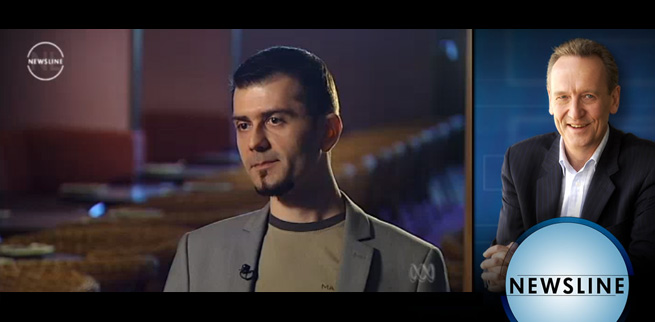
Dan Petrovic appeared on ABC’s Newsline as a representative of Australian Science and one of the first five sponsors of Mars One initiative. The interview also features comments from the founder Bas Lansdorp, Jonathan Nally from SpaceInfo and Dr. Graham Phillips from ABC.
Report by: Kesha West for Newsline by Jim Middleton
Over 50% of the speakers are prominent females in the scientific healthcare field at the ‘World Research and Innovation Congress – Pioneers in Healthcare’ event, Steigenberger Grandhotel, Brussels, 5 and 6 June, 2013
Professor Anne Glover, Chief Scientific Adviser to the President of the European Commission
Despite playing a significant role in science and healthcare throughout the ages, women globally are under-represented in this sector. A recent article in Nature magazine explains that there is still a scientific ‘gender gap’ with women continuing to face discrimination including disparities in pay and funding. (Helen Shen, 6/3/13)
Professor Anne Glover, Chief Scientific Adviser to the President of the European Commission, is the keynote speaker on the session Women in Science, addressing some of the key challenges in attracting women to this sector. Professor Glover will be joined by Professor Teresa Lago, Universidade do Porto, Portugal, founding member of the ERC Scientific Council and former Chair of the ERC gender balance working group.
Professor Glover says “While the 19th Century has been the Age of Engineering and the 20th Century the one of Chemistry and Physics, the 21st Century is going to be the Age of Biology. Facing the challenges of an Ageing Society in Europe and still major basic health challenges in the Developing World, research helps to come up with solutions for our well-being. This includes exciting developments in areas such as synthetic biology, personalised medicine, vaccine research and other fields. The presentation will highlight in particular how important it is to enthuse young people to choose a career in health science.
The 46th Annual Australian Institute of Food Science and Technology Convention is the premier food technology conference in Australia for industry, research and government organisations, locally and overseas.
Date: 14th – 16th July 2013 / Location: Brisbane Convention & Exhibition Centre, Brisbane, Australia
The upcoming 46th Annual AIFST conference has an array of international and local speakers where attendees can learn about cutting edge food science and technology innovation including seafood science, digestive health and even about a laser fence that shoots down mosquitoes!
To be held in Brisbane from July 14th – 16th 2013, session highlights include:
Seafood makes a splash – Australians consume around 16kg of fish and seafood per person a year, making it the nation’s fifth largest producing industry and worth more than $2.2 billion to the economy annually. Microbiologist Graham Fletcher will provide insight
into the seafood industry and share exciting innovations from around the world after 30 years of research. Fletcher is a trusted expert
in seafood safety, packaging, optimisation of chilled fish, ultra high pressure processing of seafood and horticultural products.
In one of the TED-Ed’s lessons worth sharing – astronaut Jerry Carr share his experience on space. As commander of Skylab, he spent over 2000 hours in space, orbiting the Earth over 1000 times. Recounting his life story, Carr remembers the enchanting years he spent at NASA.
In industrialised countries, the Internet has increasingly become embedded in everyday life: from the purchase of a train ticket to the consultation of a bibliographical catalogue, the Net can be seen today as an “invisible technology
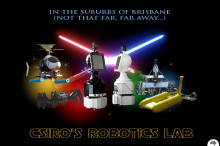
As science-fiction fans around the world gear up to celebrate some of the most popular robots ever created on global Star Wars Day (otherwise known as May-the-fourth-be-with-you Day), last week CSIRO has released details about its latest crop of robots which indicate advances in ICT research will see closer collaboration between people and robots in the not so distant future.
CSIRO’s ‘Yoda of robotics’, Dr Jonathan Roberts says the next generation of assistive robots which are specifically designed to help humans in the workplace will increase efficiencies and improve safety. He believes this trend reveals interesting similarities and differences between today’s robots to those first seen in the epic George Lucas series 35 years ago.
“The main difference is that the droids in Star Wars are capable of far more general tasks than what robots are designed to perform today and often lend a hand in all sorts of applications. For example, R2-D2 is a droid designed to help work spacecraft, yet he also occasionally subs as an excellent spy and cocktail waiter,” says Jonathan Roberts, Director of CSIRO’s Autonomous Systems Lab.
“Robots on Earth today tend to be made for very specific tasks and are not particularly easy to train to perform activities outside their intended scope. However, we are currently developing robotic systems which are designed to assist people in a variety of circumstances. While some may work alongside people in a factory others are designed for tasks considered impractical or too hazardous for humans. This is exactly what droids do in the Star Wars universe, except of course droids help all types of weird creatures, not just people.”
Some of the latest robots which are being developed by CSIRO’s Autonomous Systems Lab to help humans include:
Telepresence Robot – offering a solution which allows a robot to move around and offer a virtual video-conferencing experience. From national museums to under the Great Barrier Reef, this technology will eventually allow all Australians with a high speed broadband connection especially those in rural and regional areas to experience and access a range of our national landmarks or treasures, despite the tyranny of distance.
Stealth Robot – move over David Attenborough because this robot aims to track and observe animals in their natural habitat without being detected. Using acoustics to monitor surrounding sounds, the robot uses them to mask its motions so that it can move without being detected and appear as part of the natural habitat.
Starbug – an inexpensive, miniature autonomous underwater vehicle ideal for data collection and ecosystem surveys. It helps to get marine data from areas which humans wouldn’t be able to travel.
Helicopter Robot – an unmanned automatic helicopter designed to remotely inspect dangerous or hard to get to infrastructure such as powerlines, buildings and bridges.
Hexapod Robot – with a similar aesthetic to an insect, this multi-legged robot can be used for monitoring and mapping uneven and unstructured terrain which can be difficult to navigate with wheeled robots. It has 18 servo motors which provide rich sensory feedback to the control software allowing it to detect when the robot interacts with an obstacle and also to assess the type of terrain it is traversing on.
CSIRO will also be launching a whitepaper outlining further details on how assistive robotics can be used in the manufacturing industry during next week’s National Manufacturing Week (7-10 May) conference.
About Global Star Wars Day:
May 4 is considered a holiday by Star Wars fans to celebrate Star Wars culture and honour the films. It is called Star Wars Day because of the popularity of a common pun spoken on this day. Since the phrase “May the Force be with you” is a famous quote often spoken in the Star Wars films, fans commonly say “May the fourth be with you” on this day.
About CSIRO:
CSIRO is Australia’s national science agency and has been pushing the edge of what’s possible for more than 85 years. Today, the organisation has close to 6,500 people working out of 58 centres in Australia and internationally. These people work closely with industry and communities to leave a lasting legacy across five broad areas: food, health and life science industries; energy; environment; information and communications; and manufacturing, materials and minerals.
A key facility in an international observing network to detect increasing ocean acidification is monitoring carbon cycling in the Tasman Sea from a site near Maria Island.
The A$150,000 mooring with its suite of environmental sensors is one of three in Australia’s Integrated Marine Observing System (IMOS) that are included in the international network in which Australian scientists at CSIRO and the Australian Institute of Marine Science are playing a central role.
Others are located on the western side of Kangaroo Island, South Australia, and on the central Great Barrier Reef near Townsville. Extending the IMOS observations into the Southern Ocean is the French Antarctic supply ship l’Astrolabe and the Australian ice breaker, Aurora Australis. The vesselsprovide a platform for at-sea monitoring during return voyages from October to March between Hobart and the Antarctic bases they visit.
The observations made by the new mooring will provide data to determine the ocean acidification change and will fill a key need in assessing how the marine ecosystems of our region might be impacted.
Leading the acidification research is Dr Bronte Tilbrook from CSIRO’s Wealth from Oceans Flagship, who said the uptake and storage of carbon dioxide by the ocean is causing changes in the seawater chemistry and increasing acidity levels of surface waters.
The potential for impacts from the tropics to the polar oceans is large, and the resilience of ecosystems to these changes is poorly known.
“Elevated levels of carbon dioxide in the atmosphere have made the oceans about 30 per cent more acidic in the past 200 years.
“The ocean takes up about 25 per cent of annual carbon dioxide emissions generated by human activity. The ocean uptake is a great benefit because it removes human-generated emissions, but it comes at the cost of increased acidification of ocean waters.”
“Australia contains many ecosystems that may be sensitive to ocean acidification, including the extensive coral reefs of Northern Australia and down to the polar regions.
“Predicted impacts range from a decline in the growth of shells and skeletons of important species including corals and some shellfish, to shifts in the structure and dynamics of ecosystems,” he said.
Dr Tilbrook said the Australasian region contains some of the world’s most extensive carbonate-based ecosystems, ranging from the coral reefs of the Great Barrier Reef and Indo-Pacific, to the earth’s largest cool-water carbonate platform along the southern Australian shelf.
The surface waters of the Southern Ocean are where some of the most profound shifts in carbonate chemistry will occur by mid-century, potentially influencing the survival of deep-sea coral communities and calcifying pelagic species.
The Maria Island and Great Barrier Reef sites are part of a growing international network of moorings, and are located to characterise changes down the east coast of Australia and the influence of the East Australian Current. The Kangaroo Island mooring monitors deeper waters that can seasonally upwell onto the South Australian continental shelf. The upwelled waters are expected to have higher carbon dioxide concentrations that could accelerate the exposure of ecosystems to acidification earlier than in other regions.
Sensors on the Maria Island mooring also measure temperature, salinity, oxygen, chlorophyll and turbidity, while water samples are taken each month for plankton and nutrients. Basic measurement samples have been collected at Maria Island by CSIRO technicians monthly since 1944, providing scientists with an enviable ocean monitoring record.
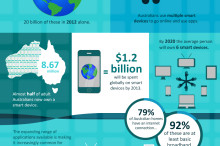
You’ve heard of the Ice Age but have you heard of the ‘App Age’? A new report compiled by CSIRO’s Australian Centre for Broadband Innovation (ACBI) has revealed the next generation of broadband-enabled applications will be more about connecting households to new sensors and cloud services than checking emails and social media invites.
The ‘Broadband Connected Homes’ report describes the changing environment of the Australia’s homes, the technologies that are affecting it, and its capacity to support new applications and services.
“When considering over 3.5 million Australians now a use smart device to access the internet and that app downloads are predicted to rise above 40 billion globally in 2013, it’s very clear our love affair with apps has come a long way in few short years. We are now looking at the next era of development by experimenting with what our homes will look like when broadband-enabled apps connect data with multiples sensors and new business services,” said Colin Griffith, Director of ACBI.
“These apps will provide new ways for people to access health, energy, education, retail, security, entertainment and many more services. They will allow people to access, discover, share and contribute to media content personalised for us. Broadband apps will also allow us to do old things in new ways such as managing our home energy use through a centralised communications hub as well as enabling non-invasive monitoring and support systems which allow elderly people to live independently in their own homes,” he said.
In conjunction with the release of the report, ACBI is also opening entries for a new Broadband4Apps competition to provide developers with the opportunity to build and demonstrate applications that are enabled by next generation broadband services. With up to $50,000 available in prize money, entrants will be invited to develop prototypes or working applications that address emerging opportunities for delivering services into broadband connected homes.
The competition will be open to individuals and companies that can demonstrate a consumer facing software application which uses the distinctive features of next generation broadband services in Australia’s home.
“The competition will help Australians better understand what is possible through the smart use of broadband. It will also help accelerate the ability of Australian developers to realise these new business opportunities and connect with service providers, technology partners and end users to build game-changing apps,” said Mr Griffith.
ACBI will be hosting two hack days (one in Sydney on 11th May and one in Melbourne on 18th May) to offer entrants the opportunity to workshop their ideas with peers and be mentored by key professionals in the industry including CSIRO, Intel, NBN Co and NICTA.
About ACBI:
The Australian Centre for Broadband Innovation (ACBI) is a national research initiative connecting people to the benefits of broadband through innovative services. It is led by CSIRO in conjunction with National ICT Australia (NICTA), NBN Co with funding support from the NSW and Tasmanian Governments.
ACBI provides unique opportunities to create innovative broadband-enabled services demonstrate their use in real world situations and evaluate their potential commercial and social value. ACBI connects people and business to the benefits of game-changing services and applications enabled by next generation broadband technologies.
About CSIRO:
CSIRO is Australia’s national science agency and has been pushing the edge of what’s possible for more than 85 years. Today, the organisation has close to 6,500 people working out of 58 centres in Australia and internationally. These people work closely with industry and communities to leave a lasting legacy across five broad areas: food, health and life science industries; energy; environment; information and communications; and manufacturing, materials and minerals. ACBI is part of CSIRO’s Digital Productivity and Services Flagship that is a $40 million research initiative to improve Australia’s productivity, deliver innovative services that improve people’s wellbeing and prosperity.
About the Broadband Connected Homes report:
Commissioned by ACBI, the report is designed to help businesses, government agencies and software developers better understand the potential to design new applications and services that can be used in homes that are being connected to next generation broadband services such as the National Broadband Network (NBN).
It describes the changing environment of the broadband connected home, the technologies that are affecting it, and its capacity to support new applications and services. This includes the new capabilities and features of NBN and home networks, the increasing range of connected devices being used in the home, and some of the development platforms for applications. It is the ability to leverage all these different aspects of a connected home that will enable successful new applications and services.











 The 46th Annual Australian Institute of Food Science and Technology Convention is the premier food technology conference in Australia for industry, research and government organisations, locally and overseas.