Author: Editorial Board

  • CSIRO Computational Informatics (CCI) takes charge of Australia’s information overload

    CSIRO Computational Informatics (CCI) takes charge of Australia’s information overload

    CSIRO has announced the appointment of Dr Bronwyn Harch as chief of its newest research division with a focus on data-driven computational and information sciences.

    The new research division, CSIRO Computational Informatics (CCI), will work in partnership with the organisation’s National Research Flagship program to address key national challenges across the information and decision making value chain. It will also work closely with a range of external partners and collaborators to create a capability hub in key research areas including next generation data analytics, autonomous robotics, complex systems modelling, and decision making under uncertainty.

    “From pioneering the development of digital image analysis for agriculture in the 1980s to securing the landmark patent to Wireless LAN technology in the 1990s, CSIRO has always been at the forefront of technology-related research which tackles the nation’s toughest challenges,” said Dr Harch.

    “The proliferation of smart devices and increasing access to next generation broadband has caused an explosion in the volume, velocity and variety of data and information. With predictions, that by 2020 the average person will own six different smart devices[1] connecting us to over 37 billion ‘things’, from cows in the field to our car to our fridge door through the Internet[2], it is clear the amount of data we produce will continue to grow at an exponential rate,” said Dr Harch.

    “We have responded to the information and data challenges facing Australia with the formation of this new CSIRO Computational Informatics (CCI) Division. Our integrated and strengthened capabilities in this division will enable us to remain at the forefront of global developments in key research areas that transform the information and decision making workflows of industry, government and the innovation sectors.”

    A recent McKinsey Institute report[3] on the future of ‘disruptive technologies’ shows a reduced focus on new gadgets and gizmos and an increased emphasis on the impact of technologies which require advanced data analytics. The same report predicts that by 2025 the potential economic contribution of new disruptive technologies such as mobile Internet, advanced robotics and 3D printing are expected to return between $14 trillion and $33 trillion globally each year.

    Dr Harch believes the new Division’s focus on data-driven science will help CSIRO to increase the economic and social well-being of the nation by tackling some of the biggest challenges facing Australia including our declining productivity and ageing population.

    “Through our Preventative Health Flagship, we are already leading the way in transforming advanced data analytics to pinpoint the genes that could lead to a simple blood screening test for Alzheimer’s disease before it takes hold. We’re also working on another project, with our Digital Productivity and Services Flagship and Australian Centre for Broadband Innovation (ACBI), which leverages next generation broadband networks to monitor health data and help older Australians to live in their own homes longer, independently and safely.”

    However, it’s not just the healthcare industry reaping the rewards from this explosion of data. In an impressive debut, research from the CSIRO Computational Informatics Division has earned a staggering 13 nominations across multiple categories from environmental science to the services industries at this year’s iAwards, Australia’s premier technology accolades.

    These projects include:

    • Zebedee: a handheld 3D mapping device which doesn’t rely on GPS and can be used underground or inside buildings.
    • ReMoTe: allows a remote expert to guide in real-time an onsite technician using gestures and voice to increase productivity and assist in up-skilling the workforce.
    • Smarter, Safer Homes: a platform which uses home sensors and video conferencing to support older Australians to live in their own homes safely and independently.
    • Environmental Linked Data: which produced Australia’s first set of open-linked long-term climate data.
    • Sense-T Aquaculture Decision Support System: a platform which helps to ensure public food safety by supplying the Tasmanian Shellfish Quality Assurance Program with real-time environmental awareness to simplify decisions regarding when to close shellfish farms.
    • Patient Flow Research: analytics to predict requirements and optimise configurations for hospital beds.
    • Automated Disease Grading and Clinical Decision Support: an automatic disease grading and clinical decision support system for diabetic retinopathy level grading.
    • Computer-aided Ocular Biomarker Suite: an eye test for early detection of Alzheimer’s disease 15-20 years before diagnosis is usually possible.
    • SensorDB Virtual Laboratory: used for storing, analysing and looking for patterns in distributed sensor data for plant phenomics in the field. This work received two Australian Capital Territory categories iAwards.
    • Medtex: a software platform that unifies the language across narrative medical reports and extracts clinically relevant information to aid decision support.
    • Lung Anatomy Trainer (eLAnT): a web-based program that uses an online lung anatomy and nomenclature training tool for teaching the complex and variable human lung anatomy seen from a fibre-optic inspection tool.
    • Starbug: Jeremy Breen, a University of Tasmania and CSIRO student, won a postgraduate tertiary award for autonomous analysis of marine sediment chemistry using an underwater robot.

    The winners of this year’s iAwards will be announced during a ceremony in Melbourne on 8th August 2013.

    For more information about the CSIRO Computational Informatics Division please visit www.csiro.au/cci.
    Source and image.

  • Marine life spawns sooner as oceans warm

    Marine life spawns sooner as oceans warm

    Warming oceans are impacting the breeding patterns and habitat of marine life, effectively re-arranging the broader marine landscape as species adjust to a changing climate, according to a three-year international study published today in Nature Climate Change.

    The international team led by CSIRO’s Climate Adaptation Flagship and University of Queensland marine ecologists Elvira Poloczanska and Anthony Richardson, based their findings on a review of peer-reviewed literature from around the world, identifying more than 1 700 changes, including 222 in Australia.

    CSIRO’s Dr Poloczanska said marine species are shifting their geographic distribution towards cooler regions and doing so much faster than their land-based counterparts.

    Despite the ocean having absorbed 80 per cent of the heat added to the global climate system, the ocean’s thermal capacity has led to surface waters warming three times slower than air temperatures over land.

    “The leading edge or ‘front line’ of a marine species’ distribution is moving towards the poles at the average rate of 72 kilometres per decade, which is considerably faster than terrestrial species moving poleward at an average of six kilometres per decade,” said Dr Poloczanska.

    “This is despite sea surface temperatures warming three times slower than land temperatures.”

    Dr Poloczanska said winter and spring temperatures, over both the ocean and land, are warming fastest, which might advance phenological events such as the start of growing seasons and the timing of reproduction. In addition, anthropogenic carbon dioxide uptake by the oceans is altering seawater carbonate chemistry, which can impact some marine organisms.

    “Given these findings, we expect marine organisms to have responded to recent climate change, with magnitudes similar to or greater than those found for terrestrial species,” she said.

    The research team also considered changes in species’ life cycle, such as breeding times, to find these are also changing as seas warm.

    Associate Professor Richardson explained that the timing of breeding and migration are, on average, occurring much earlier in the sea with marine species advancing by 4.4 days each decade which is also much faster than land based species which are breeding around 2.3 – 2.8 days earlier each decade.

    Although the study reported global impacts, there is strong evidence of change in the Australian marine environment.

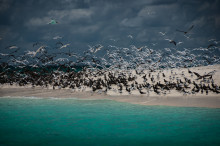
    Dr Poloczanska said that in Australia’s south-east tropical and subtropical species of fish, molluscs and plankton are shifting much further south through the Tasman Sea. In the Indian Ocean, there is a southward distribution of sea birds as well as loss of cool-water seaweeds from regions north of Perth.

    “Essentially, these findings indicate that changes in life events and distribution of species indicates we are seeing widespread reorganisation of marine ecosystems, with likely significant repercussions for the services these ecosystems provide to humans.

    “For example, some of the favourite catches of recreational and commercial fishers are likely to decline, while other species, not previously in the area, could provide new fishing opportunities,” Dr Poloczanska said.

    The international team included 19 researchers from Australia, USA, Canada, UK, Europe and South Africa.

    Source and image: http://www.csiro.au/en/Portals/Media/Marine-life-spawns-sooner-as-oceans-warm.aspx

  • DARPA’s ATLAS Humanoid Robots

    DARPA’s ATLAS Humanoid Robots

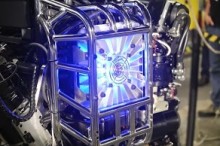
    NASA is exploring peaceful civilian space applications for ATLAS-related technologies. Atlas is a new humanoid robot 6 foot, 2 inches tall weighing 330 pounds. Atlas is initially being designed to provide humanitarian assistance in disaster response/crisis situations.

    ATLAS 1 (large)NASA’s Johnson Space Center (Valkyrie) and Jet Propulsion Laboratory(RoboSimian) teams are participating in the DARPA Robotics Challenge (DRC) focused on developing innovative software to control the robot’s functions. Last month, DARPA awarded funds and an Atlas robot to 7 teams who competed in a software challenge leading up to the first leg of the Robotics Challenge, which kicks off in December 2013.

    According to the project website, the goal of the DARPA Robotics Challenge is to create robotic systems that can work “in tandem with their human counterparts, in order to reduce casualties, avoid further destruction, and save lives.”

    Atlas can travel through rough terrain outdoors and climb using its hands and feet. The robot features two fully working hands with four fingers, including opposable thumbs, 28 hydraulically actuated joints, a “head” with LIDAR and stereo sensors, automatic crash protection, and an on-board, real-time control computer. In a demonstration video, Atlas easily avoided obstacles, maintaining a steady gait despite unexpected changes to the terrain, and even maintained its balance when struck by a large object.

    “Articulated, sensate hands will enable Atlas to use tools designed for human use,” Boston Dynamics says. “Atlas includes 28 hydraulically actuated degrees of freedom, two hands, arms, legs, feet, and a torso.”
    Its head includes stereo cameras and a laser range finder. It’s currently tethered to an off-board, electric power supply which limits its range for the moment.

    Specifications:
    – Six feet, two inches tall (1.88m)
    – 330 pounds (150kg)
    – On-board real-time control computer
    – On-board hydraulic pump and thermal management
    – Tethered for networking & 480-V three-phase power at 15 kW
    – Two arms, two legs, a torso and a head
    – 28 hydraulically actuated joints
    – Carnegie Robotics sensor head with LIDAR and stereo sensors
    – Two sets of hands, one provided by iRobot and one by Sandia National Labs

    Defense Advanced Research Projects Agency (DARPA) is an agency of the United States Department of Defense responsible for the development of new technologies for use by the military.

    Boston Dynamics is an engineering and robotics design company best known for the development of the humanoid robot ATLAS and BigDog, a quadruped robot, both designed for the U.S. military with funding from DARPA. The company was spunoff from the Massachusetts Institute of Technology (MIT).

    The DRC groups are not starting from scratch: thanks to the physical modeling of the DRC Simulator, the software algorithms successfully employed by teams in the previously held Virtual Robotics Competition (VRC) should transfer relatively easily to the ATLAS hardware, according to DARPA officials. The teams will be presented with tasks for ATLAS, such as driving a utility vehicle, walking over uneven terrain, clearing debris, breaking through a wall, closing a valve, and connecting a fire hose.

    Ultimately, despite its advanced nature, ATLAS is essentially a physical shell awaiting its software brains that, along with the actions of a human operator, will guide the suite of sensors, actuators, joints and limbs through a series of tasks.

    In order to accomplish this, the winning teams will receive funding from DARPA and ongoing technical support from Boston Dynamics, the developer of ATLAS.

    Dr. GIll Pratt, Program Manager for the challenge, said DARPA is investing in an open-source simulation package to advance the state of the art in robotic simulation. “In particular, we want to have these tools outlast the program and be the foundation for catalyzing the field of robotics, particularly helping to make the design of robots move from an art to a science,”  he said. DARPA is also funding the Open Source Robotics Foundation to further develop a preexisting simulator that will use cloud computing for quick and easy scalability.

    Credit: +DARPA/Boston Dynamics, IEEE Spectrum

    Source.

  • Celebrated Dairy Leader Announced As New AIFST President

    Celebrated Dairy Leader Announced As New AIFST President

    Acclaimed dairy expert and champion of leadership opportunities for women, Dr Anne Astin, has been officially announced as President of the Australian Institute of Food Science and Technology (AIFST).

    Inducted last night for a two-year term at the 46th AIFST Convention in Brisbane, Dr Astin’s appointment follows two years as AIFST President Elect. Dr Astin is the former CEO of Dairy Food Safety Victoria, a leading government dairy authority, and has more than 20 years experience at a senior executive and board level. Outgoing President Jo Davey said that Dr Astin is passionate about food safety and maintaining Australia’s enviable food industry reputation. “She has been widely praised for her commitment to empowering people to reach their full potential – a dedication that aligns perfectly with AIFST’s most important role of supporting the professional development of its members,

  • Deep-space flashes light up a new face of Nature

    Deep-space flashes light up a new face of Nature

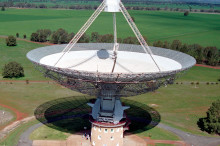
    CSIRO’s Parkes radio telescope has detected brief flashes of radio emission from the distant Universe. Their origin is unknown.

    CSIRO’s Parkes radio telescope in eastern Australia has detected mysterious ‘flashes’ of radio energy from the distant Universe that may open up a whole new area of astrophysics. The surprising finding, made by a team of scientists from ten institutions in Australia, the USA, UK, Germany and Italy, is published in today’s issue of the journal Science.

    “Staggeringly, we estimate there could be one of these flashes going off every ten seconds somewhere in the sky,” said research team member Dr Simon Johnston, Head of Astrophysics at CSIRO Astronomy and Space Science.

    Four flashes were detected, each from a different direction and each lasting for only a millisecond (a thousandth of a second).

    The characteristics of the radio signal — how it is ‘smeared out’ in frequency from travelling through space — indicate that the flashes came from up to 11 billion light-years away.

    No gamma rays or X-rays were detected in association with the flashes, and the astronomers have ruled out the flashes being from phenomena such as gamma-ray bursts, the merger of two neutron stars, merging black holes, or evaporating black holes.

    Dan Thornton, a PhD student with the University of Manchester and CSIRO, is the lead author on the Science paper. “A single burst of radio emission of unknown origin was detected outside our galaxy about six years ago but no one was certain what it was or even if it was real,” he said. “So we have spent the last four years searching for more of these explosive, short-duration radio bursts.”

    That original radio flash, known as the ‘Lorimer burst’ after its discoverer, was also found with CSIRO’s Parkes telescope.

    “Finding these things requires both a sensitive telescope and spending enough time looking, and that’s what we’ve done with Parkes,” said Dr Johnston.

    CSIRO’s Australian SKA Pathfinder telescope, now under construction in Western Australia, will be running a major survey for transient radio sources like the ones just found with Parkes.

    “With the ability to detect these very fast sources we are opening up a whole new area of astrophysics,” said Dr Johnston.

    Image: CSIRO’s 64-m Parkes radio telescope. Credit: John Sarkissian, CSIRO.

    Source.


  • Deserts ‘greening’ from rising CO2

    Deserts ‘greening’ from rising CO2

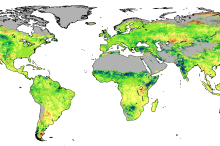
    Increased levels of carbon dioxide (CO2) have helped boost green foliage across the world’s arid regions over the past 30 years through a process called CO2 fertilisation, according to CSIRO research.

    In findings based on satellite observations, CSIRO, in collaboration with the Australian National University (ANU), found that this CO2 fertilisation correlated with an 11 per cent increase in foliage cover from 1982-2010 across parts of the arid areas studied in Australia, North America, the Middle East and Africa, according to CSIRO research scientist, Dr Randall Donohue.

    “In Australia, our native vegetation is superbly adapted to surviving in arid environments and it consequently uses water very efficiently,” Dr Donohue said. “Australian vegetation seems quite sensitive to CO2 fertilisation.

    This, along with the vast extents of arid landscapes, means Australia featured prominently in our results.”

    “While a CO2 effect on foliage response has long been speculated, until now it has been difficult to demonstrate,” according to Dr Donohue.

    “Our work was able to tease-out the CO2 fertilisation effect by using mathematical modelling together with satellite data adjusted to take out the observed effects of other influences such as precipitation, air temperature, the amount of light, and land-use changes.”

    The fertilisation effect occurs where elevated CO2 enables a leaf during photosynthesis, the process by which green plants convert sunlight into sugar, to extract more carbon from the air or lose less water to the air, or both.

    If elevated CO2 causes the water use of individual leaves to drop, plants in arid environments will respond by increasing their total numbers of leaves. These changes in leaf cover can be detected by satellite, particularly in deserts and savannas where the cover is less complete than in wet locations, according to Dr Donohue.

    “On the face of it, elevated CO2 boosting the foliage in dry country is good news and could assist forestry and agriculture in such areas; however there will be secondary effects that are likely to influence water availability, the carbon cycle, fire regimes and biodiversity, for example,” Dr Donohue said.

    “Ongoing research is required if we are to fully comprehend the potential extent and severity of such secondary effects.”

    This study was published in the US Geophysical Research Letters journal and was funded by CSIRO’s Sustainable Agriculture Flagship, Water for a Healthy Country Flagship, the Australian Research Council and Land & Water Australia.

    Source.


  • Cassini in Motion: Spectacular In Saturn’s Rings First Official Teaser

    Cassini in Motion: Spectacular In Saturn’s Rings First Official Teaser

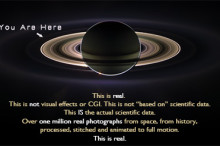
    In Saturn’s Rings is a non-profit giant-screen space art film that takes audiences on a journey of the mind, heart and spirit from the big bang to the near future via the Cassini-Huygens Mission at Saturn.

    Composed entirely of still photographs using innovative visual techniques developed by the filmmaker, In Saturn’s Rings stretches the boundaries of the motion picture form. The film will feature powerful music by Ferry Corsten, William Orbit, Samuel Barber and melds non-narrative visual poetry & science documentary into a rich experience for audiences.

    In Saturn’s Rings is a film that’s both personal and universal, experimental and sincere, science and spirit , narrative and documentary. The goal is to use large screen imagery, synchronized to powerful but moving music, to create an experience for those who see it, hear it and feel it.

    Using hundreds of thousands of still images manipulated to create full motion, using “2.75D” photographic fly-through technology. The film will be presented in beyond Hollywood quality 5.6K resolution on massive screens and concert-level surround systems to audiences in giant screen institutions, IMAX™ theaters, planetariums, museums and select 4k digital cinemas.

    “‘In Saturn’s Rings’ is a film that’s both personal and universal, experimental and sincere, science and spirit , non-narrative and documentary. The goal is to use large screen imagery, synchronized to powerful but moving music, to create an experience for those who see it, hear it and feel it.

  • Australia extends its expertise in water resource management to Asia

    Australia extends its expertise in water resource management to Asia

    Scientists from Australia’s national science agency, CSIRO, are applying their knowledge in transboundary river basin management to improve the livelihoods of people living in some of the poorest parts of Asia.

    CSIRO and its partners have begun work in the Koshi River Basin which stretches from China, across the Himalayas through Nepal and discharges into the Ganges River in India.

    The Koshi Basin is home to millions of people who rely on its fertile floodplains for their livelihoods. There is growing pressure to address development challenges in the Basin, in particular population growth and an increasing demand for energy, whilst working within constraints of natural hazards exacerbated by a changing climate, such as floods, drought, landslides, sediment movement and debris flow.

    In a collaborative four-year project, scientists from CSIRO’s Water for a Healthy Country Flagship will provide technical assistance to the International Centre for Integrated Mountain Development’s (ICIMOD) Koshi Basin Programme. CSIRO scientists will develop an integrated basin-wide modelling system to improve management of the Koshi River Basin. This system will incorporate information on water availability, freshwater environments and the ecosystem services they provide and social considerations such as the effect of changes in water availability on livelihoods. The system will contribute to development in the Koshi Basin in a socially and environmentally sustainable manner and support national and transboundary water reforms.

    “Australia has a long history of managing a scarce and variable water resource, and sharing this resource amongst competing users,” said CSIRO’s Water for a Healthy Country Flagship Director, Dr Carol Couch. “There is much the Australian water experience will bring to this project to help improve sustainable development and climate resilience, reduce water stress, and inform water-related decision making and transboundary issues. We will draw on the suite of large river basin assessments undertaken across Australia in recent years, such as the Murray-Darling Basin Sustainable Yields assessment.

    “Research will be undertaken as a partnership between Australian organisations and ICIMOD researchers, based in Nepal. We will also be learning from ICIMOD, particularly in relation to sediment movement, snow melt and glacial processes,” said Dr Couch.

    “At ICIMOD, we have taken a long-term, transboundary approach to support river basin management. This includes testing, piloting, and monitoring the innovations needed to address common issues related to climate change, cryosphere, water resources management and livelihood promotion,” said Dr David Molden, Director General of ICIMOD.

    “The Koshi Basin Programme will provide a platform for national and international researchers and decision makers to come together to promote transboundary cooperation and integrated water resource management practices and policies. This will also include the development of measures for risk management as well as equitable access to water for energy and food security,” said Dr Molden.

    Work undertaken by CSIRO this year will consist of a review and analysis of the existing knowledge base, capacity building and the development of a prototype model for the Koshi River Basin that incorporates information on water, climate, hydropower, freshwater environments, irrigation and social issues including poverty alleviation. The knowledge gained from this project will culminate in the development of a robust integrated basin-wide modelling framework, using eWater’s hydrological modelling platform, Source.

    Source.

  • Astronomers Spy on Galaxies in the Raw

    Astronomers Spy on Galaxies in the Raw

    A CSIRO radio telescope has detected the raw material for making the first stars in galaxies that formed when the Universe was just three billion years old — less than a quarter of its current age.

    This opens the way to studying how these early galaxies make their first stars.

    The telescope is CSIRO’s Australia Telescope Compact Array telescope near Narrabri, NSW. “It one of very few telescopes in the world that can do such difficult work, because it is both extremely sensitive and can receive radio waves of the right wavelengths,” says CSIRO astronomer Professor Ron Ekers.

    The raw material for making stars is cold molecular hydrogen gas, H2. It can’t be detected directly but its presence is revealed by a ‘tracer’ gas, carbon monoxide (CO), which emits radio waves.

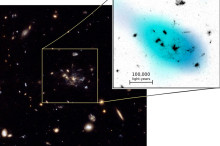
    In one project, astronomer Dr Bjorn Emonts (CSIRO Astronomy and Space Science) and his colleagues used the Compact Array to study a massive, distant conglomerate of star-forming ‘clumps’ or ‘proto-galaxies’ that are in the process of coming together as a single massive galaxy. This structure, called the Spiderweb, lies more than ten thousand million light-years away [at a redshift of 2.16].

    Dr Emonts’ team found that the Spiderweb contains at least sixty thousand million [6 x 10¹⁰] times the mass of the Sun in molecular hydrogen gas, spread over a distance of almost a quarter of a million light-years. This must be the fuel for the star-formation that has been seen across the Spiderweb. “Indeed, it is enough to keep stars forming for at least another 40 million years,” says Emonts.

    In a second set of studies, Dr Manuel Aravena (European Southern Observatory) and colleagues measured CO, and therefore H2, in two very distant galaxies [at a redshift of 2.7].

    The faint radio waves from these galaxies were amplified by the gravitational fields of other galaxies — ones that lie between us and the distant galaxies. This process, called gravitational lensing, “acts like a magnifying lens and allows us to see even more distant objects than the Spiderweb,” says Dr Aravena.

    Dr Aravena’s team was able to measure the amount of H2 in both galaxies they studied. For one (called SPT-S 053816-5030.8), they could also use the radio emission to make an estimate of how rapidly the galaxy is forming stars — an estimate independent of the other ways astronomers measure this rate.

    The Compact Array’s ability to detect CO is due to an upgrade that has boosted its bandwidth — the amount of radio spectrum it can see at any one time — sixteen-fold [from 256 MHz to 4 GHz], and made it far more sensitive.

    “The Compact Array complements the new ALMA telescope in Chile, which looks for the higher-frequency transitions of CO,” says Ron Ekers.

    Source: CSIRO Australia

  • What does the Great Barrier Reef mean to you?

    What does the Great Barrier Reef mean to you?

    What does the future hold for the Great Barrier Reef and what part will we play? In the most extensive social study to date, CSIRO is asking 5000 locals, visitors to the reef and businesses how they use, relate to and value the Great Barrier Reef.

    It will be the first scientific survey of this scale about people’s perceptions for the whole of the Great Barrier Reef, covering marine tourism, traditional owners, ports and shipping, aquaculture, mining, residents and coastal communities.

    CSIRO social scientist and project lead Dr Nadine Marshall said decision makers need as much information as possible to understand the role people will play in the future of the Great Barrier Reef.

    “It’s the first time personal thoughts and feelings about the reef are being comprehensively collected,” Dr Marshall said.

    “Years of data exist on the economic, ecological and environmental dimensions of the reef and now we’re closing the loop and including the hardest dimension of all – people.

    “We want to understand what the Great Barrier Reef means to those who live nearby, work around it or visit the area.”

    The findings will provide vital information to reef managers, businesses and the government to help them make decisions that reflect the needs of the people who interact with the Reef.

    Over the next two months CSIRO will be approaching 5000 people from Cooktown to Bundaberg, to take part in the study. People could be approached at a shopping mall, on the beach or at a tourist hot spot. Local businesses will be contacted over the telephone.

    Results will be published towards the end of the year when a snapshot of 2013 will be released. It is hoped that the study will be updated annually.

    The three-year, A$2 million study is a collaboration between CSIRO’s Wealth from Oceans Flagship, the National Environment Research Program, James Cook University and the Great Barrier Reef Foundation.

    For more information visit about the project visit Understanding our perceptions about the Great Barrier Reef.

    Source.

  • A world of ocean research awaits RV Investigator

    A world of ocean research awaits RV Investigator

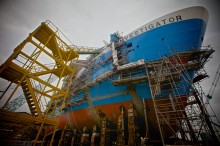
    Just over a year ago construction of Australia’s Marine National Facility research vessel Investigator began with flat sheets of steel, and now the blue-water research vessel looks amazing.

    The Executive Director for CSIRO’s Future Research Vessel Project, Toni Moate, said Investigator, is challenging the way ocean and atmospheric research has been undertaken globally, as it will support scientists across a range of disciplines – oceanographic, climate, geological, fisheries and ecosystem research.

    “As much as possible, Investigator must be all things to all Australian marine scientists, as Australia has only one blue-water research vessel and this diverse and complex approach to marine and atmospheric science is unique to ocean research globally,” Ms Moate said.

    The 93.9 metre Investigator has room onboard for up to 40 scientists, who can stay at sea for up to 60 days and cover up to 10 000 nautical miles in a single voyage and will replace the Marine National Facility’s current vessel, Southern Surveyor, later this year when it’s delivered to Hobart.

    The contract to design, build and commission the vessel was awarded to Teekay Holdings Australia, which partnered with Sembawang Shipyard Pte Ltd in Singapore because of its track record and strong commitment to new technologies and innovation.

    “Investigator’s capabilities will allow for the rapid advancement of ocean dynamics and air-sea interactions and their implications for weather and climate, and scientists will be able to accurately describe marine ecosystems and enable more effective management of biodiversity and fisheries,” Ms Moate said.

    The vessel’s design will feature a core backbone of permanently fitted systems for sampling, data acquisition, management, and communication including winches, acoustic mapping and environmental monitoring instruments including:

    • a sonar and radar system housed under the ship that can map the seafloor to 7 000 metres
    • a deep water coring capability off the side deck which can take cores 24 metres long at a depth of 7 000 metres
    • the approximately 2 tonne radar will gather data from storms and clouds towering 20 kilometres over the tropical ocean to cold ice storms in the Antarctic, in a 300 kilometre diameter around the ship, and it will have a broad range of research applications
    • the dual drop keels can deploy scientific equipment four metres below the vessel’s hull, enabling acoustic instruments to be well below the bubble zone generated by the ship moving through the water
    • the ship is being built to comply with DNV-Silent-R, to minimise the noise from all the machinery on board. This will increase the range and resolution of seabed mapping, sub-surface imaging, and marine ecosystem monitoring instruments and it will allow scientists to provide better estimates of the number of fish and other species in the marine environment
    • research teams will be able to add purpose-built systems to support their own investigations, such as radiation and trace metal laboratories, deep-water dredging, coring and drilling devices, fishing nets, towed camera systems and remotely operated vehicles.

    In 2009 the Australian Government committed A$120 million to the purchase of a new research vessel for the Marine National Facility. The project is an initiative of the Australian Government being conducted as part of the Super Science Initiative and financed from the Education Investment Fund.

    Sea time onboard Australia’s Marine National Facility research vessel is available to all Australian scientists. The National Facility is operated by CSIRO on behalf of the nation.

    Source.

  • Printing Australia’s largest flexible solar cells

    Printing Australia’s largest flexible solar cells

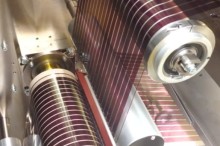
    Scientists have produced the largest flexible, plastic solar cells in Australia – 10 times the size of what they were previously able to – thanks to a new solar cell printer that has been installed at CSIRO.

    The printer has allowed researchers from the Victorian Organic Solar Cell Consortium to print organic photovoltaic cells the size of an A3 sheet of paper.

    According to materials scientist Dr Scott Watkins, printing cells on such a large scale opens up a huge range of possibilities for pilot applications.

    “There are so many things we can do with cells this size,

  • Manipulating Memory in the Hippocampus

    Manipulating Memory in the Hippocampus

    Modifying the levels of tomosyn protein in the hippocampus of mice, researchers noted over production of the protein led to a sharp decline in the ability to learn and memorize information.

    In the brain, cell-to-cell communication is dependent on neurotransmitters, chemicals that aid the transfer of information between neurons. Several proteins have the ability to modify the production of these chemicals by either increasing or decreasing their amount, or promoting or preventing their secretion. One example is tomosyn, which hinders the secretion of neurotransmitters in abnormal amounts.

    Dr. Boaz Barak of Tel Aviv University’s Sagol School of Neuroscience, in collaboration with Prof. Uri Ashery, used a method for modifying the levels of this protein in the mouse hippocampus — the region of the brain associated with learning and memory. It had a significant impact on the brain’s activity: Over-production of the protein led to a sharp decline in the ability to learn and memorize information, the researchers reported in the journal NeuroMolecular Medicine.

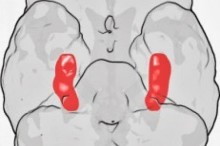
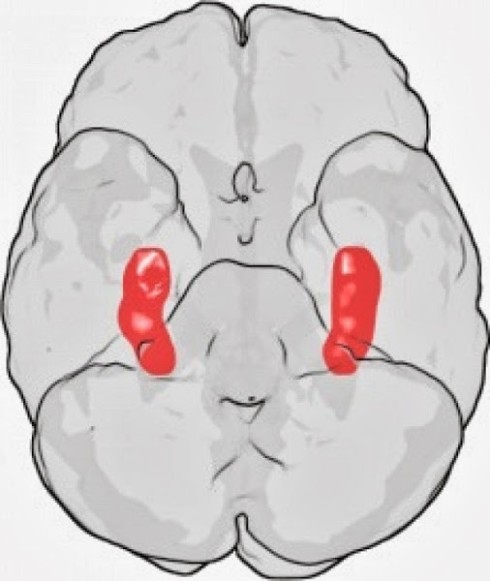
    Researchers created a virus which produces the tomosyn protein; a protein which hinders the secretion of neurotransmitters in abnormal amounts. Injecting the virus into the hippocampus region in mice,  researchers performed a series of behavioral tests designed to measure memory, cognitive ability and motor skills. The image shows the location of the hippocampi in the brain.
    Researchers created a virus which produces the tomosyn protein; a protein which hinders the secretion of neurotransmitters in abnormal amounts. Injecting the virus into the hippocampus region in mice, researchers performed a series of behavioral tests designed to measure memory, cognitive ability and motor skills. The image shows the location of the hippocampi in the brain.

    “This study demonstrates that it is possible to manipulate various processes and neural circuits in the brain,

  • An Animated Visualization of Every Meteorite Since 861 AD

    An Animated Visualization of Every Meteorite Since 861 AD

    Carlo Zapponi is data visualization designer at Nokia, who has created an amazing animation of the meteorites that have struck the earth. Only 3% of all recorded meteorites were seen falling since 861 AD. 34,513 have been recorded, only 1,042 have been seen falling. Now you can click any of the fallen meteorites at the image below, also you will see the visualization in full screen mode.

    Data from the Meteoritical Society.