Author: Editorial Board

  • Australia’s consumption of natural resources – a report

    Australia’s consumption of natural resources – a report

    By Heinz Schandl, Senior Science Leader and Thomas Wiedmann, Associate Professor at University of New South Wales

    For some time Australians have been considered among the biggest consumers of natural resources in the world. According to previous studies, we each get through 70 tonnes of materials every year. This is way higher than other developed nations. But could something be influencing these figures?

    Traditional analysis of international consumption of natural resources suggests countries such as Japan and the United Kingdom are consuming less as their economies grow, suggesting growth and resource use can be decoupled. Unfortunately, a closer look shows some countries are simply off-shoring the resource consumption they use to feed their growth.

    Our new study shows something is missing from traditional analysis: the upstream natural resource requirements of imports and exports. With these included, the picture of national resource consumption changes dramatically.

    Fossil fuels, minerals, ores, timber and food are critical to the global economy. The methods used so far to quantify natural resource use measure the flow of materials, energy, waste and emissions within a nation or region. This delivers an estimate for domestic material consumption: the amount of material and energy flow per person for that nation or region.

    By this measure, Australia is one of the largest users of natural resources in the world. Japan has a domestic material consumption of around 10 tonnes per person, and the United Kingdom is even lower, at around 8 tonnes per person.

    Measured this way, it seems reasonable to claim nations such as Japan and the UK are finally managing to decouple economic growth from resource consumption – something of a holy grail achievement as we face a resource-restricted future.

    But the claim is based on misleading data. The domestic material consumption approach is flawed because it fails to account for two very important factors: the resource requirements of imports and exports.

    This difference between consumption-based and territorial accounting is well known for greenhouse gas emissions. We know that you can count a country’s emissions either by looking at emissions generated in the country, or emissions generated in creating things that the country consumes. In our new paper published in PNAS, we now replicate this method for total use of primary resources.

    This is known as the “material footprint
  • Feynman Lectures on Physics: The New Online Edition as HTML5

    Feynman Lectures on Physics: The New Online Edition as HTML5

    Caltech and The Feynman Lectures Website have joined forces to create an online edition of Richard Feynman’s famous lectures on physics. First presented in the early 1960s as part of a two-year introductory physics course given at Caltech, the lectures were eventually turned into a book that became a classic reference work for physics students, teachers and researchers.

    Created with HTML5, the new site gives readers access to “a high-quality up-to-date copy

  • The First Science Promotion Conference in Southeast Europe

    The First Science Promotion Conference in Southeast Europe

    If you happen to be in Europe this October, you probably wouldn’t like to miss the First Regional Science Promotion Conference on October 2 and 3, 2013 in Belgrade, Serbia (Southeast Europe).

    The Center for the Promotion of Science (CPN), under the UNESCO patronage, is hosting the First Regional Science Promotion Conference with the aim of gathering science promotion professionals, practitioners and enthusiasts from the Region in order for them to share experience, to network and formulate the future steps in view of strengthening the link between science and society in our Region. Exploring challenges and finding synergies on the path towards our common aim to increase the scientific culture in the region, should result in the identification of short and long term strategic goals.

    Keynote sessions will bring international experts and representatives of international organizations, research and education institutions, science camps, science communicators, NGOs, private sector and media on board.

    They will address the topic of science promotion and communication challenges and open the debate on how to:

    – Strengthen the link between science and society through communication between the state and local institutions, research organizations, academic community, media and the public

    – Improve the scientific culture in the region via public popular science programs;

    – Increase the role of media in the promotion of science and education;

    – Emphasize the role of science centers and science camps in the popularization of science;

    – Improve science communication and language of scientists and researchers allowing them to present their work in a comprehensive manner;

    – Use science and innovation to boost economic development.

    These wide network of science promotion contributors will allow diverse contributions to the Conference’s thematic sessions:

    – Popular science events

    – Media and Science (Back-to-back Program with UNESCO South East Science Journalism School)

    – Science Camps

    – Science Center Communication Towards the Public

    – Science Communication From Research Iinstitutions Towards the Public

    – Knowledge Economy: Science, Innovation and Economic Prosperity

    The joint Conference Conclusions and Action Plan, as the result of the First Regional Conference, should help bring science promotion higher on the agenda in each of the participating countries and secure the sustainability of wider engagement of science in society.

    Attending this Conference will give you the opportunity to join your colleagues from the region, exchange ideas, get inspired by presentations of top experts in the field of science promotion, and contribute to the drafting of the concrete Action Plan for the enhancement of impact and visibility of science in our society.

    Find out more about Science Festivals, Science Workshops and Science Events, and the Conference programme: http://cpn.rs/conference/programme.php#sessionC

    You can register here for free: http://cpn.rs/conference/registration.php

    More about the The Center for the Promotion of Science: http://www.cpn.rs/?lang=en

  • Stanford’s Virtual Human Interaction Lab

    Stanford’s Virtual Human Interaction Lab

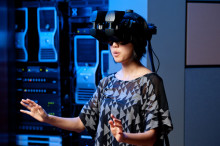
    Go behind the scenes and take a virtual tour of Stanford’s Virtual Human Interaction Lab. The lab aims to research psychological experimentation in the virtual world, according to Associate Professor of Communication Jeremy Bailenson. “We integrate three virtual senses in a way that’s very psychologically persuasive — sight, sound and touch.

    The state-of-the-art lab also offers a glimpse of the near future in household entertainment. “We’re using this cutting-edge lab to try to think ahead by a few years to predict what household technology is going to be like and how that’s going to affect people,” Bailenson said.

    The VHIL VR Lab integrates technology that can stimulate three of the human senses at once —spatialized sound, virtual touch (haptics), and three-dimensional imagery. The lab features cutting edge equipment for tracking motion, rendering graphics, and displaying visual, aural, and haptic information. Kornberg Associates Architects have collaborated with Worldviz LLC, the world’s leading virtual reality creators, and Stanford University to renovate all aspects of the lab.

    The lab includes a multisensory room that allows participants to explore a 20 by 20 foot space with spatialized sound, floor shakers, and a new head-mounted display (HMD). The HMD is tethered to a ceiling mount and allows an unrestricted range of motion in the multisensory room. In addition, the spatialized sound system makes sounds “move” around the lab space and allows users to hear natural and realistic aural information without relying on headphones. Surface motion is incorporated into experiments through the installation of floor shakers. Controlled vibrations give users the sensation of movement, which will increase the compelling nature of the virtual world. At one moment, a user may feel immersed in an earthquake simulation, while the next moment the sensations may simulate crossing a suspension bridge.

    Read more and take a tour: http://vhil.stanford.edu/tour/

    Image source.

  • A Planetary Perspective: With Landsat and Google Earth Engine

    A Planetary Perspective: With Landsat and Google Earth Engine

    Since July 1972, NASA’s Landsat satellites have gathered images over the entire land surface of the Earth, creating the most complete record ever assembled. These images, archived at USGS, reveal dynamic changes over time due to human activity (deforestation, urbanization) and natural processes (volcanic eruptions, wildfire). Now, Google Earth Engine allows scientists, researchers and the public to easily view and analyze this treasure trove of planetary data. http://earthengine.google.org.

  • Chomsky Calls Postmodern Critiques of Science Over-Inflated “Polysyllabic Truisms

    Chomsky Calls Postmodern Critiques of Science Over-Inflated “Polysyllabic Truisms

    In the interview video below, Chomsky makes a blanket critique of what the interviewer calls the “left criticism of science

  • Plasma-treated nano filters help purify world water supply

    Plasma-treated nano filters help purify world water supply

    The study paves the way for the next generation of portable water purification devices, which could provide relief to the 780 million people around the world who face every day without access to a clean water supply.

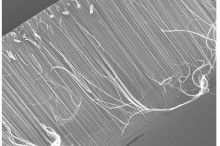
    An international team of researchers – led by Associate Professor Hui Ying Yang from Singapore University of Technology and Design – showed that water purification membranes enhanced by plasma-treated carbon nanotubes are ideal for removing contaminants and brine from water.

    The team included Dr Zhaojun Han and Professor Kostya (Ken) Ostrikov from CSIRO’s world-leading Plasma Nanoscience Laboratories.

    According to Dr Han, these membranes could be integrated into portable water purification devices the size of a tea pot that would be rechargeable, inexpensive and more effective than many existing filtration methods. Contaminated water would go in one end, and clean drinkable water would come out the other.

    “Small portable purification devices are increasingly recognised as the best way to meet the needs of clean water and sanitation in developing countries and in remote locations, minimising the risk of many serious diseases,” Dr Han says.

    “The large industrialised purification plants we see in other parts of the world are just not practical – they consume a large amount of energy and have high labour costs, making them very expensive to run.”

    Dr Han acknowledges that some smaller portable devices do already exist. However, because they rely on reverse osmosis and thermal processes, they are able to remove salt ions but are unable to filter out organic contaminants from the briny water found in some river and lake systems.

    “For people in remote locations, briny water can sometimes be the only available water source,” he says. “That’s why it’s important to not only be able to remove salts from water, but to also be able to put it through a process of purification.”

    “Our study showed that carbon nanotube membranes were able to filter out ions of vastly different sizes – meaning they were able to remove salt, along with other impurities,” he says.

    According to Professor Ostrikov, the other downside of existing portable devices is that they require a continuous power supply to operate their thermal processes. “On the other hand, the new membranes could be operated as a rechargeable device.”

    Professor Ostrikov attributes the success of the new membranes to the unique properties of plasma treated carbon nanotubes.

    “Firstly, ultralong nanotubes have a very large surface area that is ideal for filtration. Secondly, nanotubes are easy to modify, which allows us to tailor their surface properties through localised nanoscale plasma treatment,” he says.

    Now that the researchers have proven the effectiveness of the method, they plan to extend their research to investigate the filtration properties of other nanomaterials. They will begin by looking at graphene, which has similar properties to carbon nanotubes, but could be made considerably denser and stronger.

    The study ‘Carbon nanotube membranes with ultrahigh specific capacity for water desalination and purification’ is a collaborative work between Singapore University of Technology and Design, CSIRO, Massachusetts Institute of Technology (MIT), the University of Sydney, and Hong Kong Polytechnic University.

    Yang HY, Han ZJ, Yu SF, Pey KL, Ostrikov K, Karnik R. 2013. Carbon nanotube membranes with ultrahigh specific adsorption capacity for water desalination and purification [external link]. Nature Communications. 2220. doi:10.1038/ncomms3220.

    Source and image.

  • Australia’s big broadband ‘app-ortunity’

    Australia’s big broadband ‘app-ortunity’

    Alarms which send you mobile alerts warning of smoke detected in your house and tele-health systems which help to measure home-based breathing exercises for patients suffering from chronic disease are just some of the potential applications available over next generation broadband networks, according to a new report released today by the Australian Centre for Broadband Innovation (ACBI).

    Informed by range of expert industry perspectives on how future services will be offered in health, education, energy, business and media, the ‘App-trepreneur’s Guide to Broadband Connected Services’, outlines opportunities for the development of new broadband-enabled applications.

    “We are on the dawn of a new ‘App Age’, where next generation broadband networks will allow us to better manage our home energy use, support the elderly living independently at home as well as providing us with more personalised entertainment content by connecting people in their homes with services enabled by sensors and cloud computing,” said Colin Griffith, Director of ACBI.

    “With predictions that by 2020 the average person will own six smart devices connecting us to over 37 billion ‘things’, from cows in the field, to our car, to our washing machine, it’s clear that a better broadband infrastructure will revolutionise the way we access services in the home.”

    In April this year, ACBI in conjunction with its industry partners Intel, iiNet, Foxtel, Pottinger, NSW Trade and Investment, NBN Co, CSIRO and NICTA announced the Apps4Broadband competition for developers to create new ideas for applications which run over next generation broadband networks. The ‘App-trepreneur’s Guide to Broadband Connected Services’ report also highlights case studies of winners from the competition as examples of these future services.

    “The Apps4Broadband competition was designed to help Australians better understand what is possible through the smart use of broadband as well as accelerate the ability of Australian developers to realise new business opportunities by connecting with service providers, technology partners and end users to build game-changing apps,” said Mr Griffith.

    “We’ve had a great response from developers who have come up with some really interesting and new ways for people to access health, energy, education, retail, security, entertainment and many more services. The diversity of these ideas not only demonstrates the tangible benefits of broadband to the public but also suggests that we have only scratched the surface in identifying future business models and services which leverage our national broadband infrastructure. The ‘app-ortunity’ for innovation really is endless from here,” he said.

    The winners of the Apps4Broadband competition include:

    • TutorBee: A platform that allows tutors to give interactive lessons to students in their homes.
      • Winner of Best App sponsored by NSW Trade and Investment,
      • Winner Best Business-to-Business App sponsored by Pottinger and
      • Joint Winner of Best Health, Education and Social Services App sponsored by Intel.
    • Pepster: A home based breathing exercise app and device for Cystic Fibrosis patients.
      • Joint winner of Best Health, Education and Social Services App sponsored by Intel.
    • Pass the Popcorn: a second screen app for synchronising watching on-demand television and chatting with friends.
      • Winner of Best Media and Entertainment App sponsored by Foxtel.
    • The Bop Smoke Alarm: A smoke detector and app for managing alerts, false alarms and the need to replace batteries.
      • Joint winner of Best Smart Appliances, Security and Energy App sponsored by iiNet.
    • Senograph: A sensor management platform and prototype sensor for home air quality and detection of carbon monoxide.
      • Joint winner of best smart appliances, security and energy app sponsored by iiNet.

    For more information on the future trends in broadband applications and for a full list of winners from the Apps4Broadband competition, download ACBI’s ‘App-trepreneur’s Guide to Broadband Connected Services’ by visiting http://www.csiro.au/acbi-book/

    Source: http://www.csiro.au/Portals/Media/Australias-big-broadband-app-ortunity.aspx

  • CSIRO telescope marks 25 years of success

    CSIRO telescope marks 25 years of success

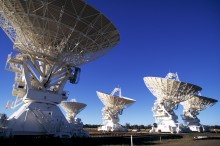
    One of the world’s most successful astronomy observatories, CSIRO’s Australia Telescope Compact Array near Narrabri, NSW, turns 25 years of age on 2 September.

    The Universe is a huge natural laboratory and astronomers study it to observe nature at its most extreme.

    “Every possible experiment is being played out somewhere in the Universe,” said Dr Jamie Stevens, CSIRO’s Senior Systems Scientist for the Compact Array.

    The Compact Array has given us the first 3D picture of the radiation belts around Jupiter … the first good evidence linking exploding stars with flashes of gamma rays … and the first image showing how gas churns in interstellar space.

    The telescope is so sensitive that it would see a mobile phone on the Moon as a very strong radio source. It can be pointed with an accuracy of better than two arcseconds — about the width of a finger seen one kilometre away.

    The Compact Array is to astronomy what the Australian swimming team is to sport: a world-class achiever for many years. It is among the top three telescopes of its kind by both publication numbers and citations. After the race, it would be standing on the podium!

    About 500 scientists from around the world use the telescope each year.

    The telescope has become better and better over time, as upgrades have made it more sensitive to faint radio signals and allowed it to capture more of the radio spectrum.

    In 2012 Compact Array data led to 76 refereed science papers — more than in any previous year of the telescope’s history.

    “I never tire of observing with the Compact Array,” Dr Stevens said.

    “It’s a factory for discovery.”

    The telescope was funded as a project for Australia’s Bicentennial in 1988, and was opened by the then Prime Minister, Bob Hawke. It boosted Australia’s international standing in radio astronomy, enabling CSIRO to develop the Australian SKA Pathfinder in Western Australia and Australia to win the right to co-host the international Square Kilometre Array telescope.

    CSIRO will celebrate the anniversary with a public Open Day at the telescope site on 1 September, then a formal ceremony and a scientific meeting.

    Source.

    The Compact Array is a set of six dishes that work together as one much larger radio telescope. It lies between the towns of Narrabri and Wee Waa in northwest NSW, about 500 km from Sydney, at CSIRO’s Paul Wild Observatory.

    Black holes, exploding stars, magnetic fields in space, galaxies at the edge of the observable Universe … the Compact Array studies them all.

  • The Forgotten Home of Coffee

    The Forgotten Home of Coffee

    Coffee is one of the world’s favourite drinks, one of the most important commercial crop-plants, and the second most valuable international commodity; Arabica coffee is considered to produce the finest coffee beans. Production of coffee helps support the livelihood of 25 million farming families around the world and it is estimated that around 32 pairs of hands are involved in bringing coffee from the plantation to the cup.

    A study conducted by scientists at the Royal Botanic Gardens, Kew, in collaboration with scientists in Ethiopia, reports that climate change alone could lead to the extinction of wild Arabica coffee (Coffea arabica) well before the end of this century. Wild Arabica is considered important for the sustainability of the coffee industry due to its considerable genetic diversity.

    The Arabicas grown in the world’s coffee plantations are from very limited genetic stock and are unlikely to have the flexibility required to cope with climate change and other threats, such as pests and diseases. In Ethiopia, the largest producer of coffee in Africa, climate change will also have a negative influence on coffee production. The climate sensitivity of Arabica is confirmed, supporting the widely reported assumption that climate change will have a damaging impact on commercial coffee production worldwide. These are worrying prospects for the world’s favourite beverage – the second most traded commodity after oil, and one crucial to the economies of several countries.

    This film was produced as part of Kew Gardens’ IncrEdibles festival; a celebration of fascinating edible plants which runs until September 1st, 2013.

    Find out more at: http://www.kew.org/incredibles

    Source and image.


  • Pulsars make a GPS for the cosmos

    Pulsars make a GPS for the cosmos

    CSIRO scientists have written software that could guide spacecraft to Alpha Centauri, show that the planet Nibiru doesn’t exist … and prove that the Earth goes around the Sun.

    Dr George Hobbs (CSIRO) and his colleagues study pulsars — small spinning stars that deliver regular ‘blips’ or ‘pulses’ of radio waves and, sometimes, X-rays.

    Usually the astronomers are interested in measuring, very precisely, when the pulsar pulses arrive in the solar system. Slight deviations from the expected arrival times can give clues about the behaviour of a pulsar itself, or whether it is orbiting another star, for instance.

    “But we can also work backwards,” said Dr Hobbs. “We can use information from pulsars to very precisely determine the position of our telescopes.”

    “If the telescopes were on board a spacecraft, then we could get the position of the spacecraft.”

    Observations of at least four pulsars, every seven days, would be required. “Each pulsar would have to be observed for about an hour,” Dr Hobbs said. “Whether you can do them all at the same time or have to do them one after the other depends on where they are and exactly what kind of detector you use.”

    A paper describing in detail how the system would work has been accepted for publication by the journal Advances in Space Research.

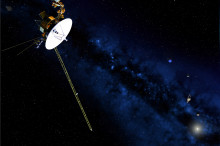
    Spacecraft within the solar system are usually tracked and guided from the ground: this is the role of CSIRO’s Canberra Deep Space Communication Complex, for instance. But the further out the craft go, the less accurately we can measure their locations.

    For voyages beyond the solar system, spacecraft would need an on-board (‘autonomous’) system for navigation. Gyroscopes and accelerometers are useful tools, but the position information they give becomes less accurate over time.

    “Navigating with pulsars avoids these problems,” said Deng Xinping, PhD student at the National Space Science Center in Beijing, who is first author on the paper describing the system.

    Scientists proposed pulsar navigation as early as 1974. Putting it into practice has recently come closer, with the development of fairly small, lightweight X-ray detectors that could receive the X-ray pulses that certain pulsars emit. NASA is exploring the technique.

    “For deep-space navigation, we would use pulsars that had been observed for many years with radio telescopes such as Parkes, so that the timing of their pulses is very well measured,” said CSIRO’s Dr Dick Manchester, a member of the research team. “Then on board the spacecraft you’d use an X-ray telescope, which is much smaller and lighter.”

    Dr Hobbs and his colleagues have made a very detailed simulation of a spacecraft navigating autonomously to Mars using this combination of technologies and their TEMPO2 software.

    “The spacecraft can determine its position to within about 20 km, and its velocity to within 10 cm per second,” said Dr Hobbs. “To our knowledge, this is the best accuracy anyone has ever been able to demonstrate.”

    “Unlike previous work, we’ve taken into account that real pulsars are not quite perfect, they have timing glitches and so on. We’ve allowed for that.”

    The same pulsar software can be used to work out the masses of objects in the solar system.

    In 2010 Dr Hobbs and his colleagues used an earlier version of the software to ‘weigh’ the planets out as far as Saturn — to six decimal places.

    The Earth is travelling around the Sun, and this movement affects exactly when pulsar signals arrive here. To remove this effect, astronomers calculate when the pulses would have arrived at the Solar System’s centre of mass, around which all the planets orbit.

    “If the pulsar signals appear to be coming in at the wrong time, we know that the masses of the planets that we are using in the equations must be wrong, and we can correct for this,” Dr Hobbs explained.

    The new version of the software lets the astronomers rule out unseen masses, including any supposedly undiscovered planets, such as the notorious Nibiru.

    “Even if a planet is hard to see, there’s no way to disguise its gravitational pull,” Dr Hobbs said. “If we don’t detect the gravitational pull, then there’s no planet there. Full stop.”

    And what about showing that the Earth goes around the Sun? Yes, they can do that too.

    “This was nailed a couple of hundred years ago,” said Dr Hobbs. “But if you still need proof, we’ve got it.”

    Publication

    Deng XP, Hobbs G, You XP, Li MT, Keith MJ, Shannon RM, Coles W, Manchester RN, Zheng JH, Yu XZ, Gao D, Wu X, Chen D. 2013. Interplanetary spacecraft navigation using pulsars [external link]. Advances in Space Research. arXiv:1307.5375.

    Source and image.

  • The Psychology of First Impressions

    The Psychology of First Impressions

    Though one must not judge a book by its cover, a job candidate only has thirty minutes to prove his or her worth to a hiring manager. Thus an interviewee’s cover must be able to represent the qualifications and potential that lies within. Since the job market is full to the brim, it is not realistically possible for hiring agencies to allocate equal amounts of time and resource to each candidate. If a candidate wishes to stand out in such a situation, he or she must understand the psychology behind first impressions.

    Ann Demarais and Valerie White together wrote a book titled First Impressions: What You Don’t Know About How Others See You. The book helps one to understand how he or she can best present themselves in any situation. Though a first impression will never tell the whole story, it is the only thing that a stranger has to judge someone. Of course the mood of the interviewer does play a crucial role but according to the book, three characteristics namely speech, body language and confidence play an equally important role in this regard.

    A first impression is like a filter. People absorb initial information by noticing your body language and assessing what you say. This information helps them determine what you are like and how you would react to situations in the future. Thereafter they keep seeing you through this filter because everyone likes to believe that they knew what you were like from the first moment they met you. While some interviewees may have to go through several rounds of interview to finally get a job, the impression that he or she makes the first time is the one that the interviewer is most likely to stick by.

    According to a study published in the Journal of Experimental Psychology, the first impression is likely to dominate regardless of how a person may contradict it by new experiences at different times. If you can impress an interviewer at the first meeting, you are likely to maintain that image but if on the other hand you come off poorly at an interview, it might be close to impossible to change that impression.

    How can you use the first impression to your advantage?

    Here is a list of tips that will help you create a great first impression and increase your chances of getting that job you have always wanted!

    · Be on time – Research shows that for every second you arrive late at an interview, you lose some traction with the interviewer and you will never be able to regain this loss. For an interview, ten to fifteen minutes before time is considered to be on time. Behaviour is often associated with personality so if you reach early your interviewer will also assume you have good organisational skills.

    · Look fresh – Appearance is very important. Some physical characteristics can determine the final outcome of the first impression. Your eyes should be bright and open. Avoid averting them as that will make you appear insecure. Get a good night’s sleep before your interview so that you appear fresh. A lack of smile will make you appear disinterested so remember to smile just enough to convey eagerness and emit warmth. Always attend an interview in conservative clothing even if the company you are applying to is alternative and funky. It is the safest option that will keep you from being judged.

    · Be personable – Remember to seem simple but be confident at the same time. Work on your chemistry with the interviewer while making sure you are polite. If the interviewer tries to lighten up, maintain a professional distance so that you seem poised and sincere.

    · Practice – If you are not sure how you will seem at your interview, it is a good idea to practice a few times. Prepare a list of your strengths and weaknesses so that you can handle any question that is thrown at you. Run a search about the company so that you have adequate information about where you are headed. Basically all you need to do is anticipate your interview and prepare accordingly.

    Once you lock in an interview, you are obviously moving towards the right direction. You were chosen from a much larger pool of applicants for an interview so have faith in your education, experience and skills. If you impressed them without seeing them, there is little that could go wrong when you meet them in person. Be confident and comfortable and let your personality show. Since you won’t get another chance to make a first impression, give your best shot at this interview.

  • Reading pleasure and e-tools

    Reading pleasure and e-tools

    It happens all too often: as soon as we leave our early childhood behind and cross the borderline between primary and secondary education, we lose all or part of our interest in books. From the age of 12-14 children’s visits to the public library, for instance, drop dramatically, leaving those who keep reading a minority. Over the last decades, numerous researchers have analysed this phenomenon. Their conclusions are more or less the same: the leap into puberty makes boys and girls either turn much more into themselves, or it diverts their attention to the outside world. In both cases puberty changes their interests and emotional household, averting many from reading literature. The ever-broadening world of gaming, TV, internet and social media offers children a host of instant and flashy challenges with which the slow and silent world of books cannot compete. Moreover, in some schools reading education to young adolescents focuses too little on the pleasure of reading and too much on analysis. As a result children lose every (remaining) interest in reading. They get bored from the start or are insufficiently challenged. That being said, many teachers who do try to enhance reading pleasure in their classrooms, do not always succeed – “It is so difficult to bring books to life for Nintendo-children

  • Soil carbon ‘blowing in the wind’

    Soil carbon ‘blowing in the wind’

    Australian soils are losing about 1.6 million tonnes of carbon per year from wind erosion and dust storms affecting agricultural productivity, our economy and carbon accounts, according to new research.


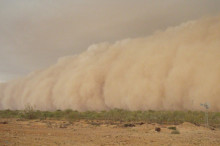
    Top soil is rich in nutrients and carbon but is increasingly being blown away by events such as the ‘Red Dawn’ in Sydney in 2009.

    When wind lifts carbon dust into the atmosphere it changes the amount and location of soil carbon.

    Some carbon falls back to the ground while some leaves Australia or ends up in the ocean.

    CSIRO research scientist Dr Adrian Chappell and an international team of experts in wind erosion and dust emission recently calculated the extent of these carbon dust emissions.

    “Carbon stored in our soils helps sustain plant growth. Our modelling shows that millions of tonnes of dust and carbon are blowing away, and it is uncertain where all that ends up,