As Commander of the International Space Station, Chris Hadfield “captivated the world with stunning photos and commentary from space.
Author: Editorial Board
-
Robot rings in Phar Lap trifecta
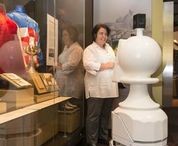
For the first time, the body of Australia’s most famous racehorse Phar Lap will be brought together virtually using CSIRO’s Museum Robot at the National Museum of Australia.
For many years Australia’s most famous horse has been in pieces. Phar Lap’s heart — currently preserved in a jar of formaldehyde – is at the National Museum of Australia (NMA) in Canberra, his hide is in the Melbourne Museum, and his skeleton is at the Museum of New Zealand Te Papa Tongarewa.
Today, students from three schools in Willunga, South Australia, Mornington Peninsula, Victoria and Townsville, Queensland will have the chance to see the legendary horse’s heart and hide and skeleton at the same time, while speaking to museum experts about the three exhibits. And they won’t even have to leave the classroom.
The students will be led by an expert guide from the NMA, through CSIRO’s museum robot. Logging in through their classroom smart board or local library computers, students will control their own unique view using the 360 degree panoramic camera on the robot’s head and can click on items in the exhibit to bring up images and more information.
“While the classroom sweep can be a bit of fun on Melbourne Cup day, we are giving students a much richer cultural and educational experience that they’ll hopefully remember for a long time,
-
Galaxy been popping pills and hooked on gas for past 8 billion years
Bats confirmed as SARS origin
A team of international scientists has isolated a very close relative of the Severe Acute Respiratory Syndrome coronavirus (SARS-CoV) from horseshoe bats in China, confirming them as the origin of the virus responsible for the 2002-3 pandemic.
The SARS-CoV pandemic killed 774 people of the 8094 people infected, a case fatality ratio of almost 10 per cent. With cases diagnosed across the world, the pandemic had an impact on international travel and trade.
The research team, led by Professor Shi Zhengli from Wuhan Institute of Virology, Chinese Academy of Sciences and including CSIRO and Duke-NUS scientist Professor Linfa Wang, have just had their breakthrough results published in the prestigious journal Nature.
While researchers globally have previously used genetic sequencing to demonstrate that bats are the natural reservoirs of SARS-like CoVs, this is the first time that live virus has been successfully isolated from bats to definitively confirm them as the origin of the virus.
The team successfully isolated a SARS-like CoV, named SL-CoV WIV1, directly from faecal samples of Chinese Horseshoe bats using the world renowned bat virus isolation methodology developed by scientists at CSIRO’s Australian Animal Health Laboratory in Geelong.
The results will help governments design more effective prevention strategies for SARS and similar epidemics.
Horseshoe bats are found around the world, including Australia and play an important ecological role. Their role in SARS-CoV transmission highlights the importance of protecting the bat’s natural environment so they are not forced into highly populated urban areas in search of food.
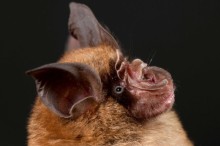
PHOTO: The SARS virus appears to have originated in horseshoe bats from China.(Guangdong Entomological Institute/South China Institute of Endangered Animals)

Bushfire in Australia
Bushfire has been part of the Australian landscape for millions of years but while we consider it a threat, some of our flora and fauna depend upon it.
Much of Australia’s vegetation has evolved with fire and curiously, like the vegetation in other harsh dry environments, it has developed characteristics that promote the spread of fire:
1. Eucalypt litter is coarse and decays slowly, ensuring that after several years there will be an abundant build-up to carry the next fire.
2. The bark of many species is flammable and loosely attached to the trees, making ideal firebrands to carry fire across natural barriers.
3. The green leaves contain highly flammable oils and resins that act as a catalyst to promote combustion before the leaves are fully dry.
All the potentials are there and sooner or later, in some part of Australia, weather patterns will occur so that strong, hot, dry winds will blow from the centre of the continent after the fuel has been preconditioned by drought.
All that is needed is a spark to produce a conflagration that simply cannot be stopped until the weather moderates.
Fire is not the foreigner in this country – people are.
Since European settlement, the total amount of fire in the landscape has declined.
The first inhabitants of this country learnt that they had to break up the fuel to survive.
They burnt extensively and often.
They learnt the responses of the plants and animals to burning and took advantage of these responses to coexist.
The bushland areas and particularly those around Sydney, New South Wales, have thickened and accumulated more fuel.
As a result, the infrequent fires that now occur under extreme weather burn much more intensely and have a significant impact on the built environment.
Fragmentation of the bush by different land use practices, such as urbanisation and agriculture, means that the Aboriginal fire regime is no longer possible or desirable.
However, our flora and fauna came from this regime. If we want to maintain the biodiversity in our native areas we have to accept that fire is a process that must be used to manage our native bushland.
We need to accept fire for what it is – an ecological process that determines the composition of our flora and fauna.
Fire is as natural as the sun and the rain.
Nothing else can replace it completely.
Nothing else produces the chemicals in the ash to stimulate new growth – or in the smoke to stimulate the flowering and regeneration of particular species.
Nothing else produces the heat pulse that removes growth-inhibiting toxins in the litter, or opens tightly-closed fruits to release new seed, or penetrates deep into the soil to stimulate the germination of long-buried seed.
Nothing else produces the succession of plant development to which our native fauna have adapted to meet their requirements for food, shelter and reproduction.
If we want to reduce fire intensity and make fire suppression safer and easier we need to accept that it is the dry undergrowth and dead leaf, bark and twig litter that provides the fuel for bushfires, and use prescribed fire to reduce fuel loads.
If we want to secure our homes and property we need to zone our bushland areas so ecotypes that require frequent fire regimes are adjacent to assets of high value and thereby reduce the impact of wildfires and promote biodiversity.
We need to support the fire service and the land management agencies when there is no emergency and accept the minor inconvenience of smoke in the air when fire is prescribed for hazard reduction, forest regeneration or biodiversity management.
Finally, we need to individually take responsibility for managing the fuels we own and maintain our property and garden so that they do not burn in summer.
CSIRO discovers gold grows on trees
Scientists from CSIRO made the discovery and have published their findings in the journal Nature Communications.
“The eucalypt acts as a hydraulic pump – its roots extend tens of metres into the ground and draw up water containing the gold. As the gold is likely to be toxic to the plant, it’s moved to the leaves and branches where it can be released or shed to the ground,” CSIRO geochemist Dr Mel Lintern said.
The discovery is unlikely to start an old-time gold rush – the “nuggets” are about one-fifth the diameter of a human hair. However, it could provide a golden opportunity for mineral exploration, as the leaves or soil underneath the trees could indicate gold ore deposits buried up to tens of metres underground and under sediments that are up to 60 million years old.
“The leaves could be used in combination with other tools as a more cost effective and environmentally friendly exploration technique,” Dr Lintern said.
“By sampling and analysing vegetation for traces of minerals, we may get an idea of what’s happening below the surface without the need to drill. It’s a more targeted way of searching for minerals that reduces costs and impact on the environment.
“Eucalyptus trees are so common that this technique could be widely applied across Australia. It could also be used to find other metals such as zinc and copper.”
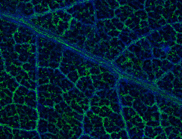
Using CSIRO’s Maia detector for x-ray elemental imaging at the Australian Synchrotron, the research team was able to locate and see the gold in the leaves. The Synchrotron produced images depicting the gold, which would otherwise have been untraceable.
“Our advanced x-ray imaging enabled the researchers to examine the leaves and produce clear images of the traces of gold and other metals, nestled within their structure,” principal scientist at the Australian Synchrotron Dr David Paterson said.
“Before enthusiasts rush to prospect this gold from the trees or even the leaf litter, you need to know that these are tiny nuggets, which are about one-fifth the diameter of a human hair and generally invisible by other techniques and equipment.”
CSIRO research using natural materials, such as calcrete and laterite in soils, for mineral exploration has led to many successful ore deposit discoveries in regional Australia. The outcomes of the research provide a direct boost to the national economy.

Reddit: Google’s Semantic Data-Mining Opportunity
Look at this perfectly looped image sequence. It’s link building, chain making, Futurama, factory… it’s satisfying, and hypnotic. Google, however, won’t be able to link these concepts well enough unless it’s fed structured semantic data. They must find creative ways to correlate “strings
European Patent Convention celebrates 40th anniversary
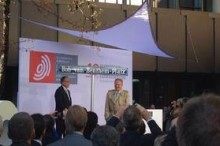
At a celebration attended by Herman Van Rompuy, President of the European Council, the European Patent Office marked the 40th anniversary of the European Patent Convention (EPC). On 5 October 1973, the EPC was signed in Munich, establishing a legal framework for the transnational grant of patents in Europe.
The Convention was inspired by the vision of a group of convinced Europeans, who had personally suffered from the war and thought, like the founding fathers of the European Economic Community, that the establishment of a supranational patent system would significantly strengthen the European economy, forge closer bonds between Europeans and help to shape a peaceful and prosperous Europe.
“After forty years, we can say that the EPC, which created the European Patent Office, has provided the ground for building a real success, not only from a technical point of view but also in its European and political dimension,” declared EPO President Benoît Battistelli. “The high quality of products and services delivered by the EPO is acknowledged across the globe. Ever since it was set up, the EPO has played an active role in fostering innovation and has given Europe a strong voice in its ongoing dialogue with the other world leaders in technology,” he added.
The European patent system will be further improved by two major projects recently adopted by the EU institutions: the unitary patent and the Unified Patent Court. “The unitary patent marks the end of a forty-year odyssey and opens new horizons for European entrepreneurs,” said Herman Van Rompuy, President of the European Council.
The European Patent Organisation, starting with seven member states, now comprises 38 countries, including all the 28 EU members. It represents a single entry point to a market of 600 million inhabitants. This framework has proved capable of integrating countries which differ widely in terms of size, economic significance and industrial development.
The growth in the number of patent applications filed has been dramatic, from 4 000 in 1978 to some 260 000 in 2012. Moreover, most of the electronic tools and services developed by the European Patent Office to conduct patent activities – such as prior art search engines, machine translation facilities and classification for technical documents – have become world standards and are used by dozens of patent offices around the world. The international reputation of the EPC system, based on the unique expertise of the EPO, significantly strengthens Europe’s position in co-operation with other major regions, such as the US and Asia.
Gravitational waves “know” how black holes grow
A paper in recent issue of the journal Science [18 October] pits the front-running ideas about the growth of supermassive black holes against observational data — a limit on the strength of gravitational waves from pairs of black holes, obtained with CSIRO’s 64-m Parkes radio telescope in eastern Australia.
The study was jointly led by Dr Ryan Shannon, a Postdoctoral Fellow with CSIRO, and Mr Vikram Ravi, a PhD student co-supervised by the University of Melbourne (Australia) and CSIRO.
“For the first time, we’ve used information about gravitational waves as a tool in astrophysics,” said Dr Shannon.
“It’s a powerful new tool. These black holes are very hard to observe directly, so this is a new chapter in astronomy.”
“One model for black-hole growth has failed our test and we’re painting the others into a corner. They may not break, but they’ll have to bend,” said Mr Ravi.
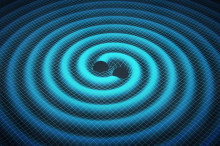
Einstein predicted gravitational waves — ripples in space-time, generated by bodies changing speed or direction. Bodies, for instance, such as pairs of black holes orbiting each other.
When galaxies merge, their resident central black holes are doomed to meet. They first waltz together then enter a desperate embrace and merge.
“Theorists predict that towards the end of this dance they’re growling out gravitational waves at a frequency we’re set up to detect,” Dr Shannon said.
Played out again and again across the Universe, such encounters create a background of gravitational waves, like the noise from a restless crowd.
Astronomers have been searching for gravitational waves with the Parkes radio telescope and a set of 20 small, spinning stars called pulsars.
Pulsars act as extremely precise clocks in space. We measure when their pulses arrive on Earth to within a tenth of a microsecond.
As gravitational waves roll through an area of space-time, they temporarily swell or shrink the distances between objects in that region. “That can alter the arrival time of the pulses on Earth,” said Dr Michael Keith of the University of Manchester in the UK.
The Parkes Pulsar Timing Array (PPTA) project and an earlier collaboration between CSIRO and Swinburne University together provide nearly 20 years’ worth of timing data.
“We haven’t yet detected gravitational waves outright, but we’re now into the right ballpark to do so,” said the project leader, CSIRO’s Dr George Hobbs.
Combining pulsar-timing data from Parkes with that from other telescopes in Europe and the USA — a total of about 50 pulsars — should give us the accuracy to detect gravitational waves “within ten years”, he said.
Meanwhile, the PPTA results are showing us how low the background rate of gravitational waves is.
The strength of the gravitational wave background depends on how often supermassive black holes spiral together and merge, how massive they are, and how far away they are. So if the background is low, that puts a limit on one or more of those factors.
Armed with the PPTA data, the researchers tested four models of black-hole growth. They effectively ruled out black holes gaining mass only through mergers, but the other three models “are still in the game”, said Dr Sarah Burke-Spolaor of California Institute of Technology (Caltech).
3D printed horseshoe to improve racing performance
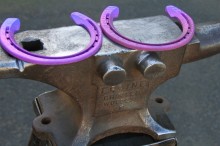
CSIRO scientists have custom made and 3D printed a set of titanium shoes for one Melbourne race horse in a first for the sport.
The horse, dubbed by researchers as ‘Titanium Prints’, had its hooves scanned with a handheld 3D scanner this week.
Using 3D modelling software, the scan was used to design the perfect fitting, lightweight racing shoe and four customised shoes were printed within only a few hours.
“3D printing a race horseshoe from titanium is a first for scientists and demonstrates the range of applications the technology can be used for.”
Mr John Barnes, Titanium Technologies Theme Leader, CSIRO Future Manufacturing Flagship
Traditionally made from aluminium, a horseshoe can weigh up to one kilogram but the horse’s trainer, John Moloney, says that the ultimate race shoe should be as lightweight as possible.
“Any extra weight in the horseshoe will slow the horse down. These titanium shoes could take up to half of the weight off a traditional aluminium shoe, which means a horse could travel at new speeds.
“Naturally, we’re very excited at the prospect of improved performance from these shoes,
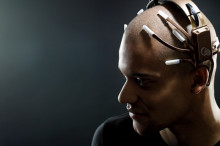
Brain Control Interfaces – The Future of Computing
Twenty years ago we could never imagine using computers as extensively in our daily lives as we do today. With technology evolving at such a fast pace, what could possibly be next? Many believe that brain control interfaces (BCI) are the future of computing – that’s right, we could soon be controlling computers with the power of our minds. Mind blowing, huh?!
What are brain control interfaces?
As the name suggests, brain control interfaces (also known as brain-computer interfaces) work by measuring electrical impulses from the brain, interpreting their meaning and converting these into real. In the latest and most impressive study, researchers at the University of Washington managed to get one person to move another person’s finger using only the power of their brain (and some pretty fancy equipment).
How do brain control interfaces work?
Brain control interfaces work by tapping into the brain’s electrical signals and essentially redirecting them through a computer. Every time we think, electrical pulses are sent between neurons in our brain, most of which are insulated but some do escape – and it’s these ones that we can capture that allow BCI to work. This is best explained in this TED Talk by Tan Le:
While hospitals have been using a piece of equipment called an electroencephalograph (EEG), which can detect brain signals in the brain from the outside, for many years, scientists have now taken it further by attaching electrodes into the inside of the brain.
Regardless of where the equipment is placed – inside or outside of the brain – the process is the same; electrical pulses between the neurons are detected and a computer converts these signals into energy or movement.
What can it be used for?
This technology is already being used for a variety of purposes, including the creation of the bionic eye and brain-controlled human prosthetics. As well as medical purposes, BCI technology could eventually make it into our everyday lives — you can use your own imagination to think about what it could be used for. Computer game lovers could have a field day, and the games are already in development.
Who might it benefit?
The main reason so much time and money is being pumped into the development of BCI technology is the potential benefits it could have for the severely disabled. Already, a form of the technology has been used to create the bionic eye, which has seen positive results in low vision patients.
There are a huge range of exciting possibilities that could lead to significantly better quality of life for the disabled. For example, a quadriplegic who could control a computer mouse cursor with their mind would have a world of possibilities open up to them.
Prosthetics that are controlled by the brain are one of the leading areas of research. While prosthetic limbs have come a long way, there is hope that soon patients will be able to have full control of a new body part in the same way that they would of a fully functioning part.
Not only could BCI technology help the physically disabled, but it could be used with children with ADHD or learning difficulties. With studies already showing that computer games can be used to help improve concentration in children, BCI could further enhance the potential to overcome these problems.
One such game developed by OpenVibe and CLARTE, requires players to focus on a series of tasks in a classroom situation. In the game, there’s an out of focus cartoon playing. In order to view the cartoon the student has to focus on the screen. If they don’t focus, the screen become blurred.
What are the risks?
Until very recently, the only effective way to achieve a useable form of mind control was by first having invasive surgery to implant sensors onto the brain, which naturally posed a lot of risks. Now, with promising research into non-invasive BCI techniques, are there still risks?
Some have called it ‘brain hacking’, which automatically has negative connotations. Comparing it to something out of X-men, they have warned that going forward, BCI technology could be used to steal people’s thoughts. It might sound outlandish now, but then again, 20 years ago, so did the idea of downloading music onto your phone!

Herbicide runoff reduced by 90 per cent in Great Barrier Reef sugarcane crops
An innovative new approach to sugarcane plantation weed management trialled in select Great Barrier Reef (GBR) catchments have shown a dramatic 90 per cent reduction in runoff of highly soluble herbicides into waterways.
In the lower Burdekin region of northern Australia, scientists from CSIRO’s Water for a Healthy Country Flagship trialled a new technique for applying herbicides to raised beds of furrow irrigated sugar cane by using a specially adapted shielded sprayer. The technique minimises the likelihood of PSII herbicides such as diuron, atrazine, ametryn and hexazinone coming into contact with irrigation water.
“The conventional application of herbicides in furrow-irrigated sugarcane production is to broadcast spray across the whole field using boom sprayers, which applies herbicides to both beds and furrows. Irrigation water then carries the herbicides with the tail water into the drainage channels, into nearby creeks and rivers and potentially into the GBR lagoon”, said CSIRO research leader, Dr Rai Kookana.
CSIRO scientist Ms Danni Oliver said “The geography of the region means that almost the entire flow from the Burdekin River Irrigation Area in the dry season (from July to January) is made up exclusively of irrigation water from sugarcane and other cropping.”
According to Jon Brodie of James Cook University, “the amount of some herbicides in creek and estuarine waters during this period regularly exceeds Australian water quality guidelines and could potentially affect, for example, coastal seagrass.”
Many of the herbicides used in the region are PSII herbicides that are known to negatively impact reef ecosystems. These waters discharge into the internationally recognised Great Barrier Reef World Heritage Area and subsequently into the Great Barrier Reef Marine Park. Improved farming techniques such as the shielded sprayer help keep herbicides on-farm have potential to have a significant and positive impact on water quality in the GBR.
“The trials show that while there will certainly be some herbicide loss following the first irrigation or rainfall event, the marked decreases in losses documented in this study – a reduction of to 90 per cent – could lead to significant improvements in off-site water quality, particularly during the dry season”, said Ms Oliver.
“Given the importance of improving GBR water quality additional testing and demonstration of these technologies across different soil types, farming systems – and possibly with different combinations of chemicals – would provide valuable additional testing of the approach from an industry perspective”, said Dr Kookana.
“These trial results are extremely encouraging, and clearly demonstrate that the use of precision herbicide application technologies by the industry, including using shielded sprayers for furrow-irrigated sugarcane cultivation, can be highly effective in reducing herbicide run-off.”
The results of the study have been published in the international journal Science of the Total Environment.
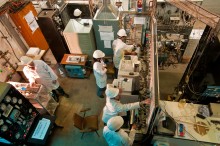
Australia and India to collaborate on clean fuel production
In a time when Australia’s liquid transport fuel supplies are declining and our transport needs are growing, a research partnership between Australia and India could provide a solution to a number of energy concerns and ultimately reduce the reliance of both countries on imported fuels.
The widespread introduction of a clean-burning synthetic fuel, dimethyl ether (DME), is a step closer following the announcement of a A$6 million partnership between CSIRO and its Indian equivalent, the Council of Scientific and Industrial Research (CSIR).
The project will focus on improving processes involved in the production of DME, which is a liquid fuel produced from natural gas (NG), coal, biomass, or even directly from carbon dioxide.
Both Australia and India are currently unable to meet demand for petroleum products with domestic production alone. DME could help meet demand and consequently reduce both nations’ reliance on imported petroleum products.
According to CSIRO’s Dr Nick Burke, “There are over half a million vehicles currently using liquefied petroleum gas (LPG) in Australia – all of which could be powered using DME. The fact that DME can be used as a blend in existing LPG engines makes it an effective transitional fuel

What Can Happen if You Say NO, Thank You And You Are a Science Writer?
This weekend happened something that attracted our attention. Namely, Danielle N. Lee, Ph.D, the Urban Scientist blogger at Scientific American, has been mistreated twice: once by the blog editor at biology-online.org and now by SciAm itself. The blog editor asked Dr. Lee to contribute a blog post at Biology-Online, and when she declined, the blog editor asked her whether she was ‘an urban scientist or an urban whore.’ Then, SciAm deleted her blog post, in which she wrote about the incident. Below is her original post with the video response.
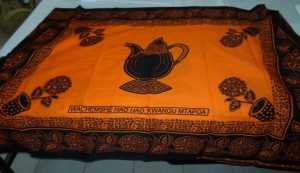
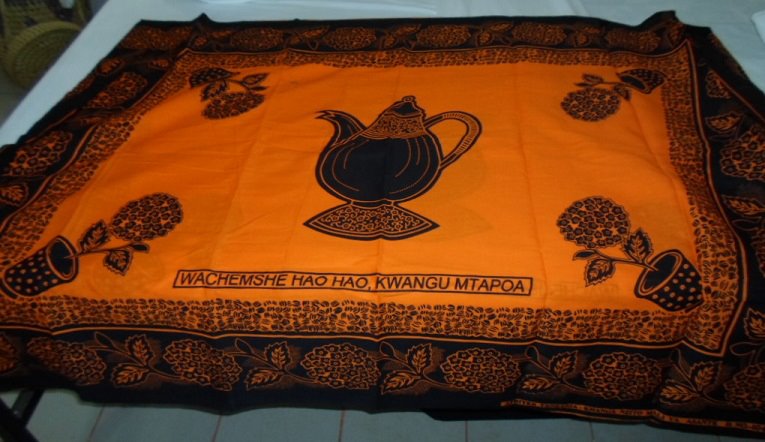
I got this wrap cloth from Tanzania. It’s a khanga. It was the first khanga I purchased while I was in Africa for my nearly 3 month stay for field research last year. Everyone giggled when they saw me wear it and then gave a nod to suggest, “Well, okay