Author: Editorial Board

  • 10 years on Mars leads to liveable mud

    10 years on Mars leads to liveable mud

    A team of researchers has found what may once have been the most liveable mud on Mars.

    Some of the oldest minerals ever analysed by NASA’s Mars Opportunity Rover show that around four billion years ago Mars had liquid water so fresh it could have supported life.

    The findings were announced in a special ‘Exploring Mars Habitability’ edition of the journal Science released today to coincide with the 10th anniversary of the Mars Opportunity Rover and its twin, Spirit, landing on the red planet.

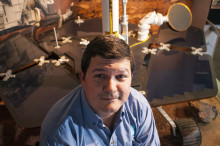
    CSIRO’s Dr Paulo de Souza, who is on the science team led by Cornell University’s Professor Steven Squyres, said a major focus on NASA’s decade of research on Mars surface was whether the planet may ever have been habitable.

    “While Mars is too cold now to have the liquid water needed for life, we’ve had evidence for past water activity on the planet from satellite images of valleys and analysis of rocks by the Rovers,” Dr de Souza said.

    “But the water that once shaped those landscapes and minerals was as acidic as vinegar.

    “Our latest research has found not only the earliest episode of water activity documented yet by the Opportunity Rover, but that the geochemistry of the 4 billion year old rocks indicates extensive deposits of past water that’s among the freshest, most life-sustaining found so far anywhere on Mars.

    “If there was ever life on Mars, then this would have been the mud for it to live in.”

    Dr de Souza is a Science Leader at CSIRO in micro-sensors and has worked with NASA since the Mars Exploration Rover Program began, having collaborated with NASA’s research teams for many years.

    Dr de Souza is very proud of the Opportunity Rover, a golf buggy-sized all-terrain vehicle also known as ‘Oppy’, whose tenth birthday is today.

    “She’s a brave little Rover and she’s way past warranty,” he said.

    “Opportunity’s Mars mission was expected to last just months but she’s still going strong 10 years on with no signs of stopping.  She’s travelled 38km instead of the few hundred metres planned.

    “Along the way, Oppy’s collected invaluable information about Mars’ surface with her high tech toolkit of rock scrapers, chemical sensors, and spectral analysers.”

    Oppy’s been beaming a decade’s worth of data back to space receiving stations on Earth, including the Canberra Deep Space Communication Centre outside Canberra at Tidbinbilla managed by CSIRO.

    “Thanks to the Rovers, we now have a much richer knowledge of our nearest planet and where to focus our future search for microfossils, present water and other signs of life,” Dr de Souza said.

    Dr de Souza is giving three public lectures on 23-24 January at CSIRO Discovery in Canberra to celebrate the 10th Anniversary of the NASA Mars Exploration Rover Program. The lectures are suitable for all ages.


    Source and image.

  • A Private or Public Education: How Much Do They Cost?

    A Private or Public Education: How Much Do They Cost?

    Education in Australia can be distinguished according to sources of funding and administrative structures. There are two broad categories of schools in Australia: public schools and private schools. But, what are the differences at the moment? How much do they cost today?

    The Australian Scholarships Group organised a survey that showed parents of a child born this year who choose private education could expect to spend $504,742 in metropolitan Melbourne from preschool to year 12. In other words, that cost is $45,747 more than the national metropolitan average.

    The Australian Scholarships Group is a member-based organisation that invests money on behalf of parents to offset education costs for their children.

    The survey was based on 6900 responses from the group’s members. The figures show the “upper ranges” that parents can expect to pay. The survey includes costs such as school fees, transport, uniforms, computers, excursions and sports trips.

    Also, this year, it estimates parents would spend up to $4730 on a child in a public high school, about $12,852 on a Catholic systemic school and $26,078 on an independent school.

    Experts say the cost of education in Australia had risen by more than double the rate of inflation in the past decade. That is not surprising since we all know that education is a massive investment.

  • What Do Big Thinkers Think of the Big Question?

    What Do Big Thinkers Think of the Big Question?

    It’s a New year, which means it’s time for the Edge.org to pose its annual question to some of the world’s finest minds. The 2014 edition asks the question, “What Scientific Idea is Ready for Retirement?

  • New Research Proves the Bird’s “V

    New Research Proves the Bird’s “V

    The brilliance of nature’s genius has been proven once again. New research shows that the bird’s “V

  • The Greatest Engineering Challenges for the Future

    The Greatest Engineering Challenges for the Future

    If there would be a way to see the future, we believe the engineering one would be extremely exciting. With the development of science and technology, the progress of the Human Kind is going on at very high rate. Almost every day of modern history is known as the beginning of some new and amazing discovery or even achievement. From that perspective, the future of engineering seems quite promising.

    But, from today’s point of view, what would be the greatest engineering challenges for the future? By a committee of the National Academy of Engineering, the Grand Challenges for engineering would be:

    Make solar energy economical

    As everyone knows, the Sun is a source of energy in our Solar system. It out-powers anything that human technology could ever produce. Only a small amount of the Sun’s energy comes to the Earth. Amazingly, even that provides 10,000 times as much as all the commercial energy that humans use on the planet. Imagine what would be the possibilities of the commercial use of solar energy.

    Provide energy from fusion

    If you have any mobile device at home, its battery normally consists of the metallic element lithium. Theoretically, the lithium in that battery could supply your household electricity needs for 15 years. Imagine what else would be feasible if we could provide an energy form fusion.

    Develop carbon sequestration methods

    The fact is that the growth in emissions of carbon dioxide causes a global warming. That problem no longer can be ignored. Perhaps it can be buried deep underground or beneath the ocean.

    Manage the nitrogen cycle

    The human-induced changes in the global nitrogen cycle pose engineering challenges just as critical as coping with the environmental consequences of burning fossil fuels for energy.

    Provide access to clean water

    When Samuel T. Coleridge wrote “water, water, everywhere, nor any drop to drink,

  • Bee sensors take flight to help farmers

    Bee sensors take flight to help farmers

    Thousands of honey bees in Australia are being fitted with tiny sensors as part of a world-first research program to monitor the insects and their environment using a technique known as ‘swarm sensing’.

    The research is being led by CSIRO and aims to improve honey bee pollination and productivity on farms as well as help understand the drivers of bee Colony Collapse Disorder (CCD), a condition decimating honey bee populations worldwide.

    Up to 5,000 sensors, measuring 2.5mm x2.5mm are being fitted to the backs of the bees in Hobart, Tasmania, before being released into the wild. It’s the first time such large numbers of insects have been used for environmental monitoring.

    “Honey bees play a vital role in the landscape through a free pollination service for agriculture, which various crops rely on to increase yields. A recent CSIRO study showed bee pollination in Faba beans can lead to a productivity increase of 17%,” CSIRO science leader Dr Paulo de Souza, who leads the swarm sensing project, said.

    “Around one third of the food we eat relies on pollination, but honey bee populations around the world are crashing because of the dreaded Varroa mite and Colony Collapse Disorder. Thankfully, Australia is currently free from both of those threats.”

    The research will also look at the impacts of agricultural pesticides on honey bees by monitoring insects that feed at sites with trace amounts of commonly used chemicals.

    “Using this technology, we aim to understand the bee’s relationship with its environment. This should help us understand optimal productivity conditions as well as further our knowledge of the cause of colony collapse disorder,” Dr de Souza said.

    The sensors are tiny Radio Frequency Identification sensors that work in a similar way to a vehicle’s e-tag, recording when the insect passes a particular checkpoint. The information is then sent remotely to a central location where researchers can use the signals from the 5,000 sensors to build a comprehensive three dimensional model and visualise how these insects move through the landscape.

    “Bees are social insects that return to the same point and operate on a very predictable schedule. Any change in their behaviour indicates a change in their environment. If we can model their movements, we’ll be able to recognise very quickly when their activity shows variation and identify the cause. This will help us understand how to maximise their productivity as well as monitor for any biosecurity risks,” Dr de Souza said.

    Understanding bee behaviour will give farmers and fruit growers improved management knowledge enabling them to increase the benefit received from this free pollination service. It will also help them to gain and maintain access to markets through improving the way we monitor for pests.

    “We’re working with the University of Tasmania, Tasmanian Beekeepers Association, local beekeepers in Hobart and fruit growers around the state to trial the technology. Many growers rely on wild bees or the beekeepers to provide them with pollinators so they can improve their crops each year. Understanding optimal conditions for these insects will improve this process,” Dr de Souza said.

    To attach the sensors, the bees are refrigerated for a short period, which puts them into a rest state long enough for the tiny sensors to be secured to their backs with an adhesive. After a few minutes, the bees awaken and are ready to return to their hive and start gathering valuable information.

    “This is a non-destructive process and the sensors appear to have no impact on the bee’s ability to fly and carry out its normal duties,” Dr de Souza said.

    The next stage of the project is to reduce the size of the sensors to only 1mm so they can be attached to smaller insects such as mosquitoes and fruit flies.

    Source and image.

  • New Reforms in Computer Science will Examine Teacher’s Skills

    New Reforms in Computer Science will Examine Teacher’s Skills

    As a new National Curriculum says children in schools will start learning the principles of computer programming from kindergarten. But there are concerns teachers would be seriously unable to go through the ambitious reform agenda without meaningful retraining.

    The new technologies Curriculum gives a considerable boost to the role of computer science in primary and secondary school education. Some of the authors of the Curriculum said students would be taught to write computer code from year 3 which should give them a competitive edge in the emerging digital economy.

    In general, code is a set of instructions used to manage computer software.

    The British Government announced it would become the first country to mandate computer programming in its schools.

    On the other hand, Australia’s new curriculum was ”reasonably comparable” to Britain’s and ”has kids at least starting to get some of the ideas of programming right from kindergarten”.

    Making teachers competent and confident enough to teach the content would be the main challenge.

    There are over 9000 schools in Australia. Experts believe teachers in each of those schools should be capable to transfer their technical knowledge and skills and also the philosophical underpinnings of computer science.

    Indeed, it is a huge job to get everyone up to scratch on this stuff. Basically, this is a very significant challenge, because many specialist teachers can not do everything that’s in the Curriculum.

    It is up to the states and territories to decide whether or not they implement the Curriculum. It is just a waiting game to find out what happens and what decisions they make.

  • Their Time is Coming!

    Their Time is Coming!

    A cyborg future is coming. Man’s relationship with machine is merging. Machines are an extension of our own intelligence. Soon we all will wear some kinds of bio-sensors to tell us what is happening inside us. That’s the future.

    A cyborg or a cybernetic organism is a being with both biological and mechanical parts. Generally, the term “cyborg” is used to refer to a human with bionic, or robotic, implants. The beginning of cyborg creation began when HCI (human-computer interaction) started. The term cyborg is often applied to an organism that has advanced abilities due to technology. While cyborgs are commonly considered as mammals, they might also be any kind of organism. There is a hypothesis saying that cyborg technology will build up a part of the future human evolution.

    The use of prostheses or implants is not a new idea. Humans have been using implanted technical aids of various types in the past to compensate for defects caused by illnesses.

    Today, it is essential that the system are closely related to the living organism. Ideally, the system itself should be capable of receiving and sending the appropriate signals for the movement and control directly from the central nervous system and especially the brain itself. For instance, in vision science, direct brain implants have been used to treat non-congenital blindness. The first system included cameras mounted on glasses to send signals to the implant.

    Nowadays there are two main applications of cyborg systems: (1) animal cyborgs and (2) social cyborgs.

    The world’s first commercially available cyborg was an animal cyborg ant it is called the RoboRoach. The RoboRoach was officially released into production via a TED talk at the TED Global conference. Other groups have developed cyborg insects, but the RoboRoach was the first kit available to the general public.

    But, what is a social cyborg? More broadly, the term “cybernetic organism” is used to describe larger networks of communication and control. For instance, cities, networks of roads, networks of software, corporations, markets, governments, and so on. A corporation can be assumed as an artificial intelligence that makes use of replaceable human components to function.

    As we can see, a cyborg time is undoubtedly coming. How will it look like? Well, we guess it would bring some advancements in our lives. The ethical question should be: “Will the humans stay humans after the cybernetic revolution?

  • Does Spacetime Have Any Time Dimension?

    Does Spacetime Have Any Time Dimension?

    The concept of time as a way to measure the duration of events is basically intuitive. Some researchers believe that this Newtonian idea of time as an absolute quantity and fourth dimension in spacetime is incorrect. They propose to replace these concepts of time with a completely new view: time as a measure of the numerical order of change.

    Einstein never interpreted time as a fourth dimension of space. By this theory, space is not 3D + T, space is 4D. With clocks we measure numerical order of material change. This numerical order is the only time that exists in a physical world. 4D space is a medium of quantum information transfers.

    Scientists at the Scientific Research Centre Bistra in Ptuj, Slovenia, theorize that this Newtonian idea of time as an absolute quantity, along with the idea that time is the fourth dimension of spacetime, are not accurate. They propose to replace these concepts of time with a view that say that time is a measure of the numerical order of change.

    This view doesn’t mean that time does not exist, but that time has more to do with space than with the idea of an absolute time. So while 4D spacetime is considered to consist of three dimensions of space and one dimension of time, this view suggests that it’s more correct to imagine spacetime as four dimensions of space. In other words, the Universe is “timeless.

  • Eddies may put Sydney-Hobart in a spin

    Eddies may put Sydney-Hobart in a spin

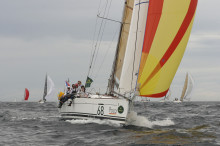
    Competitors in this year’s Rolex Sydney-Hobart race fleet may need to negotiate their way around three significant ocean eddies as they sail south this year, according to oceanographers.

    CSIRO’s Dr David Griffin has generated a view of the course based on observations from Australia’s Integrated Marine Observing System (IMOS).

    The first, south-east of Jervis Bay, is the weakest of the three and may dissipate or move farther offshore between now and Boxing Day. Nevertheless, he says yachts will want to remain inshore of the eddy, other factors such as wind strength being equal.

    “The second eddy is more important and extends over 180 nautical miles from 36S to about 39S,” Dr Griffin said.

    “I believe it could give yachts a significant advantage of one to four hours over those that do not find this river of southward flowing tropical water.

    “Finally, an isolated warm-core eddy is off Tasmania’s Freycinet Peninsula (42S), potentially giving a small boost to yachts keeping a bit further east.”

    The ocean eddy off Tasmania’s east coast will be relevant to entrants in the Launceston to Hobart race, starting on December 27.

    Dr Griffin provides ocean current analysis products for IMOS on a daily basis for IMOS.

    Source and image.

  • Discover your own black hole

    Discover your own black hole

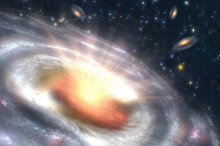
    Discover black holes while you ride to work! Or hunt them down on your home computer.

    ‘Radio Galaxy Zoo’, launching today, is a new ‘citizen science’ project that lets anyone become a cosmic explorer.

    By matching galaxy images with radio images from CSIRO’s Australia Telescope, you can work out if a galaxy has a supermassive black hole.

    “It takes about a minute to learn what to do,” said CSIRO’s Dr Julie Banfield, an Australian coordinator of the international project.

    “Then to actually work with the images takes only a few seconds each – perhaps a couple of minutes for the really tough ones.

    “You just need match up a couple of pictures and look for what you think is the galaxy at their centre.”

    Join up and you’ll be part of a community of almost a million people who work in the ‘Zooniverse’ – a set of citizen-science projects covering everything from galaxy shapes to cancer data and whale songs.

    The first Zooniverse project, Galaxy Zoo, was started by astronomers Chris Lintott and Kevin Schawinski in 2006 when they were both at Oxford University.

    “Galaxy Zoo and the other projects have been producing real science, science that gets published,” said CSIRO’s Dr Ivy Wong, who has been working to set up Radio Galaxy Zoo.

    “Everyone, literally everyone, can now help to make discoveries.”

    Source and image.

  • Is Our Universe Simply a Projection of Another Cosmos?

    Is Our Universe Simply a Projection of Another Cosmos?

    A new research theory claims that we could simply live in a projection of another cosmos. How is that possible? By holographic principle, gravity comes from thin, vibrating strings. These strings are holograms of events which exist in a flatter cosmos. According to this theory, everything we experience can be assumed as events occurring in this flatter location. This is the first time the validity of the model has been mathematically tested.

    The universe is a hologram and everything you can see is just a projection. This is the fact according to a controversial model proposed in 1997 by physicist Juan Maldacena. Until now the theory had never been tested. However, recent mathematical models suggest that this principle could be accurate.

    The holographic principle is a characteristic of quantum gravity and string theories. It states that the description of a volume of space can be thought of as encoded on a boundary to the region. The theory is first proposed by Gerard’t Hooft and its precise string-theory interpretation is given by Leonard Susskind. By this observation, the string theory admits a lower-dimensional description in which gravity emerges from it in a holographic way.

    In a larger scale, the theory suggests that the entire universe can be viewed as a 2-D information structure “painted” on the cosmological horizon, such that the 3-D we observe are only an effective description at macroscopic scales. In general, cosmological holography has not been made mathematically precise, because the cosmological horizon has a finite area and grows with time.

    The holographic principle is inspired by black hole thermodynamics. This implies that the maximal entropy in any region increases with the radius squared. In such a case, the insight was that the informational content of all the objects that have fallen into the hole can be entirely contained in surface fluctuations of the event horizon. This principle resolves the black hole information paradox within the support of string theory.

    In his paper presented at the arXiv repository, a Japanese scientist Yoshifumi Hyakutake calculated the internal energy of a black hole in order to try to provide mathematical evidence for the holographic principle. He explored the boundaries of a specific black hole as well as the effects of ‘virtual particles’ which is a type of particle that is believed to continuously pop in and out of existence. In a separate paper, Professor Hyakutake calculated the energy contained inside of the alternate flatter cosmos with no gravity. Surprisingly, the computer calculations of the theoretical universe and the black hole’s boundaries matched. Some believe this is ‘compelling’ evidence of the dual nature of the universe.

    Professor Maldacena reported that this fact provides hope that the gravitational properties of our universe can someday be explained by quantum theory.

  • The source of creativity

    The source of creativity

    Every creative writer was asked the question at least once at a social event with non-writers: “Where do you get your ideas?

  • The Fuel of the Future

    The Fuel of the Future

    It seems it came time to say goodbye to gasoline. As it is known, the petroleum resources are running out and very soon we will stay without them. Also, it pollutes air and it causes a great risk to human’s health. And finally, there is a money concerns. People are no longer willing to pay high prices that oil companies are charging for it. And why should they, if there are a lot of different alternative sources of energy. Automotive industry knows all of this and it is investing a lot of time and money to find and develop the fuel of the future.

    The search is on, but what will the fuel of the future be? Believe or not, the answer is simple. An air! It’s all around us. It’s free. And most importantly, it is not polluting. Sounds unbelievable, we know. But, it is not that simple as it appears.

    ­­Unluckily, air alone cannot be used as a fuel. First of all, energy has to be stored in it by squeezing the air using a mechanical air compressor. Once the compressed air is released, it expands. The expanding air can be used to drive the pistons that power an engine.

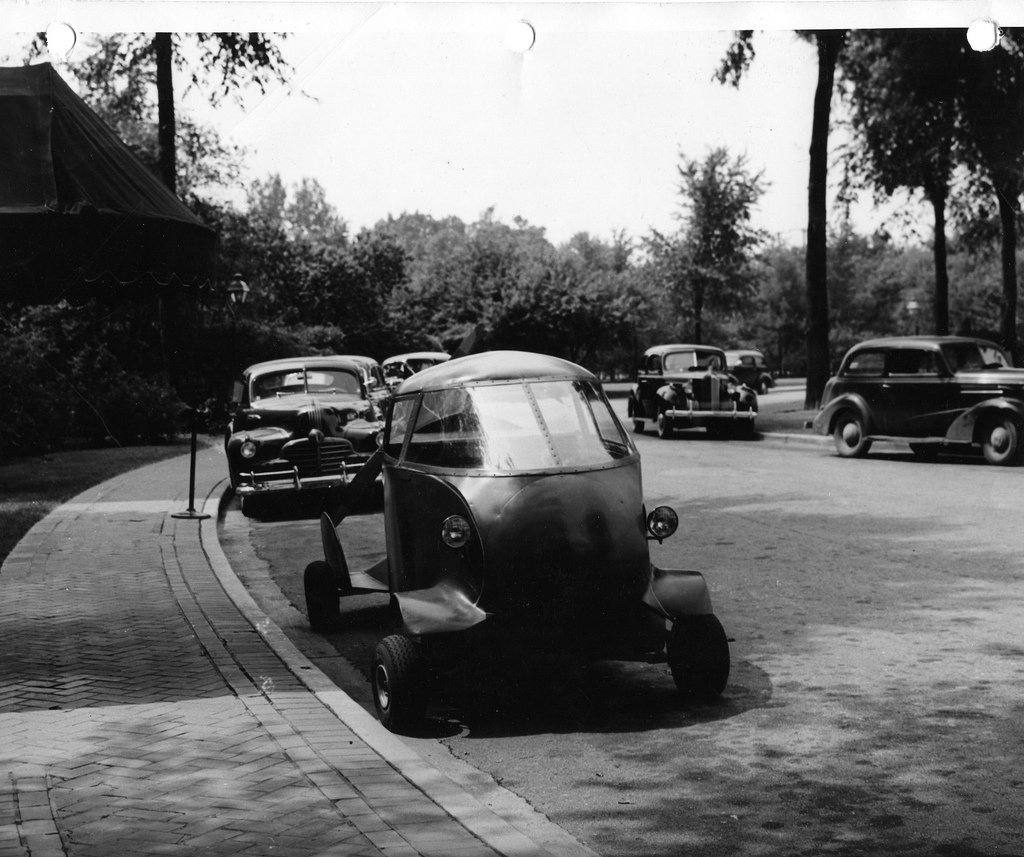
    Amazingly, the idea of using compressed air to power a vehicle is not new. Early prototypes of an air-powered vehicle were constructed before the invention of the internal combustion engine.

    air car

    How Compressed Air Can be Used as a Fuel?

    ­By the laws of physics, uncontained gases will fill any given space. On the other hand, compressing a gas into a small space is a way to store energy. When the gas expands again, that energy is released to do work. That’s the basic principle which governs an air car.

    It is expected that the first air cars will have air compressors built into them. After a drive, you’ll be able to take the car home, put it into the garage and plug in the compressor. The compressor will use air from around the car to refill the compressed air tank. Unfortunately, this is a rather slow method of refueling. It will probably take up to two hours for a complete refill. If this idea catches on, air refueling stations will become available at ordinary gas stations. Filling your tank at the pump should probably take about 3 minutes.

    How Compressed Air Car Can be Caracterised Nowadays?

    Today’s compassed air cars are far from perfect. As anything else, this technology has its advantages and disadvantages. Here are the main pluses and minuses of this technology.

    Pluses

    1. It uses no gasoline or other bio-carbon based fuel.

    2. Refueling could be done at home using an air compressor or at service stations. The energy required for compressing air is produced at large centralized plants.

    3. Compressed air engines reduce the cost of vehicle production, because there is no need to build a cooling system, spark plugs, starter motor, or mufflers.

    4. The rate of self-discharge is very low opposed to batteries that deplete their charge slowly over time. Therefore, the vehicle may be left unused for longer periods of time than electric cars.

    5. Expansion of the compressed air lowers its temperature; this may be exploited for use as air conditioning.

    6. Reduction or elimination of hazardous chemicals such as gasoline or battery acids/metals

    7. Some mechanical configurations may allow energy recovery during braking by compressing and storing air.

    Minuses

    1. The principal disadvantage is the indirect use of energy. Energy is used to compress air, which – in turn – provides the energy to run the motor. Any conversion of energy between forms results in loss.

    2. When air is compressed to fill the tank, its temperature increases up. If the stored air is not cooled while the tank is being filled, then when the air cools off later, its pressure decreases and the available energy decreases.

    3. Refueling the compressed air container using a home or low-end conventional air compressor may take as long as 4 hours, though specialized equipment at service stations may fill the tanks in only 3 minutes.

    4. The overall efficiency of a vehicle using compressed air energy storage, using the above refueling figures, is around 5-7%. For comparison, well to wheel efficiency of a conventional internal-combustion drivetrain is about 14%.

    Conclusion

    Despite these drawbacks, big car companies are still exploring the use of compressed air in a hybrid drivetrain setup. Compressed air vehicles are also remarkably quiet and, discounting the air compressors themselves, produce absolutely no emissions. They’re also very, very cheap to operate. This could make them ideal city service vehicles. Until then, compressed air cars have a long, long way to go.