Author: Editorial Board

  • Bridging our big broadband gap

    Bridging our big broadband gap

    New research report reveals the impact of next generation broadband for Australian households and businesses.

    Despite living in the ‘Digital Age’, Australia is currently not prepared to fully take advantage of the services afforded by next generation broadband according to a new groundbreaking research report released today.

    Developed by the Australian Centre for Broadband Innovation (ACBI) and CSIRO’s Digital Productivity and Services Flagship, the ‘Broadband Impact and Challenges’ report provides fresh insights and evidence to better understand the impact and opportunities offered by next generation broadband as well as advice on the necessary steps needed to mitigate the associated risks. The report was compiled out of key findings from comprehensive community surveys, interviews with businesses and thought leaders as well as detailed analyses of existing data sources and peer-reviewed economic and social research.

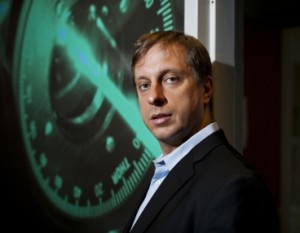
    “Although we are living in an increasingly ‘Digital Age’ full of smart devices, tele-working and social networks, one in five Australian adults still do not use the internet,” said Colin Griffith, Director of the Australian Centre for Broadband Innovation.

    “Recognising that more and more government and business services are delivered online, a key focus of our research is to understand the behaviour and capabilities of adoption and use of next generation broadband. Across the board we have found that giving more people and businesses the skills and confidence to use these broadband services effectively, will not only have a positive impact on their quality of life and business success, but also create broader economic benefits.”

    Interviews with industry and government stakeholders cited a lack of certainty about the future rollout of Australia’s broadband infrastructure as being a significant barrier in helping them prepare for the future.

    “Like other major Australian infrastructure projects such as the Snowy River Mountain Scheme and the Sydney Harbour Bridge Harbour Bridge, the debate around our national broadband infrastructure has predominately focused on cost and scale. While these are important discussions, our research highlighted that government, industry and the community need to invest in capability building through training and investment programs if we are to fully realise the benefits of next generation broadband,” said Mr Griffith.

    The report also includes a number of key insights to help government and businesses prepare for some of the potential threats which next generation broadband may bring.

    “Along with its many benefits, next generation broadband will also create challenges for Australia, accelerating disruption to businesses, jobs and services. If we are to mitigate the potential threats than active leadership at all levels of society and across different organisations is needed to ensure that there is strategic investment in capacity building and innovation to help safeguard our digital future,” said Mr Griffith.

    “Ultimately, it is the capabilities of every person and business that will determine the overall level of benefit realised for Australia in terms of jobs, improvement in productivity and quality of life.”

    The ‘Broadband Impact and Challenges’ report was officially launched to a group of industry and government stakeholders at an event in Sydney this morning.

    Source and image.

  • It’s electricity, but not as we know it

    It’s electricity, but not as we know it

    Australia’s electricity landscape could change significantly in the future and consumers will be deciding just what that future will look like.

    A new report from the Future Grid Forum, Change and choice: The Future Grid Forum’s analysis of Australia’s potential electricity pathways to 2050, looks at a range of opportunities and presents four scenarios, not predictions, through which we can view potential futures for our national electricity system.

    CSIRO Energy Flagship Chief Economist, Paul Graham, said recent declining demand, higher electricity prices and strong adoption of roof-top solar panels have changed the industry’s view of what is plausible in the future and trained a focus on affordability challenges.

    “All of the choices in the Future Grid Forum scenarios have consequences for the price of electricity, something that has significantly impacted consumers in recent years with the average household electricity price increasing by two-thirds between 2007 and 2012,” Mr Graham said.

    “Electricity will not get cheaper in the coming decades, but bills can be reduced through the adoption of energy efficiency, peak demand management and on-site generation.

    “These steps, in combination with general wages growth, means the share of income average households spend on electricity is projected to be similar – shifting marginally from 2.5 per cent in 2013 to between 2.3 and 2.9 per cent in 2050 depending on the scenario.”

    The Forum also projected that technology will allow more sophisticated ways of managing household demand during peak times through the introduction of devices such as smart air conditioners and in-home storage systems.

    “Better strategies for peak demand management could save two cents per kilowatt hour or $1.4 billion per annum on distribution costs for households,” Mr Graham said.

    Electricity has traditionally been a service with which consumers have not proactively engaged, but the Forum’s scenarios present a number of ways for people to take greater control of how they consume and produce electricity.

    “This proactive shift could potentially influence the business model for the electricity sector, encouraging the emergence of new services to supply an individually tailored product – not dissimilar to the telecommunications industry shift from a one-size-fits-all landline telephone system to a wide variety of mobile and associated data and entertainment services,” Mr Graham said.

    “One of the Forum’s scenarios looks at the option for around a third of consumers to disconnect from the electricity grid through the use of on-site generation using technologies like rooftop solar panels and battery storage; and this is projected to be economically viable from around 2030 to 2040.

    “Under the full range of scenarios Australia could see on-site generation grow from the current figure of 8 per cent to reach between 18 and 45 per cent of total generation by 2050, but mostly while staying connected and using the grid as an electricity trading platform,” Mr Graham said.

    The Forum findings are a starting point from which all stakeholders can begin to understand, manage and benefit from changes to the electricity system.

    “This is an extraordinary time of change for Australia’s electricity industry and the Forum partners see the release of this report as an opportunity to begin a national conversation to decide the right answers for the sector, its stakeholders and, most importantly, all Australians,” Mr Graham said.

    Source and image.

  • Helping miners find the right water balance

    Helping miners find the right water balance

    The coal mining industry will be better equipped to manage water and deal with extreme weather events, thanks to a new model developed by CSIRO.

    The model, to be unveiled at the 20th International Congress on Modelling and Simulation (MODSIM2013), aims to forecast future mine water needs and will help the industry address the challenges of both excessive water and insufficient water on mine sites. The research was conducted in Queensland’s Bowen Basin, home to Australia’s largest coal reserves, and one of the most highly variable climates in the world.

    Professor Damian Barrett, head of CSIRO’s Water in the Resources Sector research, said a key challenge for the industry is to maintain mine water storage at an optimal level to ensure water security for mine operations during drought but also to eliminate unregulated discharges during flood periods.

    “The coal mining industry is accountable for managing its mine water use, including complying with discharge regulations,” said Professor Barrett. “Our research is demonstrating how to reach the ‘Goldilocks’ state in water management. That is, not having too much or too little water but having just the right amount of water on mine sites for when it is needed.”

    The model is depicted through three perspectives: the business perspective capturing the mine operation practices within a mine or across several mines or companies; the environmental perspective representing all the climate change patterns such as rainfall and catchment histories and weather forecast data; and the decision perspective which considers tradeoffs by demonstrating how to develop strategies to best meet business needs while considering environmental constraints and opportunities.

    “We applied the scenario model to a number of constructed case studies including single mine sites and multiple mines sites, with the multiple mine site case studies exploring water sharing and trading opportunities among mine sites,” said Professor Barrett. “This methodology provides a rigorous and objective technique for developing management strategies and assessing risk.”

    The model was developed as part of a suite of broader CSIRO research in the coal mines of the Bowen Basin. Research in the region is providing strategies to help the industry forecast mine water quantity and quality, improve water use efficiency onsite and improve understanding of the impacts of mine water use on regional water.

    “Through improved seasonal climate forecasts, the assessment of the effectiveness of water sharing and trading among multiple sites and the cost benefit analysis of establishing water management infrastructure, our research is helping to guide the coal industry towards better water management that balances the needs of business with the needs of the environment,” said Professor Barrett.

    The comprehensive suite of work undertaken by CSIRO through its Water for a Healthy Country Flagship to improve water resource management in the mining sector will be presented at MODSIM on Thursday 5 December. MODSIM runs from Sunday 1 to Friday 6 December 2013 at the Adelaide Convention Centre, Adelaide, South Australia. The MODSIM theme for this year is ‘Adapting to change: the multiple roles of modelling’ and is expected to attract in excess of 800 national and international delegates.

    Source and image.

  • Get the conversation started

    Get the conversation started

    Ever wondered how vaccines work, why whales strand themselves or if luck really exists? The Explainer: From Déjà Vu to Why the Sky is Blue and Other Conundrums is a collection of straightforward, accessible, and engaging explanations from those in the know on those everyday concepts that may have made you stop and wonder.

    Written by academic experts with deep subject expertise, the book shares knowledge on diverse topics: from animals and agriculture, climate and energy, the body and medical myths, technology and more. Curious readers will discover accessible answers to questions such as: what is gravity? Can you pay-off a sleep-debt? What is dreaming, forgetting, depression?

    Managing Editor of The Conversation, Misha Ketchell, said: “This book makes the knowledge of academic experts available to everyone. It’s full of fascinating facts that can inform public debate or just be enjoyed for their own sake. The Explainer is perfect for indulging curiosity, settling bets or sparking a conversation.”

    CSIRO’s Dr Mark Lonsdale said: “Armed with this book you can do more than simply start the discussion – you can marshal the explanatory information to help inform it.”

    The book is a collaboration between CSIRO PUBLISHING and The Conversation, Australia’s largest independent news and commentary sites, where the articles were originally published.

    Source and image.

  • Indian Ocean phenomenon helping to predict extreme weather

    Indian Ocean phenomenon helping to predict extreme weather

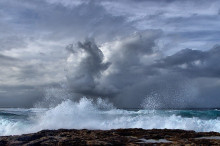
    A phenomenon in the Indian Ocean that affects events in southeast Australia is helping to predict extreme weather up to six months in advance.

    The phenomenon, the Indian Ocean Dipole, is the difference in sea-surface temperatures between the western and eastern part of the Indian Ocean, and until recently has been one of the most influential but the least understood natural forces affecting Australia’s climate.

    An international team of scientists, led by CSIRO Wealth from Ocean Flagship’s Dr Wenju Cai, confirmed the link and have published their findings in the journal Nature Geoscience.

    A better understanding of the relationship between the Indian Ocean Dipole and extreme weather events will enable farmers, industry, communities and governments to better anticipate and prepare for droughts and increased bushfire risk, up to six months in advance of the event.

    Just as the El Niño Southern Oscillation (ENSO) affects weather patterns across the Pacific Ocean, the Indian Ocean Dipole influences weather and extreme events across the Indian Ocean. While ENSO fluctuates between ‘El Nino’, ‘neutral’ and ‘La Nina’ phases, the Dipole fluctuates between ‘positive’, ‘neutral’ and ‘negative’ phases approximately every three to eight years.

    The positive phase is characterised by greater-than-average sea-surface temperatures, more rain in the western Indian Ocean region and cooler waters in the eastern Indian Ocean. It tends to cause droughts in East Asia and Australia, and flooding in parts of the Indian subcontinent and East Africa.

    Positive Dipole activity has, to date, preconditioned major wildfires in southeast Australia, caused coral reef death across western Sumatra, and exacerbated malaria outbreaks in East Africa.

    Dr Cai said the findings provide greater confidence in predicting extreme weather up to two seasons in advance, and furthermore, projecting positive IOD events into the future.

    “Over the past 50 years, the Dipole has been trending upwards, increasing the number of positive events, occurring an unprecedented 11 times over the past 30 years,

  • The smart software fighting fire with fire

    The smart software fighting fire with fire

    Australia’s key disaster management agencies have joined forces to tackle the problem of how to access and interpret information gathered during bushfires, and other natural disasters to help emergency services save lives and property.

    “Currently, there are many ways emergency services and the community accesses official, crowd sourced and social media information during natural disasters,

  • How does the first “selfie

    How does the first “selfie

    On November 19, the Oxford Dictionaries announced that “selfie

  • The Future of Energy Transmission is Wireless

    The Future of Energy Transmission is Wireless

    Try to imagine a simpler life. The life without wires. Try to imagine you are recharging your laptop computer, your mobile phone or even your car on the road so conveniently as surfing the Internet – wirelessly. Well, the future came few years ago. The scientist from MIT made an experiment which will change the world forever!

    It was 2007. The group of physicists led by Professor Marin Soljacic successfully made the first efficient non-radiative power transfer at a distance of 2 meters turning on a 60 W light bulb. Energy transfer was 40% efficient. The rest is the history! This work in wireless energy transfer is related to the work of Nikola Tesla at the beginning of 20th century. However, it has some significant differences. Unlike Tesla’s unsuccessful efforts at long-range wireless energy transfer, the MIT group focuses only on short-range transfer. On the other hand, Tesla coils resonantly transfer power with electric fields, while the MIT experimental set up uses coupling primarily via magnetic fields.

    MarinSoljacic
    Innovation & Science In Practice: How Can We Transmit Power Wiressly..?

    All the great things in this world are simple, so that’s how Soljacic’s story begins. Like many of us, Soljacic often forgets to recharge his mobile phone, and when it is about to die it emits an unpleasant noise. “Needless to say, this always happens in the middle of the night,” he said. “So, one night, at 3 AM, it came to me: Wouldn’t it be great if this thing charged itself?” He began to wonder if any of the physics principles he knew of could turn into new ways of transmitting energy.

    Let’s have a closer look at this experiment!

    As it is known, wireless transmission of energy has challenged scientists and engineers throughout history. This phenomenon takes place in any system where electrical energy is transferred from a transmitter, to single or multiple receivers, without the use of wires. At moderate distances, non-radiative energy transfer occurs. It involves the use of stationary electromagnetic fields around the coils rather than fields that spread in all directions.

    Let’s explain this better! When two coils are out of range of one another’s electromagnetic fields, there is no energy transfer as the fields around the coils are not strong enough to interact over large distances. Similarly, if two isolated coils oscillate at different frequencies, no power transfer will occur. On the other hand, if two resonating coils, with the same frequency fields, are placed within a few meters of each other, streams of energy move from the transmitting coil to the receiving coil. One coil can simultaneously send energy to several receiving coils, as long as they all resonate at the same frequency.

    If a coil generates electromagnetic waves in a highly angular waveguide, which is a structure which guides waves, this will cause the emitting of evanescent waves. Evanescent waves are near-field standing waves that have exponential decay with distance. If a proper resonant waveguide is brought near the transmitter, the evanescent waves can allow the energy to tunnel to the power drawing waveguide.

    The efficiency of the system that contains two resonant coils and wirelessly transfers power can be appreciably improved by:

    1.   Silver-plating the coils, which should increase the amount of charge through the wire and directly affect the current intensity

    2.   Working with more elaborate geometries for the resonant objects.

    Everything started in 2007. But, what is happening today? The best review on how things go nowadays is given in the following video material.

    In conclusion … We do not need to imagine anything. The future is already here. We only need to face it up and enjoy the progress of the Human Kind.

    Image source.


  • The one Toolie that’s welcome at Schoolies

    The one Toolie that’s welcome at Schoolies

    Over 28,000 students will descend on the Gold Coast for the start of schoolies this week, and while the party may be chaos, emergency departments on the Gold Coast already know how many patients will be coming through the door.

    Thanks to CSIRO technology hospitals will also know how serious the cases will be and if they will be admitted to hospital.

    Dr James Lind, Director of Access and Patient Flow at Gold Coast Health says using CSIRO’s Patient Admission Prediction Tool (PAPT) has been crucial for dealing with big events such as Schoolies, helping to reduce waiting times and ensure schoolies get the best treatment where and when they need it.

    “We know in this first week of the Schoolies festival there will be around 2700 presentations to our emergency department in total and around 20 per cent of these will be schoolies,

  • Black hole jets pack a powerful punch

    Black hole jets pack a powerful punch

    High-speed ‘jets’ spat out by black holes pack a lot of power because they contain heavy atoms, astronomers have found.

    Black-hole jets recycle matter and energy into space and can affect when and where a galaxy forms stars.

    “Jets from supermassive black holes help determine a galaxy’s fate — how it evolves,” said CSIRO’s Dr Tasso Tzioumis, a member of the research team.

    “So we want to understand better the impact jets have on their environment.”

    The work, led by Dr María Díaz Trigo of the European Southern Observatory, is published in the journal “Nature” today.

    Astronomers have known for decades that black-hole jets contain electrons, which are low-mass particles.

    But using the European Space Agency’s XMM-Newton space telescope and CSIRO’s Compact Array radio telescope in northwest NSW, the research team found the first evidence of heavy atoms — iron and nickel — in the jets from a ‘typical’ black hole known as 4U1630-47.

    An iron atom is about 100,000 times more massive than an electron. When a massive particle is moving it carries more energy than a lighter particle moving at the same speed.

    “Heavy atoms have been seen in jets from one other system, SS433, but that’s a very unusual system, an oddball, whereas this system is quite typical, much more likely to represent black holes in general,” Dr Tzioumis said.

    While 4U1630-47 is a small black hole, a few times the mass of the Sun, the physics of black holes “is scalable”, he said, meaning that the finding would apply to larger black holes.

    The discovery suggests that jets are powered by the black hole’s accretion disk — a belt of hot gas swirling around the black hole — and not by the spin of the black hole itself, which would be more likely to produce jets containing only light particles.

    The jets from 4U1630-47 are travelling fast, at two-thirds the speed of light.

    When such fast-moving jets containing heavy particles smash into matter in space, they could generate gamma rays and neutrinos, which might be detectable with current and future telescopes.

    Source and image.

  • Lead role in Square Kilometre Array telescope R&D

    Lead role in Square Kilometre Array telescope R&D

    CSIRO will play a lead role in the next stage of the development of the world’s largest radio telescope, the Square Kilometre Array (SKA), to be located in Australia and in Africa.

    This follows the SKA Organisation (SKAO) announcement that it has allocated R&D ‘work packages’ to consortia from around the world. The consortia, involving science institutes and industry, will progress the design and validation processes of the SKA to a stage that will enable tendering and build of the telescope from 2017.

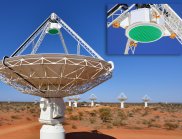
    CSIRO will head up the largest of these consortia, the SKA Dish Array Consortium, and will be responsible for the design work relating to the SKA’s 2500 antenna dishes and receivers, and the development of innovative receivers known as phased array feeds (or PAFs).

    In addition, CSIRO will lead the Infrastructure Australia Consortium in charge of designing and costing critical SKA infrastructure at the Australian SKA site (the Murchison Radio-astronomy Observatory in Western Australia). This would include the provision of power, communications, buildings, water and access to the site.

    “The SKA is an international project, with global scale and huge scientific ambition,

  • CSIRO Snapshot: November 2013

    CSIRO Snapshot: November 2013

    Today we provide a brief review of top CSIRO news published in the previous period. There was everything – from gum leaves to bushfires.  Hope you will enjoy this journey.

    Spotlight – gum leaves rich in gold

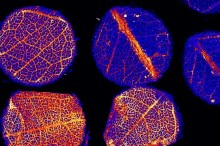
    While money doesn’t grow on trees per se, we’ve found that precious gold does. We have revealed that gum trees from the Western Australian goldfields draw up tiny particles of gold via their roots and it ends up in their leaves and branches.

    Finding new gold deposits is not just about bling’it is vital for industry. In the past 10 years the discovery of new gold deposits around the world has decreased by over 45 per cent. Gold is one of the most important minerals used by industry. It is used in electronics, dentistry, medicine, aerospace, glassmaking, computers and mobile phones.

    So mineral explorers need to find new ore deposits. Novel exploration techniques are required to find the more difficult deposits hidden beneath sediments. Read more and watch the video on CSIRO’s blog.

    Top of the news

    Bushfire help at hand

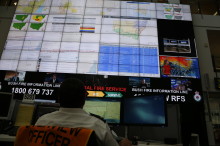
    Bushfires have the potential to affect every Australian in one way or another. And this season is looking to be a bad one. Over the last few weeks we’ve been working hand in hand with the NSW Rural Fire Service (RFS) at its headquarters to provide advice on fire behaviour. We used the best tech to produce maps showing likely fire progress and to monitor Twitter feeds to find hot spots of developing fire emergency. The RFS is also using new apps we developed for the first time to assess the impact of the fires on property. More on the Climate Response blog.

    Does my virtual forehead look big in this?

    The online retail sphere is rapidly growing, with more people using their smart phones and tablets to make everyday purchases. But we’re taking online shopping to a completely new level by teaming up with online eyewear retailer Glasses.com. Using our Smart Vision technology, Glasses.com has developed a new iPad app that allows customers to virtually try on specs from the comfort of their own home. The Smart Vision software allows the app to produce a true-to-life 180′ view of the user’s face showing how each pair fits in 3D. Read more and watch the video on CSIRO’s blog.

    It’s like Jimmy Choo – for horses

    Spring Racing Carnival fever has hit- and our scientists are not immune. In a horse-ome titanium 3D printing first, we have scanned a race horse’s hooves using a handheld scanner and then, with sophisticated modelling software, designed the perfect fitting, lightweight racing shoe. And the shoes are pinkurple. Why did we bother? We think 3D printing will have broad application potential. We’re already researching how it can be used in biomedical implants and even things like automotive and aerospace parts. More on  this blog.

    Making a clean-burning synthetic fuel, Indian style

    Impressive cricket skills aren’t the only thing us Aussies have in common with India. Both nations face pretty similar energy challenges in that neither country can meet current fuel demands with domestic production alone. Enter dimethyl ether (DME), stage left. DME is a fuel that can be produced from natural gas, coal, biomass, or directly from carbon dioxide. It generates significantly less pollution than conventional fuels when burnt, making it more environmentally friendly. So we’ve teamed up with friends in India to progress the research around use of DME. More on this blog.

    In the business

    Leading R&D for SKA

    If you haven’t heard of the Square Kilometre Array, then let us tell you it will be the world’s largest radio telescope and it will be located in Australia and Africa. It’s just been announced that we will head the largest R&D consortia for the project, the SKA Dish Array Consortium. We will be responsible for the design work relating to the SKA’s 2500 antenna dishes and receivers, and the development of innovative receivers known as phased array feeds (or PAFs). More on the Universe blog.

    Source and image.

  • Let’s fly through 17th century London!

    Let’s fly through 17th century London!

    Six students from De Montfort University have created a stellar 3D representation of 17th century London, as it existed before The Great Fire of 1666.

    The three-minute video provides a realistic animation of Tudor London, and particularly a section called Pudding Lane where the fire started. As Londonist notes, “Although most of the buildings are conjectural, the students used a realistic street pattern [taken from historical maps] and even included the hanging signs of genuine inns and businesses

  • Facts about Mars sample container

    Facts about Mars sample container

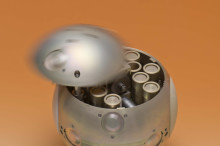
    This spherical container has been engineered to house the most scientifically valuable cargo imaginable: samples brought back from the Red Planet.

    Still probably many years in the future and most likely international in nature, a Mars sample-return mission is one of the most challenging space ventures possible for robotic exploration. A robust, multifunctional sample container is an essential link in the long technical chain necessary to make such a mission successful.

    Weighing less than 5 kg, this 23 cm-diameter sphere is designed to keep martian samples in pristine condition at under -10*C throughout their long journey back to Earth.

    First, the sample container must be landed on Mars, along with a rover to retrieve a cache of samples carefully selected by a previous mission, according to current mission scenarios. The container seen here hosts 11 sealable receptacles, including one set aside for a sample of martian air.

    Then, once filled, it will be launched back up to Mars orbit. There it will remain for several days until a rendezvous spacecraft captures it. To ease the process of rendezvous, the sample container carries a radio emitter and retroreflectors for close-up laser ranging.

    Before being returned to Earth, the container will be enclosed in another larger bio-sealed vessel to ensure perfect containment of any returned martian material. This container will then be returned to Earth for a high-speed entry.

    “Because there is the potential, however remote, that the samples contain alien life, we have to comply with strict planetary protection protocols not to bring them into contact with Earth’s biosphere,” explained Benoit Laine, Head of ESA’s Thermal Analysis and Verification section, who oversaw the sample container project.

    “In effect, the parachute technology is not reliable enough – which means the container must be able to withstand a crash landing without parachute.

    “The mission design therefore does not include any parachute, and the capsule literally falls from Mars onto Earth, decelerated only by the pressure on the heatshield through Earth’s atmosphere, and by the impact at landing.”

    While the sample container is a proof-of-concept design rather than actual mission hardware, it is fully functional and has undergone testing in simulated thermal conditions, including a 400 g shock test.

    “This challenging project drew on the expertise of multiple ESA specialists,” added Benoit. “It incorporates mechanical systems covering structural, thermal and mechanisms engineering but also communications, antennas and power – it has of course to incorporate a highly reliable battery.”

    The prime contractor for the project, which was supported through ESA’s Aurora programme, was French company Mecano I&D. Activities to prepare for a Mars sample mission continue, including a refinement of the sample container design, coordinated by the future missions preparatory office of ESA’s Directorate of Science and Robotic Exploration.

    Source and image.