Blog

  • Is Communication a Lost Art?

    Is Communication a Lost Art?

    So how far away are we from planet Earth morphing into Holodeck 5 and we all have Geordi La Forge glasses? There are several pairs of augmented reality glasses already on the market, many from brands you’ve probably never heard of, but then I’m sure you have heard of Google and their latest project in the foray.

    No longer information at your fingertips, oh no, information at your eyelashes. And much more than information, as some researchers and visionaries have conjured up all sorts of ways to use these glasses. From finding directions to a new coffeehouse, online dating, downloading music, answering a phone call, no need for a handheld device.

    Some have taken it a step further. Dr. Michio Kaku, Professor of Theoretical Physics at the City University of New York, seems to believe these glasses will forever change the way we interact with the world. He speaks about when you walk into a crowded room, say for a networking event where you are looking to land a new job. Your glasses will steer you who to speak with in that industry. A big red arrow will point them out to you. But in your glasses, their entire biography is laid out before your eyes. Where they went to school, how many brothers and sisters they have, the name of their dog – you have all this information. Likewise, someone wearing these glasses would have all this information about you. What questions will you ask? What would be left to discover about the people you meet at this event? What is their left to converse about? Oh right, work. You can talk about work.

    The art of conversation involves the asking of questions. Wouldn’t these reality glasses just negate the need to speak with anyone? Is technology reducing our social ability to communicate with the spoken language? Is it in fact devolving our language? Or are we evolving and becoming more efficient that we no longer require the use of our vocal chords? Getting a bit far out there.

    Social media has connected us, we keep “in touch

  • Mars One: The Martian Chronicles or Big Brother Live on Mars?

    Mars One: The Martian Chronicles or Big Brother Live on Mars?


    This week we have seen beautiful Venus transiting directly between the Earth and the Sun, which brought plenty of the media attention, and yesterday one of the greatest science fiction writers Ray Bradbury died during Venus transit. He was best known for his dystopian novel Fahrenheit 451 and for the science fiction stories collection The Martian ChroniclesBoth the Earth and Mars lost one of their most famous citizens.

    Speaking of Venus, Mars, science fiction and non-fiction, I want to share something with you that a colleague of mine drew the attention to, the other day. It is a private space start up from the Netherlands called the Mars One project, whose goal is to send four volunteer astronauts on a one-way journey to Mars. Take a look at the promotional video to get the sense of this endeavor.

    The idea of the privately financed Dutch company is to establish the first human colony on Mars by 2023. ‘’A habitable settlement will be waiting for the settlers when they land. The settlement will support them while they live and work on Mars the rest of their lives.

  • The transit of Venus 2012 as seen from Cairns (Australia)

    The transit of Venus 2012 as seen from Cairns (Australia)

    Credits: GLORIA Project (www.gloria-project.eu)

    Transit of Venus as seen from the Cupola Module, by NASA_JSC_Photo
  • 2012 Victoria Fellowships Open for Expanded Prestigious Science Awards

    2012 Victoria Fellowships Open for Expanded Prestigious Science Awards

    Minister for Innovation, Services and Small Business Louise Asher today announced applications are now open for the 2012 Victoria Prize for Science and Innovation, and the 2012 Victoria Fellowships.

    Ms Asher said the Victorian Coalition Government was committed to supporting discovery and development in research and innovation, and had doubled the number of Victoria Prize and Victoria Fellowships on offer. “The Coalition Government believes there is immense scientific and research talent to reward and promote in Victoria and that is why we made an election commitment to double the number of awards,

  • Victoria’s Leading Postgraduate Health and Medical Researchers Recognised

    Victoria’s Leading Postgraduate Health and Medical Researchers Recognised

    Premier Ted Baillieu and Minister for Health David Davis today announced that Dr Stefan Gehrig has been awarded the prestigious Premier‟s Award for Health and Medical Research for 2012. The Premier‟s Award for Health and Medical Research recognises and honours the achievements of Victoria‟s early career health and medical researchers.

    Mr Baillieu said Dr Gehrig won the award from a highly competitive field of young Victorian researchers for his far-reaching investigation into Duchenne muscular dystrophy (DMD).

    “Dr Gehrig discovered that increasing levels of a specific protein in muscles has the potential to treat DMD – a severe and progressive muscle wasting disease,

  • How Much is that Green Algae in the Window?

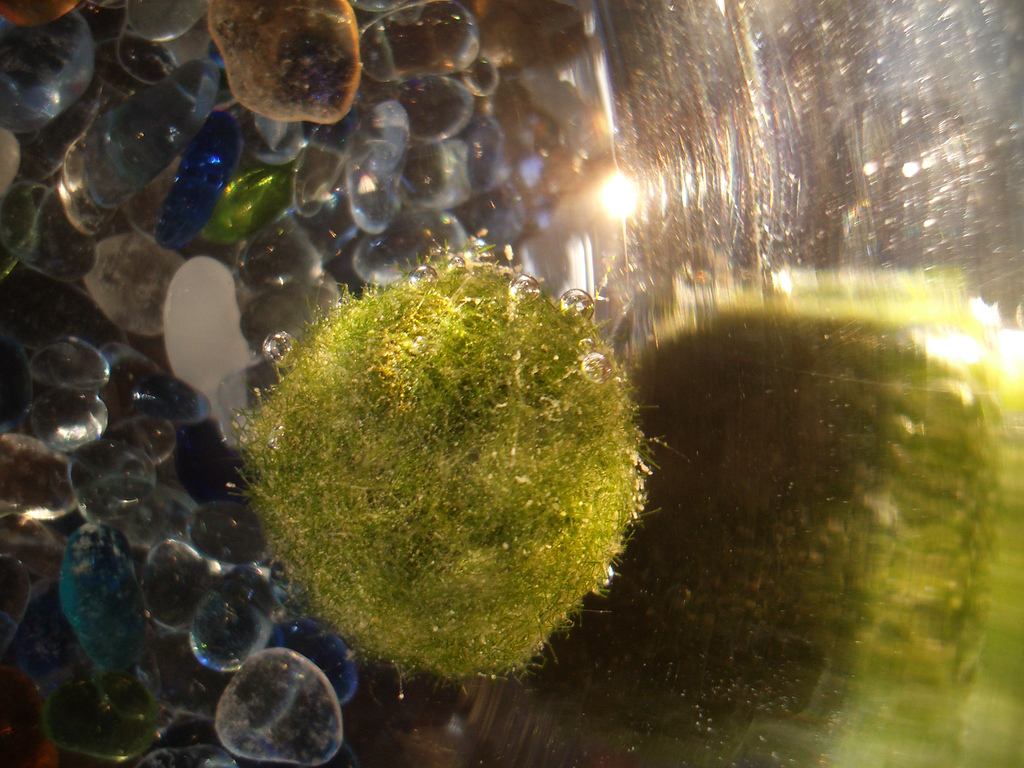
    How Much is that Green Algae in the Window?

    Whoever thought you could make money in biology, right? Turns out, there is quite a bit of money to be made in this field. And I think we are realizing more than ever the importance of the life sciences and the contribution it offers to society and the economy.

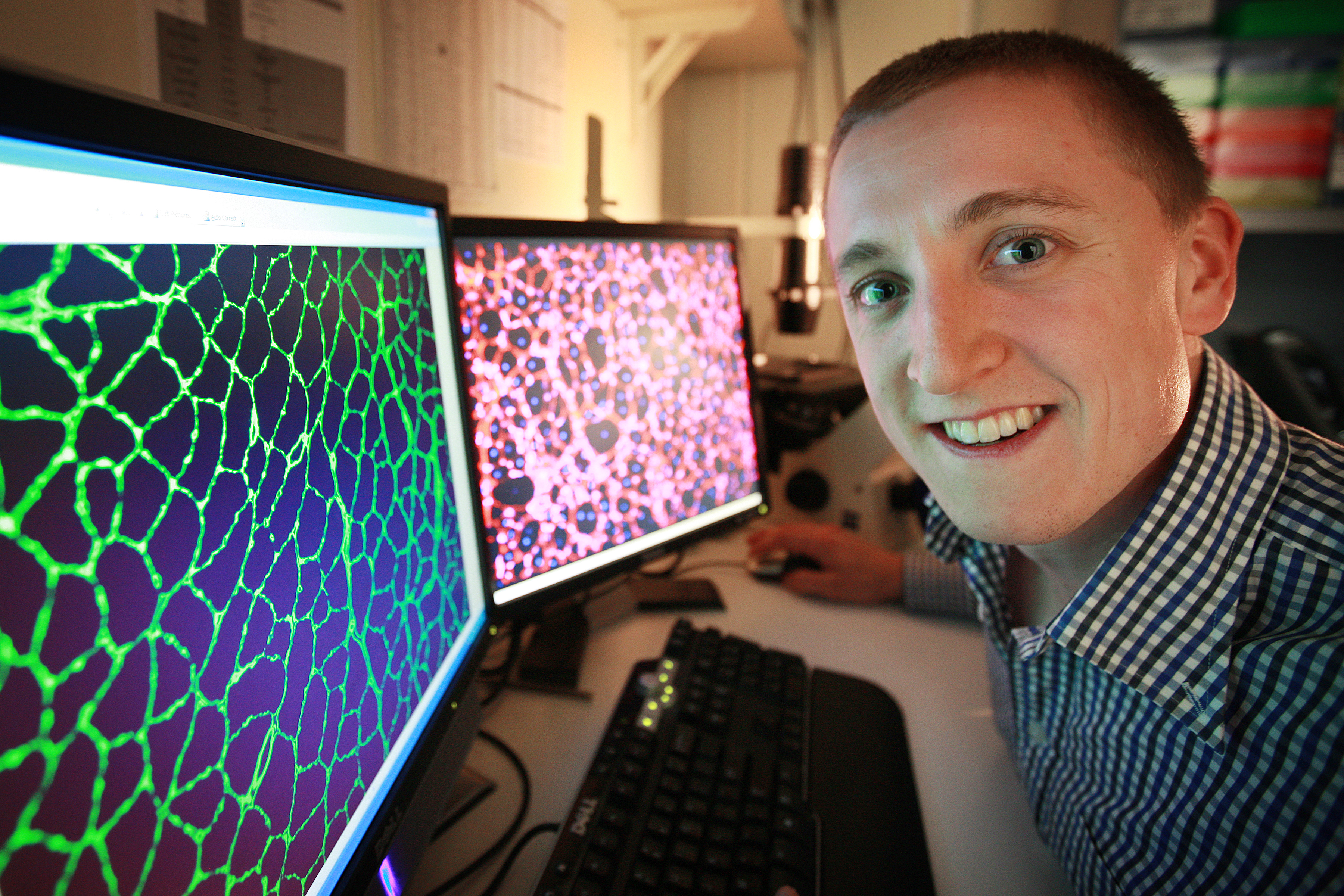
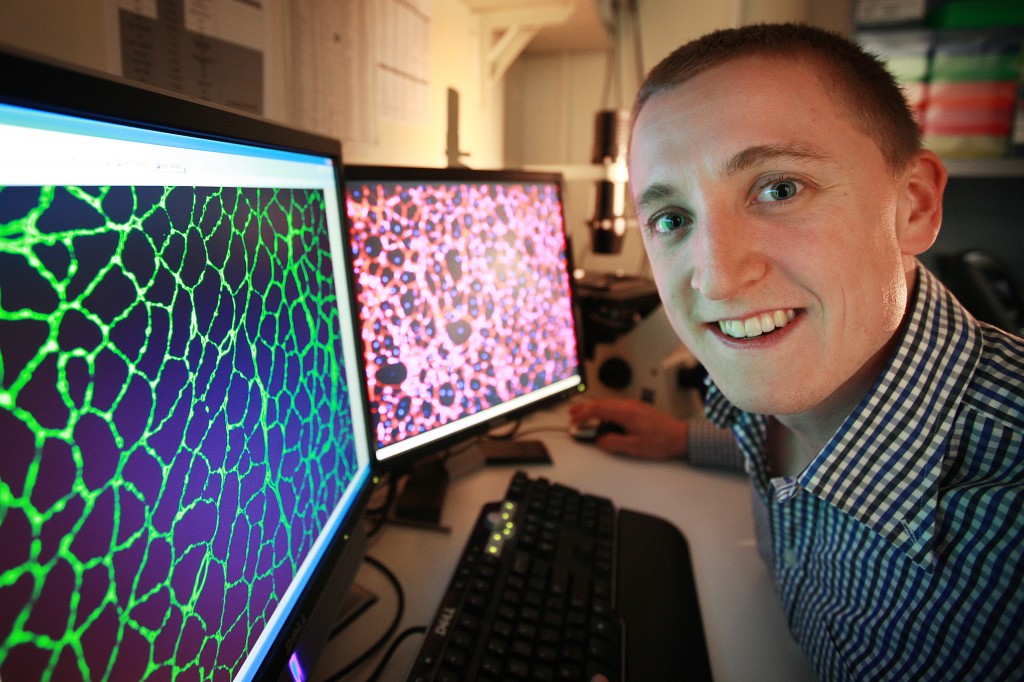
    “I think the biggest innovations of the 21st Century will be the intersection of biology and technology. A new era is beginning, just like the digital one was when I was his age.

  • Measuring Network Performance with M-Lab

    Measuring Network Performance with M-Lab

    Measurement Lab is an open platform for researchers to deploy Internet measurement tools. By enhancing Internet transparency, M-Lab helps sustain a healthy, innovative Internet. What this explanatory video to learn why M-Lab is important to researchers, network engineers and policy makers. M-Lab is a collaborative effort founded in 2009 by Googler Vint Cerf and a number of network researchers and industry partners, including Google.

    M-Lab’s goal is to provide researchers, consumers, policymakers, and anyone else who wants good, intelligible information about the Internet,  with open data about network performance.

    The nuts and bolts of M-Lab start with a widely-distributed server platform maintained and managed by the M-Lab Collaborative. These servers are purpose-built to support broadband measurement, and are consistently deployed to exact specifications. This means that the data they collect is consistent — important when you’re contrasting global network performance. Researchers host open-source, active broadband measurement tools on these servers, and users access these tools, run tests, and get real-time information on their network performance. Each time a user runs a test (about 200,000 times a day), data is collected and put into the public domain. So far, it’s 516 terabytes and growing.


    M-Lab is a head-to-tail solution for high quality, open data. And the best part is that it’s all open. From the testing methodology described in the open source code of the tools, to the server documentation, to the data collected, scientists and others can vet exactly what is being measured, how it’s measured, and what precisely this says about networks and performance. M-Lab’s momentum is generated by working together from a shared source of data to progress the state of networks.

     Source.

  • The Olympics Mass Effect

    The Olympics Mass Effect

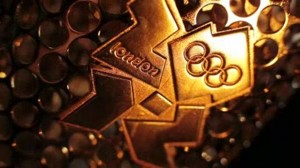
    59 Days to go.

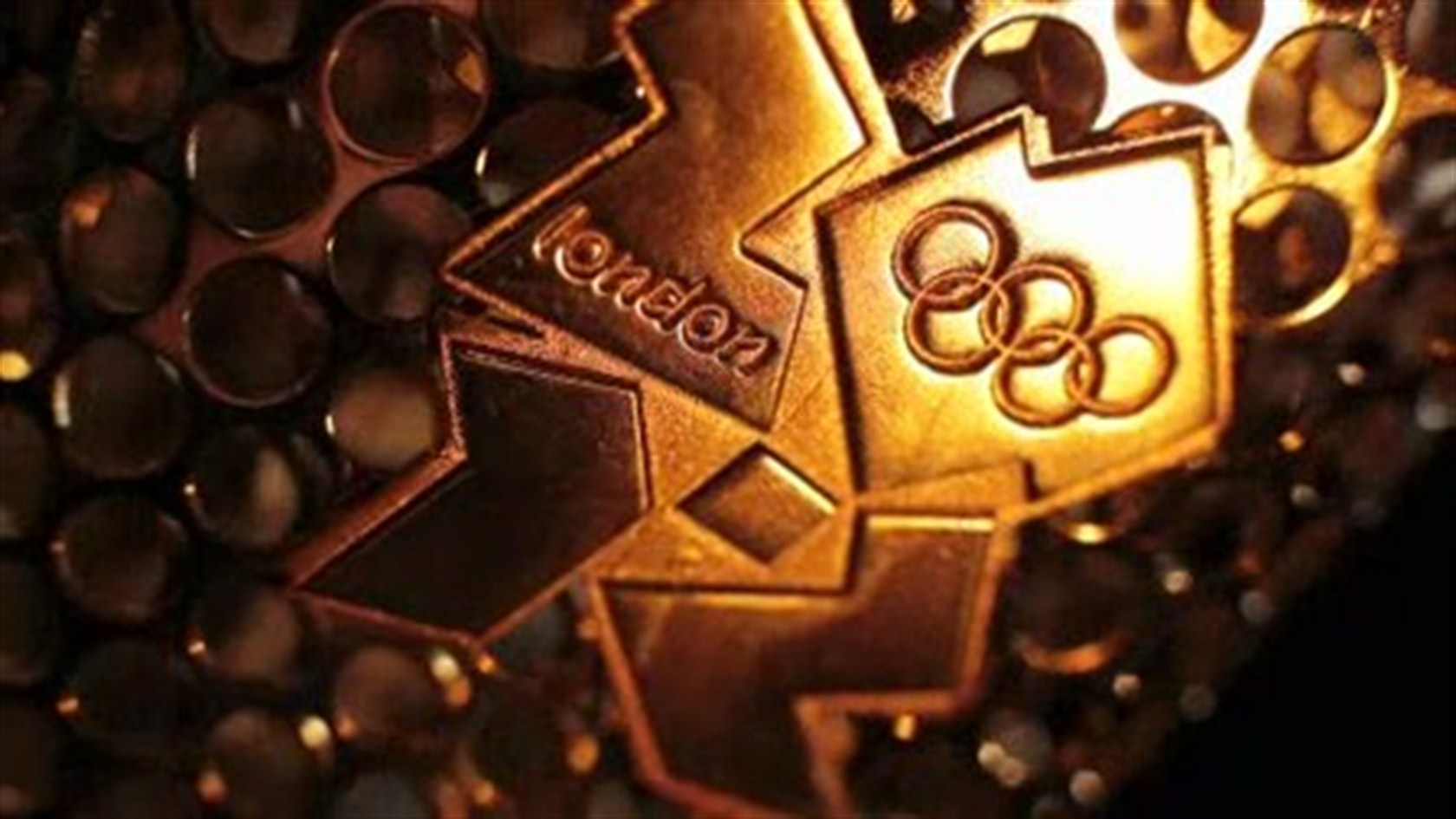
    Simply put, for those that care about the London Olympics — the excitement is mounting. With 26 sports across 44 venues, 10,500 athletes and millions of spectators, it’s going to be a busy summer. From Box-hill to Coventry, and all across London the preparations are almost over and it’s almost time for the curtains to go up. Behind the scenes  a workforce of around 200,000 people are being amassed — comprising of around 6,000 paid full-time and temporary employees, up to 70,000 volunteers and around 100,000 contractors. A small army. Add to this another small army of reporters and media that will cover the games from every angle. The American broadcaster NBC will be sending a team of around 2,800 to London. The BBC will deliver a record 2,500 hours of live action from the games, including 26 channels dedicated to each sport. An Olympic staff (in more ways than one) that actually outnumbers Team GB itself by a considerable margin.

    As Londoners, nonplussed about it all, make a quiet exit for a few weeks, the city and those unlucky enough to be caught in it, are going to be overrun with tourists, sightseers, and everyone else.

    The amount of column inches dedicated to the Olympics, as you would expect, is significant. From the tried-and-tested stories of athletes battling against the odds to make it to London this summer. To the truly bizarre ones of the UK’s Ministry of Defence telling residents high-velocity rockets will be fitted to apartment blocks close to the Olympic Park. With round the clock surveillance, and even snipers.

    Evidently, in the run-up to the games, tensions and expectations for worse-case-scenarios are high. The threat and danger of anything sparking a problem is clearly in the forefront of the organiser’s minds. With millions of extra people added to the melting pot it’s not just an extra strain on public services. It goes beyond that — the Olympics should come with a health warning.

    Well, in fact, it does. A doctor at the Centers for Disease Control and Prevention (CDC) has told US travellers to make sure they are vaccinated against measles if they travel to London for the Olympics in July.

    “Disease knows no borders. We are concerned about Americans coming back from the Olympics this summer and unknowingly infecting others,

  • Dragon’s Rendez-Vous Day

    Dragon’s Rendez-Vous Day

    For those who may not be familiar, The SpaceX Dragon commercial cargo craft  is developed, and built by the American company Space Exploration Technologies, SpaceX, as it is more commonly known. You may find very informative and interesting  article on SpaceX Dragon written by Kevin Orrman-Rossiter.

    Today SpaceX #Dragon is proceeding toward rendezvous with #ISS.  The International Space Station mission management team completed a thorough review of the progress of the SpaceX Dragon spacecraft and at 9:38 p.m. EDT unanimously authorized the International Space Station and Dragon flight control teams to proceed toward rendezvous and berthing about 11:20 a.m. Friday.

    The SpaceX mission management team reported all spacecraft systems are ready for the final stages of rendezvous and completion of the final COTS demonstration objectives, and space station managers reported the orbiting outpost is ready for the commercial spacecraft’s arrival.

    Dragon has nearly completed its fly-around of the station, crossing behind the station and beginning its final approach. NASA TV coverage will begin at 2 a.m. Source.

    Photo source: Takot

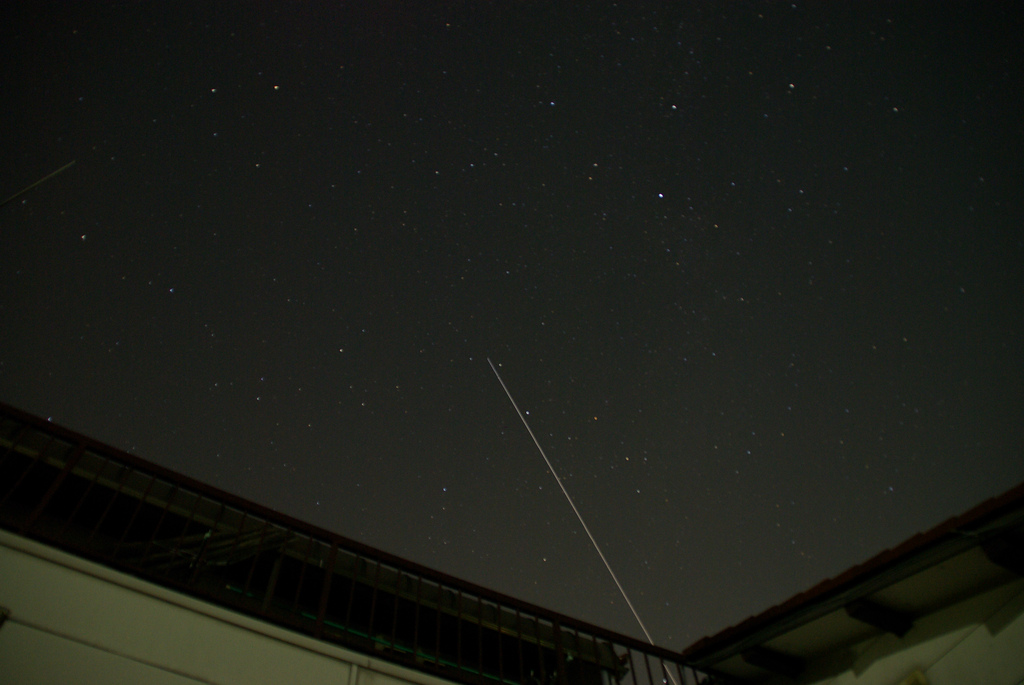
    International Space Station Flying By – captured by Takashi Ota, Japan
  • Science and Faith

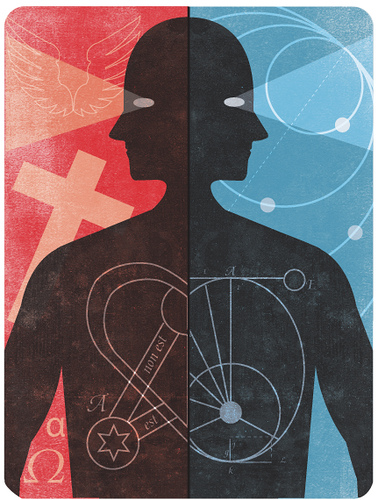
    Science and Faith

    If I let go a hammer on a planet having a positive gravity, I need not see it fall to know that it has, in fact, fallen. – Spock, “Court Martial,” Star Trek, stardate 2948.9.

    I recently viewed the film Salmon Fishing in the Yemen. Dr. Jones, (brilliantly played by Ewan McGregor), has been ordered by the Ministry of Fisheries to undertake this farfetched project of introducing salmon into the Yemen River, wholeheartedly, or be out of a job. Dr. Jones reluctantly agrees but continuously ridicules this idea based on his years of research and meticulous study of salmon. He casts doubt every chance he gets that this project will actually work. And what we actually have here is a case of policy dictating science; in the name of a heartfelt, goodwill story meant to assuage the voting public’s uneasiness with the war. (A totally different issue of debate, which I will not touch on here.) It’s not until Dr. Jones meets Sheikh Muhammed, a deeply spiritual man of faith that he begins to open up to another way of thinking, one that defies all his principles of scientific reasoning. And he embraces that this plan just might work, with farmed salmon no less. But what causes the radical reversal of the scientist’s viewpoint from staunch biological reasoning to faith that this project might actually be possible?

    Science and religion have had something of a love-hate relationship, intertwined for centuries and often at direct odds with each other. Popes and bishops issued condemnations and accused some great scientific minds of heresy in the Middle Ages. The work of Galileo, Conrad Gessner and Charles Darwin also come to mind, having caused quite a ruckus of controversy in their day. And well Darwin may always be at odds with some folks.

    From my own experience growing up Catholic and pursuing biology and chemistry in college, I found it difficult to compartmentalize science and religion. But there have been and still are a few scientists out there who can separate their scientific beliefs from their religious practice. Copernicus was a Catholic clergyman; Gregor Mendel was an Augustinian friar; and Georges Lemaitre, who first proposed the Big Bang Theory, a Belgian priest. They seemed to have been able to separate their work from their spiritual beliefs. Perhaps they had truly find enlightenment? Or maybe that’s exactly what it is; just a spiritual belief, for right or wrong, that has nothing to do with science.

    As with most conflicts, it seems that the bitter clashes between science and religion arose primarily due to a different interpretation over the definition of ‘science’. Secular philosophers considered science in the sense of natural science; while theologians took the view that all science is based on demonstrations – according to the St. Thomas Aquinas viewpoint. The shift toward science becoming the top dog, so to speak, over religion seems to have occurred as Europe and North America experienced greater secularization. The political power and influence of the church relating to scientific research has gradually decreased. According to the Catechism of the Catholic Church: “Methodical research in all branches of knowledge, provided it is carried out in a truly scientific manner and does not override moral laws, can never conflict with the faith, because the things of the world and the things the of the faith derive from the same God. The humble and persevering investigator of the secrets of nature is being led, as it were, by the hand of God in spite of himself, for it is God, the conserver of all things, who made them what they are”. I will leave it up to the reader to ponder that and agree or disagree.

    But let’s explore the concept of faith for a moment. The word faith is thought to date back to the early 13th century, around the time of some budding scientific discoveries. Formally, faith is a belief in one or more gods or in the doctrines of religion. Buddhism, Christianity, Judaism, Sikh, Hinduism, Islam – all of these religions have some concept of faith stationed at the root of their core beliefs. Informally, it can mean a trust or belief without proof, a hope. And this is where the criticism starts, over this very definition of faith, and how it can seem at odds with science.

    Critics argue that faith is opposed to reason, while advocates argue that faith addresses questions that cannot be settled by evidence. The evolutionary biologist, Richard Dawkins stated, “Faith is the great cop-out, the great excuse to evade the need to think and evaluate evidence. Faith is belief in spite of, even perhaps because of, the lack of evidence.


  • Call for Participation – PLNOG 2012 conference

    Call for Participation – PLNOG 2012 conference

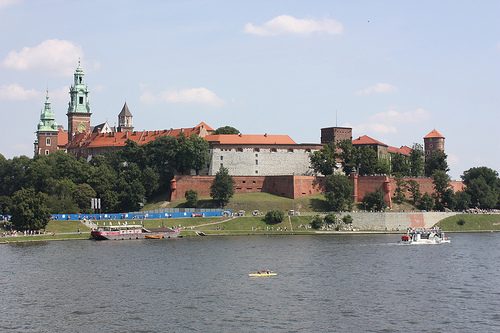
    This year in Krakow, a real Polish Golden Autumn will accompany the next meeting of all operators, deployment companies, content providers and network administrators at the 9th edition of the PLNOG conference. In response to the expectations and suggestions of attendees of previous editions, lectures again will be divided into four independent paths with an even greater number of foreign speakers and a big emphasis on the educational level. In addition, there will be panels, unique workshops, peering session and lots of attractions.
    PLNOG Conference is a unique conference dedicated to issues of maintaining and developing of ICT networks. This is an incredible opportunity to exchange experiences, broaden knowledge, attempt to solve common problems in networking industry and to meet fantastic people with similar interests. The participation of many outstanding professionals, two days of exciting lectures and fun during the evening event make the PLNOG conference a truly unique.

    In addition, in September, EuroNOG Meeting will be held – the international meeting of experts responsible for the construction, maintenance and development of ICT networks, which is an extension of the initiative PLNOG to the European market. Subsequent meetings will be held each year in various cities in Europe. Our main goal is to build a platform to exchange experience between the operators, ISPs and companies responsible for deployment.

    More about  PLNOG, and the Call For Papers can be found at: http://plnog.pl/spotkanie-8-pazdziernik/call-for-papers/

    Photo source

  • Saving Australia’s Koalas

    Saving Australia’s Koalas

    In an emergency room at Beerwah, Queensland, the phone rings almost 100 times a day.
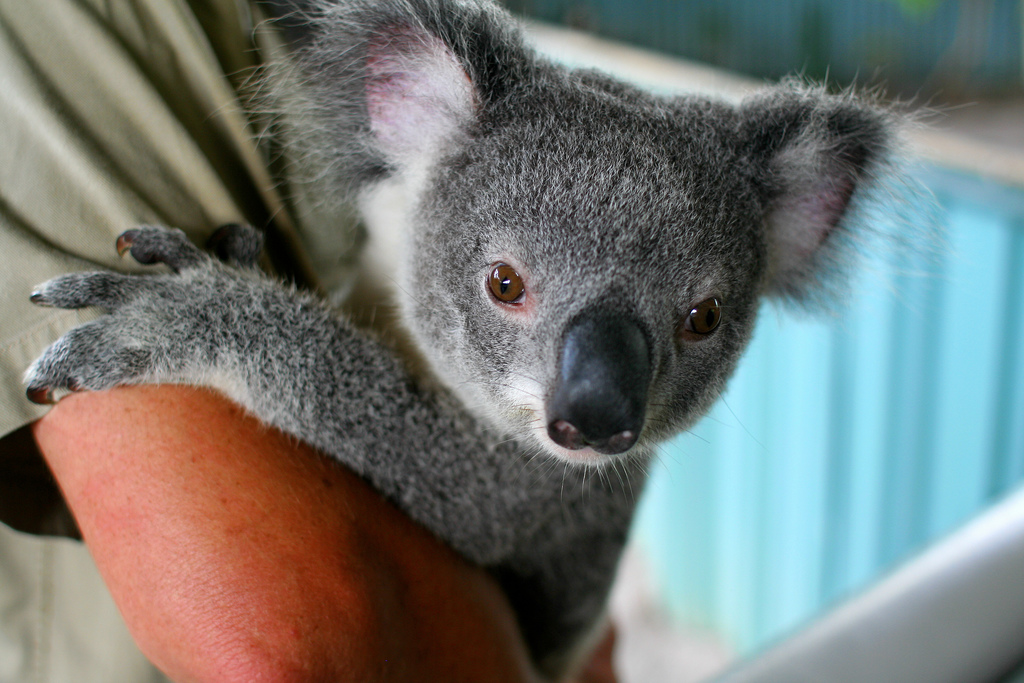
    The emergency room is one at the Australian Wildlife Hospital, providing veterinary care for sick and injured wildlife — admitting anywhere in the region of 30 different species on a daily basis — with injuries resulting from accidents, acts of deliberate cruelty, or conflict.

    Arethusa came into the emergency room suffering from fractured ribs and internal abdominal bleeding. Frodo came in with a gunshot wound, sustaining a fractured skull and significant damage to the stomach and intestines. Travis and his mother were run over by a hit and run vehicle.

    These four were koalas, but the hospital deals in animals common to the Australian landscape — from Brushtail Possums to Bearded Dragons.

    The koalas themselves, cute cuddly creatures, with a sleepy demeanour, renowned as a representation of Australia have recently been in the news for being endangered and for a curious case of koala chlamydia. Koalas are in serious decline, suffering from many of the effects the veterinarians at the Australian Wildlife Hospital see on a daily basis — as well as habitat destruction, domestic dog attacks, bushfires and disease. The Australian Koala Foundation estimates that there are less than 80,000 koalas left in the wild, possibly as few as 43,000.

    Over the past few years researchers have been distilling and putting together a case to add another reason for koala decline to the list. Roughly 600 koalas per year are seen to at the hospital, and most present with other primary conditions. A number of koalas, however, have presented at the hospital with serious illness associated with regenerative anaemia and now trypanosome infections.

    The trypanosome is a parasite we commonly associate with African Trypanosomiasis (as well Chagas disease). In reality, the trypanosome also infects rats, cattle, and even kangaroos.

    To say little is known about systemic and blood parasites of native wildlife in Australia would be an understatement. Researchers are only just beginning to understand the diversity of trypanosomes in Australian marsupials. Much is still to be learnt. Their evolutionary biology, transmission, and resulting potential impact on the wildlife. The possibility that indigenous wildlife trypanosomes can act as a reservoir for human pathogenic infections is all to be seen.

    What we do know is that, in Australia, the introduction of trypanosomes are as a direct result of human activities. Being almost certainly responsible for introducing trypanosomes from one wildlife population to another. The vector — what transmits the parasite from animal to animal — of Australian trypanosomes is not known. Although, researchers have the flea in mind as the usual suspect.

    To date around 10 trypanosome species and genotypes have been identi

  • New Associate EMBO Member from Australia

    New Associate EMBO Member from Australia

    New Associate EMBO Member from Australia – professor David L. Vaux

    Fifty-five life scientists from Europe and around the world, on 9 May 2012 in  Heidelberg, Germany, were recognised by EMBO (Excellence in Life Sciences) for their excellence in research. Forty-eight of the researchers are from Europe and neighbouring countries while seven scientists from Argentina, Australia, South Korea and the United States join as Associate Members. In total, EMBO membership now comprises almost 1,550 life scientists in the international scientific community.

    EMBO elects new members annually on the basis of scientific excellence. The new members represent a broad cross-section of the life sciences. The latest scientists to join the group come from 17 different countries and include 13 female scientists recognized for their contributions to life science research.

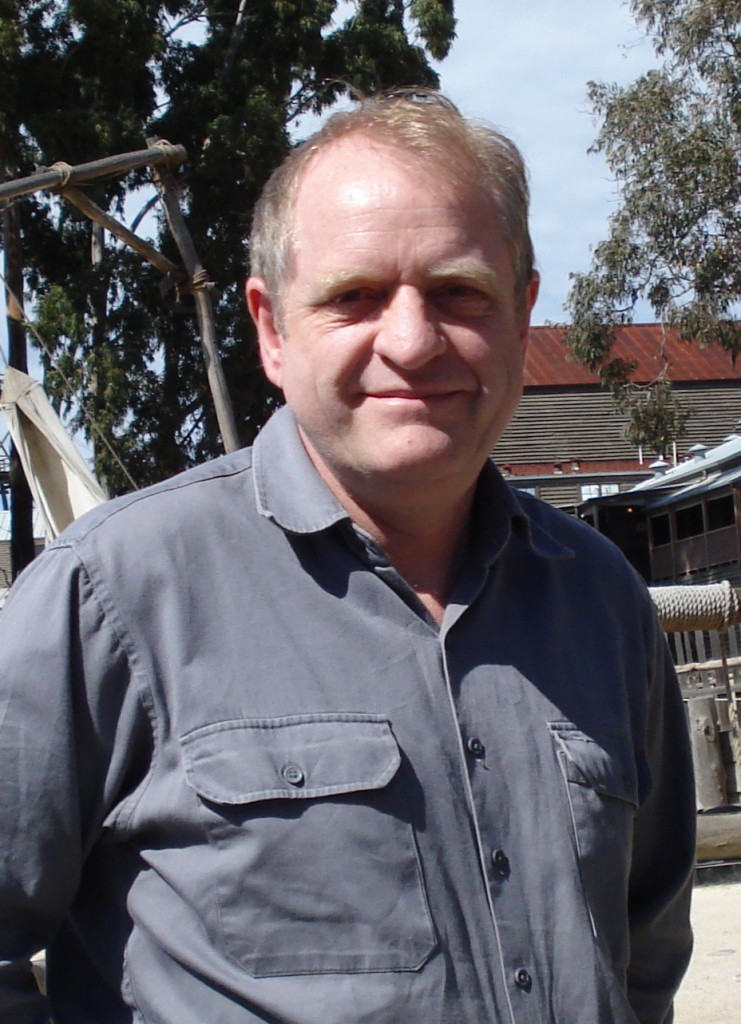
    The new Associate Member from Australia is professor David L. Vaux, Walter and Eliza Hall Institute, Parkville. Prof. Vaux is best known for identifying the proto-oncogene bcl-2 as an inhibitor of cell death, thus launching the field of molecular biology of apoptosis (programmed cell death). Read more about his research division Cell Signalling and Cell Death and his research overview, interests, and selected publications.

    The selected researchers will help shape the direction of the life sciences in Europe and beyond by their involvement with the activities of the organization. EMBO Members provide scientific input such as acting on advisory editorial boards of the four scientific journals of the organization, serving on selection committees for EMBO Programmes and giving general advice to the scientific community.

    A list of all new EMBO Members and Associate Members accompanies this announcement [link].

  • Lonelier Than Ever

    Lonelier Than Ever

    My childhood was spent on a dairy farm in Los Angeles County. Telephones were still luxuries. It was a big deal when we got a four-party line (yes! four households shared the same line). Phone bandwidth was expensive. Only the wealthy had private lines. On Sundays friends and neighbors would drop in on each other unannounced. In those days, existence had a more tangible personal feel to it. Phones became cheap; and the Internet made communication faster and even cheaper. Today we send messages everywhere on Earth at a moment’s notice. But, are we closer now than the neighbors who knocked at each other’s doors on Sunday for a visit? Are we getting more “free time