Blog

  • Sonification of the Higgs Boson – the Sound of Particle

    Sonification of the Higgs Boson – the Sound of Particle

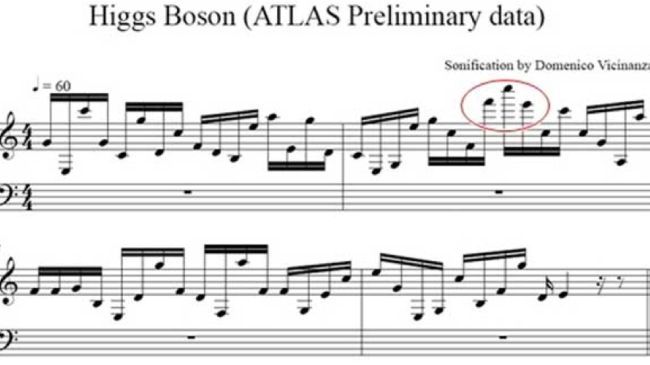
    The July 4 achievement and the discovery of Higgs Boson particle, created new possiblities for the researchers who have “sonified” the data from the Atlas experiment, by turning these scientific findings into music using data sonification. Working from results supplied by the Atlas experiment at the Large Hadron Collider (LHC), researchers have created melodies that make the results easier to understand.

    Sonification requires enormous amounts of networking and processing power to produce results, as the pan-European GÉANT network reports, it is the project coordinated by Domenico Vicinanza of DANTE (the UK-based organisation that operates the GÉANT network on behalf of European national research and education networks (NRENs)), in collaboration with Mariapaola Sorrentino of ASTRA Project, Cambridge, who contributed to the sonification process and Giuseppe La Rocca from INFN Catania, responsible for the computing framework.

    “In the music the peak of high notes in the second bar is the appearance of the Higgs-like particle (about 3.5 seconds into the recording). The researchers created two versions, one as a piano solo, and the second with added bass, percussion, marimba and xylophone.”

    Take a listen on a SoundCloud:

    “The discovery of the Higgs-like particle is a major step forward in our knowledge of the world around us,

  • America in the time of AIDS

    America in the time of AIDS

    This week the world descends on Washington DC, to discuss, evaluate, and get the state of the art of what is probably the disease of our times: HIV/AIDS; as the city prepares to host the International AIDS Conference (AIDS2012). It marks the first time in 20 years the conference has been held in the US — coming as the US lifts the ban on people entering the country with an HIV positive status.

    It is the cliché to think that sub-Saharan Africa, particularly southern Africa, typifies and exemplifies the problem we have and our struggle with HIV/AIDS. America hides an ugly truth about a disease that last year celebrated its 30th birthday (anniversary of the first case reports in the United States). Washington DC has an HIV infection rate of 3.2%. If it were a country it would rank 23rd out of 54 in percentage of people with HIV — placing it above the Democratic Republic of Congo, Ghana, and 30 other African countries, and just behind Nigeria.

    In 1995, the number of new cases in black Americans overtook the number of new cases in white Americans and other ethnicities — and it’s been that way ever since. The District of Columbia, with a population of 600,000 odd inhabitants, has a rate of prevalence of HIV/AIDS among black males that far outweighs other ethnic groups, and even the total prevalence in other American cities.

    With the number of cases around the world dropping, in general, in the US it has remained the same. If the problem in southern Africa is one of denialism… America’s problem is one of inequality. From the statistics you would be forgiven to think that poverty equals AIDS. Poverty does not equal AIDS. Inequality equals AIDS.

    The problem seems systemic, being placed squarely on the shoulders of a city that has failed its population. The Globalpost writes “for years, the District had failed to do in-depth surveillance of the AIDS epidemic and had perceived it to a problem largely limited to the gay community and injectable drug users

  • Beautiful Barred Spiral Galaxy NGC 6872

    Beautiful Barred Spiral Galaxy NGC 6872

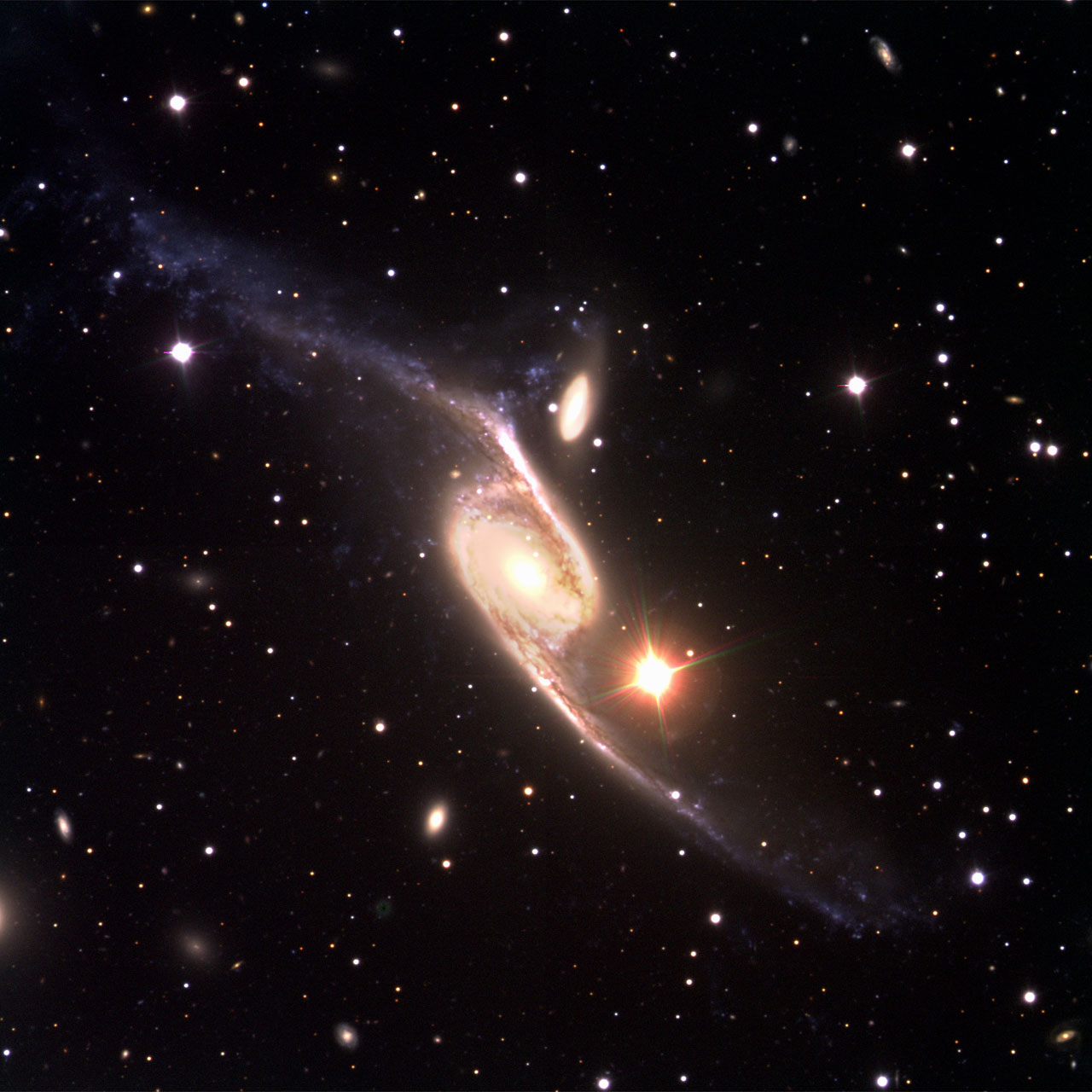
    Three-colour composite reproduced from one blue (B), one green-yellow (V) and one red (R) exposure, obtained with FORS1 at ANTU (VLT). The field size is again 6.8×6.8 arcmin 2. It shows the spectacular barred spiral galaxy NGC 6872 that is shaped like an “integral sign”. It is of type SBb and is accompanied by a smaller, interacting galaxy, IC 4970 of type S0 (just above the centre).

    The bright object to the lower right of the galaxies is a star in the Milky Way whose image has been strongly overexposed and exhibits multiple optical reflections in the telescope and instrument. There are also many other, fainter and more distant galaxies of many different forms in the field. They are particularly well visible on the “Normal” and “Full Resolution” versions of the photo.

    The upper left spiral arm of NGC 6872 is significantly disturbed and is populated by a plethora of blueish objects, many of which are star-forming regions. This may have been be caused by a recent passage of IC 4970 through it. This interesting system is located in the southern constellation Pavo (The Peacock). It is comparatively distant, almost 300 million light-years away. It extends over more than 7 arcmin in the sky and its real size from tip to tip is thus nearly 750,000 light-years. It is in fact one of the largest known, barred spiral galaxies.

    In order to image all of this extraordinary object within the available field of the FORS1 camera, the instrument was rotated so that the galaxy extends along the diagonal. For this reason, the orientation is such that North is to the upper right and East is to the upper left.
    Credit: ESO

  • Call for Participation: EuroNOG – an international meeting

    Call for Participation: EuroNOG – an international meeting

    Want to broaden your knowledge in ICT topics and meet other people working in this field? Take part in the second EuroNOG meeting on September 10th-11th in Budapest, Hungary.

    EuroNOG – an international meeting of experts responsible for the design, maintenance and development of ICT networks. The first edition was held on the 30th September 2011 in Krakow (Poland). The second edition will be organized on September 10th-11th, 2012 in Budapest (Hungary). Subsequent meetings are going to be held annually in various cities in Europe. Our main goal is to build a platform to exchange experience between the operators, ISPs and companies responsible for network implementation.

    National borders are becoming blurred, and increasing international cooperation is a key element of the Internet development. At the same time, due to various technical and economic conditions, in each of the European countries the development of networks diverged in a different way. Therefore it is difficult to compare and easily transfer ready-made solutions from one country to another – just look at the networks in Scandinavian countries compared with countries from Southern Europe– different solutions, architectures and equipment. It is best for us to exchange experience and learn from best practices used by local players on the European market.

    What sets us apart from the RIPE, TERENA and other IX meetings?

    Certainly, our conference is not academic, we do not want to focus only on the theoretical backgrounds of the IP world. We want to provide the greatest number of good practices and presentations including deployment case studies. Our point of view resembles NANOG, as we are looking at Europe through the prism of a global network, treating each country as a state – strong co-operation but also territorial autonomy. The EuroNOG conference will be a vendor-independent meeting place for experts.

    For Australian Science readers the organisers have prepared special discount code “as_10”. People registrating with this code will get 10% discount.

    Detailed information: Date: 10-11 September 2012

    Location: RamadaPlaza Hotel, Budapest (Hungary)

    Registration: http://registration.euronog.eu

    Conference website: http://euronog.eu

    If you have any questions, please contact: Emilia Staszczak

    EuroNOG main organizer mail: emilia.staszczak@euronog.eu


  • The extinction that is yet to come

    The extinction that is yet to come

    By 2050 they will all be gone. The worst is yet to come.

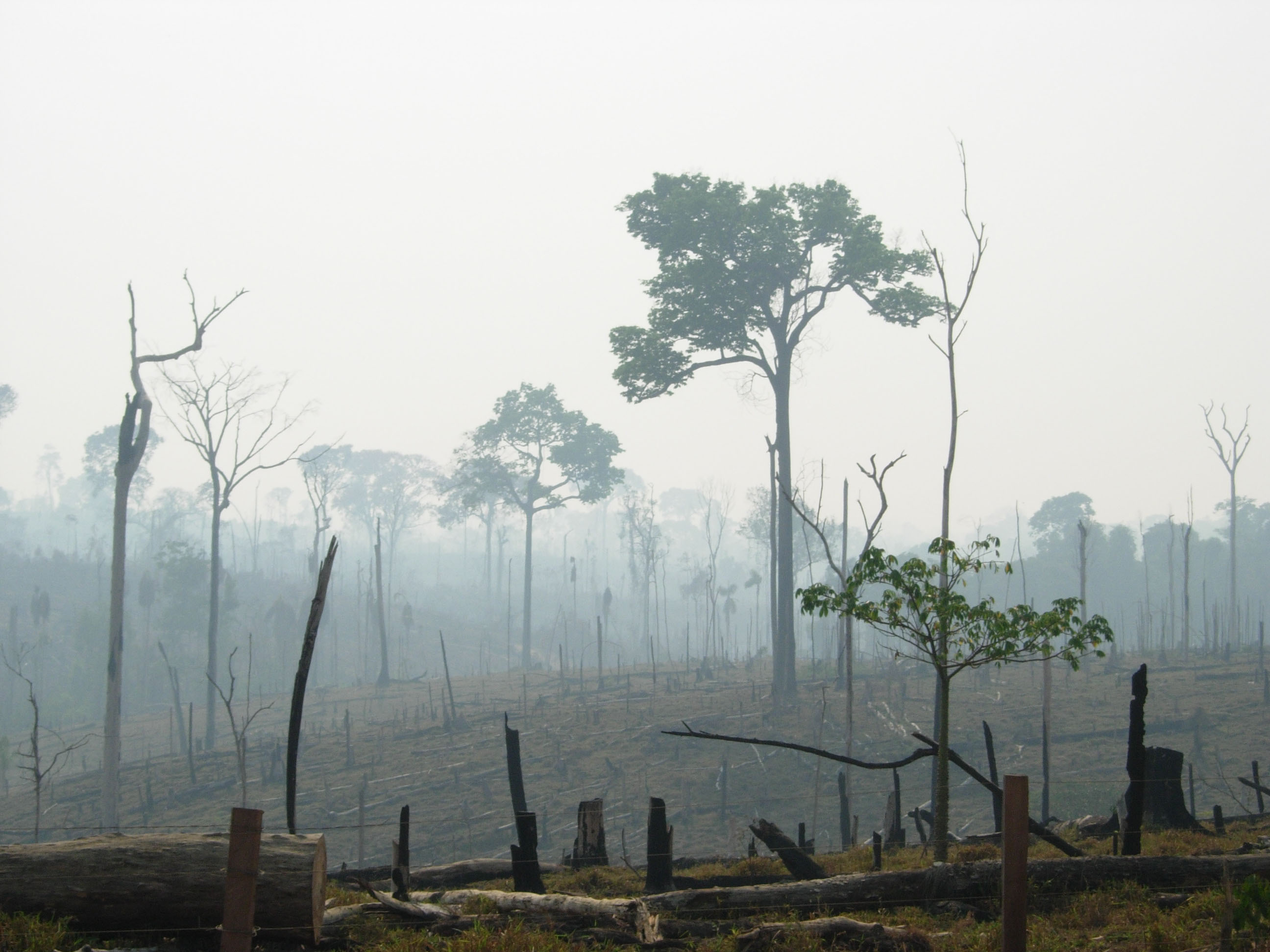
    The Amazon rainforest contains a wider variety of plant and animal life than any other biome in the world. The region in its entirety is home to roughly 2.5 million insect species, tens of thousands of plants, and some 2000 birds and mammals. To date, at least 40,000 plant species, 2000 fishes, 1000 birds, 427 mammals, 428 amphibians, and 378 reptiles have been scientifically classified. The Brazilian Amazon harbors roughly 40% of the world’s tropical forest and a significant proportion of global biodiversity.

    The numbers speak for themselves. However, over the past few years what we’re seeing is a biodiversity crisis in slow-motion. Those numbers are at risk. The largest drivers of which being climate change and habitat loss by deforestation.

    Habitat loss results in species extinction, but not immediately. When habitats shrink it may take several generations after an initial impact before the last individual of a species is gone. Extinction against the clock and in slow motion.

    Visualising how this occurs and estimating the impact has always been a problem for researchers. The question now is — how many species are headed for extinction as a result of past and future deforestation?

    New research published today in Science describes cutting-edge statistical tools used to devise a novel strategy to estimate the expected number of local species extinctions as a function of the extent of habitat loss.

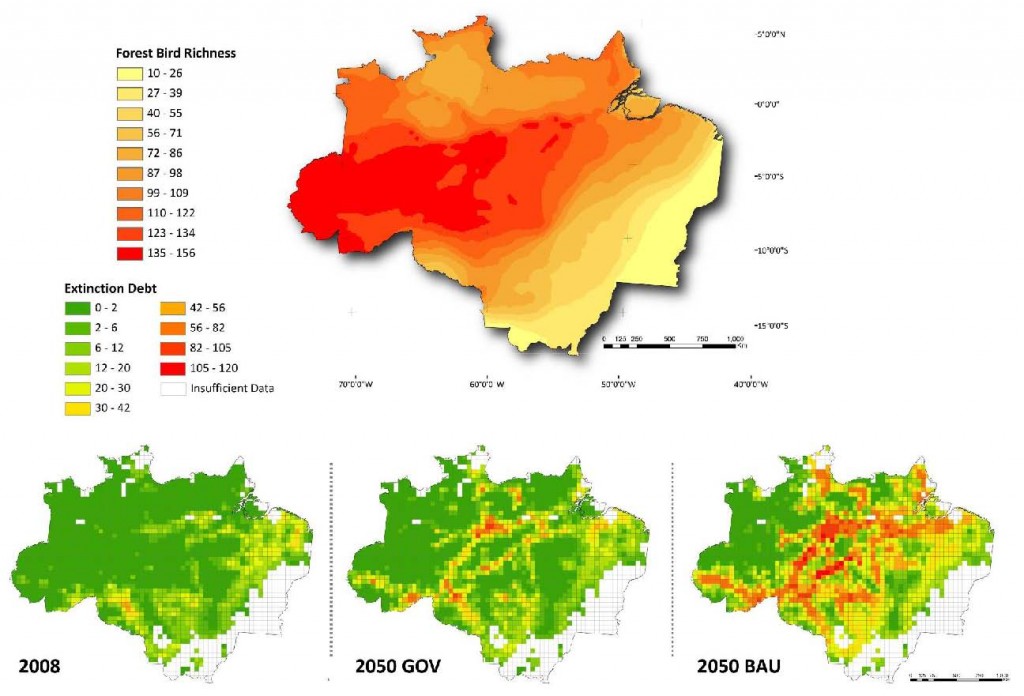
    Researchers made predictions on the extent of the extinction damage based on four possible scenarios — two in which all parties comply and respect current environmental law and protected area networks; and two which rely on strong reductions and eliminations in current deforestation rates. A reflection of recent pledges by the Brazilian government and potential reductions in deforestation proposed in 2009. What researchers describe is an estimation of something much more serious than previous estimates.

    Spatial patterns in bird species and extinction debt in the Brazilian Amazon

    Deforestation over the last three decades in some localities of the Amazon has already committed up to 8 species of amphibians, 10 species of mammals, and 20 species of birds to future extinction. Local regions will lose an average of nine vertebrate species and have a further 16 committed to extinction by 2050. The worst is yet to come it seems. More than 80% of local extinctions expected from historical deforestation have not yet happened.

    An “extinction debt

  • Plastics Make it… Problematic

    Plastics Make it… Problematic

    The American Chemistry Council sponsors an initiative “Plastics Make it Possible.

  • Nikola Tesla and the magic of science

    Nikola Tesla and the magic of science

    Science is but a perversion of itself unless it has as its ultimate goal the betterment of humanity – Nikola Tesla

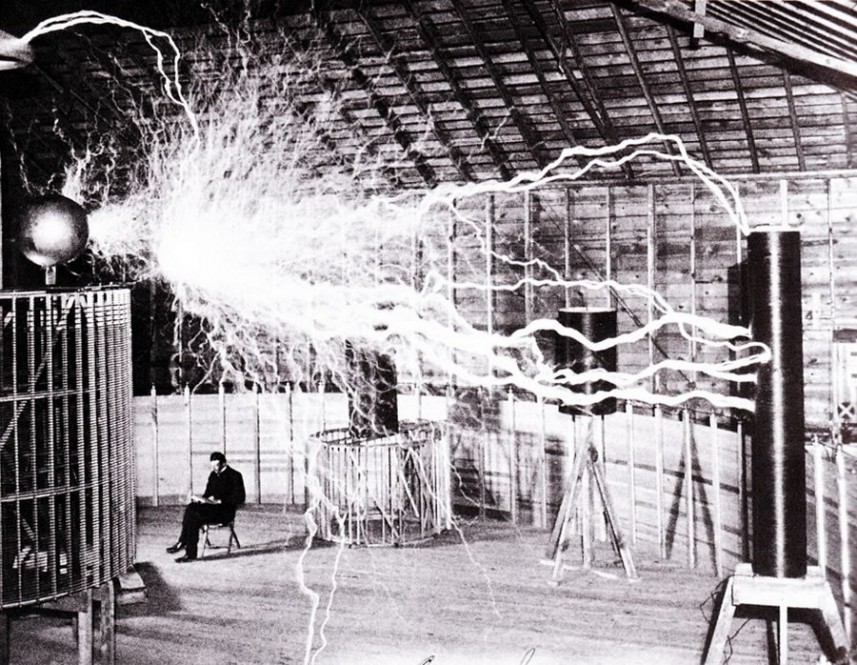
    One of the greatest people in the history of science, and the greatest inventor of the post industrial society, Nikola Tesla, is the visionary that many people have never even heard of or about his work. He could visualise the future inventions with the greatest facility. Numerous articles have been published, books have been written related to this magician of the science. There are many sources about this man who lit the world, and his developments.

    Among many Tesla’s inventions,  the most relevant that influence directly our everyday life include: radio, wireless telegraphy, remote control, robotics. He even photographed the bones of the human body. But the high point was the realisation of a childhood dream: harnessing the raging powers of Niagara Falls, and bringing light to the city. Tesla has over 700 patents to his name: invented the World First AC Generator which led to electrical development and enlightment of the world. This high frequency high volatage electricity is used today in many communication devices.

    Also, Tesla’s Wireless power System including certain devices is now considered to be an untouched method to transmit electrical current without wires. Extraterrastrial Radio Transmitter – Teslascope, radio transceiver designed with the intention of communicating with extraterrestrial life on other planets. It received publicity after Tesla’s statement on the device was published by Time magazine in their July 20, 1931 issue celebrating Tesla’s 75th birthday.

    We should mention here Tesla’s Earthquake Machine invention that probably many people never heard of. This is an excerpt from the New York World Telegram, July 11, 1935:

    “Nikola Tesla revealed that an earthquake which drew police and ambulances to the region of his laboratory at 48 E. Houston St., New York, in 1898, was the result of a little machine he was experimenting with at the time which “you could put in your overcoat pocket.

  • BioGrid Australia links data to show bowel cancer screening is making impact on patient survival rate

    BioGrid Australia links data to show bowel cancer screening is making impact on patient survival rate

    BioGrid Australia links data to show bowel cancer screening is making impact on patient survival rate.

    Victorian researchers have been able to confirm that the national bowel cancer screening program is making a major impact on patient survival.

    Using data made available through BioGrid Australia, the researchers have shown that patients diagnosed as a result of a positive screening test have a much higher survival rate than patients presenting with symptoms.

    Maureen Turner, CEO of BioGrid Australia, said today that recent analysis from six Victorian hospitals has shown an increased number of early stage cancers diagnosed via the bowel screening programs (43% versus 19%) and a reduced number of patients with advanced cancer (4% versus 18%),² she said.

    This research is further confirmation of the value of the national bowel cancer screening program and the valuable contribution that BioGrid Australia, an innovative medical research platform, is making to furthering our understanding of cancers and other diseases,² she said.

    Dr Peter Gibbs and colleagues analysed diagnosis and survival information for 103 patients (all of whom had no symptoms of cancer) diagnosed as the result of a positive stool screening test on the national program.

    The patients attended six hospitals in Melbourne: Royal Melbourne, Royal Melbourne Private, Western Hospital, Western Private, Box Hill and Epworth Eastern. These patients were diagnosed between May 2006 and 2012 and their results were compared to 793 patients of the same age presenting with symptoms over the same timeframe.

    ³This analysis confirms that patients with a bowel cancer detected by a screening test, long before any symptoms have appeared, have a much improved outcome, with a projected five year survival of 95% compared to 73% for patients of the same age who were diagnosed with symptoms² said Dr Gibbs.

    ³This research yet again emphasises the ongoing need for and value of Australia¹s national bowel screening program which is leading to better survival rates as a direct result of earlier diagnosis.² Data available through BioGrid Australia was previously used in a campaign to extend the Australian National Bowel Cancer Screening Program to 60 and 70 year olds, by demonstrating the potential savings of early bowel cancer diagnosis.

    The research released in 2010 showed that annual bowel cancer treatment costs was likely to increase four-fold to $1 billion over 10 years by 2011, strengthening the economic case for expanding the Government¹s National Bowel Cancer Screening Program. The study by Victorian researchers supported by BioGrid Australia combined Australian screening data with treatment costs and survival rates, providing new evidence of the program¹s economic and social benefits. The researchers determined the cost of treating any one patient with bowel cancer at about $55,000 a patient.

    Due to the cost of expensive new therapies treating stage 3 (more advanced) cancers tripled from $25,000 in 1999 to $75,000 and for stage 4 (most advanced), the cost has significantly escalated 10 fold from $6,000 to $61,000. By screening leading to the detection of early stage cancers which can be dealt with by surgery alone, the substantial cost of treating later stage cancers, including the use of expensive chemotherapy drugs, are avoided. The data available through BioGrid was able to show the cost effectiveness of screening.

    The free National Bowel Cancer Screening Program was introduced in 2006. In the 2012 ­ 2013 Federal Budget, the program was expanded to include Australians turning 60 years of age from 2013 and those turning 70 years of age from 2015.

    The expansion of the screening program means that an estimated 1,000 early cancers will be detected each year and between 300 and 500 lives saved annually. This will significantly reduce the burden of bowel cancer on Australians and their families. Bowel cancer is the second most commonly diagnosed cancer in Australia, with annually more than 13,000 cases and 4,100 deaths from this disease.

    BioGrid Australia

    BioGrid Australia (www.biogrid.org.au) is an innovative medical research platform that facilitates privacy-protected research across many hospitals and medical research institutes. BioGrid provides an online Access Request System by which researchers can apply for access to specific databases.  Through this system, the data custodians approve access to their data and a Scientific Expert Review Committee assesses the proposed investigation providing formal ethics approval. Once authorised, researchers can access de-identified data for specified research.

    Issued on behalf of BioGrid Australia.

    Image source.
  • The smoking guns of dying stars

    The smoking guns of dying stars

    VY Canis Majoris, the largest known star in our galaxy, with it's huge smoky clouds of gas and dust being lost into interstellar space. Credit: NASA, ESA, and R. Humphreys (University of Minnesota)

    The ancient Greeks once believed that the heavens were immutable. A vast starry vista, eternally unchanging above our heads. But we now know this to be untrue in the slightest. A lot has changed since then, however, and over the past few hundred years, astronomers have unfurled ever increasing knowledge of the lives of stars. Look out across a starry night sky and you can see stars in all stages of their lives, from brightly burning newborn stars, to ageing giants in their final gasping breaths. As stars near the ends of their lives, they begin to shine a rich red colour as they expand and dramatically increase in size.

    As red giants, these stars are burning the last of their fuel, and as they do so they begin to sputter and gasp. Just as a candle flame does when it starts to burn out, red giant stars flicker – though for these, the largest stars in the universe, those flickers can take thousands of years each. These final bursts of energy are known as thermal pulses, and they mark the star’s final days. During the last couple of million years of its life, a red giant star will lose incredble amounts of material to interstellar space. Even when not caught mid-pulse, these stars lose several times the mass of our planet every year. And the puzzle of exactly how they do so has been recently been unravelled by a team of astronomers led by researchers at the University of Sydney.

    All stars emit a stellar wind – a steady stream of particles being constantly accelerated outwards by the star. Even the Sun emits its own solar wind (with a speed measured at 535 kilometres per second as I write this). The wind from red giant stars is slightly different. As the star loses more mass, stellar material cools and condenses into dust. This dust then catches starlight which is so intense near to the star that it actually pushes that dust outwards. This effect, known as radiation pressure, causes the tiny reflective dust grains to act like minute sails and accelerates them away. Each dust grain is tiny compared to the kind of dust we find on our bookshelves, much more like fine smoke than any dust we’d recognise. Instead of being called stardust, it could easily be called starsmoke!

    “The winds that stream from the upper atmosphere of the red giant stars are responsible for removing massive amounts of matter. The grains that we have discovered here will come as a real shock to the accepted wisdom in the field. They are both much larger and much closer to the stellar surface than anyone expected.” said Barnaby Norris, a PhD student at the University of Sydney, and lead author on the research published earlier this year in Nature.

    This stardust emitted by these smoky smouldering old stars is transparent, not unlike finely powdered glass. The implications of this stardust being detected to close to an ageing star could help us to better understand the processes that occur in stars as they die, and how they manage to lose such prodigous amounts of mass so rapidly. As Norris said, “Hopefully our findings will help to illuminate a key step in the grand cycle as matter is expelled from stars into the galaxy only to seed new generations of stellar and planetary birth.”

    On a final poetic note, all of the chemical elements essential to life are created within stars, before being seeded back into the cosmos when stars die. This means that this condensing stardust contains the fundamental raw materials needed for life to eventually form. As Carl Sagan so often used to muse, we are literally made of stardust.

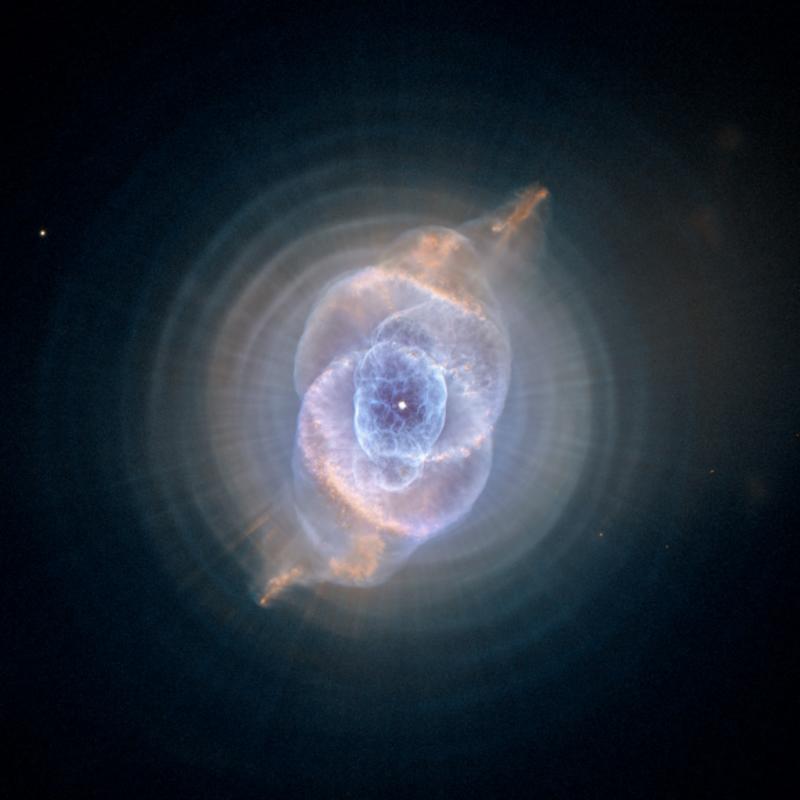
    The Cat's Eye nebula, a star which has now ended its life and is casting its outer layers into the cosmos. The concentric rings show material lost as stellar wind during the star's final thermal pulses.. Credit: ESA, NASA, HEIC and The Hubble Heritage Team (STScI/AURA)
  • Radio quiet, please!

    Radio quiet, please!

    Originally conceived over 20 years ago, there’s a project being undertaken by scientists and engineers across the whole world to help us all better understand the mysteries of the galaxy and the very beginnings of the Universe. It’s estimated to be completed by around 2024,costing $1.85 billion AUS (€1.5 billion). Once completed, it’s set to be the most complex and technologically advanced machine ever built by humanity. It will use enough optic fibre to wrap twice around the Earth and will need a computer capable of performing 10^18 operations per second – about three million times the number of stars in our galaxy. It will produce over 980 Exabytes of data every day (equivalent to about 15 million 64GB iPods) and to cope with that, it will need to handle data transfer rates over 10 times as high as the current global internet traffic. No, it isn’t a starship. But it might just be the next best thing.

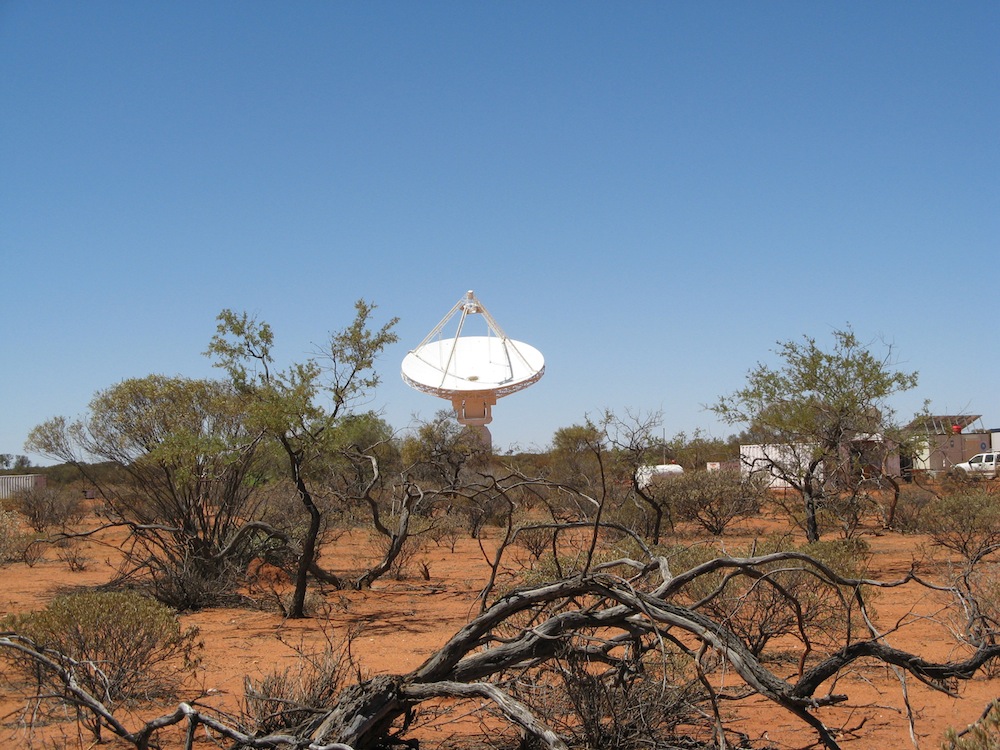
    One of the first components of the SKA, constructed in Western Australia. Credit: Dave DeBoer, CSIRO.

    The Square Kilometre Array (SKA) is one of the most ambitious scientific projects ever devised, and when completed it will comprise a huge number of telescope antennae which will work as one to form a single radio telescope so powerful that it could detect an airport radar on a planet 50 light years away. The sensitivity of any telescope is defined by the area it uses to collect data. With optical telescopes, this is the size of the mirror, and with radio telescopes it’s typically the size of the dish. The SKA gets its name because when fully constructed, all of the detectors and antennae that make it up will have a combined area of one square kilometre, or one million square metres. To put that properly into perspective, the Green Bank Telescope is currently the largest steerable single dish radio telescope, and its area is just under 8000 square metres.

    Being astronomy’s answer to the large hadron collider, the SKA is a staggeringly large international collaboration. I was lucky enough to attend a major meeting regarding the planning of the SKA (the headquarters are to be based here in the UK in Manchester), and the myriad different languages and nationalities represented was impressive to say the least. Over 24 major organisations from countries spanning 5 continents are involved in the project, ranging from universities to industrial engineering companies. New technologies, both software and hardware, are still being developed as a result of this project. Based on the huge data storage and transfer requirements of a machine as complex as the SKA, many of those new technologies are likely to feed straight back into society by offering profound improvements to computing resources like the internet. In fact, as the world’s largest project for sorting and storing data, the SKA is expected to be literally bigger than Google!

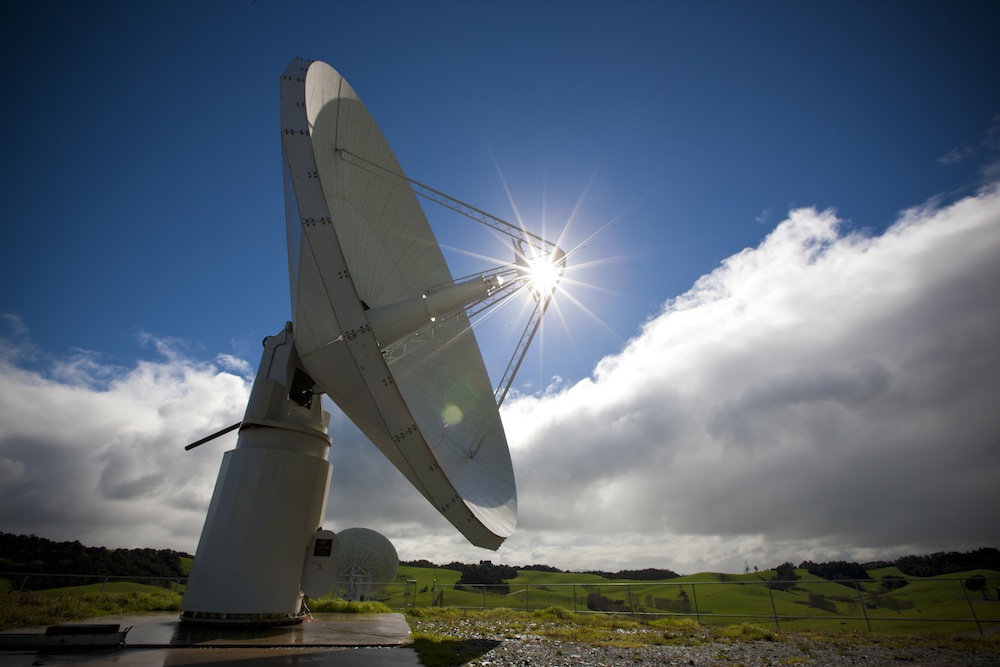
    The Warkworth antenna in New Zealand – an important part of early SKA science. Credit: Alex Wallace.

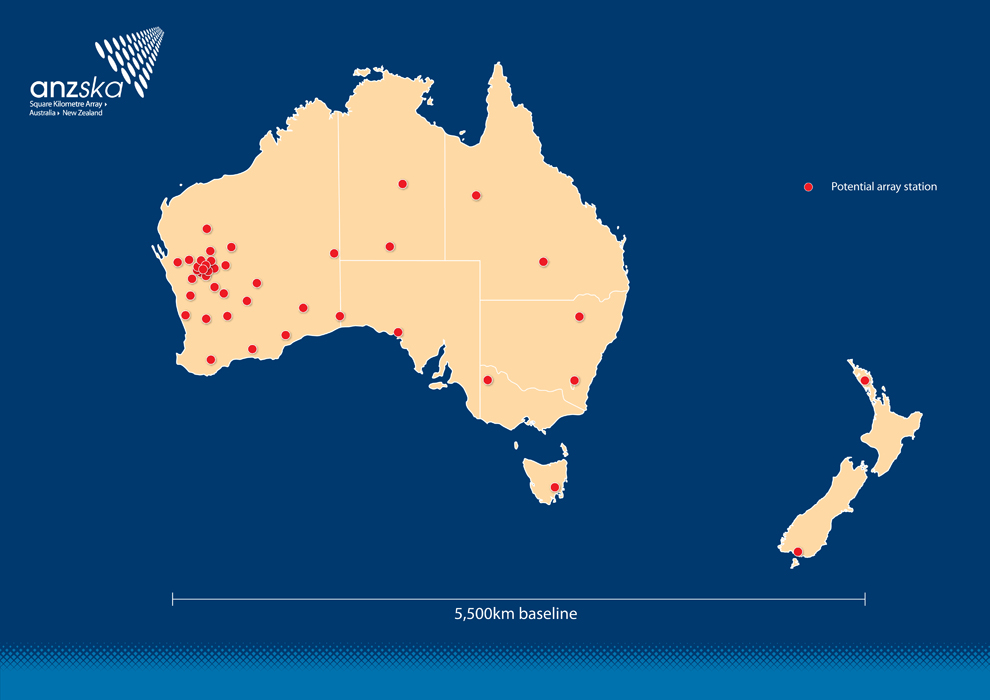
    The most difficult decision, understandably, has been where precisely to build it. Humanity has an unfortunate tendancy to fill the atmosphere of our planet with noise, bouncing radio waves to and fro and filling the air with radio frequency chatter. A radio telescope array this sensitive needs to be placed somewhere quiet to gain the full benefits, and the most recent decision has been to effectively split the SKA into two components, to be built in Southern Africa and Australia. While this may seem like an odd thing to do, it actually makes perfect sense. The SKA actually has three types of antenna operating at different frequencies. Intended to cover a huge range of radio frequencies (from 70 to 100000 MHz), three types of antenna are needed, because no single technology can actually operate across such a wide range. So the decision was made to build the lowest frequency detectors across Australia, centred at Murchison in outback Western Australia. Murchison is blessed with being one of the few places on our planet which isn’t flooded with FM radio at the low end of the frequency scale. From a radio astronomer’s point of view, it’s the quietest place on Earth.

    This is set to be complemented by the higher frequency steerable dishes which are set to be constructed across Africa. Both South Africa and Australia have put extensive efforts into developing the SKA, and Australian-developed technology is still set to be implemented in the African telescopes. This will mean a huge influx to the African astronomical community and numerous African nations won’t lose out on the economic boost from contributing to such a prestigious project. It’s an ideal situation where everyone wins.

    All in all, it’s an exciting time to be an astronomer. An epic project like this is likely to attract all manner of researchers from across the world to both continents. Just maybe, it could also finally help us to answer the really big questions, like how the galaxy formed, how the Universe began, and whether or not there’s anyone else out there.

    A map of prospective SKA sites. Credit: anzska
  • A brand new boson?

    A brand new boson?

    It’s official. As was the subject of a press conference here in Europe this morning, the LHC has discovered a new particle. Is it the much talked about Higgs boson? Evidently it’s far too early to say with certainty. But whatever it is, it’s a brand new subatomic particle, it’s consistent with a Higgs boson signature, and it’s enough to make CERN physicists quite excited.Whatever it may turn out to be, it’s brand new and never seen before.

    This is physics at its most fundamental. The standard model of particle physics is probably our best depiction of how the universe operates at subatomic scales, but our picture is incomplete. A jigsaw puzzle with missing pieces which must still be searched for. One of those pieces is a piece so basic that for a long time it was simply overlooked. Why do objects have mass at all? The existence of the Higgs boson in the Standard Model seeks to address that question. It posits that all the universe is filled with a so-called Higgs Field. Any particles, protons or neutrons for instance, passing through that field will interract with it, and it will interract via Higgs bosons. Any particle which exists in this field will effectively be surrounded by a cluster of these Higgs bosons. The more bosons, the stronger the interraction, and the more massive that particle will be.

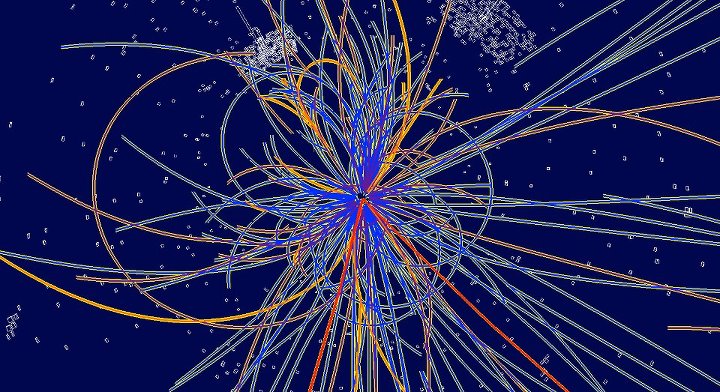
    Simulation of Higgs Boson decay.

    But exactly what it is that’s been discovered is still being analysed. Amid a press conference full of journalists asking pointed questions about “the Higgs boson”, scientists were noticeably hesitant to outright say that this is what they’ve discovered. And for good reason too, because science doesn’t work like that, no matter how many people might want to run through the streets naked shouting ‘Eureka’. In all of this, only one thing is certain – a new particle has been discovered with a mass of approximately 126 giga electron volts (126 GeV), with a statistical significance of 4.9 standard deviations (4.9 σ).

    Peter Higgs himself, declined to make any comment twice during the conference, simply stating that it would not be appropriate to answer detailed questions at this stage. The other members of the panel too, agree that it’s very difficult to say anything definitively right now and that “Higgs-like” would be a better description of what they’ve found. It’s compatible with a Higgs boson detection, but the “uncertainties are still large”. While definitely being “consistent with a Higgs boson”, interestingly it’s noted that they cannot say if this is the Higgs boson (i.e. the one required by the Standard Model), rather at this stage it may be a Higgs boson. Scientifically speaking, it’s far better to only make statements on what’s known to be true, rather than to make brash announcements which may prove to be incorrect a few months later.

    Whatever happens after the months of data analysis which are due to follow is that we’re set to unravel a lot more about the fundamentals of the universe. This discovery is on the very edge of human understanding. It may help to refine our knowledge of the Standard Model of particle physics, or it may hint that this particular Higgs boson is not a part of the standard model – a prospect which ATLAS experiment director Fabiola Gianotti seemed visibly quite excited by.

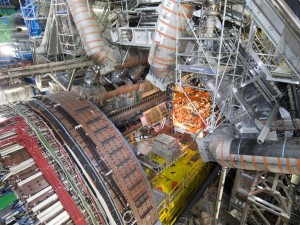
    The ATLAS instrument, a detector in the LHC.

    Rolf Heuer stressed the fact that the most exciting thing here is the fact that they have a discovery of something brand new, perhaps suggesting that we shouldn’t get too caught up in our expectations and simply enjoy the excitement of there being something never before seen in physics in the process of being analysed. Moreover, this could be the very first fundamental scalar particle, and the first gauge boson which actually has any mass. If it does turn out to be a Higgs boson, then this holds the additional thrill that this particle has a relationship to the state of the universe itself, embodying the substance to all other particles which exist.

    In the meantime, as the LHC prepares to power down for a couple of years of maintenance, this discovery will certainly stoke the fires of curiosity in thousands of scientists worldwide. The data are still being picked apart too, for things which are completely unknown. Perhaps even more brand new physics is still waiting to be found. It’s an exciting time in physics right now!

  • The Higgs boson does exist: New particle observed at 125 GeV

    The Higgs boson does exist: New particle observed at 125 GeV

    Australian researchers helped design and build parts of the ATLAS detector and helped analyse the results.

    Researchers using two huge detectors at the Large Hadron Collider announced the results of their searches at a joint scientific seminar in Geneva and Melbourne, where the International Conference on High Energy Physics is being held.

    In a joint seminar today at CERN and the “ICHEP 2012

  • Who Doesn’t Love a (Penguin) Parade?

    Who Doesn’t Love a (Penguin) Parade?

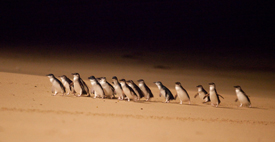
    Penguins marching home from a long day at sea.

    It’s not just 5-year old children who get excited by the sight of penguins; on no, penguins have been “all the rage

  • Mr Boson, I presume…?

    Mr Boson, I presume…?

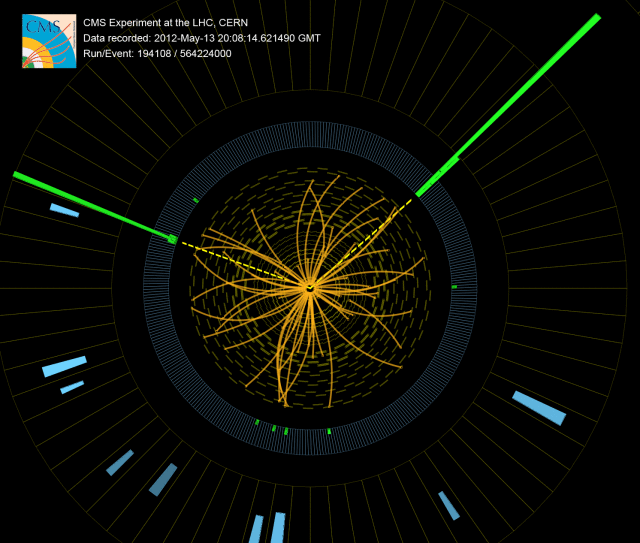
    ATLAS proton-proton event containing four muons

    When Peter Higgs steps out onto the tarmac at an airport near the franco-swiss border, it will probably be with equal parts trepidation and elation.

    CERN, the European Organization for Nuclear Research, and the world’s leading laboratory for particle physics, is to hold a scientific seminar on July 4th, with Peter Higgs in attendance, to deliver the latest update in the search for the Higgs boson — the famed “God Particle