Blog

  • The Mathematics of War

    The Mathematics of War

    Scientists often exercise a certain detachment when doing their work. I’ve often seem friends and colleagues get “lost in the numbers” and forget precisely what it is they’re looking at and what those numbers actually mean. However, in some cases this may not be a bad thing. For instance, in the analysis of conflict data.

    Putting aside any personal reactions and moral implications of what you’re really looking at may not be easy for everyone, but analysis of conflict data is important in predicting the behaviour of wars and potentially minimising risks and harm in the future. Technology is marching on, and as a result the amount of data being collected from war zones is huge. With the state of social media, internet resources like Twitter and Facebook have proven to be valuable sources of information, providing a quick way to share information with people trapped in the middle of troubled areas – a remarkably significant use which I’m sure no one could have ever predicted when these services originally started up. The problem for researchers lies in how exactly to use that data. Constructing a model of how a conflict will unfold and making predictions from it may be vital in stopping things from escalating out of control. Unfortunately, such predictions aren’t easily made.

    The idea that the movements of masses of people could be predicted is not a new one. In fact, in his typically insightful manner, the idea was first devised by Isaac Asimov who created the fictional science of psychohistory, featured in his 1951 novel Foundation. Asimov’s ideas weren’t without firm basis in reality, and while the details may be different, it seems like the concept of psychohistory may not be quite so fictional after all.

    Predicting the Afghan War Diaries
    The Afghan National Army at Kabul Military Training Centre (2009)

    Between then, a group of researchers based in Edinburgh and Sheffield in the UK and New York decided to try a different approach. They noted that most of the data analysed previously didn’t go beyond simply visualising what had been seen and recorded. Actual predictions had proved too challenging, not least because it hadn’t been clear how to actually model the data available.

    This group of researchers, led by Guido Sanguinetti, constructed a set of methods to use statistical dynamic modelling to make predictions on conflicts such as the recent war in Afghanistan. They needed to look at the times and locations, as well as how information was transported from place to place. They decided that the best way to analyse how a conflict unfolded was to treat it the way other researchers model environmental events and the spread of infectious diseases. In many ways, these events proceed in ways very similar to outbreaks of violence during conflicts.

    In this case though, Sanguinetti and his colleagues had an ace up their sleeve. Courtesy of the now infamous whistleblowers at WikiLeaks, a huge disclosure of US military logs from the Afghan conflict had been made in 2010. Known as the Afghan War Diary, this set of records drew a lot of attention internationally on its release and also served to be the ideal way of testing the effectiveness of any predictions. Essentially, Sanguinetti and the others could use their models to make predictions on the conflict and then check against the released reports to see how accurate they’d been.

    Conflict climates

    Remarkably, based entirely on written reports between 2004 and 2009, they were able to predict with impressive accuracy, what events would occur in 2010. In short, using nothing but some clever mathematics, the researchers could tell what would likely happen next. Where conflicts would increase in intensity and where things would remain quiet. And this isn’t even a comprehensive model yet. There are many adjustments which can still be made to improve the accuracy still further. Even accounting for sudden changes, like the dramatic increase of US forces in Afghanistan in 2010, the predictions remained accurate. Evidently, events will continue unabated despite any large military offensives which may be taking place.

    The war in Afghanistan has not been of the traditional type between two armies. Instead, the conflict there has been irregular, involving a huge number of loosely connected groups. This may be the reason why a relatively simple model works so well in predicting the behaviour of those groups – where and when violence would escalate. This sort of behaviour is typically the sort that large scale armies have trouble in countering due to the lack of any centralised organisation. Mathematically speaking, it genuinely becomes a lot like trying to predict the weather.

    To me, this kind of work offers some hope in resolving serious conflicts as quickly as possible. Being a pacifist myself, I abhor violence of any kind, and the ability to predict and avoid any serious bloodshed is certainly a good thing. Whatever your feelings on it, the ability to predict violence in conflict situations the same way meteorologists predict the weather has some potentially very useful possibilities.
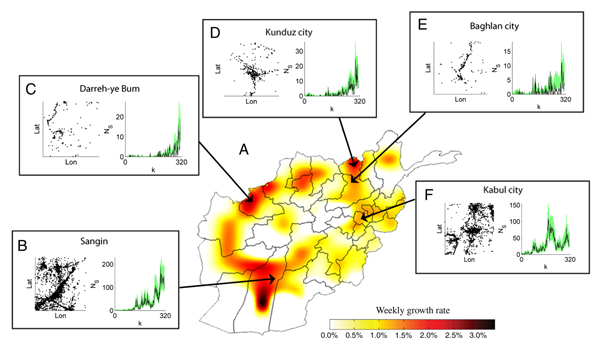
    A visualisation of the increasing number of events recorded in the Afghan War Diaries (A) compared with predictions of events occurring (B-F).
  • The rise in representation of non-human entities

    The rise in representation of non-human entities

    It happened over ten years ago. Jimmy was incarcerated against his will, held in a cage, isolated, and denied the basic freedom he deserved. A Habeas Corpus request was put in on his behalf. A long ordeal involving lawyers and various international organisations.

    It happened again last year, in San Diego USA, Tilikum, Katina, Kasatka, Ulises and Corky were all held captive. A lawsuit was filed at a federal court, declaring that they were being held as slaves in violation of the 13th Amendment to the US Constitution (the amendment that abolished slavery and involuntary servitude after the American Civil War).

    One simple fact made these two cases unique — none of the subjects were human. Jimmy was a Great Ape. Tilikum, Katina, Kasatka, Ulises and Corky were all orcas. Those were not the first, and certainly not the last.

    In 2005, a public prosecutor, Dr. Heron Santana, was involved in the landmark, bench-setting case that would provide the framework for all those that came after. As was the case with Jimmy, a Habeas Corpus was demanded for a female chimpanzee — Suíça, 23 years old, who had lived in a zoo for four years. What transpired made Suiça the first animal to be recognized as a subject in a court of law. In the end, the Habeas Corpus was approved — unfortunately, it was on the day after she was found dead in her cage.

    Animal activism had always existed before then. But perhaps that was the spark the trend needed. Indeed, numerous examples now exist, including perhaps the most well known — the World Declaration on Great Primates, that proposes the extension of rights allowance in an equal way to all great primates: human beings, chimpanzees, bonobos, gorillas and orangutans, and identifying the three basic conditions to the relationship between humans and great primates — the right to life, individual freedom, and prohibition of torture.

    With chimps and other great apes the difference is clear — “the only difference is that they do not talk

  • The (nuclear) alchemists of Darmstadt and the doubly magic tin-100 nucleus

    The (nuclear) alchemists of Darmstadt and the doubly magic tin-100 nucleus

    An international group of researchers announced in the journal Nature that they had succeeded in creating tin-100.   This experiment helps us understand how heavy elements have formed.  A few minutes after the Big Bang the universe contained no other elements than the lightest; hydrogen and helium.

    We, the objects around us, the Earth and the other planets all contain heavier elements; carbon, oxygen, silicon, tin, iron etc.  These elements came into existence later than hydrogen and helium.  They formed through the fusion of atomic nuclei inside of stars.  Elements heavier than iron owe their existence to gigantic stellar explosions called supernovas.  Tin-100 is a very unstable, yet important, element for the understanding the formation of these heavier elements.

    A multinational team headed by nuclear physicists from the Technische Universitat Munchen, the Cluster of Excellence Origin and Structures of the Universe and the GSI in Darmstadt carried out these precision experiments.  They shot xenon-124 ions at a sheet of beryllium to create the tin-100 atoms.  The subsequently measured the half-life and decay energy of tin-100 and its decay products using specially developed particle detectors.

    What is our world made from?

    The inspiration of creating new elements can be traced to alchemical traditions.  Alchemy is an arcane tradition, that can be viewed as a proto-science, a precursor to chemistry and nuclear physics.  It’s prime objective was to produce the mythical philosopher’s stone, which was said to be capable of turning base metals into gold or silver, and also act as an elixir of life that would confer youth and immortality upon its user.

    The Alchemist, 1771 painting by Joseph Wright of Derby. Image credit: Wikipedia, image copyright has expired.

    It did bring to chemistry many ideas and provided procedures, equipment, and terminology that are still in use.  It also provided the inspiration for the creation of new elements.  Now we understand to create new elements requires a combination of precision equipment and experimental procedures coupled with a sound understanding of quantum theory.

    So what is tin-100 and why is it useful to understand the astrophysics of heavy element formation?

    Most people will recognise that matter around us is composed of atoms.   Atoms of carbon, hydrogen, oxygen for example form the building blocks to make organic molecules and silicon and oxygen bond together to make common beach sand and are fused together to make glass.  The familiar metals are solids made of one type of atom, for example gold and aluminium, or combinations, bronze being made of copper and tin atoms.

    Atoms in turn are a central nucleus of protons and neutrons surrounded by a swarm of electrons.  The number of protons distinguishes one element from another.  This atomic number is used to designate an element 1 for hydrogen, 8 for oxygen and 50 for tin, for example.  Stable tin comprises 112 nuclear particles – 50 protons and 62 neutrons.  The neutrons act as a kind of buffer between the electrically repelling protons and prevent normal tin from decaying.  Each atom will contain an equal number of electrons to its protons.  Remove or add an electron and the atom becomes an ion, a charged particle.

    The strange quantum world of the nuclei

    Quantum mechanics which, amongst other things,  explains how the electrons form into shells around the nucleus.  Elements which have filled outer shells, helium, neon, argon, xenon are ‘noble’ gases, chemically inert – not the least reactive.  Nuclei are also complex quantum objects.

    As far as we know, nuclei are the smallest objects that can be split up into their constituents.  They are therefore the smallest entities which emergent properties – patterns that arise from complexity – can be studied.  Nuclear scientists study these emergent phenomena and are using them to decipher the nature of the nuclear force.  In contrast to the structure of atoms, for which the fundamental interaction between the electrons and the nucleus – the electromagnetic force – is known with great precision, the interaction between the nucleons – the strong nuclear force – is not so well known.

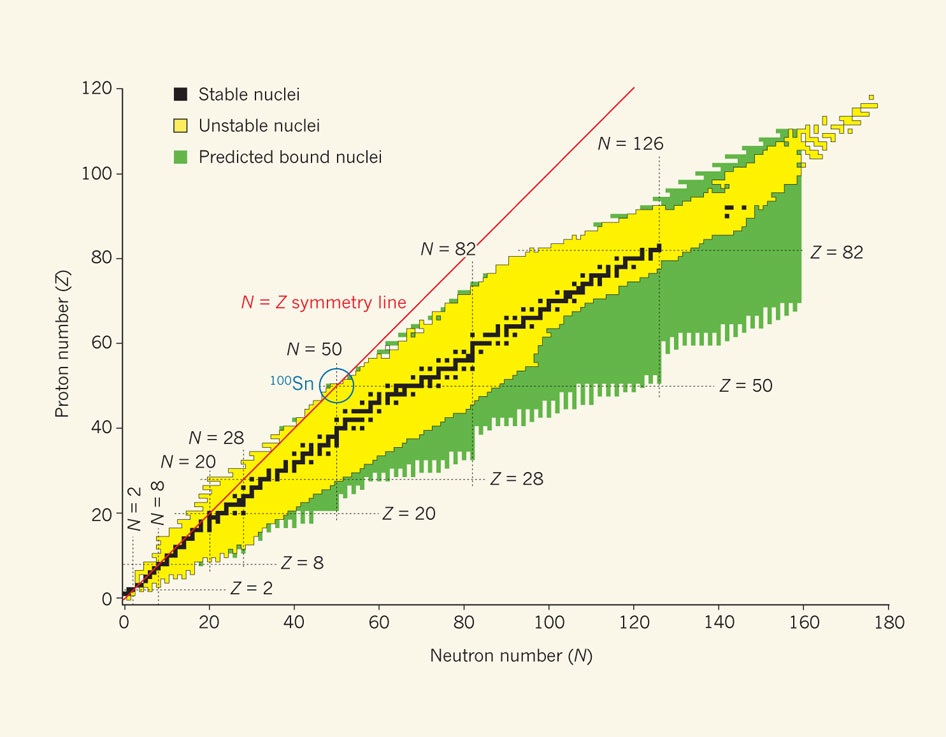
    In nature not all combinations of nucleons are stable.  As a general rule the more protons present then more neutrons are required to stablise the nuclei.  A useful graphical presentation of this is the Segre table of radionuclides.

    Location of nuclei as a function of their neutron number (N) and proton number (Z). Image credit Daniel Bazin Michigan State University.

    If the shell structure of electrons was difficult at first for scientists to come to terms with, then the shell structure exhibited by nucleons is not only unexpected it is complex enough not to be discussed in many quantum physics texts.  It was first thought that such densely packed and strongly interacting objects as the nucleons would exhibit a liquid-like behavior, much like the flow of electrons in a good conductor such as a metal.

    That is what makes these experiments so exciting.

    Stability and magic numbers

    Magic numbers are the number of protons or neutrons that form full shells in an atomic nucleus.  The term is thought to have been coined by the physicist Eugene Wigner.  The model has been used to explain – at least for stable nuclei – the observed sequence of magic numbers: 2, 8, 28, 50, 82 and 126.

    Nuclei that have a magic number of neutrons or protons are more tightly bound than there non-magic counterparts.  This intrinsic simplicity makes them prime candidates for testing proposed models of nuclear structure.  Even more attractive are the doubly magic nuclei.  The lighter nuclei helium-4, oxygen-16 and calcium-40 do follow the magic number sequence.

    However because of the repulsion between protons the line of stable nuclei veers away from the symmetry line.  As a result tin-100 represents the largest nuclei to follow the sequence.  It is bound but unstable.  It is very close to the edge of nuclear stability, where the nuclear force between the protons and neutrons can no longer bind them into a nucleus.  Unfortunately, what makes this nucleus so attractive to study is what also makes it so difficult.

    How to make a new element

    In nature elements heavier than iron come into being only in powerful stellar explosions – supernovas.  These include, for example, the precious metals gold and silver and the radioactive uranium.  The cauldron of a supernova gives rise to a whole array of high-mass atomic nuclei.  these decay to stable elements via different short-lived intermediate stages.

    There are two ways to create new elements in the laboratory.  The first is is to fuse two nuclei in a manner that minimises the loss of protons or α-particles (helium-4 nuclei).  The second is is more brutal, fragmenting a small part off a heavier nuclei in a collision.

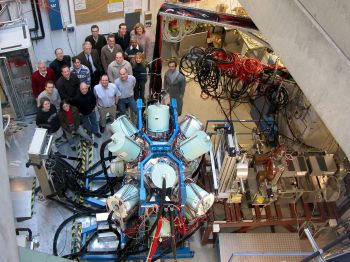
    The detector set-up at GSI. Photo credit: GSI

    In these experiments energetic xenon-124 is sheared by making it collide with a target beryllium foil leaving a residue that is composed of 50 neutrons and 50 protons.  Out of the 120,000,000,000,000 xenon-124 accelerated in the experiment, only 259 tin-100 nuclei were identified.  These results were sufficient though for the decay of tin-100 to be studied with great precision.

    The results, excitedly for the researchers, demonstrated a ‘superallowed Gamow-Teller decay‘.  This type of β-decay is beyond the scope of this essay to explain, needless to say it does provide new experimental depth to the models of nuclear chemistry.  It is an important decay transition that occurs in the collapse of supernovae.  It also is important in putting boundaries on the possible mass of the neutrino.  Both of which are important validations of the current nuclear theories as well as providing real experimental data to fine tune the theoretical models.

    This allows more real models of nuclear synthesis to be constructed.  Allowing a deeper understanding of how the atoms that make up our universe were created.

    Now other laboratories around the world will work on improving the production rates of tin-100 and other exotic nuclei, based on these experiments.  Allowing the emergent properties of these nuclei can be studied in more detail.  Giving us greater understanding of the forces that bind these particles together – to make us!

  • Neil Armstrong’s speech in Sydney 24 August 2011

    Neil Armstrong’s speech in Sydney 24 August 2011

    UPDATE: Regrettably, the CPA engaged lawyers to threaten me with everything they could think of if I didn’t pull the recording (below). So pull it I have. Please feel free to pass on any feelings about this to them. At least for the time it was available, about 500 people got to hear the great man’s words. All is not lost though. I have a contact in the US who is friends with one of the family. When the time is right, I hope she will be able to raise the issue with him. Too soon right now of course.

    On 20 July 1969, my entire school in the very young city of Canberra packed into the hall to watch Neil Armstrong step onto the Moon. The school’s only television set was tiny, and my only real memories of that historic day were black and white blobs on the television screen, and teachers constantly shushing all the children.

    But I did witness the event, and it is one of the earliest endures memories I have from my childhood – certainly the earliest world event I can recall. As an inspiration, the Moon landings – this first one, and all the others that followed – laid the foundation for an education in science.

    On 24 August 2011, Neil Armstrong delivered a very rare and unique speech in Sydney. And it was to rekindle in me an interest in science and space exploration that had laid essentially dormant for many years.

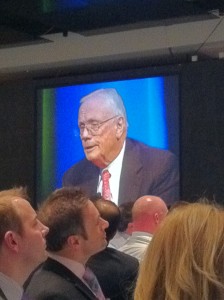
    Neil Armstrong delivering his speech in Sydney, 20 August 2011

    Somewhat curiously, the event was the 125th Anniversary of the Certified Practising Accountants Australia. The CPA’s CEO Alex Malley pulled off a real coup, based on the knowledge that Armstrong’s father Steven had been an auditor.

    Courtesy of my wife being a CPA, I was privileged to attend that incredible event with her. I recorded the entire speech, plus about one hour of questions and answers after that, but I was only using a cheap point-and-shoot camera, picking up the sound through the PA system. I haven’t published it beforehand though, not wanted to circumvent any speaking tours he might undertake.

    However, one year and one day following that event, the man who inspired so many of us has passed away, following complications stemming from heart surgery he had a couple of weeks ago. So I feel there’s now a responsibility to get his words out there for everyone.

    The speech is about 42 minutes. It doesn’t include the questions and answers – I’ll post that as soon as can get get the editing done.


    CPA Australia also published an extended interview with Armstrong. The introduction to that interview contained these prophetic words:

    “Rarely, if ever again, will Neil Armstrong conduct an interview such as this.”

    Nor a speech like this one…

    A sad sad day.

  • Reducing the Digital Divide: Internet Society Supports Establishment of Internet Exchange Points across Africa

    Reducing the Digital Divide: Internet Society Supports Establishment of Internet Exchange Points across Africa

    [Johannesburg, South Africa –23 August 2012] – The Internet Society  announced that it has been selected by the African Union (AU) to conduct community mobilization and technical aspects workshops to support the establishment of Internet Exchange Points (IXPs) in AU Member States as part of the African Internet Exchange System (AXIS) project.  The AXIS project aims at keeping Africa’s Internet traffic local to the continent by providing capacity building and technical assistance to facilitate the establishment of National Internet Exchange Points and Regional Internet Exchange Points in Africa. The project is funded by the Euro-Africa Infrastructure Fund and the Government of Luxembourg.

    The Internet Society is committed to organizing 60 community mobilization and technical aspects workshops in 30 African countries.  To this effect, the Internet Society will also contribute its own resources for the implementation of this component of the AXIS project.
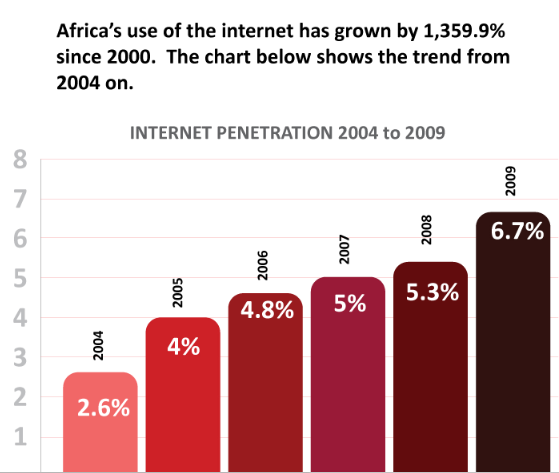
    Africa's use of the internet by Jon Gosier (Flickr)
    Currently, much of Africa’s Internet traffic is routed through Internet exchange points external to the African continent.  As countries establish their own IXPs, Internet traffic will be routed locally, creating a downward pressure on costs and stimulating growth in and distribution of local Internet content.  Through the AXIS project, the interests of the AU and the Internet  Society, working with other African Internet organizations such as AfriNIC, AfNOG and AftLD, will be realized in this collaborative effort to assist in the development of a more locally operated and, hence, more robust and economically accessible pan-African Internet.
    Moctar Yedaly, Head of Information Society Division, African Union Commission, commented, “Africa is paying overseas carriers to exchange ‘local’ (continental) traffic. This is both a costly as well as an inefficient way of handling inter-country exchange of Internet traffic. Independent analysis has shown that Africa pays over US$600 Million to developed countries every year for inter-African traffic exchange that is carried outside the continent. We are therefore pleased that the African Internet Exchange System project will address this challenge by facilitating optimization of Internet traffic to support intra-continental traffic flows in Africa.

  • Arctic sea ice extent is plummeting to a likely new record low

    Arctic sea ice extent is plummeting to a likely new record low

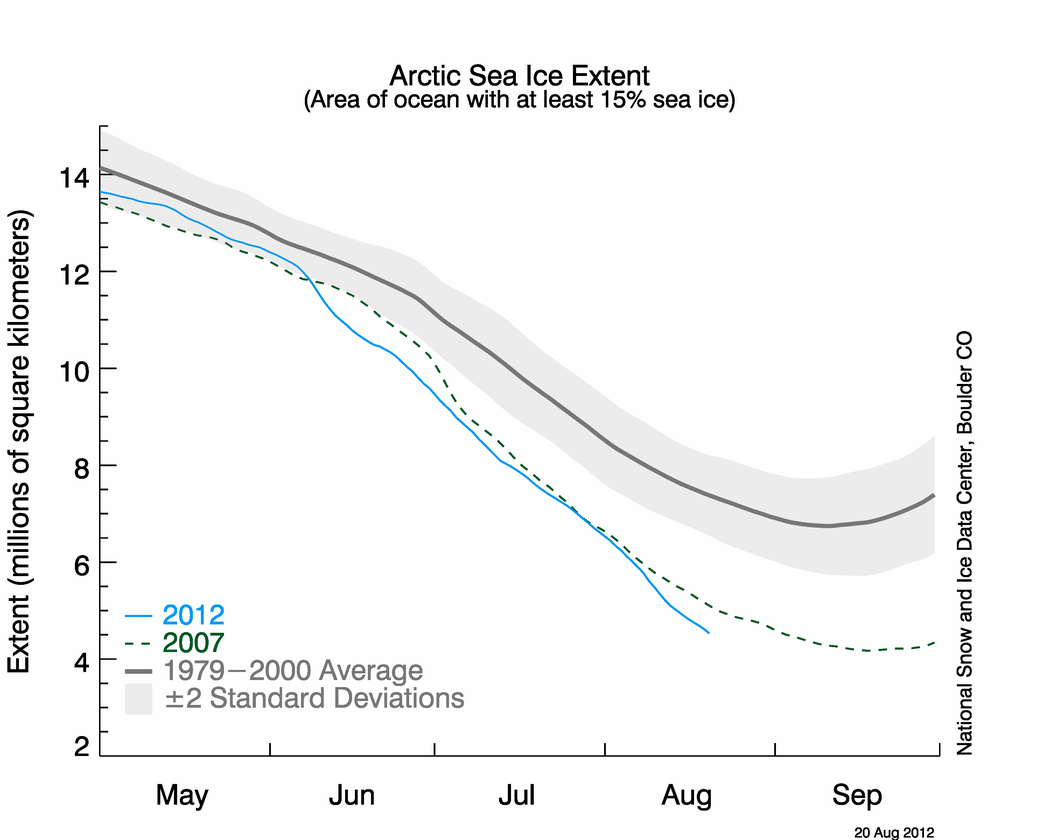
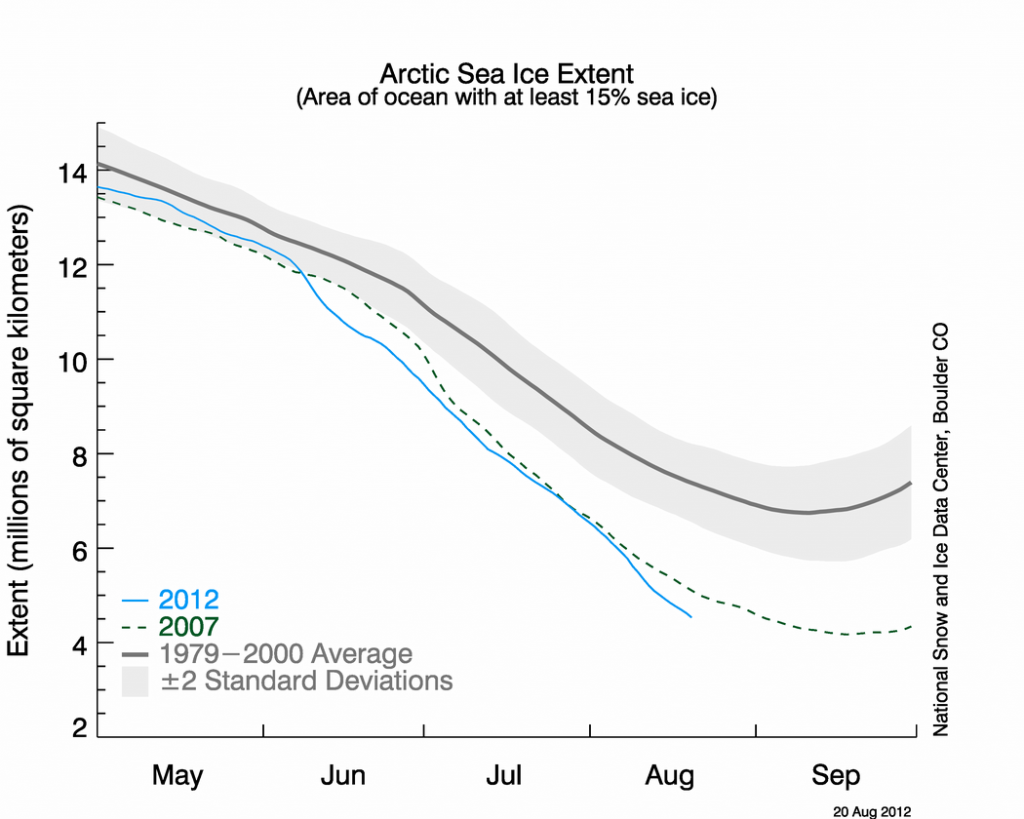
    The plot is from US National Snow and Ice Data Center (NSIDC) and shows the Arctic sea ice extent data for the melt seasons of 2007 and 2012 alongside the 1979-1999 average. 2007 was a record low year, but with about three weeks of melt season left it looks likely that 2012 will set a new and decisive record low. While individual years have a small degree of variation, overall the long term trend is quite markedly downwards.

    There is a design and principle on which to earth functions.
    The world needs to review its knowledge base, its functioning, in terms of energy to matter ratio that earth strives to maintain. Unless we awaken to understand the energy cycle in which we live and how earth is designed to sustain certain ratio of energy to matter, we are doomed for huge destruction. The increasing heat in the environment is creating disorder. Time earth gets to convert heat into biological mass is critically reduced. Consequently disorder is peaking stressing every ecological system and life in it. Noble Laureate James Lovelock has predicted destruction through increasing heat. We need to quickly evolve in our understanding of nature to survive on earth. Some organization or institution and the media should take up to awaken the world – read a small article and awaken and call the world’s attention – “Critical Thinking on Global Warming and Increasing Climate Catastrophes” by John Paily http://www.scribd.com/doc/101836445

    For more information, see http://nsidc.org/arcticseaicenews/ which is frequently updated.

    NSIDC’s calculations are echoed by those of other agencies, of which the most important is perhaps the Japanese Aerospace Exploration Agency (JAXA).

    See http://www.ijis.iarc.uaf.edu/en/home/seaice_extent.htm which is also frequently updated.

  • It’s a wheel!  It’s a wheel – a wheel on Mars!

    It’s a wheel! It’s a wheel – a wheel on Mars!

    NASA’s rover Curiosity was safely on Mars.  It was a perfect landing.  The novel sky-crane method had proved its detractors wrong and its designers right.  What was needed then was signs that Curiosity was working as designed.  NASA had said that the first pictures may be anything up to 2 hours after landing.  A long time for the audiences, waiting, live, all over Earth.

    It's a wheel on Mars. Photo credit NASA/JPL

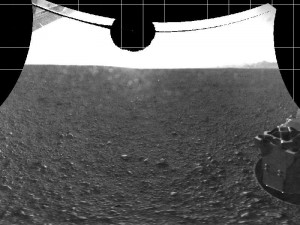
    “Got thumbnails.” Pause in the control centre, then someone else yells “Its a wheel, its a wheel!” “A wheel on Mars!”  For the second time that momentous afternoon the NASA/Jet propulsion Lab crowd erupted into spontaneous and joyful applause.  Not only had they landed the rover, Curiosity, safely on Mars, they had received the first images back from its cameras.  Sometimes the unscripted, unexpurgated exclamations make for the best history.

    The first two pictures were from the front and back navigation cameras.  They were low resolution black and white thumbnails taken through the dust caps that protected the cameras during landing.  As the minutes ticked by higher resolution images came through from the rover.  The business as usual, familiar image enhancement bought into sharp clarity the ‘first’ two images from the robot explorer.

    The 'first' image enhanced view from the rear hazard camera, Mars Curiosity Sol 0.

    The first week on Mars

    After the exuberance and press conference came the trademark NASA precision and methodical approach.  An approach that gets missions safely to Mars, at the same time can make the audacious appear mundane.

    Mission controllers at NASA’s Jet Propulsion Laboratory in Pasadena, are now checking out Curiosity’s subsystems and 10 instruments.  Curiosity is in the opening days of a two-year mission to investigate whether conditions have been favorable for microbial life and preserving clues in the rocks about possible past life.

    Mission team members are “living” on Mars time.  A Martian day is approximately 40 minutes longer than an Earth day, meaning team members start their shift 40 minutes later each day.

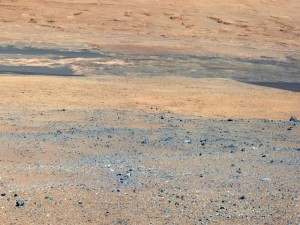
    View of Mount Sharp, Curiosity's roving destination. Image credit NASA/JPL

    Amongst the important system events in this first week was a software upgrade.  It took four days to successfully upgrade Curiosity’s software in its main and back-up computer.  The software had been uploaded during its trek to Mars, but not activated until now.  The software to date was focused on getting Curiosity through the Martian atmosphere and safely to its destination in Gale Crater.  The software upgrade is to cover its surface exploration activity, roving and controlling the various scientific instruments.

    Curiosity Ready to Roll

    “There will be a lot of important firsts that will be taking place for Curiosity over the next few weeks, but the first motion of its wheels, the first time our roving laboratory on Mars does some actual roving, that will be something special,” said Michael Watkins, mission manager for Curiosity from the Jet Propulsion Laboratory.

    Mission engineers are devoting more time to planning the first rove of Curiosity.  In the coming days, the rover will exercise each of its four steerable (front and back) wheels, turning each of them side-to-side before ending up with each wheel pointing straight ahead.  On a later day, the rover will drive forward about one rover-length 3 metres, turn 90 degrees, and then kick into reverse for about 2 metres.  Exciting times for the rover driver team!

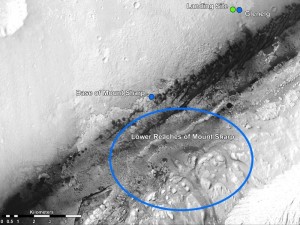
    This image shows the landing site of NASA's Curiosity rover and destinations scientists want to investigate. Photo credit NASA/JPL

    The scientists and engineers of NASA’s Curiosity rover mission have selected the first driving destination for Curiosity.  The target area, named Glenelg, is a natural intersection of three kinds of terrain.  The trek to Glenelg will send the rover 400 metres east-southeast of its landing site.  One of the three types of terrain intersecting at Glenelg is layered bedrock, which is attractive as the first drilling target.

    The choice described by Curiosity Principal Investigator John Grotzinger of the California Institute of Technology as, “With such a great landing spot in Gale Crater, we literally had every degree of the compass to choose from for our first drive.”  “We had a bunch of strong contenders.  It is the kind of dilemma planetary scientists dream of, but you can only go one place for the first drilling for a rock sample on Mars.  That first drilling will be a huge moment in the history of Mars exploration.”

    Grotzinger estimated the rover’s journey would take between three weeks and two months to arrive at Glenelg, where it will stay for roughly a month before heading to the base of Mount Sharp.

    It may be a full year before the remote-controlled rover gets to the base of the peak, which is within 20 kilometres of the rover’s landing site.

    Zapping rocks and doing science

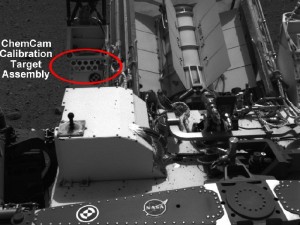
    Before Curiosity heads off to Glenelg another first will occur.  The team in charge of Curiosity’s Chemistry and Camera instrument, is planning to give their mast-mounted, rock-zapping laser and telescope combination a thorough checkout.  ChemCam has “zapped” its first rock in the name of planetary science.  It was the first time such a powerful laser has been used on the surface of another world.

    The Chemistry Camera calibration target, as seen by the camera. Photo credit NASA/JPL.

    The technique is called ‘laser-induced breakdown spectroscopy’.  The high-powered, narrow-focused, laser beam vaporises the rock from a distance generating a plasma plume with temperatures in excess of 100,000°C.  At the high temperatures during the early plasma, the vaporised material breaks down into excited ionic and atomic species.  As it cools to 5,000–20,000°C the characteristic atomic emission lines of the elements can be recorded by the camera.  This data is compared to the ‘standards’ that the rover carries to identify the rock components.

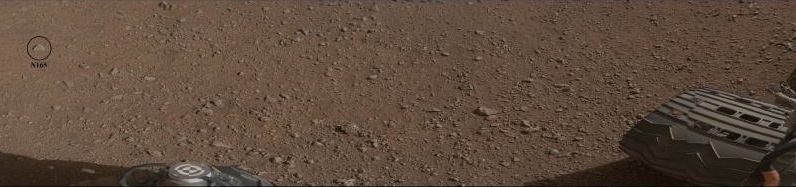
    The soon to be famous rock N165, target for testing the Chemistry Camera laser and analysis. Photo credit NASA/JPL.

    As Roger Wiens, principal investigator of the ChemCam instrument from the Los Alamos National Laboratory explained earlier, “Rock N165 looks like your typical Mars rock, about three inches wide. It’s about 10 feet away.” “We are going to hit it with 14 millijoules of energy 30 times in 10 seconds.  It is not only going to be an excellent test of our system, it should be pretty cool too.”

    Pretty cool indeed.

    First weather report in 30 years

    It is currently just above freezing point in gale Crater where Curiosity is.

    Grotzinger noted the team’s report on the Martian crater’s temperature was “really an important benchmark for Mars science”.

    “It’s been exactly 30 years since the last long duration monitoring weather station was present on Mars,” when Viking 1 stopped communicating with Earth in 1982,” he said.  Then Viking 1 lander recorded temperatures that varied from −17.2 °C to −107 °C.

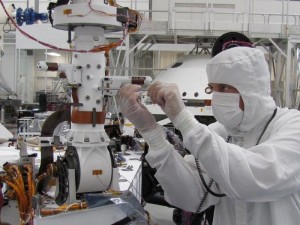
    Sensors on two finger-like mini-booms extending horizontally from the mast of NASA’s Mars rover Curiosity will monitor wind speed, wind direction and air temperature. One also will monitor humidity; the other also will monitor ground temperature. The sensors are part of the Rover Environmental Monitoring Station, provided by Spain for the Mars Science Laboratory mission.

    The weather station devices on Curiosity being tested prior to launch. Photo credit NASA/JPL.

    In this image, the spacecraft specialist’s hands are just below one of the Rover Environmental Monitoring Station mini-booms. The other mini-boom extends to the left a little farther up the mast.

    As Curiosity’s primary mission is for a full Martian year it will be able to record the seasonal variations that occur for Mars.

    On the ground radiation monitoring and weather conditions will be crucial for any future exploration or habitation by humans.  This mission by Curiosity represents an important step towards these aspirations.

  • Fear of Ebola

    Fear of Ebola

    “…the last big outbreak I experienced in Uganda [was] in 2007. When MSF arrived a lot of the staff in the hospital had died and the rest had run away because they were scared.

  • We Support the Petition to End the Faroe Islands’ Whale & Dolphin Slaughter

    We Support the Petition to End the Faroe Islands’ Whale & Dolphin Slaughter

    Thousands of signatures have now been presented in person to the Faroe Islands Government. Add your voice to this petition to keep up the demand until this cruel whale slaughter is banned.

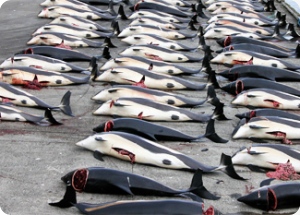
    Hundreds of pilot whales are slaughtered every year on the Faroe Islands, a small group of islands north of Europe. Faroe men go out with boats to drive these animals into a fjord using nets to block their way back to sea. The whales then beach themselves, or are pulled ashore with a blunt hook lodged in their blowholes. Once beached and defenceless these whales are killed by having their spinal cords and major blood vessels cut. It can take up to three and a half minutes for a whale to eventually die.

    Other than pilot whales, several species of dolphins are also killed using these same methods.

    Due to the harsh climate that makes it difficult to grow food on the Faroe Islands, the meat and blubber of these animals was once an important part of the diet of the Faroe people. But nowadays their food supply is diverse and plentiful, the cruel whale and dolphin hunt continues primarily for the sake of ‘tradition’.

    Please show the Faroe Islands that the international community is strongly opposed to this cruel slaughter by signing this petition to the Faroe Islands Prime Minister. Petition Tally by  August 16 2012: 81,718 signatures.

  • Internet Society’s African Peering and Interconnection Forum Provides Opportunities for Regional Internet Growth

    Internet Society’s African Peering and Interconnection Forum Provides Opportunities for Regional Internet Growth

    AfPIF-3 Highlights Regional Interconnection – Addressing Africa’s Internet Transit Deficit

    © Internet Society/Shoot the Earth/ Nyani Quarmyne

    [Washington, D.C. and Geneva, Switzerland –13 August 2012] – The third African
    Peering and Interconnection Forum (AfPIF-3), organized by the Internet Society, will
    be held 22-24 August 2012 in Johannesburg, South Africa. A multistakeholder forum,
    AfPIF aims to foster national and cross-border interconnection opportunities where
    key stakeholders, including infrastructure and service providers, Internet Exchange
    Points (IXPs), regulators, and policy makers can share experiences, hear from
    experts, and advance peering and interconnection arrangements.

    According to recent research, nearly all peering and interconnection agreements are
    forged at regional and global peering forums around the world. A unique regional
    forum, AfPIF facilitates discussions on infrastructure challenges, including
    terrestrial capacity issues, national and regional IXP development, local content
    development, and international peering. AfPIF provides a venue for productive
    technical discussions and business relationships that can be forged to augment
    Internet infrastructure and services in Africa.

    Keynotes and panel sessions will cover topics that address Africa’s Internet transit
    deficit, including Peering Negotiations and Strategies for Operators, Peering and
    Transit Economics, Landlocked Countries and Cross-border Regulatory Reality,
    Exploring the Content Business in Africa, and Attracting Global Content via Regional
    IXPs.

    “AfPIF has established itself as a strategic event for conducting business in
    Africa,

  • Adapting Drinking Water Resources to the Impacts of Climate change in Europe – ADWICE Stakeholder Exchange Conference 2012

    Adapting Drinking Water Resources to the Impacts of Climate change in Europe – ADWICE Stakeholder Exchange Conference 2012

    The ADWICE Stakeholder Conference will take place on 2 October 2012 in Brussels, Belgium. The event will offer a platform for dialogue for understanding the vulnerability of drinking water resources, water quality and water abstraction infrastructures to local, national and European decision makers, experts and researchers, water supplier and river basin authorities.

    The one-day conference represents a valuable opportunity to share knowledge and experiences and to reflect on what kind of measures may be taken to mitigate or to adapt to it.

    The one-day conference will present and discuss the draft results of the literature study conducted by a team led by BIO Intelligent Service, in collaboration with Cranfield University, Water Research Institute (IRSA), National Institute of Hydrology and Water Management (NIHWM) and ICLEI- Europe, for the European Commission (DG ENV). The event will offer a platform to share knowledge and experiences among scientific researchers, local government leaders, national policy-makers and representatives of European institutions and to receive feedback from stakeholder while gathering illustrations and best practices. 

    The morning session will provide inputs for further work while discussing the existing knowledge. The afternoon will be dedicated to highly interactive specific discussions with invited stakeholders and experts to explore different facets of this important topic in detail.

    The conference is free of charge, though early registration is recommended to secure a place.

    For further information, visit http://adwice.biois.com/conference or contact us at adwice-conference@biois.com

    Drinking Water expressed in % with access


    Image source

  • Gale Crater Vista on Mars

    Gale Crater Vista on Mars

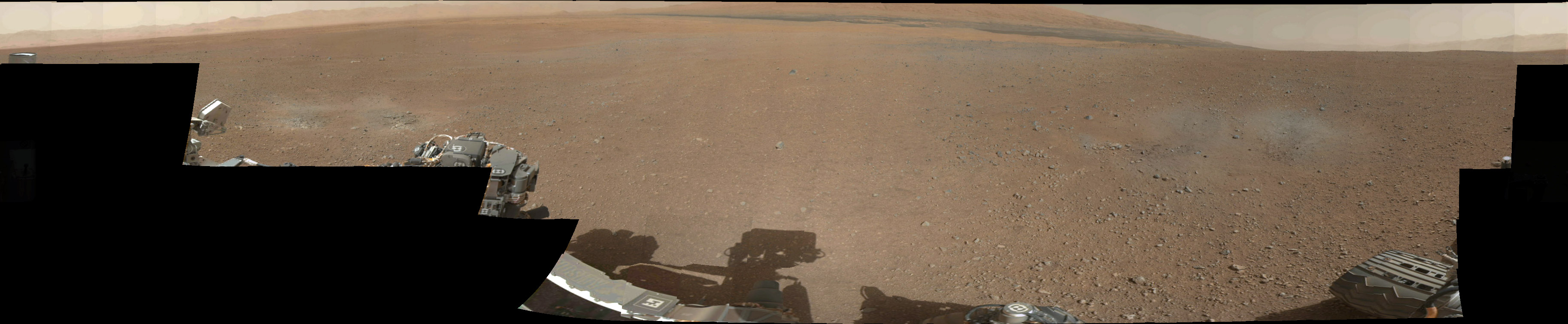
    This is the first 360-degree panorama in color of the Gale Crater landing site taken by NASA’s Curiosity rover. The panorama was made from thumbnail versions of images taken by the Mast Camera.

    Scientists will take a closer look at several splotches in the foreground that appear gray. These areas show the effects of the descent stage’s rocket engines blasting the ground. What appeared as a dark strip of dunes in previous, black-and-white pictures from Curiosity can be seen along the top of this mosaic, but the color images also reveal additional shades of reddish brown around the dunes, likely indicating different textures or materials.

    The images were taken on Aug. 9, 2012, by the 34-millimeter Mast Camera. This panorama mosaic was made of 130 images of 144 by 144 pixels each. Selected full frames from this panorama, which are 1,200 by 1,200 pixels each, are expected to be transmitted to Earth later. The images in this panorama were brightened in the processing. Mars only receives half the sunlight Earth does and this image was taken in the late Martian afternoon.

    Image Credit: NASA/JPL-Caltech/MSSS


  • Call for Papers “Big Data, Big Questions, or, Accounting for Big Data

    Call for Papers “Big Data, Big Questions, or, Accounting for Big Data

    Call for Papers “Big Data, Big Questions, or, Accounting for Big Data

  • The whole Earth-side of the Moon should be protected forever

    The whole Earth-side of the Moon should be protected forever

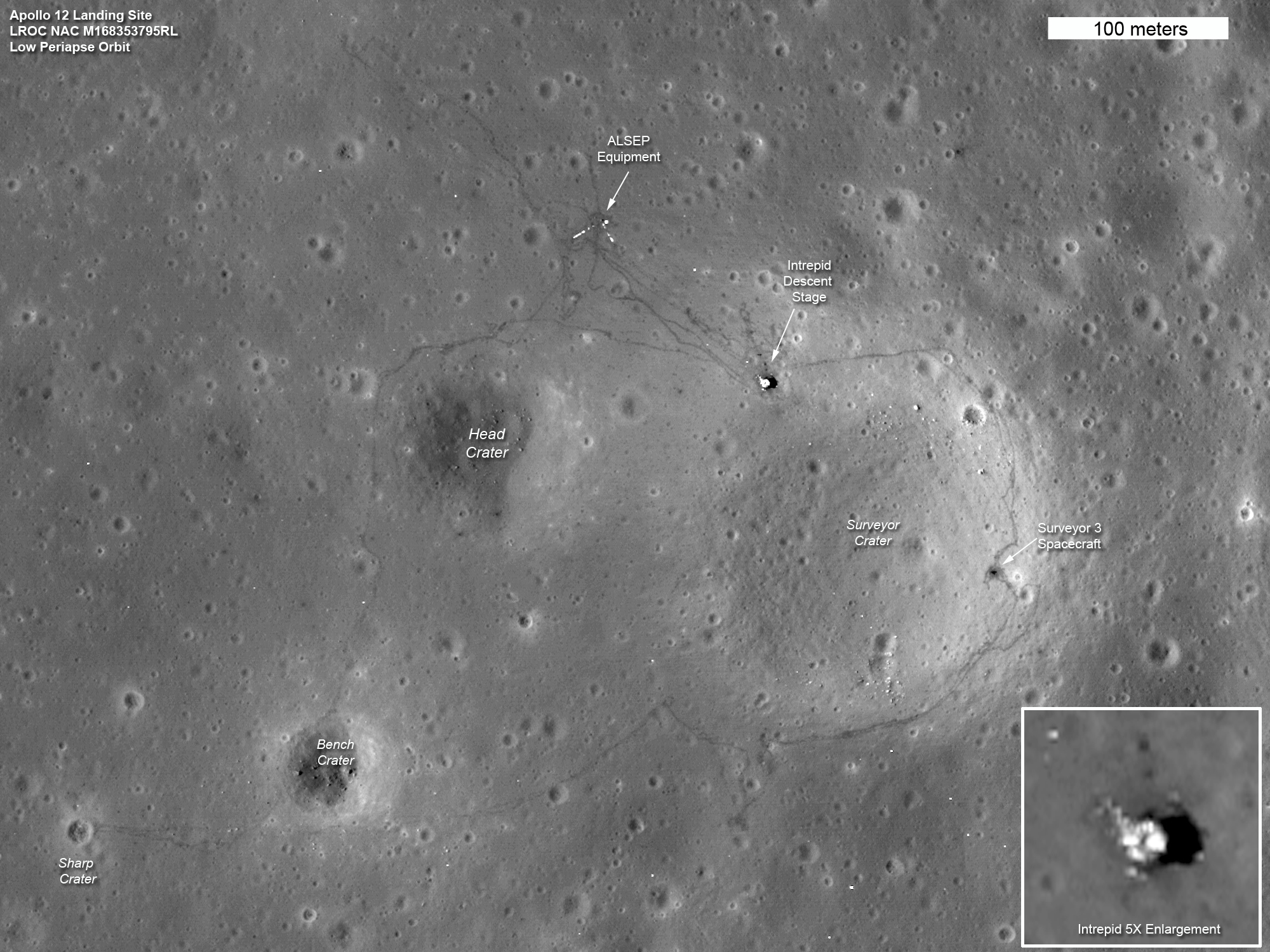
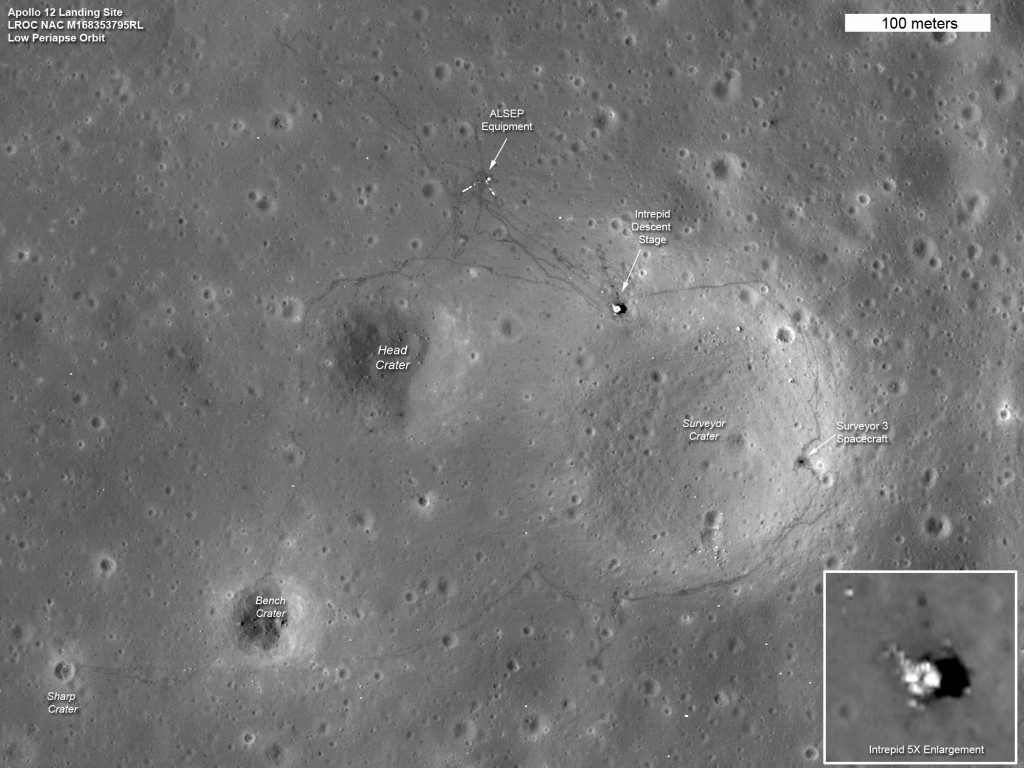
    Apollo 12 landing site, taken from NASA's Lunar Reconnaissance Orbiter in 2011

    Earlier this year, the New York Times had an interesting piece about museums seeking to protect small areas of the Moon around the Apollo landing sites. And a good thing too: “…the next generation of people visiting the moon might carelessly obliterate the site of one of humanity’s greatest accomplishments.”

    More recently, NASA has released draft guidelines around protecting the landing sites from damage.

    But isn’t that a bit like how Cairo almost swallows the Pyramids?

    Surely we need to go further? Much further?

    For thousands of years, all of Earth-bound humanity will gaze up on the Earth side of the Moon. And it’s exactly the same view looked upon by all of humanity throughout history.

    Surely that whole view is worthy of protection? After all, any changes made that are visible from Earth will be visible forever. There’s no atmosphere or weather to sweep away our transgressions over time. What is done on the Moon stays done…

    I raised these concerns with a NASA engineer a couple of years ago after his presentation at the Questacon national science museum about the (now ill-fated) Constellation project to return to the Moon.

    It seemed to me that the American disposable society mantra was writ large in their plans, with leftover bits free to crashland wherever once done with. It’s that sort of mentality that’s got us into a spacejunk problem in Earth orbit.

    I have no doubt that there will come a day – possibly while I’m still alive – that we are strip-mining parts of the Moon for minerals to build spaceships and Moonbase buildings and to fuel them.

    But surely there should be a commitment from all nations for this sort of permanent scarring to be limited to the far side (the incorrectly named dark side!) of the Moon only. And for communications facilities and potentially colonies to be positioned around the Earthside perimeter for minimal visual impact, while maintaining direct communications.

    There should also be strict controls on escape of artificial light. Surely the sort of light pollution that we spew pointlessly upwards from our Earth should not be shining back at us one day from the Moon?

    We owe our future generations that much, I believe.

    And while looking back – enjoy this handheld footage of the Earthrise, from Apollo 10, right out at the Moon, to very fitting music: