Blog

  • Weekly Science Picks

    Weekly Science Picks

    So much science, so little time… – Photo credit, Leo Reynolds

    Sigh, my photo caption sums it all up…

    But here are the news stories that caught my eye and I hope you find them interesting as well. Maybe reading them will inspire your own work or to dig deeper for answers. In any case, enjoy!


    This is one of my favorite topics because it offers up rampant debate on so many topics – society, education, cognition. You’re just going to have to read it for yourself.

    This Is Your Brain on the Internet (Maybe) by Kyle Hill

    So what is the Internet doing to our thinking? It is hard to say. Current research has a hard time keeping up with the break-neck pace of online culture, and only the more conventional mediums like television and newspapers have been evaluated in any rigorous sense.


    Newspapers might be old school, but they do have an online media presence as well these days. This article was published in The Australian this week and concerns Australia’s own CSIRO. Genetically modified crops and foods have been a part of our collective diet for many years, whether or not some want to admit it. And they are here to stay. I am of the opinion that they play an important role in our food security given a number of ever changing variables in our environment. The usual characters are depicted in this piece and it will be interesting to follow this story and hear the response from CSIRO.

    Scientists Wary of CSIRO GM Crop by Adam Cresswell

    SCIENTISTS from three countries are warning a CSIRO-led push to make Australia the first nation in the world to introduce genetically modified wheat crops could pose a significant health threat to humans and other animals.


    If you haven’t heard, NYC Mayor Mike Bloomberg has banned sugary soft drink sales in cups larger than 16 0z. in his efforts to personally tackle the obesity epidemic. I feel some disclaimers are in order: One, this story did appear on www.bloomberg.com, but you could have found it in a variety of online publications; and two, I serve on the Mayor’s Best Practices Partnership to identify strategies to combat childhood obesity. That being said, I find the details of the ban interesting as you can see in the quote below. I personally do not see the need for a a 32 oz. soda, but people who want their sugary fix will do some quick addition, carry more cans or bottles and walk to get more refills. Oh, how long must we wait for data on this?!

    NYC Health Panel Backs Bloomberg Ban on Super-Size Sodas by Henry Goldman and Leslie Patton

    Restaurants, movie theaters and other outlets have six months to comply or face a $200 fine each time there’s a violation, the health department said. The ban doesn’t apply to convenience stores and groceries that don’t act primarily as purveyors of prepared foods, which are regulated by New York state. The rules do allow consumers to buy as many of the smaller drinks as they want and to get refills.


    To continue with the discussion on obesity, this is an interesting read which once again highlights the genetics vs. environment debate.

    What’s the Main Cause of Obesity – Our Genes or the Environment? from ScienceDaily with resources from the BMJ (British Medical Journal)

    The ongoing obesity epidemic is creating an unprecedented challenge for healthcare systems around the world, but what determines who gets fat?


    And one last article that I thought was noteworthy, and a bit on the strange side by the title:

    Chemists Develop Nose-Like Array to ‘Smell’ Cancer from ScienceDaily, findings appear in the current issue of the journal ACS Nano

    The chemist says, “Smell ‘A’ generates a pattern in the nose, a unique set of activated receptors, and these are different for every smell we encounter. Smell ‘B’ has a different pattern. Your brain will instantly recognize each, even if the only time you ever smelled it was 40 years ago. In the same way, we can tune or teach our nanoparticle array to recognize many healthy tissues, so it can immediately recognize something that’s even a little bit ‘off,’ that is, very subtly different from normal. It’s like a ‘check engine’ light, and assigns a different pattern to each ‘wrong’ tissue. The sensitivity is exquisite, and very powerful.”

  • 2012 Winners from the 60SecondScience Video Competition

    2012 Winners from the 60SecondScience Video Competition

    Results from the 2012 60SecondScience Video Competition have been released.  For the last two years 60SecondScience has been a global science event involving students and citizens from 40 countries. These citizen and student-created videos have been downloaded and viewed well over 700,000 times, and growing daily. The competition is sponsored by DEECD Victoria, Australia. Winners below share $10,000 in cash prizes in the 2012 Competition.

    OPEN DIVISIONS

    • BEST CINEMATOGRAPHY: From Austria:  Vision 
    • BEST ANIMATION: From UK  Hamster Quantum Physics
    • INTERNATIONAL OPEN Winner: From India  Water Vapour
    • INTERNATIONAL OPEN Runner-up: From Hong Kong  Genetic Modification
    • INTERNATIONAL OPEN Highly Commended: From Slovenia Wind Turbine. Egypt Alzheimer’s.  USA Dog Colour Vision.  UK Food for Thought

    • AUSTRALIAN OPEN Winner: Doppler Effect  Runner-up: Pectin-The Movie


    STUDENT DIVISIONS

    • INTERNATIONAL Junior Winner: From Bulgaria Calcium Reaction

    • INTERNATIONAL Junior Runner-up: From West Java  Water

    • INTERNATIONAL Junior Highly Commended:  From Indonesia Fan from CD Waste

    • INTERNATIONAL High School Student Winner: From Indonesia  Frying Oil Filter

    • INTERNATIONAL High School Student Runner-up: From California  Nerve to Eat

    • INTERNATIONAL LOTE Winner: From Hong Kong  Sublimation

    • AUSTRALIAN OPEN Winner: Doppler Effect Runner-up: Pectin-The Movie


    AUSTRALIAN Primary School Students

    • VIC • winner Lemon Battery • Runner up Bicarb Highly Commended: Egg DropFire ExtinguisherFlowers

    • NSW • winner *The Mpemba Effect • Runner up Scientific Nerds Convention Highly Commended CoolingTenergy

    • QLD  • winner Floating Egg • Runner up Electroscope Highly Commended Moving WaterPepper

    • WA • winner Bouncing Egg • Runner up Longbow Energy Highly Commended RadiationSuper Suction

    • SA • winner Soluble • Runner up Sugar Content in Fruit Highly Commended Water Pressure

    • ACT • winner A Gummy Problem Runner up The Mystery of Gravity Highly Commended: Rust
    • AUSTRALIAN LOTE Primary Winner From Queensland Kan Bakuhatsu


    AUSTRALIAN Secondary School Students

    • VIC • winner Fractal Coastline • Runner up Hydro Kiss Highly Commended: Newton’s 3rd LawPain to BrainVeggie Pwr

    • NSW  • winner Nick’s Science Vid • Runner up Dissolving Sugars Highly Commended: PhotosynthesisBacteria

    • QLD • winner Igneous Rocks

    • WA • winner Nuclear Fusion • Runner up Icy Float Highly Commended: Brazil NutSodium-Water ExpWind PowerInk

    • ACT • winner * Occipital Lobe • Runner up Cerebellum Highly Commended: Hot Air Balloon Physics
    • AUSTRALIAN LOTE Secondary Winner From Victoria Lava in a Cup

    The 2012 Competition is now finalised and our 11 fabulous local and world judges have made their decisions. In 2013 the judging panel welcomes Richard Saunders and Dr. Rachael Dunlop. Judging criteria are based on science accuracy, communication and video production values.

    With assistance from Emeritus Professor John McKenzie AM, the convenor presented Australian winners with awards last Friday 7 September at BMW Edge Theatre, Federation Square as part of the ICT Week Celebrations, opened by Victorian Minister for Technology Gordon Rich-Phillips.

    The 2013 Competition opens for Registration and Uploads on 23 September 2012 and closes on 18 August 2013.

  • The tribe that eradicated rinderpest

    The tribe that eradicated rinderpest

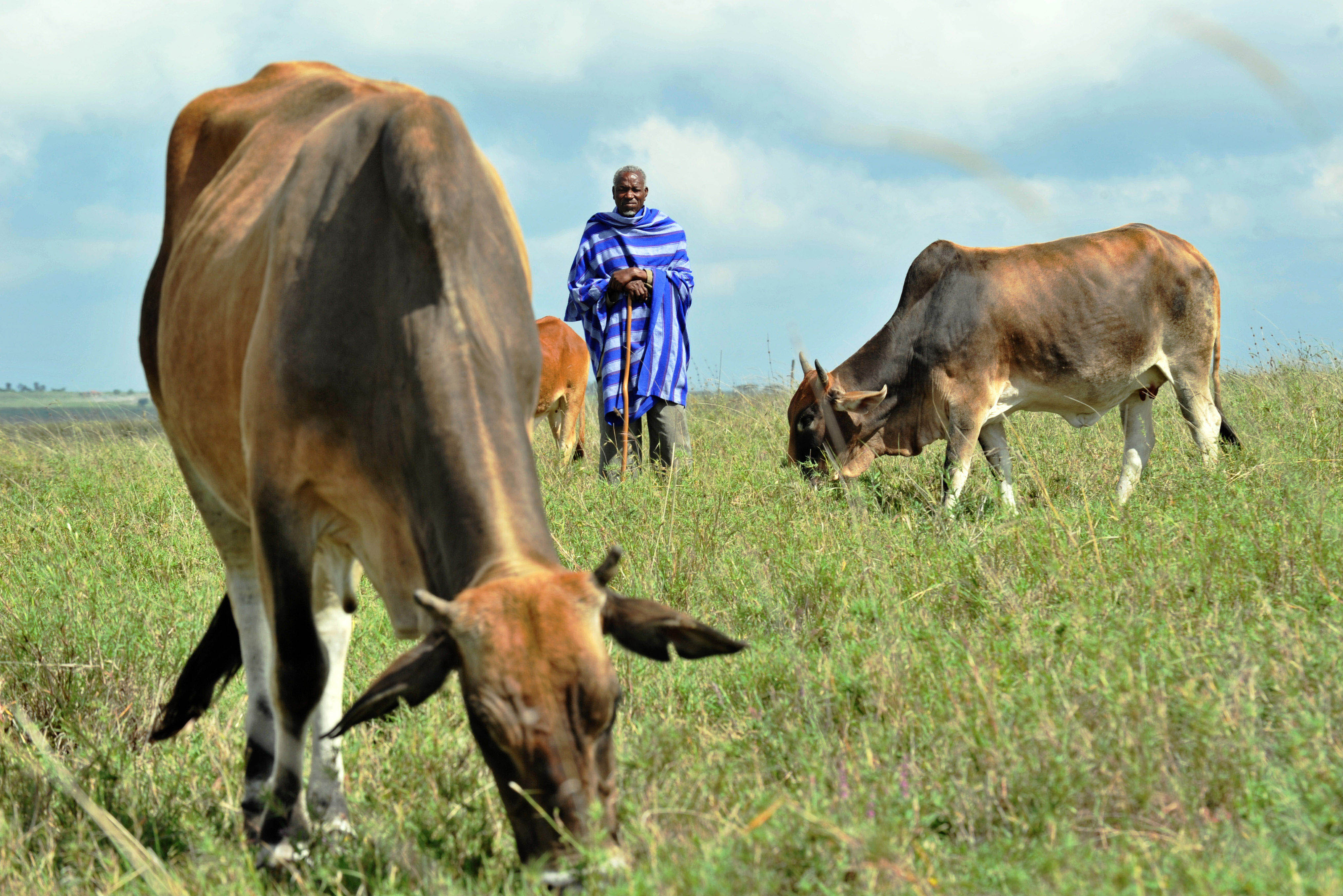
    Karamoja region in northern Uganda is one of pastoral communities and closely dispersed ethnic groups that rely on livestock for their livelihood. It is within a semi-arid place like this that economies based on meat, milk, and blood from cattle thrive. In communities such as this one, cattle plague will always be the number one fear.

    The morbillivirus rinderpest goes by many names — cattle plague in the old english or “loleoo

  • Science or fringe science? Removing the ‘giggle factor’ from Near Earth Object impacts

    Science or fringe science? Removing the ‘giggle factor’ from Near Earth Object impacts

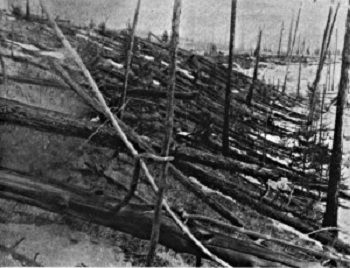
    On June 30, 7.17am in a remote, sparsely inhabited area in Siberia, Russia, near the Podkamennaya Tunguska River, occurred an event of enormous devastation. An asteroid or comet estimated to be 40-50 meters in diameter, exploded at low altitude with an energy almost 200 times that of the atom bomb dropped on Hiroshima. Trees where knocked down over an area of two thousand square kilometres, hundreds of reindeer where killed and the seismic shock from the airborne explosion was registered on barometers in England. Eyewitnesses 60km away, reported seeing the northern sky covered with fire, followed by an enormous bang, though thankfully no human deaths were recorded.

    Fallen trees at the Tunguska impact site

    Dan Yeoman from NASA’s Jet Propulsion Laboratory stated in an interview in 2008, “the Tunguska event is of great importance not only because of the devastation caused to a thankfully remote area, but also as it is the only modern era event of this type where we actually have first-hand accounts.

  • Urban informatics and new opportunities for interdisciplinary exchange – Interview with Marcus Foth

    Urban informatics and new opportunities for interdisciplinary exchange – Interview with Marcus Foth

    As an internet researcher and social media consultant, I ask some of the guests of the Australian Science magazine and knowledge network to tell me and my readers more about themselves, their current projects, and their views on topics including internet technology, the use of the Web in science and education, and certain aspects of the digital technologies that influence our everyday lives and work. You can see the published interviews so far – here.  

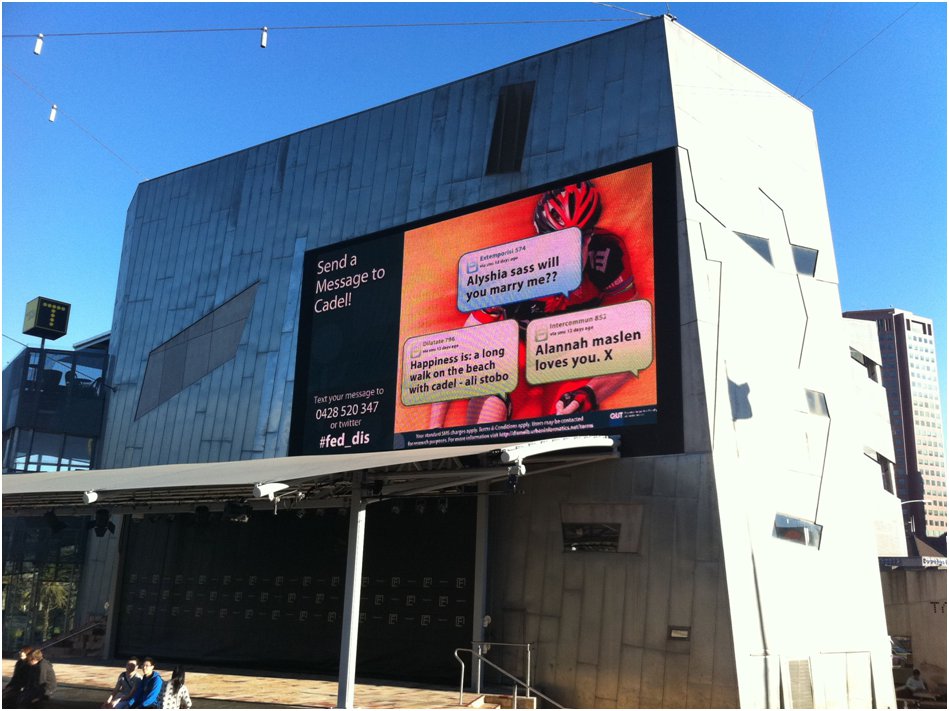
    Photo credit: Erika Fish, QUT

    Marcus Foth is an Associate Professor and Director of the Urban Informatics Research Lab, as well as the Principal Research Fellow at the School of Design, Queensland University of Technology. He has authored and co-authored over 90 articles published in journals, edited books, and conference proceedings, as well as the Urban Informatics web site. You can follow him on Twitter.

    Welcome to Australian Science. Would you, please, tell our readers a little bit more about yourself? Where do you come from, both geographically and philosophically? What is your scientific background, and your professional scope? 

    Certainly. I was born and grew up in the Northern part of Germany, in a town called Lübeck, at the coast of the Baltic Sea, about an hour from Hamburg. After high school I moved what appears to be as far away diagonally as possible within Germany in order to commence a computer science degree at the University of Furtwangen in the Black Forest that offered a – at the time – unique specialisation: Medieninformatik which combined technology applications and media studies. This was in 1997. The internet was just starting to become commercially successful, and many current students were still working on kiosk installations and multimedia CD-ROMs which were the latest fad at the time.

    This degree program included two industry internships as well as an opportunity to study abroad. Together with friends of mine we looked at a number of options and eventually applied for advanced standing into the Bachelor of Multimedia program at Griffith University in Brisbane where we continued our studies in 2000. Due to the credit transfer, we were able to graduate at the end of 2000. This was my first year in Australia, and I had an amazing time. So much so that I decided to take advantage of a Government initiative that made it easier for recent IT graduates to apply for permanent residency. I was also lucky that my application was processed very rapidly: I applied in March 2001 and returned to Brisbane in July 2001 on my PR visa.

    I had finished all my coursework for the German CompSc degree, and all that was left to do was the graduation thesis. In the meantime, I enrolled into a Master of Arts in Digital Media program at Queensland University of Technology which was flexible enough to comprise project units that allowed me to write my thesis “Backing up the Smart State: E-Security in Queensland’s Small and Medium Enterprises.

  • BioGrid and Victorian Cancer BioBank Join Forces for Cancer Research

    BioGrid and Victorian Cancer BioBank Join Forces for Cancer Research

    September 7 2012
    Cancer research has taken a major step forward in Victoria as the Victorian Cancer BioBank and BioGrid Australia join forces to improve bowel cancer management.

    The collaboration allows researchers for the first time in Australia to access detailed data associated with tissue and blood samples.
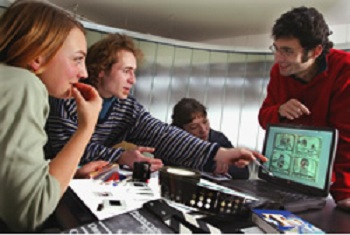
    Maureen Turner, CEO of BioGrid Australia, said today: ³Our collaboration opens up new possibilities, further strengthening the work that is underway to establish an integrated technology platform for cancer research in Victoria,² she said.

    The Victorian Government announced in the 2012 Budget the development of an integrated cancer research platform under the umbrella of the Victorian Cancer Agency.

    Bowel cancer research will be the first to benefit from the new association. Led by Dr Jeanne Tie, up to 13 sites are involved in the project, including clinicians from Royal Melbourne, Western, Austin and Box Hill Hospitals are examining whether circulating tumour DNA (ctDNA) is a reliable blood biomarker for the presence of colorectal cancer.

    The clinicians are currently recruiting suitable participants for the study before taking serial blood samples.

    Up to 900 blood samples over four years will be processed by Victorian Cancer Biobank staff across all four sites within three hours of collection. The plasma samples will be stored on ice before being shipped to the research laboratory for ctDNA analysis.

    Dr Anne Thompson, CEO of the Victorian Cancer BioBank said: ³Interpreting the clinical usefulness of this biomarker relies on correlating ctDNA levels with the histopathology of the tumour, the treatment given to the patient and imaging results used to monitor effectiveness of treatment.²

    ³With the link now in place, researchers are able access secure, ethically approved data provided through BioGrid Australia to learn more about disease recurrence and survival.²

    ³This type of approach was not available before in Victoria, and it seemed logical to join forces for better cancer research results,² she added.

    This new data linkage service between BioGrid and Biobank is available to all Australian researchers. The Victorian Cancer BioBank and BioGrid Australia chose bowel cancer as the first cancer to be supported through the collaboration because Australia has one of the highest rates of bowel cancer in the world and bowel cancer is the second most common type of newly diagnosed cancer and causes the second highest number of cancer deaths in Australia. Around 14,225 Australians are told they have bowel cancer every year but it is one of the most curable types of cancer if detected early, however, fewer than 40% of bowel cancers are detected early.
    The collaboration has other immediate benefits for Victoria, according to Ms Turner. ³While Victoria is actively securing clinical trials to take place in Victoria, trials can and do have their limitations,² she said.

    ³For instance, often older or frail patients are excluded from trials leaving doctors uncertain as to whether trial results are relevant to many of the patients they see in routine practice.²

    She says the approach that BioBank and BioGrid is taking ensures that biospecimens together with data will inform data analysis across all ages and stages of cancer through translational research projects and multi-centre clinical trials. ³What we have together is a very powerful draw card for attracting international research to Victoria, as larger numbers of patients participating in our services can be amassed more rapidly.²

    BioGrid Australia
    BioGrid Australia (www.biogrid.org.au) is an innovative health research platform that facilitates ethical privacy-protected research across many hospitals and medical research institutes. BioGrid provides a web-based Access Request System by which researchers can apply for access to specific databases. Sometimes additional ethics approval is required. Through this system, the data custodians authorise access to their data and a Scientific Advisory Committee assesses the proposed investigation.

    Victorian Cancer BioBank
    The Victorian Cancer Biobank is a not-for-profit consortium of tissue banks, supported by the Victorian government through the Victorian Cancer Agency. Our coordinated and integrated program collects and distributes tissue samples to researchers in Victoria, Australia and throughout the world. Our purpose is to provide high quality, ethically obtained biospecimens to support research that will lead to improvements in cancer diagnosis and treatment and deliver better clinical outcomes to people with cancer.

    Media inquiries: Penny Underwood, MediaWise, on 03 9818 8540.

  • Media & Learning Brussels 2012 – Conference Programme Available

    Media & Learning Brussels 2012 – Conference Programme Available

    [Press release]

    The Media & Learning Conference taking place in Brussels on 14 and 15 November 2012 is aimed at anyone who wants to find new and effective ways to use media to enhance the learning process. It has three main themes; mapping future trends and developments in media-enhanced learning in all sectors, boosting skills and competences in media production, use and re-use of media-enhanced content and tracking the importance of media literacy and wisdom as fundamental building blocks in the creation of innovative, inclusive and futureproof education and training.
    The conference programme is now available online. Keynote speakers include Xavier Prats Monné, Deputy Director-General for Education at the European Commission and Guus Wijngaards who will present his take on the educational media trends of the future based on the recent highly rated NMC Horizon Report. Andrew Keen, author of “Digital Vertigo: How Today’s Online Social Revolution Is Dividing, Diminishing, and Disorienting Us

  • Alien encounters and the man from Grenada

    Alien encounters and the man from Grenada

    The month of August indeed belonged to the tiny rover that could — Curiosity. We were all hooked right from the landing and until those first images of the red planet were beamed back. Not even Will.i.am could spoil it for us. We revelled in everything in between, from the missed high-fives, peanuts, Neil deGrasse Tyson’s conversation with the rover, to — yes, unfortunately — Will.i.am’s new single being broadcast from the surface. Curiosity even spawned this generation’s cultural hallmark that is the fake twitter account. If there is any one milestone that denotes you’ve reached a certain level of cultural status… it’s the fake twitter account. From Mrs Rupert Murdoch to dead literary figures, the fake twiteratti are just as important as the real ones.

    In an odd roundabout way, all of this got me thinking about a bizarre event that happened in 1977.

    The United Nations debating such topics as aliens and extra-terrestrial encounters of any kind seems like something confined to the annals of science fiction. And yet, the most significant debate any international body has had on the prospect of alien encounter happened at the 32nd session of the United Nations General Assembly, for reasons unbeknown to me and probably many at the committee.

    Member nations and delegations convened at the 32nd session of the General Assembly to listen to the man from Grenada, Sir Eric M. Gairy, the Prime Minister and Minister for External Affairs of Grenada (evidently taking his title to its farthest logic conclusion — what could be more external than space?).

    He began with a reading from the Bible — Psalm 100, then launching into an engaging speech that touched on freedom and independence of nations, human rights, wars and conflicts. It quickly took on another flavour. The smallest nation in the UN (at the time) had centre stage and was determined to make the most of it. Mr. Gairy began to speak of unidentified flying objects (UFOs) with the same unabashed enthusiasm he was getting a reputation for.

    He concluded by recommending that not only the UN take it seriously but they should set up a department to study UFOs. The UN already had a space outfit — the Of

  • Lighting the Imagination in Science

    Lighting the Imagination in Science

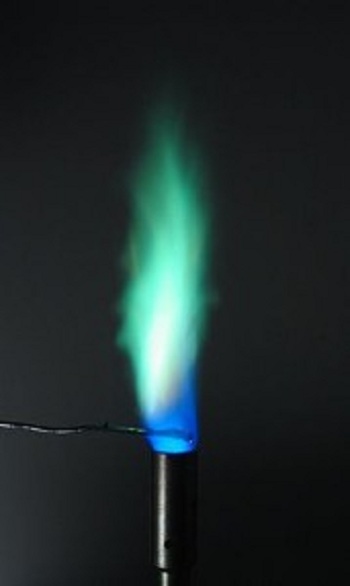
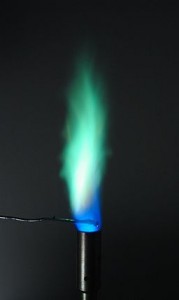
    Gas flame used for flame test of copper sulphate. Photo Credit: Søren Wedel Nielsen

    Imagination in Science

    In my policy work in early childhood education, I get to travel and observe a few child care centers in the NYC area every year as part of our Excellence in Teaching Awards. Well, I should say I did, until the funding for this awards program was cut. Minor point.

    In those visits last year, some really stellar (read well-funded) classrooms had water tables, sand boxes, aquariums, terrariums, birds, blocks, paints; tools to inspire and ignite the creativity of young minds as they explore and try to make sense of the world around them. Imagination is the most vivid and active during the early years. It must be cultivated and continued in practice.

    Let’s think about the role of imagination in science. The process of imagination is on display everywhere in an early childhood classroom. But by the time they reach middle school, students seem to burn out and tire of science. Tired of memorizing facts and figures they see no point in bothering to retain because they will never use that information again. They see no purpose for being able to regurgitate that Cu is the symbol for the chemical element of copper; that 454 grams equals 1 pound; that kinetic energy is defined as the work needed to accelerate a body of a given mass from rest to its stated velocity. All of this information could be looked up if it were required in the future. Where is the imagination? What is driving the curiosity?

    The United States is losing a great majority of future scientists as a result of its education system and the way it teaches science. It’s alarming when you hear the statistics: American students ranked 21st out of 30 in science, and 25th out of 30 in math compared to other students in developed countries (2006 PISA comparison). Or on the 2009 NAEP math test 4th graders showed absolutely no improvement in scores, while 8th graders showed modest progress at best. That’s why this emphasis on STEM – Science, Technology, Engineering and Mathematics – is so crucial. If we are to “stem” this brain drain of our youth, we must begin to see and teach science in a new light.

    Why We Should Care

    Science and math form the basis of our society. Who envisioned and built streets to make transportation easier, or built homes for improved shelter? That couldn’t have been done with basic principles and understanding of either science or math.

    Think about who designed your Starbucks cup containing your triple soy latte this morning.* Or the person who envisioned the design of the clothes you are wearing and the manufacturing process that went into producing the items that fit your style. Or the energy and transportation logistics required to get those Levi’s into the stores for you to purchase.

    Whether kids are interested in studying particle physics, fashion design, or aeronautical engineering in terms of a future career, doesn’t much matter. Society requires this mix of disciplines to function. And the teaching and promotion of science and technology, and the process we use in the curriculum to increase students’ interest and learning, is how we begin to turn this tide.

    We need to show the applications of science to connect with children. Give them the means to see the direction of their studies laid out in front of them so that they can understand the relevant connections between classroom content and career pathways, thus providing learning opportunities for students.

    I think we are not seeing the forest for the trees; we are more focused on getting to the endpoint – maintaining a competitive status, being a global leader, creating more jobs – than we are focused on how we get there along the way. Perhaps that is the missing component; something we should be sharing with children as we try and teach them about protons, electrons and neutrons. That if they can understand these concepts, understand the relationships, they may be better able to think about the application of these concepts into nuclear medicine and how it might lead to a career as in the field of molecular medicine, or they may apply this knowledge to working on nuclear-powered submarines.

    We start our kids in gymnastics, karate, soccer (football) and rugby when young; why isn’t the same emphasis placed on science education in schools? Science is fun! But I’m wired differently and a bit of a nerd, so you may differ with my opinion (but you probably do not, since you are reading Australian Science). Kids don’t just like winning at sports, they like winning. There’s more to competition than just winning, of course: learning what went right, what went wrong, how to improve, working with others, pulling your own weight, being a leader – these are things important to competition, whether it is athletics or academics. And a healthy balance of the two is important.

    Young muscle memory needs to be exercised early and often for excellence to take hold. But conditioning a young mind is different from pushing a young mind. Beginning down the path with the mindset that your young child is going to win the Nobel Prize in physics and anything less is unacceptable, probably isn’t ideal. But if parents and schools can start exposing kids to science at an earlier age – simple building blocks, water tables, modeling clay, activities requiring counting and measuring, nature trips. I’m talking things that are age appropriate of course, those activities that give kids a chance to explore on their own terms the world around them. Encouragement, support, resources – that’s how you grow a future scientist, that’s how you improve a nation, a society. Without science, what chance do we have as a species for survival?

    In the U.S., much time and resources are spent on “teaching to the test”. Meaning, teachers are prepping their students for standardized tests. Not munch learning is taking place as little information is retained that way. Would it be better to have a two-week “camp

  • The Best of Science blogging – August 2012

    The Best of Science blogging – August 2012

    The month of August was busy: we had Curiosity landing on Mars, events and interviews with scientists who are directly involved with the Mars Science Laboratory, multimedia that followed up the major event, new bloggers joining us – say Hi to Alan and David. If you are interested in science blogging, and contributing to Australian Science, please read the Editor’s note.

    Then the news broke that Neil Armstrong died, so we decided to publish  a rare and unique speech that he delivered in Sydney on 24 August 2011. Beside the major events, check out the articles on alternative energy, environment, virology, pharmaceutical policy, ecology and democracy, science of prediction, modelling, and few calls for participation at the various conferences and events. The recap and the top ten articles of the month are here:

     Top ten posts:

    Interview with lead Mars Curiosity rover driver Matt Heverly and Where to land Mars Curiosity for the best science? Interview with Marion Anderson, who helped choose the landing site by Alan Kerlin

    Last week I interviewed Matt about this important role, about driving rovers in general, and about the science work that he’ll be helping with.  When Matt came online, he’d quite literally been in the “Mars Yard

  • Does my Science look big in this? August 2012 in review

    Does my Science look big in this? August 2012 in review

    August was a momentous month for science and technology. In my top five events are: NASA landed a car-sized rover on Mars; the first man to walk on the Moon, Neil Armstrong dies; Harvard scientist create a cyborg tissue; Swedish researchers detail how Parkinson’s disease spreads through the brain; and Voyager 2 turns 35.

    Without a doubt the technology achievement of the month goes to NASA. They landed the rover, Curiosity, successfully on Mars at 1:31 a.m. EDT August 6, 2012. Ending a 36-week flight and beginning a two-year investigation.  What makes this noteworthy? For one the coverage and access NASA provided in real time. From the launch to the daily updates to the ‘on the spot’ coverage of the entrance-descent-landing sequence live from the Pasadena control-room. Showing that engineers and scientists are human after all.

    I was delighted to see the sky-crane landing working to perfection.  As the system were all bought to life one-by-one the science exploration staff are eagerly anticipating zapping, sampling and analysing rocks, regolith and atmosphere.

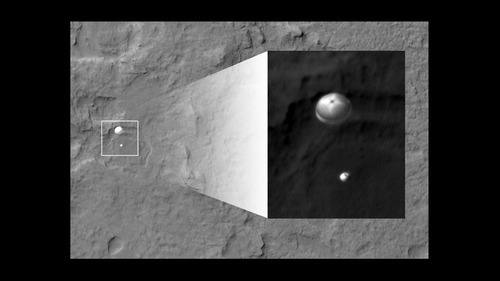
    Curiosity parachuting to the Martian surface. Photo credit NASA/JPL.

    “Today, the wheels of Curiosity have begun to blaze the trail for human footprints on Mars. Curiosity, the most sophisticated rover ever built, is now on the surface of the Red Planet, where it will seek to answer age-old questions about whether life ever existed on Mars, or if the planet can sustain life in the future,” said NASA Administrator Charles Bolden. “This is an amazing achievement, made possible by a team of scientists and engineers from around the world and led by the extraordinary men and women of NASA and our Jet Propulsion Laboratory. President Obama has laid out a bold vision for sending humans to Mars in the mid-2030’s, and today’s landing marks a significant step toward achieving this goal.”

    The bold vision for sending humans to Mars was poignant. Neil Armstrong, the first man to walk on the moon during the 1969 Apollo 11 mission, died, following complications resulting from cardiovascular procedures. He was 82. Without a doubt Neil Armstrong, Buzz Aldrin and Michael Collins were childhood heroes to me. They along with the other astronauts of both the Apollo and Gemini missions were a key inspiration in firstly my interest in and secondly my career in science.

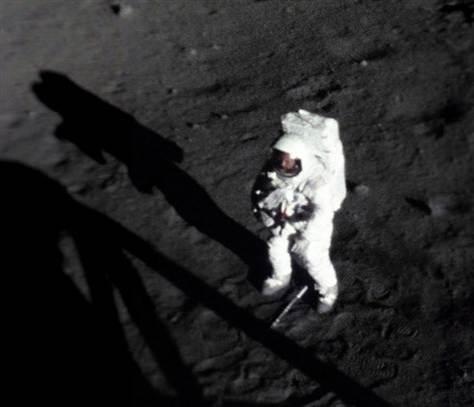
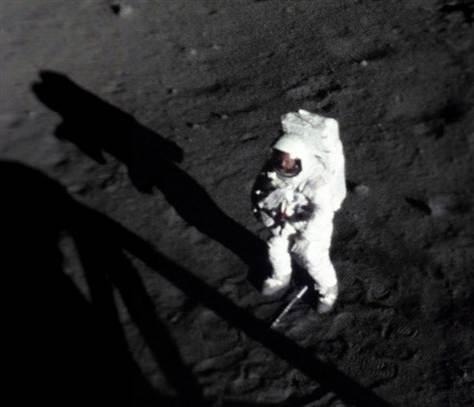
    The only picture taken of Neil Armstrong on the Moon. Neil was carrying the camera (seen in his hands here) during the entire moon-walk so all images captures Buzz Aldrin. This image was captured by a stationary camera on the Lunar landing module. Image credit NASA.

    “Houston, Tranquillity Base here. The Eagle has landed,” Armstrong said, telling a tense and waiting Earth that men had finally reached the lunar surface. Neil Armstrong was also a reluctant American hero who always believed he was just doing his job. A refreshing change from the current days of hyped useless celebrities and where the word awesome is applies to every mundane activity. Traveling to the Moon, that inspires a sense of awe.

    Meanwhile researchers at Harvard have grown cyborg tissues with embedded nanoelectronics. They have reported how they developed a system for creating nanoscale “scaffolds” which could be seeded with cells which later grow into tissue.

    Though a number of potential applications exist for the technology, the most near-term use may come from the pharmaceutical industry. Researchers could use it to more precisely study how newly developed drugs act in three-dimensional tissues, rather than thin layers of cultured cells. The system might also one day be used to monitor changes inside the body and react accordingly, whether through electrical stimulation or the release of a drug.

    Parkinson’s researchers at Lund University for the first time were able to follow events in which misfolded proteins travel from sick to healthy cells. This model has never before been identified so clearly in a living organism. The experiments also show how the transferred proteins attract proteins in the host cell leading to abnormal folding or “clumping” inside the cells. This is a cellular process likely to lead to the disease process as Parkinson’s progresses, and it spreads to an increasing number of brain regions as the patient gets sicker.

    The aim of the research is to better understand how Parkinson’s pathology progresses and thereby uncover novel molecular targets for disease-modifying treatments.

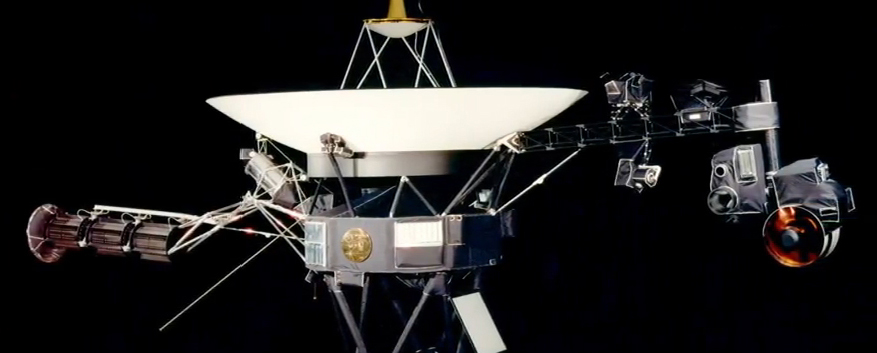
    Voyager 1. Image credit NASA/JPL

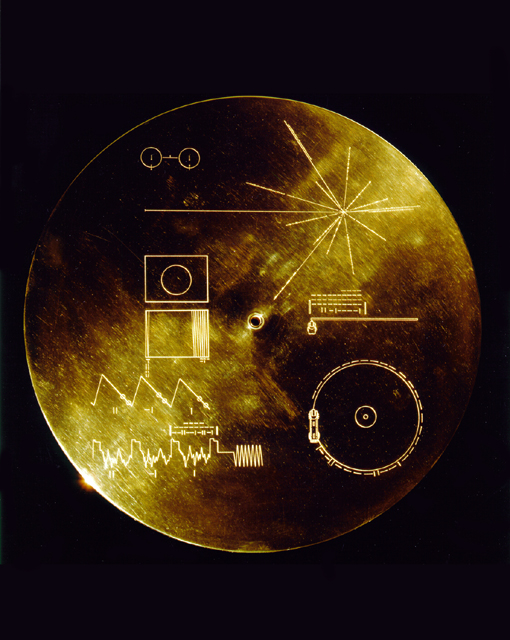
    Finally what an inspiring longevity story. Thirty-five years ago, NASA’s Voyager 2 spacecraft, the first Voyager spacecraft to launch, departed on a journey that would make it the only spacecraft to visit Uranus and Neptune and the longest-operating NASA spacecraft ever. Voyager 2 and its twin, Voyager 1, that launched 16 days later on Sept. 5, 1977, are still going strong, hurtling away from our sun. Mission managers are eagerly anticipating the day when they break on through to the other side – the space between stars.

    I trust you have enjoyed my idiosyncratic “five best new science and technology” stories of this past calender month. These were in most cases, but not exclusively so, announced through peer reviewed journals. These were those that I found most interesting, or influential, or of possible future impact.  No science applied to my choice, the choice was my responsibility alone!

  • Environmental Sabbath Day – A Simple Proposal

    Environmental Sabbath Day – A Simple Proposal

    In our efforts to reduce greenhouse gases we often overlook the cultural dimensions. These days, we love the idea of “24/7

  • Kepler Astronomers Find First Planetary System Around a Binary Star

    Kepler Astronomers Find First Planetary System Around a Binary Star

    NASA’s Kepler mission has found the first multi-planet solar system orbiting a binary star, characterized in large part by University of Texas at Austin astronomers using two telescopes at the university’s McDonald Observatory in West Texas. The finding, which proves that whole planetary systems can form in a disk around a binary star, is published in the August 28 issue of the journal Science.

    “It’s Tatooine, right?” said McDonald Observatory astronomer Michael Endl. “But this was not shown in Star Wars,” he said, referring to the periodic changes in the amount of daylight falling on a planet with two suns. Measurements of the star’s orbits showed that daylight on the planets would vary by a large margin over the 7.4-Earth-day period as the two stars completed their mutual orbits, each moving closer to, then farther from, the planets (which are themselves moving).

    The binary star in question is called Kepler-47. The primary star is about the same mass as the Sun, and its companion is an M-dwarf star one-third its size. The inner planet is three times the size of Earth and orbits the binary star every 49.5 days, while the outer planet is 4.6 times the size of Earth with an orbit of 303.2 days.

    Artist's concept of the Kepler-47 system.

    The outer planet is the first planet found to orbit a binary star within the “habitable zone,” where liquid water could exist and thus create a home for life. However, the planet’s size (about the same as Uranus) means that it is an icy giant, and not an abode for life. It’s a tantalizing taste of discoveries waiting to be made.

    The combination of observations from the NASA mission and McDonald Observatory allowed astronomers to understand the characteristics of Kepler-47’s two stars and two planets.

    The Kepler mission looks for minute dips in the amount of light coming from a star that might indicate a planet is passing in front of it, an event called a “transit.” The space telescope is also adept at identifying eclipsing binary stars, in which two stars pass in front of each other as they orbit each other. In the case of Kepler-47, they found both stellar eclipses and planet transits in one system.

    So Kepler astronomers Jerome Orosz (lead author on the study) and William Welsh of San Diego State University flagged the Kepler-47 system as worthy of follow up from the ground. They asked the McDonald Observatory Kepler team to work with them.

    Endl studied the binary star with the 9.2-meter Hobby-Eberly Telescope (HET, one of the world’s largest telescopes), as well as the 2.7-meter Harlan J. Smith Telescope at McDonald.

    “The challenging thing is that this is a very faint star,” Endl said, “about 6,000 times dimmer than can be seen with the naked eye.”

    He was taking spectra of the system — looking for characteristics in its light to indicate the motions of the primary star. (The secondary star is too faint to measure.) The McDonald observations enabled astronomers to calculate the mass of the primary star.

    These values, along with the Kepler eclipse and transit timings, were plugged into a model that calculated the relative sizes of all the bodies involved, Endl said.

    The Kepler team at McDonald Observatory also includes Bill Cochran (a co-Investigator of the Kepler mission), research scientist Phillip MacQueen, graduate students Paul Robertson and Eric Brugamyer, and recent graduate Caroline Caldwell.

    “This is the type of research where McDonald Observatory really excels,” Cochran said. “We have excellent scientific instruments on our telescopes, and the queue-scheduled operation of the HET allows us to obtain spectra at the optimal times when they will give us the best information about the stars.”

    Source.