Blog

  • Giant Impact: making the moon

    Giant Impact: making the moon

    It began… where it always begins — out there — in the vastness of space. What would it look like, that void of empty nothingness? So early on in the sound of creation, indescribable things all around. Not yet planets, not yet moons. Not yet defined. A titanic mass of rock. Different. Ugly and melancholic. Mischievous and cumbersome. As immediately as it’s gone, another smaller rock — about a tenth the size of its predecessor — in the other direction. We will come to realise that they are almost on the same path. A perilous planetary orbit around our sun.

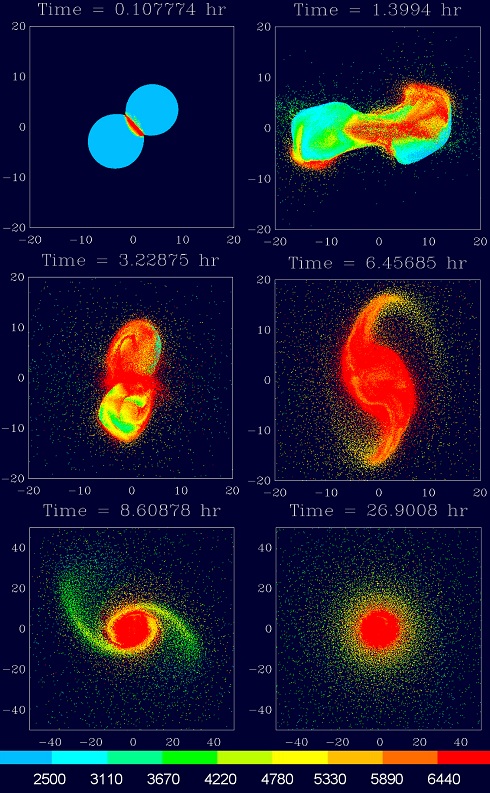
    One is a destroyer. The other is to be destroyed. The larger mass continues to grow as it gobbles up remnants from a cloud of dust. A hot, violent place with molten rock mantles wrapped around a dense hot core. On the other side of our sun swings the smaller mass. Both will have the same fate. On the far side, they collide. A cataclysm of apocalyptic proportions. In the vacuum/vacuous of space not a sound is heard. The smaller rock ploughs into its destroyer, like the little man in a fight with a lot to prove. It sinks deep into its molten core. Spiralling vast amounts of debris in long arcs into orbit. Debris, drawn together by nothing more simple than gravity, clump together, forging something close to a primitive moon. And with primitive moons come primitive planets. Finally, one defines the other.

    This has always been the theory… at least, more eloquently put in the form of maths, calculations, numbers and analysis. The origin of our Moon by giant impact has always been the leading theory. Leading because it is able to explain so many features of the Earth-Moon system. From it’s current spin and angular momentum to its composition. Both Earth and Moon are very similar in their oxygen, tungsten, chromium, and titanium isotopes — leading to the logical conclusion that one was formed from the other, since these isotopes vary differently in different planetary bodies and meteorites.

    However, simulations have shown this not to be the case. It is the Moon that should have a similar isotopic composition to the smaller impactor in this scenario, but instead it is made up mostly of material from Earth. Researchers had been tinkering around with the permutations and combinations to find such a scenario of impact that could satisfy all conditions. But to date, none had come close.

    In papers published in Science by researchers from Harvard and the Southwest Research Institute, a new model is proposed. One that adequately accounts for a similarity in composition while also coming out with an appropriate mass for Earth and Moon. One paper describes two bodies of similar mass colliding slowly, while the other describes a giant erosive impact (with a small impactor) happening really fast. Both have the same solution to the problem. That is to have the Earth-Moon system losing angular momentum over time, reaching its present state through the Sun’s gravitational influence. Thereby, in the end, both coming to a compromise in explaining the physics and the overall geo-chemistry of the Earth-Moon system.
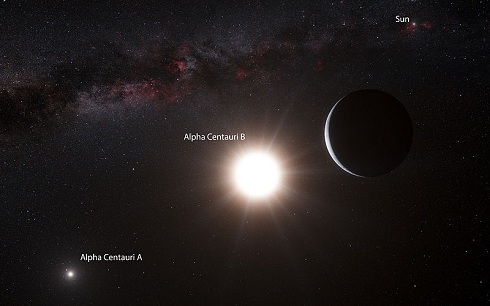
  • The nearest solar system to ours has an Earth-sized planet…

    The nearest solar system to ours has an Earth-sized planet…

    Already there’s an artist’s impression of the
    newly discovered ‘Alpha Centauri B a’

    Yes—you read right. Alpha Centauri has a planet, and it is roughly the size of Earth. And at just 4.37 light years distance, it is theoretically reachable (with a whole lot of space travel development!) despite the frustrating limitations put on us by Mr Einstein.

    In a paper appearing in the journal Nature today, lead author Xavier Dumusque (Geneva Observatory, Switzerland and Centro de Astrofisica da Universidade do Porto, Portugal) explains how they use the 3.6-metre telescope at the European Space Observatory’s La Silla Observatory in Chile to detect the tiny back-and-forth wobbles to a sun’s position that are caused by the gravitational mass of a planet revolving around it.

    BUT don’t pack your bags yet. This planet is closer to its sun than Mercury is to our Sun. So close in fact that it orbits it in just 3.2 days. So close that its surface temperature is likely to be around 1200 degrees Celsius.

    So not exactly in the much-sought-after ‘Goldilocks zone’—that orbital distance from a sun that would allow liquid water to exist on a planet, making it theoretically hospitable to life—as we know it anyway…

    And besides, while 4.37 light years sounds pretty close—that’s some 56 trillion kilometres—56,000,000,000,000 kilometres. To put that into perspective, Voyager 1 is currently 18,353,400,000 kilometres from Earth, and it was launched in 1977! How’s that in light years? Just 16 hours, 59 minutes and 38 seconds of light-travel time. So we’d probably need something like Arthur C Clarke’s Rama spaceship to make the crossing, because we’d be in there for a very long time…

    Let’s just clarify some details. Alpha Centauri isn’t one star, it’s actually three:

    • Alpha Centauri A (α Cen A)—about 110% the size of our Sun and 152% the luminosity
    • Alpha Centauri B (α Cen B)—about 91% the size of the Sun and half its luminosity
    • Proxima Centauri (α Cen C)—a red dwarf about 1/7 the size of the Sun (just 1.5 times the size of Jupiter) and less than 2% its luminosity

    Alpha Centauri A and B form a binary 4.37 light years from us. The distance they are apart varies between the distance from the Sun to Saturn, and to Pluto. Proxima is gravitationally connected to the binary, but actually slightly closer—4.24 light years away, making it the closest star to our solar system. This system is so close to ours that most of the night sky viewed from any planet there would be recognisable to us, with most constellations virtually unchanged from how they look here.

    Comparative star sizes

    Alpha Centauri is very easy for us to find in the Southern Hemisphere. It’s the fourth-brightest star in our skies at magnitude -0.27, is in the constellation Centauri and is also one of the Pointers to the Southern Cross—the furthest one from Crux. It’s also the brightest of the two pointers and indeed the whole Centauri constellation—hence the alpha in the name. A reasonable amateur telescope or even good binoculars will resolve the binary system, with clear differences between the sizes of the two stars. You need a fair bit better telescope and very good seeing to find Proxima…

    The discovery was made using the HARPS instrument on the ESO telescope—the High Accuracy Radial Velocity Planet Searcher spectograph. Rather than detecting sideways wobbles, HARPS was able to discern variations in the star’s light due to red-shifts and blue-shifts of the forward and away aspects of the star’s wobbles! Considering that the relative velocity this movement is in the order of the speed a baby would crawl, it’s a truly remarkable achievement.

    No doubt others will be looking to verify the finding over coming months. There’s a small (10 to 25%) chance that the planet could be orbiting in an elliptical plane that has it passing in front of α Cen B from our perspective. If so, the other main way that planets are found could be used. This method detects periodic dips in the star’s brightness caused by the planet’s partial eclipse, and is the way the Kepler Space Telescope has been used to find hundreds of other exoplanets.

    Sources:

    http://www.eso.org/public/news/eso1241/

    http://www.nature.com/news/the-exoplanet-next-door-1.11605

    http://bigstory.ap.org/article/earth-sized-planet-found-just-outside-solar-system

    http://www.sciencenews.org/view/generic/id/345756/description/The_alien_next_door

    http://en.wikipedia.org/wiki/Alpha_centauri

  • Citizen Scientists Discover Four-Star Planet with NASA Kepler

    Citizen Scientists Discover Four-Star Planet with NASA Kepler

    The discovery of planets continues to expand beyond the domain of professional astronomers. A joint effort of amateur astronomers and scientists has led to the first reported case of a planet orbiting a double-star that, in turn, is orbited by a second distant pair of stars.

    Aided by volunteer citizen scientists using the Planethunters.org website, a Yale-led international team of astronomers identified and confirmed discovery of the phenomenon, called a circumbinary planet in a four-star system. Only six planets are known to orbit two stars but none of these are orbited by a distant binary.

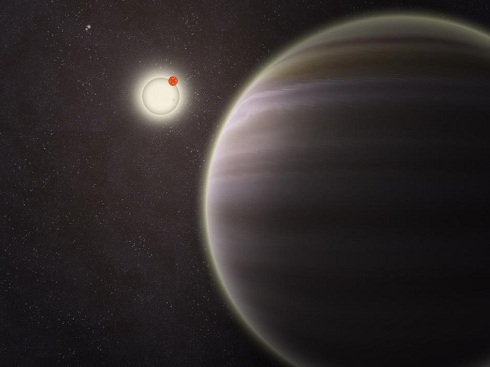
    Image Credit: Haven Giguere/Yale

    Coined PH1, the planet was identified by the citizen scientists participating in Planets Hunters, a Yale-led program that enlists the public to review astronomical data from NASA’s Kepler spacecraft for signs of planets transits distant stars.

    “I celebrate this discovery as a milestone for the Planet Hunters team: discovering their first exoplanet lurking in the Kepler data. I celebrate this discovery for the wow-factor of a planet in a four-star system,” said Natalie Batalha, Kepler scientist at NASA Ames Research Center, Moffett Field, Calif. “Most importantly, I celebrate this discovery as the fruit of exemplary human cooperation– cooperation between scientists and citizens who give of themselves for the love of stars, knowledge, and exploration.”

    A bit larger than Neptune and thought to be a gas giant, PH1 orbits its host stars every 137 days. Beyond the planet’s orbit approximately 900 times the distance between the sun and Earth, a second pair of stars orbits the planetary system.

    The research paper submitted to the Astrophysical Journal is scheduled to be presented today at the annual meeting of the Division of Planetary Sciences of the American Astronomical Society in Reno.

    Ames Research Center in Moffett Field, Calif., manages Kepler’s ground system development, mission operations and science data analysis. NASA’s Jet Propulsion Laboratory, Pasadena, Calif., managed the Kepler mission’s development.

    Ball Aerospace and Technologies Corp. in Boulder, Colo., developed the Kepler flight system and supports mission operations with the Laboratory for Atmospheric and Space Physics at the University of Colorado in Boulder.

    The Space Telescope Science Institute in Baltimore archives, hosts and distributes Kepler science data. Kepler is NASA’s 10th Discovery Mission and is funded by NASA’s Science Mission Directorate at the agency’s headquarters in Washington.

    For information about the Kepler Mission, click here.

    Source.

  • Ada Lovelace Day: celebrating women in science, technology, engineering and maths

    Ada Lovelace Day: celebrating women in science, technology, engineering and maths

    In the 1800s, Ada Lovelace, an English mathematician, worked with inventor Charles Babbage on a plan for an “analytical engine.

  • The evolution of human mortality

    The evolution of human mortality

    How long until we live forever?

    The general consensus is that we are getting older and living longer. Despite consequences and kryptonite, it is getting easier to stay alive. Heaven can wait, it seems. Every year each baby born is expected to live 3 months longer than its predecessor of the previous year. This has been the case for the last 160 years. A stunning display of the ability we humans have to prolong the length of life. And it is this simple fact of life that economists and politicians are struggling to deal with — an ageing population and not enough resources to go around.

    But outside of this there are some interesting and important questions to pose when thinking about human mortality. Does our mortality have a basis in our genetics? Researchers, publishing in PNAS, wanted to know if this reduction of mortality was as a result of a possible genetic shift or something much simpler. They wanted to understand the evolutionary context for variation in human mortality patterns — particularly comparing those of today to hunter-gatherer populations. Modern-day hunter-gatherer populations which are used as a proxy in evolutionary terms.

    What they found was a significant decrease in human mortality. The vast majority of this mortality reduction has only occurred since 1900 and has been experienced by only about 4 of the 8,000 human generations that have ever lived. An astounding fact.

    The average age-speci

  • Weekly Science Picks

    Weekly Science Picks

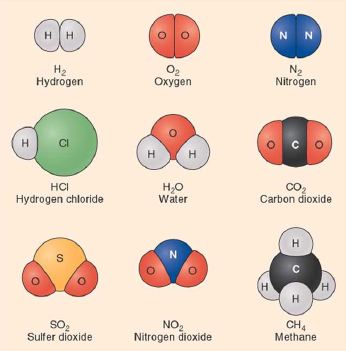
    Chemical Structures, Photo credit: www.southtexascollege.edu

    This past week was made notable by the Nobel Prizes awarded. So much great research being done, it can make your head spin. Chinese literature took center stage, and for peace…the European Union… Be sure to catch up on all the action here.

    Just some of the stories that grabbed me, motivated me and infuriated me are listed below. I think they’re worth a read; let us know what you think.

    Ocean acidification is one of the topics I think people hear or read the headline and move on, not giving it a second thought. Or maybe that;s just my opinion. I think we all need to take a hard look at the amount of CO2 humans are pumping into the air. And think about how our own individual actions, in our neighborhoods, whether we live near an ocean or not, affect marine life and what the consequences of these impacts might mean.

    Ocean Acidification by Liz O’Connell

    Will ocean acidification spell a watery grave for vital parts of marine ecosystems? Marine ecologist Jane Lubchenco, head of the National Oceanic and Atmospheric Administration, named ocean acidification global warming’s “equally evil twin.”

    Again, I may be on my Public Service Announcement soap box here, but biodiversity doesn’t receive the attention it deserves either. The section that caught my attention most was the section in the article describing ‘We have the science: policy is the next step’. I believe this concept is something that we, as communicators of science, need to be vigilant in spreading.

    Explainer: what is biodiversity and why does it matter? by Steve Morton, Andy Sheppard, and Mark Lonsdale

    To halt the decline in biodiversity across the continent, we must translate accumulated knowledge on biodiversity into government policy. This can be done through programs and on-the-ground management. Tough decisions need to be made about where to invest, what to manage, and which approach to take.

    Climate change. Carbon capture and storage (or sequestration) is a huge topic as the world looks for ways to reduce CO2 levels, keeping greenhouse gases in check and prevent global temperatures from rising 2°C. Speaking of we have the science: policy is the next step… significant work needs to be made on this front.

    Carbon capture: 130 plants need ‘to avoid dangerous climate change’ by Adam Vaughan

    More than a hundred carbon capture and storage projects (CCS) musst be built to avoid dangerous global warming, an international CCS  group said this week, as fears were raised over whether UK projects would benefit from an EU fund for 12 demonstration plants.


    A.D.H.D. This is something we need to look at as a nation, and I’m so very curious what the experiences of other countries surrounding this issue are. We have to fix the environment. What kind of policy do we want where we dope kids up to get though to complete an education? You have to read this article to understand what I am referring to. In some instances, medication may be warranted, but I feel this doctor may be going beyond his Hippocratic Oath; especially when he doesn’t know the harm he may be doing.

    It is a constant argument and debate here in the U.S. about academic performance and teacher effectiveness. We like band-aids and pills to fix problems. Who thinks this is a good idea? I don’t believe this is good for the patient without A.D.H.D. or good for society.

    Attention Disorder or Not, Pills to Help in School by Alan Schwarz

    “I don’t have a whole of choice,” said Dr. Anderson, a pediatrician for many poor families in Cherokee County, north of Atlanta. “We’ve decided as a society that it’s too expensive to modify the kid’s environment. So we have to modify the kid.”

  • What an Astronaut’s Camera Sees from ISS

    What an Astronaut’s Camera Sees from ISS

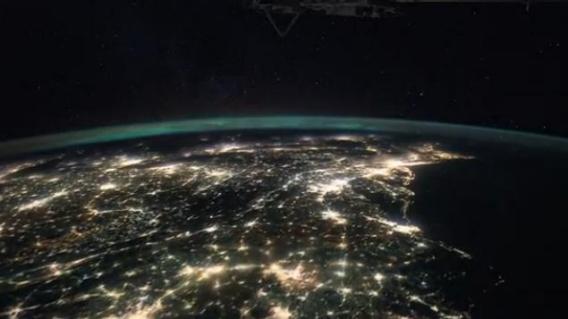
    When astronauts head to the International Space Station (ISS), Dr. Justin Wilkinson,  the chief geoscientist at NASA, asks them to snap pictures of various geographical locations. From this vantage point 250 miles above the planet’s surface, he learns many things — for example, he tells Slate, “there are a lot more examples of a geographical phenomenon called an inland delta or megafan—that is, deltas formed far from coastlines—than was once thought.

  • Singing Mice Show Signs of Learning

    Singing Mice Show Signs of Learning

    Like songbirds and humans, male mice have brain circuits and behaviors they may use to learn some of their sounds.

    Guys who imitate Luciano Pavarotti or Justin Bieber to get the girls aren’t alone. Male mice may do a similar trick, matching the pitch of other males’ ultrasonic serenades. The mice also have certain brain features, somewhat similar to humans and song-learning birds, which they may use to change their sounds, according to a new study.

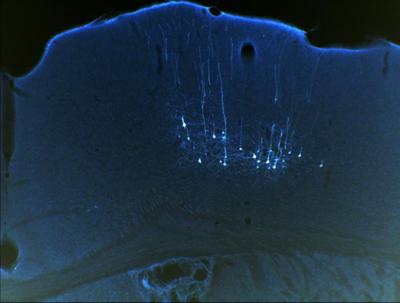
    This image shows the motor cortex neurons that directly project to the brainstem and ultimately control the larynx of male mice. Credit: Gustavo Arriaga and Erich Jarvis, Duke.

    “We are claiming that mice have limited versions of the brain and behavior traits for vocal learning that are found in humans for learning speech and in birds for learning song,” said Duke neurobiologist Erich Jarvis, who oversaw the study. The results appear Oct. 10 in PLOS ONE and are further described in a review article in Brain and Language.

    The discovery contradicts scientists’ 60-year-old assumption that mice do not have vocal learning traits at all. “If we’re not wrong, these findings will be a big boost to scientists studying diseases like autism and anxiety disorders,” said Jarvis, who is a Howard Hughes Medical Institute investigator. “The researchers who use mouse models of the vocal communication effects of these diseases will finally know the brain system that controls the mice’s vocalizations.”

    Jarvis acknowledged that the findings are controversial because they contradict scientists’ long-held assumption about mice vocalizations. His research suggests the vocal communication pathways in mice brains are more similar to those in human brains than to sound-making circuits in the brains of chimpanzees and other non-human primates. The results also contradict two recent studies suggesting mice do not match pitch or have deafness-induced vocalization changes.

    “This is a very important study with great findings,” said Kurt Hammerschmidt, an expert in vocal communication at the German Primate Center who was not involved in the study. He is cautious about some of the claims but suggested that if mice can learn vocalizations they could become a good model to study the genetic foundation of the evolution of language.

    Jarvis, his former graduate student Gustavo Arriaga, and a colleague from Tulane University tested male mice for vocal learning traits as part of a larger project to study speech evolution in humans. Vocal learning appears to be unique to humans, songbirds, parrots and hummingbirds and scientists define it with five features related to brain structure and behavior. Since scientists have never found the features in other animals, “I almost expected every experiment in mice to fail,” Arriaga said.

    In the study, funded by HHMI, NSF and NIH, Arriaga first used gene expression markers, which lit up neurons in the motor cortex of the mice’s brain as they sang. Arriaga then damaged these song-specific neurons in the motor cortex and observed that the mice couldn’t keep their songs on pitch or repeat them as consistently, which also happened when the mice became deaf.

    Arriaga also used an injectable tracer, which mapped the signals controlling song as they moved from the neurons in the motor cortex to those in the brainstem and then to the muscles in the larynx. “This direct projection from the mice’s forebrain to the brainstem and muscles was the biggest surprise,” Jarvis said.

    “The evidence of direct projection from these motor cortex regions is a great finding,” Hammerschmidt said. “And I think it is important to try to understand whether these projections are really able to work in a similar way like such projections known in birds and humans.” The question is whether mice can learn a vocalization the way other species do. The researchers found that when two male mice were placed in the same cage with a female, the males’ pitch began to converge after seven to eight weeks. Arriaga and Jarvis tested 24 male mice and did the experiment twice to confirm the result.

    Hammerschmidt is skeptical. Jarvis and Arriaga’s “pitch convergence story is less convincing,” he said. Scientists have observed pitch convergences in non-vocal learners and the number of tested animals in this study could be too low to determine whether the discovered effect is reliable, he said.

    Jarvis disagrees, but added that more work does need to be done to know if mice can learn other features of vocalizations or if their learning is limited to just pitch.

    “Our results show that mice have the five features scientists associate with vocal learning. In mice, they don’t exist at the advanced levels found in humans and song-learning birds, but they also are not completely absent as commonly assumed,” he said. His team is now searching mouse brains for genes specific to the brain circuits for vocal behavior. So far, these genes have only been found in songbirds and humans but, based on these results, could be in mice too, Jarvis said.

    Citations:

    “Of mice, birds, and men: the mouse ultrasonic song system has some features similar to humans and song-learning birds,” Arriaga, G. et. al. (2012) PLOS ONE. 7(10): e46610. doi:10.1371/journal.pone.0046610

    “Mouse vocal communication system: are ultrasounds learned or innate?” Arriaga, G. et. al. (2012) Brain and Language.

    Source.

  • The “POLI

    The “POLI

    This article is part of Media and Learning month’s newsletter, dedicated series on lecture capture. It is provided by the Lifelong Learning project REC:all, which aims to explore new ways in which lecture capture can become more pedagogically valuable and engaging, and which is investigating a variety of learning design, technical and legal issues related to lecture capture.  Marta Cabedo Fabrés from Universitat Politècnica de València (UPV), Spain – describes how.

    The new educational paradigm due to the Bologna process, presents a teaching model in which the professor acts as facilitator of learning and the students assume an active and autonomous role. Based on these points the Universitat Politècnica de València (UPV) has developed and implemented a number of tools (POLIMEDIA, POLITUBE and POLICONECTA) and a Virtual Learning Environment (POLIFORMAT), in order to adapt to the European Higher Education Area and to improve teaching quality.

    POLIMEDIA is a system designed at the UPV for creating multimedia content (videos, instruction clips, knowledge clips, etc.), and POLITUBE is a free access portal enabled by the UPV to store educational videos that are used to support and complement classroom teaching.

    The materials and resources available in POLITUBE and POLIMEDIA, after a rigorous review, are recognized as learning objects and become part of Riunet (UPV institutional repository). Riunet provides access from the Internet to the scientific, academic and corporate production of this university following the international movement of Open Access.

    POLIFORMAT is a tele-education platform used in the UPV. It is based on Sakai and it offers a standardised interface for accessing to a Web 2.0 toolkit. It facilitates autonomous and collaborative learning to students.

    Each subject has its own space in POLIFORMAT and it is accessible only to teachers and students enrolled in the subject. The tools available include news, calendar, repository of resources, tasks, contents, on-line exams, chat, internal mail, discussion forum, wiki and student’s personal space. Some of these tools can be activated during a specified period of time, according to the needs of the subjects.

    POLICONECTA is a videoconferencing tool developed at the Lifelong Learning Center of the UPV for distance learning. It is based on
    the use of commercial software Adobe Connect, and allows virtual meetings, video conferencing and remote lectures, which can be
    recorded. It also includes the ability to share documents, applications or a whiteboard.

    For the delivery of courses or seminars at a distance UPV makes more than 30 classrooms available which are properly equipped with multiple cameras, microphones, projector, monitors, and interactive whiteboard. Some classrooms also have “Paper Show” (a special notebook that records what you write or draw with a pen in a computer). The only equipment  required by students is a broadband Internet connection, headphones and a microphone.

    All tools and platform described in this article have already been used with a high degree of acceptance by more than 250 lecturers and approximately 36000 students at the UPV. In the last six years more than 3000 videos have been produced using these technologies and actual experiences show that the use of lecture captures results in a substantial improvement of teaching quality. Find out more.

    UPV’s experience in lecture capture will be presented during the REC:all workshop taking place on 13 November.

    Source

  • 2013 looks like being the year of the comet

    2013 looks like being the year of the comet


    Comet Lovejoy, taken by astronaut Dan Burbankfrom the ISS

    The astronomy world has been buzzing since it was announced on 24 September – C/2012 S1 is a new comet that could be lighting up our skies like none in living history by November 2013. It’s been named Comet ISON after the telescope research network used to discover it – the International Science Optical Network, using its 16″ telescope in Russia.

    It has since been confirmed, using one of the scopes from the public subscription-based telescope network iTelescope.

    With a trajectory taking it very close to the Sun, people are predicting that it could be bright enough to be visible in daylight, like Venus. Ernesto Guido, Giovanni Sostero & Nick Howes  advised on the blog for the Associazione Fruiulana di Astronomia e Meteorologia that it will pass within 0.012AU of the Sun – with one AU being the distance of Earth from the Sun – at the end of November and about 0.4AU from Earth in early January 2014. That’s about 1.8 million kilometres from the Sun.

    They predict it will become a naked-eye object from early November, and peak in negative magnitudes between 25 November and 3 December, with the brightest a whopping -10.6. Given the visual flop that was the last Haley’s Comet visit, they urge caution with these calculations. But calculations by others appear to confirm that it will likely be very bright.

    (more…)

  • A flawless launch for the world’s first commercial space mission

    A flawless launch for the world’s first commercial space mission

    Photo: Ben Cooper http://www.launchphotography.com/SpX-1.html

    Elon Musk’s commercial space travel venture SpaceX has ticked off another global first – the first commercial space flight. Watch a replay of the launch first stage:


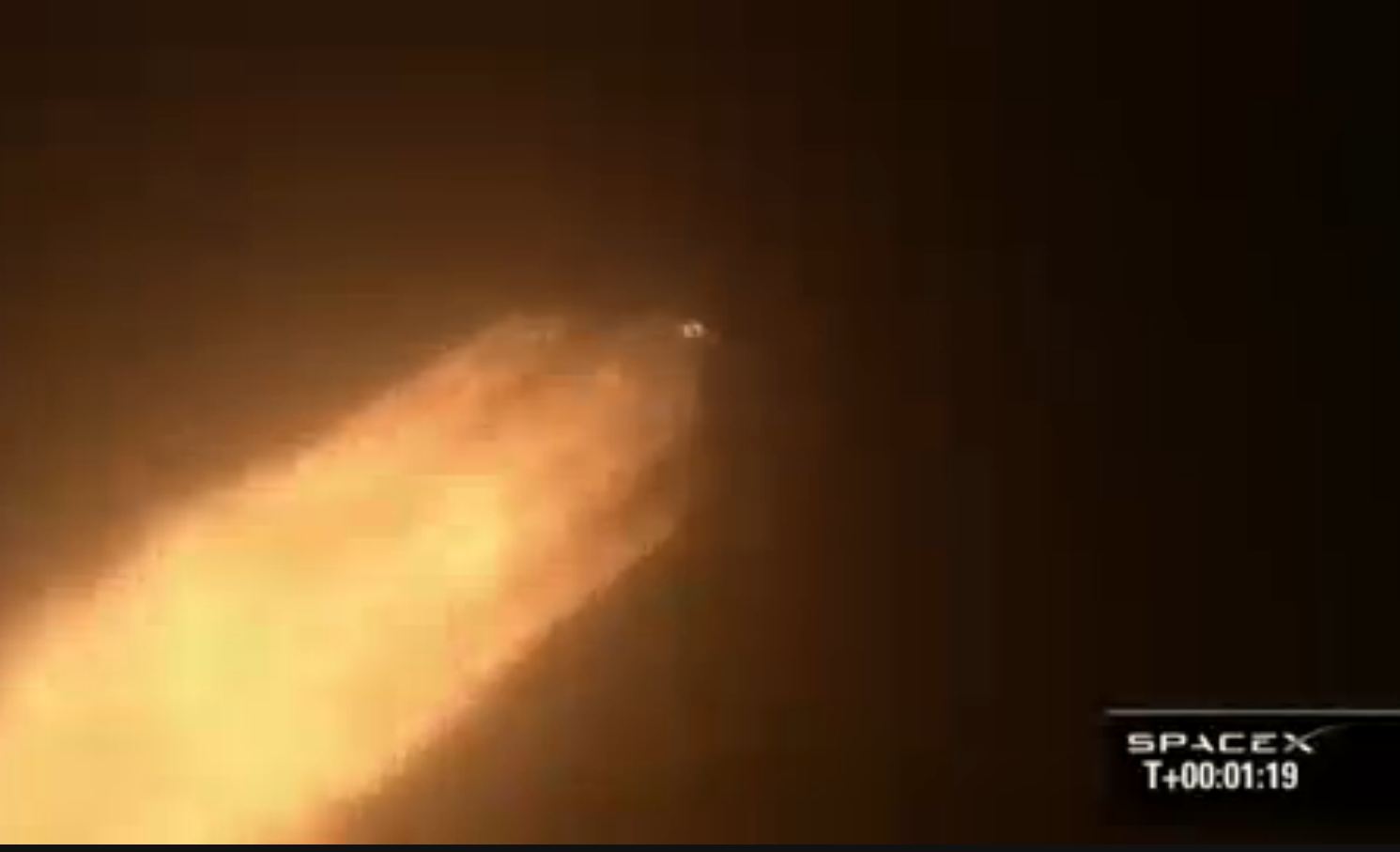
    The SpaceX Falcon 9 rocket roared off the launch pad at 11:35am Canberra time, boosting the robotic Dragon capsule into a three-day chase of the International Space Station, carrying a NASA-commissioned resupply cargo. The media kit includes the full cargo manifest – 905 kilograms each way.

    What it doesn’t mention is that the cargo includes a freezer with vanilla and chocolate ice cream for the crew! Special treat.

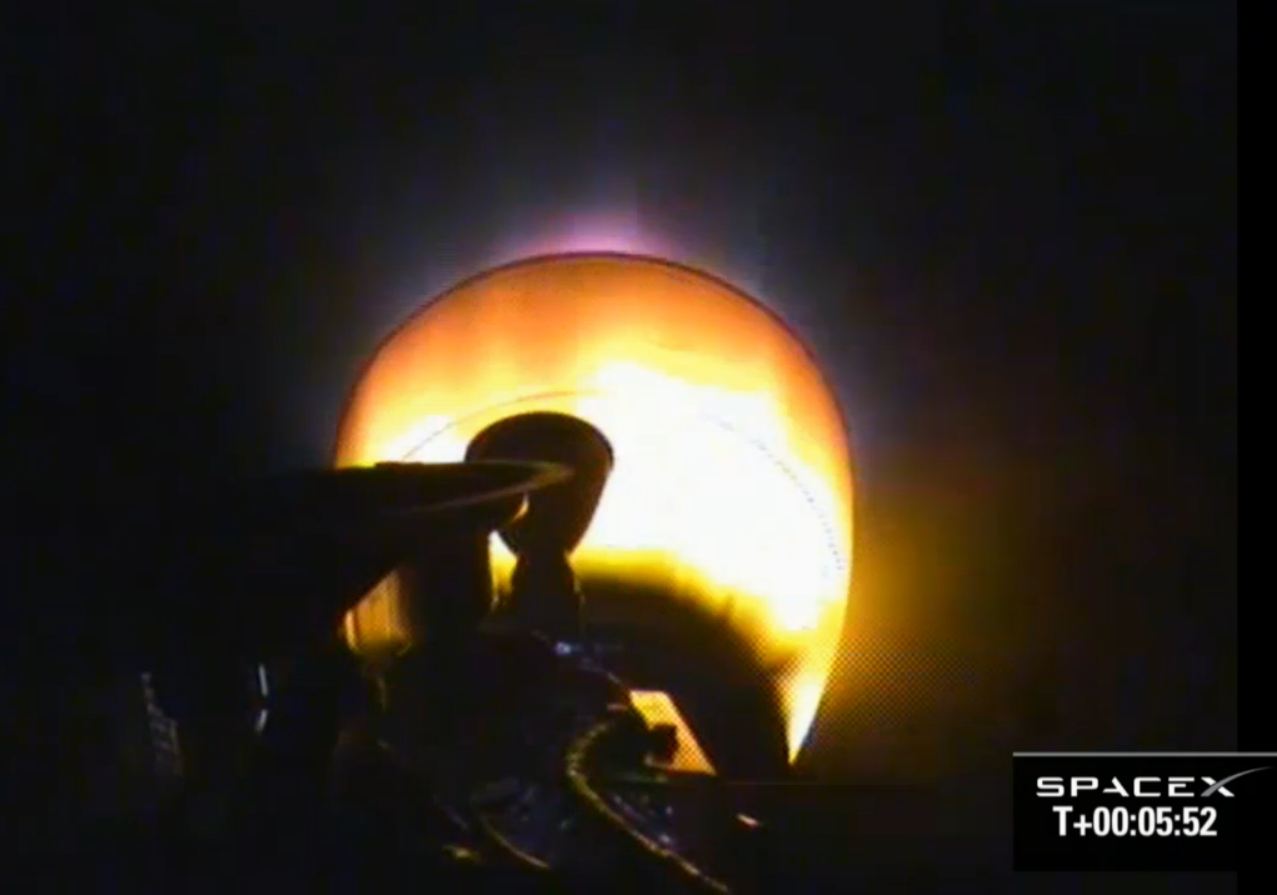
    SpaceX are switched on with their broadcasts too – they had multiple onboard cameras giving some amazing perspectives, such as this one of the second stage rocket glowing white hot.

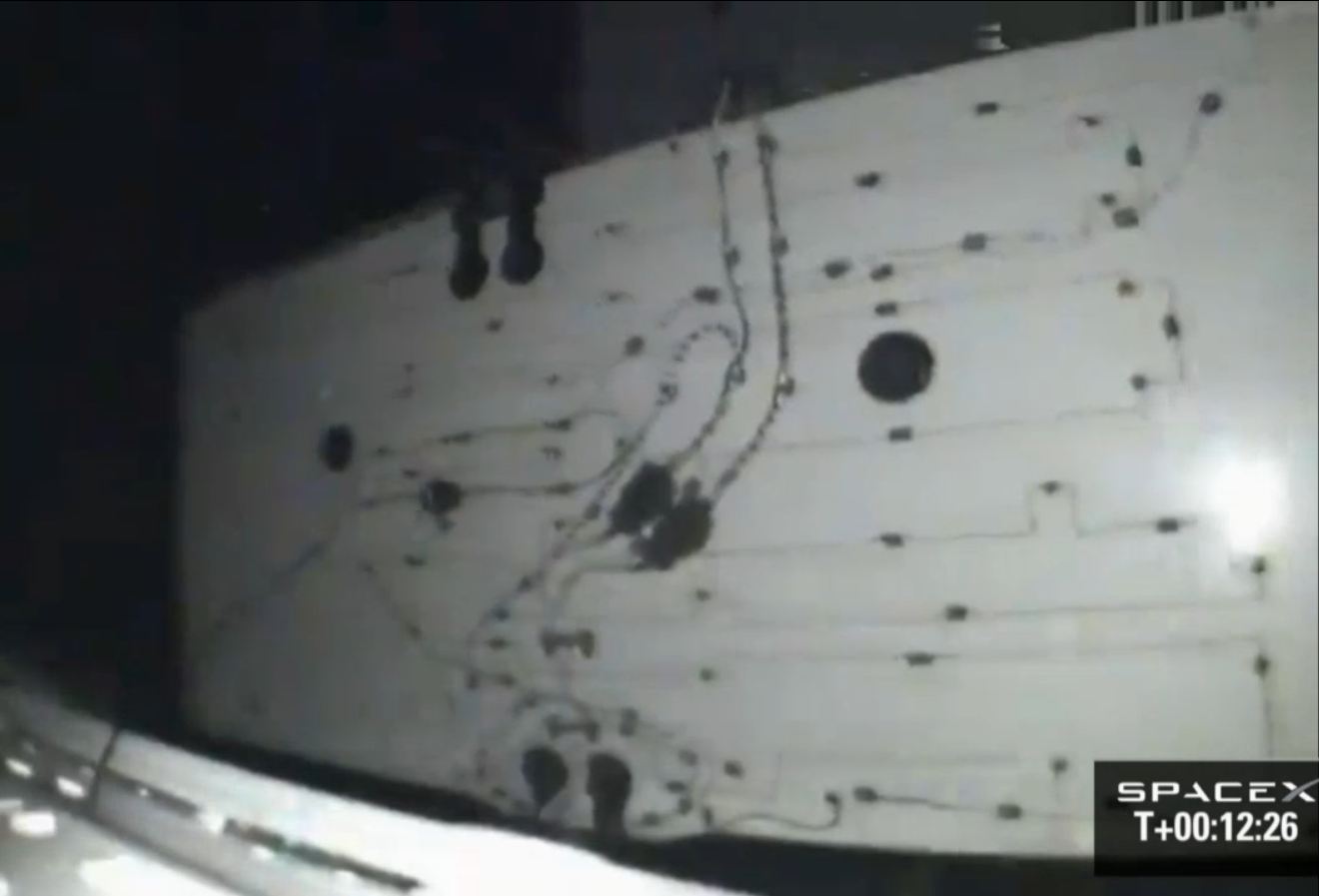
    This one shows the solar array deployment – unfolding surprisingly quickly.

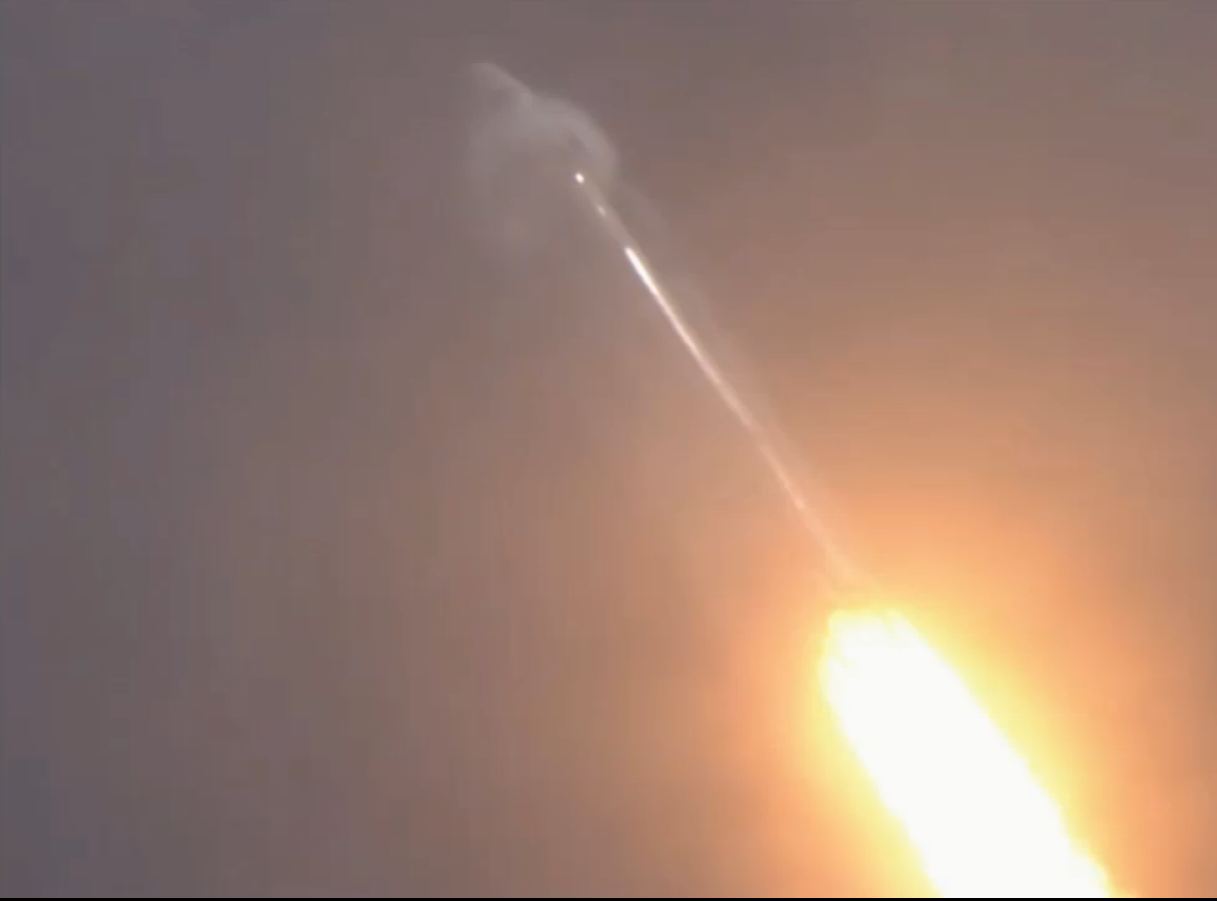
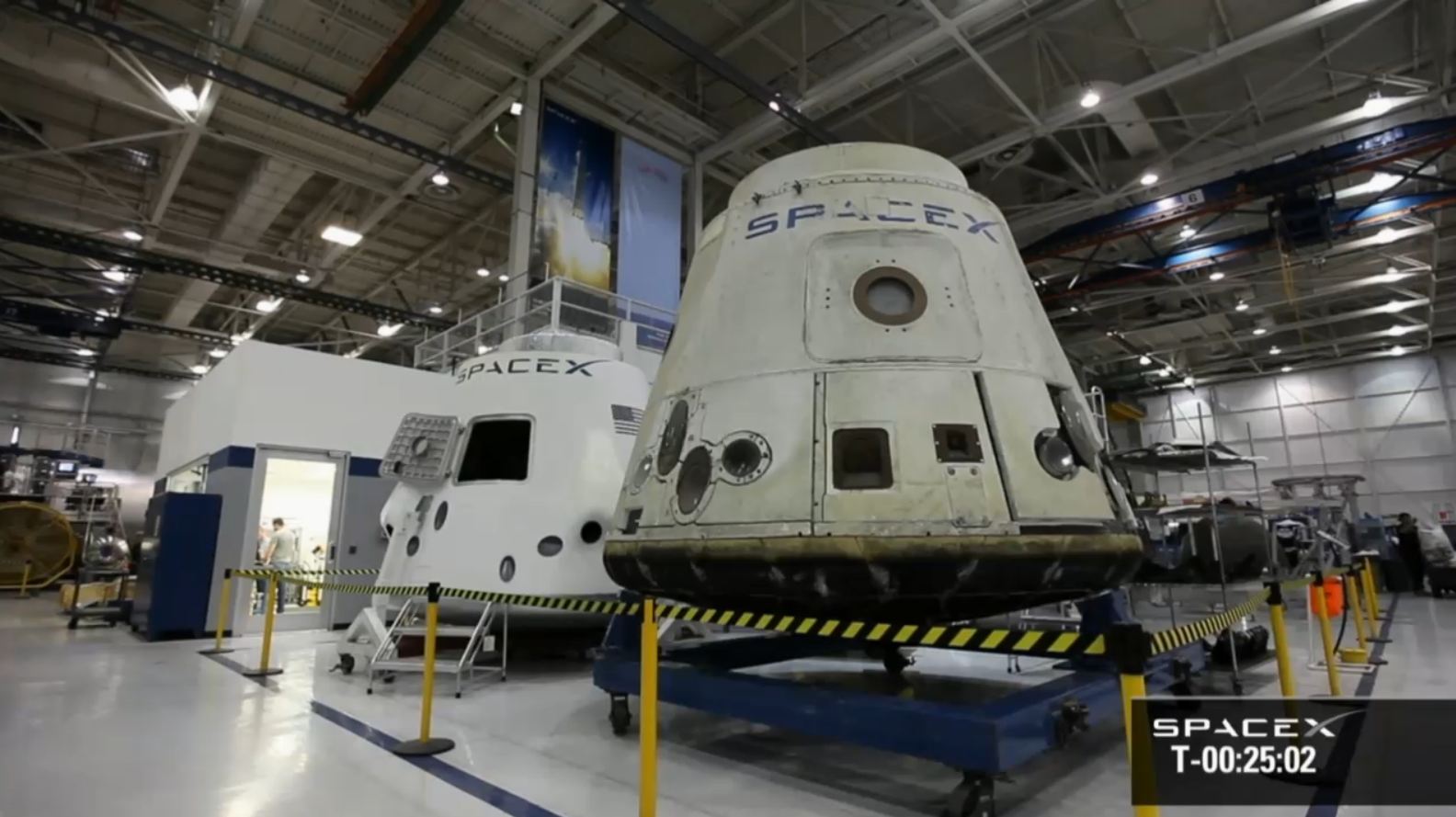
    During the broadcast, SpaceX confirmed the stories behind the naming of their craft: the Falcon 9 is named after Han Solo’s Millenium Falcon on Star Wars, and the 9 is for the nine Merlin rocket engines that power it. This screengrab shows the Falcon breaking the sound barrier.

    The capsule itself is named Dragon, after the old show Puff the Magic Dragon, following criticism back in 2002 of SpaceX’s goals. This screengrab shows Dragon docked to the ISS.


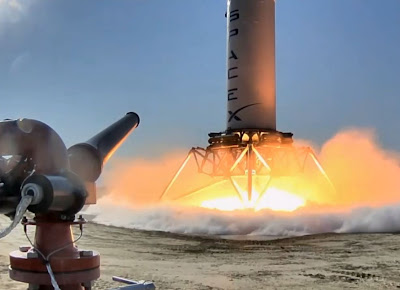
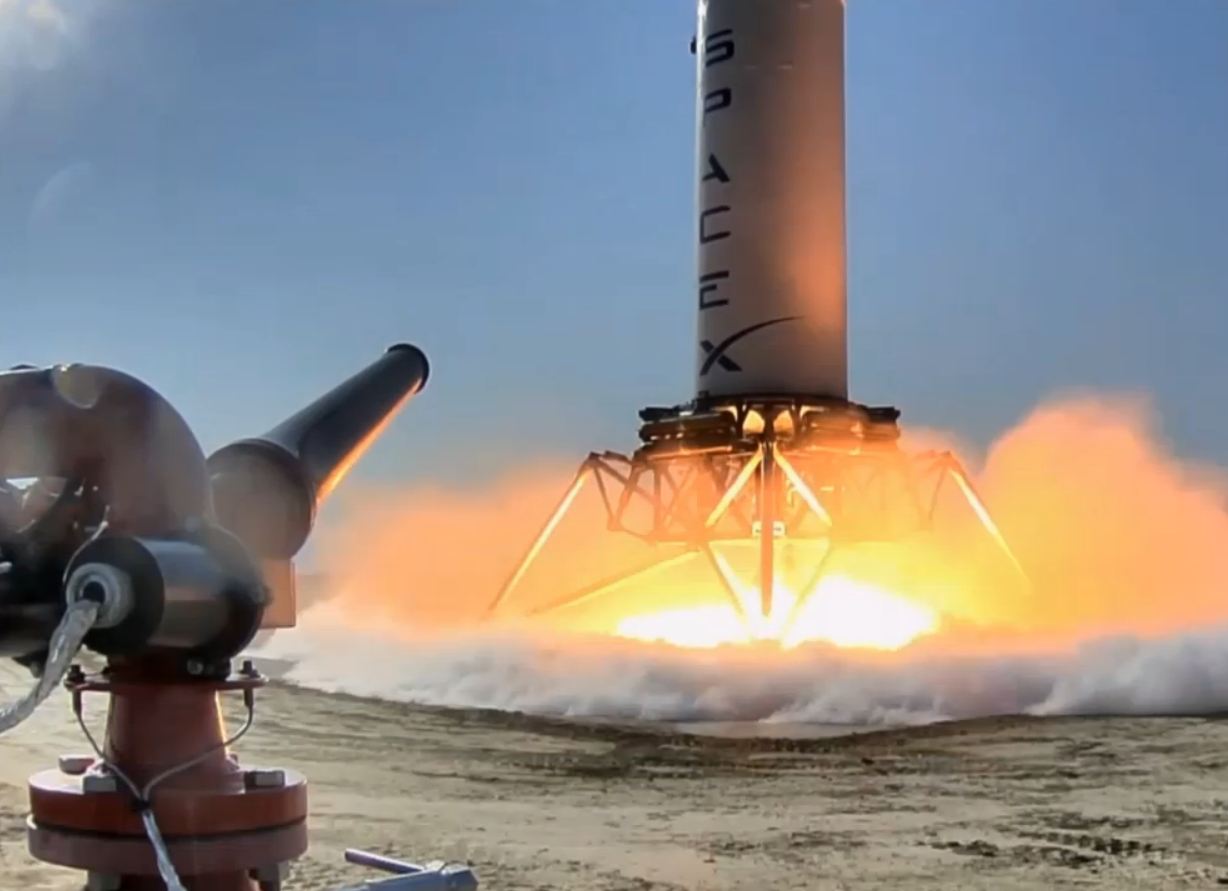
    Recently, SpaceX also tested their “grasshopper” configuration – a set of legs on the base of the first stage. The goal here is to retain some fuel in the booster and return the whole thing back to a gentle landing for reuse.

    This shows the shock absorbers on the grasshopper legs. It was only a short hop a few metres off the ground, but it’s a start.

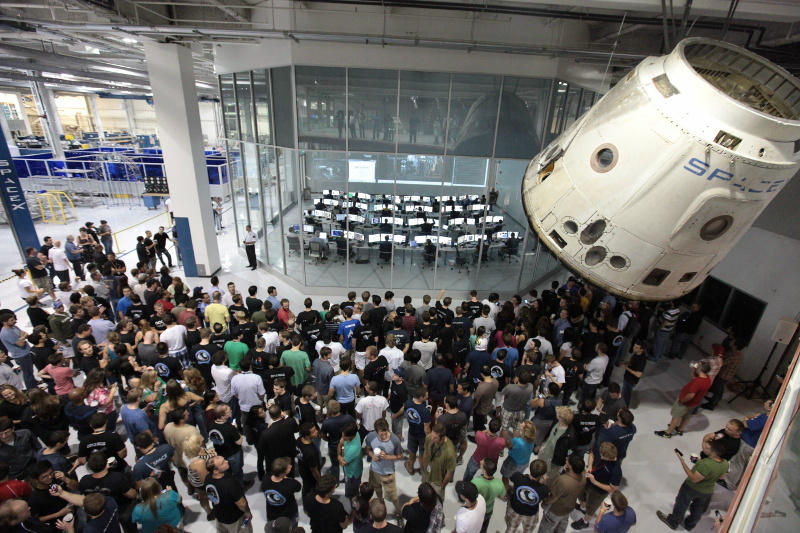
    And what about this as a workplace?

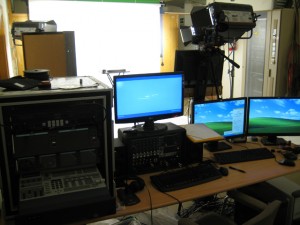
    Finally, here’s the launch control room in SpaceX HQ. NASA it is not!

    The Dragon capsule looks very cylindrical there – just a wide angle lens distortion.

  • Snappy meals for a hungry plant

    Snappy meals for a hungry plant

    Image: SatuSaro/WIkimedia Commons

    I’m a big fan of carnivorous plants. Seriously, they’re plants which eat animals, placing them oddly higher up the food chain than other plants – That always fascinated me. But a recent study on one Australian sundew has shown it to be even more fascinating than was previously thought.

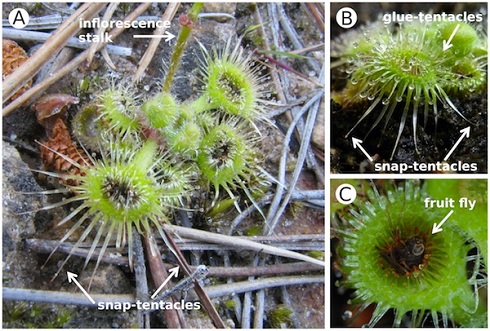
    This sundew, with the rather poetic latin name of drosera glanduligera, has an edge over other sundew species. Most sundews wait patiently for insects to be lured to their sticky doom on those drops of “dew” on the plant’s glue tentacles. In the meantime though, they don’t have much other choice than to sit and wait for their meals to arrive. D. glanduligera here, has an added bonus to its traps – dubbed snap tentacles, which serve to keep this plant particularly well fed by helping to ensnare prey.

    Fast motion in plants is an exceptionally rare trait. Most people will be familiar with venus flytraps, or the “sensitive plant” mimosa pudica. With sundews, only the tropical species move particularly fast – sundews in colder climates are in no hurry to digest their doomed prey. But for a long time, d. glanduligera was something of a mystery. The exact purpose of the long tentacles, with their curious jerking motions, growing on the undersides of the traps was difficult to fully fathom. Difficult, that is, until a recent study showed that these snap tentacles are extremely efficient catapults which help this hungry little plant survive by flinging the plant’s prey directly into the gaping maws of those traps.

    The reason for d. glanduligera’s unusual traps are because this plant needs to be active to survive. It grows fast and lives for only a year, so it needs a good supply of nutrients and can’t afford for its food to get away. Thomas Speck, a co-author on the paper, pointed out how this plant’s catapult system is so effective that the insect virtually never escapes, joking that were the plant a hundred times larger he’d rather not walk around South Australia! What’s more, its environment is steady and unchanging, allowing this plant to become such a specialist without the fear of any surprises. It’s a rather fantastic little example of the sort of things evolution can come up with when it has the chance.

    Image: Poppinga et al (2012)/PLOS One

    Snap tentacles make this sundew much more deadly than most other carnivorous plant species. They’re highly sensitive and have a response time of around 400 milliseconds making them among the fastest traps known – faster than our beloved venus flytraps. Before an insect knows what’s happening, it’s already too late. Once catapulted into the glue tentacles on the upper side of the plant’s leaves, the insect’s fate is sealed. Those glue tentacles, also remarkably fast for a sundew, rapidly move the insect to the centre of the trap, where it is digested by the plant. If you’re curious, you can even watch a video of the plant in action!

    It’s amazing what plants can be capable of, given the right opportunities. The full study is published for all to see, through PLOS One, doi:10.1371/journal.pone.0045735.g001

    Image: MFdeS/Wikimedia Commons
  • Weekly Science Picks

    Weekly Science Picks

    Happy Birthday!

    This first week of October there seemed to be a recurring theme — one of birthdays. On the 1st Nigeria celebrated 52 years of independence, followed closely Germany celebrating unity on the 3rd. But possibly the oldest this week had to be the birthplace of tropical medicine — the London School.

    “On the 2nd October 1899 the London School of Tropical Medicine at Royal Albert Dock opened its doors to 11 students. An inaugural address was given by Patrick Manson which discussed issues around the lack of training in Tropical diseases and the need to increase knowledge and awareness.

  • What do polls and climate change have in common? It’s not what you think! Brian Schmidt at TEDx Canberra

    What do polls and climate change have in common? It’s not what you think! Brian Schmidt at TEDx Canberra

    Here’s the talk by our own Nobel Prize winner Brian Schmidt at the recent TEDx Canberra. He talks about the certainty in uncertainty, showing how credible statistical analysis can reveal unexpected results.

    You may be surprised…