Blog

  • Weekly Science Picks

    Weekly Science Picks

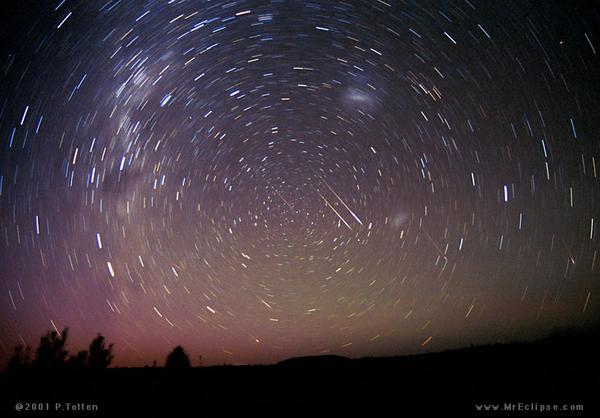
    Ah, the weekend! Time to kick back, relax, and look back over everything that’s happened over the past few days. And I’m rather happy to say that some quite interesting things have happened, including the Leonid meteor shower which peaked on Friday night (though if you step outside after dark and watch the sky, you may still see a few stragglers). So what else has caught my eye this week, science-wise?
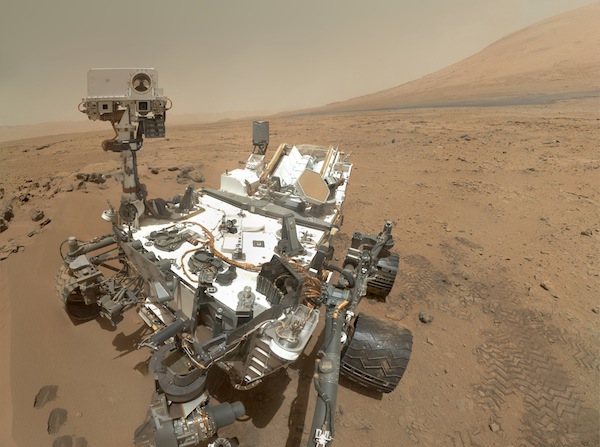
    Well first off, the Curiosity Rover has been busy over on the planet next door. I can’t help but find everything about the Curiosity rover exciting, especially as it’s paving the way for actual manned exploration to another planet. As many people will agree, no matter how sophisticated a rover can be, it will never be as good as a team of properly equipped geologists exploring a site in person. As it turns out, this idea just came a step closer to being reality…

    Astronauts Could Survive Mars Radiation, Curiosity Rover Finds

    The findings demonstrate that Mars’ atmosphere, though just 1 percent as thick as that of Earth, does provide a significant amount of shielding from dangerous, fast-moving cosmic particles.


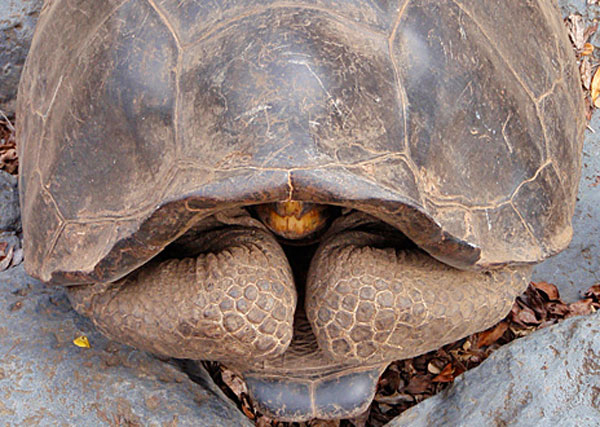
    Some people may recall the death of an aged tortoise nicknamed Lonesome George, so called because he was thought to be the last surviving member of his species. I know I do, and was rather saddened by it. While it may be an inescapable part of the way life on our planet works, there’s something quite humbling about being forced to simply watch a species go extinct and not be able to do anything about it. But then, was George’s death really the end of the story? As it happens, perhaps not…

    DNA tests show Lonesome George may not have been last of his species

    “These giant tortoises are of crucial importance to the ecosystems of the Galapagos Islands, and the reintroduction of these species will help preserve their evolutionary legacy,” said Danielle Edwards, postdoctoral research associate at Yale and lead author on the study.
     

    Lisa Grossman at New Scientist discusses the phenomenon of rogue planets – planets roaming interstellar space after being forcibly ejected from their home systems. It’s a concept which I’ve thought about in great detail in the past, as have many others, including astrophysicists, astrobiologists, and science fiction authors.

    Astrophile: Lonely planet roams with stellar outcasts

    The wanderers are no longer gravitationally linked, but they are headed in the same direction. “Like when you kick a clod of sand, the grains don’t stick together anymore but they have the same common motion,” Delorme says.


    In chemistry, I’ve always held a certain fascination with noble gas compounds. Molecules formed from atoms which aren’t supposed to react and form molecules always seemed rather exotic and curious. Several of these compounds have been predicted involving Xenon, one of the heaviest noble gasses. And there may be a lot of Xenon trapped inside the Earth this way…

    Professor predicts stable compounds of oxygen and ‘inert’ gas xenon

    “In addition to providing a likely solution to the missing xenon paradox and clarifying essential aspects of xenon chemistry, our study may result in practical applications,” says [Artem R.] Oganov. “For example, the ability of xenon to form strong chemical bonds with oxygen and other elements, and to be trapped in crystalline defects, suggests their use as non-classical luminescence centers and active sites for catalysis”.


    And to end on a humourous note, XKCD wrote a comic this week describing the Apollo Spacecraft and Saturn V rockets using only the 1000 most commonly used words in the English language. The result was slightly hilarious and rather enlightening about how often writers like myself use words which aren’t in that top 1000. A testament to XKCD’s popularity is how many people in the online space and astronomy communities mentioned it – including at least one astronaut!

    xkcd: Up Goer Five

    Lots of fire comes out here. This end should point toward the ground if you want to go into space. If it starts pointing toward space you are having a bad problem and you will not go into space today.
     

    Hope you’re having a good weekend!


  • Bacon Fans United: The Pig Genome Sequenced

    Bacon Fans United: The Pig Genome Sequenced

    Breeding healthier and meatier piggies has been one of the many scientific challenges of the past decades; creating more reliable models to study human diseases is another. The swine disease model is indeed much better to use when studying human disorders than the (thus far) widely used murine models. Although pigs reproduce slower than mice and are more expensive to take care of, they are more similar to humans when it comes to anatomy and physiology. These common grounds have allowed the development of accurate swine models for diabetes, cystic fibrosis or retinitis pigmentosa (a cause of blindness). In its issue of 15 November, Nature published the fully sequenced and annotated pig genome. This is a major achievement, and will allow considerable progress to be made on both the yummy and the healthy fronts.

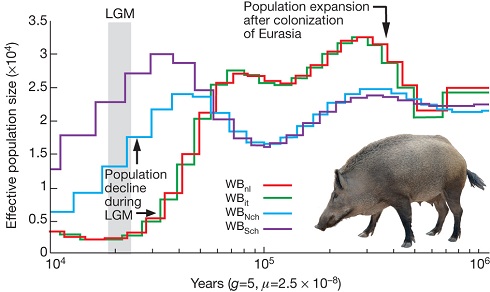
    Sus scrofa domestica, by its official name, originates from South-East Asia and then went on a visit to Europe. A closer examination of the sequenced pig genome consistently shows a clear and deep split between Asian and European wild boars rooting some 1 My ago. More precisely, the analysis allowed to date the split between the two lineages in the mid-Pleistocene (1.6–0.8 My ago), a divergence the authors explain with possible colder climate prompting isolation between populations across Eurasia.

    Demographic history of wild boars. Image from Groenen et al. (Nature, 2012).
    Demographic history of wild boars. Image from Groenen et al. (Nature, 2012). The default mutation rate for human (μ) was used, and the generation time (g) was estimated to 5 years. The Last Glacial Maximum (LGM) is highlighted in grey. WBnl, wild boar Netherlands; WBit, wild boar Italy; WBNch, wild boar north China; WBSch, wild boar south China.

    As the authors explain it:

    Our demographic analysis on the whole-genome sequences of European and Asian wild boars revealed an increase in the European population after pigs arrived from China. During the Last Glacial Maximum (LGM; ~20,000 years ago), however, Asian and European populations both suffered population bottlenecks. The drop in population size was more pronounced in Europe than Asia, suggesting a greater impact of the LGM in northern European regions and probably resulting in the observed lower genetic diversity in modern European wild boar.

    Noticeably, pigs have been faithful companions to humans for 10,000 years now. Breeding piggies and selecting for some particular features of theirs has had an important impact on the swine genome. Authors thus identified a wide range of genes and gene families to have undergone fast-paced evolution. Immunity-related genes, already known to be actively evolving in Mammals, were for instance part of this subset, and further analysis revealed evidence for specific gene duplications and gene-family expansions. Lastly, a significant expansion of the porcine olfactory receptor gene family was described. The authors explain it by the importance smell has for pigs when scavenging for food.

    Image source

  • Setting up a science club in a primary school: Why you should!

    Setting up a science club in a primary school: Why you should!

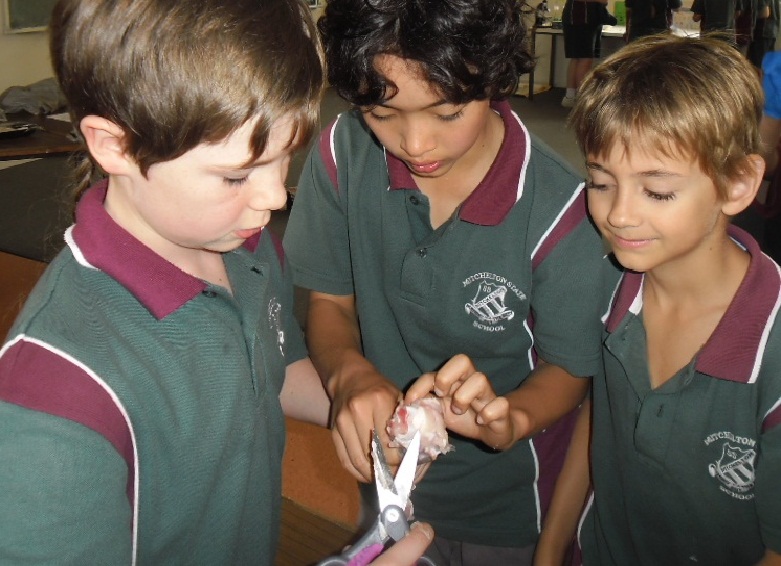
    Last week, I dissected a chicken leg and while many may believe such a thing is not extraordinary having done it so many times, the ordinary became the extraordinary when I saw it through the eyes of a child in our recently established science club.
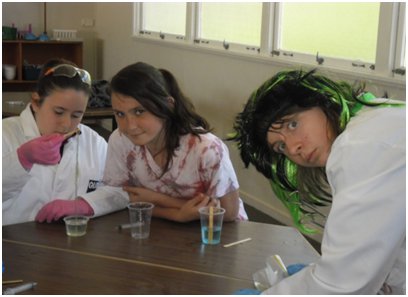


    The research on extra-curricular clubs is growing and with it there is mounting evidence of the benefit to students. In 2010 Blomfield and Barber from Murdoch University published an article which asserted that “Extracurricular participation was positively associated with higher academic track enrolment, university aspirations, and school belonging, and negatively associated with skipping school

  • The Gender Myth and Science. Our Response at SC@M

    The Gender Myth and Science. Our Response at SC@M

    Girls are just not as good at science as boys. Men do hard sciences, women do soft sciences. Gender stereotypes have existed long-term throughout the spectrum of sciences. Most people have witnessed it first-hand. Patients question expert female doctors, yet implicitly trust their male counterparts. Laboratories are full of female scientists with male leads. Why do we trust the judgement of men in science before females? Just where do these gender stereotypes come from and when do children start believing in them?

    SC@M (Science Club at Mitchelton State School) began mid-2012, attracting 45 students from Grades 4-7. Of the applicants, 21 were girls, 24 were boys with their ages ranging from 9-12 years. Included in the SC@M application process, students were asked a series of gender and science related questions to elicit their current opinions. Not surprisingly, some of our SC@M applicants did indeed hold some gender stereotypical views, which were compelling to examine. Unexpectedly, it was a minority of applicants that held these views.

    Question 1:  Boys understand science easier than girls. Do you agree with this statement? Why or why not?

    Agree             n = 15 Disagree               n =30
    Boys like it moreBoys listen more, girls talk too muchAll the famous scientists seem to be maleMost scientists on TV are male Boys and girls learn the sameGirls listen better so they understand moreBoth girls and boys can be good at scienceYou just have to work hard

     
    Question 2:  Men are better at science jobs than women. Do you agree with this statement? Why or why not?

    Agree            n = 12 Disagree             n = 33
    Women are not as good at maths Most scientists are men Men are braver Men think it’s more fun

    Men can deal with more energy correlations and stuff

    Boys do technology stuff

    They are equal, we have equal rights It just depends on how hard you push yourself Men may be stronger but science doesn’t require strength I have only ever been taught science by ladies

    Notably, of the children who agreed with these statements, several described the dominance of male scientists portrayed by the media. Doesn’t every Australian know of Dr. Karl? He hosts radio talk-back science shows and Sleek Geeks on ABC TV, is the science-guru guest on numerous morning shows and the author of over 30 books. Many would consider Dr Karl as the face of Australian science. This misrepresentation of science and gender subtly endorses the view that boys are simply better at science.

    It was pleasing to note that the majority of our applicants disagreed with these statements and most suggested that science was accessible to both genders. Given current research suggests girl’s interest in science diminishes towards late high school, it would be worthwhile to re-examine this same cohort of children at a later stage to determine any change.

    Question 3: Currently there are more men in some science jobs (like engineering) than women. Why do you think this is so?

    Typical responses
     Men like it more. Women don’t want to get dirty.Men are stronger.Boys just like building things.

    Women have a family.

    It’s too hard for girls.

    Girls like dancing and other jobs.

    Women are more suited to caring and developing jobs like childcare and nursing.

    There has always been more men in engineering.

    Although 75% of applicants thought that science was accessible for them, the majority of children responded with gender-biased statements when responding to Question 3. Sadly, none of the applicants provided an opposing side. Women are under-represented in engineering fields and other physical sciences. We need strategies to encourage girls to enter these fields, not allow them to simply accept that “it is just too hard for girls

  • The Science Surrounding James Bond

    The Science Surrounding James Bond

    James Bond in Skyfall. Original source: The Guardian. Photograph: Francois Duhamel

    Bond. Double Bond.

    That was a quip a lab partner of mine cracked during a sophomore chemistry class and I have not forgotten since. And it is a perfect lead in for this week’s post as I take you through the past and into a closer look with – The Science Surrounding James Bond.

    This year marks the 50th Anniversary of Ian Fleming’s classic James Bond series. And Friday, 9 November 2012, the 23rd installment of the series, Skyfall, hit theatres in the United States. And I wouldn’t have missed it for the world.

    I became a James Bond fan early on, around age 5, thanks to my Dad. Perhaps, not the most appropriate film choice for a 5-year-old per se, but that’s water under the bridge. What captivated my attention so? The action-packed chases, the sports cars (Aston Martin DB5, yes, please), the explosions, the science behind it all!

    The Quartermaster – Q

    The Quartermaster, known affectionately by the moniker ‘Q’ is head of the fictional research and development division of the British Secret Service. Q – always the scene stealer, in my opinion, whether portrayed by John Cleese, Desmond Llewellyn, Peter Burton, and now the youngest gadget genius, Ben Whishaw – keeps the spy business humming along. Where would 007 be without Q who created so many of those gadgets allowing his to escape safely and serve country and Queen? Q in fact answers this question in License to Kill.

    “If it hadn’t been for Q Branch, you’d have been dead long ago” – Q to Bond

    Yes, where would James Bond be without science and technology?

    I could not possibly list all of the gadgets and technology featured in the James Bond films. Well, I could, but for space’s sake I’ll refrain. I’ll just highlight some of the more clever mechanics and mind-blowing inventions, some of which still have relevance today. Perhaps. This may be a list of mundane ordinary household items or personal effects, that are anything but, and all very much deadly. I’ll also include the movie reference for homework, just in case you’d like to check it out for yourself.

    Handgun with palm recognition – Skyfall

    Bioemetric Fingerprint Scanner – Diamonds Are Forever

    Radioactive Lint – On Her Majesty’s Secret Service  (Fun fact – George Lazenby who played Bond in this film is Australian)

    Perfume Flamethrower – The Spy Who Loved Me

    Montblanc fountain pen – Octopussy

    Mini Submarine – For Your Eyes Only

    SNOOPER – A View to a Kill

    Philips Keychain – The Living Daylights 

    Miniature Binoculars – The Living Daylights 

    Dentonite Toothpaste – Licence to Kill

    Surfboard – Die Another Day

    Kids, there is a lot of chemistry, physics and hi-stakes math going on these films, so pay attention. Many of these inventions and gadgets helped keep humankind safe from terrorism and evil in the films. I’d hate to be a Debbie Downer and mention the downside, such as the loss of life, and destruction to the environment that sometimes results from Bond’s escapades, but there is a price to pay for freedom. All the more reason to study the sciences with the aim to improve the societal good of the world!

    The Old and the New

    The tales of Bond have allowed audiences to see the world; those that maybe haven’t had the luxury to travel so much. For a kid growing up on a farm in the Midwest, those movies opened my eyes to different lands and cultures and set my mind racing with possibilities. Possibilities of what I wanted to do in the field of science.

    I really don’t want to give anything away for those that have yet to see the film (IT’S SUPERB!), but Skyfall especially displays that melding of the classic Bond with the futuristic Bond. Bond has actually found immortality – the writers, producers and actors have found ways to continually reincarnate and refresh this character for future audiences. Here’s to another 50 years of shaken martinis, fine tailoring, fast sports cars, death-defying stunts, witty one-liners and keeping the world safe from terrorism at all levels. Cheers.

  • First research to successfully predict the responses of children with autism to treatment models

    First research to successfully predict the responses of children with autism to treatment models

    Research Fellow Dr Giacomo Vivanti and his team of researchers at the Olga Tennison Autism Research Centre (OTARC) at La Trobe University have successfully profiled children with autism in order to predict how well they will respond to a particular form of developmental therapy.

    Dr Cheryl Dissanayake, Director of OTARC, says that Dr Vivanti¹s research, published last week in the Journal of Autism and Development Disorders, is the first of its kind to profile children in order to predict treatment responses.
    This research is important because it is the first step towards being able to identify which intervention programs are best suited to specific children, says Dr Dissanayake.

    The autism intervention model being studied by Dr Vivanti and his team is the Early Start Denver Model (ESDM), which is being implemented at the Victorian Autism Specific Early Learning and Care Centre: The Margot Prior Wing of the La Trobe Community Childrens Centre since 2010. (See details of the ESDM, below.)
    There is little doubt that all children in the Margot Prior Wing benefit from the ESDM, but what we’re trying to understand is why some children make more gains than others.

    ŒChildren are making gains across four cognitive areas after one year of therapy. And some children in our sample are moving from a severe autism diagnosis to a less severe diagnosis.

    However, not all children improve to the same degree under the ESDM, and Dr Vivanti says that the challenge is to better understand how to match children to the programs that are best suited to their specific needs.

    We are working on the issue of what works for whom and why? says Dr Vivanti.  The paper published this week details the initial results of the OTARC research, and uses the profiling model developed by Dr Vivanti to predict the responses of children at the Margot Prior Wing to the ESDM therapy.

    The paper shows that Dr Vivantis profiling model has been highly successful in predicting treatment outcomes for children undergoing the ESDM intervention, although the sample size was relatively small, with 21 children participating in the study.

    The next step in the research, says Dr Dissanayake, is to assess whether the predictors of treatment success used by Dr Vivanti will work equally well when used in other types of early intervention programs.

    We really want to get to the stage where we can say, this group of children will do better in program A, whereas these other children will do better in program B so that we can prospectively match treatments to individual children, says Dr Dissanayake.
    REPORT: Autism intervention model normalises brain signals in children with autism

    An American study provides strong evidence for the effectiveness of an autism intervention model known as the Early Start Denver Model (ESDM), currently in use at the Margot Prior Wing of La Trobe Childrens Centre.

    It’s been known for some time that ESDM leads to significant positive changes in the development of children with autism, says Dr Cheryl Dissanayake, Director of the Olga Tennison Autism Research Centre (OTARC) at La Trobe.

    The latest American research builds on this by demonstrating that ESDM may actually normalise brain signals of young children receiving the therapy in terms of the way that they respond to faces and objects.

    What this means is that children receiving ESDM showed the same pattern of response to faces and objects as typically developing kids. They are still autistic, but the ESDM seems to be changing the way their brain responds to other people.

    Ultimately, this means that they will relate to other people in a more normal manner, says Dr Dissanayake.

    The ESDM has been in use at the Victorian Autism Specific Early Learning and Care Centre: The Margot Prior Wing of the La Trobe Community Children’s Centre since 2010. The model in its original form relies on one-on-one delivery, but the Margot Prior Wing has adapted the model for delivery in a group setting.

    The ESDM is a developmentally-based behavioural intervention model for children between 12 and 60 months of age. It is a naturalistic play-based approach delivered by specially trained therapists in collaboration with the childs parents or guardians. The therapy is based on strict adherence to a manual that guides treatment.

    The American research, published last week in the Journal of the American Academy of Child and Adolescent Psychiatry, provides further evidence in support of the ESDM.

    The La Trobe University centre is one of six Autism Specific Early Learning and Care Centres funded by the Federal Government, and one of just two centres that deliver a group-based ESDM. Research is currently taking place at the Margot Prior Wing to assess the effectiveness of the ESDM in a group setting, as well as to understand why some children make greater gains in response to the ESDM than others.

    Image.

  • Interview: Keri Bean—Mars meteorologist, Curiosity Rover team member

    Interview: Keri Bean—Mars meteorologist, Curiosity Rover team member

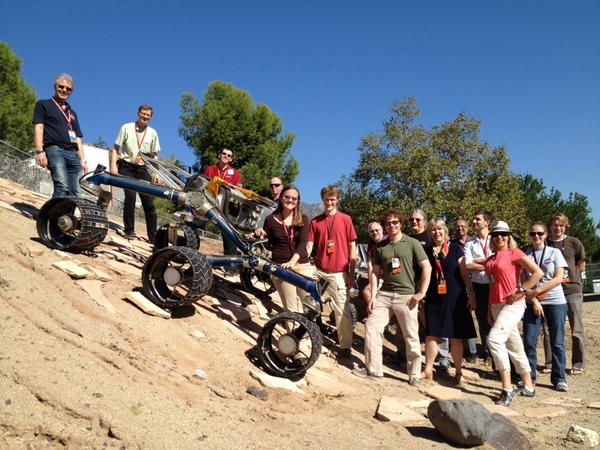
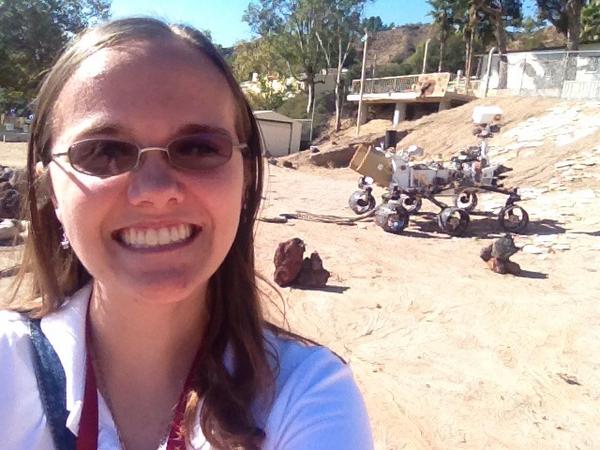
    Keri Bean in the NASA JPL Mars Yard, with the Curiosity test-bed twin ‘Maggie’

    Keri Bean is a meteorologist specialising in the atmospherics of other planets. She is on the team operating the Curiosity Rover for NASA’s Mars Science Laboratory mission. Prior to MSL, Keri has had roles in the missions for other Mars rovers Spirit and Opportunity, a prototype Moon rover, the Phoenix Mars Lander, and the Hubble Space telescope. And she’s just 25 years old! That’s a pretty incredible CV to rack up already.

    In this interview, Keri talks with me about her work on MSL and the other missions, plus how and why she got into space science. It all started when a tornado hit her pre-school.

    Australian Science on SoundCloud.

    Keri (centre) with many of the MSL team and ‘Scarecrow’, the other Curiosity test rover (Scarecrow is lighter than Curiosity so that it mirrors the lower Mars gravity).

    A GIF of the partial solar eclipse by Mars moon Phobos, as captured by the Curiosity rover—an image capture task coordinated by Keri.

    A photo of Phobos (highly zoomed it, and hence quite grainy) taken by Curiosity just after dusk on 21 September using one of its Mastcams, showing its ‘potato’ shape.

    The ‘Chariot’ Lunar rover prototype for which Keri worked on camera design (and which James May managed to have a minor accident with when filming an episode of Top Gear!).

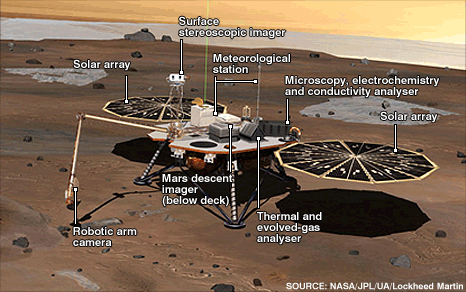
    The Mars Phoenix Lander.

  • Weekly Science Picks

    Weekly Science Picks

    It seems the rate of everything has increased exponentially. A very bold, vague, yet intriguing statement, you might say.

    During the course of the past 2 weeks, Hurricane Sandy devastated the East Coast of America, followed closely by a nor’easter. So my science picks for this week center on the themes of natural disasters, planning, global warming and Space, and the rate of which we have to increase our thinking and innovation in order to get ahead of these issues, before they become serious problems.

    So let’s get started.

    I was out of town when Hurricane Sandy struck. My neighborhood in Brooklyn was pretty much untouched. While I heard reports from friends not having power, and subways and airports being closed, it wasn’t until watching the hurricane relief telethon that I realized the magnitude of destruction. And I chose the following article by our very own Charles Ebikeme because it is important to remember that Haiti has yet to recover from several rounds of natural disasters. The U.S. will rebuild. Considering a large portion of the Haitian population still remains housed in tents from the earthquake, will they be able to rebuild? Before the next natural disaster strikes?

    Sandy’s aftermath by Charles Ebikeme

    While most of the focus of western media centred on the damage Sandy caused in America, especially this close to a Presidential election; there were few news outlets that reported what had passed in the Caribbean — outside the death tolls and damaged infrastructure. Indeed, as it is becoming more and more apparent, it is always the blogosphere that provides an adequate source of information. Hurricane Sandy’s progression was followed by bloggers on the ground, giving another side of the story we don’t often get to see.

    But it is in Haiti, a country that has yet to recover from tropical storm Isaac that hit in August of this year, as well as the earthquake of 2010, that felt the worst of Sandy’s wrath. 1.8 million people in Haiti are affected by the storm, according to the United Nations relief agency.

    This next story appears in the current issue of Scientific American and drives home the point why immediate action on climate change, energy and planning (community planning) is necessary to attempt to prevent incidences such as Sandy, or at least lessen the amount of destruction as much as possible. Obama won re-election this week. And while there is no shortage of issues to tackle, the President needs to implement an energy policy for this country. And it’s called global warming, so I hope the world can come together within the next four years and knock out a sound plan.

    Global Warming: Faster Than Expected? by John Carey

    The potential for faster feedbacks has turned some scientists into vocal Cassandras. Those experts are saying that even if nations do suddenly get serious about reducing greenhouse gas emissions enough to stay under the 450-ppm limit, which seems increasingly unlikely, that could be too little, too late. Unless the world slashes CO2 levels back to 350 ppm, “we will have started a process that is out of humanity’s control,

  • Does my science look big in this? The astrobiology edition

    Does my science look big in this? The astrobiology edition

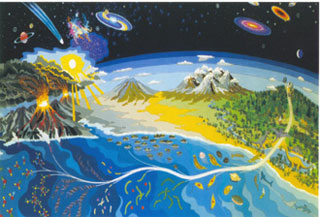
    During the 20th century a powerful new idea gradually entered our consciousness and culture: cosmic evolution.  We are all par of a huge narrative: a cosmos billions of years old and billions of light years in extent. It is this idea that caught my attention this month via the proceedings of the Sao Paulo Advanced School of Astrobiology SPASA 2011, published in the October International Journal of Astrobiology.

    Although the question of extraterrestrial life is very old, the concept of full-blown cosmic evolution – the connected evolution of planets, stars galaxies and life on Earth and beyond – is much younger. In a rather breathtaking paper, Steven Dick formerly of the Aerospace History at the National Air & Space Museum places his arguments for cosmic evolution. Dick traces the idea from its roots in the 19th century theories of Pierre-Simon Laplace and Robert Chambers through its philosophical, astronomical, and biological upbringing to the present day. He examines evolution, the worldview that it had become in the 1950s and 1960s and how it had permeated culture in numerous ways and different cultures in diverse ways. Dick cautions us though noting “we need to remember that ‘culture’ is not monolithic and that ‘impact’ is a notoriously vague term.”

    Cosmic evolution. Image credit: Harvard University.

    In addition to the impact of our new understanding on culture, cosmic evolution also provides a window on long-term human destiny, asserts Dick. He presents this idea via three scenarios, the: the physical , biological, and postbiological universe. Life is unique to earth in the physical universe scenario, and the options flow from this situation – think of Isaac Asimov’s Foundation series. We will certainly interact with extraterrestrials in the biological universe – here cosmic evolution commonly ends in life, mind and intelligence. Cultural evolution in a biological universe may replace biologicals with artificial intelligence creating what Dick calls a postbiological universe. We do not know yet, which of these is our reality, that is one of the challenges of astrobiology, maintains Dick.

    In a second ‘big-picture’ paper Marcelo Gleiser presents his four ages of astrobiology. For Gleiser the influx of astrophysical data, particularly on the prevalence of exoplanets “indicates that there are plenty of potentially life-bearing platforms within our galaxy.” He then presents the ‘history’ of life in the universe in terms of the steps needed for matter to have sequentially self-organised into more and more complex structures. His sequence is best viewed as a prelude to the physical or biological universe scenarios of Dick. Gleiser’s fourth age, the Cognitive Age (the age of thinking biomolecules), really addresses whether we are unique or not i.e. which of Dick’s two scenarios, the physical or biological are reality. Gleiser’s first three ages: physical, the creation  of stars and planets from atomic nuclei; chemical, in which elements organise into biomolecules; and thirdly biological, in which living creatures of growing complexity form from biomolecules. the papers by Dick and Gleiser are both papers heady and exhilarating conceptual reads.

    Jorge Horvath and Douglas Galante accept the premiss that life exists, and then argue we need to take high-energy astrophysical events seriously. Scientists and the public account for meteor impacts in both academic studies, science-fiction writing and film – not so for events such as supernovae, gamma-ray bursts and flares. They show that these events are more frequent than asteroid strikes and that the effects are non-negligible (academic speak for potentially fatal to planet based species). They conclude that just because we have not yet been wiped out by such events can be seen as either a measure of earthlife’s resilience or a threat we are statistically yet to encounter.

    My attention was captured by two other papers from the proceedings. Martin Brasier and David Wacey address the problem of studying life in deep space – comparing it to study of life remote in time. This view is pertinent, as it is non-trivial for scientists to determine what is a viable signal of extinct life. The authors develop a set of protocols and then apply these to earth samples, of varying ages. They do this to show how we could interpret similar samples, where much of the desirable information (the context) has been filtered out during the process of transmission (either physical or data) across vast distances of space, or time or both (as is likely on Mars). Even 10 years ago these questions were moot, but we have learned much over the recent past about metabolic pathways and living microbial systems. Brasier and Wacey conclude that there is still work required on pseudo-fossils, structures that arise naturally within complex physico-chemical systems, so that we can confidently agree on signs of life that are remote in space and time.

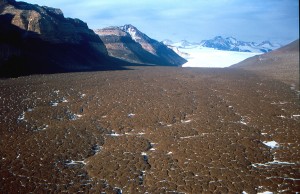
    The Dry Valleys in Antarctica. Photo credit: NASA

    My final pick is an experimental paper that looks at the ExoMars mission. The European Space Agency and (initially NASA ) ExoMars mission is scheduled for launch in 2018 – specifically to detect life signatures on the surface and subsurface of Mars. This probe will carry, for the first time, a Raman spectrometer,  a technique with proven ability to determine the spectral signals of key biochemicals. The authors support these assertions by assessing samples acquired from Arctic and Antarctic cold deserts and a meteorite crater. These terrestrial environments are similar to those found on Mars. The experimental results presented in this paper demonstrate that it will be possible using this technique to assess and detect spectral signals of extra-terrestrial (Mars in this case) extremophilic life signatures.

  • How Have Marsupials Evolved?

    How Have Marsupials Evolved?

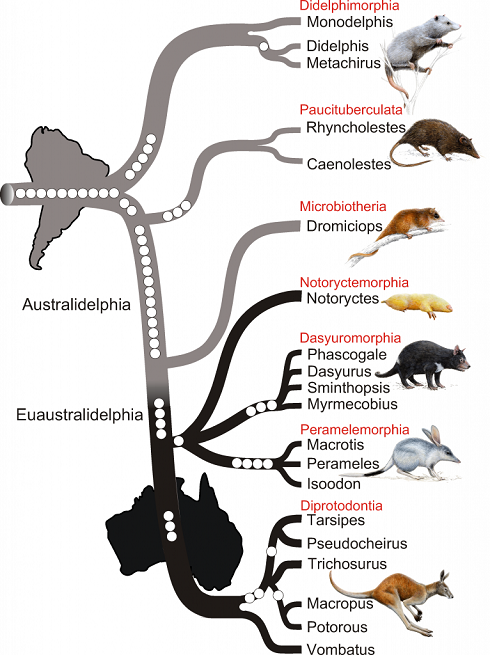
    The phylogenetic relationships between two orders of marsupials have been intesively debated. Authors benefited from recent sequencing projects which provided two marsupial genomes: this of the South American opossum (Monodelphis domestica) and the one of a kangaroo, the Australian tammar wallaby (Macropus eugenii). Retroposons are suitable and homoplasy-free markers: their insertion sites are random; parallel insertions or exact excisions are very rare.

    Thus, if one finds a retroposon in the homologous genomic loci of both species this indicates a common ancestry; on the contrary: if the marker is missing in one of the species, it means prior divergence. Moreover, one retroposon can insert into another: this situation is called transposition into transposition. These nested mobile elements insertions provide precious information about the relative times during which given retroposon families integrated into genomes: young elements can insert into older ones, but the reciprocal is impossible.

    After complete screening of the opposum and kangaroo genomes, authors found ~8,000 and ~4,000 nested retroposon insertions, respectively. Then, the frequencies and time scales of SINEs (Short INterspersed Elements) were calculated (using TinT software) and 3 groups identified:

    1. SINEs specific to the lineage leading to opossum => phylogenetically informative markers present in the opossum lineage;
    2. SINEs specific to the lineage leading to kangaroo => phylogenetically informative markers present in the kangaroo lineage;
    3. SINEs active in both species => phylogenetically informative markers present in both lineages .

    Also, ~220,000 genomic loci containing retroposons were detected using three different strategies. After screening and experimental confirmation, a total of ~440 marsupial sequences were aligned and analyzed to reveal 53 informative markers. Ten of those confirmed again the monophyly of marsupials. The other 43 phylogenetically informative retroposon markers provide significant support for most of the basal splits within marsupials.

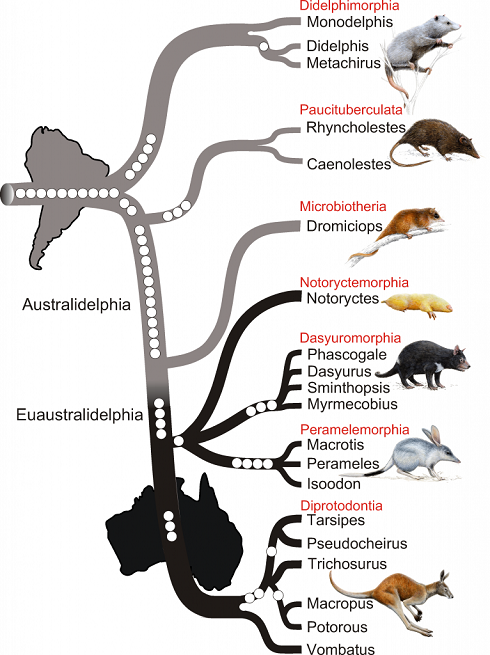
    Phylogenetic tree of marsupials derived from retroposon data.
    Phylogenetic tree of marsupials derived from retroposon data.

    Authors did not find any loci containing elements present in opossum plus Paucituberculata but absent in kangaroo, which would have supported the alternative of a close relationship between Didelphimorphia and Paucituberculata. They screened for markers that would support the alternative hypothesis of Paucituberculata being the sister to all marsupials: experimental verification showed that all of the putative elements were also present in the order Paucituberculata (Rhyncholestes), thus supporting the monophyly of marsupials, but not the basal divergence.

    Furthermore, 13 of the original 53 markers were present in the South American Microbiotheria and the 4 Australasian orders but not in either Didelphimorphia or Paucituberculata: this significantly supports the monophyly of Australidelphia. The branch separating Australidelphia from Didelphimorphia and Paucituberculata is one of the strongest supported as well. Nevertheless, poor fossil record from South America, Antarctica, and Australia does not allow to assess Australidelphian early realtionships and biogeography.

    Two competing hypotheses exist regarding Microbiotheria: the latter are either excluded from the Australasian order (based on nuclear protein-coding genes) or embeded into it (completely or partially based on mitochondrial data). No reliable marsupial phylogeny is established up to now. In the present study, authors provide evidence for 4 independent diagnostic retroposon insertions which allow to place Microbiotheria within South America marsupials. Thus, authors propose the new name Euaustralidelphia for the monophyletic grouping of the four Australasian orders Notoryctemorphia, Dasyuromorphia, Peramelemorphia, and Diprotodontia. In total, 18 out of the initial 53 retroposon markers provide significant support for the monophyly of each of the five multi-species marsupial orders.

    Authors conclude: “the retroposon marker system identified a clear separation between the South American and Australasian marsupials. Thus, the current findings support a simple paleobiogeographic hypothesis, indicating only a single effective migration from South America to Australia, which is remarkable given that South America, Antarctica, and Australia were connected in the South Gondwanan continent for a considerable time.”

    Nilsson MA, Churakov G, Sommer M, Tran NV, Zemann A, Brosius J, & Schmitz J (2010). Tracking marsupial evolution using archaic genomic retroposon insertions. PLoS biology, 8 (7) PMID: 20668664

    (This was originally published on the author’s personal blog. Image is from the original article.)

  • Tasting colours and seeing sound: Synaesthesia

    Tasting colours and seeing sound: Synaesthesia

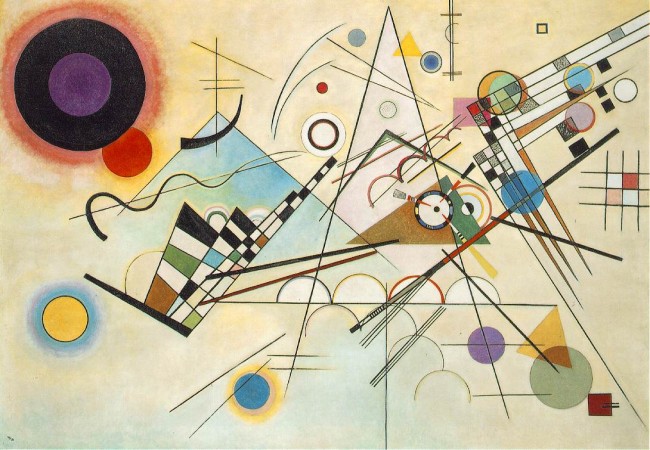
    Kandinsky: “Composition 8”

    One hears a sound but recollects a hue, invisible the hands that touch your heartstrings,

  • Sandy’s aftermath

    Sandy’s aftermath

    Before hurricane Sandy touched down on the east coast of America, it passed through the Caribbean, causing around 80 fatalities — 60 of them occurred in Haiti, 11 in Cuba, two in the Bahamas, two in the Dominican Republic and one in Jamaica.

    Hurricane Sandy started life out over central America, nonchalantly, as a collection of winds that would eventually gather momentum, speed and energy. It began its non-discriminating path through the Caribbean, eventually to hit Puerto Rico and the Dominican Republic as well. As it hit Jamaica it was a category 1, destroying around 1500 hectares of farmland. In Cuba the next day it was a category 2, destroying banana, coffee, bean and sugar crops. Sandy destroyed roughly 30% of the nation’s coffee farms. Add to that the 200,000 damaged homes. The Bahamas archipelago was next, before it would set it sights on America’s eastern seaboard.

    While most of the focus of western media centred on the damage Sandy caused in America, especially this close to a Presidential election; there were few news outlets that reported what had passed in the Caribbean — outside the death tolls and damaged infrastructure. Indeed, as it is becoming more and more apparent, it is always the blogosphere that provides an adequate source of information. Hurricane Sandy’s progression was followed by bloggers on the ground, giving another side of the story we don’t often get to see.

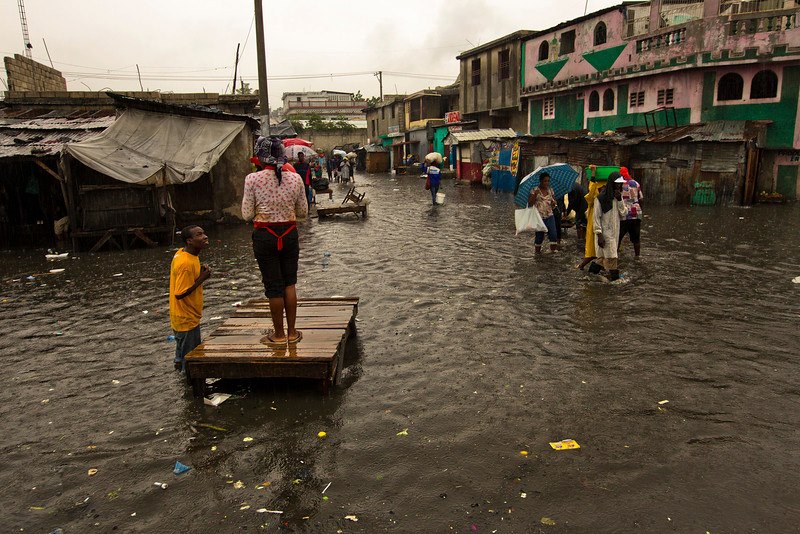
    But it is in Haiti, a country that has yet to recover from tropical storm Isaac that hit in August of this year, as well as the earthquake of 2010, that felt the worst of Sandy’s wrath. 1.8 million people in Haiti are affected by the storm, according to the United Nations relief agency.

    With everyone concerned with the numbers, damage, and brute destruction, there is the underlying problem that any disaster hit area has to deal with. Namely, the aftermath. It is the aftermath of the Caribbean region we must now think about. There will be the inevitable worry about food prices from this point on. Huge crop losses in southern Haiti raise famine worries.

    Prime Minister Laurent Lamothe, after assessing the damage, said “Most of the agricultural crops that were left from Hurricane Isaac were destroyed during Sandy, so food security will be an issue.”

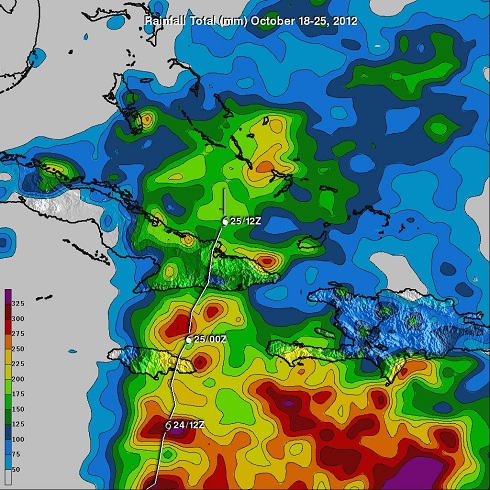
    Rainfall totals for the seven-day period Oct 18-25, 2012. Image courtesy of SSAI/NASA, Hal Pierce

    Three days of constant rain caused rivers to overflow and the floodwaters to rise. Most of southern Haiti is underwater. In the whole Caribbean region rainfall amounts as high as 250 millimeters were measured over eastern Cuba and some extreme southern areas of Hispaniola. Haiti experienced 20 inches. Port-au-Prince receives an average annual rainfall of 54 inches.

    As the rains stopped the damage is only made worse to the tune of infectious diseases such as cholera. Haiti has been fighting a cholera epidemic since 2010. A cholera outbreak that has killed over 7400 people and left up to 600 000 sick across the country.

    According to the Pan American Health Organization (PAHO) and the WHO, there is an increase in cholera cases in the south and south-east, where 49 cases and 9 deaths have been recorded.

    The list of infectious disease outbreaks following natural disasters is long. Although, usually there are some that are more common than others. Diarrheal diseases, acute respiratory infections, malaria, leptospirosis, measles, dengue fever, viral hepatitis, typhoid fever, meningitis, as well as tetanus and cutaneous mucormycosis have all been documented as the incidence and magnitude of natural disasters increase.

    Natural disasters and infectious diseases outbreaks represent a significant challenge. But they do not necessarily go hand in hand. Disasters do not transmit infectious diseases. But the risk of infectious disease is multiplied by the change in situation — populations displaced, overcrowding, limited access to food and water, and public health breakdown.

    Haiti’s Prime Minister, Laurent Lamothe said “I am launching an appeal to international solidarity to come and help the population, to help support the completion of our efforts towards saving lives and property,”

    Flood disasters are the most common natural disasters throughout the world, and diarrheal diseases are the leading cause of death from displaced populations living in camps. France has promised to rebuild seven destroyed bridges and Mexico has offered food. How Haiti deals with the aftermath of Sandy will be one to follow closely.

    Image — source, source

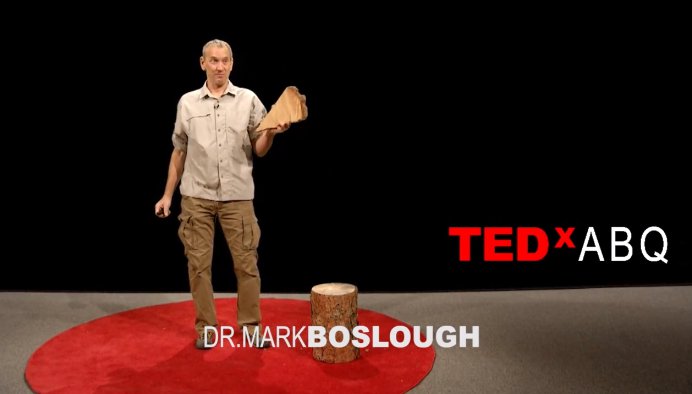
  • Mankind can bet on global warming, and win: Dr.Mark Boslough

    Mankind can bet on global warming, and win: Dr.Mark Boslough

    Dr. Mark Boslough is a world-renowned expert on global catastrophies. As a Caltech-trained physicist, member of the technical staff of Sandia National Laboratories, and adjunct professor at the University of New Mexico, he is regularly seen on science documentaries and news reports explaining his research on planetary impacts and participating in expeditions to remote destinations around the world.


    More information about TEDxABQ can be found at http://www.tedxabq.com/.

  • Weekly Science Picks

    Weekly Science Picks

    Bob Dylan and the curse of self-plagiarism. Disclaimer: this weeks theme largely relates to Bob Dylan. Up first — here comes a story of a Hurricane!

    With frankenstorm Sandy in the news, Empirical Zeal asks the question “What is the true measure of a storm?