Blog

  • The Higgs: An Unexpected Boson

    The Higgs: An Unexpected Boson

    The interesting thing about research is that the most interesting results are always the ones which are unexpected. This is particularly true out in the frontiers of physics where, frequently, no one really knows quite what to expect. While news reporters were swift to leap to the conclusion that the Higgs boson had been discovered back in July, the scientists at the CERN press conference were noticeably hesitant to make any such claims outright. Interestingly, it seems that they were wise to do so – in light of the more recent findings, their apprehension has been proven to be well advised. Simply but confusingly, the CERN experiments seem to have yielded two bosons for the price of one.

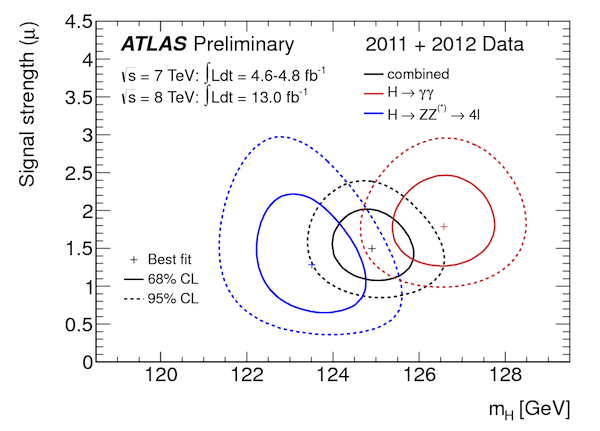
    A huge experiment like any of those taking place at the Large Hadron Collider (LHC) collects a lot of data, and believe me when I say that analysing and interpreting the data you can collect from any experiment is not an easy task. A lot of effort needs to be made in order to make sure you understand everything you’re seeing. Back in July, there were a few obvious things which were uncertain. For one, the “Higgs-like particles” observed at CERN appeared to be breaking up and decaying into photons more rapidly than predicted. This was the first clue that something unexpected was going on with the LHC data. However, on closer inspection, the results were so unexpected that there was thought to be a fault with the equipment. Everyone was hoping to find a peak for the Higgs boson, but no one expected there to be two! With one signal detected at 123.5 GeV and a second at 126.6 GeV, there’s a statistically significant difference of 3.1 GeV between the two. While the data have been checked and re-checked throughout November, they appear to be perfectly sound. As far as anyone can tell, these are two genuine detections of two particles.

    An unexpected boson?

    What exactly this means is very much an open question. Assuming these data are correct, aren’t any existing theories which explain why there would be two Higgs-like signals so close together. Some hypotheses predict multiple Higgs bosons, but none predict them to be so close together. What’s more, these two particles seem to fragment into different products – the 123.5 GeV particle decays into two Z-particles (a different, more familiar variety of boson), while the 126.6 GeV particle decays into photons. So what’s going on?

    Physicists are interesting folk, and I’m sure some would be fascinated if this turned out to be something new. Fabiola Gianotti, director of the ATLAS experiment at CERN has appeared noticeably excited before by the prospect of new and unknown physics being discovered. However, the other thing about physicists is that by their nature, they need to be highly skeptical, particularly when it comes to their own work. Adam Falkowski, a Paris-based particle physicist, states what most researchers are probably thinking on his blog Résonaances – that the result is most likely due to a “a systematic problem”. In other words, a problem in the apparatus such as a poorly calibrated detector. To date, there is no explanation from CERN for the unusual data. So is it a glitch, or could there really be two particles being detected here?

    Whatever is being seen here, it certainly appears to be at least subtly different to what the theories predict. Even if the second detection turns out to be a fault in the detectors at CERN, the fact that the original detection appeared to decay into photons more readily than it should is still unusual – though as noted by Matt Strassler in his blog, Of Particular Significance, “the excess is still not yet 3 standard deviations. Deviations of this size do come and go.  And we don’t have confirmation from CMS.  So the situation remains tantalizing but unfortunately not yet very convincing.” Right now, we still need to wait for official confirmation from CERN. Personally, I suspect that isn’t likely to happen until they know more about it themselves. A further announcement is currently scheduled for March 2013.

  • The Highlights of 2012

    The Highlights of 2012

    As 2012 draws to a close and the new year begins, now is a good time to wrap things up and recapitulate the year just passed. It’s been an exciting year with plenty of interesting happenings in science, technology, and education. Despite the fact that we aren’t especially keen on top 10 lists (because all of our authors are fantastic and inspirational), here are a few of the highlights from the past year. We hope you enjoy them!

    Mr Boson, I presume…? / A Brand New Boson

    The news that CERN had detected a signature matching the much sought after Higgs boson was the biggest news this year in physics. While physicists at the LHC still aren’t 100% certain what they’ve found, one thing is for certain – they’ve definitely discovered something never before seen, and it definitely seems to match what’s expected for the Higgs boson. Now it’s up to the theorists to work out if this will confirm existing theories, or if it will require brand new physics to be devised to explain it!

    “It’s a bit like spotting a familiar face from afar,

  • Chemtrails – Conspiracy Theory?

    Chemtrails – Conspiracy Theory?

    Qantas Airbus A380
    Contrail or Chemtrail?

    We all know what contrails are: those long thin artificial clouds that form behind aircraft, most often as a result of the water vapour in the exhaust of the aircraft’s engines. But have you heard of chemtrails?

    I first learned of chemtrails after our editor asked if I would be interested in writing a story on it. At the time, I thought it would be a simple story.

    But it’s been over a month since I watched the video, “What in the World are They Spraying? I didn’t realize the amount of research or the length of the list of questions that would emerge. Here, I’ll comment on the video (it’s about 1 hour 35 minutes long), pose some of the questions I had, and offer some analysis.

    Michael J. Murphy is a filmmaker and political activist who wrote, directed and produced the film. The concern seems to be compassionately targeted on public health. That scientists and geoengineers are trying to solve the global warming crisis by geoengineering appears to be unacceptable to Mr. Murphy and his collaborators. Geoengineering is the deliberate intention to moderate global warming by intervening with Earth’s climate system. An example is cloud engineering. Cloud engineering research is underway at the University of Washington as a potential tool to ease climate change, but at this point is only at the initial stages.

    The film tries to touch on some aspects of science and targets aluminium as the cause for an increased alkalinity of soil in California that is damaging plant life and threatens the water supply for hikers visiting Mt. Shasta. This aluminium that falls as pellets from the sky is also thought to be the cause for softening the bark of coconuts trees in Hawaii and why farmers there cannot grow their own taro and papaya. Farmers on the compound in the film claim they want GMO seeds so they can grow their own food naturally. Interesting turn of events and thought patterns, wouldn’t you say?

    I could go into more detail about the effects of aluminium, but I will refrain. If you are keen to learn more about the public health effects, click here.

    The so-called climate engineers are painted as scientists who have crossed over to the dark side. They know the harm these chemicals can cause but must be willing to go ahead with these spraying flights, even if it means harming their own families. Or are they somehow excluded and protected from the aluminium that rains down with coats and hats that offer some sort of super power protection? It was mentioned in the film that they are forming sales, implementation and funding strategies. I’m still not sure who “they” are. They are mentioned over and over and over again as the culprits, the party responsible for poisoning the people and food on our planet. Follow the money, the filmmakers and those appearing in the movie say repeatedly. There is a whole evil empire, beginning to build, that will take over the world. And the evil empire evidently begins with Monsanto.

    The multinational agricultural and biotech company Monsanto is mentioned as a curve ball to distract from the topic at hand and perhaps gain more followers. In the film, it is stated that an aluminium resistant gene had been developed at Cornell University and was patented in September 2009. A search of the United States Patent and Trademark Office website reveals no such patent matching #7582809.

    The filmmakers bring in advocate and conspiracist G. Edward Griffin to join this chemtrail crusade. He talks about how chemtrails don’t dissipate; that a permanent grid hangs over cities like Los Angeles. A bit more confirmation on this is needed for my liking – for instance a time-lapse camera set up throughout the daylight hours, for an entire 7-day period, to see exactly how many airplanes are passing through, creating these everlasting contrails containing chemicals that rain down on us. And the camera should be able to zoom in on the plane, or perhaps a set of binoculars could be used to see the N-Number on the aircraft. Flight plans have to be registered by pilots at airports, so surely with some investigation and tracking down records, we could find out whom these they people are and begin to interrogate them as to why poisoning the planet for profit or using this method to combat global climate change seems like a good idea.

    The first International Chemtrail Symposium took place on May 29, 2010. When you plug this into Google, a myriad of conspiracy type results show up; one is listed under “Godlike Productions”. In the film, we are given a glimpse of this symposium. The phrase, “What God had originally made” is used. Any time God vs. science rears its head in a conversation, it is no longer a logical debate; it is one rooted on emotion and one’s philosophical beliefs.

    Another anecdote that leans this chemtrail film toward the conspiracy theory side is when they invite activist Jeremy Rothe-Kuschel to go to Washington, D.C., to try to persuade elected officials in the U.S. House and Senate to investigate this fleece that has been cast over the American people. Representative after representative shut them down. Ambushing politicians with pamphlets and a video camera does not seem to be the best method for getting one’s case heard. Senator Dianne Feinstein of California humours this crew a bit by taking their information. I’ve yet to see her office actually follow up on the issue of chemtrails by displaying information on their website, holding a public meeting, or introducing a bill for a hearing to the Committee on Science and Technology.

    Over and over there are references that scream sensationalism tactics. Presenting one side of the story as this film does, makes it a bit difficult to really ascertain what the perceived harm is and if chemtrails are really a ploy by governments the globe over to decrease the human race. If it is true, than we should start tracking the whereabouts of aluminium and barium in relation to scheduled flight plans and requesting that our elected officials work with our national scientific organizations to find the answers, while looking for real solutions to climate change that works for the populations and the planet.

  • Opening up of Access to Agricultural Research Information

    Opening up of Access to Agricultural Research Information

    Mango-Orchard-GutamWhile organising the Knowledge Management in Agriculture Session at the International Conference on Statistics and Informatics in Agricultural Research at New Delhi on 19th Dec 2012, Dr. Ajit Maru a Senior Officer for GFAR’s theme on Agricultural Knowledge for All had asked the panellists to respond on How do largely agricultural societies/communities such as in Asia who are in transition to a “knowledge based economy

  • Weekly Science Picks

    Weekly Science Picks

    By now, I think it’s safe to say that if you’re reading this, it means the world didn’t end on Friday. Which is rather a good thing, because a lot of interesting things have been happening recently! Even though I’ve been busy as can be, writing papers and trying to finish off a thesis there have still been a few fascinating little gems to catch my eye in the news this week…


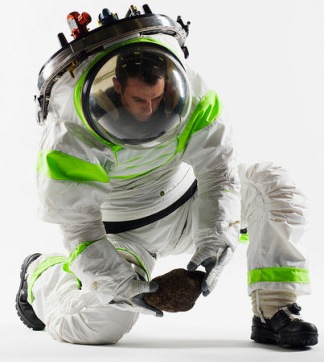
    Firstly, NASA have announced a new prototype space suit, with new and improved technology. Intended to be easier to put on, amongst other things, the most exciting part of the news is that these new suits are intended for deep space missions, focussing on safety “during spacewalks and potential surface activities”! Oh, but there’s just one thing which everyone’s noticed…

    Nasa’s New Space Suit Looks Exactly Like Buzz Lightyear

    NASA-Z1-suit

    Nasa said one of the key differences was that the new suit has a one-piece design, into which the wearer crawls in through a hole in the back, as opposed to the trousers-top-helmet version currently in use on the International Space Station.


    Meanwhile, in Switzerland, physicists have been puzzled by the results they’ve seen from the LHC. While there’s now little doubt that they’ve detected a signature which matches what they’d expect from “a Higgs-like boson”, it seems like there’s more going on than they realised…

    Two Higgs Bosons? CERN Scientists Revisit Large Hadron Collider Particle Data

    Yesterday researchers at the Atlas experiment finally updated the two-photon results. What they seem to have found is bizarre—so bizarre, in fact, that physicists assume something must be wrong with it. Instead of one clean peak in the data, they have found two.


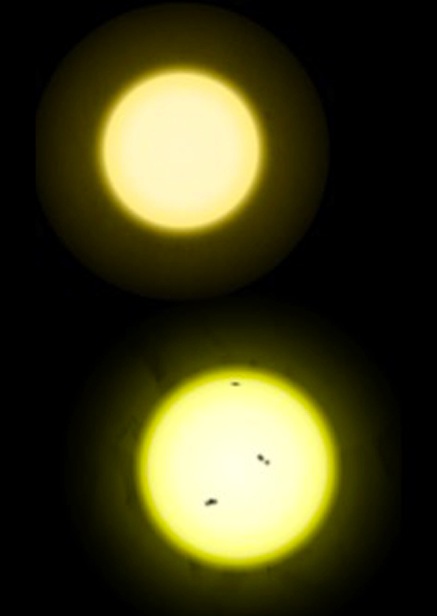
    The Sun, compared to Tau Ceti
    The Sun, is slightly larger and more active than Tau Ceti. Credit: R.J. Hall/Wikimedia Commons

    Finally, one star near to Earth which has always garnered much attention from science fiction writers is Tau Ceti – right in our neighbourhood at a mere 12 light years away. For a long time, many have speculated on the potential for life-sustaining worlds around the Sun’s slightly more orange neighbour, and now it looks like there may well be. While we’re still waiting for confirmation, there may be 5 planets around Tau Ceti, and two of those might be candidates for sustaining life!

    Nearby Tau Ceti may host two planets suited to life

    The highlight of this alien solar system is Tau Ceti e, which has a mass of over four Earths and a year just under half as long as ours. It orbits in the star’s habitable zone, the region where liquid water is thought to exist. “It is in the right place to be interesting,” says [Hugh] Jones.


    Short but sweet, that’s all for this week. I hope everyone has a lovely Christmas (or whichever of this season’s holidays and festivals you choose to celebrate). See you next time!

  • Evolution of flying bat clue to cancer and viruses

    Evolution of flying bat clue to cancer and viruses

    bat sThe genes of long-living and virus resistant bats may provide clues to the future treatment and prevention of infectious diseases and cancer in people, the Commonwealth Scientific and Industrial Research Organization ( CSIRO), Australia’s national science agency, said in a report on Friday.
    This research, published in the journal Science, was a global effort involving researchers from China, Australia, Denmark, the United States and Singapore. It provides an insight into the evolution of bat’s flight, resistance to viruses and relatively long life.

    Researchers at CSIRO and the Beijing Genome Institute led a team sequencing the genomes of two bat species – an Australian mega bat, the black flying fox, and a Chinese micro bat, David’s Myotis. They then compared the bat genomes to those of eight other mammals, including humans, to find similarities and differences.

    “A deeper understanding of these evolutionary adaptations in bats may lead to better treatments for human diseases, and may eventually enable us to predict or perhaps even prevent outbreaks of emerging bat viruses,” said Dr. Chris Cowled, post-doctoral fellow at CSIRO’s Australian Animal Health Laboratory.

    “Bats are a natural reservoir for several lethal viruses, such as Hendra, Ebola and SARS, but they often don’t succumb to disease from these viruses. They’re also the only mammal that can fly, and they live a long time compared to animals similar in size,” he said.

    The research also reaffirms bats’ ancient and important place in the eco-system, particularly as pollinators and controlling insect numbers.

    image source


  • The Risk of Human Space Flight to Mars

    The Risk of Human Space Flight to Mars

    This past week NASA announced that in 2015 they would be sending two astronauts to the International Space Station (ISS) for a year-long mission. This is an expected, and necessary step in the preparation for human spaceflight to Mars. If we are to have human explorers on the surface of Mars, we need to understand the effects on humans of long-term space travel. At the moment trips to the ISS last on average 5-6 months. A mission to Mars may take 6-8 months, plus an extended time on the planet, and a 6-8 month return trip. In reality astronauts could be sent on missions of 2 years or longer.

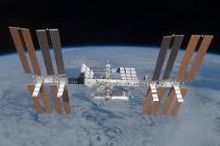
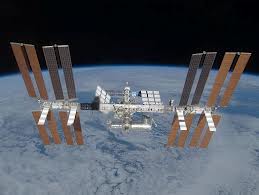
    The ISS as it orbits Earth. Photo credit NASA.
    The ISS as it orbits Earth. Photo credit NASA.

    Astronauts are exposed to a number of conditions in space that can pose serious health risks, especially if exposure takes place over a long period of time. There are lots of hazards and risks for humans in space, including: ascent and descent accidents; space sickness; debris collisions; micrometeorites; hazardous and toxic gas leaks on the spacecraft; EVA (Extra Vehicular Activity) accidents; sudden unexpected illness and the list goes on. Today I’m talking about the specific issues that affect astronauts during long distance flights. (By the way I use the term ‘astronaut’ as a general term, which includes astronauts from various nations, including cosmonauts from Russia, and teikonauts from China.)

    Some of the major issues for astronauts during long duration space flights include:

    Exposure to radiation – Astronauts live and work well above the protective atmosphere of earth, so they are subject to the full force of the sun’s radioactive output as well as high energy cosmic rays that originate outside of our solar system. Long distance missions do not have the benefit of Earth’s protective atmosphere and magnetic field. Material shielding is effective against low energy radiation, but may create damaging secondary radiation for higher energy particles. The ISS uses aluminium to protect the spacecraft and crew. As the thickness of the shielding material increases, the probability that the particle will survive with enough energy to damage human issue is decreased. Low levels of radiation generally do not pose a significant health risk to astronauts, however the effects of radiation are cumulative, so long term exposure increases the lifetime risk to astronauts. Crews of future long duration interplanetary missions will have to travel through the Van Allen radiation belts, and be exposed to more galactic cosmic rays, and as a result will be exposed to higher levels of radiation than those remaining in Earth’s orbit. Increased and prolonged exposure to radiation has serious health consequences for astronauts, including cancer, leukaemia, heart disease, and damage to the central nervous system.

    Muscle atrophy – Our muscles, bones and organs have adapted to work in the environment we inhabit, which is exposed to the effects of gravity. When exposed to an environment where there is little or no gravity, our muscles, bones and organs begin to lose condition – becoming more problematic the longer the astronaut is in space. On Earth, our muscles are constantly working against gravity. In space there is no force of gravity for muscles to work against, so astronauts will lose muscle tone. Loss of muscle tone starts to occur shortly after launch, and continues whilst the astronaut is in a reduced-gravity environment. During longer missions, muscles may atrophy, and astronauts may experience uncontrolled muscle twitching, and a loss of fine motor control. The loss of muscle tone, strength and control can be mitigated with regular exercise during the mission.

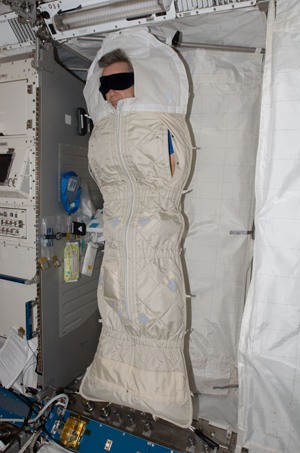
    Astronaut Robert Thirsk, asleep in his sleeping quarters in the ISS. Photo credit NASA.
    Astronaut Robert Thirsk, asleep in his sleeping quarters in the ISS. Photo credit NASA.

    Cardiovascular damage – When in space, the body no longer needs to maintain the powerful heart muscles needed on Earth, so heart tissue begins to shrink. In space, astronauts experience a redistribution of body fluids, which results in changes to cardiovascular physiology. The heart doesn’t have to work as hard pumping blood in a microgravity environment as it does on earth so crew members are encouraged to undertake aerobic exercise as part of their daily routine, in addition to exercises designed specifically to maintain as much muscle tone as possible. Whist exercise is beneficial, it appears that it cannot reverse the process, but can help slow it down.

    Bone density – In microgravity, the lack of impacts in weight bearing exercise means that newly created bone tissue is not incorporated into bones as normal, so as bone tissue is created it is absorbed into the system, not used as it would be on Earth. This results in high calcium levels elsewhere in the body, which can lead to significant health issues. Studies have revealed a significant loss of calcium from weight bearing bones of astronauts. This is a concern for astronauts as it suggests a risk of renal stone formation on long duration missions. Density in such bones as the pelvis and legs decreases by approximately 1 to 2 percent a month on average, which presents concerns for astronauts during long haul missions. Unfortunately exercise does not seem to reduce the level of bone loss, but is beneficial for many other issues as discussed previously.

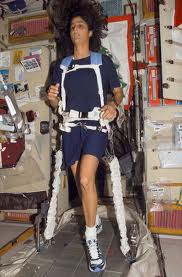
    Sunita Williams exercising on the ISS. Photo credit NASA.
    Sunita Williams exercising on the ISS. Photo credit NASA.

    Hyperarousal – Don’t worry – it’s not what you think! Astronauts may experience hyperarousal, their reaction to a changed schedule, working under pressure, sleep deprivation, and the excitement of being in space. Hyperarousal can cause insomnia, disrupt the appetite, result in impaired concentration, cognitive dysfunction, and decreased co-ordination. Fatigue is often a side effect of hyperarousal, as is anorexia and sudden weight loss. Over time space agencies have developed strategies to deal with hyperarousal, including giving crews adequate rest time, control over some of their tasks, adequate leisure time, and regular contact with family and friends.

    Sleep deprivation – The amount and quality of sleep experienced in space is poor for a number of reasons including: variable cycles of ‘day’ and ‘night’; poor illumination during daytime hours in the space craft; environment outside the windows at the ‘wrong’ time of day; hectic work schedule; noise of the spacecraft; altered diet; and the physical challenge of sleeping in space. Sleep deprivation may compromise the immune system, which whilst not a significant issue during short term missions, is a potentially debilitating condition during long-term missions. Sustained physical stress over a long term period may result in an immune system that is so compromised that the body is unable to fight serious infections. Precautions include wearing sleeping masks and earplugs, anchoring themselves down to sleep, maintaining a steady routine of work and sleep, and using shades and other devices to block out the windows.

    Psychological Issues Working away from friends and family, and working with people from other cultures presents a number of psychological and social challenges. The psychological welfare of a crew of astronauts is critical to the success of a space mission. Interpersonal relationships during a mission may be a significant source of psychological stress. Crews do many things in space to try to maintain a sense of ‘normalcy’ during long stays in space. When crews aren’t required to work, they are encouraged to undertake other activities, which include reading, listening to music, writing e-mails and letters to family and friends, and exercising. In 2007 American astronaut Sunita Williams ran the Boston Marathon on the treadmill in the ISS, completing the race in just over 4 hours. During low earth orbit missions crews receive periodic care packages from their family with CDs, DVDs, books, magazines, photos, and letters. In addition to the packages, the ISS also has library lockers that contain music, books, and videos.

    Over the last 40 years humanity has overcome enormous social, technical and physical challenges to put humans into space. When Yuri Gagarin became the first human in space by orbiting the Earth for 108 minutes on the 12th of April 1961, very little was known about the space environment and how it would affect humans. Just over 40 years later we now have a permanent presence in space with the introduction of the ISS into low Earth orbit. We know a lot about the physiology and psychology of humans in space, and have made space a relatively comfortable existence for astronauts. The future of space exploration may include human missions to other planets within our solar system, such as Mars. Before any long-term exploration of Mars could be contemplated, further research is needed in a number of areas to ensure the safety, and longevity of all crew members during the mission and beyond.

  • Apollo 17: last men on the moon

    Apollo 17: last men on the moon

    image
    Apollo 17 Commander, Eugene Cernan, next to the lunar rover. Image credit NASA.

    After kangaroo hopping back to the lunar rover, Eugene and Jack drove back to the lunar module, Challenger. There they dusted each other off and loaded the last of their 100kg of lunar rock samples. Jack cleaned up inside While Eugene parked the rover a kilometre and a half away so the takeoff could be televised. Then hopping and skipping in the low lunar gravity he made the most of his last moments on the moon. Once back at the lunar module, one foot on the Challenger’s landing pad, Eugene Cernan lifted his other from the moon, and said:

    As I take these last steps from the surface for some time to come, I’d just like to record that America’s challenge of today has forged man’s destiny of tomorrow.

    The next day, December 14, 1972, they blasted off from the moon, ending the sixth and last human exploration of the moon for the 20th century.

    The last of the lunar Apollos

    The Apollo program was a child of the cold war between the USA and Soviet Russia. It was invigorated by President Kennedy’s 1961 challenge to put man on the moon and return him safely before the decade was over. Once the landing of Apollo 11 was achieved in July 1969, the Apollo and NASA budgets came under savage scrutiny. It was the time of the war in Vietnam, budget problems for the 1972 fiscal year and followed the scare of Apollo 13.

    The final two scheduled Apollo missions, 18 and 19, were finally cancelled in September 2, 1970. Apollo 20 had already been cancelled on January 2 so that its Saturn V rocket could be used as the launch vehicle for the Skylab space-station in 1973.

    image
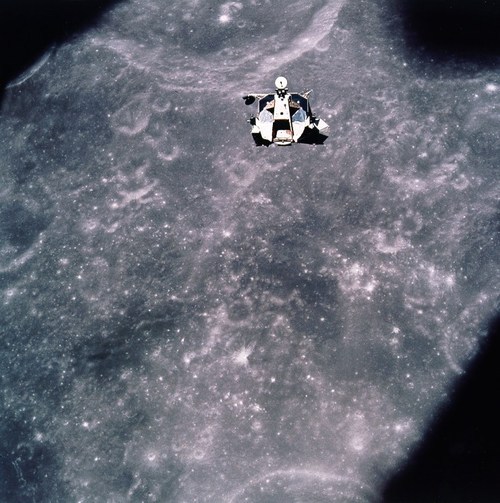
    The first part of the return journey as the Lunar module, Challenger, approaches Apollo 17 Command Service Module, America, after blasting off the lunar surface. Photo credit NASA

    The Apollo program was an incredible, successful human feat. It remains the only program to have placed humans beyond low-earth orbit and onto another celestial body. Apollo 8 was the first manned spacecraft to orbit another celestial body, while Apollo 11 landed the first humans on another world. The program returned 382 kg of lunar rocks and soil to Earth, contributing to the understanding of lunar geology.

    It laid the foundation for NASA’s current human spaceflight capability, and funded construction of its Johnson Space Center and Kennedy Space Center. Apollo also spurred advances in many areas of technology incidental to rocketry and manned spaceflight and the start of huge opportunities for technology transfer, leading to more than 1,500 successful spinoffs related to areas as disparate as heart monitors, solar panels, and cordless innovation. More recently, we’ve seen a fledgling private-sector American space industry complete its first cargo delivery to the international space station.

    Stepping up, walking tall

    There is a marvelous fascination with human exploration. The Apollo missions are a great representation of that drive and curiosity. Apollo 17 astronauts, Eugene Cernan, Harrison Schmitt and Ron Evans, exemplified those attributes.

    image
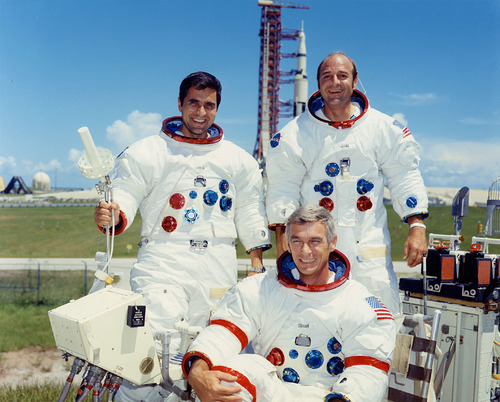
    Publicity shot of the Apollo 17 crew with their Saturn V vehicle in the background. (L-R): jack Schmitt, Eugene Cernan (seated) and Ron Evans.

    Eugene Cernan is ‘Captain America’ to a tee. A US Navy pilot who, like much of America, was caught up in the early space race. In 1962 he watched, captivated, on TV the launch of John Glenn. Who in the third manned Mercury capsule became the first American to orbit the earth. Cernan at the time lacked the coveted ‘test-pilot’ wings to be selected in the September 1962 second group of astronauts, which included Apollo 11 commander, Neil Armstrong. Cernan was picked, in October 1963, for the third astronaut group – which included the other Apollo 11 astronauts Buzz Aldrin and Michael Collins.

    Cernan became the second American astronaut, after Ed White on June 3 1965, to perform an extra-vehicular activity – a spacewalk. His Gemini 9 spacewalk lasted 2 hours and nine minutes, travelling 57,600 km, and rated as one most difficult achievements of his life.  The brutal mechanics of Newton’s third law in action in space making seemingly simple tasks into exhausting and challenging experiences, resulting in fogging his helmet and pushing his heart rate to 188 bpm. His experiences made NASA rethink the training required for future extra-vehicular activities.

    image
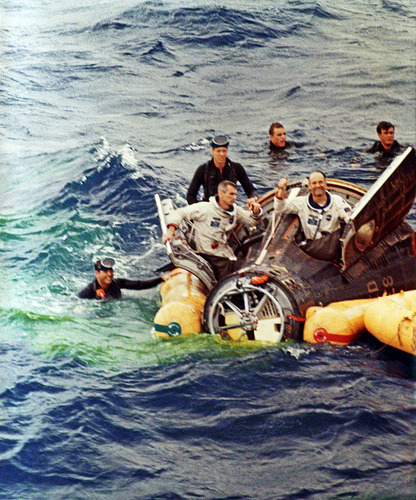
    Gemini 9 splashdown with Eugene Cernan (L) and a smiling Tom Stafford (R).

    On January 27, 1967 Tom Stafford, John Young and Cernan were in an altitude chamber “trying to bring a new, untried, stubborn spacecraft up to launch standards”. Meanwhile, in an identical craft, Apollo 1 astronauts veteran Gus Grissom, first American spacewalker Ed White and Cernan’s closest friend the rookie Roger Chaffee, were conducting similar tests atop a Saturn rocket at Cape Kennedy. Minutes later they were dead, killed in a fire – a tragedy stunning the close-knit space community.

    In May 1969, Cernan, as part of the Apollo 10 crew along with Tom Stafford and John Young achieved a number of records and a “dry-run” for the Apollo 11 landing two months later. As befitting a crew of test pilots they set the record for the highest speed attained by a manned vehicle at 39,897 km/h during the return from the Moon on May 26, 1969 and hold the record of being the humans who have traveled to the farthest point away from home, some 408,950 kilometres. Cernan and Stafford came within 15.6km of the lunar surface in their lunar module Snoopy.

    image
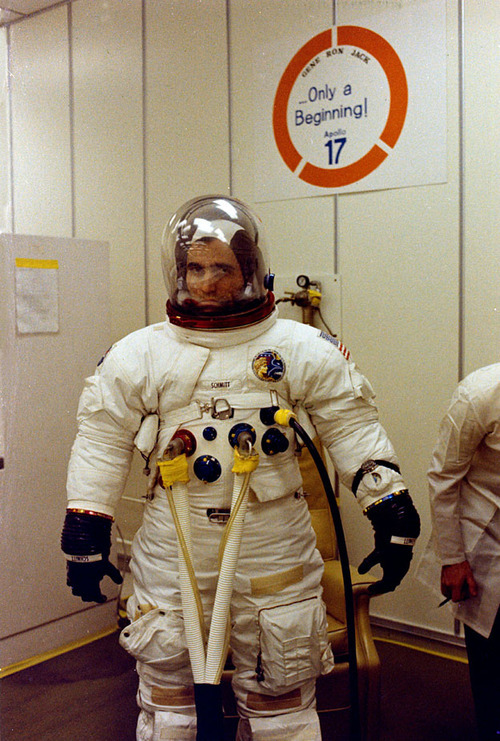
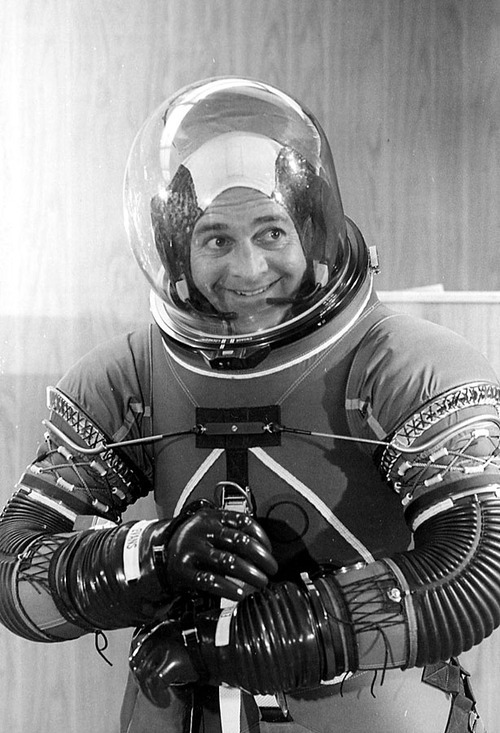
    Jack Schmitt being suited up for dress rehearsal prior to launch. Photo credit NASA.

    Harrison “Jack” Schmitt is a geologist and one of the NASA  group 4 astronauts, “the scientists“, that were announced on June 28, 1965. His and their story is worthy of is own post, coming in January 2013.

    image
    Ron Evans having a suit fitting during the pre-launch phase. Photo credit NASA.

    Ron Evans was picked as a Command Module specialist from the beginning of his NASA career. Chosen in April 1966, one of the group 5 astronauts, he was support crew for Apollo 1 and back-up command module pilot for Apollo 14. I found him notable for his almost invisibility in memoirs of the time. In both Deke Slayton’s and Eugene Cernan’s fascinating autobiographies Ron Evans is there an accepted, uncontroversial part of the missions, without a strong personality, extremely competent – obviously the perfect man for the pilot seat of the command module America.

    Adventures in the Taurus-Littrow valley

    A moon landing was the payoff for all the hard-work, according to Cernan, “the ultimate dream for any pilot.” Following the tradition began by Neil Armstrong on Apollo 11, Cernan, as Commander, was first out on the moon. As he skipped around Schmitt quipped, “Hey, whose been tracking up my lunar surface?” and then stepped out onto a geologist’s paradise – the moon.

    The primary objectives for Apollo 17 were: to sample lunar highland material older than the impact that formed Mare Imbrium and investigate the possibility of relatively young volcanic activity in the same vicinity. The Taurus-Littrow valley was selected with the prospects of finding highland material in the valley’s north and south walls and the possibility that several craters in the valley surrounded by dark material could be linked to volcanic activity

    Cernan and Schmitt had a  three-day lunar surface stay, conducting three periods of extra-vehicular activity, either moonwalking or driving around in the third Lunar Roving Vehicle. They amassed over 22 hours on the surface during these periods in which they collected lunar samples and deployed scientific instruments.

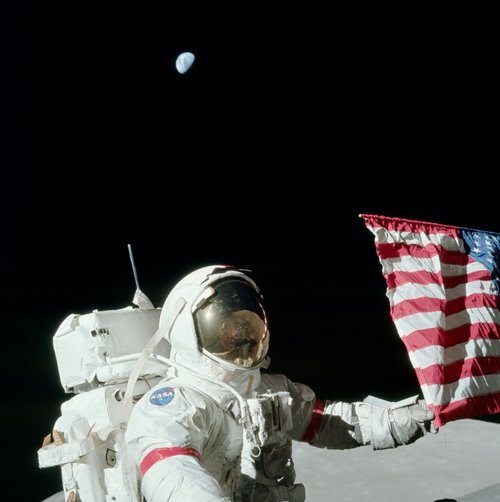
    image
    Eugene Cernan on the first EVA, suits still pristine and the Earth above his head. Evocative shot by Jack Schmitt. Photo credit NASA.

    The largest haul of lunar rocks was collected by the two moon-walkers as well as deploying the Apollo lunar surface experiments package (ALSEP), a feature of all manned lunar missions. The stations ran from deployment until they were turned off on 30 September 1977 due to: budgetary considerations, the power packs could not run both the transmitter and any other instrument, and the ALSEP control room was needed for the attempt to reactivate Skylab.

    They also carried out gravimeter experiments to learn about the moon’s internal structure. The gravimeter was used to obtain readings at the landing site in the immediate vicinity of the lunar module, as well as various locations on the mission’s roving routes.

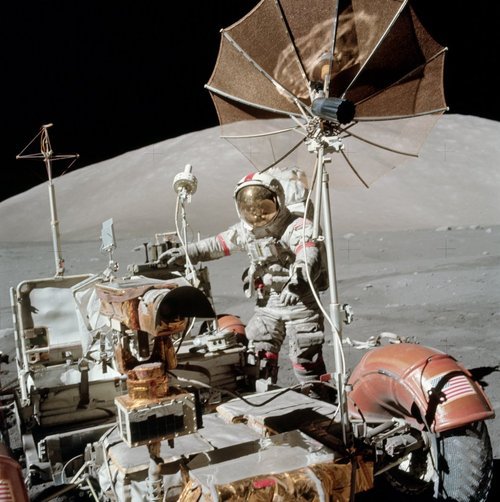
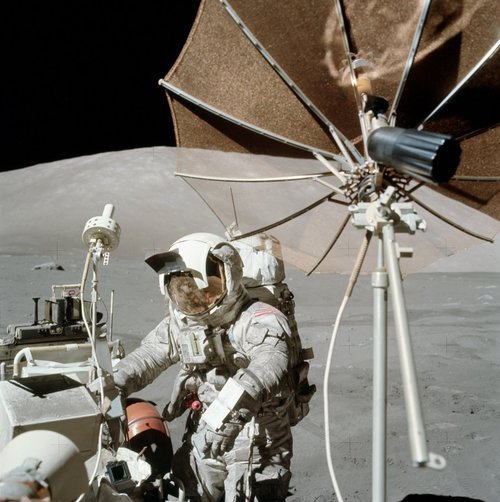
    image
    Eugene Cernan next to the lunar rover vehicle. Photo credit NASA.

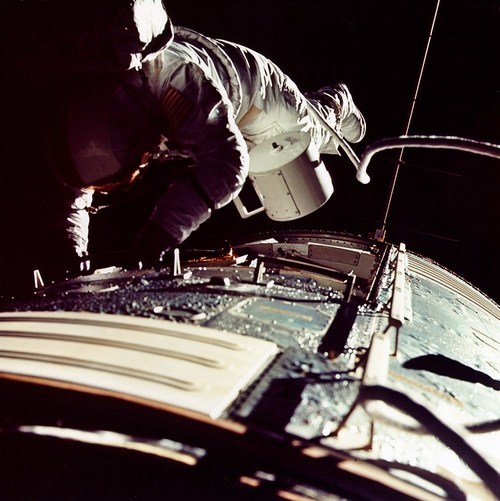
    Meanwhile the command module also housed a series of scientific experiments. A special bay housed three experiments (as well as cameras and altimeter) for use in lunar orbit: a lunar sounder, an infrared scanning radiometer, and a far-ultraviolet spectrometer. The film canisters were recovered by Ron Evans in a spacewalk after docking with the returned lunar module.

    image
    Ron Evans on his space-walk to retrieve film canisters from the outside of the service module prior to separation of the command module and return to earth. Photo credit NASA.

    Splashdown in the Pacific on December 19, 1972 brought this “first phase” of human space exploration to a close – I now wait for the second phase to begin and wonder who might it be?

  • Bumper Year for Whale Shark Sightings

    Bumper Year for Whale Shark Sightings

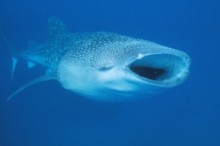
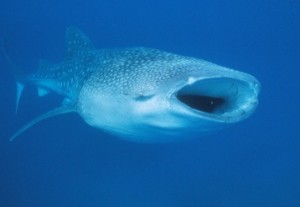
    Whale Shark Courtesy of Dr Brad Norman, ECOCEAN
    Whale Shark Courtesy of Dr Brad Norman, ECOCEAN

    It has been a big year for ECOCEAN’s whale shark whale shark photo identification library. There have been a record of 256 whale shark sightings at Western Australia’s most recently listed World Heritage site, Ningaloo.

    This has been due to more people signing up as citizen scientists to contribute to ECOCEAN’s whale shake monitoring program. When more people collect data, more sharks can be identified.

    Of the 256 identified whale sharks identified, 107 were new and 149 were whale sharks that had been seen in the Ningaloo Marine Park before.

    “We couldn’t have achieved these results without the generosity of the WA community

  • Weekly Science Picks

    Weekly Science Picks

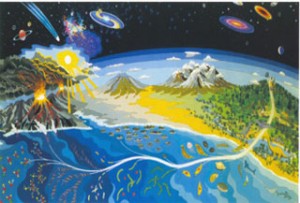
    Cosmic Evolution Connectedness
    Cosmic Evolution Connectedness

    It’s that time again! Time for Weekly Science Picks! Let’s dive in.

    This is interesting. This could really make things interesting. You just need to read this article on climate change and emissions that appeared in The Australian. It opens up a whole can of worms for debate, which I may tackle later, so feel free to leave a comment. I’d love to hear some thoughts on this.

    Doha sets up $3bn hit for taxpayers as climate deal fails to deliver on emissions targets by David Crowe

    “We can’t be allowed to free ride off the suffering of others,” he said yesterday. – John Connor, chief executive, Climate Institute


    This is one of those stories that gets you excited and makes you wish you were part of that research team on assignment. I am anxiously awaiting the results. Earlier this week, drilling began at Lake Ellsworth in Antarctica. This project is testing the environments of where life is possible and has implications for future space exploration and discovery.

    Drilling begins at lake hidden beneath Antarctic by David Shukman

    “Exploring for life in such an extreme environment – in pitch-black conditions under high pressure beneath the ice-sheet – could open up possibilities for life on other worlds such as Jupiter’s moon Europa.” – Professor Martin Siegert, chief scientist


    There’s so much focus and emphasis on space these days, that we forget about that big blue thing that covers 71% of our planet and is in need of some major TLC…ah, the ocean! The Argo data program started in the late 1990s and has since been put to use in weather and climate models. It’s also playing a major role in ocean forecasting, such as responding to environmental emergencies, helping the shipping industry and promoting safety at sea.

    Ocean science robot revolution hits symbolic millionth milestone by CSIRO

    “The world’s deep ocean environment is as hostile as that in space, but because it holds so many clues to our climate future exploring it with the Argo observing network is a real turning point for science. – Dr Susan Wijffels, Argo co-Chair and CSIRO Wealth from Oceans Flagship scientist


    And tying it all back to the source of what’s important, the kiddos. This last pick comes from one of our very own Australian Science authors, Danielle Spencer. Here Danielle examines the importance of play-based learning in the science classroom.

    We’re Just Playing, Science by Stealth by Danielle Spencer

    Play-based learning is highly sanctioned in early year’s curriculum, but why do we need to stop? Ask any child who doesn’t like science and it’s about too much writing, too much theory, too much bookwork. Maybe, we just should let them play some more.


    Stay thirsty for knowledge, my friends. Stay thirsty.

  • We’re Just Playing. Science by Stealth

    We’re Just Playing. Science by Stealth

    One of my students asked me the other day why I like science so much. “Easy

  • Ocean science robot revolution hits symbolic millionth milestone

    Ocean science robot revolution hits symbolic millionth milestone

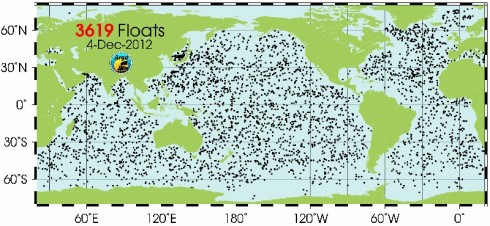
    An innovative global observing system based on drifting sensors cycling from the surface to the ocean mid-depths is being celebrated by scientists today after reaching a major milestone – one million incredibly valuable ocean observations.

    12 December 2012

    argo
    Global locations for Argo robotic sensors – 4 December 2012.

    From 10 drifting robotic sensors deployed by Australia in the Indian Ocean in late 1999, the international research program has been quietly building up a global array which is now enabling new insights into the ocean’s central influence on global climate and marine ecosystems.

    The initial objective was to maintain a network of 3000 sensors, in ice-free open ocean areas, providing both real-time data and higher quality delayed mode data and analyses to underpin a new generation of ocean and climate services. The program is called Argo.

    “Argo data is now also being widely used in operational services for the community, including weather and climate prediction and ocean forecasting for environmental emergency response, shipping, defence, and safety at sea.” Dr Susan Wijffels, Argo co-Chair, CSIRO Wealth from Oceans Flagship scientist

    “We’re still about 50 years behind the space community and its mission to reach the moon,” says Argo co-Chair and CSIRO Wealth from Oceans Flagship scientist, Dr Susan Wijffels.

    “The world’s deep ocean environment is as hostile as that in space, but because it holds so many clues to our climate future exploring it with the Argo observing network is a real turning point for science.

    “In its short life the Argo data set has become an essential mainstay of climate and ocean researchers complementing information from earth observing satellites and uniquely providing subsurface information giving new insights into changes in the earth’s hydrological warming rates and opening the possibility of longer term climate forecasting,” Dr Wijffels said.

    Although the one millionth profile of the upper ocean, measured from the surface to a depth of two kilometres, was achieved in early November, oceanographers around the world are today celebrating this critical benchmark in ocean monitoring which delivers data to a scientist’s desk within 24 hours of sampling.

    Celebrations included a series of high-level international presentations by senior scientists involving Dr Wijffels, her Argo co-Chair Prof Dean Roemmich from Scripps Institution of Oceanography, oceanographer Dr Josh Willis from the NASA Jet Propulsion Laboratory, and Dr Jim Cummings from the US Naval Research Laboratory.

    The Argo array has risen to now number more than 3500 sensors, the largest there has ever been. The average lifetime of the floats has improved in the past decade greatly increasing the efficiency of the operation.

    Presently 28 countries contribute to the annual A$25M cost of operating the program. The US is the largest provider of sensors to the network, with Australia, led by CSIRO with the Integrated Marine Observing System and the Bureau of Meteorology, maintaining more than 300 profilers for deployment mainly in the Indian and Southern Oceans, and Tasman Sea.

    The 1.5 metre tall robotic sensors cycle vertically every 10 days, sampling temperature and salinity. At the surface, the sensors despatches its data via satellite to national centres across the globe, where analysts then check it, package it and send it to synchronous assembly centres in France and the US.  The sensor’s ascent and descent is regulated by a hydraulic pump, powered with lithium batteries. Their life expectancy is between 4-9 years, averaging more than 200 profiles per sensor as they drift with the currents and eddies.

    Data are collected at the impressive rate of one profile approximately every four minutes, (360 profiles per day or 11000 per month) and on 4 November 2012 Argo passed the symbolic milestone of collecting its one millionth profile. To put this achievement in context, since the start of deep sea oceanography in the late 19th century, ships have collected just over half a million temperature and salinity profiles to a depth of 1km and only 200000 to 2km.  At the present rate of data collection Argo will take only eight years to collect its next million profiles.

    Dr Wijffels said almost 1200 scientific papers based on or incorporating Argo data have been generated since the start of the program. Prominent findings include:

    • Analysis of ocean salinity patterns that suggests a substantial (16 to 24%) intensification of the global water cycle will occur in a future 2° to 3° warmer world.
    • A more detailed view of the world’s largest ocean current, the Antarctic Circumpolar Current.
    • An insight into changing bodies of water in the Southern Ocean and the way in which carbon dioxide is removed from the atmosphere.
    • Isolating the effect of ocean warming and thermal expansion on the global energy and sea level budget.

    Dr Wijffels said Argo data is now also being widely used in operational services for the community, including weather and climate prediction and ocean forecasting for environmental emergency response, shipping, defence, and safety at sea.

    Provided by Csiro

  • Open Internet: UN Human Rights Day’s Spotlight on Inclusion and Participation

    Open Internet: UN Human Rights Day’s Spotlight on Inclusion and Participation

    The open Internet can give voice to the voiceless.
    Photo used under Creative Commons from WWF-Canon / Fernado Zarur

    [Geneva, Switzerland] – The Internet Society joined world-wide celebrations of the United Nations Human Rights Day and welcomed its focus on inclusion and the right of all people to participate in public life and make their voices heard.

    The Internet, in just a few years, has emerged as a major platform for communication and expression, amplifying the voices of more than two billion people around the world. The open and global network offers the potential for greater inclusion in public issues and provides a platform for individuals to influence the decisions that shape their communities.

    “The open and unencumbered Internet has become a key means by which people can share, receive, and impart information across frontiers,

  • Come on in, the Water is…Frozen

    Come on in, the Water is…Frozen

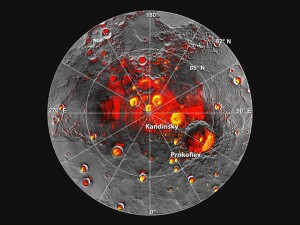
    MESSENGER detected the presence of polar ice on Mercury. The spots shown in yellow are craters containing ice. Source: Image Credit: NASA/Johns Hopkins University Applied Physics Laboratory/Carnegie Institution of Washington/National Astronomy and Ionosphere Center, Arecibo Observatory

    Water – the source of all life. It’s been found on what we have believed for many moons to be that little hot-tempered planet named Mercury. It seems the celestial body has a shady side, a split personality perhaps; one side ferociously hot, while its polar opposite features some craters of ice. NASA scientists have unequivocally confirmed the presence of water on the planet. Ready for a swim? Ice-skating may be more appropriate.

    The Finding

    Rarely does consensus on discoveries such as this occur. Three methods, neutron spectrometry, near-infrared reflectance and thermal models from MESSENGER, were used to conclude and confirm the presence of water and organic material on Mercury.

    The duality of Mercury is somewhat perplexing; can you imagine living on a planet with a temperature range between -223C and 427C? It is in these shaded, cold regions, those that never see the sun, where the ice lies bare and exposed. However, data from MESSENGER also show that frozen water is found in slightly warmer areas. It lies buried beneath a dark material, an insulator of some sort covering it, and there’s a lot of it. Estimates put the amount of water ice on Mercury between 100 billion and 1 trillion metric tons. That’s enough water to cover an area the size of Washington, D.C., 3.2 kilometers deep.

    Where Did the Water Come From?

    Much the way Earth came to have water and organic material, it is thought that comet impacts and asteroid strikes created the same organic building blocks of life on Mercury. At last Thursday’s news conference, researchers were bouncing around all sorts of hypotheses on what this discovery could mean for life in other parts of our solar system. Messenger principal investigator Sean Solomon, of Columbia University’s Lamont-Doherty Earth Observatory said “there’s a lot of water out there, as there is a lot of water around other stars, but at substantial distance. “The solar system is “a soggy place ” according to Jim Green, director of NASA’s Planetary Science Division. Green went on to explain his enthusiasm with that statement, indicating “it really bodes well for us to continue on the exploration, following the water and its signs throughout the solar system.” How water was brought to Earth and Mercury, were probably brought to other planets.

    With any good find, come more questions…

    These observations, while extraordinary, can only heighten our curiosity about Mercury and the rest of the galaxy. Is the dark material in the polar craters on Mercury mainly organic compounds? If so, what sorts of chemical reactions has that organic material undergone? Is this the same material that gave rise to life on our planet? Are there regions on Mercury that have both liquid water and organic compounds? Only by continued exploration of space can we hope to find answers to these questions.

    Life as we know it, will probably not be found on Mercury given its ultra-thin atmosphere and proximity to the sun. The discovery of water ice and dark organic material can still inform the hunt for organisms beyond Earth and help scientists piece together the puzzle of how life began on our planet. We still do not fully understand the beginnings of life and the chemical reactions associated with those beginnings on our own planet.

    Last week’s discovery of water and organic material on Mercury will indicate we have a lot to learn. Hopefully, it opens up vast areas of research that radiate outward, showing the connections of our segmented universe. How we see view and study other planets has great value for how we analyze and safeguard ours. For instance, what are the implications for planetary warming (climate change)? What can the ice trapped beneath the organic carbon material tell us? The thermostat of astrobiology has just been ratcheted up a notch.