Over 2 million years ago, before the emergence of the genus Homo, within the rift valleys and savannah grasslands of Africa during the Pliocene period, a unique event took place. One that, with some hyperbole, admittedly, shaped the course of human evolution. The event was on a molecular scale but had its bearings on what we now call and search for as the “human condition
Steven Burrill is a well recognized name in the field of science and technology, and has been actively involved in various aspects of these fields. As a founder and CEO of Burrill & Company, his influence and contributions to science and technology has been far reaching, and is responsible for great strides made in various aspects of this field.
The Burrill & Company group includes Burrill Merchant Banking, Burrill Institutional Equities, Burrill Venture Capital and Burrill International all of which have been instrumental in finance, research and exposure aspects of science and technology. These institutions have been responsible in advancing science, and making technology more accessible to people.
One of the moves that Steven Burrill has made to make technology and information more accessible to the masses is through The Journal of Life Sciences. The journal is in partnership with the California Health care Institute, and focuses on reporting on life sciences and the developments in this sector.
TJOLS has been instrumental in getting more people to take interest in science and technology, and reporting in a way that is easy to understand. Although the journal primarily appeals to biotechnology executives and healthcare professionals, more and more people are taking an interest in the journal.
Steven Burrill’s contributions to science and technology go far beyond TJOLS. He has played many roles in the field including in the National Science and Technology Medals Foundation (NSTMF) where he serves as the Chairman of the board. He also serves in numerous other boards in the science and technology industry.
It is hard to imagine an area of science and technology where Steven Burrill and The Burrill & Company group are not involved. Whether it is in funding, research or non-profit efforts for the advancement of science, you can be sure to find the name Steven Burrill. His efforts have not gone unrecognized as he has received numerous accolades and awards for his contributions to science and technology.
Starting a Biotech Company by Steven Burrill
Burrill talks about how starting a biotech company is different from starting any other company in the world.
Audio Podcast:An Entrepreneurial Perspective on the Life Sciences Industry
Steve Burrill, CEO of Burrill & Co., provides an overview of the life sciences industry, reflecting on insights he has gained throughout his career.
This annual conference attracts 1,500 scientists working in the life sciences. Featuring an impressive line-up of more than 120 world-class scientific speakers, including: Paul Nurse, Linda Partridge, Kari Alitalo, Steven Henikoff and Rob Singer. The programme includes three plenary lecture sessions devoted to genomics, RNA and oxygen sensing, vasculogenesis and disease. 20 concurrent sessions juxtapose classical fields of research with those exploring new frontiers in molecular biology. Daily meet the speaker lunches, giving access to leading researchers, and poster sessions extend the scientific programme.
Latest News:
Brisbane Times:
Scientists closer to elixir of youth
A FUTURE where Australians can pop a pill and significantly delay the effects of ageing – from hair loss to the onset of dementia – may be only about a decade away, one of the world’s leading evolutionary biologists predicts.
Professor Dame Linda Partridge, who heads research teams at University College London and is the founding director of the Max Planck Institute for Biology of Ageing in Cologne, has been selected to give the prestigious Graeme Clark Oration in Melbourne next month.
She predicts that at some point in the next 10 years drugs will be available that could keep us healthy in body and mind long into old age.
Wikipedia educational assignments – where improving the free online encyclopaedia is integral to the course – already happen in many universities in the USA, Canada and other countries. In the UK, lecturers in the universities of Hull, Southampton, Portsmouth and Imperial College, London have been experimenting with Wikipedia assignments.
It seems that everybody gains from this sort of assignment. The students get a real experience of publication, and are motivated to find reliable sources, write neutrally, avoid plagiarism and seek feedback from Wikipedia’s internal review processes. Wikipedia, and its enormous global audience, get improved articles in academic subjects. The lecturers get help in creating a distinctive and demanding educational experience.
To avoid the potential pitfalls, these courses need planning and coordination beforehand between the lecturers and the Wikipedia contributors. Ambassadors – experienced Wikipedians – assist the courses online or in person. The Wikimedia education portal has tips, case studies and supporting materials.
These projects treat Wikipedia as a set of educational processes, not as a static, fixed resource.
The saying about sausages and legislation is that people who enjoy them shouldn’t watch them being made. With anything that claims to be knowledge, the opposite is true. Learners need to see the process behind it: whether the idea just popped into someone’s head, or survived rigourous testing against alternative explanations; whether it was published directly or went through some sort of review. On Wikipedia, the writing, editing and review processes are all open and on public view. By exploring and taking part in these processes, learners have a chance to develop high-level skills of research and collaboration.
At school level, there are opportunities not only to teach many subjects using Wikipedia’s freely reusable text, images and other media but also to teach a critical understanding of Wikipedia itself. Those of us who write Wikipedia don’t want readers to treat the site as a final authority: we want them to view it critically, as a medium with weaknesses and strengths, just as newspapers, books or television should be read critically.
What would be ideal now is if educators and other staff from universities and schools could get together in a room with Wikimedia contributors, discussing the educational projects we’re each working on and the opportunities for the future. That’s exactly why Wikimedia UK and the University of Leicester are hosting a one-and-a-half-day EduWiki conference on the 5th and 6th of September.
There will be speakers from the USA, Canada and Germany as well as the UK, talking about educational activities that use Wikipedia or other wiki projects.
The EduWiki conference takes place on 5 and 6 September at the University of Leicester. More about this – on the Source page.
Winner of the 2011 Picture of the Year: A view of Lake Bondhus in Norway, and in the background of the Bondhus Glacier, part of the Folgefonna Glacier.
Wikimedia Commons have just announced their three best images from 2011. Commons is an online repository of media freely licensed and available for anyone to use and repurpose. Every year the Commons community highlights the best media submitted over the course of the previous 12 months, in what has become the Picture of the Year Contest. This year, German Wikipedian Heinrich Pniok is the winner of the Sixth Annual contest for his picture of Lake Bondhus in Norway. You can read the complete story behind the 2011 Picture of the Year inthis excellent article by User:Tony1 from the 25 June 2012 issue of the Wikipedia Signpost.
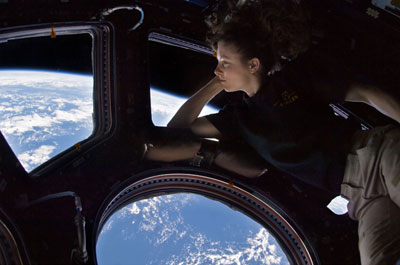
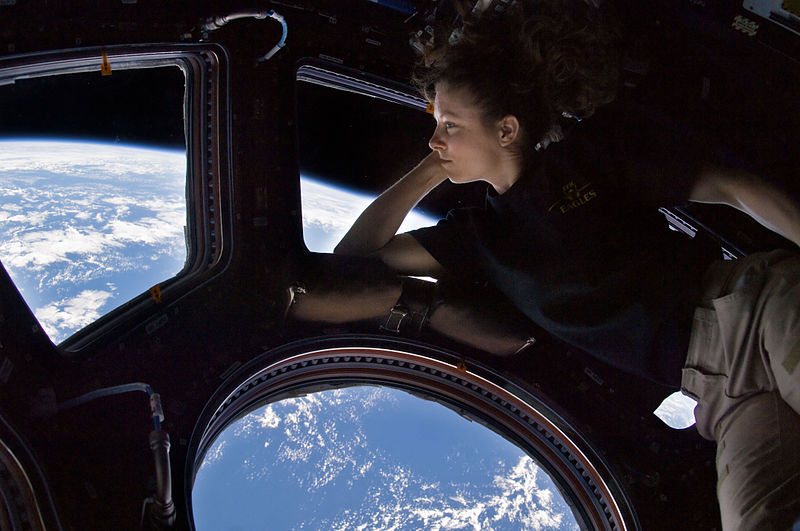
Australian Science Editorial Board’s favourite photo is a self portrait of Tracy Caldwell Dyson in the Cupola module of the International Space Station observing the Earth below during Expedition 24, featured in the article Networking the Solar System.
Tracy Caldwell Dyson on the International Space Station
ScienceOnline2013 conference will take place Jan. 31-Feb. 2 in the McKimmon Conference Center on the campus of N.C. State University in Raleigh, North Carolina.
For those not familiar with ScienceOnline conferences, ScienceOnline started in 2007 as a one-day conference with 135 people who wanted to explore the world of science blogging. Today, ScienceOnline has grown into an international and interconnected network of thousands of individuals, local groups and regional affiliations, and signature annual events that delve into all the ways that science is done, shared, communicated and supported through the Web and tools of social media.
In short, ScienceOnline is a global community – a community built through our online connections and face-to-face conversations.
Those connections and conversations have been in full splendor online with the hashtag #scio13.
Note that the scio13 planning wiki, where you can add suggestions for discussion sessions, workshops and demonstrations, will close July 1 at 12 noon E.D.T. Bora and the program committee will then begin to build the program for the conference.
Fiber to the Premises was only introduced to homes in 2009. This was made possible with the help of the government in partnership with internet providers. In 2010, Telstra introduce increases the data allowances on their plans allowing their users to use the internet more. This applies to mobile and internet plans. Australia is only beginning to harness the potential of broadband technology.
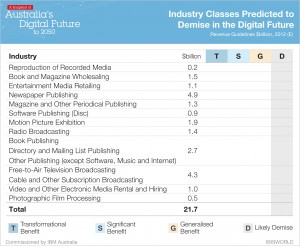
With this in mind, IBM conducted a research to determine the progress of digital technology in Australia. On June 14, 2012, a report titled “A Snapshot of Australia’s Digital Future to 2050” was released indicating how information and communications technology would be an important resource. This details the changes that would happened to Australia’s digital technology and how it would affect the economy and different industries.
IBM commissioned Phil Ruthven, who is the Founder and Chairman of IBISWorld. The report is a projection of how numerous industries would be affected by the progress and innovations to information and communications technology. This indicates how this technology can benefit a lot of industries and improve their work. It also hints about how some industries can harness the potential of this digital technology to their advantage. Sadly, part of the report indicates how the technology would cause negative effects on some industries and may lead to some of these industries being obsolete. You can find more details about the report here:
Although there are 15 industries that would not find sustainability in this technology, they would only contribute a minimal about of revenue to the economy. The boom that other industries would experience would cover the losses. The report boasts of $1 trillion revenue for Australia by 2050 with the help of this utility. Currently, the resource is generating $131 billion as revenue. Information and communication technology would also benefit a lot of industries like mining, education, and health care. With how high speed internet is being used today, we can really see how this can produce promising developments in the future. The report provided ways on how industries can profit by incorporating the use of this utility as part of their business. Big and small businesses are setting up shop in the virtual market. Harnessing the potential of this promising technology now would help your business gain stability.
Australia would face a lot of great development with the help of this utility as this would improve the potential of a lot of industry. The quality of education would improve. Australia would be able to enhance Tourism, making it a really profitable industry. Together with this, the possibility of Health Tourism, as Health would also benefit from the use of this technology. Australia would be able to provide quality services that are essential Business Process Outsourcing.
The report created a study on different industries and determined how they can compete with the help from information and communications technology. This indicates how the industry can benefit from the use of this resource and how it can affect growth and profit. This also provides ideas on how an industry can adapt and use this technology to their advantage. About 10% from the total number of industries would not be able to operate without this technology, and the industries included in this percentage generate 25% of the country’s revenues. This is the reason why different industries are urged to use this enhanced technology.
Determining the sustainability of the industry was carefully determine with the help of a criterion and ranking that is created for the study with the help of information that is available in IBISWorld’s Industrial Database. This carefully determined as to whether an industry would experience substantial benefits in the use of the technology and the gravity of its effect. This also determines which industries would be able to evolve with the help of the technology that is introduced. It is the same criterion that determined as to which industry may suffer due to the progress that is brought about by the development of other industries and the economy as caused by this technology.
The benefits would also produce a substantial benefit to consumers. As part of the development of information and communications technology, consumers who use the technology would get more out of the service. This would improve the technology we use at home like the internet or the telephone. With better technology, the possibility of working at home is realized. This would allow people to work full-time at home while doing business with different industries even those overseas. This also opens opportunities for small businesses as the technology provides them a level playing field with big companies. Also, with the development of this technology there would be lesser need for resources or the possibility of improving the prices of resources making it easier to create a profitable business.
The report is definitely an eye-opener to a lot of industries. The year 2050 can be very vague. It is impossible to determine how your business would be after 40 to 35 years. Having this report truly helps allowing business to make well-formed plans that would change their business. The use of enhanced information and communication technology really shows great promise. You can even see how broadband technology affects businesses today. The report claims that the technology would evolve fast and does not take much time to generate profit. The report also helps in showing people which industries would benefit from the technology and would exhibit great development. This would be great information for potential investors. Also, with the reports about possible revenues, it really poses more possibilities for progress to Australia’s economy. This would also help in attracting international investors.
IBM hopes to show the potential in information and communications technology and how this can affect Australia and its 509 industries. The report shows a lot of significant benefits and very minimal consequential effects. The report is favors by a lot of economist calling year 2050 “The Trillion Dollar Digital Age”. There are industries that did not fare well on some of economists’ projection and the report provides a possible solution. Some industries can enjoy a transformative benefit with the help of this technology. The report really helps in showcase the possibilities that lie in the Australia’s Digital Future.
A recent news published online by The Wall Street journalabout the Indian Council of Agriculture Research (ICAR) offer of germplasm from its massive seed gene bank at National Bureau of Plant Genetic Resources (NBPGR) to multinational corporations (MNCs) in exchange for expertise and a share of the profits made me to put forth before you about the topic ‘Free and Open Source Agriculture’ which is proposed and discussed by Janet E. Hope (2004), Susan H. Bragdon(2005), Daniel D. Holman(2007) Keith Aoki (2009) and others. It is strange that the ICAR which is an the apex body of the world’s largest National Agricultural Research System (NARS) coordinating, many institutes involved in basic and strategic research, education and extension, is still looking at MNCs for next generation genetic technologies and the for the want of the same, it is going to share/sell its genetic materials. No doubt agriculture in India and elsewhere in the world is facing challenges from the changing climatic conditions, threats from biotic and abiotic factors. India is rich in biodiversity and with the use of agricultural biotechnology, it is now possible to develop new crop varieties that are tolerant to adverse climatic and poor soil conditions, pests, diseases, insects, weeds etc. and build agriculture and food security. The MNCs with their huge investments have taken proprietary rights on most of the rapid scientific and technological advancement tools and products. Now they are looking at harness the public plant genetic resources for the creation of new generation of crops with the use of advanced molecular biology tools.
As per the Convention on Biological Diversity (CBD) 1992, plant varieties are national sovereign resources and with sui generis system of protection in India under the Protection of Plant Varieties & Farmers’ Rights Act, 2001(PVFRP), the plant breeders and farmers have been given rights for conservation, improvement and re-use. Now the question arises once the MNCs takes the role of plant breeders and claim their rights on the improved traditional varieties with the help of biotechnological tools, does the farmers have any right to use the same improved material for his own use? or would they be left with no choice other than to buy the planting material at the cost specified by the MNCs?
As per the PPVFR, the farmers would have the right to claim for rewards from Gene Fund if genes from their local varieties are used for the production of improved material for commercial purpose, they don’t have any right to participate in decision making on matters related to the conservation and sustainable use of plant genetic resources for food and agriculture as suggested in the International Treaty on Plant Genetic Resources for Food and Agriculture (ITPGR) in Article 9.2. However it seems that in man of the decisions on sharing/selling the country’s germplasm, there is no seeking of prior consent from the farmers/communities from whose locations, the germplasm might have been collected.
Under the IPR regime, the free progress of science and innovation is hampering and the fruits are not reaching to the public while, the exchange of knowledge and tools should be a way of life in agricultural research. Hence, I would like to put forth the concept of ‘Open Source‘ in Agriculture and Biotechnology which is proposed/discussed since quite sometime when the Free and Open Source Software (FOSS) and GNU movements had become global movements. In contrary to the proprietary software which gives only license to work, FOSS gives source code and a bundle of rights to the user to use, reverse engineer, learn, share and improve it. We are seeing now many FOSS products which are built by the community and are very good. These products are licensed as ‘Copyleft‘ or ‘Share Alike‘ of creative commons and or GNU Public License which requires that the copies or adaptations of the work to be released under the same or similar license as that of original.
This concept of FOSS initiative in agriculture has not taken up as a policy by the public funded research institutes. Though the germplasm is being received and sent (shared) by material transfer agreements (MTAs), many of the breeders are not exploring the concept of ‘Share Alike‘. When the crop improvement is being taken up by both public and private, the MTAs should have the licensing terms which asks the agencies to share their improved materials in the similar terms to the public for further use and development without seeking any royalties for the further improvement and use. Recently, there are reports that there is a charge against the Bt Brinjal’s developers in India for violation of the Biological Diversity Act, 2002 and allegations that they had accessed Indian varieties of brinjal for the development of genetically modified ‘Bt Brinjal’ without prior permission from the National Biodiversity Authority (NBA). These issues could be avoided when the materials are freely available to everyone to use and also for re-use.
Though there is a provision for ‘Compulsory License‘ under PPVFR for undertaking production, distribution, and sale of the seed or other propagating material on the grounds that the reasonable requirements of the public for seeds or other propagating material of the variety have not been satisfied or that the seed or other propagating material of the variety is not available to the public at a reasonable price, there is no provision for the use of the material for further improvement.
The FOSS movement had not built in one day but its a continuous building movement. And if this initiative to happen in agriculture, it would be a great thing. However, for that it needs greater advocacy and to be built by the convinced breeders/farmers. Centre for Sustainable Agriculture from Hyderabad in India which is working for sustainable agriculture is now exploring the concept called ‘Open Source Seeds‘. In the world, the BiOS Initiative of Cambia (BiOS – Biological Innovation for an Open Society) is the one which is based on the GNU/FOSS model and is sharing enabling technologies with large community of innovators under ‘Protected Commons‘. The BiOS licenses when employed for MTAs, would enable the public to access to the technologies freely and there would not be any prevention of the same by appropriation of IPR rights by private players.
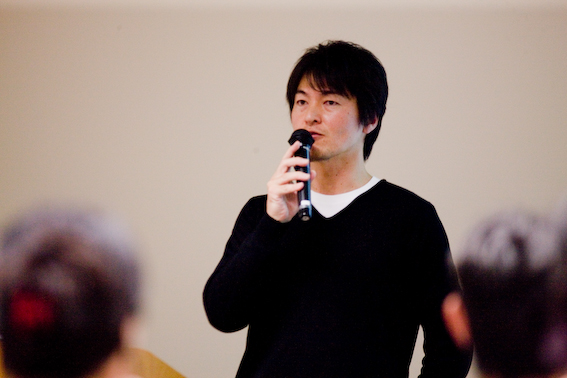
Keita Bando is a Digital Repository Librarian and Coordinator for Scholarly Communication database called MyOpenArchive we have presented MyOpenArchive earlier this year. Founded in September 2007, MyOpenArchive is an international Non-Profit Organization that advocates Open Access for never-before-published research papers on the web and provides Self-Archiving platform to enable better knowledge sharing in a way that’s easy to publish. We talked with Keita about Open Access (OA), scientific and scholarly publishing, and the current situation of the OA in the world.
Welcome! Would you, please, tell our readers a little bit more about yourself? What is your scientific background, and your professional scope?
Hello, Australian Science and its readers! Nice to meet you. I have been devoted my time on Open Access, Scholarly Communication, and recently Altmetrics. That’s why we (two colleagues and me) founded MyOpenArchive five years ago. An engineer and an designer helped me to develop my initial effort.
Also much of my time have been devoted on OA advocacy relations. For example, an presentation at 2008 Open Access Day, hosting Japanese website during Open Access Week 2009, and we hosted an event at that week. Furthermore, in 2011 we attended two conferences in Europe and the US, to make great acquaintances with those who deeply committed into Open Repository relations.
Besides, I have been devoted my time on Mendeley Advisor relations. Mendeley is a great service for me, and that’s why I advocate Mendeley in Japan. On one hand, Mendeley is famous as Reference manager. On the other hand, Mendeley is a Self-Archiving, Institutional Repository friendly service. Personally I am an OA Advocate who is interested in Mendeley Advisor relations.
As a volunteer I have been devoted my time on those relations, for I have a full-time job at an University (as a staff, but not a librarian).
How many individual and organizational ‘self-archiving’ units or members do you have within MyOpenArchive? What science disciplines the archive covers?
MyOpenArchive is not a sectional repository (arXiv, PMC etc). You can publish and share any type of research paper, of any section (Journal Article, Thesis or Dissertation, others) using Creative Commons License (or Public Domain). Users can upload material from any field, all science disciplines are present in the articles.
The first 3 years (2007-2010) we attracted 393 users and 210 posts. After 2010 renewal, 292 users and 166 posts. On the new site, we introduced Twitter/Facebook Sign in/up system to find that Twitter users overwhelmed Facebook users (214 vs. 78).
What do you think about “self archiving” today in the hyper connected networked surrounding and advancement of digital technologies? Do people deposit more or less?
Self archiving, so far, meant that librarians conduct the posting author’s final draft and/or others to Institutional Repository. These years, however, increasing number of users found their way to publish research papers to Mendeley, ResearchGATE, academia.edu and so on because those social networking services for researchers taps self archiving features into their site.
Thus, Self archiving can be achieved without IR. FigShare, PeerEvaluation, MyOpenArchive and numerous Social iR(s) represent Self archiving without help of librarians or IR. Researchers can do the self archiving, literally, on their own.
On the other, experimental efforts are increasing in order to match SNS for researchers and IR. For example, I am interested in DURA project, on which Mendeley and Cambridge University Library join forces upon JISC subsidy. Technology evolution let those services interact each other, and SWORD, Symplectic is critical on the Self archiving movement to advocate OA.
How do you see OA development in the next five years? How do you see the impact of open access on the science, education, and communication online?
In my opinion, altmetrics is the key to innovate OA relations. PLoS is the most important contribute to altmetrics innovation. It focuses on article level metrics, on which they can enhance the real time impact of individual papers. PLoS hires some of altmetrics guru, such as Cameron Neylon and Martin Fenner to the effort. Besides, PLoS talents like Mark Patterson and Peter Binfield (they are keen on altmetrics) are going to launch new OA journal (eLife Science, PeerJ) with some of Mendeley staff (Ian Mulvany, Jason Hoyt). Also, BMC show their understandings on OA journal. Hopefully Publication companies will increasingly submit altmetrics.com plans on and on.
I feel the importance of “being the part” of Open Access movement to know the global trend. Thus I am taking part in Facebook, LinkedIn, Google plus groups, while I follow them on Twitter to know the status of “person” as much as “information”. Most importantly, I can say that being the part of real friendship is critical. Last year I attended several international conferences as real friendship needed. “Why don’t we contribute” happens on these efforts, personally.
I know that you are very active online, collaborating with other Open Access chapters and nonprofit organisations. What are your current plans in the organisation and Open Access movement globally?
For example, Sridhar Gutam of Open Access India became allies with us, to share the Asia relations. On the partnership we hope to enhance the collaborations among those parties around the world.
We are going to attend Edinburgh Open Repositories 2012, on 9-13 July.
Berlin 10 Open Access Conference and Open Access Week also mean a lot for us, so this is going to be a “being the part” of discussion and real networking.
Thank you Keita for taking your time to talk with me!
Do you wish to become a Martizen, a citizen of Mars, anytime in the near future? If you are serious about this then Dutchman, Bas Lansdorp is your man.
Bas Lansdorp is a person with an audacious ambition. Through his company, Mars One, he plans to establish the first human settlement on Mars by April 2023. In addition to this he intends that a new team of four settlers will join the Martian settlement every two years. By 2033 there will be over twenty people living, working, and they believe, flourishing on Mars, their new home.
If the Mars one publicity is believable, and on this point there is no real reason to doubt it, organizing a manned mission to Mars has been Bas Lansdorp’s dream for many years. Bas has been working on Mars One with partner Arno Wielders since January 2011. During 2011 they had confidential discussions with possible equipment suppliers to ensure that there was reality in their idea. In May 2012 they announced their vision to the world.
Like any large entrepreneurial venture their success will predicated on the skill, experience and credibility of the venture and the people involved. To be credible they will need to be convincing in, at least, these four aspects of the venture; technological; financial; psychological; and finally ethical. They will need to be convincing in a way that engages and excites both investors and participants.
It is rocket science
Getting to Mars is not trivial, if it were, well I expect there would be more than the spectacular array of NASAsuper, and superannuated rovers there currently is on Mars. Mars One have developed and made integral to their model a simple theme to get to and live on Mars: buy already developed technology from existing component manufacturers.
Take the Falcon Heavy lifter from SpaceX, to boost the components into low earth orbit. Combine a SpaceX Dragon capsule as the landing stage, add a transit living module from Thales Alenia Space and attach to two propellant stages which are a variant of the SpaceX Falcon 9 upper stage rockets and you have the vehicle to get from low earth orbit to orbit around Mars via a Hohmann transfer trajectory.
The seven-month trip to mars will be Spartan, similar to, but more cramped, than current conditions experienced on the International Space Station. This is where rigorous training will first pay off:
“Showering won’t be an option; instead they will have to make do with wet wipes like the International Space Station astronauts. Tinned food only, constant noise from the ventilators and equipment and a regimented routine of three hours of exercise a day to keep up muscle mass all add to their trials. If they are hit by a solar storm they will have to take refuge in the shelter area of the rocket, which provides the best protection, for as long as several days.”
When the first 4 settlers land on Mars in April 2023 they will arrive at an established site. They will be picked up from their SpaceX Dragon capsule and taxied to the settlement by two robotic Mars rovers designed and built by MDA Space Missions. To get to this point is an ambitious and tight timeline.
2013
Settler selection begins. Replica of Mars settlement is built on an Earth desert to help the settlers prepare and train, and for a realistic environment in which to test the equipment. The settler selection and the preparations in the simulated Mars base will be broadcast on television and online for the public to view.
2014
Preparation for the supplies mission. Production of the first Mars communication satellites.
2016
January launch of the supplies mission, landing in October, includes the first habitat module (modified Dragon capsule) and 2500kg of supplies.
2018
First robotic rover lands (again in a modified Dragon capsule) to enable the pick of the specific settlement site.
2021
A total of 2 robot rovers, 2 living units, 2 life support units and 2 supply units are now all present at the Mars settlement site.
2022
All H2O, O2, and atmosphere production will be ready before a go-ahead to launch the settlers.
2023
First 4 settlers arrive at the Mars settlement.
2025
Second group of 4 settlers arrive, to be no doubt enthusiastically greeted by the pioneering first four.
Once arrived there will be work for the settlers to connect up the various habitats. However once complete they will have substantial living space, 50m²+ each, equipped with showers, flushing toilets and kitchens. The living units are a Dragon capsule with an inflatable living section supplied by ILC Dover, who have supplied NASA with space suits and landing bags for the previous Mars rovers Opportunity and Spirit. The inflatable living sections are to be covered in Martian regolith to provide adequate radiation shielding.
Mars One
When moving around on the Mars surface the settlers will be wearing Mars suits, similar to the suits worn by the Apollo astronauts on the Moon. These suits will be made by Paragon Space Developments, the same company who provide NASA with ‘extra-vehicular’ suits, for when astronauts work in space outside the International Space Station.
By focussing on proven existing technologies Mars One are certainly presenting a reliable low cost technology solution. It is also deceptively simple. Let us remind ourselves this is a first, these conditions will be new.
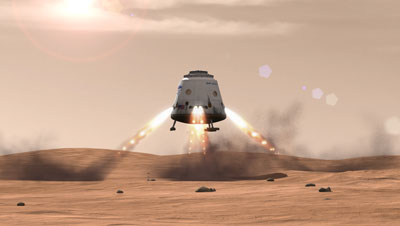
For example the first step to settlement, safely landing the settlers on Mars, is unproven at present. NASA has described the process of entering the Red Planet’s atmosphere and slowing down to land as “six minutes of terror.” Computer graphics of Mars landings, in full colour and exquisite detail do not provide the simple fact that landing payloads that are large enough to bring humans and sustain their survival on the Red Planet is still beyond our capability. Currently NASA expects to have testable solutions to this some time in 2014.
Similarly we could look at the Mars suits and pose, repairs? replacements? These will be an absolute necessity for survival, however you won’t be able to buy a replacement online or wander down to high street shops to get an upgraded model or new one for a growing Martizen child.
Competent and knowledgeable engineers and specialists, as well as countless armchair experts, will no doubt be picking apart the technology of the Mars One mission, as I have just briefly done. There is no doubt that each step of the timetable above has a myriad of ‘first-time’ problems that will require solutions, some of which can be inferred some which will only become apparent as the experience proceeds. I hope that all involved have read Gregory Benson’s 1999 novel, The Martian Race, a gripping primer to life on Mars.
Show me the money
Mars manned mission. Image credit: NASA
Getting to Mars is not cheap. Since the late 1940s there have been many proposals for manned exploration and settlements on mars. A commonality is that they are all pitched 10-20 years in the future and large sums of money are mentioned. To put this into today’s context on August 6 (EDT), 2012 NASA’s Mars rover, Curiosity, will land on Mars. This mission will place an 899kg six-wheeled, un-manned science laboratory on Mars; for the approximate mission cost of US$2.5B. It is expected that a 2030s NASA mission to Mars will be of the order of US$20B. Mars One says it will cost them US$6B to put the first four settlers on Mars.
In many ways focusing on the mission cost is a furphy. NASA mission budgets come from USA public purses and there is always great argument in the US Senate about the value of such publically funded scientific enterprise. In the US this argument is always balanced by the technology and enterprise that this brings to US companies and the economy. Mars One have no such public funding in mind. They intend to buy the above technologies based on price and quality, not through political or national preferences.
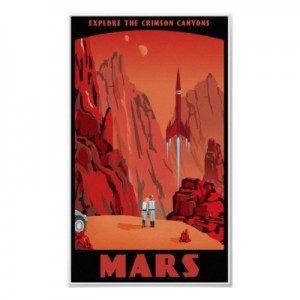
Colonisation of Mars 2023, Mars One. Image Credit: Ariukux
The ability to fund such a mission will depend on what value it returns for investors. Here is the Mars One point of difference; funding will be via sponsorship and as the World’s largest media event. If I were a settler having ILC Dover and Paragon Space Development would be more reassuring than IKEA on my Living and Life Support Modules. As for the thought of a 7 months trip to Mars eating McDonalds pre-prepared ‘meals’ that would be unpalatable. Choose the sponsors wisely Mars One.
There are no stated scientific or economic goals. Instead they see it this way:
“A manned mission to Mars is one of the most exciting, inspiring and ambitious adventures that mankind can take on. We see this as a journey that belongs to us all, and it is for this reason that we will make every step one that we take together. This will also be our way to finance the mission: the mission to Mars will be the biggest media event ever! The entire world will be able to watch and help with decisions as the teams of settlers are selected, follow their extensive training and preparation for the mission and of course observe their settling on Mars once arrived. The emigrated astronauts will share their experiences with us as they build their new home, conduct experiments, and explore Mars. The mission itself will provide us with invaluable scientific and social knowledge that will be accessible to everyone, not just an elite select few.”
To assist in making this worldwide media frenzy Mars One has enlisted Paul Römer as an ambassador. An established expert on grasping the attention of a global public, he was the co-creator of the worldwide phenomenon “Big Brother” – the television program that revolutionized reality television.
The 24/7 Martizen lab-rat
More than the tangibles of this venture, I believe it will be the intangible elements that make this a standout human endeavour. Especially the ethics and psychology of the Martizen being media fodder 24/7. A previous article has already questioned the ethics of such, admitedly voluntary, surveillance.
The psychology of such surveillance is fascinating and worrying. Even the most extroverted of people have private lives. Only the totally naive display ‘real’ faces through the public media. Media such as facebook display a mixture unconscious representations, as well as carefully and foolishly contrived facets of our lives. In many cases events are morphed and selectively recorded on media such as facebook and twitter. It is one thing to post to your facebook friends, it is quite a different thing to know that all that you do will be on display for a public you do not know.
It is hopefully obvious that the narcissist, wastrel, celebrity personalities that populated the many versions of Big Brother are not what will make a great four-person team on Mars. I also am happy to be labelled an ‘elitist’ and state that public participation via stringent selection processes, such as voting-off someone you don’t like, will be a disaster for a serious mission.
I am unsure how history’s first off-world conception, birth and death will go as media events. I can appreciate the lure for marketers of such landmark voyeuristic events, I am at the same time unsure how the participants of such private events will feel.
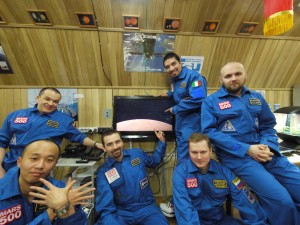
Mars500 crew. Photo credit ESA
There is psychologically a world of difference between the isolation that would be experienced in genuine remote exploration, think Antarctica, to the pseudo-isolation of contrived event that has a definite endpoint, think Big Brother and Survivor. The Marsonauts of Mars500 ended with smiling faces after their 17 month long isolation experiment. The European Space Agency’s Directorate of Human Spaceflight has a long tradition of conducting research on the physiological and psychological aspects of spaceflight. In light of this, ESA undertook the Mars500 cooperative project with the Russian Institute for Biomedical Problems (IBMP) in Moscow, in 2010-11. This all male crew experiment is instructive, and illuminating for Mars One, however no matter how ‘isolated’ Moscow may feel, like the people in the Big Brother household, they could if they chose leave at any stage.
Despite this a key science project during Mars500 was to determine the implications of personal values held by individual crew-members for compatibility within the group as a whole or otherwise, and for individual coping strategies and adaptation during long lasting confinement. On a human exploration mission to Mars, the psychological resilience of the crew will play a critical role for the maintenance of health and performance and hence the success of the mission. One factor impacting on psychological resilience is the personal values of crew members defining their motivational goals and attitudes. Crew member selection is for real, not a game where if a poor choice is made they leave the set or you re-boot the computer.
It’s a one-way trip
That is one clear distinction this is a one-way journey. Since returning astronauts from the surface of Mars is one of the most difficult, and expensive, parts of a Mars mission, the idea of a one-way trip to Mars has been proposed several times. The notion of settlers, rather than expedition astronauts changes the technology and psychology of the mission.
A one-way trip scenario has been proposed seriously a number of times since 1998. Including a 2004 proposal by Paul Davies. Another organisation, Mars to Stay, proposed that astronauts sent to Mars for the first time should stay there indefinitely, both to reduce mission cost and to ensure permanent settlement of Mars. Among many notable Mars to Stay advocates, former Apollo astronaut Buzz Aldrin is a particularly outspoken promoter who has suggested in numerous forums “Forget the Moon, Let’s Head to Mars!”
During a 2009 public hearing of the U.S. Human Space Flight Plans Committee at which Robert Zubrin presented a summary of the arguments in book The Case for Mars, dozens of placards reading “Mars Direct Cowards Return to the Moon” were placed throughout the Carnegie Institute.The passionate uproar among space exploration advocates – both favourable and critical – is an indication of the interest in Mars exploration.
I find the Mars to Stay idea appealing and compelling for both economic and safety reasons. More emphatically, I find it a representation of the spirit of human exploration and discovery. Also personally it is a fulfilment of the ultimate mandate by which manned space programs (US, European, Russian, Chinese, Indian, Japanese etc.) are sold, at least philosophically and long-term, as a step to colonizing other worlds. I hope that Mars One either credibly fulfils this trust or propels alternative programs that deliver human settlement on Mars via a well-defined (i.e. non-suicidal) exploration program.
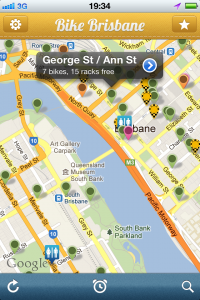
On Thursday, the Lord Mayor announced the winners of the hack::Brisbane competition at a presentation in New Farm Park. The winners of the hack::Brisbane competition are: (more…)
· European Patent Office honours outstanding inventors with European Inventor Award in Copenhagen
· Australian prize winners Dr. John O’ Sullivan, Dr. Terence Percival, Graham Daniels, Diethelm Ostry and John Deane paved the way for today’s Wi-Fi technology
· EPO President Benoît Battistelli: “The work completed by Dr. O’Sullivan and his team perfectly demonstrates how a publicly funded Research Centre can use patent protection and licensing revenue to finance further innovation.
In the fields of Brunei Darussalam in North Borneo, once a crown colony of Great Britain, lies the pitcher plant. The pitcher plant is carnivorous, capturing and devouring insects that seek to harvest its nectar.
The pitcher plant is beguiling, attractive, and has evolved many ways to seduce its predator. Insect prey is captured within the wells of its pitcher-shaped leaves, when insects crawling along it slip on the wax crystals of the inner wall, and fall into the digestive fluids at the bottom. A dense layer of platelet-shaped wax crystals, orientated perpendicularly to the surface for a reason — to essentially make it difficult for insects to grip — especially when wet.
The wax crystal layer is a common feature to many species of the pitcher plant. One such species, Nepenthes gracilis, is unusual in the fact that the crystals are also present on the underside of the pitcher lid.
This was the observation that led to recently published research describing a new way the pitcher plant captures its prey.
The lead author of the paper, published today in PLoS ONE, Dr Ulrike Bauer from the University of Cambridge’s Department of Plant Sciences, said: “It all started with the observation of a beetle seeking shelter under a N. gracilis lid during a tropical rainstorm. Instead of finding a safe — and dry — place to rest, the beetle ended up in the pitcher fluid, captured by the plant. We had observed ants crawling under the lid without difficulty many times before, so we assumed that the rain played a role, maybe causing the lid to vibrate and ‘catapulting’ the beetle into the trap, similar to the springboard at a swimming pool.”
In effect, it’s a clever strategy on the part of the pitcher plant. At times, mostly when the weather is dry, insects have no problem gathering nectar from the plant. This allows “scout
When the human race inevitably expands off planet Earth, we’ll naturally want to take our internet with us – over the past 15 years or so, the internet really has become an integral part of our lives! In fact, even as you’re reading this, 300 gigawatts of electricity worldwide will have been used to transfer 640 terabytes of information across the internet to 1.5 billion desktop computers and a further billion mobile devices. In the time you’ve taken to read this paragraph, over 200 million e-mails have been sent, 6 million Facebook pages have been loaded, 1.3 million YouTube videos have been watched, and 100,000 people have posted an update to their twitter accounts.
Astronaut Tracy Caldwell Dyson enjoying a view from the ISS Cupola window.
Inspite of its sprawling extent on our planet though, the internet’s first step off-world was able to fit inside just 1120 bytes. On January 22, back in 2010, astronaut TJ Creamer made a small but important piece of internet history by being the first human being ever to post to a twitter feed from orbit. Astronauts had been updating twitter feeds while in orbit for some time, but they had previously always relayed their messages via NASA back here on Earth. Since 2010, however, the International Space Station (ISS) has been upgraded to have its own internet connection. Intended for personal use by astronauts and still routed through ground based systems at NASA for security, this is how e-mails, blog posts and twitter updates are sent back home. All the same, even though it might seem a long way away, the ISS is relatively nearby in low Earth orbit.
Things start to become more complicated when you consider travelling further afield, because whether we like it or not, we can’t cheat special relativity. The speed of light is the fastest any interplanetary communication (or anything, for that matter) can travel. The Moon is still close enough that interaction is possible in almost real time. Sending a message to someone on the Moon would involve a delay of a little under three seconds. Good enough to hold a conversation, but with gamers here on Earth complaining about latencies higher than 600 milliseconds, you’re obviously not going to be able to play Halo or Warcraft against a friend over that kind of distance. Travel as far as Mars and the problem becomes even more pronounced, with delays of anywhere between 3 and 22 minutes, depending on exactly where Mars is in relation to Earth. Minutes turn to hours as you continue to travel outwards (transmissions from Voyager 2 currently take over 13 hours to reach us). All things considered, using an interplanetary internet sounds like a rather good idea for communication over distances like these. While phonecalls to Mars would be essentially impossible, delays between responses to e-mails and tweets are fairly routine. You could quite easily have a twitter conversation with someone over on a neighbouring planet.
Preparing for the future, NASA and Google teamed up a few years ago to develop a new internet protocol designed to be used in space. Called Disruption-Tolerant Networking (DTN), it’s designed to work a bit differently to the internet we’re all familiar with. While our familiar TCP/IP systems rely on a constant connection to transfer data, this is obviously unfeasible in deep space. While a DTN network would still operate using a series of nodes passing information from machine to machine, the way ground-based networks do, each node needs to hold onto the data being transmitted until it has a confirmation that the message has been safely passed on.
SpaceX believe it should be possible to send people to Mars within 20 years.
With a steadily accumulating collection of spacecraft in various parts of the solar system. Google’s Vint Cerf has expressed plans to use these old pieces of hardware, many of which have long since completed their original missions, as nodes in what will become an interplanetary internet. Indeed, spacecraft have already transmitted data amongst themselves en route back to Earth. ESA’s Mars Express probe, for instance, has served as a relay between Earth and vehicles landing on Mars, and is set to do so again when NASA’s Curiosity rover arrives at the red planet later this year. In an interview with networkworld.com last year, Cerf is quoted as saying “…if they are still functionally operable — they have power, computer, communications — they can become nodes in an interplanetary backbone. So what can happen over time, is that we can literally grow an interplanetary network that can support both man and robotic exploration.” He continued to explain how, while all space missions to date have involved point-to-point communications, future space missions will likely require “a richer communications network.” This also has an added plus that an interplanetary network infrastructure will allow scientists to receive more data from deep space missions than is currently possible.
With many astronauts already maintaining active twitter feeds from orbit, it has to be said that similar social networks may well play an important role in communications in the future. By the time that role is needed, a network infrastructure will likely be in place for it to operate on. A company like Google, processing petabytes of data and serving hundreds of millions of queries for an index containing billions of websites every day, is certainly qualified to help set up a computer network on interplanetary scales. Maybe in the future when people talk about Google Mars, they might mean it literally!


 Steven Burrill is a well recognized name in the field of science and technology, and has been actively involved in various aspects of these fields. As a founder and CEO of Burrill & Company, his influence and contributions to science and technology has been far reaching, and is responsible for great strides made in various aspects of this field.

 What do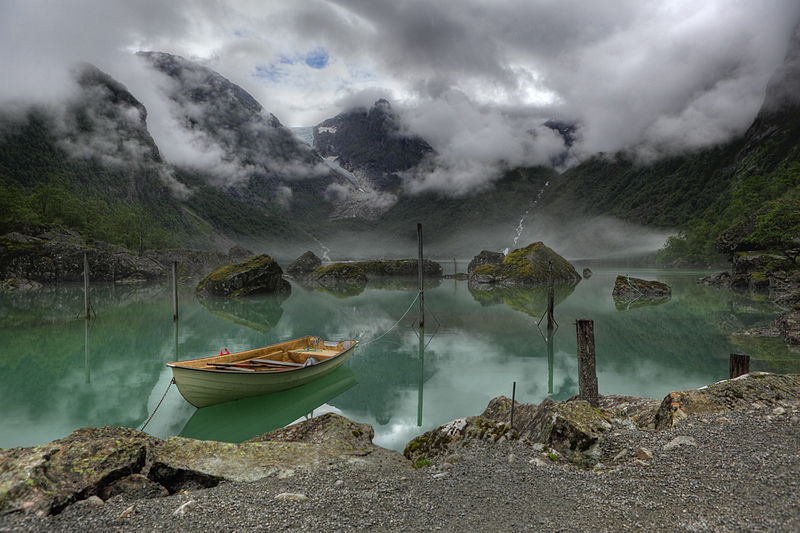

 ScienceOnline2013 conference will take place Jan. 31-Feb. 2 in the McKimmon Conference Center on the campus of N.C. State University in Raleigh, North Carolina.
 Fiber to the Premises was only introduced to homes in 2009. This was made possible with the help of the government in partnership with internet providers. In 2010, Telstra introduce increases the data allowances on their plans allowing their users to use the internet more. This applies to mobile and internet plans. Australia is only beginning to harness the potential of broadband technology.

 Keita Bando is a Digital Repository Librarian and Coordinator for Scholarly Communication database called MyOpenArchive we have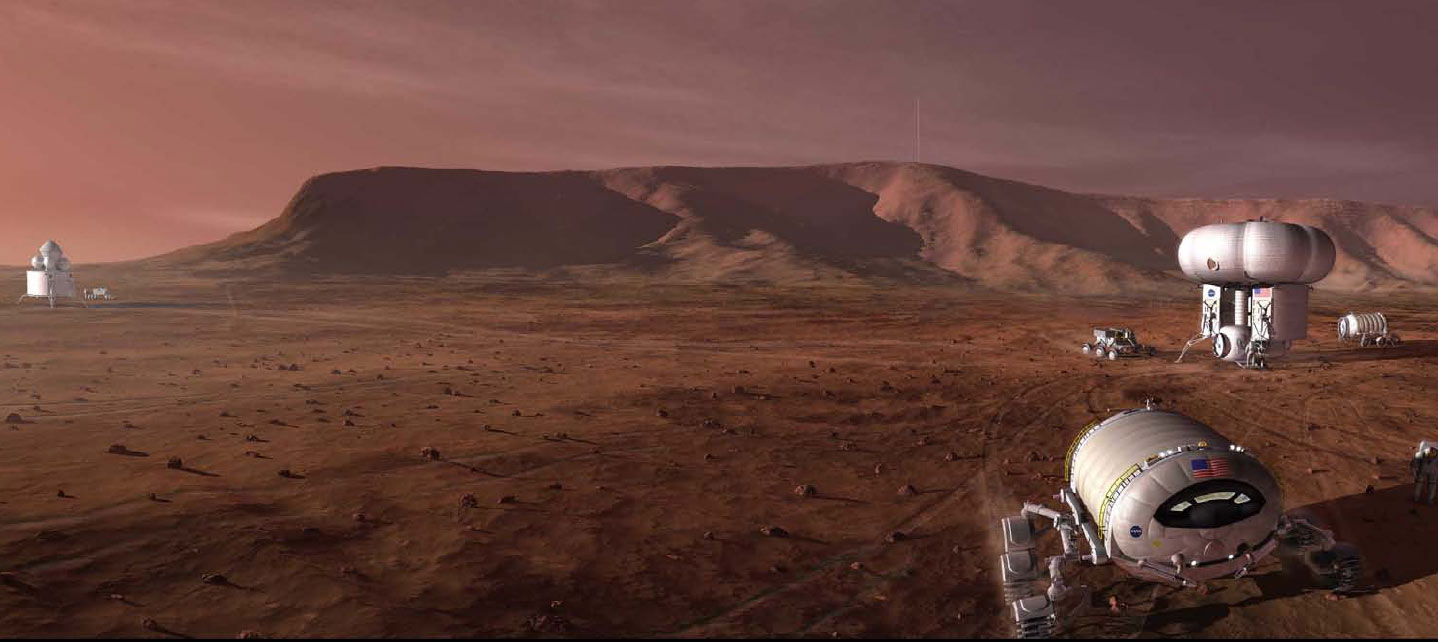




 On Thursday, the Lord Mayor announced the winners of the hack::Brisbane competition at a presentation in New Farm Park. The winners of the hack::Brisbane competition are: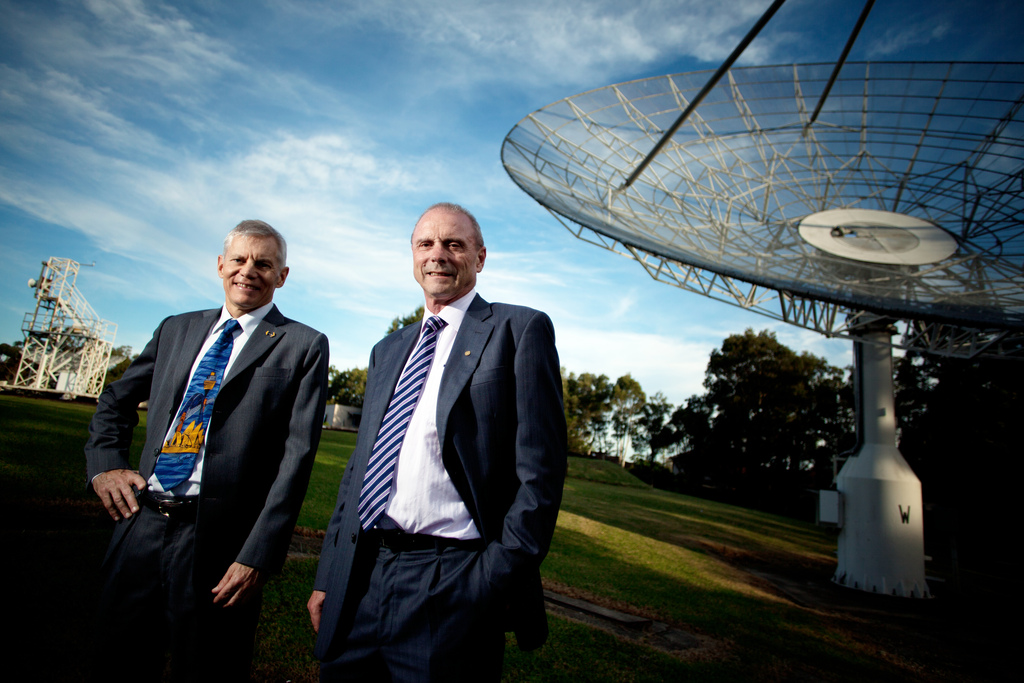

 It’s a trap!