Author: Danica Radovanovic

  • Best of Science blogging – September 2012

    Best of Science blogging – September 2012

    Lot of events happening this September and I’m looking forward to share with you some wonderful articles and interesting posts, interviews for you to read. We have weekly science blogging picks with the guest editor each week, now it’s almost a tradition called #ScienceSunday, you can search for it on Google Plus as well.  We are coming out soon with the new design for the Australian Science and some new interesting initiatives.

    Contact us if you’d like to join our team of science and tech bloggers and authors – please read the Editor’s note, also if you’re interested in Weekly Science Picks scroll down the article to find about it more. The Australian Science recap of the September 2012:

    Lighting the Imagination in Science by Kelly Burnes

    Let’s think about the role of imagination in science. The process of imagination is on display everywhere in an early childhood classroom. But by the time they reach middle school, students seem to burn out and tire of science. Where is the imagination? What is driving the curiosity?

    Got Science? Australian Science on Display at Mitchelton State School is part two of the previous article by Kelly, an interview with Mitchelton State School staff :

     McIntyre indicated that in addition to exposing children to science, it’s also essential “to develop the attributes of curiosity that are necessary to the investigations around science.

  • Urban informatics and new opportunities for interdisciplinary exchange – Interview with Marcus Foth

    Urban informatics and new opportunities for interdisciplinary exchange – Interview with Marcus Foth

    As an internet researcher and social media consultant, I ask some of the guests of the Australian Science magazine and knowledge network to tell me and my readers more about themselves, their current projects, and their views on topics including internet technology, the use of the Web in science and education, and certain aspects of the digital technologies that influence our everyday lives and work. You can see the published interviews so far – here.  

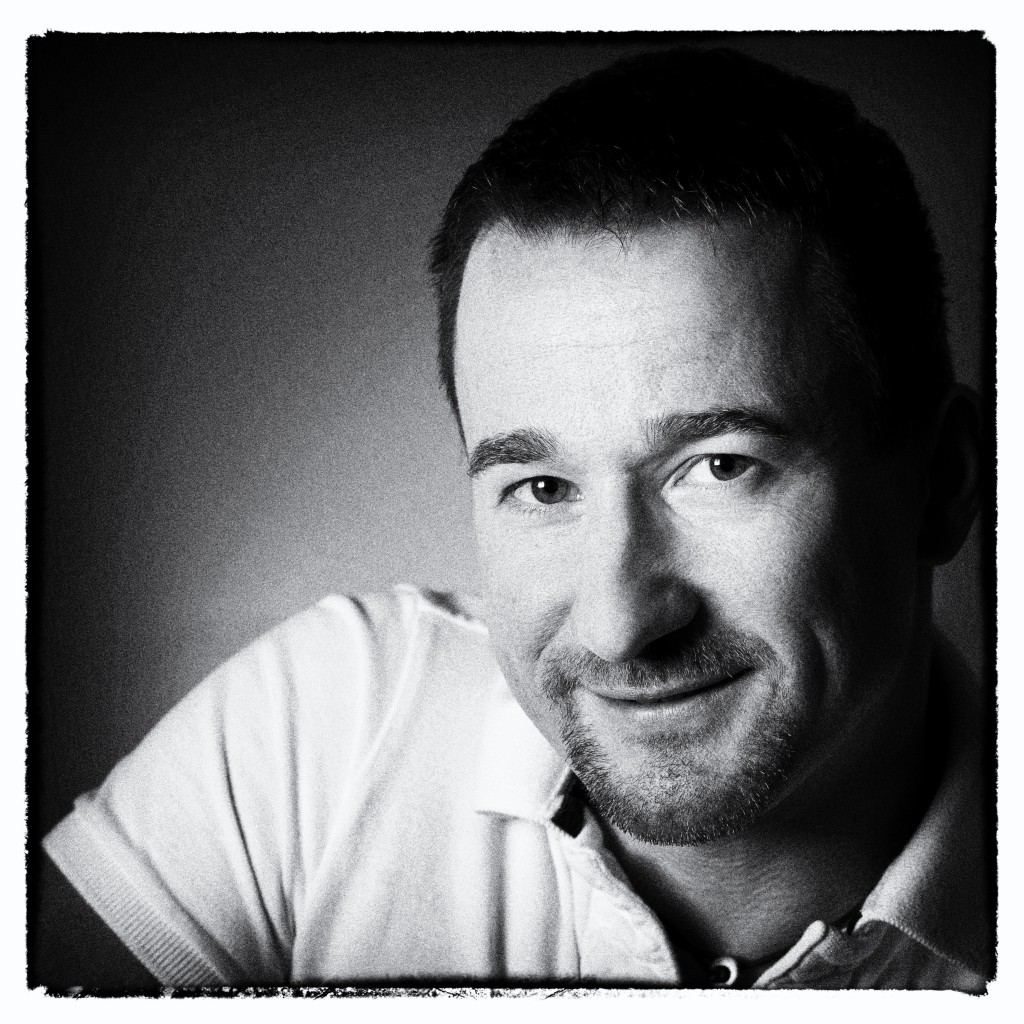
    Photo credit: Erika Fish, QUT

    Marcus Foth is an Associate Professor and Director of the Urban Informatics Research Lab, as well as the Principal Research Fellow at the School of Design, Queensland University of Technology. He has authored and co-authored over 90 articles published in journals, edited books, and conference proceedings, as well as the Urban Informatics web site. You can follow him on Twitter.

    Welcome to Australian Science. Would you, please, tell our readers a little bit more about yourself? Where do you come from, both geographically and philosophically? What is your scientific background, and your professional scope? 

    Certainly. I was born and grew up in the Northern part of Germany, in a town called Lübeck, at the coast of the Baltic Sea, about an hour from Hamburg. After high school I moved what appears to be as far away diagonally as possible within Germany in order to commence a computer science degree at the University of Furtwangen in the Black Forest that offered a – at the time – unique specialisation: Medieninformatik which combined technology applications and media studies. This was in 1997. The internet was just starting to become commercially successful, and many current students were still working on kiosk installations and multimedia CD-ROMs which were the latest fad at the time.

    This degree program included two industry internships as well as an opportunity to study abroad. Together with friends of mine we looked at a number of options and eventually applied for advanced standing into the Bachelor of Multimedia program at Griffith University in Brisbane where we continued our studies in 2000. Due to the credit transfer, we were able to graduate at the end of 2000. This was my first year in Australia, and I had an amazing time. So much so that I decided to take advantage of a Government initiative that made it easier for recent IT graduates to apply for permanent residency. I was also lucky that my application was processed very rapidly: I applied in March 2001 and returned to Brisbane in July 2001 on my PR visa.

    I had finished all my coursework for the German CompSc degree, and all that was left to do was the graduation thesis. In the meantime, I enrolled into a Master of Arts in Digital Media program at Queensland University of Technology which was flexible enough to comprise project units that allowed me to write my thesis “Backing up the Smart State: E-Security in Queensland’s Small and Medium Enterprises.

  • The Best of Science blogging – August 2012

    The Best of Science blogging – August 2012

    The month of August was busy: we had Curiosity landing on Mars, events and interviews with scientists who are directly involved with the Mars Science Laboratory, multimedia that followed up the major event, new bloggers joining us – say Hi to Alan and David. If you are interested in science blogging, and contributing to Australian Science, please read the Editor’s note.

    Then the news broke that Neil Armstrong died, so we decided to publish  a rare and unique speech that he delivered in Sydney on 24 August 2011. Beside the major events, check out the articles on alternative energy, environment, virology, pharmaceutical policy, ecology and democracy, science of prediction, modelling, and few calls for participation at the various conferences and events. The recap and the top ten articles of the month are here:

     Top ten posts:

    Interview with lead Mars Curiosity rover driver Matt Heverly and Where to land Mars Curiosity for the best science? Interview with Marion Anderson, who helped choose the landing site by Alan Kerlin

    Last week I interviewed Matt about this important role, about driving rovers in general, and about the science work that he’ll be helping with.  When Matt came online, he’d quite literally been in the “Mars Yard

  • Open Linked Data, DBpedia, Serendipity, and the Future of Web – Interview with Kingsley Idehen

    Open Linked Data, DBpedia, Serendipity, and the Future of Web – Interview with Kingsley Idehen

    Being a Semantic Web, Open Linked Data, Open Source enthusiast, and at some point the contributor to the AP for the FOAF and other metadata standards, recently I had an opportunity to talk with Kingsley Idehen on his current projects,  views on the use of the Web technologies, Open Linked Data,  WebID, serendipity, and certain aspects of the Internet that influence our everyday lives.
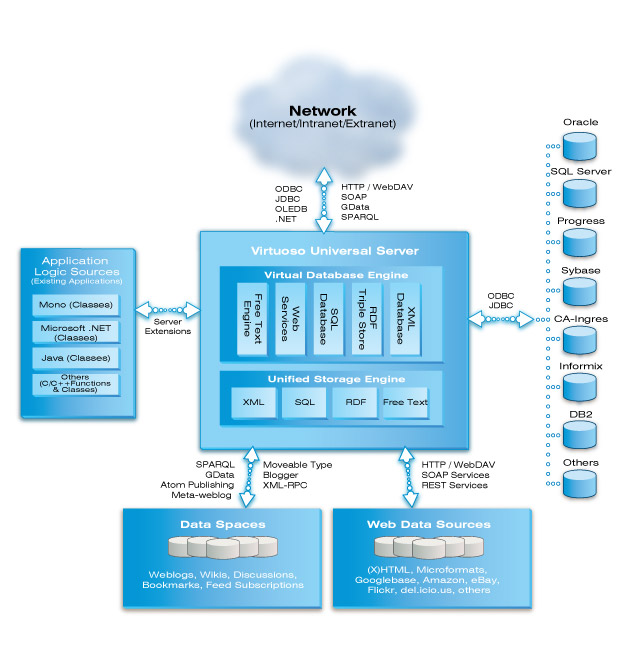
    Kingsley Idehen is the Founder & CEO of OpenLink Software. He is a recognized technology enthusiast and expert in areas such as: Data Connectivity middleware, Linked Data, Data Integration, and Data Management.  He is also a founding member of DBpedia project via OpenLink Software. Kingsley’s  background is quite varied: he had planned to become a scientist in the genetic engineering realm but ended up being more fascinated by the power Information Technology and its potential to reshape mankind. From science, accounting, and programming, he followed his scientific instincts to architect OpenLinkVirtuoso, a powerful and innovative open source virtual database for SQL, XML, and Web services. The Virtuoso History page tells the whole story about Kingsley’s vision and accomplishments. You can follow him on Twitter and read his Google+ posts.

    Would you explain to our readers a bit about the OpenLink Software, for those in the Web technology who may not be familiar with it? Can you give us a story about the inception, history, work and achievements of the OpenLink Software?

    OpenLink Software develops, deploys, and supports bleeding edge technology covering the following realms:
    1. Relational Database Connectivity Middleware — ODBC, JDBC, ADO.NET, OLE-DB, and XMLA Drivers/Providers
    2. Disparate Data  Virtualization
    3. Personal & Enterprise Collaboration
    4. Relational Tables (RDBMS) and Relational Property Graph (Graph DB) based Database Management Systems
    5. Federated Identity Management.

    I founded OpenLink in 1992 with open database connectivity middleware supporting  all major RDBMS products as our focus. By 1998 we evolved our vision to include RDBMS virtualization, and by 2000 we decided that the Semantic Web technology stack provided all the critical standards that would enable us extend data virtualization to include other data sources and formats beyond the RDBMS.

    OpenLink was initially associated with dispelling the performance myth that undermined the early promotion of the Open Database Connectivity (ODBC) standard from Microsoft. In the Semantic Web and Linked Data realms our Virtuoso hybrid data server underlies critical parts of the Linked Open Data cloud (starting with DBpedia which lies at the core) as well as offering the largest publicly accessible Linked Data space on the planet, against which anything (human or machine) can perform ad-hoc queries that drive lookups while also aiding the emergence of other Linked Data Spaces on the LOD cloud.
    Naturally, our technologies are used extensively across enterprises worldwide due to performance, scalability, and security that underlies every item in our product portfolio.

    Is there any existing tools and methodologies developed by either you or your team in the OpenLink Software or others that you would like to mention? 

    * High-Performance ODBC Drivers for all the major RDBMS databases
    * ODBC Drivers for the World Wide Web — yes, the World Wide Web of Linked Data (or LOD cloud) is exploitable and accessible to any ODBC, JDBC, ADO.NET, or OLE-DB compliant application
    * Virtuoso — high-performance and massively scalable hybrid DBMS (relational tables and property graphs).
    * Linked Data Middleware — that transform output from a plethora of Web 2.0 and SOA services into structured Linked Data
    * URIBurner — a public instance of the middleware mentioned above that enables anyone transform existing data into Linked Data
    * OpenLink Data Spaces — platform for enterprise and personal data spaces that includes in-built Federated Identity and sophisticated Linked Data functionality
    * DBpedia — Linked Open Data Cloud nexus that runs on Virtuoso (re. Linked Data Deployment and Data Management).

    Some useful links and downloads: ODBC Drivers for the World Wide WebVirtuoso Commercial EditionVirtuoso Open Source Edition,  Linked Data MiddlewareURIBurnerOpenLink Data Spaces, and DBpedia.

    Do you collaborate with similar organisations/institutions worldwide in the field of the Open Linked Data? Would you tell us more about your involvement within the DBpedia project?

    Yes, as demonstrated by DBpedia (Frei University and University of Leipzig), Sindice (DERI), and Bio2RDF(Carleton University and others).

    Virtuoso is the Linked Data Publishing and Database Management system behind DBpedia. Net effect of Virtuoso is you have a massive collection of Linked Data derived from Wikipedia that’s available to the entire public. This instance enables you browser through pages that describe entities while also delivering ad-hoc query functionality via a Web Service that supports the SPARQL query language, results serialization formats, and HTTP based wire protocol.

    In addition to providing the live instance, we also provide quality assurance, support and maintenance. Publishing and maintaining DBpedia is a challenge, and we even offer packages that enable others instantiate personal or service specific instances via Amazon EC2 AMIs (virtual machines).

    DBpedia is basically germination of the seed planted by the Linked Data meme published by TimBL circa. 2005. In turn, DBpedia enabled the emergence of the massive Linked Data Cloud that exists today.

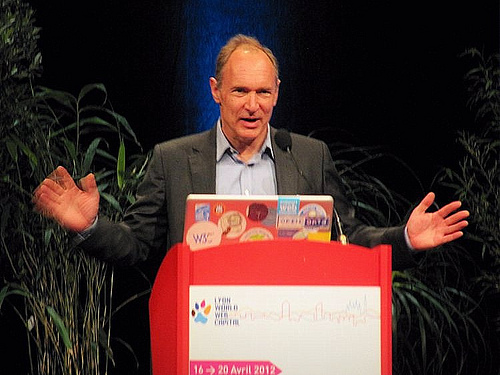
    In his recent keynote, at the WWW2012, Tim Berners-Lee talked about the importance of the openness and urged for governments to embrace the movement of open data. Following that, you showed me how one can successfully kill spam using the WebID protocol as a Web-scale verifiable identity mechanism. Thus, for those who are not familiar with WebID – beside allowing to identify self online and exchange the WebID with other people and social web services – are there some other uses aimed at solving real problems? 

    Here are the fundamental problems solved by unadulterated open data connectivity:
    1. generating capital from high quality government data via open data initiatives the leverage Linked Data principles — this is better than dysfunctional financial engineering that’s plunged the world into an economic fragility
    2. big data and small data virtualization that simplifies the process of discovering and sharing insights for individuals and enterprises alike
    3. achieving the goals above without compromising privacy and security.

    There’s nothing more useful than 1-3 and there’s no technology to date that’s achieved that without some kind of platform specificity that ultimately becomes a dysfunctional silo. This is where the Web is unique, as its impact on mankind has already demonstrated with aplomb.

    I always ask people who are in the ICTs (Information-Communication Technologies): do you think that Web is one big serendipity machine from the computing and the scientific point of view?  

    It is. See: SDQ (Serendipitous Discovery Quotient) and The Future of SEO? Or an Abstract Concept? – another SDQ article.

    As the links to structured data increase on the Web, its density increases, which ultimately means that you require fewer and fewer link hops to find whatever you seek, with precision.
    For instance, you can Find all Blog Posts about a Subject Matter Topic based on the attributes of the topic since the Post, Topic, and their Connection are all denoted (named) using hyperlinks (de-referencable) URIs. These URIs resolve to content in the form of fine-grained links taking the form: entity-attribute-value or subject-predicate-object. See my presentation that covers the basics of structured of data.

    Do you think that Web apps and software architects are killing the serendipity moment with their search algorithms, mechanical turks and other mechanisms?  

    No, the worst that can happen is artificial protraction of a journey to an inevitable destination i.e., the Web as mankind’s distributed database and serendipity machine.

    What are you currently working on? What’s your current projects and research about? What can we expect from the OpenLink Software in the upcoming period?

    Addressing the Read-Write dimension of the Web, hence the recent emphasis on WebID and the WebID authentication protocol. Verifiable Identity is a critical piece of the Web that hasn’t manifested coherently until the emergence of the WebID and Read-Write Web community groups from the W3C.

    All our products are WebID enabled, so our current focus is getting the world to understand why federated identity matters by product offerings that address:

    1. Personal Data Spaces or Data Lockers — how users take full control of their identity, profiles, data, and privacy
    2. Data Wikis – basically reapplying the Wiki Content pattern to Linked Data such that crowdsourcing and social networking add new virtuous dimensions to Linked Data product and quality.

    What is taking up the most my time these days is finalizing a boat load of new product releases that increasingly simplify the power inherent in our products and the infrastructure provided by the World Wide Web. Also, OpenLink Software is finalizing new editions of Virtuoso, OpenLink Data Spaces, and its suite of ODBC and JDBC compliant data access drivers which support all major DBMS engines.

    Thank you Kingsley for taking your time to talk with me! 
  • Nikola Tesla and the magic of science

    Nikola Tesla and the magic of science

    Science is but a perversion of itself unless it has as its ultimate goal the betterment of humanity – Nikola Tesla

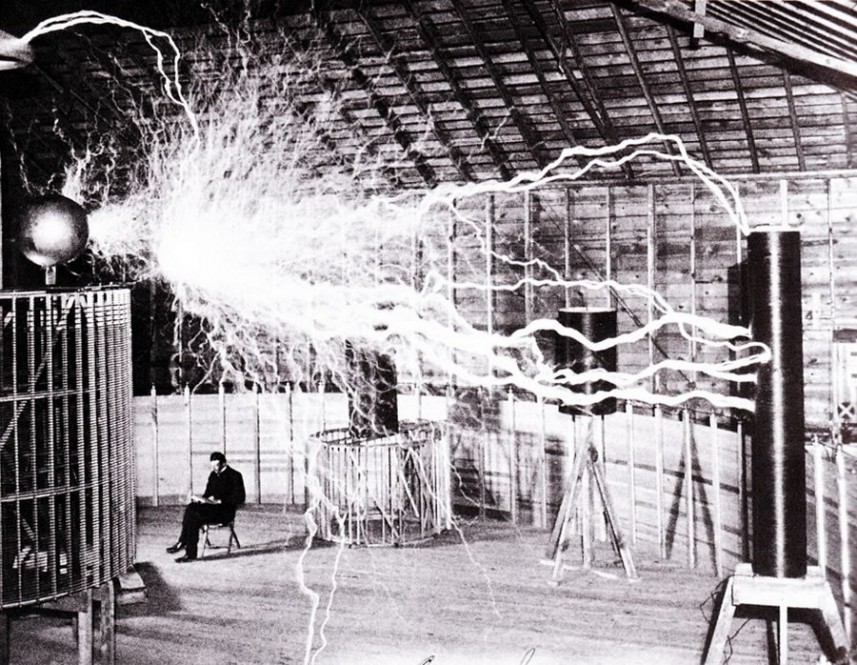
    One of the greatest people in the history of science, and the greatest inventor of the post industrial society, Nikola Tesla, is the visionary that many people have never even heard of or about his work. He could visualise the future inventions with the greatest facility. Numerous articles have been published, books have been written related to this magician of the science. There are many sources about this man who lit the world, and his developments.

    Among many Tesla’s inventions,  the most relevant that influence directly our everyday life include: radio, wireless telegraphy, remote control, robotics. He even photographed the bones of the human body. But the high point was the realisation of a childhood dream: harnessing the raging powers of Niagara Falls, and bringing light to the city. Tesla has over 700 patents to his name: invented the World First AC Generator which led to electrical development and enlightment of the world. This high frequency high volatage electricity is used today in many communication devices.

    Also, Tesla’s Wireless power System including certain devices is now considered to be an untouched method to transmit electrical current without wires. Extraterrastrial Radio Transmitter – Teslascope, radio transceiver designed with the intention of communicating with extraterrestrial life on other planets. It received publicity after Tesla’s statement on the device was published by Time magazine in their July 20, 1931 issue celebrating Tesla’s 75th birthday.

    We should mention here Tesla’s Earthquake Machine invention that probably many people never heard of. This is an excerpt from the New York World Telegram, July 11, 1935:

    “Nikola Tesla revealed that an earthquake which drew police and ambulances to the region of his laboratory at 48 E. Houston St., New York, in 1898, was the result of a little machine he was experimenting with at the time which “you could put in your overcoat pocket.

  • Open Access for Open Knowledge: An Interview with Keita Bando

    Open Access for Open Knowledge: An Interview with Keita Bando

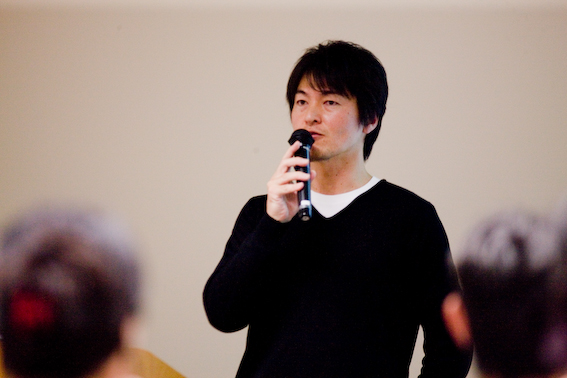
    Keita Bando is a Digital Repository Librarian and Coordinator for Scholarly Communication database called MyOpenArchive we have presented MyOpenArchive earlier this year. Founded in September 2007, MyOpenArchive is an international Non-Profit Organization that advocates Open Access for never-before-published research papers on the web and provides Self-Archiving platform to enable better knowledge sharing in a way that’s easy to publish. We talked with Keita about Open Access (OA), scientific and scholarly publishing, and the current situation of the OA in the world.

    Welcome! Would you, please, tell our readers a little bit more about yourself?  What is your scientific background, and your professional scope? 

    Hello, Australian Science and its readers! Nice to meet you. I have been devoted my time on Open Access, Scholarly Communication, and recently Altmetrics. That’s why we (two colleagues and me) founded MyOpenArchive five years ago. An engineer and an designer helped me to develop my initial effort.

    Also much of my time have been devoted on OA advocacy relations. For example, an presentation at 2008 Open Access Day, hosting Japanese website during Open Access Week 2009, and we hosted an event at that week. Furthermore, in 2011 we attended two conferences in Europe and the US, to make great acquaintances with those who deeply committed into Open Repository relations.

    Besides, I have been devoted my time on Mendeley Advisor relations. Mendeley is a great service for me, and that’s why I advocate Mendeley in Japan. On one hand, Mendeley is famous as Reference manager. On the other hand, Mendeley is a Self-Archiving, Institutional Repository friendly service. Personally I am an OA Advocate who is interested in Mendeley Advisor relations.

    As a volunteer I have been devoted my time on those relations, for I have a full-time job at an University (as a staff, but not a librarian).

    How many individual and organizational ‘self-archiving’ units or members do you have within MyOpenArchive? What science disciplines the archive covers?

    MyOpenArchive is not a sectional repository (arXiv, PMC etc). You can publish and share any type of research paper, of any section (Journal Article, Thesis or Dissertation, others) using Creative Commons License (or Public Domain). Users can upload material from any field, all science disciplines are present in the articles.

    The first 3 years (2007-2010) we attracted 393 users and 210 posts. After 2010 renewal, 292 users and 166 posts. On the new site, we introduced Twitter/Facebook Sign in/up system to find that Twitter users overwhelmed Facebook users (214 vs. 78).

    What do you think about “self archiving” today in the hyper connected networked surrounding and advancement of digital technologies? Do people deposit more or less?

    Self archiving, so far, meant that librarians conduct the posting author’s final draft and/or others to Institutional Repository. These years, however, increasing number of users found their way to publish research papers to Mendeley, ResearchGATE, academia.edu and so on because those social networking services for researchers taps self archiving features into their site.

    Thus, Self archiving can be achieved without IR. FigShare, PeerEvaluation, MyOpenArchive and numerous Social iR(s) represent Self archiving without help of librarians or IR. Researchers can do the self archiving, literally, on their own.

    On the other, experimental efforts are increasing in order to match SNS for researchers and IR. For example, I am interested in DURA project, on which Mendeley and Cambridge University Library join forces upon JISC subsidy. Technology evolution let those services interact each other, and SWORD, Symplectic is critical on the Self archiving movement to advocate OA.

    How do you see OA development in the next five years?  How do you see the impact of open access on the science, education, and communication online? 

    In my opinion, altmetrics is the key to innovate OA relations. PLoS is the most important contribute to altmetrics innovation. It focuses on article level metrics, on which they can enhance the real time impact of individual papers. PLoS hires some of altmetrics guru, such as Cameron Neylon and Martin Fenner to the effort. Besides, PLoS talents like Mark Patterson and Peter Binfield (they are keen on altmetrics) are going to launch new OA journal (eLife Science, PeerJ) with some of Mendeley staff (Ian Mulvany, Jason Hoyt). Also, BMC show their understandings on OA journal. Hopefully Publication companies will increasingly submit altmetrics.com plans on and on.

    I feel the importance of “being the part” of Open Access movement to know the global trend. Thus I am taking part in Facebook, LinkedIn, Google plus groups, while I follow them on Twitter to know the status of “person” as much as “information”. Most importantly, I can say that being the part of real friendship is critical. Last year I attended several international conferences as real friendship needed. “Why don’t we contribute” happens on these efforts, personally.

    I know that you are very active online, collaborating with other Open Access chapters and nonprofit organisations.  What are your current plans in the organisation and Open Access movement globally?

    For example, Sridhar Gutam of Open Access India became allies with us, to share the Asia relations. On the partnership we hope to enhance the collaborations among those parties around the world.

    We are going to attend Edinburgh Open Repositories 2012, on 9-13 July.

    Berlin 10 Open Access Conference and Open Access Week also mean a lot for us, so this is going to be a “being the part” of discussion and real networking.

    Thank you Keita for taking your time to talk with me!
    Image source: flickr.com/photos/keitabando/3180077809/in/set-72157612285351143

  • Mars One: The Martian Chronicles or Big Brother Live on Mars?

    Mars One: The Martian Chronicles or Big Brother Live on Mars?


    This week we have seen beautiful Venus transiting directly between the Earth and the Sun, which brought plenty of the media attention, and yesterday one of the greatest science fiction writers Ray Bradbury died during Venus transit. He was best known for his dystopian novel Fahrenheit 451 and for the science fiction stories collection The Martian ChroniclesBoth the Earth and Mars lost one of their most famous citizens.

    Speaking of Venus, Mars, science fiction and non-fiction, I want to share something with you that a colleague of mine drew the attention to, the other day. It is a private space start up from the Netherlands called the Mars One project, whose goal is to send four volunteer astronauts on a one-way journey to Mars. Take a look at the promotional video to get the sense of this endeavor.

    The idea of the privately financed Dutch company is to establish the first human colony on Mars by 2023. ‘’A habitable settlement will be waiting for the settlers when they land. The settlement will support them while they live and work on Mars the rest of their lives.

  • Harvard and MIT offer free online education materials

    Harvard and MIT offer free online education materials

    Harvard University and the Massachusetts Institute of Technology (MIT) announced last week the launch of edX, a transformational partnership and initiative in online education. EdX presents a not-for-profit joint venture between these two institutions that will collaborate to “enhance campus-based teaching and learning and build a global community of online learners

  • Connected and Free: World Wide Web professionals at #WWW2012

    Connected and Free: World Wide Web professionals at #WWW2012

    This is the Part II from the highlights of the World Wide Web 2012 (#WWW2012) conference and here are some notes of mine but this time focusing on people, attendants who have been actively participating in the web professionals meeting and their impressions of the conference. 

    Beside numerous tracks, sessions, workshops, and tutorials – the #WWW2012 offered interesting keynotes by the leading and prominent professionals in Web industry, research, and policy. The main keynote speakers were Tim Berners Lee, the inventor of Web, Bernard Stiegler – a director of IRI (Innovation and Research Institute) at the Georges Pompidou Center in Paris, a professor at the University of Technology of Compiègne where he teaches philosophy, Chris Welty – a Research Scientist at the IBM T.J. Watson Research Center in New York, and Neelie Kroes, a Vice President of the European Commission and European Digital Agenda Commissioner.

    I asked some of the many colleagues, peers, and presenters about their preferred event on the World Wide Web 2012 conference, and what presentation/session/keynote/workshop made the best impression on them, and why.  Here are some interesting thoughts.

    New software paradigm, and Social Media in Response to a Crisis

    I’ll start with volunteers at the conference since they had a great job to do and many of them are web researchers, students, and professors.

    Jean-Tiare LE BIGOT: “I am currently studying telecommunications in Lyon (France) and attended the www2012 as a Volunteer. In my spare time, I try to create an archive of network status map.  As a Volunteer, it has been quite tricky for me to choose and attend the presentations. Nonetheless, I had the luck to see all keynotes in the auditorium. As many of the attendees, I appreciated TBL talk on the values of the Web and also the debate of the following day. But the one I preferred was the one by Chris Welty. He talked about IBM’s Watson project and the steps which enabled Watson to defeat humans in the Jeopardy show. I really enjoyed the humor in his explanations when he showed us the biggest fails :). ”

    Watson is an Artificial Intelligence system designed to answer real world questions as in the Jeopardy show or financial/medical world. During his presentation, Chris Welty stressed on point: Machine’s understanding is in no way the same as human’s. This is to illustrate this point that he showed us some failed answer which is obvious for a human being. An example:

    Source

    Cindy Hui:  I am a post-doctoral researcher at the Rutgers University. My research includes modeling and simulation, social networks, social computing, and disaster research. I presented a paper at Social Web for Disaster Management Workshop titled “Information Cascades in Social Media in Response to a Crisis: A Preliminary Model and a Case study.”

     “There were so many interesting workshops and sessions at WWW2012 that covered such a variety of topics, but I mostly attended the ones that focused on social networks and social media since those are my areas of interest.  In particular, I was very excited about the Social Web for Disaster Management and the Making Sense of Microposts workshops since there’s such a growing focus on how to analyze and make use of these community-driven, collective information from various social media platforms. It really brings together people from computer science, social science and policy practitioners, each contributing important pieces to the overall focus.

  • Global Web, Society and Knowledge at #WWW2012

    Global Web, Society and Knowledge at #WWW2012

    The 21st International World Wide Web Conference, (#WWW2012) for web professionals is over. Lyon convention center (Lyon, France) gathered many prominent computer and social science specialists, web and mobile technologies creators, internet researchers and scholars, developers, users and commercial ventures – actively engaging, interacting, writing, and communicating on web, Internet, social media, digital technologies, and emerging applications.

    Recently finished #WWW2012 conference offered numerous workshops, sessions, tutorials, interesting  keynotes from 16 – 20 April 2012 in Lyon, France on different topics, and in particular on a global concern in information-communication and web technologies in our society. The main theme of the WWW2012 is Society and Knowledge, and Future direction of the Web , and through numerous sessions and presentations it covered social, technological,  and philosophical issues, which are critical web research subjects at the moment, as well as the actual topic of Internet and democracy, free access to services, freedom of expression, regulation and censorship, control and copyright.

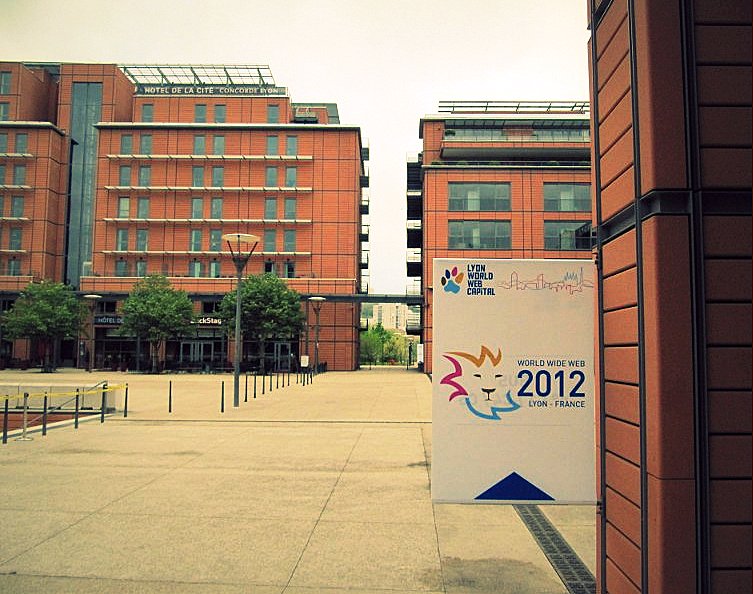
    #www2012, Lyon Convention Center, Cité de Congrès. Photo credit: D. Radovanovic

    Topics ranging from Web Search (information retrieval, ranking, relevance feedback, interactive search), Web Mining (clustering, classification, and summarization of Web data, predicting trends from web content, Web measurements, Web evolution), Social Networks (user-driven recommender systems, link prediction, social search, social mining, analysis of reputation), Data and Content Management, Semantic Web, Video on Web, as well as the topics on Security, Privacy, Trust and Abuse on the Internet were covered from different perspectives and approaches, but all related to the evolution of the Web.

    I am selective here with some presentations, workshops, and papers since it was physically impossible to be present parallel at all events and tracks (see below some stats section on papers being presented). I didn’t count the number of participants at the conference, but I can estimate more than 2,000 participants in total.  These are just some of my thoughts jotted down on workshops, sessions, and presentations as Part I of the #WWW2012 highlights.

    Making Sense of Micro posts: Big things come in small packages

    As I wrote earlier this year for the second time around I was in the Program Committee for the #MSM12 or Making Sense of Microposts workshop at #WWW2012 that offered up a very interesting pool of presentations and papers.  In particular I would point out the keynote by Greg Ver Steeg – Information Theoretic Tools for Social Media who talked about interesting information theoretic measures for social media and how can we estimate these quantities, e.g., how well one user’s activity can predict another’s.  He also presented techniques for estimating entropies (the case for spatio-temporal events, for textual information, etc.)  You can find Greg’s presentation slides here.

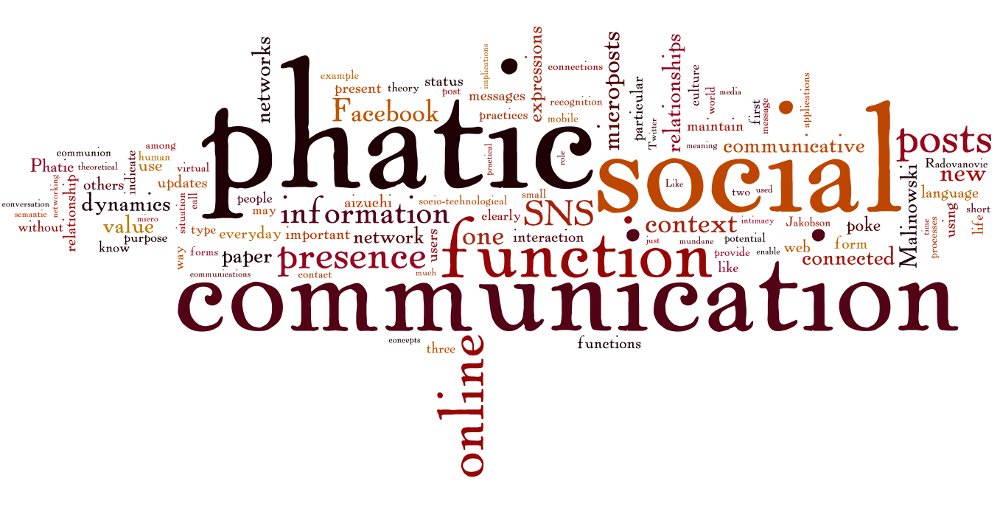
    My role at the #WWW2012 was also as a presenter of a research paper Small talk in the Digital Age: Making Sense of Phatic Posts. I was giving a talk on the phatic communication, and phatic posts – why tweets and Facebook updates on weather, food, and other trivia are very useful both for online communities and human relationships, and for the sustainability of the social network systems. I wrote earlier about here, here (The Scientific American), and here. Other interesting papers on microposts, sentiment analysis and semantics, information extraction, visualisation, search and networks – could be here found and downloaded.

    The award for best paper went to the authors of the paper: Alleviating Data Sparsity for Twitter Sentiment Analysis. The authors presented the semantic feature set where they extract semantically hidden concepts from tweets and then incorporate them into classi

  • The World Wide Web 2012: Making Sense of Microposts

    The World Wide Web 2012: Making Sense of Microposts

    The World Wide Web 2012 conference is hosted this year in Lyon, France, from April 16 to 20, and will feature many prominent figures of the Web, internet technologies, and computer science. Earlier this year I wrote about it, both in the role as a PC member at one of the workshops and as an author. Now, I am very pleased to share that my paper I wrote with one of my colleagues for The World Wide Web 2012 #WWW12 conference – got accepted!  Proceedings of the paper could be found here.

    The paper examines one of the very popular social and communication dynamics on social networks and media, and it will be published for the ACM SIG Proceedings.  In the paper I am arguing that the little things you think are pointless and does not have a practical information value  – posts on Facebook and Twitter, Flickr comments, fav’s, the likes, the pokes and the tweets about food, weather, the mundane brief status updates – all turn out to have a vital social and communication value  that even merits a new phrase – “phatic-posts

  • MyOpenArchive –  an Open Access repository

    MyOpenArchive – an Open Access repository

    MyOpenArchive, founded in September 2007, is an international Non-Profit Organization that advocates Open Access for never-before-published research papers on the web and provides Self-Archiving platform to enable better knowledge sharing in a way that’s easy to publish. The following article is the courtesy of  Keita Bando,  Digital Repository Librarian and Coordinator for Scholarly Communication and is a source of OpenRepositories2011. You can also take a look at the poster version.

    Open Access Week [1] indicated the potential of the Open Access Movement by reaching a large number of current users of Open Access Journals and Institutional Repositories (IRs). [2] The main focus of this study is to highlight the importance of self-archiving as a form of “iR

  • Communicating Science and Connecting people: An interview with Bora Zivkovic, the Scientific American editor

    Communicating Science and Connecting people: An interview with Bora Zivkovic, the Scientific American editor

    Photo credits: Travis Dove, The New York Times

    Jean Cocteau once said that the art is science made clear, but what he didn’t indicate is that the science is creating different forms of art including the art of connecting people and communicating science. Bora Zivkovic is a unique, energetic, technologically-savvy, and multidisciplinary scientist, connector, and blogger. I met Bora twice: during the Science Online 2009 and Science Online 2010 conference in Raleigh NC, USA, and on many other occasions online, and he would always motivate me with incredible energy and passion for science and people. I would say that Bora is the real science connector, not only communicating and articulating science in its many forms but also connecting people, networks, and the scientific communities world wide.

    Born in Belgrade, former Yugoslavia (now Serbia), Bora’s studies of veterinary medicine were interrupted by the 1990s war in the Balkans, when he arrived in the USA. He went to graduate school at North Carolina State University where he studied how bird brains measure time of day (circadian rhythms) and time of year (photoperiodism). He started A Blog Around the Clock in 2004 as a prolific science blogger. He was the online Community Manager for the open access journal PLoS ONE. He is now the editor of Scientific American’s blog network, organizes the annual ScienceOnline conference, and is the editor of The Open Laboratory, an annual collection of the best writing from science blogs.

    He even interviewed me once, as a host of a series of interviews with various scientists, bloggers, educators, and journalists; and now is my turn to ask Bora questions I always wanted to ask him. I had an opportunity to interview him and here are the questions and perceptive, knowledgeable, and fun responses.

    Welcome to Australian Science! Recently the Science Online 2012, #scio12 has finished, and impressions are still spreading online among scientists, bloggers, journalists by sharing blog posts, videos, tweets. How do you feel after this year’s conference? Do you think that some things and social dynamics during this conference have changed comparing to previous conferences? I’ve seen familiar names tweeting online, people I met in person in 2009 and 2010. What has changed in the conference dynamics since then?

    We were very aware that growing a meeting by 50% can change the dynamics. We spent the entire year discussing strategies for ensuring that the intimate atmosphere of the meeting does not vanish. I wrote quite a lot about this in my long blog post after the event, especially about the need to make sure that so many new people feel welcome and instantly included into the community – including all the fun parts of the event. We completely changed the daily schedule in order to foster more informal interractions, we (really, Karyn Traphagen) designed the Cafe Room with this in mind, and we put quite a lot of effort in our communications on the blogs (including my post which was recommended to all to read beforehand), emails and social media, to prepare everybody for the unconference format and for the unique blend of serious discussions and crazy fun of ScienceOnline. For the most part, judging from what people are saying on their blogs and in our feedback forms, we were successful.

    You are an influential leader of the scientific blogging network community – I may say – worldwide. You have a lot of experience in the curating, managing, coordinating scientific events, scientific blogs, and online communities. You’ve been organizing the ScienceOnline conference for the past 6 years and also serve as series editor for The Open Laboratory anthology. You’ve worked as PLoS online community manager and now work in the role of Editor at the Scientific American blogs. What are the best strategies for building and maintaining blog network (out of scratch)?

    Building a blog network from scratch is actually a wonderful experience – one gets to turn one’s vision into reality. Of course, building a network hosted on the Scientific American website is not exactly “from scratch”, as the power of the brand (as well as the resources of the organization) almost guarantee visibility and traffic from the start. I spent several years as a blogger at Scienceblogs.com so I could experience (and later analyze) many aspects of the community building at that site – definitely insights I used in building the SA network later on. Also, just before Scientific American hired me, I was briefly involved in the planning and early organization of the PLoS Blogs and Scientopia blogs. In both of these, my voice was one of several. At Scientific American I was hired specifically to do this, so I had more freedom to build exactly the kind of network I wanted to.

    The key to the success of a network are its people. I had the luxury of having nine long months to think about it. I dug through the archives and started following literally thousands of science blogs. I used Twitter to ask for suggestions for even more blogs, especially blogs that do a particular ‘thing’, e.g,. writing about a particular topic in a particular style. What I was looking for was to assemble a team, rather than produce a “best of” list. I wanted a group of people who will be joy to work with, who will have fun communicating with each other in the backforums and in their blogs’ comment sections, and who will be naturally inclined to feel as members of a community, not just writers for hire.

    Of course, there are many people like that, so I also made sure that, within the limits of size and budget, I include quite a lot of diversity. When I say ‘diversity’ I am not talking just about coverage of as many topics and scientific disciplines as we can accommodate, but also diversity in voices. I wanted to have people on the network who can speak to different audiences, so I wanted to find people of varied backgrounds (geography, career path, age, gender, race/ethnicity, etc.), with different writing styles, writing at different “reading levels”, etc, in order to capture as broad and varied audience for the network as a whole. Inclusion of several bloggers who communicate well using media other than text was also very important to me, as art, illustration, video, music, photography, cartoons, animations, infographics and other ways of communicating science are just as important as good text writing for extending our reach and capture new audiences.

    It is also important to understand that a blog network is not static. Bloggers come and go. It is OK – life and career sometimes force people to take different directions, which may entail stopping blogging temporarily or permanently, or taking one’s blog in a completely different direction. It is important to make these transitions smoothly without disrupting the community and the overall tone of the network.

    As a science blogger and network community manager, what’s the one piece of advice you would give to people who want to curate and manage their local and national blogging communities? And what is your advice to bloggers, scholars, scientists, educators, and journalists who want to write for those scientific online networks? I have noticed that relationships, people and linking matter the most, I would like to hear your thoughts. 

    Analyze the audience. Make a vision that fits it (and expands to other audiences you want to attract). Then – ignore personal friendships! Both you and I have thousands of friends in the science blogging circles. Many of them are fantastic bloggers whose blogs I read religiously. Yet I did not invite them to the network because their blogging topics and styles do not fit the vision I have for the network. Some of the bloggers who ended up on the network happen to be my friends, but they are here because of what they do and how they do it. Other bloggers on the network I only first encountered when I started looking around really hard – I liked their writing, I started communicating with them online, perhaps “tested” them on the Guest Blog, and decided they were a good fit. I also deliberately chose a few bloggers who are veterans, people who have experience, reputation and authority, people who can help on a bad day when trolls are all over a bloggers’ comment section, or if there are uncertainties in the troops (and of course, they already have many regular readers who will follow their blogs onto the new hosting network). But most are relatively new or young bloggers who I thought had great talent and potential. Most have more than repaid my trust in them and grew into tremendous forces of high-quality blogging.

    You are an avid twitterer and I remember you used FriendFeed a lot. What social web tools are you using these days the most besides Twitter? What social media tools help you now for promoting the work and networking and which one do you use for professional development?

    Twitter is still my main social network where I spend the most time and do most of the interraction – this is where I discover stuff, promote stuff, and talk with people. I also post links to most of my bloggers’ posts on my Facebook and Google Plus pages. If interraction there happens, and it often does, I am happy to go there as well to reply, but these are definitely not taking up much of my time. I am only very superficially exploring the worlds of Tumblr, Posterous, Quora and Pinterest, am studiously avoiding LinkedIn (though I have a profile there – and probably everywhere), have pretty much abandoned FriendFeed since it was bought by Facebook, and use other sites (e.g., YouTube and Flickr) mainly as repositories rather than places where I expect to get much interraction. I see quite a lot of potential in Google Plus which, I sometimes joke, is how FriendFeed would look like if it continued developing.

    I have a feeling that the new social web paradigm in science, technology and education cannot sustain without building relationships and links. Do you find the human factor and the power of community prevailing over machines and tools we are using? Are we finally getting to the point that despite McLuhan’s “that tools will be using us

  • Earth’s City Lights

    Earth’s City Lights


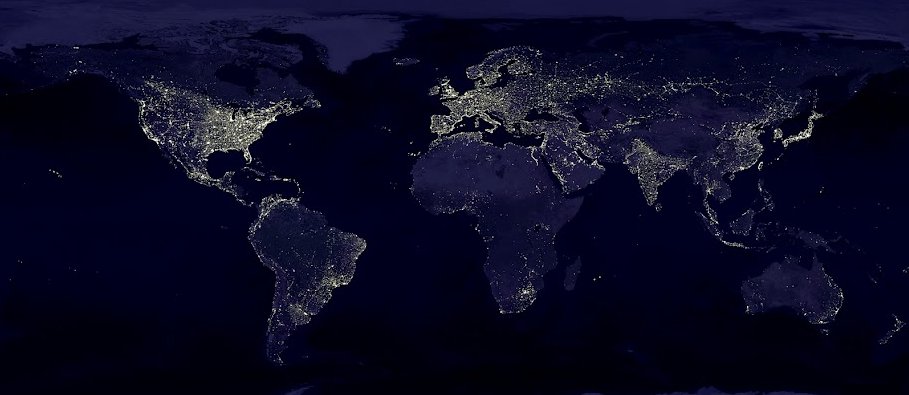
    This image of Earth’s city lights was created with data from the Defense Meteorological Satellite Program (DMSP) Operational Linescan System (OLS). Originally designed to view clouds by moonlight, the OLS is also used to map the locations of permanent lights on the Earth’s surface.

    The brightest areas of the Earth are the most urbanized, but not necessarily the most populated. (Compare western Europe with China and India.) Cities tend to grow along coastlines and transportation networks. Even without the underlying map, the outlines of many continents would still be visible. The United States interstate highway system appears as a lattice connecting the brighter dots of city centers. In Russia, the Trans-Siberian railroad is a thin line stretching from Moscow through the center of Asia to Vladivostok. The Nile River, from the Aswan Dam to the Mediterranean Sea, is another bright thread through an otherwise dark region.

    Even more than 100 years after the invention of the electric light, some regions remain thinly populated and unlit. Antarctica is entirely dark. The interior jungles of Africa and South America are mostly dark, but lights are beginning to appear there. Deserts in Africa, Arabia, Australia, Mongolia, and the United States are poorly lit as well (except along the coast), along with the boreal forests of Canada and Russia, and the great mountains of the Himalaya.

    Credit: Data courtesy Marc Imhoff of NASA GSFC and Christopher Elvidge of NOAA NGDC. Image by Craig Mayhew and Robert Simmon, NASA GSFC.
    http://www.nasa.gov/

    Cross -link to this post.